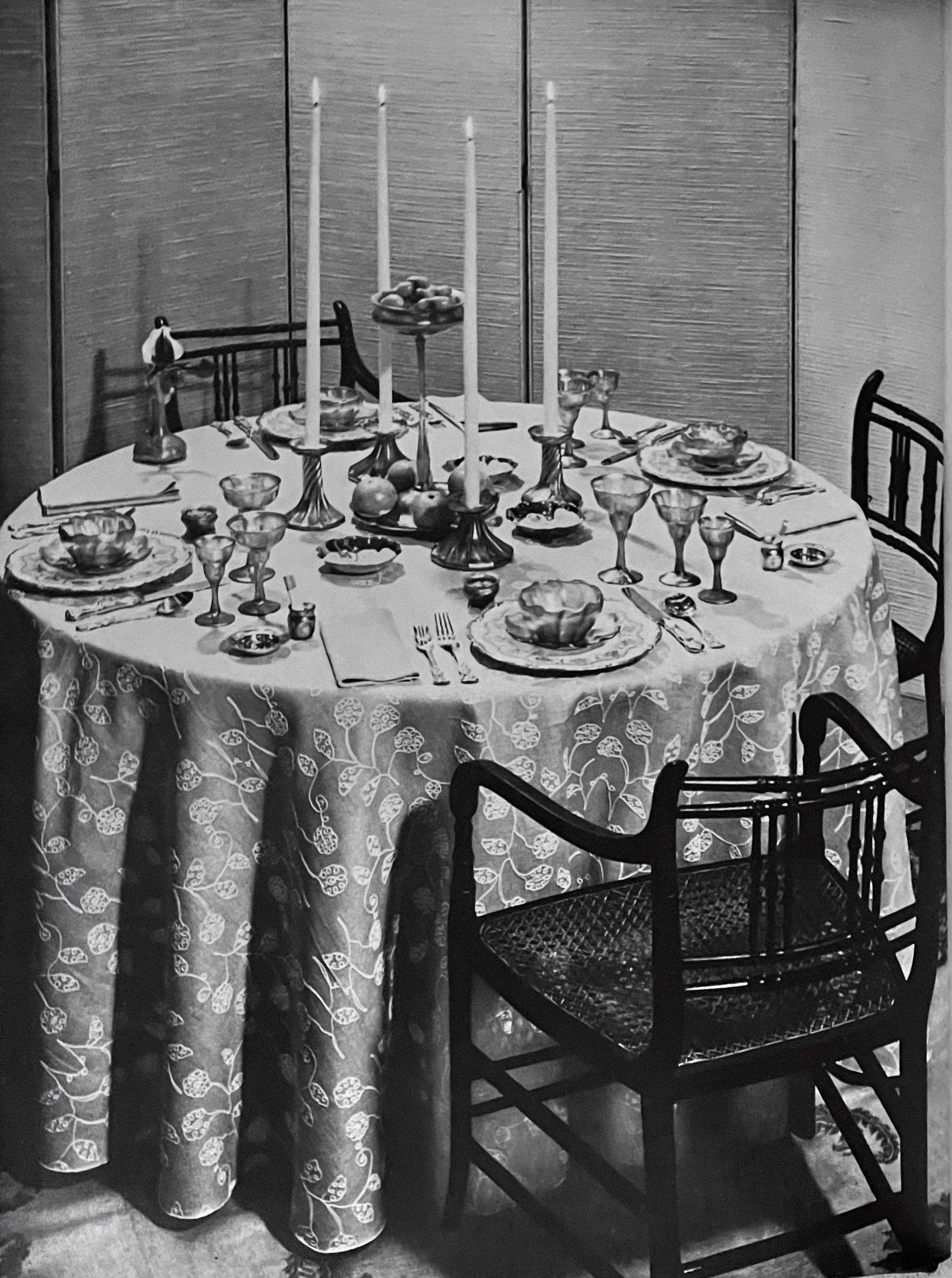
Art Deco influences china and tableware. The introduction of sleek, streamlined dishes from Fiesta and Russell Wright departs from the elaborate Georgian and Renaissance styles of the 19th century and signals the beginning of modernism. This pottery blends form and function, is easy to maintain and is mass marketed for a country mired in the Depression. Still, it is so avant-garde it won’t gain a solid following until the ‘40s and ‘50s.
The 1940s
The emphasis is on recycling old and current tableware, because of the country’s preoccupation with World War II. But wartime technology will become enormously influential in the home in the next decade.
The 1950s
The kitchen becomes the showplace. Technology produces better refrigerators, toasters, coffee makers, juicers. Families eat in the kitchen, and dishes with informal, playful patterns become popular. Colors like harvest gold, aqua and tangerine appear with ‘50s design influences of tail fins, diners, rocket ships and biomorphic shapes like amoebas. Cocktail parties become chic, and entertaining the boss calls for more formal tables, set with solid linen tablecloths (replacing lace) and stem wine glasses. China is decorated with stylized classic motifs: Greek key, acanthus leaves, along with basic gold and platinum borders.
The 1960s
Some brides still want to create the perfect dream house. The major social shifts that came later don’t affect table design and china instantly. Women who get married during cultural upheaval, even if on a mountaintop in bare feet, expect at least some traditional china, such as Lenox, whether they like it or not.
The 1970s
Tableware reflects society’s new directions. Natural, crafted looks become popular, like earth-tone dishes with a handmade look that coordinate with hand-woven linens and macrame. Sleek, pared-down Scandinavian designs grab attention, and Dansk’s Generation pattern, speckled earthenware with simple blue and brown bands, is a hot seller. At the opposite end of the spectrum is a classic Spanish style, with its scrolled lines and bright, dripped glazes in oranges and browns. The practical bride loves Corelle dinnerware, heat-tempered and break resistant, perfect for young families.
The 1980s
The era of excess runneth over into tableware. Anything goes, including Americana looks, animal prints, ethnic designs and tailored lines. Etiquette-book rules about dressing the table go out the window. Brides mix and match, indulging their sense of self-expression, and meals become epicurean theater. Swid Powell hires such international architects as Charles Gwathmey, Robert Siegel and Ettore Sottsass to do dramatic collections of china, silver and crystal. Fashion designers like Ralph Lauren get into the mix.
The 1990s
Tableware becomes part of a bold marketing strategy bent on selling an entire lifestyle, from clothing to bed linens. Companies like Eddie Bauer, Old Navy, Banana Republic, Crate & Barrel, Pottery Barn and Guess coordinate everything, down to the napkin ring. Transitional patterns in bone china become popular; simple designs with a bit of color or texture that can be dressed up. More fashion designers enter the market, including Calvin Klein, Gianni Versace and Christian Lacroix, offering signature looks in dishes, stemware and flatware. Companies pick up on the trend of mixing and matching, offering numerous patterns that can be swapped to create different looks.
The 2000s
Romance returns, in the form of rose motifs and muted colors like dove gray. The passion for finding remnants of the past at antique stores and flea markets is translated into classic, clean borders and blue and white patterns. Homespun pictorial designs include nature accents such as flowers, fruits and vintage seed packets and bring a sense of prettiness to the table. —Donna Ferrari, Bride’s magazine, 1998
Etiquette Enthusiast, Maura J Graber, is the Site Editor for the Etiquipedia© Etiquette Encyclopedia
The 1950s
The kitchen becomes the showplace. Technology produces better refrigerators, toasters, coffee makers, juicers. Families eat in the kitchen, and dishes with informal, playful patterns become popular. Colors like harvest gold, aqua and tangerine appear with ‘50s design influences of tail fins, diners, rocket ships and biomorphic shapes like amoebas. Cocktail parties become chic, and entertaining the boss calls for more formal tables, set with solid linen tablecloths (replacing lace) and stem wine glasses. China is decorated with stylized classic motifs: Greek key, acanthus leaves, along with basic gold and platinum borders.
The 1960s
Some brides still want to create the perfect dream house. The major social shifts that came later don’t affect table design and china instantly. Women who get married during cultural upheaval, even if on a mountaintop in bare feet, expect at least some traditional china, such as Lenox, whether they like it or not.
The 1970s
Tableware reflects society’s new directions. Natural, crafted looks become popular, like earth-tone dishes with a handmade look that coordinate with hand-woven linens and macrame. Sleek, pared-down Scandinavian designs grab attention, and Dansk’s Generation pattern, speckled earthenware with simple blue and brown bands, is a hot seller. At the opposite end of the spectrum is a classic Spanish style, with its scrolled lines and bright, dripped glazes in oranges and browns. The practical bride loves Corelle dinnerware, heat-tempered and break resistant, perfect for young families.
The 1980s
The era of excess runneth over into tableware. Anything goes, including Americana looks, animal prints, ethnic designs and tailored lines. Etiquette-book rules about dressing the table go out the window. Brides mix and match, indulging their sense of self-expression, and meals become epicurean theater. Swid Powell hires such international architects as Charles Gwathmey, Robert Siegel and Ettore Sottsass to do dramatic collections of china, silver and crystal. Fashion designers like Ralph Lauren get into the mix.
The 1990s
Tableware becomes part of a bold marketing strategy bent on selling an entire lifestyle, from clothing to bed linens. Companies like Eddie Bauer, Old Navy, Banana Republic, Crate & Barrel, Pottery Barn and Guess coordinate everything, down to the napkin ring. Transitional patterns in bone china become popular; simple designs with a bit of color or texture that can be dressed up. More fashion designers enter the market, including Calvin Klein, Gianni Versace and Christian Lacroix, offering signature looks in dishes, stemware and flatware. Companies pick up on the trend of mixing and matching, offering numerous patterns that can be swapped to create different looks.
The future
Romance returns, in the form of rose motifs and muted colors like dove gray. The passion for finding remnants of the past at antique stores and flea markets is translated into classic, clean borders and blue and white patterns. Homespun pictorial designs include nature accents such as flowers, fruits and vintage seed packets and bring a sense of prettiness to the table.
Source: Donna Ferrari, tabletop, food & wine editor, Bride’s magazine