Showing posts with label Telephone Manners. Show all posts

Wednesday, April 6, 2016

Etiquette and Invitations by Phone

Inexperienced hostesses are often perplexed as to the etiquette in the matter of issuing invitations.


Invitations by Telephone:

The Smarter the Dinner, the Shorter
the Notice Given, Is the Rule Now


Special Cable to The Herald

LONDON, June 2.— Inexperienced hostesses are often perplexed as to the etiquette in the matter of issuing invitations for dinners and balls, especially as there is an idea about that the strict rules formerly in vogue as to the length of time necessary have a dinner relaxed. But the fact is that the point entirely depends on the nature of the invitation and a little also on the social position of the one extending it.

The very smartest dances of all are the most informal as to the invitation, for their object is more to diminish the number of guests asked. Therefore, the whole thing is kept as quiet as possible beforehand.

These ultra-smart invitations are often written only on a visiting card, and are constantly given verbally or by telephone.

Political parties, of course, are always planned out long ahead and so are large formal dinners. But the general rule is the smarter the dinner, the shorter the notice given among persons of the very highest standing, unless the function is a purely formal one. —Los Angeles Herald, 1906


Etiquette Enthusiast Maura J Graber is the Site Moderator and Editor for the Etiquipedia© Etiquette Encyclopedia

Etiquette and an Unruly Phone

The telephone is a most ill-mannered member of society. But who would do without it? 
The Unruly Telephone:
Some of the Pranks it Plays Both Day and Night —
It Has No Etiquette or Delicacy
 — 
Though Many Are Its Services to Mankind

It has long been noticed by careful observers that the telephone as an adjunct to civilization has done many marvelous and unlooked for things. It has shortened distance, but it has also doubtless increased profanity among mankind. By reason of the fact thai one's identity is not revealed it has led to fraud, vulgarity, flirtations, and practical joking to a larger scale than ever practiced before. 

It is said that a certain Sacramento restauranteur has had more trouble over orders that were sent in by wags—"just for fun"—than over all his other troubles combined. The same kind of a complaint comes from San Francisco and from every town of any importance in the country. "Send five oyster loaves to room 21," (such and such a street.) sounds like a business-like transaction, especially if the voice making the order over the telephone says it is the voice of a well known customer; yet just such orders have often been sent to the alleged address, only to find that the person living there was wholly innocent of giving the order, or that the place named was a vacant lot. 

The "Record-Union" is only one newspaper in hundreds that have learned through the telephone some of the characteristics, if you please, of women. As a point in illustration: During the great Corbett-Fltzsimmons prize fight, the telephones in this office rang quite often, and many of the eager voices that inquired for the result were the voices of women who would not give their names. In some instances they confessed to a morbid desire to know the result, though they said they had never attended prizefights and had no desire to see one. 

Some weeks ago a doctor, who had been very busy all day, was awakened by the ringing of his telephone. "Who is there?" he asked. "Mrs. Jones," said the voice at the other end of the line. "What is wrong?" "Oh, come up right away," said she, "for baby is very sick. He awake hoarse and is crying now." "Is he near you?" "Yes, right here by the telephone." "Hold him up and let me hear him cry." The babe was held up, the telephone was in good order, and the sleepy doctor heard the hoarse crying of the child. The telephone told the story of the labored breathing. "He has croup," said the doctor, "and it will not be necessary for me to come up. Do what I tell you and all will be well." The doctor then told the excited mother what to do and the child was saved, though the doctor lost the opportunity to charge mileage.

The telephone is a most ill-mannered member of society. On a recent occasion in this city a well-known professional man was engaged in his office on private and important business. The telephone rang and got his ear, though a dozen respectable citizens had been waiting at the outer gates for hours to see the man for just a moment. This illustrates that the telephone has no etiquette and that when it wants to see you its appeals are invincible. 

When it lends its voice to the entire public how is the patron of the noisy thing to tell whose voice it is that calls? It may be his wife, his sweetheart, his banker, or his doctor. There is no way to tell, until one hushes the intermittent ringing of its sharp bell—and then it is too late to say one is not at home. 

There are many points yet to be settled regarding the legal phases of the telephone. Men have accepted service of legal process by telephone, thousands have been interviewed by newspapers in the same way, while the courts show that breach of promise suits have been based on a proposal made over the telephone. The weird instrument plays so many tricks when wires are crossed and when atmospheric conditions are ajar that no man can swear by the card that this or that sound is the voice of friend or foe. A man is just as likely as not to ring up his bitterest enemy by mistake, or to take his friend for a stranger and refuse to grow warm in the conversation. 

In its manifold phases there is much in the telephone to attract the attention of mankind, now drawing forth the admiration and now the condemnation of those who use the talking machine either for pleasure or during the rounds of their daily cares. But who would do without it? — Sacramento Daily Union, 1898


Etiquette Enthusiast Maura J Graber is the Site Editor for the Etiquipedia© Etiquette Encyclopedia

Monday, April 4, 2016

1920's Phone Etiquette and Use

Talking directly into the mouthpiece with lips a half inch away, will enable the one to whom you are speaking to get your message without straining to hear you. 

Phone Etiquette Advice is Given

Keenly appreciative of the value of correct telephone usage in newspaper work, the New York Sun is at present running a series of suggestions for telephone etiquette in its popular column entitled ’The Sun's Rays" for the information of readers. Forty-two items have been included to date in the series, a number of which follow: 


Telephone Etiquette 
  • The old-fashioned “Hello” when answering the telephone has become obsolete through the modern usage of the name, or telephone number, to identify one's self.
  • Placing the receiver on the hook gently prevents making a disagreeable noise in the other party’s ear and eliminates possible damage to the instrument.
  • Telephone manners are as important for voice-to-voice courtesy, as face-to-face politeness. 
  • “Guess who this is” was never good telephone manners. The modern telephone user establishes his identity immediately. 
  • A courteous way to start the day right is with a sincere “Good morning.” 
  • Good breeding is revealed quite as much by courteous manners over the telephone as though you were physically present. 
  • Talking directly into the mouthpiece with lips a half inch away, will enable the one to whom you are speaking to get your message without straining to hear you. 
  • Impatient “jiggling” of the hook to signal the operator does not flash the small lamp on the switchboard. The right and effective way is to move the hook up and down slowly. —Madera Tribune, 1928


Etiquette Enthusiast Maura J Graber is the Site Editor for the Etiquipedia© Etiquette Encyclopedia
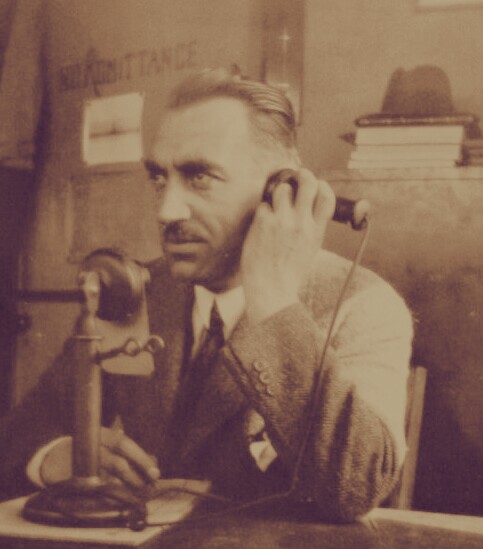
Early Telephone Etiquette

Advantages to a residential phone listed in a 1905 advertisement, included the ability for one to call the doctor, call the police and call one's husband.

Early 20th C. Telephone Etiquette

Here’s a bit of telephone etiquette that is going the rounds: Some people haven’t sense enough to know that when they use a telephone and call up someone, good manners make it necessary for the one calling to introduce one’s self before engaging in conversation. Some ill-bred people have the vulgarity and impudence to try to compel the party called to give their name first. —Madera Mercury, 1905


Etiquette Enthusiast, Maura J Graber, is the Site Editor for the Etiquipedia© Etiquette Encyclopedia

Saturday, January 2, 2016

More Retro Phone Etiquette

     
Impatient “jiggling” of the hook to signal the operator does not flash the small lamp on the switchboard. 

Phone Etiquette Advice is Given

Keenly appreciative of the value of correct telephone usage in newspaper work, the New York Sun is at present, running a series of suggestions for telephone etiquette in its popular column entitled ’The Sun's Rays" for the information of readers.

Forty two items have been included to date in the series, a number of which follow:

                        
“Guess who this is” was never good telephone manners. 

Telephone Etiquette

  • The old - fashioned "Hello" when answering the telephone has become obsolete through the modern usage of the name or telephone number to identify one's self. 
  • Placing the receiver on the hook gently prevents making a disagreeable noise in the other party’s ear and eliminates possible damage to the instrument. 
  • Telephone manners are important for voice to voice courtesy and as important as face to face politeness. 
  • “Guess who this is” was never good telephone manners. The modern telephone user establishes his identity immediately. 
  • A courteous way to start the day right is with a sincere “Good morning.”
  • Good breeding is revealed quite as much by courteous manners over the telephone as though you were physically present. 
  • Talking directly into the mouthpiece with it a half inch away, will enable the one to whom you are speaking to get your message without straining to hear you. 
  • Impatient “jiggling” of the hook to signal the operator does not flash the small lamp on the switchboard. The right and effective way is to move the hook up and down slowly.—The Madera Tribune, 1928 


Etiquette Enthusiast, Maura J. Graber, is the Site Editor for the Etiquipedia© Etiquette Encyclopedia

Telephone Etiquette and Success

A Pleasing and Distinct Voice 
is a Real Asset!
Telephone etiquette, declares the Christian Science Monitor, is not limited to any arbitrary rules laid down for the instruction of its subscribers. 

Telephone Etiquette Combination of Common Sense and Consideration

What may be called telephone etiquette, declares a writer in the Christian Science Monitor, is not limited to any arbitrary rules laid down by this or that telephone company for the instruction of its subscribers. But it is so far-reaching as to include all the general amenities of daily life now associated with the use of the telephone that make things easier and pleasanter for all concerned and, incidentally insure the best results. 

A "party line" was a telephone line or circuit shared by two or more subscribers.
Like most rules of etiquette, the writer finds that the underlying rule of telephone etiquette is a combination of common sense and consideration for others. Co-operation is the word used in telephone circles, but it is a product of co-operation not only on the part of the one who calls, but also of the operator and of the person who answers the call.

Good manners on the telephone, in its use both in business and social relations, is dependent upon clear enunciation. Not only is it courteous to make oneself understood by the person answering the call, but it is necessary that the operator should understand quickly and clearly, not only the number given, but the name of the exchange.

Another effect of improved enunciation is that it becomes a valuable social and business accomplishment, for unconsciously, the intelligent use of the telephone leads to a more careful choice of words and a more pleasing tone of voice. An upward inflection of the voice gives a cheerier air to the conversation. 
Good telephone manners also include thoughtfulness as to the time.
Brevity and conciseness over the telephone should not be mistaken for curtness or brusqueness, which are always quickly noticeable at the other end of the wire, and should be carefully avoided. Another element of telephone etiquette is the prompt answer to a call and in making yourself known at once, while the party who makes the call Is usually the one who should end the conversation. 

Good telephone manners also include thoughtfulness as to the time the calling person is on the wire and reasonable brevity in the conversation, especially when one is using a party line. —The Madera Tribune, 1927

Etiquette Enthusiast, Maura J. Graber, is the Site Moderator and Editor for Etiquipedia© Etiquette Encyclopedia

Wednesday, September 3, 2014

Etiquette and Retro Advertising for the Gracious Home of 1930

"Conversations with the cook or maid can be so conveniently carried on by telephone from your bedroom or your living-room. The day's routine can be arranged in no time at all ... meals planned, orders given and without one unnecessary step. And all this over your regular Bell telephones, which you use to call friends across the street, or across the continent. Telephone convenience is a mark of the modern home ... as important to the smaller household, as it is to the larger."

The Gracious Home Reflects the Ease with which it is Managed


Telephones in important parts of the house simplify the direction of the domestic establishment ... yet from them you can call other homes, other cities, other countries.            

 ^     ^     ^


The House that is managed with a minimum of effort is pleasant to live in, or to visit. And telephone convenience within the home plays a large part in this scheme of things. It enables women to give all of their household directions for the day within a few minutes' time. To make sure, with no unnecessary bother, the domestic affairs are progressing smoothly. And to keep fresh their energies for the varied activities of their interesting lives.

This household administration is conducted over the regular Bell telephones ... the same instruments with which you call friends across the street, or in other cities, or even in other lands.
"Calls to the butler's pantry ... before luncheon, while you are dressing for dinner ... assure the smooth functioning of your household and save time, effort and trouble."
At moderate cost you can have telephone service in all parts of your home. Even in smaller houses, enough telephones add enormously to the efficiency of household affairs ... to your ease in calling friends, or in receiving services from the outside.
"Telephones located in all parts of your home ... the laundry, the maid's room, the garage ... play their important part in the ease and efficiency of modern housekeeping."
Your local Bell Company will be glad to help plan the arrangements which will give you the greatest satisfaction. Just call the Business Office today. 
Advertisement for Bell Telephone Company, from Vogue Magazine, 1930

Wednesday, July 23, 2014

Retro Voices on the Etiquette of Call Waiting and Voicemail

"No. We're not busy.  We've just been sitting here screening our calls on the answering machine.  Hysterically funny!  What are you up to, dear?"

'Call Waiting' and Other Conundrums of Telephone Etiquette
The telephone was an ornery object even when it was simple and ugly. Now that its shape has been streamlined, its colors lightened and brightened, and its works programmed to be as complicated as a jet aircraft, its arrogance knows no bounds. It is rude, intrusive and demanding. It beeps in the middle of a conversation and expects understanding and forgiveness. 
Now that telephones are not only everywhere - showers, airplanes, boats and gardens - but have become increasingly complicated, telephone manners are, quite naturally, becoming equally complicated. Assume that one makes a call and hears splashing water at the other end. Should one pretend that it's perfectly normal to talk to a naked person in a shower, or make a comment about it? Is it time for jokes, embarrassment or savoir-faire? 
''It's unchic to make a big deal out of it; you have to adopt an 'oh yes, so what' attitude,'' one caller said. ''There's no question that you subsconsciously visualize what that person looks like in the buff, but you've got to present yourself as calm, unruffled and unsurprised.'' 
The innovation most resented by most people is ''call waiting,'' a service or disservice formerly available only on telephones with several lines, and now possible on single-line instruments. This development punctuates a call with a beep, or beeps, if someone else is tying to get through while a conversation is going on. When this happens, the person already on the line is almost always asked to hold while the second call is answered.               
"Amazing!  This thing actually works! Oh wait... There's another call coming in.  Hang on. Let me see who that is..." Two of the country's leading etiquette experts were appalled at the concept of call waiting in the 1980s.  Most still are.
''It's last come, first served, an incredibly rude idea,'' said Judith Martin, who is also known as ''Miss Manners.'' ''It's an invention of the devil,'' said the late-Letitia Baldrige, the author of the revised ''Amy Vanderbilt Complete Book of Etiquette'' and ''Letitia Baldrige's Complete Guide to Executive Manners.'' 
''Let them call again,'' she said. ''For years people have re-dialed when the line was busy. They waited their turn. When I'm put on hold, I always hope that as my revenge, their other call will be someone wanting to sell them something.'' 
Mrs. Martin compared call-waiting to ''standing at a cocktail party and not paying attention to the person you're with, waiting for a more important person.'' 
A number of people not in the etiquette business also dislike call-waiting. ''I had it but I gave it up because I think it's terribly rude,'' said a singer-pianist. ''You either had to take that second call or keep on being interrupted by those beeps.'' One woman said she was of two minds about call-waiting, although she herself refused to have it. But, she said, most of the young people she works with, who are on the junior benefit committees for the Youth Counseling League, have the service. 
''I don't know which is more offensive, having your call broken into by another, or to keep calling and get a busy signal,'' she said. ''The only way to handle call-waiting with any kind of manners,'' she added, ''is to excuse yourself for a moment, answer the second call, take the number and return immediately to the original call.''
What's the etiquette of taking a telephone call in a car? 
The publisher of one magazine, said her own car had a speaker-phone but that she never used it if there were other people traveling with her. ''It's just plain manners,'' she said. However, she said, she always hires cars with telephones, and she frequently makes calls from airplanes, she said. She not only didn't agree with people who considered it gauche to announce that they were calling from a car or a plane, but she often found it useful. 
''I might tell them, 'It's costing me 50 cents a second from the car, and let's get down to business,' '' she said. ''And if I call from a plane, I always tell them where I am. People love it, they get a real high, and they always take the call.'' 
As for Mrs. Martin, her feelings about the telephone and its innovations go beyond call-waiting. Of one thing she's certain: She's not going to live at its beck and call. She has no ''ringing'' telephone in her home, she said. She said she manages very well with a 24-hour ''live'' answering service, and she returns calls at her convenience. ''The telephone demands to be attended to when it feels like it, regardless of what anyone is doing - and my husband and I have simply eliminated that,'' she said. ''We do not need to be reached day and night.'' 
''The fact is if more business was conducted by mail, the world would go around a lot faster,'' she said. ''The illusion that the telephone speeds up communication is ridiculous. You can spend days with messages back and forth.'' 
Mrs. Martin was considering updating the calling card routine once practiced by the tonier types of every city. Her idea was to institute ''telephone hours'' at home, where one could be ''in'' for calls between certain hours and ''not receive'' the rest of the time. 
She did, however, consider the answering machine a convenience, although it had one drawback. ''People get very angry because there is a deep-down belief that you should be available 24 hours a day,'' she said. ''The trouble with answering machines is that you're almost forced to return calls,'' said another woman. ''The excuse that your machine is, or was, on the blink can only be used once or twice.'' 
She also pointed out the trap of using the machine to screen calls - picking up only if it's someone you want to talk to. 
''Once they start doing that, their friends never believe that they're really out,'' she said. ''They are convinced that the person is really there but not picking up. The whole thing gets unbelievably convoluted.''

This originally was published in the NY Times, by Enid Nemy


Etiquette Enthusiast, Maura J. Graber, is the Site Editor for Etiquipedia© Etiquette Encyclopedia 

Saturday, April 26, 2014

In Quest of Telephone Manners for the Modern Age


The telephone is a nuisance and no one denies it, but it is a necessity also and no one denies that, either, and one of the greatest conveniences in an age of great conveniences. Some of the disagreeable features connected with it cannot be done away with but must be accepted with as much tranquility as we can master, like the terrific noise which an aëroplane makes or the trail of smoke and cinders which a railway train leaves behind. The one who is calling, for instance, cannot know that he is the tenth or eleventh person who has called the man at the other end of the wire in rapid succession, that his desk is piled high with correspondence which must be looked over, signed, and sent out before noon, that the advertising department is waiting for him to O. K. their plans for a campaign which should have been launched the week before, that an important visitor is sitting in the library growing more impatient every minute, and that his temper has been filed down to the quick by an assortment of petty worries. (Of course, no office should be run like this, but it sometimes happens in the best of them.)

Some one has said that we are all like islands shouting at each other across a sea of misunderstanding, and this was long before telephones were thought of. It is hard enough to make other people understand what we mean, even with the help of facial expression and gestures, and over the wire the difficulty is increased a hundred fold. For telephoning rests upon a delicate adjustment between human beings by means of a mechanical apparatus, and it takes clear thinking, patience, and courtesy to bring it about.– “The Book of Business Etiquette,” by Nella Henney, 1922

“There are two things that are as important to me as the bed in the bedrooms that I furnish, and they are the little tables at the head of the bed, and the lounging chairs. The little table must hold a good reading light, well shaded, for who doesn't like to read in bed? There must also be a clock, and there really should be a telephone. And the chaise-longue, or couch, as the case may be, should be both comfortable and beautiful.”
From 1913's “The House in Good Taste” by Elsie de Wolfe


"Cell phone etiquette rules are still in their infancy, or possibly 'toddler years,' even though cell phones have now been with us for three decades. It has only been in the last dozen years or so that their use has been so ubiquitous among old and young alike. One can still go by the telephone etiquette rules, camera etiquette rules, and even videotaping etiquette rules of yesteryear, as a basic guide. At the heart of those etiquette guidelines, one can see that they are still applicable in present day situations." Maura Graber, The RSVP Institute of Etiquette

Emerging Talk-Rules: The Mobile Phone

Bringing one's phone along to a party wasn't always as simple as it is today. Suddenly, almost everyone in England has a mobile phone, but because this is new, unfamiliar technology, there are no set rules of etiquette governing when, how and in what manner these phones should be used. We are having to ‘make up’ and negotiate these rules as we go along – a fascinating process to watch and, for a social scientist, very exciting, as one does not often get the opportunity to study the formation of a new set of unwritten social rules...

For example: I have found that most English people, if asked, agree that talking loudly about banal business or domestic matters on one’s mobile while on a train is rude and inconsiderate. Yet a significant minority of people still do this, and while their fellow passengers may sigh and roll their eyes, they very rarely challenge the offenders directly – as this would involve breaking other, well-established English rules and inhibitions about talking to strangers, making a scene or drawing attention to oneself. The offenders, despite much public discussion of this problem, seem oblivious to the effects of their behaviour, in the same way that people tend to pick their noses and scratch their armpits in their cars, apparently forgetting that they are not invisible.
"I have also noticed that many women now use their mobiles as ‘barrier signals’ when on their own in coffee bars and other public places, as an alternative to the traditional use of a newspaper or magazine to signal unavailability and mark personal ‘territory’." Kate Fox 
How will this apparent impasse be resolved? There are some early signs of emerging rules regarding mobile- phone use in public places, and it looks as though loud ‘I’m on a train’ conversations – or mobiles ringing in cinemas and theatres – may eventually become as unacceptable as queue jumping, but we cannot yet be certain, particularly given English inhibitions about confronting offenders. Inappropriate mobile-phone use on trains and in other public places is at least a social issue of which everyone is now aware. But there are other aspects of ‘emerging’ mobile-phone etiquette that are even more blurred and controversial.

There are, for example, as yet no agreed rules of etiquette on the use of mobile phones during business meetings. Do you switch your phone off, discreetly, before entering the meeting? Or do you take your phone out and make a big ostentatious show of switching it off, as a flattering gesture conveying the message ‘See how important you are: I am switching off my phone for you’? Then do you place your switched-off phone on the table as a reminder of your courtesy and your client’s or colleague’s status? If you keep it switched on, do you do so overtly or leave it in your briefcase? Do you take calls during the meeting? My preliminary observations indicate that lower-ranking English executives tend to be less courteous, attempting to trumpet their own importance by keeping phones on and taking calls during meetings, while high-ranking people with nothing to prove tend to be more considerate.

Then what about lunch? Is it acceptable to switch your phone back on during the business lunch? Do you need to give a reason? Apologize? Again, my initial observations and interviews suggest a similar pattern. Low- status, insecure people tend to take and even sometimes make calls during a business lunch – often apologizing and giving reasons, but in such a self-important ‘I’m so busy and indispensable’ manner that their ‘apology’ is really a disguised boast. Their higher-ranking, more secure colleagues either leave their phones switched off or, if they absolutely must keep them on for some reason, apologize in a genuine and often embarrassed, self- deprecating manner.

There are many other, much more subtle social uses of mobile phones, some of which do not even involve talking on the phone at all – such as the competitive use of the mobile phone itself as a status-signal, particularly among teenagers, but also in some cases replacing the car as a medium for macho ‘mine’s better than yours’ displays among older males, with discussions of the relative merits of different brands, networks and features taking the place of more traditional conversations about alloy wheels, nought-to-sixty, BHP, etc.

I have also noticed that many women now use their mobiles as ‘barrier signals’ when on their own in coffee bars and other public places, as an alternative to the traditional use of a newspaper or magazine to signal unavailability and mark personal ‘territory’. Even when not in use, the mobile placed on the table acts as an effective symbolic bodyguard, a protector against unwanted social contact: women will touch the phone or pick it up when a potential ‘intruder’ approaches. One woman explained: ‘You just feel safer if it’s there – just on the table, next to your hand . . . Actually it’s better than a newspaper because it’s real people – I mean, there are real people in there you could call or text if you wanted, you know? It’s sort of reassuring.’ The idea of one’s social support network of friends and family being somehow ‘inside’ the mobile phone means that even just touching or holding the phone gives a sense of being protected – and sends a signal to others that one is not alone and vulnerable.
"Most of us no longer enjoy the cosiness of a gossip over the garden fence." Kate Fox
This example provides an indication of the more important social functions of the mobile phone. I’ve written about this issue at great length elsewhere, but it is worth explaining briefly here. The mobile phone has, I believe, become the modern equivalent of the garden fence or village green. The space-age technology of mobile phones has allowed us to return to the more natural and humane communication patterns of preindustrial society, when we lived in small, stable communities, and enjoyed frequent ‘grooming talk’ with a tightly integrated social network of family and friends. 

In the fast-paced modern world, we had become severely restricted in both the quantity and quality of communication with our social network. Most of us no longer enjoy the cosiness of a gossip over the garden fence. We may not even know our neighbours’ names, and communication is often limited to a brief, slightly embarrassed nod, if that. Families and friends are scattered, and even if our relatives or friends live nearby, we are often too busy or too tired to visit. We are constantly on the move, spending much of our time commuting to and from work either among strangers on trains and buses, or alone and isolated in our cars. These factors are particularly problematic for the English, as we tend to be more reserved and socially inhibited than other cultures; we do not talk to strangers, or make friends quickly and easily.

Landline telephones allowed us to communicate, but not in the sort of frequent, easy, spontaneous, casual style that would have characterised the small communities for which we are adapted by evolution, and in which most of us lived in pre-industrial times. Mobile phones – particularly the ability to send short, frequent, cheap text messages – restore our sense of connection and community, and provide an antidote to the pressures and alienation of modern urban life. They are a kind of ‘social lifeline’ in a fragmented and isolating world.

Think about a typical, brief ‘village-green’ conversation: ‘Hi, how’re you doing?’ ‘Fine, just off to the shops – oh, how’s your Mum?’ ‘Much better, thanks’ ‘Oh, good, give her my love – see you later’. If you take most of the vowels out of the village-green conversation, and scramble the rest of the letters into ‘text-message dialect’ (HOW R U? C U L8ER), to me it sounds uncannily like a typical SMS or text exchange: not much is said – a friendly greeting, maybe a scrap of news – but a personal connection is made, people are reminded that they are not alone. Until the advent of mobile text messaging, many of us were having to live without this kind of small but psychologically and socially very important form of communication.

But this new form of communication requires a new set of unspoken rules, and the negotiations over the formation of these rules are currently causing a certain amount of tension and conflict – particularly the issue of whether mobile text is an appropriate medium for certain types of conversation. Chatting someone up, flirting by text is accepted, even encouraged, but some women complain that men use texting as a way of avoiding talking. ‘Dumping’ someone by text-message is widely regarded as cowardly and absolutely unacceptable, but this rule has not yet become firmly established enough to prevent some people from ending relationships in this manner."


From the book "Watching the English: The Hidden Rules of English Behaviour" 2004, by Kate Fox. A social anthropologist and co-director of the Social Issues Research Centre 


Etiquette Enthusiast, Maura J. Graber, is the Site Editor for the Etiquipedia© Etiquette Encyclopedia