Showing posts with label Rachel North. Show all posts

Wednesday, February 21, 2018

Tea Rituals and Scone Etiquette

This looks delicious, but it is not "the done thing" to cut a scone, slather clotted cream and jam on, then put the scone back together to form a kind of bulky sandwich. Scones are broken, much like a bread roll. The scone (pronounced as in “gone” not as in “cone”) is to be eaten in a very particular way. Scones are served whole and preferably warm from the oven, and as with bread you break a scone with your fingers, and spread the jam and cream on, bite-size by bite-size piece. One should never be seen to cut a scone with a knife.

The Beginnings of the Afternoon Tea Ritual 

The British ritual of afternoon tea is attributed to Anna Maria, 7th Duchess of Bedford. The Duchess was staying as a guest of John Manners, the 5th Duke of Rutland, at Belvoir Castle in Leicestershire when she found herself experiencing a “sinking feeling” during the long hours between midday luncheon and late evening dinner. 

She requested a snack of tea and cake to curb her hunger and found that she so enjoyed it that she invited her friends to join her. She continued the social gatherings when she returned to her home at Woburn Abbey and even took her own silver tea equipment with her when she went to visit her friends in their castles and palaces.
A stunning, late 19th century silver and enamel tea service. Tea services added to the ceremony of Victorian afternoon tea we know today.  

As the popularity of this new found ritual spread amongst the upper and middle classes the Victorians unsurprisingly began producing new specially designed apparatus to further enhance the enjoyment of afternoon tea. So up sprang all the elegant tea pots and kettles and creamers and tea strainers, and subsequently the ceremony of afternoon tea grew into what we know today.– Contributor Rachel North

Contributor Rachel North is an etiquette and afternoon tea enthusiast with a love for anything -ancient and historical.
Etiquette Enthusiast Maura J. Graber, is the Site Editor for the Etiquipedia© Etiquette Encyclopedia 

Etiquette, Low and High Teas

Several 19th century ladies and a gentleman,  enjoying an outdoor afternoon, or “low tea.” “High tea” is a completely different meal in itself and does not connote any segment of society, wealth, ability to exhibit manners or the oft and incorrectly used term, “classy.” 

Afternoon tea is traditionally known as “low tea” because it was served whilst sitting down on low sofas and chairs, whereas high tea is a completely different meal in itself. High tea does not have anything to do with the overused and misused phrase, “high class,” but instead got its name due to being eaten on high tables amongst the working classes.

After a long day’s hard labour, the working classes would gather together for their evening meal which usually consisted of meat, fish and other heavy foods. It is still common to hear people from various areas of the country refer to their dinner as “tea” and their lunch as “dinner.”

When presented correctly, afternoon or a “low tea” is actually a three course meal, hence the prettily decorated three-tier stand.

The tea when presented correctly is actually a three course meal, hence the prettily decorated three-tier cake stand. Quite apart from being purely aesthetic, the cake stand represents the three courses. When when having tea, you “work from the bottom up” when it comes to the stand.

The bottom tier represents your first course and is usually laden with finger sandwiches, the middle tier sports warm, succulent looking scones and the top tier finishes the meal off with various cakes, pastries and petit fours. It is incorrect for the three tier cake stand to be arranged in any other way.— Etiquipedia Contributor, Rachel North

Contributor Rachel North is an etiquette and afternoon tea enthusiast with a love for anything -ancient and historical.
Etiquette Enthusiast, Maura J. Graber, is the Site Editor for the Etiquipedia© Etiquette Encyclopedia  

Thursday, July 16, 2015

Etiquette and Ladies in Waiting


A very special delivery from the stork


Stork Party and Baby Shower Etiquette 

I only attended my first Baby Shower last year but when my two good friends said they were going to throw me one, I was actually pretty excited about it, and I enjoyed it tremendously! It is a great way to for friends to help out with some essentials, as it can be very expensive shopping for a newborn. 

Baby showers are quite new in England really, and have only been taking off in popularity in recent years, so there isn't much info, if any, at all, in my British etiquette books. The majority of my books are British. I have only a few American etiquette books. 


Vintage mid-1950s birth announcement card~ One benefit of waiting to shower a new mother with gifts after the baby was born? Everyone then knew the sex of the baby. Fetal ultrasounds as we know them today, were not available. ~ Ultrasound was first used for clinical purposes in 1956 in Glasgow. Obstetrician Ian Donald and engineer Tom Brown developed the first prototype systems based on an instrument used to detect industrial flaws in ships. They perfected its clinical use, and by the end of the 1950s, ultrasound was routinely used in Glasgow hospitals. Fetal ultrasound technology really didn't take off in British hospitals until the 1970s, and it was well into the 1970s before it became widely used in American hospitals.– From Live Science


So when I was looking for information on baby showers, according to "Etiquette Sleuth, Maura Graber," I learnt it was the sobering reality of dropping infant mortality rates over the past 50 years, that led to "Baby Showers" being a more modern day creation. 

A bit of history: Once upon a time, what we now know as "Baby Showers" were called "Stork Parties" or "Stork Showers." Prior to the 1940s and 1950s, baby showers were not as common as one would think, regardless of what they were called. They are rarely mentioned in early etiquette books. 

Babies were usually given gifts from all well-meaning friends and family members, upon their Christenings. That etiquette for gifts given for babies, or for young children, was clearly spelled out for Christenings, or other religious events, and other cultural milestones, from baby to childhood. 


Vintage Stork Party Invitation Idea

Many etiquette books avoided the subject entirely, other than to advise on the etiquette that relatives should never host showers or parties, and that notes of thanks should be sent as soon as possible. Other etiquette given, in advice columns and such, recommended waiting until a time after the birth, to shower a new mother with much appreciated necessities and \ or niceties. 

In the 1941, "New American Etiquette" book, by Lily Haxworth Wallace, the etiquette for "Stork Showers" is the following: "It is best that they be held about five weeks after the arrival of the baby but it is quite proper, in some localities, to have the shower before the baby is born. All gifts at "Stork Showers" should be things for the child." 

The Cokesbury Shower Book, in 1941, gave no etiquette advice on the Stork Showers themselves or the suggested timing for them, but five possible themes: A "Current Events" party, a "Baby Book" party, a "Layette Shower," a "Petal Party" or a "Lady in Waiting" party. 


Suggested decor or invite for Lady in Waiting shower
The "Lady in Waiting"


( Miscellaneous Stork Shower and Buffet Luncheon) Informal white note paper forms the basis for this invitation, which is really a royal command if you, among others, consider a baby "king of his world." —From The Cokesbury Shower Book, 1941 


Vintage 1950s birth announcement card – Baby Shower etiquette is very similar to Bridal Shower etiquette, with multiple babies or subsequent arrivals of siblings, being the focus of most proprietary etiquette questions.


The etiquette question of who can host a baby shower has also come up, more and more frequently, but this has evolved to allow a family member to have a shower in her home (or his home), due to size restraints, while the "official" hostess (or host) should be a friend, or group of friends." 

Tips to the Pregnant Executive's Co-Workers 

One baby shower is enough. It should be hosted outside the office, because if it is held on the promises we can disrupt productivity. A baby shower might be held (Dutch Treat except for the pregnant one who's lunch is paid for) in a nearby restaurant or employee's home on the weekend. Then things will not upset management. 

A point of etiquette: The mother-to-be should write a thank-you note to every single person who gave her a present within two weeks of the shower-and she should send flowers to the person who organized it. 

The Unmarried Pregnant Woman 

When a colleague on your staff who is not married becomes pregnant, there is only one thing to do: Treat her as you do her wedded colleagues. Don't make an issue of it. Respect her dignity and rejoice in her happiness over the impending birth." From Letitia Baldrige's 1993, "New Complete Guide to the Executive Manners" 

On the Question of Second, Third, Fourth etc... Baby Showers 

"... Miss Manners makes an exception for an informal gathering of the expectant mother's close friends who are moved to make a fuss over a second-or fifth-time. However, the plea for a more formal gathering for the lady's entire acquaintance, complete with those detestable gift registries, would enable the guest of honor to parcel out her shopping, is not charming." From Miss Manners' "Manners for the New Millenium" 

My advice? 

Send notes of thanks for the gifts you've been showered with, as soon as possible. You'll be busier than you know after your baby's birth and expressing gratitude to those who showered you with those gifts, is the most polite thing one can do!


Sobering Statistics on Infant Mortality Rates from the Victorian Era to Modern Times 

U.S. : The infant mortality rate started a long decline from 165 deaths per 1,000 births in 1900, to a low number 7 deaths per 1,000 births in 1997 in the U.S.

Europe: The levels of infant mortality in the late 19th century were extremely high in Europe and could vary quite markedly from one country to another, ranging from about 100 per 1,000 live births in Norway and Sweden to 200 or even 250 per 1,000 in countries such as Germany, Austria and Russia. At the turn of the 20th century, however, infant mortality began to fall almost right across the continent. By the 1950s, when national rates of infant mortality ranged between 20 and 50 per 1,000.

UK: The infant mortality rate in England and Wales continues to fall. In 2012, there were just 4.0 infant deaths per 1,000 live births – the lowest rate ever. In historical perspective, 95 out of every 1,000 children born in 1912, in England and Wales, died before their first birthday.
A Vintage "Baby's Book" Shower


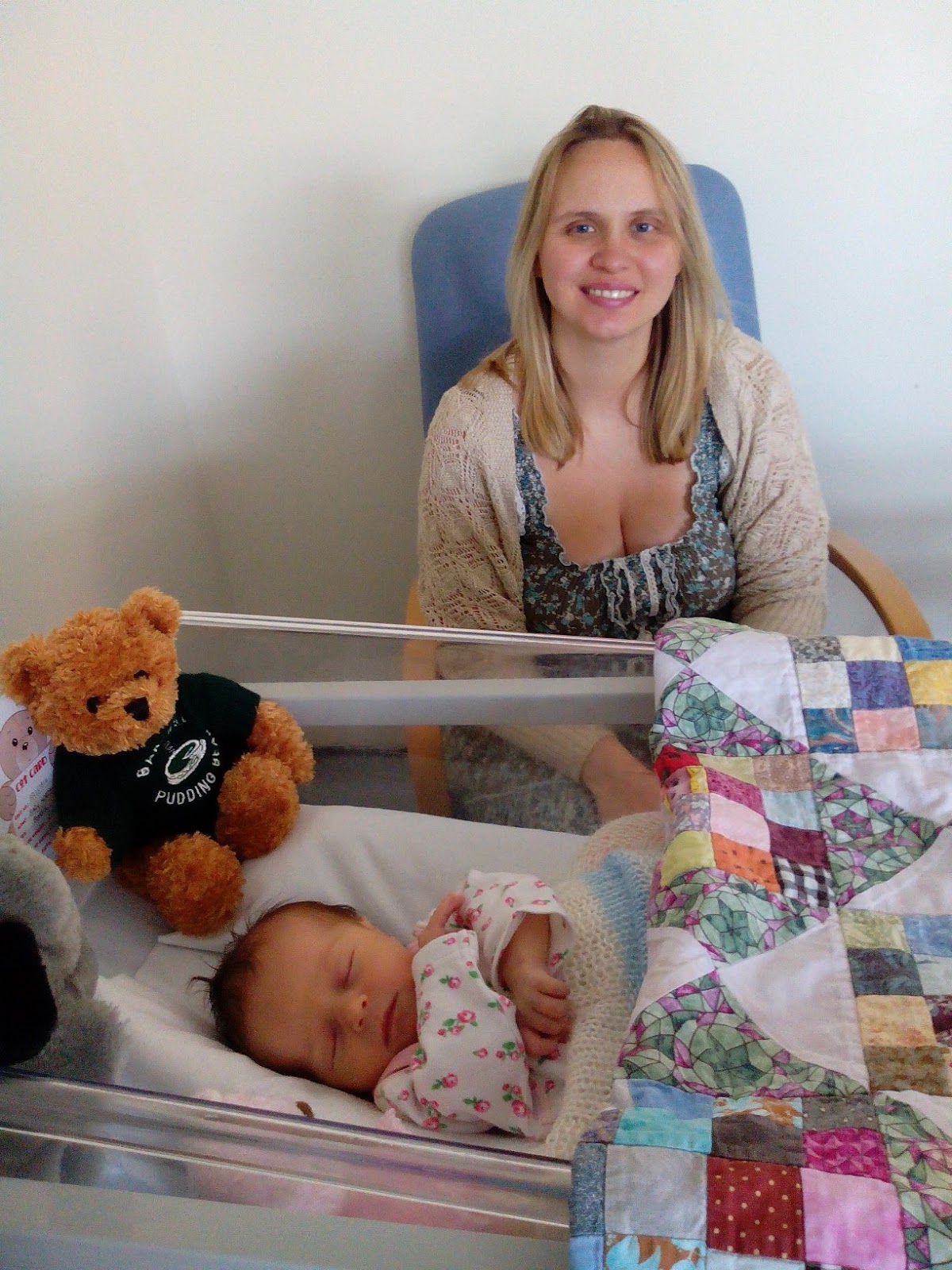
Rachel North and daughter Victoria Rose North ~
British Etiquipedia© contributor, Rachel North, is currently enjoying being a new Mum to the absolutely beautiful, Victoria Rose. Rachel is an etiquette and afternoon tea enthusiast with a love for anything ancient and historic.


🍽Etiquette Enthusiast, Maura J Graber, is the Site Editor for the Etiquipedia © Etiquette Encyclopedia

Thursday, February 12, 2015

Etiquette at Sea: Manners in the Mess

Tall Ships Adventures take people on adventures around the UK coast, Europe, the Canaries, the Azores and the Caribbean
Etiquette on board ship is just as relevant as any other time or place, perhaps even more so as you’re living in very close proximity to others. Your days and nights are spent pulling on ropes and scrubbing the decks, keeping watch in the pouring rain, climbing the rigging and setting the sails. It can be a high stress environment but in order for a ship to run smoothly there must be discipline and there must be teamwork. Manners and considering the needs of your shipmates are therefore of paramount importance.

When I refer to table manners at sea I’m not talking about the manners you use on some lavish Caribbean cruise or leisurely yacht charter. If that’s the kind of seafaring you enjoy then I recommend eating as you would at a fine dining establishment. I’m talking about when you’ve barely slept in four days; you’re cold, and your clothes are dirty and smell musty. Your muscles acPosd you have bruises down your arms; your stomach is churning from sea sickness and you feel woozy but there is no option of taking a nap. Etiquette and manners may be the furthest thing from your mind but they matter.

The mess on a working vessel is a far cry from the opulence and splendour of a cruise liner. It is small and cramped and only too easy to accidentally spill your soup down your front. Etiquette about which fork to use isn’t an issue because you only have one fork. And one spoon. And one knife. Not everyone can eat at once so they have separate sittings. This means that mealtime can be fast paced. You eat and you leave so that the galley staff can clean up, wash up, and serve the next lot of weary seafarers.

Etiquette is all about adaptability. You adapt the etiquette to suit the situation, the company and the circumstances. If you’re eating with tired, grouchy sailors then you need to adapt to their ways. One thing remains though: consideration and respect for your fellow diners. You may not make use of all the rules you learned in Fine Dining for Dummies but you still need to be aware of the people around you and do your part in making it a pleasurable experience for all concerned.

                    
Rachel North, at sea and in the mess, 2nd from the right

Some Do’s and Don'ts for Dining at Sea

  • DON’T be late for your mealtime.
  • DO make sure you know what time your sitting is and go as soon as you are called.
  • DON’T wait until everyone has been served before you start eating.
  • DO pass the plates down the table to the people at the far end.
  • DON’T ask the galley staff to get you a drink.
  • DO offer a drink to everyone else at your table when you get one for yourself.
  • DON’T refuse to eat anything if you feel sea sick.
  • DO try and nibble on anything to settle your stomach, even if it’s just a piece of bread or dry biscuit.
  • DON’T hog the salad.
  • DO offer the bowl to your neighbours once you’ve taken your share.
  • DON’T finish the salad.
  • DO offer your shipmates the last of the salad and then tell the galley staff that it needs to be refilled.
  • DON’T leave half your food untouched.
  • DO tell the galley staff if you don’t want something being served.
  • DON’T elbow your neighbours as you try and cut your food.
  • DO keep your elbows in. Yes, it’s cramped but everyone’s in the same boat (literally).
  • DON’T spill your food and drink.
  • DO ask for a cloth if you do spill anything.
  • DON’T bash into your neighbours even if the ship seems to be on its side.
  • DO apologise for bashing into your neighbours and try to keep upright for the remainder of the meal.
  • DON’T sit there in silence no matter how tired you are.
  • DO smile, make polite conversation and say thank you to the staff and your fellow diners.
  • DON’T lean over your shipmates if you want something.
  • DO ask politely for something to be passed to you.
  • DON’T talk with your mouth full.
  • DO chew carefully and swallow before speaking.
  • DON’T make a distasteful face when your food is served.
  • DO thank the cook for feeding you so well
  • DON’T throw up in the mess or galley
  • DO go on deck if you feel queasy but keep to the leeward side of the ship (also, put your harness on and secure yourself to the ship – we don’t want any accidents!)
  • DON’T stay seated for fifteen minutes drinking your tea after finishing your meal.
  • DO take your tea with you out on deck
  • DON’T try and be helpful by taking dirty plates and cups into the galley (you’ll just be in the way).
  • DO help the galley staff by passing them plates and cups from the table.
  • DON’T sit in the captain’s seat even if he isn’t there.
  • DO sit anywhere else where the table has been laid.

I hope you’ve found this list helpful for the next time you find yourself on a working vessel at sea. Just remember that even when you’re feeling tired, sick and grouchy you still need to be aware of your shipmates around you who most likely feel the exact same way… Good manners cost nothing. Bad manners can cost you an otherwise amazing experience.


Rachel North is a writer, etiquette and tea enthusiast with a heart for young people and a special interest in youth development. In her spare time Ms North enjoys sailing, visiting places of historical interest, attending social events and curling up with a good book, her husband and a cup of Earl Grey tea.


Etiquette Enthusiast, Maura J. Graber, is the Site Editor for the Etiquipedia© Etiquette Encyclopedia

Wednesday, August 27, 2014

International Flag Etiquette and Protocol Sampling

The National Flag of the Republic of South Africa
Having emigrated from England to South Africa in August of 1992, my family arrived amidst much upheaval and change. The apartheid era was drawing to an end and the country was preparing to welcome Nelson Mandela as the nation’s first African president.    
The previous flag of South Africa, flown from 1928 to 1994
Part of the process in building a new South Africa was changing the design of the flag. The choice of a new flag that would incorporate all the attributes of a new South Africa, was not an easy decision to make. The decision was initially put to the public and a competition held in search of the perfect design. I remember well the excitement of this competition as we all discussed the designs at school and decided which ones we liked best; we even had the opportunity to design our own flags.

The competition proved fruitless, and with less than four months to go before the presidential inauguration of Nelson Mandela, they called on the talents of State Herald Fred Brownell. It was a high pressure task, but one that he met with little time to spare. The flag was initially intended to be used on an interim basis to be reviewed after five years however since being unveiled at the Presidential inauguration on 10 May 1994, the design has been well received.

South African National Flag Etiquette and Protocol

At all times the National Flag must be respected by adhering to the following etiquette and protocol:
  • The flag must never touch the ground, nor be used as a covering for tables, statues, podiums, railings etc.
  • The flag must never be flown upside down. To do so would be a sign of surrender.
  • The flag should be hoisted in the morning and lowered before sunset. It should not be flown at night unless illuminated.
  • When a flag is being hoisted or lowered one must stand respectfully to attention, remove ones hat and place their right hand over their heart.
  • The flag must be kept in good condition and is not to be defaced in any way.
  • When flown on South African soil amidst the flags of other nations it must take pride of place (furthest to the right) and no flag must exceed it in size.
  • The flag must always be displayed on the right hand side during gatherings of any kind.
  • The flag must never be dipped to any other person or object.
  • The flag is half-masted as a sign of mourning. This is on instruction from The Presidency only.
  • To dispose of the flag in the most dignified manner it should be burned.   
The Union Flag of the United Kingdom

The Union Flag of the United Kingdom

One of the most common things you hear from people who are possibly trying to look clever by knowing about the Union Flag, is that it is only ever known as the Union Jack when flown at sea. While a “Jack” does traditionally refer to a flag being flown by a warship, there is much debate regarding whether this is a true statement regarding the flag of the United Kingdom.

According to the Flag Society, “It is often stated that the Union Flag should only be described as the Union Jack when flown in the bows of a warship, but this is a relatively recent idea. From early in its life the Admiralty itself frequently referred to the flag as the Union Jack, whatever its use, and in 1902 an Admiralty Circular announced that Their Lordships had decided that either name could be used officially. In 1908, a government minister stated, in response to a Parliamentary question, that "The Union Jack should be regarded as the National flag.” So please don’t feel too badly if someone corrects you. It is a very small point that seems to provoke much debate.

After the union of Great Britain and Ireland in 1801 a new flag was designed which combines the red cross of St George for England, the white saltire of St Andrews for Scotland and the red saltire of St Patrick to represent Ireland. There is no official Flag Act in the UK and the Union Flag is our national flag more by tradition and practice than governmental decree.


Union Flag 
Etiquette and Protocol

  • Ensure the flag is the right way up. The top most diagonal stripe must be the wider white stripe, situated above the red stripe and resting against the flag pole.
  • Do not use the flag in an undignified manner such as a table covering or to cover a statue or podium.
  • Flag shoulder patches on uniforms are worn on the left shoulder.
  • When draped over a coffin the flag’s top left corner should cover the deceased’s left shoulder.
  • The flag should be situated to the right of the speaker during a gathering of any kind.
  • During a salute the flag is lowered so that the flag pole is horizontal.
  • The flag is flown at half mast following the announcement of the death of a senior member of the Royal Family until the funeral.
  • The flag is flown from Buckingham Palace or Windsor Castle when the sovereign is not in residence.
  • The flag is flown from government buildings on the Sovereign’s birthday.
  • When in disrepair the flag must be disposed of respectfully by burning or cutting so that it no longer resembles the flag.
The Royal Standard was the only flag to fly from Buckingham Palace until a break with protocol and etiquette took place after Princess Diana’s death in 1997.

The Royal Standard

The only flag that takes precedence over the Union Flag is the Royal Standard, the official flag of the reigning British sovereign. The Royal Standard was the only flag to fly from Buckingham Palace until a break with protocol took place after Princess Diana’s death in 1997.
    
The Royal Standard of the United Kingdom
Royal Standard Flag Etiquette and Protocol

  • The Royal Standard is only flown when the sovereign is in residence.
  • The flag is never flown at half-mast to indicate that the throne is always occupied.
  • The flag is never hoisted or lowered when the Sovereign is passing in procession.
  • Westminster Abbey is the only church permitted to fly the Royal Standard whether or not the Sovereign is present.
  • The flag accompanies the Sovereign when traveling.


Shipshape Flag Etiquette

It is law that when at sea you must display your proper national colours. It is most common to see private vessels and merchant ships flying the Red Ensign whereas the white Ensign is reserved for the Royal Navy.
The White Ensign Flying at Sea. The ensign is flown from the stern of the vessel.


Flag Etiquette and Protocol at Sea

  • It is a criminal offence to fly the incorrect flag at sea.
  • When visiting a foreign company you hoist your host’s flag as a “courtesy” flag. It is displayed prominently and is superior to any other flag. Visitors to the UK by sea use the Red Ensign as the “courtesy” flag.
  • Do not hoist a tatty and dirty courtesy flag. This can cause great offence to your hosts and may even result in criminal action being taken.
  • It is polite to salute passing vessels by dipping the ensign (lowering it by one third).
  • The Union Flag should only be flown by the Royal Navy when alongside (side by side at the pier or another vessel), or else under very special circumstances.
  • Flying the Union Flag on a civilian vessel as an ensign is illegal.
  • The ensign is flown from the stern of the vessel.
  • Ensigns are flown at half-mast upon the death of a member of the Royal Family, and again on the day of the funeral. The flag only remains at half-mast in the intermittent period between death and burial for the Sovereign.
  • The White Ensign is flown at the stern while alongside and from the main mast when under way.
  • Traditionally, lowering the ensign was a mark of surrender.   
The Australian Flag was first flown in 1901 and is made up of a blue background that plays host to the Union Flag, the Commonwealth Star and the Southern Cross.

The Australian National Flag


My mother’s family immigrated to Australia soon after the war, and much of my extended family is Australian. As a little girl I spent some time there, although I was too young at the time to have paid any attention to the particulars of flag protocol. I was far too busy accosting the wombat in our back garden and climbing the steps of the giant pineapple in Queensland.

The Australian Flag was first flown in 1901 and is made up of a blue background that plays host to the Union Flag, the Commonwealth Star and the Southern Cross. It is a symbol ofnational pride for the Australian people and is permitted to be flown on any day of the year.

When thinking of the Australian flag it brings to mind a particular scene in an episode of Ladette to Lady, a questionable and somewhat disturbing reality television show, which purported to turn troubled ladettes into perfectly formed young ladies. There was an Australian girl who was selected to ride with the Hunt and when she was galloping along, supposedly representing her finishing school, she pulled out an Australian flag and let it fly along behind her. She was admonished quite severely and one of the tutors remarked, “Wars have been fought over less!” Talk about an over-reaction, that poor girl... However, it is a stark reminder that there are certain protocols that need to be observed particularly when you are visiting another country and particularly where national flags are concerned.


Australian Flag Etiquette and Protocol

  • The flag takes precedence over all other national flags when it is flown on national soil and no other flag should exceed it in size.
  • The flag is flown at half-mast during a period of national mourning.
  • The flag should only be flown during daylight hours, unless illuminated.
  • The flag is flown at half-mast from 10:30 AM to 11:03 AM on Remembrance Day.
  • The flag must not be allowed to fall to the ground.
  • The flag should be raised briskly and lowered ceremoniously.
  • The public are encouraged to fly the flag on public holidays.
  • The flag should not be flown if it is damaged or defaced in any way.
  • Never fly the flag upside down, even as a sign of distress.
  • The flag can be used to cover the coffin of any Australian national. 
  • The flag must be removed before burial or cremation.


Compiled by contributor Rachel North. Rachel is an etiquette and afternoon tea enthusiast with a love for anything ancient and historical. You can visit her here: http://shipshapeetiquette.co.uk/


Rachel's Sources: British Flag Protocol 


Royal Northumberland Yacht Club: Flag Etiquette http://rnyc.org.uk/activities/cruising/flag-etiquette/


It’s An Honour: Australia Celebrating Australians http://www.itsanhonour.gov.au/symbols/flag.cfm#protocols


🍽Etiquette Enthusiast, Maura J. Graber, is the Site Editor for the 
Etiquipedia© Etiquette Encyclopedia

Saturday, March 29, 2014

The Pirates' Code of Etiquette and Manners


“... the Code is more what you’d call guidelines than actual rules.  The Pirate's Code was the pirate’s version of promoting team work.

The Code was written by the very famous Buccaneer, Bartholomew Roberts, and he actually made his crew swear on a bible that they would uphold the Code. The Code was designed so that there would be a better understanding of what was expected of each other and so they could potentially work together with a lesser fear that their shipmates were going to do the dirty on them. It was the pirate’s version of promoting team work.
The Bahamian pirates were unlike most other pirates before or since in that they engaged in more than simple banditry.  Most of them -- Blackbeard included -- were former merchant and naval sailors who thought themselves engaged in a social revolt against shipowners and captains who'd made their prior lives miserable.  Bellamy's crew members referred to themselves as 'Robin Hood's' men.  "They vilify us, the scoundrels do, when there is only this difference," Bellamy once told a captive.  "They rob the poor under the cover of law and we plunder the rich under the cover of our own courage."  There was also a democratic spirit aboard the pirate ships, an unusual development six decades before Lexington and Yorktown, more than 70 ahead of the storming of the Bastille. Upon seizing a vessel, the pirates turned its government upside down. Instead of using whips and beatings to enforce a rigid, top-down hierarchy, they elected and deposed their captains by popular vote. They shared their treasure almost equally and on most ships didn't allow the captain his own cabin.  "They were very shrewd in the way they reorganized their ships to limit the captain's power," says maritime historian Marcus Rediker of the University of Pittsburgh. "There was a real social consciousness at work there."  From The Last Days of Blackbeard by Colin Woodard

Pirate Code of Conduct, Shipboard Articles 1721


ARTICLE I – Every man shall have an equal vote in affairs of moment. He shall have an equal title to the fresh provisions or strong liquors at any time seized, and shall use them at pleasure unless a scarcity may make it necessary for the common good that a retrenchment may be voted.

Democracy and equality will be exercised

ARTICLE II – Every man shall be called fairly in turn by the list on board of prizes because over and above their proper share, they are allowed a shift of clothes. But if they defraud the company to the value of even one dollar in plate, jewels or money, they shall be marooned. If any man rob another he shall have his nose and ears slit, and be put ashore where he shall be sure to encounter hardships.

Do not steal or commit fraud against your fellow shipmates

ARTICLE III – None shall game for money either with dice or cards.

Gambling is forbidden

ARTICLE IV – The lights and candles should be put out at eight at night and if any of the crew desire to drink after that hour they shall sit upon the open deck without lights.

Respect others when they are trying to sleep

ARTICLE V – Each man shall keep his piece, cutlass and pistols at all times clean and ready for action.

Every man is responsible for ensuring his own weapons are clean and ready for action
 
Stede Bonnet, a Most Unlikely Pirate:
Most of the men associated with the Golden Age of Piracy were reluctant pirates. They were desperate but skilled sailors and brawlers who either could not find honest work or who were driven to piracy by the inhuman conditions on board merchant or navy ships at the time. Some, like “Black Bart” Roberts, were captured by pirates, forced to join, and then found the life to their liking. Major Stede Bonnet (1688-1718) is the exception: he was a wealthy planter in Barbados who decided to outfit a pirate ship and set sail for riches and adventure. It is for this reason that he is often referred to as “the Gentleman Pirate.”

ARTICLE VI – No boy or woman to be allowed amongst them. If any man shall be found seducing any of the latter sex and carrying her to sea in disguise he shall suffer death.

No boys or women allowed on board

ARTICLE VII – He that shall desert the ship or his quarters in time of battle shall be punished by death or marooning.

Disloyalty and desertion will be punished

ARTICLE VIII – None shall strike another on board the ship, but every man’s quarrel shall be ended on shore by sword or pistol in this manner. At the word of command from the quartermaster, each man being previously placed back to back, shall turn and fire immediately. If any man do not, the quartermaster shall knock the piece out of his hand. If both miss their aim they shall take to their cutlasses, and he that draweth first blood shall be declared the victor.

No fighting allowed on board, but any disagreements may be settled through a duel on land

Every man will receive an equal share of gold.

ARTICLE IX – No man shall talk of breaking up their way of living till each has a share of l,000. Every man who shall become a cripple or lose a limb in the service shall have 800 pieces of eight from the common stock and for lesser hurts proportionately.

Every man will receive an equal share of gold. We look after men injured in the line of duty and they will receive compensation.

ARTICLE X – The captain and the quartermaster shall each receive two shares of a prize, the master gunner and boatswain, one and one half shares, all other officers one and one quarter, and private gentlemen of fortune one share each.

They will share the prize proportionate to each man’s rank

Well, we don’t have to worry about duels anymore but many of these articles can certainly be adhered to in real life such as, “respect others when they are trying to sleep” or “do not steal or commit fraud.” 

Etiquette and manners can sometimes be seen as a strict code of rules but that is not how they are intended, especially not in the twenty-first century. As Captain Barbossa said in "Pirates of the Caribbean", “the Code is more what you’d call guidelines than actual rules,” and that is exactly how etiquette should be seen. Yes, there are certain rules that would probably be best if you stick to them such as, “chewing with your mouth closed” – nobody likes to see a mouth full of slushy food – but it is important to be able to adapt to the situations you find yourself in as no situation will ever be completely the same.

It is best to know the rules first so that you can adapt to any situation appropriately but if you’re ever unsure your best chance of success is by showing kindness, graciousness and exhibiting class.


Disclaimer: I do not advocate or endorse any acts of piracy, modern or historical. Theft, murder, torture, pillaging and plundering are not good manners and have no place in our society.
Contributed by Rachel North ~ Rachel North is an etiquette and afternoon tea enthusiast with a love for anything ancient and historical. You can visit her blog here: http://shipshapeetiquette.co.uk/


Etiquette Enthusiast, Maura J. Graber, is the Site Editor for the Etiquipedia© Etiquette Encyclopedia

Wednesday, March 26, 2014

Maritime Manners, Naval Traditions and "Shipshape Etiquette"

Naval Traditions
October 21, 1805, The Battle of Trafalgar  (Painting by J.M.W. Turner,  1822)

Most dinner guests had once served in the Royal Navy and were now involved in the Maritime Volunteer Service, of which my father is now proudly a member. I was sat beside an elderly gentleman who had fought in World War Two and had some extremely interesting stories to tell.

In addition the war veteran to my left I had the good fortune of sitting opposite the Fleet Chief, an entertaining gentleman who is determined to preserve the traditions and etiquette rules of the Royal Navy. He took charge of ensuring we were behaving appropriately at dinner which funnily enough involved telling my father off for stealing his napkin.

I learned several interesting facts regarding Navy tradition which I would like to share with you:


Passing the Port: The port began its rounds at relatively the same time as the biscuits and cheese were served and I proceeded to learn some fascinating facts regarding the etiquette of port and where the customs originated from.  The port must always remain touching the table. When passing the port around the table one must slide it along and not lift it from the surface. When pouring the port one must ensure that at least one part of the decanter remains on the table. I accomplished this by keeping a corner of the base on the table and tilting it as far over as possible. 

The Fleet Chief showed me how it can be done by tilting it off the very edge of the table and holding the glass beneath it. This technique would surely be useful the further along the table it went.  The reason for this may just be a practical one as by keeping the port resting against the table it ensures balance and stability, decreasing the likelihood of any spills.  I am of the understanding however that whether or not the port touches or does not touch the table varies and it depends on the rules of that particular mess. We can therefore perhaps give one the benefit of the doubt if they do not follow the same rules as their fellow diners.
“The Loyal Toast” by James Gillray, 1798 ~ A salute given to the head of state of the country in which a formal gathering is being given, whether or not the particular head of state is present. A matter of protocol at military and state occasions, and a display of patriotism when at civilian events.
The Loyal Toast: The Loyal Toast, which is the toast given to the reigning monarch, is actually given sitting down in the Royal Navy. The gentleman I mention above told us all to sit down as we had proceeded to incorrectly stand up for the toast.  The reason for this is attributed to King William IV who having served in Navy himself understood the discomfort and impracticality of suddenly standing up while at sea. He therefore permitted the serving seamen to remain sitting during the Loyal Toast.  

Although we were not actually at sea during dinner the very fact that we were celebrating Admiral Lord Nelson’s victory at the Battle of Trafalgar meant that we were to show respect to Navy tradition.  It is also important to note that the port is consumed following the Loyal Toast and should not be touched beforehand.

A “Nelson Fork”~ It was developed and used from 1797 on, by Horatio Nelson, after he was attacked fighting in the Napoleonic Wars, resulting in the loss of his right arm.  Nelson was given command of the British naval ship, Agamemnon.  He served in the Mediterranean, helped capture Corsica and saw battle at Calvi. He lost his right arm at the Battle of Santa Cruz de Tenerife in 1797. He subsequently used, what came to be known as, a 'Nelson Fork' in order to assist him in cutting and eating food with the same hand.
One of the other interesting things the Fleet Chief told me about port was that upon bringing Nelson’s body home from battle they preserved it by pickling it in port. I’ve since looked into this online but all references found regarding pickling Nelson’s body is said to have been done by either rum or brandy; I cannot therefore verify this piece of information as fact.

Port ages in old wooden barrels ~ "The port is always passed to the left. There are various explanations for why this is so, most originating from the Royal Navy, where it is said to be passed from “port to port”. It is said that one of the reasons it is passed to the left is so that the sword arm (right arm) is available. The Fleet Chief I was speaking to also implied that one of the reasons comes from Lord Nelson due to his missing right arm.  Another possible reason is that it involves an old superstition that passing something in an anti-clockwise direction opens the doors to evil spirits.  Whatever the origin of the tradition, the port is never to reverse direction and should more port be required it will need to make the rounds again in much the same manner."

Biscuits: I also learnt that one should tap biscuits three times before eating them. And the reason for this? To get rid of any weevils!  I must say I’m glad we don’t have to worry about that anymore. After dinner there were several ways in which money was raised for the Maritime Volunteer Service as it is a charity after all. One of the ways they raised money was by charging £2 from the men who did not tie their own bowties! 

My father happened to be one of them! His excuse is that he didn’t have time so he got himself a clip on! Hmmmm, I think some lessons are in order!  They then had a raffle and I managed to pull my father’s ticket from the bucket! There were many suspicious glances passed my way but I assure you I do not have X-Ray vision.

To finish off the evening of great enjoyment and education we sang sea shanties and naval songs, just to get that rowdy feel of sailors at sea.  I must say I thoroughly enjoyed myself.
Originally posted on "Shipshape Etiquette"

More on the Etiquette of Serving Port

Antique Port Wine Chariot

"Where port is served, the bottle on its coaster stands before the host, the tablecloth having been removed before the ritual begins. He pours for whoever is on his right -- to save this person, seated in the honourable place, from having to wait until last to be served. Then the bottle is slid reverently along the polished wooden table top (originally so that the dregs might be disturbed as little as possible, though all good ports should be decanted before they are drunk); or it is rolled along in a wheeled silver chariot; or it is handled with special ceremonial gestures from male to male, as drinking cups were handled at ancient Greek symposia. But port is passed clockwise (to the left), not as drinks circulated in ancient Greece, to the right. "Beg your pardon, sir," says Jingle in "The Pickwick Papers", after the waiter has left the men to themselves, "bottles stands-- pass it round-- way of the sun-- through the button-hole [both these expressions are ways of saying "to the left": men's buttonholes are traditionally placed on the left]-- no heeltaps [meaning "leave no wine at the bottom of the glass"]." At the British Factory House dinners in Oporto, the men move into a second dining room in order to enjoy vintage port, for fear of any smell of food interfering with the drink's aroma."  from Margaret Visser, "The Rituals of Dinner"

Captain James Cook and Scurvy

Captain James Cook managed to make dining on sauerkraut not just popular, but highly desirable and the result was that none of his crew died of scurvy. Scurvy was caused by mainly vitamin C and B deficiencies, oftentimes compounded by the overdose of vitamin A from eating seals' livers, producing a breakdown in the cellular structure of the body.

One of Cook’s most important discoveries during his voyages was actually about food. Cook realized that there were certain foods that, if eaten, prevented the disease called scurvy.  Scurvy, we know today, is caused by a lack of vitamin C in the diet. Scurvy was common among sailors, because most vitamin C comes from fruits and vegetables.  Fruits and vegetables were very difficult to keep fresh during long sea voyages in the days before refrigeration. So, sailors before Cook’s time ate a diet that was mostly dried, hard bread known as hard tack, and dried, salted meat.

Cook took two major steps to change the diet of his crew. First, every time the ships stopped anywhere that grew fresh fruit and vegetables, he bought some to feed to the crew. However, because there were sometimes weeks between stops, and fruit and vegetables would rot in that time, he had to have another plan. He knew that sauerkraut, which is pickled cabbage, had been shown to prevent scurvy. Sauerkraut, because it is pickled, can be kept in jars, and will not go bad. Cook brought a lot of sauerkraut on his voyage – but the crew didn’t want to eat it at first.

Captain Cook played a very interesting trick on his crew. When he realized that the men were refusing to eat the sauerkraut, he took it away from them. He said only the officers could eat it, and only put it out on the officers’ tables. Telling the crew they couldn’t have it, made them want it more – so they started eating it.

Cook’s crew was out to sea for a longer period of time than any sailors before them. And yet, not one of Cook’s sailors died of scurvy. This means that Cook proved that certain foods could prevent scurvy, and smart sea captains after him followed his example and took sauerkraut, fruit, and vegetables on their voyages.


From BBC's History of the British Empire


Article Contributed by Rachel North ~ Rachel North is an etiquette and afternoon tea enthusiast with a love for anything ancient and historical. You can visit her blog here: http://shipshapeetiquette.co.uk/


🍽️Etiquette Enthusiast, Maura J. Graber, is the Site Editor for the Etiquipedia© Etiquette Encyclopedia