Saturday, March 21, 2026

Gilded Age Gastronomical Tidbits

Did you know? These are salad days - lettuce, watercress, dandelion and chive. Take your choice,


These are salad days - lettuce, watercress, dandelion and chive. Take your choice,

The interesting scientific discovery is made that now potatoes will not make hash.

This is the season for dainty desserts - the “
airy nothings” that follow the substantial afternoon dinner.

A discussion has been revived as to the health of the vegetarians compared with the habitual meat eating of us.

He who eats ice cream and drinks coffee simultaneously is the kind of man who would rather have pork than filet.

It should be remarked that there is too much cottonseed oil in hotel salads, and a superfluity of lard in restaurant ice cream.

Home prepared corned beef is said to be as different from the butcher's as day is from night. No housekeeper will doubt this assertion.

Every table d'hôte and every restaurant one enters proves there are thousands who have yet to learn it is a gastronomic sin to cut lettuce.

There is some truth to the satirical statement of an exchange that the largest strawberries of every season are found in the illustrated catalogues.

How to eat, after all, is often of more importance than what to eat, especially among people who deny themselves rubber overshoes in order to buy a book on social etiquette.

Your modern epicure is now inclined to elevate his nose at the suggestion of ice cream, and will satirically observe that it is merely “frozen trash” for very young women.

The text of Sir Henry Thompson's gastronomic sermons is that healthiest and most comfortable people in hot weather are those who eat meat but once a day. As before observed, the butchers say Sir Henry is an idiot. — The Times Gazette, 1888


🍽️Etiquette Enthusiast, Maura J. Graber of  The RSVP Institute of Etiquette, is the Site Editor of the Etiquipedia© Etiquette Encyclopedia 

Friday, March 20, 2026

After Luncheon Gilded Age Favorite

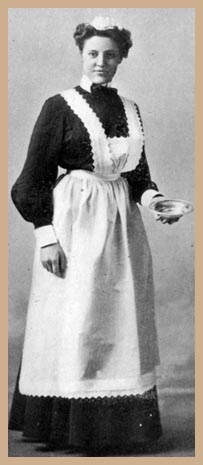
Popular in the Gilded Age, by 1908, crème de menthe over ice was still a popular after luncheon drink for women. — At a luncheon party, when coffee is served at the table, creme de menthe is occasionally passed after the guests are seated in the library.

CREME DE MENTHE SERVED IN LIBRARY

At a luncheon party, when coffee is served at the table, creme de menthe is occasionally passed after the guests are seated in the library. Tiny cordial glasses are partially filled with fine-shaved ice and over this is poured a tablespoon full of sugar syrup mixed with creme de menthe cordial. These are set on very small doily-covered plates, an after-dinner coffee spoon beside each glass. The plates are passed, two at a time, on a tray.

In English and compromise style of service the waitress stands at the left of the host or hostess when serving down a plate or taking up a plate or other article prepared for serving.

Wheter the host (or hostess) or the waitress set the plate or cup (coffee or tea) made ready for serving upon the tray is a matter to be decided by each individual host. We are however inclined to think that it should be done by the waitress. When no tray is used the waitress lifts the plate.Why change because a small tray is in one hand? — From “A Guide for Edwardian Servants by Janet McKenzie Hill,” 1908


🍽️Etiquette Enthusiast, Maura J. Graber of  The RSVP Institute of Etiquette, is the Site Editor of the Etiquipedia© Etiquette Encyclopedia 

Thursday, March 19, 2026

Egotists and Etiquette

It’s very hard to convince an egocentric through, correction that he should think of others. Clever sign seen in office.

EGOISTS HARD TO CONVINCE

Question: I know a young lady who never says “we” or “ours.” And if speaking to you, she never considers both man and wife. When she mentions her home, she says, “my home.” How can you politely tell someone like this that her husband and friends should be included in a conversation as well as herself?

Answer: It's very hard to convince an egocentric through, correction that he should think of others. Which reminds me of a joke:
A woman complained to her husband that he always referred to everything they mutually owned as his, that the should consider her when speaking of their possessions. The next morning the husband arose, looked agitatedly around the bedroom and said, “Maggie, where are OUR trousers?” 
By Amy Vanderbilt, Etiquette Authority, 1957

🍽️Etiquette Enthusiast, Maura J. Graber of  The RSVP Institute of Etiquette, is the Site Editor of the Etiquipedia© Etiquette Encyclopedia 

Wednesday, March 18, 2026

Etiquette and Physical Appearance

It’s your wedding, “but etiquette does not have rules for the more personal aspects of one’s appearance… Please try to remember that you want your brother to be part of your wedding because you love him, not for his looks.”

DEAR MISS MANNERS - My wedding will be quiet, elegant and 
simple, and I would like my brother to be in the wedding party. But he is a professional musician, with spiked and shaved hair, and would be a sight to behold at our formal service.

He says he can’t and won’t change his hair; it’s part of his professional business. I love my brother, but his appearance would be such a strange sight, really ruining the image I would like. Please advise.


GENTLE READER - You probably didn't expect a defense of wearing spiked hair to candlelight weddings, did you? The rule of etiquette extends to setting the general standard of dress for a social occasion, and if he demanded to wear whatever his stage costume is (Miss Manners would prefer not to imagine that), you would be within your rights to insist that he wear dress proper to a member of the wedding party.

But etiquette does not have rules for the more personal aspects of one's appearance. For instance, you could not reasonably require all your bridesmaids to adopt the same hairstyle, even though you are having them dress alike. Please try to remember that you want your brother to be part of your wedding because you love him, not for his looks. – Miss Manners, aka Judith Martin, 1987


🍽️Etiquette Enthusiast, Maura J. Graber of The RSVP Institute of Etiquette, is the Site Editor of the Etiquipedia© Etiquette Encyclopedia

Tuesday, March 17, 2026

Etiquette: Two Rings Are Too Much

“The too-common attitude of on with the new before one’s quite off with the old detracts greatly from the seriousness of marriage. Even the broken marriage deserves more respect than that…” — You may be on cloud nine over your boyfriend popping the question, but if you’re still married to another, you cannot wear your newest engagement ring. One engagement or wedding ring at a time is the proper etiquette, even if you are no longer wearing the ring from your soon-to-be ex-husband. Wearing another ring before the ink is dry on your divorce decree is just plain “tacky” and not proper.

PARENTS OPPOSE RING

Dear Mrs. Palmer, I married at 17 and after three and a half years of trying to make the best of a bad situation have obtained an interlocutory divorce decree. Now I have met the man I feel I should have married in the first place and he has said he would like to give me an engagement ring on my birthday this month. 
My parents are quite happy about my choice of a husband but said they thought it would be quite improper for me to wear his engagement ring while I am still legally married to my first husband.

My divorce has hurt them a great deal, since there has never been a divorce in our family before. I don't want to make them any more unhappy, but I want to do what is best in order to build a good life for myself. My boy friend said he will abide by my decision. We know our love is real and the life we plan together will last whether I wear his ring or not.

Would you advise me on the desirability of wearing the ring, whether it is socially acceptable or not, if my parents object to it? And is there a book on the etiquette of divorce and remarriage? I know I cannot wear a white gown, but there are other questions that come to mind occasionally. — Mrs. A., Los Angeles.

Dear Mrs. A., I agree with your parents about the ring. The too-common attitude of on with the new before one’s quite off with the old detracts greatly from the seriousness of marriage. Even the broken marriage deserves more respect than that, for divorce is the death of something born with high hopes and solemn intentions and promises. A good life in the future is never insured by taking the errors and failures of the past lightly.

Whether you agree with your parents’ and my reasoning or not, there is a simple matter of values. Postponing your acceptance of a diamond until your divorce is final shouldn’t cause you any pain. You'll have all the rest of your life to wear it. What justification could there be for offending your parents with something that is of so little real importance to you? Giving a little here and there out of consideration for others is a good habit to get into if you want this marriage to be more successful than the last.

I don't know of any book on the etiquette of divorce and remarriage. I don't think the subject is big enough to warrant an entire volume dedicated to it. All the questions of form are handled in books on etiquette in general. The important rule of good taste is restraint.— From “
Most Sincerely, Jane Palmer,”Los Angeles Mirror, 1952


🍽️Etiquette Enthusiast, Maura J. Graber of The RSVP Institute of Etiquette, is the Site Editor of the Etiquipedia© Etiquette Encyclopedia

Monday, March 16, 2026

Etiquette and Bridesmaids’ Dresses

It has always been the obligation of bridesmaids to pay for their own dresses, so there is no need for pussy-footing.

WEDDING OUTFITS

Dear Mrs. Post: I am planning a Florida wedding but I live in New York. The bridesmaids’ dresses will be selected here and mailed to each girl in Florida. How should I inform them of the cost in a tactful manner? — Miss F. Lawrence

Dear Miss Lawrence: It has always been the obligation of bridesmaids to pay for their own dresses, so there is no need for pussy-footing. Enclose a note with each dress saying you have paid the store and the cost was so much, or ask the store to send bills directly to the girls. — Elizabeth Post, 1967 


🍽️Etiquette Enthusiast, Maura J. Graber of The RSVP Institute of Etiquette, is the Site Editor of the Etiquipedia© Etiquette Encyclopedia

Sunday, March 15, 2026

Gilded Age Faux Pas

Etiquette Mistakes Made by “The 400”

I dropped into a very fashionable place at luncheon the other day and I got to wondering if the “400” didn't make mistakes too. So I asked Charlie – everybody knows Charlie. “Yes,” he said. “Some- times they asked me for a table near the door. Sometimes they call me ‘Captain.’ Sometimes they even use the wrong fork. But it’s easy to tell them from the new rich, because the 400 is very quiet and easy to serve. Real people never make themselves conspicuous.” – Above, a depiction of men and women outside the famous Delmonico’s restaurant in New York.
A “Second Debut” article from 2024

“Your orders, madam?”, Jeffries would ask in his beautiful English voice… 

Mistakes in Etiquette the 400 Make…
Daughter of Boss-Painter, Now High in New York Society, Tells How Social Blunders Are Made and Avoided 


Can someone of humble birth, being suddenly rich, win a place in the best society and act as “to the manor born”?

A poor girl, whose father was a painter and whose mother was a telephone operator, says it isn't hard at all to climb to the top rung of the social ladder and avoid faux pas. (And, by the way, she really did pronounce it fo pa.). For her helpful story of her conquest of society and etiquette, which appears in full in January Smart Set, we print these amusing extracts:

“It wasn't so hard to avoid social errors while we were traveling on my honeymoon. Everything was new and we moved about. constantly. The only thing that annoyed me was the restaurants. ‘What would you like to order, darling?’ my husband would say. I honestly did not know what to order. It always embarrassed me, and I got around it by saying: ‘Oh, you order. Surprise me.’ I learned from him how to order in public and I watched him like a hawk to see which knife and which fork he used.

“How those menus did confuse me. At first, I couldn’t think of a thing but beefsteak and French fried potatoes. But soon I learned to look over the Entrées. I discovered ‘chicken-hash, en bordure,’ ‘eggs Benedict’ with that delicious Hollandaise sauce, and a mixed grill - the tender little lamb chop cuddled among a tomato, mushroom, kidney, bacon and sausage.

“They soon became my favorite luncheon dishes, with hearts of lettuce with Russian dressing. I think I liked the Russian dressing on account of its beautiful pink color. Then I became bold and changed the dressing. I fell easily into selecting soup or oysters perhaps broiled chicken or one of the dishes marked ‘Ready.’ Then sweet - that meant dessert – and I loved chocolate ice-cream. I soon stopped saying ‘small black’ for after-dinner coffee and ‘demi- tasse’ rolled off my tongue as if we had always had coffee in the drawing-room at home.

“Supper! At first when I went out to supper with my husband, I was always torn between a club-sandwich or fruit salad. That had been the thing we ordered when we went out to supper in the old studio days with a ‘beau.’ But after watching Ed it didn't take me long to order lobster a la Newburg - again the pink color intrigued me - or crab meat Dewey.”

She Meets Lord Jeffries

“However, these problems were no laughing matters in those days. Further problems would await me when I got home, and walked into the beautiful house my husband had brought me into. Jeffries, the English butler who had lived with him for years and I was sure was nothing less than a United States Senator when I first saw him, frightened me almost to death, ‘Your orders for the morning, madam?’ he would ask in his beautiful English voice. Those pesky orders - would I ever get away from them? But Jeffries understood. How kind and gentle he was in his unoffensive suggestions and his many subtle moves to me from making glaring mistakes in front of the rest of the servants.” – National City Star-News, 1924


🍽Etiquette Enthusiast, Maura J. Graber of The RSVP Institute of Etiquette, is the Site Editor for the Etiquipedia© Etiquette Encyclopedia 

Saturday, March 14, 2026

Restaurant Etiquette Quiz from 1967

9. When soup is served in a consommé cup with two handles (a) it must be eaten with the soup spoon. (b) the cup may be picked up to drink the soup.

RESTAURANT DINING

The following questions on dining out are from letters I have received recently. Dining out is one of the greatest pleasures we have, but there seems to be appearance of taste and many small problems which worry people and detract from their pleasure. Possibly some of those below have bothered you, and the answers may help you. The more certain you are that you are doing the right thing, the pleasanter your evening will be.

1. When you sit down and order a cocktail in a restaurant, you put your napkin in your lap (a) as soon as you sit down. (b) when the dinner is served.

2. When bacon and scrambled eggs are passed on a platter you (a) use the serving utensils for the bacon. (b) pick the bacon up with your fingers.

3. When eating baked potatoes in a restaurant, (a) you scoop out and eat only the inside. (b) you may eat the skin separately like bread and butter.

4. When taking a child who is a small eater to a restaurant, you should (a) order a small meal for him. (b) ask for a separate plate and give him some of your meal.

5. When there are three or four couples at a table, the first one served should wait to start eating until (a) everyone at the table is served. (b) two or three others have been served

6. When a waiter asks a woman a question, such as “What kind of salad dressing do you want?” she (a) tells her escort who in turn tells the waiter. (b) answers the waiter herself.

7. Before being eaten in the fingers, sandwiches made from whole slices of bread should be (a) cut in half. (b) cut into bite-size pieces.

8. A small doily is found under the finger bowl when it is brought in on the dessert plate. This doily is (a) removed to the table with the finger bowl. (b) left on the dessert plate when the fingerbowl is removed.

9. When soup is served in a consommé cup with two handles (a) it must be eaten with the soup spoon. (b) the cup may be picked up to drink the soup.

10. When jumbo shrimp cocktail is served in a stemmed bowl you should (a) use a knife to cut the shrimp. (b) use the edge of your fork, holding the stem of the glass with the other hand. 


The correct answers are: 

1. (a)  

2. (a) 

3. (b) 

4. (a) 

5. (b) 

6. (b) 

7. (a) 

8. (a) 

9. (b) 

10. (b)

— Elizabeth L Post, 1967


🍽️Etiquette Enthusiast, Maura J. Graber of The RSVP Institute of Etiquette, is the Site Editor of the Etiquipedia© Etiquette Encyclopedia

Friday, March 13, 2026

Wedding Invite Etiquette

You should find out first whether the ceremony will be held in a very small chapel where every seat might be filled, or if it is to be limited to family only. If either is the case, you must not “invite yourself.”

Uninvited appearance not in best of taste


Dear Mrs. Post: I don't care about attending wedding receptions or receiving formal invitations. When I see a boy or a girl I know grow up, and make ready for marriage, I always come out and tell the parents that I would like to attend the ceremony and not the reception, just to see the two united in holy matrimony. In a church or temple one can just walk in as a spectator. My question is, can one "invite oneself to ceremonies? Sylvia M.

Dear Sylvia: Although it is not in the best of taste to invite oneself to an affair for which invitations are being issued, your sincere desire to see the young people married could be considered sufficient reason to do so. But you should find out first whether the ceremony will be held in a very small chapel where every seat might be filled, or if it is to be limited to family only. If either Is the case, you must not "invite yourself." —
 By Elizabeth L. Post, 1967


🍽️Etiquette Enthusiast, Maura J. Graber of The RSVP Institute of Etiquette, is the Site Editor of the Etiquipedia© Etiquette Encyclopedia

Thursday, March 12, 2026

Gilded Age Hat Tipping Fashion

Gilded Age Fashionistas claimed bragging rights! – What the girls are now doing … A San Francisco invention that has caught on in New York and Chicago…
TIP THEIR HATS
It is the fashion in the East now for girls to tip their hats by way of salutation.

The New York damsels were the first who had the courage to expose their pre- cious bangs to the elements whenever they met a friend. Then the Chicago girls followed their example, and now the fashion has reached San Francisco.

Etiquette has not yet asked ladies to tip those dainty little creations, all lace and feathers, nor yet the towering flower-gardens that are the bane of our theaters. The hat that girls tip is a special headgear, warranted to be put on and taken off easily, and to stand hard wear and tear. It was patented by a San Francisco firm, so that for once we can claim the glory of having dictated fashion to the East.

Untrimmed the hat looks a sort of cross between a cook's cap dyed black and a man-of-war’s man's hat. It is only when examined conscientiously that its entire originality is discovered. Upon a circular band of straw, an inch and a half in depth, is posed a plate of fine chip straw about ten inches in diameter. The front of the band is pleasingly ornamented with a strong peak of glazed leather, which can be firmly grasped and used to raise the hat, without any injury to the entire construction.

The hat has quite a rakish appearance when trimmed. This is usually done by encircling the band of straw with ribbon and velvet and gracefully tilting up one side of the brim, with flowers or a plume of feathers. –San Francisco all, 1893


🍽️Etiquette Enthusiast, Maura J. Graber of The RSVP Institute of Etiquette, is the Site Editor of the Etiquipedia© Etiquette Encyclopedia
Wednesday, March 11, 2026

Hands Off Chicken, Not Lobster


People are less lenient than they used to be… The only thing that could soil the fingers and is not tabued by the meticulous are lobster claws. And when such lobster is served, finger bowls of hot soapy water should be provided at once.– Aside from the erroneous fictional accounts of Henry VIII, Emily was correct. Unless finger bowls are in use, keep your hands off the chicken at a dinner party.


Hands Off Chicken, Modern Code Insists


DEAR Mrs. Post: Is it incorrect, according to eliquette, to eat even the slightest bit of chicken in the fingers? I don't mean whether it is correct to take up what can be cut off the bone easily enough, but I am referring to the very small bones from which it is impossible to cut meat loose with knife and fork. Aren't good table manners to-day more lenient about these foods, especially if finger bowls are provided?

Answer: No, people are less lenient than they used to be. That is, if we go back to the descriptions given us by the writers of long ago, and as copied for instance in the moving picture of Henry the Eighth, who picked up a whole chicken in his hands and tore it apart, our table manners have become positively finicking. The only thing that could soil the fingers and is not tabued by the meticulous are lobster claws. And when such lobster is served, finger bowls of hot soapy water should be provided at once. Perhaps, if this practice were followed when serving chicken, there would be no objection to taking the wings in the fingers. — Emily Post, 1937


🍽️Etiquette Enthusiast, Maura J. Graber of The RSVP Institute of Etiquette, is the Site Editor of the Etiquipedia© Etiquette Encyclopedia

Tuesday, March 10, 2026

Etiquette: As the Table Turns

The hostess does at all times keep an ear open for the conversation at the table. She tries to divide her attention equally between the gentleman on her left and the one on her right, while noting where at the table there are lulls in conversation. She then tries, when she can, to direct the conversation in a general way. Perhaps she will pose a question to someone who seems very silent in order to get him or her talking.

DEAR MISS VANDERBILT: In an old etiquette book I read elaborate, and to me silly, directions for "turning the table" when you have a dinner party. In this the hostess decides at what point she wants the conversation to change so that everyone talking will talk to someone else. So she breaks off the conversation with the man on her left and turns to the man on her right and starts another conversation, no matter what he has been talking about to the person on his right. This seems artificial, to say the least, and certainly not of this century. What do you think of it? Is it really still done? — Mrs. G. R., St. Paul, Minn.

Dear Mrs. G. R., St. Paul, Minn. —Not in this sense, according to a rigid formula. The hostess does at all times keep an ear open for the conversation at the table. She tries to divide her attention equally between the gentleman on her left and the one on her right, while noting where at the table there are lulls in conversation. She then tries, when she can, to direct the conversation in a general way. Perhaps she will pose a question to someone who seems very silent in order to get him or her talking.

Even though she is the conversation-steerer, the hostess should be careful not to interrupt a conversation which seems to be going very well just for the sake of "turning the table.” And it is annoying when someone in deep conversation with someone else is interrupted by the hostess to be asked, “Some more coffee?” She should wait for a pause in the conversation.

Over-assiduous hostesses can be point-killers and some in their anxiety to be good hostesses never seem to let their guests conclude a sentence. Sometimes it is the clear duty of the hostess not only to interrupt a conversation that is becoming unpleasant or acrimonious, but to be very firm about changing the subject. Her duty is to all of her guests. 

She might say, “I hate to interrupt, but perhaps we had better leave the politics until after we leave the table. I want you all to have a pleasant meal.” Traditionally, subjects to be avoided at the dinner table are: accidents, illness, religion, scandal and politics. — Amy Vanderbilt, 1968

🍽️Etiquette Enthusiast, Maura J. Graber of The RSVP Institute of Etiquette, is the Site Editor of the Etiquipedia© Etiquette Encyclopedia

Monday, March 9, 2026

Lobster Eating Etiquette

“It's perfectly all right to be a slob when eating lobster,” said Letitia Baldrige, author of “Letitia Baldrige’s Complete Guide to Executive Manners” (Rawson Associates, 1985). In fact, being a slob is part of the point. Highly refined restaurants save diners from a messy sparring bout by serving lobster out of the shell. Yet the convenience is rarely more than a palliative to the primordial lobster-eating urge.

Eating lobster turns civilized 

The problem with lobster is rarely its flavor. Except for its spawning months (in the early summer), when its shell is soft and its flesh is weary, a properly cooked lobster is sweet and tender, rich and delicate, the apex of seafood, the apogee of elegance. The problem with lobster is eating it. It brings out the neanderthal in us all. Many have described the civilized approach to eating a lobster without making a mess. 

In “The New Etiquette” (St. Martin’s Press, 1987), Marjabelle Young Stewart provides five steps to the conquering and consuming of life’s sweetest meat: 
1. Twist off the claws. Crack each with a nutcracker. Use a pick or oyster fork to remove and eat the meat. 
2. Break the tail off the body. If the tail is split, break back the flaps with your hands and push in with a fork. 
3. Twist off the legs. Suck the meat out gently. 
4. Use a fork to get small, accessible pieces of meat in the body. 5. Use a fork to eat the tomalley (green matter) and roe (coral). 

Yet Stewart’s system leaves much to chance and therefore fails to civilize the confrontation between soft fingers and hard red shells. What do you do, for instance, if the lobster tail has not been split? The precise tug it takes to extract the meat from the shell is almost an instinct. It begins with separating the tail from the rest of the body. From fishing to cooking to eating, never face a lobster head on. Place the lobster tail toward you, grasp the back of the declawed body with one hand and the center of the tail with the other and administer a quick, selfassured twist-pull. The motion combines the wringing of wet wash with the sliding of a cork from a wine bottle. A grunt is optional. 

Next, use one hand to flatten the tail, red side up, thick end toward you. Use your other hand to insert a dinner fork, pointed down, between the top of the meat and the shell. Maintain a 60-degree fork angle and gently tug to loosen the meat. When the meat achieves the play of a loose tooth, the holding hand can lighten the pressure on the top of the shell and apply a slight squeeze to its sides. Close your eyes. Yank. The claws are another problem, one that cannot be addressed solely by a nutcracker. This tool is reliable against the lobster’s smaller “ripping claw.” But nutcrackers frequently give way before the lobster's larger “crusher claw” cracks. There are sturdier (and more expensive) lobster crackers available. 

There is also the advice of “The New Emily Post's Etiquette” (Funk & Wagnall’s 1975): “Lobster claws should be cracked in the kitchen before being served.” When following this dictum in the kitchen, wear an apron, invert a chef’s knife and use the back side of the blade to whack with abandon. Back at the table, to remove the claw meat, use an inverted cocktail or salad fork, held again at 60 degrees, and tug carefully with a table-ward motion. In dinner, as in life, the lobster's claws are its main weapon. Pull slowly to avoid a big squirt. 

Brave eaters move below the claws to face the challenge of the lobster knuckles. A downward angle of a lobster pick or fork is helpful. But the best advice is that lobster knuckles make a mean salad. Take them home and pick them in private. The body is another territory for the bold. Use a small fork to pick, pick, pick. The lobster's green tomalley is the traditional trophy here. But lobstermen increasingly advise against eating this liver. In rare moments, they talk about pollution, saying, "Lobsters are bottom feeders." In the end, there are all those little legs and only one way to eat them. Twist-pull them loose. 

“It's perfectly all right to be a slob when eating lobster,” said Letitia Baldrige, author of “Letitia Baldrige’s Complete Guide to Executive Manners” (Rawson Associates, 1985). In fact, being a slob is part of the point. Highly refined restaurants save diners from a messy sparring bout by serving lobster out of the shell. Yet the convenience is rarely more than a palliative to the primordial lobster-eating urge. Have you ever seen a four-star lobster diner look as satisfied as someone pushing away from a roadside table along the Maine coast? We want the sloppy crack-slush-mush of full lobster battle. That is the problem. We have tried to civilize it with table tools and table rules, but we cannot wait to put on our bibs. 

The battle is part of the pleasure. “Scary, scary,” whined a 5-year-old diner when viewing a 20 pound dinosaur of the deep that her family selected for dinner recently at the Old Homestead Restaurant in Manhattan. After wielding picks and crackers, a mallet and a fork, she was a convert. “Good, good,” she said. And all the better for the battle. — By Molly O'Neill, N.Y. Times News Service


🍽Etiquette Enthusiast, Maura J. Graber of The RSVP Institute of Etiquette, is the Site Editor for the Etiquipedia© Etiquette Encyclopedia


Sunday, March 8, 2026

Etiquette for Eating Shrimp

“A jumbo is about four or five inches long and one could never be put whole into the mouth. Are these eaten in the fingers? The cocktail fork seems so tiny for such a big shrimp.”

A Question for Amy Vanderbilt 

Dear Miss Vanderbilt: In a library recently I read in your excellent etiquette book, “Unshelled shrimp should be conveyed whole to the mouth.” Are you speaking of a dish of shrimp for the person to shell themselves? I have never seen this and was wondering about the “sand vein.” You didn't mention it since cocktail shrimp are deveined in the kitchen, does one do this with the fingernail before eating the shrimp? One would need to wash one’s hands afterward! I saw literally tons of jumbo shrimp being deveined (not in a factory). A jumbo is about four or five inches long and one could never be put whole into the mouth. Are these eaten in the fingers? The cocktail fork seems so tiny for such a big shrimp. – Mrs. Fort Lauderdale, Florida

Dear Mrs. Fort Lauderdale –For aesthetic purposes the sand vein in shrimp should be removed. If the shrimp are eaten cooked, the vein is not removed. If you encounter it in a shrimp cocktail, you should realize that it is harmless. Don't attempt to remove it, certainly not with the fingernail. Cocktail shrimp are served in a variety of ways. They are offered with toothpicks; in which case you spear them. If they are very large, you bite off a manageable mouthful after having dipped me shrimp in the sauce. Then eat the rest of the shrimp. If you dip it again, you should be careful to turn it around so that the part you have bitten is not dipped into a communal sauce bowl. 

When shrimp cocktail is served with a cocktail fork, you use the fork even though it is tiny. You may either put the whole shrimp in your mouth, or take manageable bites. Sometimes shrimp cocktails or shrimps prepared in the Oriental fashion have the tail left on to be used as a handle. If you have an Oriental dish, you may use chopsticks if you are able to do so; in Louisiana and in various Italian dishes, shrimp is often served with the shell on. In this case, you remove the shell with your fingers but you don't bother to remove the vein. When a shrimp dish is served this way, of course, a finger bowl or folded wet towels (Oriental fashion) or scented paper towelettes are essential. –Amy Vanderbilt, 1963


🍽Etiquette Enthusiast, Maura J. Graber, is the Site Editor for the Etiquipedia© Etiquette Encyclopedia

Saturday, March 7, 2026

More Faux Dining Signals

Playing with one’s utensils? That was never allowed and one presumably doing so at the Victorian or Gilded Age table would be reprimanded or shown their way to the door. Doing so now? Please don’t! —I’ve read and seen videos online with people whimsically suggesting it would be fun to bring back some of the 18th or 19th century “secret signals” used by people in love. Those signals for someone one fancied are sadly all fake, however. — “The fan language — and other, similar codes like the language of the handkerchief and the language of the parasol— were largely the result of advertising campaigns meant to popularize and sell accessories. There is little evidence that the fan language was ever in widespread use, though the concept was satirized by several writers in the 18th and 19th centuries. Besides being rather impractical, fan codes were a bit dangerous; an unconscious fidget or desire to actually fan herself could embroil a lady in a totally unintentional feud— or marriage. Not to mention the consequences if the matron acting as chaperone to a courting couple had, a few years earlier, employed the fan language to win her own husband!” -Esti Brennan, Clements Library Chronicles

Supposed Victorian Dining Table Signaling

Below: Each faux signal and what it supposedly meant.
  • Drawing a napkin or handkerchief through the hand — I desire to converse by signal with you. 
  • Holding napkin by the corners — Is it agreeable to you? 
  • Playing with fork — I have something to tell you. 
  • Holding up the knife and fork in each hand — When can I see you? 
  • Laying both together left of the plate — After the meal. 
  • Clenching right hand on table — To-night. 
  • Napkin held with three fingers — Yes. 
  • Napkin held with two fingers — No. 
  • Holding napkin to chin with forefinger to mouth — Cease signaling. 
  • Standing knife and fork thus leaning them in an inverted V  — Can I meet you?  
  • Balancing fork on edge of cup — Are you engaged to-night?  
  • Striking fork with knife — I shall go out. 
  • Balancing fork on knife — Meet me. 
  • Placing knife over the glass — Will you be alone? 
  • Stirring spoon in cup slowly — Will you be late? 
  • Slapping the ear, as if brushing away a fly — I don't understand.
More recent faux table signals above. — Only the “paused” and “finished” positions are proper signals, however they are for the wait staff, not someone you fancy. Those crossed out are not only made up, they are against good manners and should never be used. They make it difficult to remove the plate and utensils efficiently and without a lot of noise. Even the “excellent” signal shouldn’t be used, because one should personally give that message to the chef or cook and not supposedly leave it on a plate which will shortly be cleaned off in the kitchen. — By Site Editor, Maura J. Graber


🍽️Etiquette Enthusiast, Maura J. Graber of The RSVP Institute of Etiquette, is the Site Editor of the Etiquipedia© Etiquette Encyclopedia

Friday, March 6, 2026

Smartwatch Etiquette

One of the technological advances needing courteous attention is the smartwatch. A very helpful gadget that tracks your health and fitness goals and is also connected to your mobile phone so it helps you decide what incoming information you should attend to without pulling out your phone.

Checking Your Smartwatch 
During Mealtime


If you’ve read my blog articles or attended one of my classes, you’ve probably read or heard me say that technology is helpful, as long as it is used courteously.

One of the newest technological advances needing courteous attention is the smartwatch. A very helpful gadget that tracks your health and fitness goals and is also connected to your mobile phone so it helps you decide what incoming information you should attend to without pulling out your phone.

However, there is a downside to glancing at your smartwatch that is common to glancing at any watch: it relays the impression that you’re checking the time because you’d rather be doing something else. And depending on who you’re dining with, the degree of this downside could be pretty steep.

Avoiding Distractions

The point of sharing a meal with your family, friends, or someone special is to enjoy the food served while simultaneously enjoying the pleasure of good company and conversation. It stands to reason that electronic devices do not fit in this scenario.

Before smartwatches, you could keep your silenced phone off the table and put away to prevent distractions. But now, it’s instinctual and tempting to look at your wrist when you feel a buzz because you know something is happening. A text? A call? Social media or email announcement?

Who can resist glancing, especially if you’ve been recently engaged prior to whatever is happening in the present moment?

Essentially, smartwatch etiquette requires more vigilance than other mobile devices. Silencing or removing them altogether may be necessary, especially if you are attending an important lunch or dinner where other guests need your undivided attention.

Yielding to Temptation

Depending on the occasion and the people you are with, it’s acceptable to glance at your watch to check the time or see what’s streaming onto your wrist. As long as there is no individual or group face-to-face interaction going on at the time, glancing at your watch is helpful and requires less attention than having your cell phone out.

But keep in mind: just as you would never place your cell phone on the table (as third parties aren’t invited), don’t be fooled into thinking the interruption of smartwatches won’t be noticed by others. Even though table etiquette dictates the personal space of each diner, as I tell my students, “eyeballs don’t follow property right observances.”

So, you might think the occasional glance at your smartwatch isn’t noticed, but it is! Especially if you glance frequently at it. That someone will conclude you aren’t interested in what’s going on at the table will eventually happen.

Noticing Others

What should you do when you notice someone glancing at their phone often at dinner? What are your boundaries of propriety and politeness?

At work or in business: 
  • If it’s a co-worker, that person may count on you to have his or her back. “John, as a heads up, I noticed the boss was looking your way a lot a lunch today—and it happened that every time you were glancing at your smartwatch.”
  • Try to step aside from judging others as they might be a new owner of a smartwatch and might still be adjusting to their own distractions.
  • Customers are observant and in business you would never want another person to think that your smartwatch is more important than interactions with him. It takes only one mistake to lose a customer.
At home: 
  • As a parent of the lucky youngster who has a smartwatch, your responsibility is to set clear boundaries about paying proper attention to others at the table. 
  • After-dinner discussions of what you observed will help your child become more mindful of the distraction. Stress that you are counting on her to manage her behavior and leave good impressions with others.
  • Be a role model. Train yourself not to glance at your own smart watch.
  • Spouses and partners should help each other by giving feedback on what is observed. It’s helpful to ask for a time to share feedback and how you felt when the person kept glancing at her phone.

You never want to convey the message that another person is boring. The best thing you can always do when sharing a meal is to give your undivided attention to the humans at the table rather than the electronic device on your wrist or in your pocket.


“The hours of folly are measured by the clock; but of wisdom, no clock can measure.”~ William Blake 

 Contributor, Candace Smith is a retired, national award-winning secondary school educator, Candace Smith teaches university students and professionals the soft skills of etiquette and protocol. She found these skills necessary in her own life after her husband received international recognition in 2002. Plunged into a new “normal” of travel and formal social gatherings with global leaders, she discovered how uncomfortable she was in many important social situations. After extensive training in etiquette and protocol, Candace realized a markedly increased confidence level in meeting and greeting and dining skills and was inspired to share these skills that will help others gain comfort and confidence in dining and networking situations. Learn more at http://www.candacesmithetiquette.com/


🍽️Etiquette Enthusiast, Maura J. Graber of The RSVP Institute of Etiquette, is the Site Editor of the Etiquipedia© Etiquette Encyclopedia 

Thursday, March 5, 2026

1970’s Etiquette Called Into Question

In the book the girls were taught how to use the “rest position” and “finished position.” Those, in case you're baffled, are arrangements of silverware. In “rest position,” the fork prongs are curved down over the knife. This supposedly indicates you're still eating. The "finished position" is a side-by-side arrangement of knife and fork, with the fork prongs down. This tells the waiter you're done. I called two upperclass bastions in my community, the yacht club and athletic club, to see if the “rest position” and “finished position” are used there. The woman in charge at the yacht club said she'd never heard of such a thing in her 15 years at the club. The man in charge of the waiters at the athletic club said he was aware of the positions because they're used in England where he was born. He said native-born Americans don't use them. — This is odd indeed! Etiquipedia is baffled by this response from both clubs. “Rest” and “Finished” positions have been used in the United States since the mid 1800’s. Nearly any etiquette book will instruct a person in how to lay one’s utensils properly to signal one is either pausing their dining or are finished.

According to columnist,
“Girls etiquette class isn't too practical.”

You can get about anything you want these days in a department store, including etiquette. Mom can spend a pleasant hour in notions and Dad can price fertilizer while daughter or son is picking up the proprieties. 

The archtypical kids' etiquette course is " White Gloves and Party Manners," a creation of Marjabelle Young, who for 15 years ran an etiquette school in Washington, D.C. Graduates of the course include the Eisenhower and Nixon children. “White Gloves” is taught in six hour-long segments to girls five through twelve. I sat in on a class for five through eight year olds at a local department store. The girls were reviewing their curtsy and pivot and were having trouble making their squiggly feet obey. 

“The reason I'm teaching you this is for poise and confidence,” said the teacher. The teacher was having a little problem with restlessness during the class. “I want you to sit very still. I want you all to sit like young ladies like I taught you.” A little girl in a proper party dress and a non-regulation arm cast smiled ... and wiggled some more. Each girl taking the course received a pair of white gloves, a workbook, and a copy of the book “White Gloves and Party Manners,” written by Ms. Young and Ann Buchwald. 

Some of the things in the workbook were quite bazarre. One page had a space for listing of phone numbers. Here's part of the list: My Music Teacher, My Art Teacher, My Ballet Teacher, Riding Stable Number, Club, My Veterinarian, Best Party Dress Shop, My Printer (Reordering my informals), My Cleaners, Bakery (Birthday Cakes), Family Photographer. It’s enough to give a girl who's poor lots of complexes. 

A family tree, to be filled in by the girls, occupied a whole page. “What if you have to put a horse thief at the top?” I asked the teacher. She said most girls couldn't go back as far as their grandparents, anyway. Girls were advised to rub a mixture of lemon juice and sugar into their hands. I called a dermatologist, who suggested that the girls might be better off if they drank the lemonade. 

The book is a conversation piece, too. The girls are advised how to use a finger-bowl. So they probably won't have the experience of Esther Greenwood in Sylvia Plath's “The Bell Jar,” who thought the water in the first finger-bowl she encountered was a Japanese soup. She drank it. Of course, finger-bowls appear more often in fiction than in real life. 

In the book the girls were taught how to use the “rest position” and “finished position.” Those, in case you're baffled, are arrangements of silverware. In “rest position,” the fork prongs are curved down over the knife. This supposedly indicates you're still eating. The "finished position" is a side-by-side arrangement of knife and fork, with the fork prongs down. This tells the waiter you're done.

I called two upperclass bastions in my community, the yacht club and athletic club, to see if the “rest position” and “finished position” are used there. The woman in charge at the yacht club said she'd never heard of such a thing in her 15 years at the club. The man in charge of the waiters at the athletic club said he was aware of the positions because they're used in England where he was born. He said native-born Americans don't use them. 

I have mixed emotions about "White Gloves."- An etiquette course is a valid way to supplement what is taught at home. And much of the material in the "White Gloves" book is good, like that on friendship. But so much of the material is dated that the course could turn a little girl into a living antique. Her peers might laugh.— Maureen Elena Reardon , 1974


🍽️Etiquette Enthusiast, Maura J. Graber of The RSVP Institute of Etiquette, is the Site Editor of the Etiquipedia© Etiquette Encyclopedia

Wednesday, March 4, 2026

Bridal Etiquette and Carloyn Bessette Kennedy

The most frequently asked fashion queries concern the propriety of attire. Take the etiquette of wearing gloves. Thanks to Carolyn Bessette Kennedy, they've made a comeback. 


Wedding etiquette that is as layered as the cake according to 
TOWN & COUNTRY 
Magazine 

Wedding etiquette can be more layered than a wedding cake. Whether you're in Singapore or Sausalito, questions about attire and guest lists, wrote Sarah Midori Zimmerman in an article in the current issue of Town & Country, seem to be as integral a part of getting married as saying “I do.”

The most frequently asked fashion queries concern the propriety of attire. Take the etiquette of wearing gloves. Thanks to Carolyn Bessette Kennedy, they’ve made a comeback. If you choose to wear them, keep in mind that long gloves may be difficult to wriggle out of during the ceremony. You have several options, though: practice taking them off until you've made removing them look effortless.

Remove the left glove and hand it to your maid of honor once you reach the alter, put it back on after you and your groom have exchanged rings, or make a slit along the under seam of the left gloves ring finger so that it can be folded back to allow the groom to slip on the wedding band. While experts disagree on whether you should wear your gloves in the receiving line, it’s imperative that you remove them anytime you're eating or drinking. 

When it comes to hemlines, the rules have been relaxed considerably. Don't worry, for example, whether the hemlines of your mother and your fiancée’s mother's dresses match. The whole idea of matching anything seems to have gone the way of bended-knee proposals. 

Concerns about guest lists seem to keep brides sleepless the most. Try to stick to your original list. You needn't feel compelled to invite relatives who aren't immediate family, especially if you don't see them often and prefer to keep the wedding small. And remember, it's never wise to invite more people than you can comfortably accommodate. Invitations should be mailed about eight weeks prior to the wedding. — For AP Special Features, 1998


🍽️Etiquette Enthusiast, Maura J. Graber of The RSVP Institute of Etiquette, is the Site Editor of the Etiquipedia© Etiquette Encyclopedia