Thursday, August 7, 2014

Etiquette for Elevators and Lifts

Rarely will you need surgery in an elevator, but if you fear a power outage, or you are adverse to standing in a limited space with a crowd of other people, you can always take the stairs.

Elevators have a way of magnifying the stresses limited space can bring on. It's a scary thought to many people. You have a group of strangers packed into a small room, suspended by only cables, as it moves up and down. It's often a very uncomfortable experience. 

In the summer, you'll most likely be dodging a variety of odors that heat simply exacerbates. You may get strong whiffs of people's breakfasts, lunches and perspiration. In winter, you can wind up squished in between heavy coats and wet umbrellas of others in the elevator with you. 

 Here are the etiquette rules one should keep in mind for elevators or lifts, to make everyone's ride a bit smoother:

  1. Before Entering Let Others Exit: Don't block the doors. Wait momentarily as the doors open to see if anybody moves or appears to be preparing to leave. If everyone stays where they are at, you've got a green light to get in.
  2. Always Face the Door if Possible: If you're looking everybody else in the face, turn around. You might be having a conversation with somebody, but let the conversation rest while you travel up or down.  
  3. What Not to Wear: Take caution not to bump others with your backpack, tote, messenger bag, yoga mat, etc... If it is hanging off of you and taking up space, attempt to put it on the floor in front of you. Do not remove your hat, coat, or gloves; again, you may bump into others or make others more anxious. 
  4. Stand Near the Control Panel: If you're among the first to enter on the ground floor and will be getting off at one of the lower floors, stand off to a corner near the door and let the others who get on, fill in the space behind you. If you're in the front and are getting off at a higher floor, step out at intervening stops, hold your hand on the door to prevent it from closing, and re-board after others have gotten off. Especially polite is to press the hold button to keep the doors open until everyone is aboard, if you are standing near the control board and won't be in anyone's way.  
    Don't block the doors.  No one can leave before you enter.
  5. Ask "Which floor?": If the lift is overly crowded and you are nearby the buttons, ask people to call out their floors so that you can press the floor buttons for them. Don't make them reach through the crowd, making everyone else uncomfortable.
  6. Hang Up Your Phone: No one wants to listen to a one-sided conversation of someone they don't know. Fortunately, many elevators have poor mobile phone reception, but for those that don't, please make your call before or after getting in the elevator.
  7. The Little Pleasantries: Never whisper to another adult in the presence of others. It will only make people around you try to listen more to what you are saying. Teach your children to be quiet in elevators as well.  It will reflect well on you as a parent, and those riding with you won't be annoyed.  If the elevator isn't too crowded, and you have a moment, make eye contact, smile, and say hello if you want to. – From a variety of sources online and in books


Etiquette Enthusiast, Maura J. Graber, is the Site Editor for the Etiquipedia© Etiquette Encyclopedia

Wednesday, August 6, 2014

9 Rules of Waiting Room Etiquette

He's cute, but a bit much if the person sitting next to him in the waiting room is there to see someone about chronic headaches!
  1. Respect the privacy of others: This is the primary rule of etiquette for doctor's office and therapist's office waiting rooms, and with good reason. It is no one else's business, but your doctor's or therapist's, why you are there. Never ask other people why they are waiting there – regardless of how friendly or happy they appear. Most people do not really want to make small talk with you before they see their doctor or have a therapy session. If you happen to meet someone who does seem to be open to small talk, you may be in for more than you bargained for. Saying, "Hi. How are you today?" may not get you a simple, "Fine, thanks. And you?" but a 30 minute dissertation on everything that is ailing them, physically, and or, emotionally. And please refrain from trying to "network" with others. Keep your business cards to yourself.
  2. Keep your mobile phone calls to yourself and your phones silent: The annoyance known as "cell yell," phone calls of a personal nature, and foul language are not welcome in the waiting room. Those waiting around you do not want to listen to your phone call. Step outside if you have a call of an urgent nature. Otherwise, make your call as brief, and as quiet, as you can.  Better yet? Text.
  3. Please don’t eat in the waiting room: Not all offices have daily janitorial service. If you spill food or beverages, the office staff will have to clean it up most likely, making you an unwelcome sight upon your next visit. Most all waiting rooms have signs now, forbidding foods and beverages. Then again, some offices are a bit more tolerant. I once watched a very pregnant woman politely, and cleanly, wolf down two burgers and a large order of fries in an OB/GYN's office waiting room. In fact, at my yearly visits there, someone was inevitably eating a meal of some sort. The office staff, aware that pregnant women are eating for two, didn't seem to mind in the least, as long as it was done without a lot of mess, noise or smell.  
    Most of us are animal lovers. We'd appreciate a bit of notice if you'll be bringing a service animal with you, when you are scheduling your first visit at our office. We want to be prepared.
  4. Make yourself comfortable: Just don't feel it is okay to make yourself too comfortable. That means you may not have your feet propped up on the furniture, nor may you rearrange the furniture. And please keep your shoes on!
  5. Please do not try to sell anything: Not to the staff, nor to others waiting to see someone. We know your kids are cute. We know that schools, churches and clubs often have fund-raisers when your kids need to sell something. Many of us have kids who have something to sell too. We promise not to pester you to buy anything from us while you wait. 
  6. The waiting room is not a play area: If you must bring your child with you, unless you are in a pediatrician's office waiting room, the waiting room is not equipped to act as an entertainment or recreation center for your child/children. If they have a device to keep them occupied, make sure the sound is silent or the volume is set at a very low level. We really like kids, but we like them to be quiet, and generally well-behaved.       
    Most waiting rooms do not look like this one above.
  7. Be willing to move: If you see a couple come in together, or a parent with a child in tow, and there are only two seats left available, one on either side of you, it is most polite to move over one seat and let them sit together. Also, your purse, bag, laptop or whatever you have brought in with you, does not need a seat of its own. If the professionals are running behind and there is limited seating, slide whatever you brought under your seat, or keep it in your lap.
  8. Do not take waiting room magazines into our restroom with you: You may have a cute sign in your bathroom at home, announcing to others that it is your "library" or "reading room" but it is highly unsanitary. Do not rip articles or recipes out of our magazines either. We generally will be more than happy to make you a copy of whatever it is you want to take with you and finish reading when you leave. That way, you can read it at your leisure, even in your "reading room" when you get home.
  9. Please mention service animals: Please give us a "heads up" when booking an appointment, if you need to bring your service animal with you.  We want to be prepared and want you to be happy.

Respectfully,
The Office Staff

Etiquette Enthusiast, Maura J. Graber, is the Site Editor for the Etiquipedia© Etiquette Encyclopedia

Tuesday, August 5, 2014

Etiquette and a University Student's Ten Commandments of Social Media


"The Ten Commandments of social media. Learn it, live it, love it. It will make life easier and more enjoyable for everyone." David Coats, The Daily Titan

1. Thou shalt not post vague, whiny rants.
Great advice! Writing regularly in a journal has been proven to reduce stress.
Everyone goes through tough times. Posting complaints on social media sites may be cathartic for you, but it’s annoying for everyone else. Buy a journal.


2. Thou shalt not get offended without fully understanding what it is that has you so upset. 


The world is full of opinions, more than likely ones you won’t agree with. But flying off the handle and claiming you’re offended by something you don’t actually understand will only make you look like a fool. Read the full article or post. Consider why the author came to this line of thinking and then think about what you’re hoping to gain from your response.


3. Thou shalt consider thy audience. 


You know who wants to see pictures of your kids, siblings, nephews and nieces? Family members. That’s it. OK, maybe a few close friends. But the vast majority of your 864 Facebook friends or Twitter followers could not care less that your 3-year-old cousin has a tee-ball game on Sunday. Speaking of which, don’t invite people to events you know they will never even consider attending otherwise. It’s awkward for everyone involved.


4. Thou shalt not post every meal ever consumed. 


We post very few meals, but these were excellent!
We get it, you like delicious food. You know who else likes delicious food? Everyone. Much like the Fourth Commandment, very few people care about the turkey and cheese sandwich you had for lunch. Notable exceptions to this include special occasions, ridiculously fancy/expensive meals (but only if they’re a rare occurrence), horrible mishaps in the kitchen that everyone can laugh at, and exceptional homemade recipes that are then shared.


5. Thou shalt check Snopes.com before posting any news articles that seem too good to be true. 


At Etiquipedia, we're on the fence when it comes to Snopes. The site seems too good to be true. But for now, we'll just go with it.

No, your uncle doesn’t know a guy who found a Harley Davidson once owned by Elvis, that lady was not rescued off an island thanks to Google Maps, and the average person does not swallow eight spiders per year. All of these rumors have been disproved. Also, if you do decide to post something and get called out on it, don’t get upset. You should have done your research before proclaiming to the world that drinking Mountain Dew will shrink a man’s testicles. Newsflash, it won’t.


6. Thou shalt not try to guilt one’s friends and/or followers into liking or retweeting something in support of another person or a cause they know nothing about. 


That’s great that you liked the picture of the kids on Facebook holding the sign that says their mom will quit smoking if they get one million likes. Good for you. Now leave the normal people alone. Those posts mean nothing. Other than you’re gullible and probably have a guilty conscience.


7. Thou shalt not ask celebrities or brands to follow you.    


But what about "former celebrities?" After all, who isn't on board with Twinkies and weird visors?  

Why should they follow? Famous people rarely run their own account. Celebrities like 50 Cent and Britney Spears have people to run their social media accounts, as does President Barack Obama, according to a 2009 New York Times article. They have far better things to do with their time than to comb through thousands of mentions from people either telling them how much they hate them, how much they love them, or trying to solicit money from them. Asking someone to follow you on social media might be the ultimate act of desperation.


8. Thou shalt realize that Reddit exists. 


Not everyone uses Reddit, and that’s perfectly fine. But all those hilarious pictures you insist on posting and tweeting more than likely originated there. Reddit is kind of like the beginning of the Internet. This means a lot of people have already seen that picture of the cat you think is just too funny not to share. Don’t take it personally when it doesn’t get liked, retweeted or favorited. It’s old news to a lot of people.


9. Thou shalt not post/tweet anything you wouldn’t say to someone in person. 

Psssst! Did you hear about ..... ?
Don’t be a keyboard warrior. Just because there’s a computer screen in front of you does not mean there isn’t a real person on the other end. If you’re legitimately upset with someone, be a human and reach out to them to resolve it. Don’t post an insulting comment that you know will do nothing but make the situation worse. Grow up.


10. Thou shalt have fun. 


Social media is there for everyone to share those stupid cat pictures and laugh at old photos from freshman year in high school. Don’t be the person who posts the attention-seeking “woe is me” status. Be the person who posts the picture from the senior prom when you spilled punch all over yourself and/or your date.


This was originally published in May of 2014, in the Opinion section of  The Daily Titan, for California State University, Fullerton.  Author David Coats was a staff writer from the Spring 2014 COMM 471 class. 

Monday, August 4, 2014

Etiquette in Germany

Celebrating Oktoberfest in Munich 
Punctuality 
Germans are extremely punctual, and even a few minutes’ delay can offend someone. Be on time! Better yet? Be five to 10 minutes early for important appointments and be sure to call the people you are meeting if you are for any reason going to be late.   
It is polite to bring flowers if you’re invited to a German home for coffee and cake or some other social occasion. If the flowers are wrapped in paper, remember to take off the wrapping just before you enter the home. 

Greetings  

Practice saying "Guten Tag" and "Auf Wiedersehen." When customers enter shops in Germany, especially the smaller outlets, they greet everyone in the shop. The same is true of doctors’ waiting rooms. 

Handshakes

Shaking hands is an important part of German culture. It is customary to shake someone's hand when meeting them for the first time, and at every subsequent meeting too. It is very common for a person who is joining a group to shake hands with every single individual.
At business meetings, and even at some social meetings, it's customary for each participant say their name and shake everyone else's hand upon arriving, and then again when leaving. 

Kissing

When close friends greet each other, it is common to kiss both the left and right cheeks. However, this is considered inappropriate in a business setting.   
Though cheek-kissing in Germany isn't quite as ingrained as it is in France or some other European nations, it can still be quite daunting for visitors who hail from cultures where personal space is considered more sacred.

Names, 'Sie' and 'Du'

The formal and informal forms of address for the German language are Sie and du, respectively. The finer points of using Sie and du can take a lot of experience to learn, but below are some helpful tips:
The formal Sie is always used together with the last name, for example Herr Schmidt or Frau Fischer. Store clerks, business acquaintances and strangers are always addressed with the Sie form. Telephone calls also always require the "Sie" form if you do not know the person on the other end. 
When introducing yourself, it is common to give only your last name, or you can give your full name. Introducing oneself with only the first name indicates that you want to be addressed with the informal du, which may be inappropriate for some situations.
Don't assume you are on a "first name basis." To call someone by their first name, unless they have offered to be addressed by you with the informal du, or if they use du and your first name when speaking with you, is considered impolite.
It is generally the older person, or person of higher rank, who offers to switch from Sie to du. After they get to know you, they may do this by re-introducing themselves and using their first name.
If you're unsure which form to use, listen for which form of address the person is using with you. Then you can comfortably use the same form with him or her.
Du is used among younger people and friends, as well as for children. It is used together with the first name. In private, the older person suggests using the informal "du" to the younger person. 
In the business world, the higher ranking person – regardless of age and sex – would always be the one to suggest switching to "du." A nice intermediate step is to address a person by their first name but then use the formal "Sie." Always ask, however, before you decide to take this step. If you’re not on a first-name basis in German, you can still switch when speaking English. Just don’t forget to switch back when you are speaking in German.
It is polite to address everyone by their family name and "Sie." Do not leave off double-barreled names, such as Frau Müller-Weber. Names are inserted into conversation after every few sentences. 
What about "Fräulein"?  This is an outdated form of addressing young women. Nowadays, rather than being seen as polite, it can also be offensive. Just use the normal "Frau Müller." "Frau" is the equivalent of the English "Ms."

 Titles 

If you are in doubt of titles, it is advisable to ask. Titles of nobility belong to an individual’s name –such as Fürstin von Metternich. Academic titles also belong to the name, such as Herr Doktor Müller or Frau Professor Weise.

Seating in Restaurants  

It is common to share tables with perfect strangers when restaurants are full and very busy. Before you do so, however, always point to the free seat and ask, "Ist dieser Platz noch frei?" (Is this seat free?).  
It is polite to wish the other diners at the table with you "Guten Appetit." But don’t expect any further conversation with others at the table. It may be very welcome, but you shouldn’t force it. When you leave, be sure to bid farewell to your table companions.
A Bavarian restaurant.

German Table Manners:

You certainly may continue to hold your eating utensils (besteck) the American way, but Europeans find the American way of eating rather inefficient. (You may get some stares.) They find all that switching hands and picking up and putting down the knife a bit too complicated. Here’s the German/European way of using a knife and fork: 
  1. Hold the fork in your left hand, the knife in your right hand.
  2. Keep both in your hands while eating. Don’t put the knife or fork down except to drink or pick up bread. The knife (in your right hand) is also used to help discreetly guide food onto your fork (in your left hand).
  3. Do not cut up an entire piece of meat at once. Cut off a bite-size piece and eat it before you cut off another piece.
  4. If there are more utensils than just a knife and fork (salad fork, dessert spoon, etc.), the rule is simple: Move inward from the outside for each course. Sometimes spoons are placed above the plate rather than on the side.
  5. When finished, lay your knife and fork side by side on your plate pointing to the center, with the handles on the lower right rim (five o’clock position).

Finger Foods?

Nein! Germans and other Europeans rarely eat with their hands. Especially in a fine restaurant or in a formal/semiformal dining situation. Even pizza is eaten with a knife and fork. However, if you are at an outdoor "Grillparty" or eating informally, it’s okay to eat some foods, such as hamburgers or hotdogs, with your hands.

Beverages, aka "Getränke" 

Germans don’t normally drink tap water, even though it’s perfectly safe to do so. Sparkling mineral water (from a bottle) is the norm. If you prefer the non-fizzy variety (stilles Wasser), you can get that. Germans are big coffee and tea drinkers. (Decaf coffee may or may not be available.) Of course, beer and wine are usually also part of any dinner in Germany. After dinner, brandy, cognac, grappa or some other digestif is often served. Sometimes a Kräuterlikör (herbal liqueur), such as Jägermeister, may be offered instead.
Drank too much Jägermeister last night, did you?

More on Alcohol

Beer and wine are part of a normal dinner and alcoholic drinks are usually offered to guests. Not drinking, however, is completely accepted. Do not insist on alcoholic drinks if a person has rejected your initial offer and don’t order them for them. A German who rejects a drink is not just being shy or polite but does not want to drink. For some cultures it is uncommon to see teenagers order a beer at restaurants and pubs. Remember that the legal drinking age in Germany is 16 for beer and wine and 18 for spirits.

Toasting

It’s common to clink glasses with a "Prost" ("cheers") or "Zum Wohl" ("good health") before drinking. At official dinners, it is more common to lift the glass by the stem and nod meaningfully to the others. The host should lead the toast. 
At a dinner party or in a restaurant, you should not start eating or drinking until everyone in the group has received their drink or their meal, and then follow the lead of the host.

Closed Doors 

Germans enjoy quietness and privacy. They may thus often close their doors but will be happy to receive you if you knock on the door. A closed door doesn’t necessarily mean that the person cannot be disturbed. Likewise a closed bathroom door in somebody’s house does not mean the bathroom is occupied. But when entering someone's office, it is common to knock first and then enter the room immediately.

Telephones 

When answering the phone in Germany, it is customary to identify yourself with your last name. It is best not to call people at home after 10 p.m. unless you’ve asked them first if they mind you doing so. Don’t expect to reach anyone in the office after 5 p.m. Monday through Thursday and after 4 p.m. on Fridays. 

Dogs

Berlin is the capital city of dogs. But living together with our four legged friends also brings problems. There has been a Dog Regulation in Berlin since summer 2000. As a dog owner you should pay attention to the following:
  • Keep you dog on a lead at public festivals, in parks and forests and on public transport (maximum length 2 metres). 
  • Do not let your dog run onto children’s playgrounds or sunbathing lawns. 
  • Dog breeds classified as dangerous on a special list ("Kampfhunde", or fighting dogs) must be kept on a lead as a basic principle and wear a muzzle.

Sources- Visit Germany, Young Germany and The German Way 


Etiquette Enthusiast, Maura J Graber, is the Site Editor for the Etiquipedia© Etiquette Encyclopedia

Sunday, August 3, 2014

6 Famous Etiquette Mishaps and Faux Pas

                          Former President George H. W Bush 

1. George Bush senior may hold the record for the most embarrassing behavior at a state dinner. In 1992, the former president vomited, then fainted, after experiencing sudden and violent gastric distress during a state dinner in Tokyo. Unfortunately, he vomited — as the news reports put it – “copiously” into the lap of then Prime Minister Miyazawa. Mr. Bush, formerly with the diplomatic corps, was always a model of gentlemanliness, manners and propriety. His mortification the next day upon seeing the press reports of the mishap must have been horrific. One writer wondered, "Did Japanese hardliners harbor suspicions that the presidential sickness had been no accident?" After all, 48 years prior, Bush had been shot down by the Japanese while trying to torpedo one of their warships.
                                   
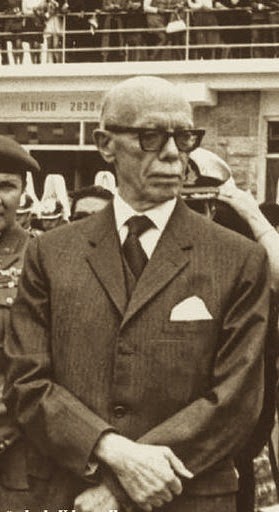
                                      José María Velasco Ibarra

2. José María Velasco Ibarra was President of Ecuador five different times, but sadly, he was always being deposed. On one occasion, he turned up at an embassy reception. Accounts on this vary. He either vomited over the West German ambassador or he urinated in the punch bowl. According to one version of the story, he actually did both. The army immediately deposed him for having “compromised the dignity of the Republic.” 
                 
                    Former British Prime Minister Harold Wilson

3. The White House state protocol took a holiday it seems, when Prime Minister Harold Wilson visited Washington in the 1960s. It was at a time when the sun appeared to be setting on the British Empire — colonies everywhere were clamoring for independence, it was post-Suez canal, there was the free-falling pound, not to mention labor strikes. Upon arriving at the White House for the formal welcoming ceremonies, Wilson pointed out to then U.S. Chief of Protocol, Jimmy Symington, that two of the Union Jacks were flying upside down — the international sign of distress. The next day, the Washington Post newspaper ran an enormous photo of the flags with the caption, “Oops!”
      
These people are dancing the Viennese Waltz. They are not dancing to the Austrian State anthem. 

4. As the story goes, former British Foreign Minister George Brown was at a state dinner in Vienna in 1966, and after enjoying some wine, he turned to "an exquisite creature in violet" sitting beside him, upon hearing the orchestra strike up a tune. Saying, “Madame, you look ravishing. May we dance?” The exquisite creature in violet turned to him and said, in perfect English, “No, Mr. Brown, for three reasons. Firstly, this is a state dinner, not a ball. Secondly, were this a ball and not a state dinner, this would still be the Austrian state anthem, and not a waltz. And thirdly, were this a ball and not a state dinner, and were that a waltz and not the Austrian state anthem, I would still be the Cardinal Archbishop of Vienna.”

                                        
       Polish leader Lech Walesa was unfamiliar with artichokes.

5. When Polish leader Lech Walesa visited Queen Elizabeth II at Buckingham Palace, he was served artichokes. Never having encountered an artichoke before, he began to eat the spiny leaves. The Queen generously offered, “Why don’t you eat the bottom part? It takes so long to eat the leaves.” That’s what's known as noblesse oblige — a French phrase literally meaning "nobility obliges." It is the concept that nobility extends beyond mere entitlements, to acts of generosity and nobility toward those less privileged.

                                            
Mozaffar ad-Din Shah Qajar did not know the etiquette for eating asparagus. 

6. The Shah of Persia, Mozaffar ad-Din Shah Qajar, visited London in 1902. At the Edwardian Era dinner, he was served asparagus, which was a legume evidently unknown to the occupant of the Peacock Throne. After eating each spear, he would toss the stalk over his shoulder onto the floor. Feelings of anxiety ensued with those dining with the Shāh. Not wanting to embarrass the world leader, and in a show of true diplomacy, everyone else began tossing their stalks onto the floor.


🍽️Etiquette Enthusiast, Maura J. Graber of The RSVP Institute of Etiquette, is the Site Editor of the Etiquipedia© Etiquette Encyclopedia 

Saturday, August 2, 2014

Victorian Manners and Mourning Etiquette

Circa 1875 portrait of a young, "Master Hackett." He is wearing a black armband – a signal that he was mourning the recent death of a close relative. An important aspect of Victorian etiquette was to wear black clothes, black armbands or "mourning jewelry" for a defined period. This was a sign of respect for the deceased and a way of conveying the news of a bereavement to others.

MOURNING


Those in mourning for parent, child, brother, or husband should not be seen at any public function or private entertainment before six months have passed.

CARDS

These are the same size as visiting-cards. A black border is used, the width to be regulated by the relationship to the deceased relative. They should be sent to indicate temporary retirement from and re-entrance into society.

Within a month after death in a family friends should leave cards. The persons receiving the same should acknowledge the remembrance and sympathy when they are ready to resume their social functions. This may be done by letter or card.

MEN

Mourning cards are the same size as visiting-cards, and a black border is used, the width to be regulated by the relationship of deceased relative.
Victorian mourning brooch.
WOMEN

Mourning cards should be sent, to indicate temporary retirement from society. Later cards should be sent, to indicate return to society.

CHILDREN

Children under twelve need not be dressed in mourning, though they often are. Only the lightest material should be used. Girls of more advanced age do not wear veils, but crape may be worn in hat or dress, according to taste. For parent, brother, or sister, mourning is worn for about one year. 

MEN

Men wear mourning one year for loss of wife. A crape band should be worn around the hat, its width being determined by the nearness of the relative mourned for. It is usually removed after eight months. A widower wears mourning for one year, or, if he wishes, eighteen months, and for a brother, sister, parent, or a child, from six months to a year, as he desires. For the loss of other relatives, duration of mourning is generally regulated by the members of the family.

The wearing of a black band on the coat sleeve in token of half-mourning is an English custom, and is somewhat practised in this country.

STATIONERY-MEN

A widower uses a black border about one-third of an inch on his stationery, and this at intervals is diminished. All stamping should be done in black.

WOMEN

A widow's stationery should be heavily bordered, and is continued as long as she is in deep mourning. This is gradually decreased, in accordance with her change of mourning. All embossing or stamping should be done in black.

WEDDINGS

Mourning should never be worn at a wedding, but it should be laid aside temporarily, the wearer appearing in purple.

“Carson says, ‘The universality of human desire for symbolic signs of private emotions is ever standing. The emotion of grief at the loss of relatives and friends by death has found in dress fertile fields for expressing the desire. Black, death’s particular emblem, has been used for this purpose certainly since the early part of the 14th century. Chaucer and Shakespeare give occasional allusions to it to use, particularly in the case of the widow.’ He tells us also of a curious custom of giving away black gloves to be worn ‘in memoriam.’ In 1736 at the funeral of Gov. Belcher of Boston more than 1000 pairs of mouning gloves were distributed. At the funeral of Andrew Faneuil 3000 pairs were given away.” From Lillian Eichler’s “The Customs of Mankind”

WIDOWS

A widow should wear crape with a bonnet having a small border of white. The veil should be long, and worn over the face for three months, after which a shorter veil may be worn for a year, and then the face may be exposed. After six months white and lilac may be used, and colors resumed after two years.

WOMEN

The mourning dress of a woman for parent, sister, brother, or child is the same as that worn by a widow, save the white bonnet ruche--the unmistakable mark of a widow.

For parents and children, deepest mourning is worn at least one year, and then the change is gradually made by the addition of lighter material or half-mourning.

For other members of the family--as, aunts, uncles, grandparents, cousins, etc.--black clothes should be worn, but not heavy mourning.

Complimentary mourning is worn for three months; this does not necessitate crape and veil, but any black material can be used.

WOMEN, FOR CHILDREN

For a child, mourning is usually worn for six months, thereafter substituting black and white.

FOR BROTHER AND SISTER, ETC…

Mourning for a brother or sister, step-parents, or grandparents is the same as for parents, but the time is shorter, generally about six months. For an aunt, uncle, or cousin the time is three months.
The city of Toronto's proclamation for a day of mourning befitting Queen Victoria
FOR FIANCE

In the event of the death of a woman's betrothed shortly before the date of the wedding, she may wear black for a short period or full mourning for a year.

FOR HUSBANDS

Mourning cards are sent out, to indicate that they are not making or receiving calls.

Mourning is generally worn for two years, and sometimes much longer. Woolen material of the deepest black and crape should be worn during the first year. When out-of-doors a crape veil should be worn for a year, or at least three months, covering the face, or, if preferred, the veil may be thrown over the shoulder, and a small one of tulle, or other suitable material, edged with crape, worn over the face.

A crape bonnet should be worn, and a very small white ruche may be added if desired. After the first year a gradual change to lighter mourning may be made by discarding the widow's cap and shortening the veil. Dull silks are used in place of crape, according to taste. In warm weather lighter materials can be worn--as, pique, nun's veiling, or white lawn.

Black furs and sealskin may be worn. Precious stones, such as diamonds and pearls, may be used if mounted in black enamel. Gold jewelry should not be used. A woman should avoid all pretensions to excessive styles.

FOR HUSBAND'S RELATIVES

A married woman wears mourning for her husband's immediate relatives.

FOR PARENTS AND GRANDCHILDREN

Mourning for these persons is generally worn for one year. During the first six months, black material trimmed with crape is used, and also a deep veil, which is thrown over the back of the head and not worn over the face, as for a husband. After this period the mourning may be lightened, according to taste.


From W.C. Green, “The Book of Etiquette”


Etiquette Enthusiast, Maura J. Graber, is the Site Editor for the Etiquipedia© Etiquette Encyclopedia

Friday, August 1, 2014

Etiquette for Formal Afternoon Teas

      An ornate tea server 

These are very successful as a rule, due perhaps to their small expense and few exactions, and are given with many purposes: to introduce young women into society, to allow a hostess to entertain a number of her friends, to honor some woman of note, etc.

A formal afternoon tea is one for which cards have been issued, naming set date. Awnings and carpet should be provided from curb to house. A man should be stationed at the curb to open carriage doors and call them when the guests leave, and another man should be in attendance at the front door to open it the moment a guest appears at the top step and to direct him to the dressing room.

A policeman should be detailed for the occasion to keep back the onlookers, and should receive a small fee for his services. At the door of the drawing-room a man should ask the name of each guest, which he announces as the latter enters. The hostess and those receiving with her should be just within the door to receive the guests.


CARDS
Each guest should leave a card in the tray in the hall. A woman may leave the cards of the men of her family who have been unable to attend. Cards should be sent by mail or messenger by those invited but unable to be present, and should be timed so that they reach the house during the function.

A husband and wife each send a card when the invitation is issued in the name of the hostess only, and two cards each when issued in the name of hostess and her daughter. If issued in the name of both husband and wife, a husband should send two and his wife should send one card.

DAUGHTERS
The daughters who have passed the debutante age usually stand for an hour beside their mother to receive the guests, and afterward mingle with the guests to help to make the function a success.


A comedic look at the “London Season” in 1870 ~ The “London Season” is synonymous with tradition, and both British and international codes of conduct in social, corporate entertainment and business environments. It actually began over two hundred years ago, and started out as a series of events, enjoyed only by members of the aristocracy. 


DEBUTANTE

When a tea is given in honor of a debutante, she stands beside the hostess (usually her mother), and each guest is introduced to her. Flowers should be liberally provided, and friends may contribute on such an occasion. The host and the men all wear the regulation afternoon dress. Women wear costumes appropriate to the afternoon, more elegant in proportion to the elaborateness of the function.

Guests may suit their convenience in arriving, provided they do not come at the opening hour nor at the very end.

After leaving their wraps in the dressing-rooms, guests enter the drawing-room, leaving their cards in the tray in the hall, and then giving their names to the man at the door, who announces them. On entering the room, the women precede the men. After greeting the hostess and being introduced to those receiving with her, the guests move into the middle of the room. Guests go the dining-room when they wish without greeting the hostess.

It is not expected that guests at a large reception will stay all the afternoon. Twenty minutes is long enough. It is not necessary to bid the hostess good-bye when leaving.

If guests take leave of host and hostess, they should shake hands. In the dining-room the men, assisted by the waiters, help the women.

When the reception is a small formal one, the guests may stay a longer time, and usually it is better to take leave of the hostess, unless she is much occupied at the time.

HOST
Except when a newly married couple give a house-warming or a reception, the host does not stand beside his wife, but spends the time in making introductions, and doing his best to make the function a success.

When some married woman or woman guest of honor assists his wife to receive, he should at the proper moment escort her to the dining-room.

HOSTESS
The hostess and those receiving with her should be just within the door, ready to receive each guest as announced. The hostess shakes hands with each guest, and introduces them to those receiving with her. Friends assisting a hostess to entertain are generally permitted to invite a few of their own friends, and their cards are sent with those of the hostess. A pretty feature is the presence of a number of young women here and there in the rooms to assist in receiving the guests. Music is always appropriate.


HOURS
The hours are from 4 to 7 P.M.


INTRODUCTIONS
The hostess should introduce her guests to those receiving with her.


INVITATIONS
Engraved invitations are sent a week or ten days in advance, by mail or messenger. They are usually issued in the name of the hostess only, though they may be issued in the name of both husband and wife. In place of the visiting-card, an "At Home" card may be used, or cards specially engraved for the purpose. When cards are sent to a married couple, the cards are addressed to both husband and wife.

Invitations are sent in two envelopes-the inner one unsealed and bearing the name of the guest, and the outer one sealed, with, the street address.

INVITATIONS, ANSWERING
It is not necessary to accept or decline these invitations, as the guest accepts by his presence. If unable to do so, he should send by mail or messenger a visiting-card, to reach the hostess during the ceremony. When the invitation has been issued in the name of the hostess only, a husband and wife each send a card, and if in the name of hostess and her daughter, each should send two cards. If the invitation has been issued in the name of the husband and wife, the wife should send one and a husband two cards.

If the woman in the family is the only one present at the function, she can leave cards for the rest of the family.

MEN
Both the host and men wear the regulation afternoon dress, consisting of the long frock coat with single or double-breasted waistcoat to match, or of some fancy cloth, and gray trousers. White linen, a light tie, a silk hat, gray gloves, and patent leather shoes complete the costume. The overcoat, hat, and cane are left in the dressing-room, and the guest removes one or both gloves as he pleases --remembering that he must offer his ungloved, right hand to the hostess.

SHAKING HANDS

Guests on being presented to the hostess should shake hands. If guest takes leave of hostess, they should shake hands. If the hostess is surrounded by guests, a pleasant nod of farewell is admissible.


WOMEN
Women leave cards of their male relatives as well as their own, even though their names may be announced upon entering. Guests leave their cards in a receptacle provided for the purpose, or give them to the servant at the door. Women wear a costume appropriate for the afternoon, and keep their hats and gloves on.


From “The Book of Good Manners,” by W.C. Green

Etiquette Enthusiast, Maura J. Graber, is the Site Editor for the Etiquipedia© Etiquette Encyclopedia