Monday, March 9, 2015

Etiquette for 19th C. Ladies

You can never be rude if you bear the rule always in mind, for what lady likes to be treated rudely?

In preparing a book of etiquette for ladies, I would lay down as the first rule, “Do unto others as you would others should do to you.” You can never be rude if you bear the rule always in mind, for what lady likes to be treated rudely?

True Christian politeness will always be the result of an unselfish regard for the feelings of others, and though you may err in the ceremonious points of etiquette, you will never be impolite.

Politeness, founded upon such a rule, becomes the expression, in graceful manner, of social virtues. The spirit of politeness consists in a certain attention to forms and ceremonies, which are meant both to please others and ourselves, and to make others pleased with us; a still clearer definition may be given by saying that politeness is goodness of heart put into daily practice; there can be no true politeness without kindness, purity, singleness of heart, and sensibility.

True politeness is the language of a good heart, and those possessing that heart will never, under any circumstances, be rude. 

Many believe that politeness is but a mask worn in the world to conceal bad passions and impulses, and to make a show of possessing virtues not really existing in the heart; thus, that politeness is merely hypocrisy and dissimulation. Do not believe this; be certain that those who profess such a doctrine are practising themselves the deceit they condemn so much.

Such people scout politeness, because, to be truly a lady, one must carry the principles into every circumstance of life, into the family circle, the most intimate friendship, and never forget to extend the gentle courtesies of life to every one. This they find too much trouble, and so deride the idea of being polite and call it deceitfulness.

True politeness is the language of a good heart, and those possessing that heart will never, under any circumstances, be rude. They may not enter a crowded saloon gracefully; they may be entirely ignorant of the forms of good society; they may be awkward at table, ungrammatical in speech; but they will never be heard speaking so as to wound the feelings of another; they will never be seen making others uncomfortable by seeking solely for their own personal convenience; they will always endeavor to set every one around them at ease; they will be self-sacrificing, friendly, unselfish; truly in word and deed, polite.

Give to such a woman the knowledge of the forms and customs of society, teach her how best to show the gentle courtesies of life, and you have a lady, created by God, only indebted for the outward polish to the world.

It is true that society demands this same unselfishness and courtesy, but when there is no heart in the work, the time is frittered away on the mere ceremonies, forms of etiquette, and customs of society, and this politeness seeks only its own ends; to be known as courteous, spoken of as lady-like, and not beloved as unselfish and womanly.

Thoughts on Etiquette and Manners, by Florence Hartley, 1860 

Etiquette exists in some form in all countries, has existed and will exist in all ages. From the rudest savage who dares not approach his ignorant, barbarous ruler without certain forms and ceremonies, to the most polished courts in Europe, or the home circles of America, etiquette reigns.

True politeness will be found, its basis in the human heart, the same in all these varied scenes and situations, but the outward forms of etiquette will vary everywhere. Even in the same scene, time will alter every form, and render the exquisite polish of last year, obsolete rudeness next year.

Politeness, being based upon real kindness of heart, cannot exist where there is selfishness or brutality to warp its growth. It is founded upon love of the neighbor, and a desire to be beloved, and to show love. Thus, where such pure, noble feelings do not exist, the mere forms of politeness become hypocrisy and deceit.

Rudeness will repel, where courtesy would attract friends. Never by word or action notice the defects of another; be charitable, for all need charity. Remember who said, "Let him that is without fault cast the first stone." Remember that the laws of politeness require the consideration of the feelings of others; the endeavor to make every one feel at ease; and frank courtesy towards all.
Never meet rudeness in others with rudeness upon your own part; even the most brutal and impolite will be more shamed by being met with courtesy and kindness, than by any attempt to annoy them by insolence on your part. Politeness forbids any display of resentment. The polished surface throws back the arrow.

Remember that a favor becomes doubly valuable if granted with courtesy, and that the pain of a refusal may be softened if the manner expresses polite regret. Kindness, even to the most humble, will never lose anything by being offered in a gentle, courteous manner, and the most common-place action will admit of grace and ease in its execution.

Let every action, while it is finished in strict accordance with etiquette, be, at the same time, easy, as if dictated solely by the heart. To be truly polite, remember you must be polite at all times, and under all circumstances. – From 1860 Vanity Fair Magazine, Taken from the Ladies' Book of Etiquette and Manual of Politeness in 1860, By Florence Hartley


🍽Etiquette Enthusiast, Maura J. Graber, is the Site Editor for the Etiquipedia© Etiquette Encyclopedia

Wednesday, March 4, 2015

Etiquette and the Art of Listening


Humorous depiction of men talking about their feelings. 
-Image source, Pinterest

To converse, is not to talk continually, as prattlers suppose; it is to listen and speak in our turn; we must not acquit ourselves the less well in the one than in the other. To do this, we should attend half of the time to the person who is addressing us, (on this account it is impolite to do any work while talking;) if they hesitate or are embarrassed you should appear not to notice it, and in case you are a little acquainted, after a few moments, you should, in a very modest manner, supply the word which seems to have escaped them. If they are interrupted by any incident, when the cause of the interruption shall have ceased, you will not wait until they resume the conversation, but with a smile of benevolence, and an engaging gesture, request them to proceed; "please to continue; you were just saying?"...

If we are obliged in this manner, to palliate any such interruption, much more, ought we never to allow ourselves to be the cause of it. This is so rigorous a rule, that if, in the warmth of conversation, two persons commence speaking at once, both ought to stop immediately, when they perceive it, and each, while excusing themselves, to decline proceeding. It is proper for the one worthy of the most respect to resume the conversation.

If a person shall relate anything to you, who, without having any pleasantry, makes attempts at it; and without being affecting, endeavors to move you, however wearied you may be, appear pleased and assume an air of interest. If the narrator wanders into long digressions, have patience to let him extricate himself alone from the labyrinth of history. If the history is interminable, be resigned, and do not appear less attentive. This condescension is especially to be observed, if you are listening to an elderly or respectable person. If the merciless story-teller is your equal or friend, you may say to him, in order to induce him to finish his narration, "and finally... ."

Novices in the customs of the world, think they can abruptly interrupt a conversation which is begun, by asking to have some incidents, which they have not understood, explained, or by making the person who is telling the story repeat the names; this should not be done until after some consideration, and in the most polite manner. If the narrator pronounces badly; if you see that other hearers are in the same situation as yourself; if you foresee that for want of having followed him in his narration, you will not be able to reply with politeness, you can in this case, interrupt; but in some such manner as this; "I ask your pardon, Sir, I fear I have lost some part of your interesting conversation, will you be kind enough to repeat it," etc... . It is necessary also, to choose a favorable moment, as for instance, when the narrator pauses, hesitates for a word, or stops to take his handkerchief.

When a person relates to you a plain falsehood, the art of listening becomes embarrassing, for if you seem to believe it, you would pass for a fool, and if you appear to doubt it, you will pass for an uncivil person. An air of coldness, a slight attention, an expression like the following, "That is astonishing," will extricate you honorably from your embarrassment; but when an event is narrated which is only extraordinary, or not improbable, your manner should be otherwise. Your countenance should express astonishment, and you should reply by a phrase of this kind; "If I did not know your strict regard for the truth, or if any person but you had told me this, I should have hardly believed it." Under no circumstances should you interrupt him.

It happens sometimes that you foresee some incident in an interesting story; and the pleasure that you find in this; the desire of showing that you have guessed correctly, and the intention of proving how much you are interested, induce you to interrupt suddenly in this manner, "I see it, it is so, exactly." An interruption of this kind, although well meant and natural, will offend old persons, who like to tell a story at full length, and will confound formal narrators, who will be in despair that a phrase is taken from them which they had intended for effect; these interruptions are only allowable among our intimate friends, or inferiors, for otherwise you will have an ill-humored answer to your, "I see it," etc... as with a triumphant air, "egad, but you can't see it," etc... which is always embarrassing.

The worst kind of interruption of all others, is that which hauteur dictates. A clever person seizing hold of a story which another is telling, and with the intention of making it more lively, becomes, notwithstanding his eloquence, a model of impertinence and vulgarity. It is, doubtless, hard to see a fool spoil a good anecdote, of which he might have made something interesting; but if we should not be restrained by politeness from expressing our feelings, we ought to be by interest. Now hearers of delicacy will remain silent to the conclusion of the recital, and will address themselves with good feelings to the poor narrator who is injured in his rights.

Interruption is pardonable if it is made to prove or clear up a fact in favor of a person who is absent. When they accuse you, you can, according to strict rules, interrupt by an exclamation, but it is better to do it by a gesture. There is often much art and grace in listening, while you gesticulate gently; for example, by counting upon the fingers; by making a gesture of surprise; by a motion of assent, or an exclamation. This is a tacit manner of saying, "ah, I recollect, you are right," and charms the narrator without interrupting him.

In a lively, animated and friendly dialogue, we can interrupt each other by turns, in order to finish a sentence which is begun, or to improve an epithet; this contributes to vivacity in discourse, but it ought not, however, to be too often repeated. There are many shoals to be avoided in listening, and which always betray inexperience in society. To say from time to time to the narrator, "Yes, yes," by nodding the head, making motions with the hand, a custom of old persons, and which is a good representation of a pendulum ; to keep the eyes fixed and the mouth gaping open; to have an air of an absent person or of one in a reverie; to point the finger at persons designated by the narrator; to gape without concealing by the hand or the handkerchief, which is by no means flattering to the speaker; to cast your eye frequently towards the clock--all these habits are offences against good *ton.

* The ton is a term commonly used to refer to Britain's high society in the Regency and reign of George IV, and later. During the eighteenth century, it was borrowed from the French word meaning "taste" or "the highest style" and is pronounced the same way as "tone." The full phrase is "le bon ton," meaning good manners or "in the fashionable mode" – characteristics held as ideal by the British beau monde. –From "Etiquette" 1866

Etiquette Enthusiast, Maura J. Graber, is the Site Editor for the Etiquipedia© Etiquette Encyclopedia 

Tuesday, March 3, 2015

Early 16th C. Etiquette and Virtue

The Schoole of Vertue was a popular book on manners and morals for children, published in 1582.


First, say this prayer: “O God! enable us to follow virtue. Defend us this day. Let us abound with virtues, flee from vice, and go forward in good doing to our live’s end.”
Repeat the Lord’s Prayer night and morning.
 

How to wash and dress yourself:

Don’t sleep too long.
Rise early; cast up your bed, and don’t let it lie.
Go down, salute your parents, wash your hands, comb your head, brush your cap and put it on.
Tie on your shirt-collar, fasten your girdle, rub your breeches, clean your shoes, wipe your nose on a napkin, pare your nails, clean your ears, wash your teeth.
Have your torn clothes mended, or new ones obtained.
Get your satchell and books, and haste to School, taking too pen, paper, and ink, which are necessary for use at school.
Then start off.

How to behave going to, and at, School:

Take off your cap to those you meet; give way to passers by.
Call your playmates on your road.
At School salute your master, and the scholars.
Go straight to your place, undo your satchell, take out your books and learn your lesson; stick well to your books.
If you don’t work, you’ll repent it when you grow up.
Who could now speak of famous deeds of old, had not Letters preserved them?
Work hard then, and you’ll be thought worthy to serve the state.
Men of low birth win honour by Learning, and then are doubly happy.
When you doubt, ask to be told.
Wish well to those who warn you.
On your way home walk two and two orderly (for which men will praise you); don’t run in heaps like a swarm of bees like boys do now.)
Don’t whoop or hallow as in fox-hunting don’t chatter, or stare at every new fangle, but walk soberly, taking your cap off to all, and being gentle.
Do no man harm; speak fair words.
On reaching home salute your parents reverently.

How to wait at table:

Look your parents in the face, hold up your hands, and say Grace before meate.
Grace before Meat.
Make a low curtesy; wish your parents’ food may do ’em good.
If you are big enough, bring the food to table.
Don’t fill dishes so full as to spill them on your parents’ dress, or they’ll be angry.
Have spare trenchers ready for guests.
See there’s plenty of everything wanted.
Empty the Voiders often.
Be at hand if any one calls.
 
When the meat is over, clear the table:
1. cover the salt,
2. have a tray by you to carry things off on,
3. put the trenchers, &c., in one Voider,
4. sweep the crumbs into another,
5. set a clean trencher before every one,
6. put on Cheese, Fruit, Biscuits, and
7. serve Wine, Ale or Beer.
 
When these are finished, clear the table, and fold up the cloth.
Then spread a clean towel, bring bason and jug, and when your parents are ready to wash, and when your parents are ready to wash, pour out the water.
Clear the table; make a low curtsey.

How to behave at your own dinner:

Let your betters sit above you.
See others served first, then wait a while before eating.
Take salt with your knife, cut your bread, don’t fill your spoon too full, or sup your pottage.
Have your knife sharp.
Don’t smack your lips or gnaw your bones: avoid such beastliness.
Keep your fingers clean, wipe your mouth before drinking.
Don’t jabber or stuff.
Silence hurts no one, and is fitted for a child at table.
Don’t pick your teeth, or spit too much.
Behave properly.
Don’t laugh too much.
Learn all the good manners you can.
They are better than playing the fiddle, though that’s no harm, but necessary; yet manners are more important.
 

How to behave at Church:

Pray kneeling or standing.Confess your sins to God.
He knows your disease.
Ask in faith, and what you ask you shall have; He is more merciful than pen can tell.
Behave nicely in church, and don’t talk or chatter.
Behave reverently; the House of Prayer is not to be made a fair.
Avoid dicing and carding.
Delight in Knowledge, Virtue, and Learning.
Happy is he who cultivates Virtue.
Cursed is he who forsakes it.
Let reason rule you, and subdue your lusts.
These ills come from gambling: strife, murder, theft, cursing and swearing.
 

How to behave when conversing:

Understand a question before you answer it; let a man tell all his tale.
Then bow to him, look him in the face, and answer sensibly, not staring about or laughing, but audibly and distinctly, your words in due order, or you’ll straggle off, or stutter, or stammer, which is a foul crime.
Always keep your head uncovered.
Better unfed than untaught.
 

How to take a Message:

Listen to it well; don’t go away not knowing it.
Then hurry away, give the message; get the answer, return home, and tell it to your master exactly as it was told to you.

Against Anger, etc...

The slave of Anger must fall.
Anger’s deeds are strange to wise men.
A hasty man is always in trouble.
Take no revenge, but forgive.
Envy no one.
An ill body breeds debate.

The Fruits of Charity, etc...

Charity seeketh not her own, but bears patiently.
Love incites to Mercy.
Patience teaches forbearance.
Pray God to give thee Charity and Patience, to lead thee to Virtue’s School, and thence to Eternal Bliss.

Against Swearing:

Take not God’s name in vain, or He will plague thee.
Beware of His wrath, and live well in thy vocation.
What is the good of swearing?
It kindles God’s wrath against thee.
God’s law forbids swearing, and so does the counsel of Philosophers.

Against filthy talking:

Never talk dirt.
For every word we shall give account at the Day of Doom, and be judged according to our deeds.
Let lewd livers then fear.
Keep your tongue from vain talking.

Against Lying:

To speak the truth needs no study, therefore always practise it and speak it.
Shame is the reward of lying.
Always speak the truth.
Who can trust a liar?
If a lie saves you once, it deceives you thrice.
                       
                              From Francis Segar, 1582


🍽Etiquette Enthusiast, Maura J. Graber of The RSVP Institute of Etiquette, is the Site Editor for the Etiquipedia© Etiquette Encyclopedia


Etiquette History of British Army Mess-Rooms

The mess in particular constituted a very great expense. This mess, which the Emperor Napoleon III established in the regiments of the Garde Impiriale, following the example of the English army, which he greatly admired, is not only a place where men meet for their meals, but a club, and very often a club of the most elegant description, maintaining the highest standard of excellence as to surroundings, cuisine, and personnel. The government pays a portion of the furnishings, but all the rest, — the silverware, the china, glass, etc. — is the property of the Mess, and is administered by a committee of three officers.
THE English army before the war was a very aristocratic institution. The law of 1871, passed after the Franco-Prussian War, had suppressed the purchase of officers' commissions — before that time the authorized price for com- missions varied from £450, for an Ensigncy in the Infantry, to £7,250 for a commission of Lieutenant-Colonel in the Life Guards — the Royal Warrant abolishing the system of purchase had substituted that of entrance examinations, but, as a general thing, the corps of officers was recruited from the same social class as in the day of Thackeray's novels, partly from the nobility, whose members generally remained but a short time; partly from old military families, true guardians of glorious traditions; and partly also from among the sons of rich parvenus of commerce and industry, who, as in the, day of Vanity Fair, rose, in wearing the King's uniform, many rounds of the social ladder.

The number of officers who had risen from the ranks was very few, and for the most part, were the sons of prominent families who upon their entrance were named for "special recommendation." Even in later years, when the standard for military studies was very high, officers led an expensive existence. The costliness of the mess, the up-keep of polo ponies and hunters, the luxury of the uniforms, the elegancies of the social life, obliged an officer to spend a great deal more than his pay, arid it was practically impossible for an officer to serve, especially in some of the crack regiments, who was not possessed of large personal resources.

The mess in particular constituted a very great expense. This mess, which the Emperor Napoleon III established in the regiments of the Garde Impiriale, following the example of the English army, which he greatly admired, is not only a place where men meet for their meals, but a club, and very often a club of the most elegant description, maintaining the highest standard of excellence as to surroundings, cuisine, and personnel. The establishment is furnished by the state, and comprises, at least, a dining-room, the "Mess Room," a reception-room, the "ante-room," a billiard-room, a wine-cellar, and all the official apartments necessary for service. The government pays a portion of the furnishings, but all the rest, — the silverware, the china, glass, etc. — is the property of the Mess, and is administered by a committee of three officers.

Each newly-admitted officer pays, as in a club, an entrance fee, and annual dues. The government provides a yearly amount for the upkeep of the Mess. The expenses of each officer are paid monthly. The fittings of the mess of certain regiments are magnificent, the furnishings very handsome, the silver superb, and the wine-cellars of the first quality.

The Mess of the Horse Guards and of the Life Guards, of the Foot Guards, and of many other corps that I could name, are in no way inferior in elegance and perfection of style to the most exclusive and expensive clubs of any country. The officers — I speak of times of peace — always at dinner are in " mess kit," the special uniform for Mess, very elegant, heavily braided with gold upon the" particular color of the regiment — a uniform entirely different from that worn for service, or for parade. Besides the " King's Rules," which prescribe the functioning and administration of the Mess, there exist customs peculiar to the different corps, to which not only members of the Mess, but their guests as well, must strictly conform.

There is a great deal of entertaining at Mess: there are "Inspection Nights," and "Regimental Guest Nights," when the visitors are guests of the regiment or corps, and also "Guest Nights" when individual members may entertain. This question of entertaining is considered very important. Dining in Mess "is a Parade." All officers must dine in Mess on "Guest Night," unless very excellent reasons are given for being absent, but on "Inspection Night," or "Regimental Guest Night," they are obliged to be present, and may not excuse themselves. 

The intimate relationship which the war has established between the French officers and their comrades of the English army is the cause of many invitations, which will become more and more frequent now that the establishment of peace, and the maintenance of British regiments on French soil for an indefinite period, permit closer friendships; civilians are already, and will in future be still more, in receipt of invitations to Mess from the English officers. Now the esprit de corps, the old customs, the usages and privileges of the different corps are carefully and jealously observed by our allies. The new army has inherited them, and is as exacting in regard to them as the old. 

The war has admitted to the various regiments a very considerable number of men who have received commissions, but who have had previously no idea of military traditions or customs. To assist newcomers — "Warts" as they call the latest- arrived Second-Lieutenants in military slang — Lieutenant-Colonel E. G. Mackenzie, Staff Officer, Royal Fusifiers, has written a little pamphlet called Notes on Mess Etiquette. It should be of interest to all prospective Mess guests. We will give a few short extracts from it. Certainly those who are to have the honour of being entertained by our brave allies and friends will be glad to know of usages and customs, the omission of which would render them conspicuous or ridiculous. They will be happy "to know the ropes," as General Sir Bindon Blood said in his introduction to the little book in question, and with its aid to avoid "a bad break" (or la faucheuse gaffe). 

To give an idea of the rules and customs of certain corps, we may cite the fashion in the Royal Marines of drinking the King's health. The Royal Marines, whose device is "Per mare, per terram," are divided into two corps: the Royal Marine Artillery, and the Royal Marine Light Infantry. These are the crack corps, proud of a glorious history. There are also certain other regiments of infantry which were raised originally as "marines." These corps insist upon every custom which may recall this fact, and among them all the King's health is drunk, as in the Royal Marines, that is to say the corps remaining seated, while, in all other army corps the men rise and drink standing. This custom goes back to the days of three-deck vessels, when the rooms of the middle deck, among which was the dining- hall, had very low ceilings, where it would be difficult to stand. 

Evil tongues pretend that the custom came also from the fact that after dinner the rolling and pitching caused certain convives to find themselves more comfortable seated. The guest who was ignorant of this custom, but only knew in a general way that in the army everybody arose when the vice-president said: "Gentlemen, the King!" would be embarrassed to discover that he was the only person standing. 

The King's health is not proposed at all dinners, it is proposed only on "Band Night," or "Guest Night," when the band of the regiment plays. The King's health is drunk in the following manner: when the repast is ended, the president — before whom the wine is usually placed until it is circulated and poured — rises and says: "Mr. Vice, the King." The wine then makes the circuit of the table and all the glasses are filled. 

Under no condition may any one drink or even raise his glass until the toast is proposed. When all the glasses are filled the vice-president rises in his turn and says: "Gentlemen, the King." The band then plays "God Save the King." All the company rises, holding in the right hand the full glass. In certain regiments the officers respond: "The King ! God bless him !" after which everyone is seated. : On ordinary evenings the men may leave the table after the wine has been once around, on others it is the custom to wait until the senior officer rises, but on "Guest Night" no one may rise before the senior officer. In some regiments it is the rule that no officer shall leave the Menu until all the guests have left. 

The president and vice-president of the Mess are not necessarily the two officers of highest rank. It is a weekly service, taken in turn. During the week the men are "in roster" they take the places respectively at the head and foot of the table. The president is responsible for the conduct of the officers at Mess, and gives the orders to bring the coffee, the cigars, and cigarettes. The vice-president is always the last to leave the table, at least unless he has received from the president special permission to rise, in which case the president himself will remain until the last. 

The officers must be in the ante-room — the room adjoining the Mess-Room, at least five minutes before the bugle sounds the last call to dinner. Smoking is not permitted in the ante-room for an entire half-hour before dinner. When dinner is announced the senior officer present, passes out first, followed by all the others. If there is a guest present, the officer who is his host passes out first with him, if there are several guests, the oldest officer present passes out first with his, and the others follow with theirs according to age. An officer arriving late must excuse himself to either the president or the vice-president, whichever is nearest to his place. It is not permitted to smoke in the Mess-Room before the end of dinner. In certain Mess-Rooms the president or the senior officer gives the permission to smoke. No one is ever allowed to smoke a pipe. 

Each man in his mess pays for what he drinks. "Treating" is considered very bad form, though of course the expenses of a guest are charged to his host. In each Mess there is a "wine book," in which is entered every day the charge of each officer for wines and liquors. If there is a claim through error, it must be addressed directly to the president of the Mess Commission. When a stranger enters the ante-room it is the custom for all officers present to rise and salute. He is usually offered a drink and a cigarette, this expense being carried by the general account under the heading "Mess Guests." 

Never may the name of a lady be mentioned at mess; never may a bet be made there, nor may one ever "talk shop." In time of peace officers dress for dinner in "Mess Kit," with the exception of the "Orderly Officer," who is usually in service undress blue. Today an officer of the Regular Army, or an officer coming from the Regulars, may wear the undress blue every day after six o'clock. In most Mess-Rooms officers wear long trousers for dinner. If, for any reason, an officer is in breeches, he must excuse himself to the senior officer present in the ante-room, before dinner, for not being in proper dress. If a guest is himself an officer, he should, of course, be in uniform, but if he is a civilian he should wear a dress coat and a white tie. It would be extremely bad form for a guest to present himself in a " dinner- jacket" (which they call in Paris "smoking-jacket," the English always asking "Why smoking?" the "smoking- jacket" being a dressing gown) with a black tie- With the exception of the Officer of the Day, officers dining at mess do not wear the belt. It is always worn on special guest nights, or on inspection nights, or other formal occasions, but when an officer comes to dine at a mess as guest, the custom is that he should wear the belt. 

It is quite usual for a Mess to nominate officers of other corps, and even civilians* honorary members. In this case the committee addresses to the one so honored a letter or a printed card, asking him to consider himself an honorary member of the Mess during his stay in the district. To this invitation the rule is to reply with a note, written in the third person, thanking the chief of the corps and his officers for their courtesy, and assuring them that the writer will be happy to avail himself of the privilege. But all this does not mean that the invited member shall use the mess as though he were a member in reality. It is a simple formal courtesy; any one taking the invitation literally, and coming regularly to dine at the mess would be considered very badly informed. When one speaks to an officer, or of an officer, one designates him by his, rank: Major X., Captain Z., but when it is a subaltern, that is, a Lieutenant, or a Second-Lieutenant, one calls him Mr. Y., and not Lieutenant Y. The same rule holds in addressing a letter. We write: Captain Z. and Y. Esq. 

It is forbidden to bring dogs to the Mess. In most regiments a fine of five shillings is imposed on the owner of a dog found within the precincts of the Mess. No matter if you have at your side the most magnificent sabre in the world, a precious "arm of honor," etc., never think of drawing it from its scabbard in the Mess, even to display it. You would be loaded with fines from every corner of the room. When the wine is passed around the table it is well to remember always to pass it "as the hands of the clock move," that is, from left to right. It would be a grave fault to fail in this matter. It is a good rule, when invited to dine at a Mess, always to ask one's host if his regiment has special customs, for, I repeat, most regiments are very jealous of their privileges and traditions, and it is a matter of simple courtesy to inform one's self, and observe them.


By Frank Levray , Le Correspondent. — Translation, Lotus Magazine.
Etiquette Enthusiast, Maura J. Graber, is the Site Editor for the Etiquipedia© Etiquette Encyclopedia 

Thursday, February 26, 2015

Messing with Manners and Military Terminology

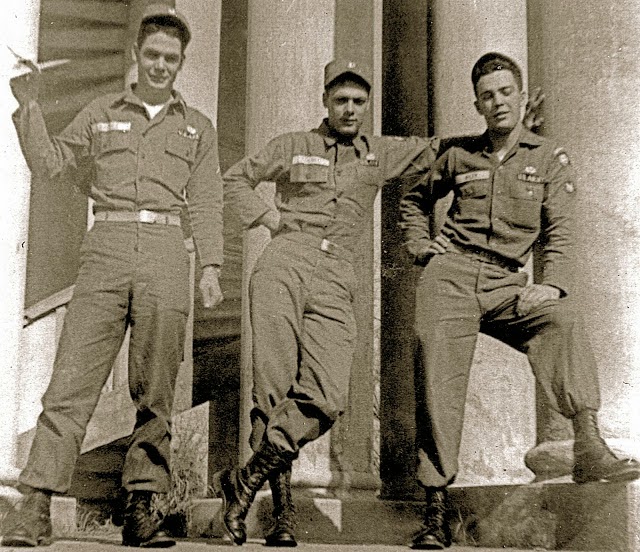
Three Paratroopers Messing Around with  a Paper Airplane in 1956, at Fort Bragg, North Carolina


When referencing food and the military, I am frequently asked the same questions by students. “Why does the military give out mess kits?”, and “Why is the place where soldiers eat called a mess hall?” I am a person who needs answers that add up. Inquisitive kids are that way too. 

When I first started looking around for an answer back in the early 1990s, I found a few bits and pieces of information available, but not one source I read actually tied it all together to where it made sense to me. 

From the outset “mess” obviously meant “food” and nothing more. The biblical Essau had a “mess of potage” which is believed to be a portion of lentil soup or beans. While growing up my brothers had G I Joe action figures that came with “mess kits” and watching the “Beverly Hillbillies” on television I heard the term “mess a’vittles” frequently used. While listening to former Presidential aide Dee Dee Meyers talking on late night t.v. she referred to her “mess bill” for something she had eaten on Air Force One. It was starting to drive me a bit nuts. If “mess” historically had meant food, how, why and when did it become the definitive term for a state of confusion and disorderliness? 

It took me much sleuthing, but I finally found a very old book on word origins and voila… there was an answer that made sense. The change in the general public’s definition of the word apparently was in the 1590s, when a party game called “Muss” spread across Europe. Muss was a game in which trinkets were tossed around a room and the party guests would scramble to retrieve them (anyone for some 52 pickup?)   As popularity of the game spread throughout Europe, with its various languages, the name of the game somehow was changed to “Mess”.   The Bible, military handbooks, and all other writings had naturally been left with the original meaning of the word intact. But from that point on, “muss” has rarely been used as a common term for something in a state of disarray, other than regionally in a few parts of the world. 

Many southern states here in the U.S. are one such regional area.   The term "muss" is still used in the south, while I rarely hear it here in Southern California.  The eyes of an octogenarian attending one of my seminars became misty as he recounted how his grandmother in Alabama would scold him for wearing his hat in her home. “I would say that my hair was a mess underneath my hat. She would then correct me by saying, ‘Your hair is mussed. It is not a mess!” 

Now I always try to remember that my daughter’s room is not a mess.  Her room is simply mussed up. It sounds better and somehow makes me feel a bit better about it. 


From Site Editor, Maura Graber, The RSVP Institute of Etiquette

14th C. Boke of Curtasye Etiquette

King Edward I of England, 1272-1307 AD. Known also as "Edward Longshanks," due to his great height and stature, was perhaps the most successful of the medieval monarchs. The first twenty years of his reign marked a high point of cooperation between crown and community in England, though his campaigns and efforts to capture territory in Wales, Scotland, Ireland, etc... "aroused in the Scots a hatred of England that would endure for generations." http://www.britannia.com/history/monarchs/mon30.html


From "The Boke of Curtasye" 
On reaching a Lord’s gate, give the Porter your weapon, and ask leave to go in. If the master is of low degree, he will come to you: if of high, the Porter will take you to him. At the Hall-door, take off your hood and gloves, greet the Steward, etc.., at the dais, bow to the Gentlemen on each side of the hall both right and left; notice the yeomen, then stand before the screen till the Marshal or Usher leads you to the table. 
Be sedate and courteous if you are set with the gentlemen.  
Cut your loaf in two, the top from the bottom; cut the top crust in, and the bottom in  cut the top crust in, and the bottom in.  
Put your trencher before you, and don’t eat or drink till your Mess is brought from the kitchen, lest you be thought starved or a glutton.  
Have your nails clean.  
Don’t bite your bread, but break it.  
Don’t quarrel at table, or make grimaces. 
Don’t cram your cheeks out with food like an ape, for if any one should speak to you, you can’t answer, but must wait. 
Don’t eat on both sides of your mouth. 
Don’t laugh with your mouth full, or sup up your potage noisily. 
Don’t leave your spoon in the dish or on its side, but clean your spoon. 
Let no dirt off your fingers soil the cloth. 
Don’t put into the dish bread that you have once bitten. 
Dry your mouth before you drink. 
Don’t call for a dish once removed, or spit on the table: that’s rude. 
Don’t scratch your dog. 
If you blow your nose, clean your hand; wipe it with your skirt or put it through your tippet. 
Don’t pick your teeth at meals, or drink with food in your mouth, as you may get choked, or killed, by its stopping your wind. 
Tell no tale to harm or shame your companions. 
Don’t stroke the cat or dog. 
Don’t dirty the table cloth with your knife. 
Don’t blow on your food, or put your knife in your mouth, or wipe your teeth or eyes with the table cloth. 
If you sit by a good man, don’t put your knee under his thigh. 
Don’t hand your cup to any one with your back towards him. 
Don’t lean on your elbow, or dip your thumb into your drink, or your food into the salt cellar: That is a vice. 
Don’t spit in the basin you wash in or loosely (?) before a man of God. 

If you go to school you shall learn: 

1. Cross of Christ,
2. Pater Noster, 
3. Hail Mary and the Creed, 
4. In the name of the Trinity, 
5. of the Apostles, 
6. the Confession. 
 
Seek the kingdom of God, and worship Him.  At church, take holy water; pray for all Christian companions; kneel to God on both knees, to man only on one. At the Altar, serve the priest with both hands. Speak gently to your father and mother, and honour them. Do to others as you would they should do to you. Don’t be foolishly meek. The seed of the righteous shall never beg or be shamed. Be ready forgive, and fond of peace. If you cannot give an asker goods, give him good words. Be willing to help every one. Give your partner his fair share. Go on the pilgrimages (?) you vow to saints, lest God take vengeance on you. Don’t believe all who speak fair: the Serpent spoke fair words (to Eve). Be cautious with your words, except when angry. Don’t lie, but keep your word. Don’t laugh too often, or you’ll be called a shrew or a fool.   
Man’s 3 enemies are: the Devil, the Flesh, and the World. Destroy these, and be sure of heaven. Don’t strive with your lord, or bet or play with him. In a strange place don’t be too inquisitive or fussy. If a man falls, don’t laugh, but help him up: your own head may fall to your feet. At the Mass, if the priest doesn’t please you, don’t blame him. Don’t tell your secrets to a shrew. Don’t beckon, point, or whisper. When you meet a man, greet him, or answer him cheerily if he greets you: don’t be dumb, lest men say you have men say you have no mouth. Never speak improperly of women, for we and our fathers were all born of women.  
A wife should honour and obey her husband, and serve him.  
Try to reconcile brothers if they quarrel.  
At a gate, let your equal precede you; go behind your superior and your master unless he bids you go beside him. 
On a pilgrimage don’t be third man: 3 oxen can’t draw a plough. 
Don’t drink all that’s in a cup offered you; take a little. 
If you sleep with any man, ask what part of the bed he likes, and lie far from him. 
If you journey with any man, find out his name, who he is, where he is going. 
With friars on a pilgrimage, do as they do. 
Don’t put up at a red (haired and faced) man or woman’s house. 
Answer opponents meekly, but don’t tell lies. 
Before your lord at table, keep your hands, feet, and fingers still. 
Don’t stare about, or at the wall, or lean against the post. 
Don’t pick your nose, scratch your arm, or stoop your head. 
Listen when you’re spoken to. 
Never harm child or beast with evil eye.
Don’t blush when you’re chaffed, or you’ll be accused of mischief. 
Don’t make faces.
Wash before eating. 
Sit where the host tells you; avoid the highest place unless you’re told to take it.


🍽Etiquette Enthusiast, Maura J. Graber, is the Site Editor for the Etiquipedia© Etiquette Encyclopedia 

Wednesday, February 18, 2015

Chinese New Year Etiquette

The Lunar New Year holiday is celebrated by many Asian cultures. It is usually celebrated over a minimum three-day period, to about fifteen days, surrounding the first full moon of the year. Festivities begin the day before the full moon, the day of the full moon, and the day following the full moon.
                           
Chinese tourists in Chiang Mai and Chiang Rai Thailand, have been the target of numerous complaints from locals who've accused the visiting Chinese of causing traffic accidents with reckless driving, defecating in the city's moat and defacing several popular tourist attractions. Officials announced Monday that thousands of Chinese tourists visiting Thailand during the New Year holiday will receive tourism etiquette manuals in an effort to curb "offensive behaviour." The city of Chiang Mai, the most popular destination for Chinese tourists, will be the focal point of the Mandarin-language manuals, with some 90,000 of them expected over this week's holiday period. According to Thai news agencies, the manual will list museum etiquette, such as not touching paintings, warn against using public property as lavatories, and encourage proper driving behaviour, according to the Tourist Authority of Thailand office in Chiang Mai.

The following are some of the etiquette practices that the Chinese community,  in particular, observe in preparation for the arrival of the Lunar New Year:

1. Settle all debts before the Lunar New Year begins. The goal of settling one's debts is to begin the New Year with a "clean slate" or fresh start. It is to ensure that sufficient funds will be available to provide all that will be needed to ensure a joyous celebration will be had by all.

2. Use special paper greetings, flowers, and fruits to decorate your home. Greeting cards and good luck symbols are tied on a blooming tree along with an abundance of fragrant flowers and fruits. It is a cultural belief, that the more abundant the tree is with these beautiful items, the more good luck the family will experience in the Lunar New Year.

             
2015 ~ Year of the Goat... Or Year of the Lobster? Lots of American lobster is now on the menu in Beijing for this 2015's Chinese New Year. Actually, exports of U.S. lobster to China have skyrocketed over the past couple of years, in an effort to satisfy the appetites of China's increasingly growing middle class. The steamed, whole crustaceans are flown in live from the U.S.  Serving the festive, red delicacy is a mark of prosperity and they happen to be good luck symbols too.

3. Celebrating the Lunar New Year is a family affair in Chinese culture, with plenty of food and drink. This time is utilized to heal and reconcile and strengthen relationships as we transition into the year. Make sure all your favorite dishes, plus a few traditional foods, are in abundance. Running water during the first day in the New Year is frowned upon because doing so denies the earth and water a day of rest.


4. "Happy Birthday to me, Happy Birthday to you, Happy Birthday to all!" Everyone becomes a year older with the Lunar New Year, no matter when your birthday is celebrated. Children are given red “Lai See” envelopes with “good luck” money inside. This tradition is also used for many other festive occasions, in lieu of more modern, gift-giving practices.

5. Visit family, friends and build new friendships. The first day in the New Year is spent with your immediate family, the second day is often spent with good friends and special guests. Modern traditions dictate that the third day be spent celebrating with teachers and business associates.This is also a great opportunity to create new friendships and start the Lunar New Year off together.


6. Pay significant attention to your actions. Recognize the first acts you perform in the Lunar New Year. Displays of anger, lying, raising your voice, indecent language and breaking anything during the first three days of the New Year is forbidden, especially the first day.


Hopefully these tips will help you celebrate with your friends in the Asian community and enjoy the wonderful traditions that accompany them. 


Happy Lunar  New Year!
                                               

Lai See Etiquette 

(From Geo Expat.com)

During Chinese New Year, and stretching into the following week, you may notice a flurry of red envelopes being exchanged almost everywhere you go. These fancy little red envelopes, called "lai see", are packets that contain good luck money. Giving lai see to people is a big part of Chinese New Year celebrations, so you don't want to miss out on giving (or receiving!) them in the following couple of weeks. 
But giving lai see is not like handing out candy to children on Halloween (unless you're one of those grumps who don't like giving treats to the kids without costumes). There's a set of rules you have to abide by when giving out lai see. 
Locals give out lai see like it's second nature to them, but in fact, there are different amounts distinguished for different people and people with different marital statuses and also people with different job positions. Starting to feel a little weary about this whole business? You'll get the hang of it once you understand proper lai see etiquette. 
Lai see is bestowed from "big to small", "old to young", and "senior to junior". For example, if you are the boss or manager, you should give lai see to your employees. If you live in an apartment complex with its own management staff, you should give lai see to your security guard, cleaners, and doorman. Married couples also give to their single, younger relatives, and may give two lai see packets to each recipient (one from each spouse). If you are unmarried, you will usually only need to give one packet to each recipient. 
You don't have to give lai see to everyone you know, but keep in mind that there is a chance you may forget somebody. People usually bring a pile of red envelopes with them whenever they go out, just in case they might bump into someone accidentally. It's best to keep a mixture of $10, $20, $50, and $100 envelopes on you to be ready at all times. The amount you put in the lai see is up to you.  
Use this handy guide to avoid any lai see faux-pas. Don’t forget to give and receive with both hands as this is regarded as a sign of courtesy. Also, never let children give out lai sees to older folk or service staff – this is considered insulting.


Compiled and submitted by Demita Usher of Social Graces and Savoir Faire 

Friday, February 13, 2015

More Ancient Chinese Etiquette for Women & Girls

The sacrificial offering to them. You must never cease to make. Thus should you honor your ancestors.

On Reverence for Parents 


Girls not yet gone out from their homes [not married] Must carefully reverence their parents ; Early rise, and to them The morning salutations present. If cold, build a fire to warm them ; If warm, use the fan to cool them ; If they are hungry, hasten to supply them food; If thirsty, prepare for them the tea.  
If your parents rebuke you. Receive it not impatiently, But, standing in their presence, Hear with reverence and obedient heart. And repent of and forsake the wrong. The words of your parents. Regard as beyond all others important ; Obey their instructions ; Turn not away your head, And be not stiff-necked.  
If you do wrong, confess to your parents, Requesting instruction and reproof. When your parents become old, Morning and night be sorrowful and fearful ; Their clothes, food, and drink, With the utmost care provide, Observing the demands Of the four seasons in your care for them.           
Observing the demands of the four seasons in your care for them.           
If your parents are sick. Leave not their bedside, Loosen not your girdle to lie down ; The tea and the medicine. Yourself first taste To be sure that it is just right. Cease not to cry unto heaven. Or to pray in the ancestral temple, That they may be restored. 
Never let it be said That your parents died For lack of attention from you. When they die, Your very bones should grieve. And to your life's end cease not to mourn. Griefs clothing, for your parents, Three years you must wear ; The sacrificial offering to them. You must never cease to make. Thus should you honor your ancestors.

Written by Lady Tsao in the Han Dynasty. The Han Dynasty, from 206 BC – 220 AD, was one of the Longest of China's Major Dynasties 


Etiquette Enthusiast, Maura J. Graber, is the Site Editor for the Etiquipedia© Etiquette Encyclopedia