Showing posts with label Eileen Copeland. Show all posts

Monday, August 17, 2026

Etiquette and Excitement at “Le Bal”

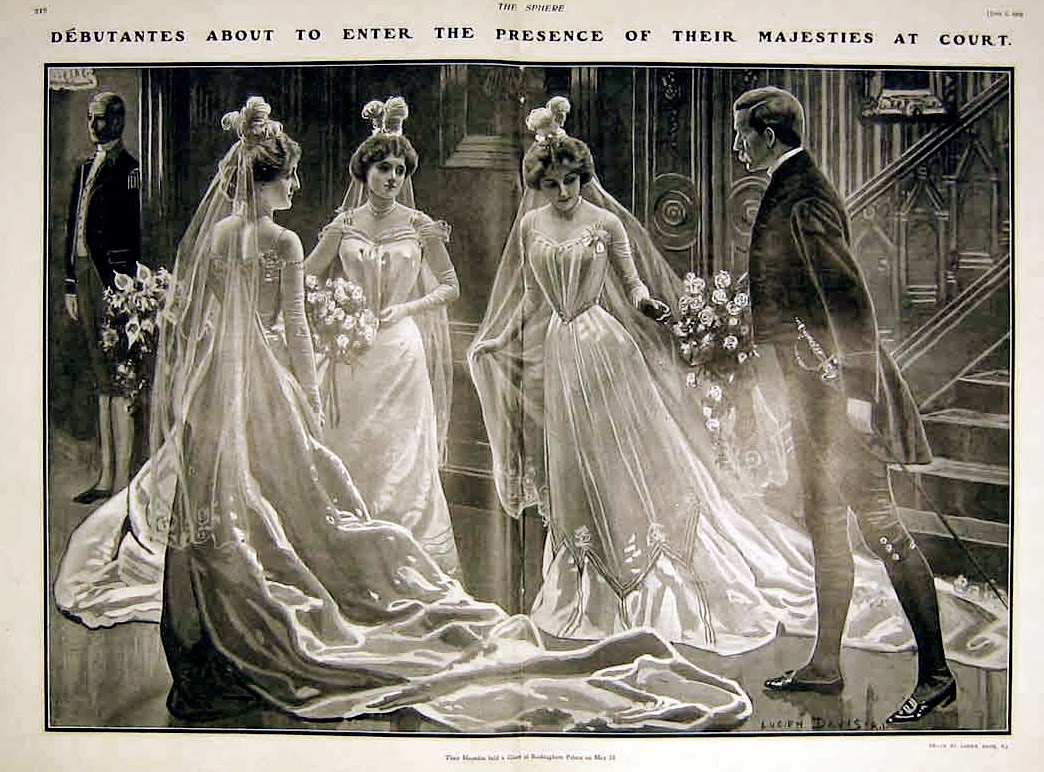
Debutantes of Old in White, Readying to Meet Royalty — To make one’s “debut,” or to enter into society, has its roots in the Royal Court of France. By the reign of Britain’s King George III, Queen Charlotte started a tradition of introducing and presenting the young aristocratic women of court to society. Known as “Debutantes” from Queen Victoria’s reign in 1837 and on, there was strict etiquette to follow regarding proper costume for court presentations; Fashionable evening dresses with head-dresses of veiling, feathers and a train trailing the dress from the waist. Long, white kid gloves, pretty fans or fragrant bouquets added to the look and offered a bit of diversity in look for the young debutantes. Fashion and etiquette have evolved over the years, however the excitement, pomp and ceremony remain the highlight of a young woman’s entrance to society.

Le Bal des Débutantes Paris’ Etiquette:

The Dos, Don’ts & the Couture

Le Bal is coming! On November 28, 2026, at the Shanghai-La Paris Hotel, a new group of Debutantes and their Cavaliers will gather — and yes, I’ll be watching. 

Le Bal takes inspiration from the traditional Debutante ball, but the etiquette has evolved along with the fashion.

Historically, Debutantes were presented in white gowns, white gloves and tiaras. At modern Le Bal, each Deb is dressed by a couture or haute couture house, while her Cavalier wears traditional white tie.

So, what does Le Bal etiquette look like today?

DO: Embrace Individuality… The Debs aren't expected to look alike. Color, different silhouettes and distinctive couture allow each young woman to have her own moment.

DON'T: Automatically Choose Black or White. Unlike traditional Debutante presentations, Le Bal generally steers its Debs away from black and white.

 DO: Respect the Dress Code! The couture may be modern, but this is still an exceptionally formal occasion. The Cavaliers' traditional white tie is a perfect reminder that some dress codes haven't gone anywhere.

 DON'T: Confuse Formality With Being Old-Fashioned Etiquette is kinetic. It evolves. Le Bal keeps the ceremony and formality of the debutante tradition while allowing fashion to move forward.

DO: Remember Your Comportment
The gown may get you photographed, but how you carry yourself completes the look. Posture, introductions, conversation, dancing and gracious interaction with your fellow guests are all part of formal social etiquette. 

And then, of course, there are the gowns…Last year we saw Bronwyn Vance, daughter of Angela Bassett and Courtney B. Vance; Spanish royal Eulalia de Orleans-Borbón in Tony Ward; and Lady Araminta Spencer-Churchill in Armani Privé. And who could forget Apple Martin's Valentino moment?

Hollywood? Royalty? Aristocracy? Couture? November 28th can't come quickly enough! 

Who will debut? Who will dress them? And most importantly… What are they going to wear?!?

Meet our newest contributor, Eileen Copeland. Eileen is the founder of Southern California Etiquette™, a modern etiquette and social refinement platform which explores dining culture, hosting, presentation, and contemporary social behavior. A native Southern Californian, Eileen’s background includes executive and personal assisting, real estate, wellness, modeling, beauty, and luxury client services. Married for over 15 years, Eileen is a mother of two and grandmother of two, whose broad experiences, including living internationally for nearly a decade, helped shape her appreciation for culture, hospitality, and refined living. She shares life with her husband, her mini Goldendoodle, Teddy, and Luna, her sphynx cat, while continuing her etiquette studies under mentor Maura Graber of The RSVP Institute of Etiquette.


 🍽️Etiquette Enthusiast, Maura J. Graber of The RSVP Institute of Etiquette, is the Site Editor of the Etiquipedia© Etiquette Encyclopedia

Friday, July 24, 2026

Thoughts on Introduction Etiquette

An introduction is more than good manners — it's an invitation to belong.


When did it become acceptable to stop introducing people? 
Have you ever been with someone who greeted everyone they knew, but never introduced you to any of them? Sadly, we have all been there.
A thoughtful introduction can turn an awkward moment into a welcoming one. It tells someone they belong, not that they're standing on the outside looking in. It shows respect for others when we make introductions.
No matter where you are in the world, respect often begins with a simple greeting. “Hello.” “Hola.” “Bonjour.” “Jambo”… Different words. Same message: "I see you."
Modern etiquette isn't always about table settings or dress codes. Sometimes it's simply saying “hello,” making the introduction, and making sure no one feels invisible.
An introduction isn't just good manners— it's an invitation to belong.

A Review of Introduction Etiquette 
  • Always introduce men to a women.
  • When introducing two men or two women, always introduce the younger to the older.
  • Say “I would like to present… ” Or “I’d like you to meet...”
  • Use proper titles whenever you know them, such as Miss, Mr., Mrs. or professional designations such as Doctor, Judge, or Captain.
  • Shake hands with a man. With a woman, shake hands only if she first offers her hand first.
  • Always stand up to be introduced, or to make introductions.
  • Look directly at the person you are being introduced to. Be polite and friendly with your eye contact.
  • Say “How do you do…” after being introduced.
  • Speak names clearly. Repeat them if asked.
  • If you are being introduced and didn’t understand the another person’s name, ask the person making the introduction to repeat the name.

Meet our newest contributor, Eileen Copeland. Eileen is the founder of Southern California Etiquette™, a modern etiquette and social refinement platform which explores dining culture, hosting, presentation, and contemporary social behavior. A native Southern Californian, Eileen’s background includes executive and personal assisting, real estate, wellness, modeling, beauty, and luxury client services. Married for over 15 years, Eileen is a mother of two and grandmother of two, whose broad experiences, including living internationally for nearly a decade, helped shape her appreciation for culture, hospitality, and refined living. She shares life with her husband, her mini Goldendoodle, Teddy, and Luna, her sphynx cat, while continuing her etiquette studies under mentor Maura Graber of The RSVP Institute of Etiquette.


🍽Etiquette Enthusiast, Maura J. Graber, of The RSVP Institute of Etiquette, is the Site Editor for the Etiquipedia© Etiquette Encyclopedia

Tuesday, June 30, 2026

When Tech and Old Etiquette Intersect

Today's invitations arrive through text messages, email, social media, or digital RSVP platforms instead of wax-sealed envelopes. Yet one simple courtesy remains just as important: respond.

Your Digital RSVP Is Older and More Important Than You Think

When was the last time you received a dinner invitation by text or email ? 

Now, when was the last time you actually replied?

Long before text messages, dinner invitations were handwritten and delivered by hand. Hosts expected a response—not because they were trying to be formal, but because they needed to know how many guests to prepare for.

The word etiquette itself comes from the French word for "label" or "ticket." One popular story traces it to the Palace of Versailles, where signs, called étiquettes, helped direct guests and establish expectations. Over time, the word became associated with the rules that helped society function smoothly.

Although our invitations have changed, the purpose behind them hasn't.

Today's invitations arrive through text messages, email, social media, or digital RSVP platforms instead of wax-sealed envelopes. Yet one simple courtesy remains just as important: respond.

A quick "Yes, I'd love to come" or "Thank you, but I can't make it" helps your host plan food, seating, and the overall experience for everyone attending.

A "Maybe" may seem harmless, but it often leaves a host waiting, guessing, and unable to finalize their plans.

Etiquette has never been about being old-fashioned or overly formal. It's about making other people feel respected and considered.

Technology will continue to evolve. Good manners don't.

The next time your phone buzzes with an invitation, remember: an RSVP isn't just a button to click—it's a small act of courtesy that has connected hosts and guests for centuries.


Meet our newest contributor, Eileen Copeland. Eileen is the founder of Southern California Etiquette™, a modern etiquette and social refinement platform which explores dining culture, hosting, presentation, and contemporary social behavior. A native Southern Californian, Eileen’s background includes executive and personal 
assisting, real estate, wellness, modeling, beauty, and luxury client services. Married for over 15 years, Eileen is a mother of two and grandmother of two, whose broad experiences, including living internationally for nearly a decade, helped shape her appreciation for culture, hospitality, and refined living. She shares life with her husband, her mini Goldendoodle, Teddy, and Luna, her sphynx cat, while continuing her etiquette studies under mentor Maura Graber of The RSVP Institute of Etiquette. You can reach her at Southern California Etiquette.


🍽️Etiquette Enthusiast, Maura J. Graber of The RSVP Institute of Etiquette, is the Site Editor of the Etiquipedia© Etiquette Encyclopedia

Saturday, June 27, 2026

Early Black-American Etiquette

“George wonders who Harry’s charming companion may be. Illustrating correct manners of saluting on the street.” - From “The National Capital Code of Etiquette,” 1920

Before Emily Post

Many etiquette books were written over the centuries, but everyone references Emily Post’s wildly successful early 20th century book, “Etiquette in Society, in Business, in Politics, and at Home.” It was so successful, it became one of the most recognized etiquette books in America. But what fascinated me was discovering the African-American communities were already producing etiquette manuals before Emily Post became nationally known.

Growing up I had never heard about books such as, “The Colored Girl Beautiful” from 1916 and “The National Capital Code of Etiquette” from 1920. They focused on presentation, conduct, dress, conversation, and social mobility within Black society.

 While mainstream etiquette books of the Gilded Age and post-Gilded Age often centered wealthy white society—the Astors, Vanderbilts, debutante culture, and formal entertaining—Black Americans were simultaneously cultivating their own systems of refinement, often under entirely different social conditions.

The difference was not refinement itself, but access and visibility. For white upper-class society, etiquette was often associated with status, leisure, and social ranking. For many African-Americans in the late 19th and early 20th centuries, etiquette and presentation could also function as dignity, protection, education, and advancement in a society still shaped by segregation and exclusion.

By 1900, Black literacy had risen to over 50%, helping fuel the growth of social organizations, etiquette education, churches, debutante traditions, and formal community gatherings (U.S. Census Bureau, 1900).Refinement was not absent from Black communities—it was simply less documented and less centered in mainstream historical narratives.

And honestly? That changes the conversation.

Refinement was never exclusive. It was always there.

📖 Who Said It First?

Before Emily Post’s famous etiquette book was published and she became a household name, African-American communities already had their own etiquette and refinement guides in circulation.

Hackley’s 1916 book and Green’s 1920 etiquette code both predate Emily Post’s first edition, which was first published in July 1922.

African-American Etiquette Texts

“The Colored Girl Beautiful,” from 1916, and “Etiquette in Society, in Business, in Politics” from 1020, focused on presentation, conduct, grooming, and dignity within Black society. The National Capital Code of Etiquette (1920) emphasized manners, Conversation, and the Home. It was in 1922 that Emily Post standardized many of these social expectations, introductions, and social presentation by way of another American book on social etiquette for mainstream society. 


Research and historical references sourced from:

• The National Capital Code of Etiquette (1920) by

Edward S. Green

• The Colored Girl Beautiful (1916) by E. Azalia Hackley

• Emily Post, Etiquette in Society, in Business, in Politics,

and at Home (1922)

• Internet Archive

• Project Gutenberg

• Schomburg Center for Research in Black Culture


Meet our newest contributor, Eileen Copeland. Eileen is the founder of Southern California Etiquette™, a modern etiquette and social refinement platform which explores dining culture, hosting, presentation, and contemporary social behavior. A native Southern Californian, Eileen’s background includes executive and personal 
assisting, real estate, wellness, modeling, beauty, and luxury client services. Married for over 15 years, Eileen is a mother of two and grandmother of two, whose broad experiences, including living internationally for nearly a decade, helped shape her appreciation for culture, hospitality, and refined living. She shares life with her husband, her mini Goldendoodle, Teddy, and Luna, her sphynx cat, while continuing her etiquette studies under mentor Maura Graber of The RSVP Institute of Etiquette. You can reach her at Southern California Etiquette.

🍽️Etiquette Enthusiast, Maura J. Graber of The RSVP Institute of Etiquette, is the Site Editor of the Etiquipedia© Etiquette Encyclopedia

Wednesday, May 27, 2026

Top 10 Rules of BBQ Etiquette

The grill is understood as the host’s domain. Unless invited, guests should avoid hovering over the grill or offering constant commentary—respect the process. 

Summer Etiquette 101: BBQ Edition

As summer approaches, backyard barbecues and outdoor dining become part of American social culture. While the atmosphere may be relaxed, etiquette still applies—modern etiquette simply adapts to informal settings.

1. Guests should greet the host upon arrival and acknowledge them before departure. A simple hello and goodbye remains one of the easiest forms of consideration.

2. The grill is understood as the host’s domain. Unless invited, guests should avoid hovering over the grill or offering constant commentary—respect the process.

3. Hot dogs and hamburgers are traditionally eaten with the hands. Utensils are generally unnecessary unless the item becomes difficult to manage.

4. Ribs are accepted as finger foods; however, excessive messiness should still be avoided.

5. Napkins should be used frequently—this is barbecue, not battle.Bringing your own wipes to a barbecue is no longer excessive—it is simply preparation. Summer dining and sauce tend to find their way everywhere eventually.

6. Disposable plates and paper napkins do not eliminate standards of conduct. Plates should remain balanced, movement should be measured, and spills should be avoided whenever possible.

7. Side dishes such as baked beans, potato salad, and coleslaw are eaten with utensils and served with moderation.

8. Phones should not dominate the table or gathering. Outdoor dining remains a shared social experience, not an extension of private scrolling.

9. Guests may bring a small offering such as dessert, fruit, beverages, or ice, even when told it is unnecessary. Thoughtfulness is always noticed.

10.A brief thank-you message after the gathering reflects appreciation and good form. Informal settings do not remove the value of acknowledgment.

Ultimately, summer etiquette is less about perfection and more about awareness. The setting may be casual, but consideration for others remains timeless. -By Eileen Copeland, 2026


Meet our newest contributor, Eileen Copeland. Eileen is the founder of Southern California Etiquette™, a modern etiquette and social refinement platform which explores dining culture, hosting, presentation, and contemporary social behavior. A native Southern Californian, Eileen’s background includes executive and personal assisting, real estate, wellness, modeling, beauty, and luxury client services. Married for over 15 years, Eileen is a mother of two and grandmother of two, whose broad experiences, including living internationally for nearly a decade, helped shape her appreciation for culture, hospitality, and refined living. She shares life with her husband, her mini Goldendoodle, Teddy, and Luna, her sphynx cat, while continuing her etiquette studies under mentor Maura Graber of The RSVP Institute of Etiquette.


🍽Etiquette Enthusiast, Maura J. Graber, of The RSVP Institute of Etiquette, is the Site Editor for the Etiquipedia© Etiquette Encyclopedia