Showing posts with label Eileen Copeland Southern California Etiquette. Show all posts

Monday, August 17, 2026

Etiquette and Excitement at “Le Bal”

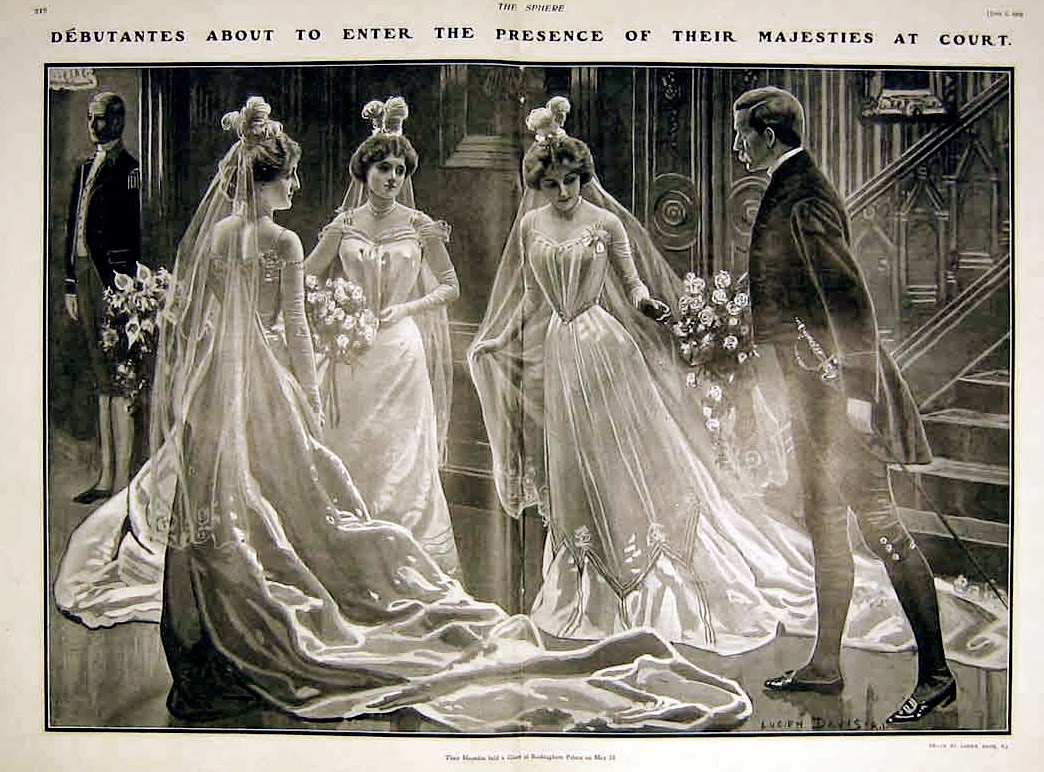
Debutantes of Old in White, Readying to Meet Royalty — To make one’s “debut,” or to enter into society, has its roots in the Royal Court of France. By the reign of Britain’s King George III, Queen Charlotte started a tradition of introducing and presenting the young aristocratic women of court to society. Known as “Debutantes” from Queen Victoria’s reign in 1837 and on, there was strict etiquette to follow regarding proper costume for court presentations; Fashionable evening dresses with head-dresses of veiling, feathers and a train trailing the dress from the waist. Long, white kid gloves, pretty fans or fragrant bouquets added to the look and offered a bit of diversity in look for the young debutantes. Fashion and etiquette have evolved over the years, however the excitement, pomp and ceremony remain the highlight of a young woman’s entrance to society.

Le Bal des Débutantes Paris’ Etiquette:

The Dos, Don’ts & the Couture

Le Bal is coming! On November 28, 2026, at the Shanghai-La Paris Hotel, a new group of Debutantes and their Cavaliers will gather — and yes, I’ll be watching. 

Le Bal takes inspiration from the traditional Debutante ball, but the etiquette has evolved along with the fashion.

Historically, Debutantes were presented in white gowns, white gloves and tiaras. At modern Le Bal, each Deb is dressed by a couture or haute couture house, while her Cavalier wears traditional white tie.

So, what does Le Bal etiquette look like today?

DO: Embrace Individuality… The Debs aren't expected to look alike. Color, different silhouettes and distinctive couture allow each young woman to have her own moment.

DON'T: Automatically Choose Black or White. Unlike traditional Debutante presentations, Le Bal generally steers its Debs away from black and white.

 DO: Respect the Dress Code! The couture may be modern, but this is still an exceptionally formal occasion. The Cavaliers' traditional white tie is a perfect reminder that some dress codes haven't gone anywhere.

 DON'T: Confuse Formality With Being Old-Fashioned Etiquette is kinetic. It evolves. Le Bal keeps the ceremony and formality of the debutante tradition while allowing fashion to move forward.

DO: Remember Your Comportment
The gown may get you photographed, but how you carry yourself completes the look. Posture, introductions, conversation, dancing and gracious interaction with your fellow guests are all part of formal social etiquette. 

And then, of course, there are the gowns…Last year we saw Bronwyn Vance, daughter of Angela Bassett and Courtney B. Vance; Spanish royal Eulalia de Orleans-Borbón in Tony Ward; and Lady Araminta Spencer-Churchill in Armani Privé. And who could forget Apple Martin's Valentino moment?

Hollywood? Royalty? Aristocracy? Couture? November 28th can't come quickly enough! 

Who will debut? Who will dress them? And most importantly… What are they going to wear?!?

Meet our newest contributor, Eileen Copeland. Eileen is the founder of Southern California Etiquette™, a modern etiquette and social refinement platform which explores dining culture, hosting, presentation, and contemporary social behavior. A native Southern Californian, Eileen’s background includes executive and personal assisting, real estate, wellness, modeling, beauty, and luxury client services. Married for over 15 years, Eileen is a mother of two and grandmother of two, whose broad experiences, including living internationally for nearly a decade, helped shape her appreciation for culture, hospitality, and refined living. She shares life with her husband, her mini Goldendoodle, Teddy, and Luna, her sphynx cat, while continuing her etiquette studies under mentor Maura Graber of The RSVP Institute of Etiquette.


 🍽️Etiquette Enthusiast, Maura J. Graber of The RSVP Institute of Etiquette, is the Site Editor of the Etiquipedia© Etiquette Encyclopedia

Thursday, August 6, 2026

Etiquette and View of Queen Charlotte

On the Queen Charlotte Ball

The ball has been running almost every year since 1780, when King George III first organized the Queen Charlotte’s Ball as a way to celebrate his wife’s birthday. 

The ceremony remained unchanged- with debutantes paying respects to a large iced cake at Buckingham Palace, overseen by the monarch- until 1958, when Prince Philip persuaded the Queen to stop receiving each year’s crop at Court.

Philip is said to have complained that the annual Ball, at which girls aged 17 and 18 were expected to meet their suitably-moneyed future husbands, was ‘bloody daft’. 

The Queen’s sister, Princess Margaret, was even more forthright, saying later ‘we had to put a stop to it . . . every tart in London was getting in!’ 

Since 1958 the ball was held sporadically at various exclusive venues in the capital to varying degrees of success before being relaunched in 2009 and held annually since, albeit without its royal seal of approval.  –From the Daily Mail, 2014

— Public domain image of Thomas Gainsborough‘s portrait of Queen Charlotte, from 1781

Queen Charlotte, Presence, and the Elegance of Being Remembered 

👑 👑 👑 👑 👑 👑 👑

History invites us to look closer. Etiquette teaches us to do so with grace.

There are people and moments in history which feel unexpectedly personal and intriguing. For me, England’s Queen Charlotte is one of the people.

As an Afro-Latina woman who once had the privilege of living in Germany, Queen Charlotte’s story resonates with me in a deeply personal way. Like many little girls, I grew up fascinated by queens, castles, and grand ballrooms. Years later, I found myself living in Germany, marrying a German man, and eventually discovering the remarkable story of a German-born queen whose legacy continues to inspire conversations about grace, etiquette, and representation. History suddenly felt much closer than I ever imagined.

There is also a rich historical conversation surrounding Queen Charlotte’s ancestry. For generations, historians have explored evidence suggesting she may have had African ancestry through her Portuguese royal lineage. While scholars continue to debate the extent of that ancestry, Queen Charlotte has become an enduring figure of representation for many Black communities around the world. As an Afro-Latina woman, I found myself looking beyond the portraits and royal titles to appreciate the possibility that history is often far more diverse than many of us were taught.

Yet what captivated me most wasn’t the historical debate. It was her presence. When I study portraits of Queen Charlotte, I don’t immediately notice the jewels. I notice her composure… Her posture…  Her quiet confidence.

There is nothing hurried about her expression. Nothing that suggests she was competing for attention. She simply occupied the room. And perhaps that’s where the etiquette comes into the picture.

In 1780, King George III established Queen Charlotte’s Birthday Ball in honor of his wife’s birthday. Although young women had been formally presented at court for generations, Queen Charlotte’s Ball elevated the tradition into Britain’s most celebrated annual debutante presentation. It became the social event of “the Season,” where invitations were coveted, presentations were rehearsed, and families dreamed of introducing their daughters into society. But what fascinates me most is not the grandeur of the ballroom. It is the purpose behind the ball. The evening wasn’t created for guests to outshine the Queen, but was created to honor her.

Imagine receiving an engraved invitation to St. James’s Palace. Every detail of your appearance, your entrance, your curtsy, your conversation, and even your dance reflected respect for the occasion. Etiquette wasn’t a performance; it was an expression of consideration for someone else. That lesson feels just as meaningful today.

Whether attending a wedding, celebrating a birthday, accepting a dinner invitation, or entering someone’s home, etiquette has never been about becoming the center of attention. It has always been about recognizing whose moment it is.

One historical detail stopped me in my tracks. While guests often arrived in elaborate court dress adorned with jewels and embroidery, Queen Charlotte herself was known for appearing with remarkable restraint. She didn’t need to compete with those who came to celebrate her. Her presence spoke before her clothing ever could. As someone who teaches etiquette, I find that lesson timeless.

Today, we often confuse elegance with being noticed. Queen Charlotte reminds us that true elegance is found in dignity, humility, and knowing when to let the occasion—not our ego—take center stage. Perhaps that’s why Queen Charlotte’s story continues to inspire me. Not simply because she was a Queen. Not simply because she was born in Germany. Not simply because many continue to celebrate her as a woman whose possible African ancestry has broadened conversations about representation in European history. But because she reminds us that grace never demands attention. It simply earns respect.

More than two centuries later, Queen Charlotte’s Birthday Ball still offers us one of etiquette’s greatest lessons: The guest’s job was never to compete with the Queen. It was to honor her. And perhaps that is the timeless beauty of etiquette. It teaches us that every room has a purpose, every celebration has a guest of honor, and every gracious person understands the difference. Because true etiquette has never been about being the most noticed person in the room.It has always been about knowing how to honor the moment—and the people within.

Meet our newest contributor, Eileen Copeland. Eileen is the founder of Southern California Etiquette™, a modern etiquette and social refinement platform which explores dining culture, hosting, presentation, and contemporary social behavior. A native Southern Californian, Eileen’s background includes executive and personal assisting, real estate, wellness, modeling, beauty, and luxury client services. Married for over 15 years, Eileen is a mother of two and grandmother of two, whose broad experiences, including living internationally for nearly a decade, helped shape her appreciation for culture, hospitality, and refined living. She shares life with her husband, her mini Goldendoodle, Teddy, and Luna, her sphynx cat, while continuing her etiquette studies under mentor Maura Graber of The RSVP Institute of Etiquette.


 🍽️Etiquette Enthusiast, Maura J. Graber of The RSVP Institute of Etiquette, is the Site Editor of the Etiquipedia© Etiquette Encyclopedia

Saturday, August 1, 2026

Spotlight on Eileen Copeland


Meet Etiquette Coach and Etiquipedia Contributor, Eileen Copeland, Founder of Southern California Etiquette
Eileen is the founder of Southern California Etiquette, a modern etiquette and social refinement platform which explores dining culture, hosting, presentation, and contemporary social behavior. 
A native Southern Californian, Eileen’s background includes executive and personal assisting, real estate, wellness, modeling, beauty, and luxury client services. 
Married for over 15 years, Eileen is a mother of two and grandmother of two, whose broad experiences, including living internationally for nearly a decade, helped shape her appreciation for culture, hospitality, and refined living. She shares life with her husband, her mini Goldendoodle, Teddy, and Luna, her sphynx cat.

Below are links to a few of Eileen’s articles on etiquette that you’ll find on Etiquipedia:

Top 10 Rules of BBQ Etiquette
Thoughts on Introduction Etiquette
Early Black-American Etiquette
When Tech and Old Etiquette Intersect
Eileen says, “Good manners are not about being better than someone else—they're about helping others feel valued, respected, and welcome.”

The following is a Q. & A. with Eileen:

What was the impetus for starting your Etiquette business?

I started Southern California Etiquette because I believe good manners are one of the greatest gifts we can give the next generation. Etiquette isn't about social status—it's about respect, kindness, and consideration. My mission is to help children build confidence early while teaching that good character never goes out of style.

2. What do you enjoy teaching the most regarding Etiquette?

I enjoy teaching children social skills and dining manners the most. They are eager to learn and genuinely excited to practice what they've been taught.

Eileen was inspired by HBO’s, “The Gilded Age,” to research more on Black Americans in the Gilded Age. Her research has led her to several authors’ works. “I enjoy studying etiquette through many different voices and historical perspectives. I'm especially inspired by the work of Edward S. Green, one of the earliest Black etiquette authors, whose 1899 book The Complete Manners of Polite Society highlighted the importance of courtesy, dignity, and self-respect.” — Above, Eileen modeling gilded age attire. 

3. What do you find rewarding about teaching Etiquette?

Seeing confidence grow is the most rewarding part. Whether it's introducing themselves with confidence, practicing good table manners, or communicating respectfully, students gain life skills they will carry with them for years to come. Watching them realize that small acts of respect and kindness can make a big difference. That is incredibly rewarding!

4. What types of classes do you offer?

My primary focus is children’s etiquette education, including everyday manners, dining etiquette, communication skills, confidence, and social etiquette. I also offer classes for teens, adults, businesses, schools, community organizations, and private groups.

Teaching respect, empathy, and confidence at an early age is vital, and allows them to build a strong foundation for every stage of life.
5. What age group do you enjoy working with most? And why?

Children are my favorite age group because the lessons they learn today become the habits they carry into adulthood. Teaching respect, empathy, and confidence at an early age is vital, and allows them to build a strong foundation for every stage of life.


6. Who are some of the older etiquette authors or authorities you enjoy reading?

I enjoy studying etiquette through many different voices and historical perspectives. I'm especially inspired by the work of Edward S. Green, one of the earliest Black etiquette authors, whose 1899 book The Complete Manners of Polite Society highlighted the importance of courtesy, dignity, and self-respect.

I'm also grateful to study under Maura J. Graber, whose passion for etiquette history and education continues to inspire my own work. And, of course, Emily Post remains one of the most influential authorities whose timeless principles continue to shape etiquette today.

As I continue my own journey as an etiquette writer, I hope to help preserve history while making etiquette approachable and meaningful for future generations. Good manners are not about being better than someone else—they're about helping others feel valued, respected, and welcome.


To learn more about Eileen and her services, you can reach her via her website https://southerncaliforniaetiquette.com/


 🍽️Etiquette Enthusiast, Maura J. Graber of The RSVP Institute of Etiquette, is the Site Editor of the Etiquipedia© Etiquette Encyclopedia

Friday, July 24, 2026

Thoughts on Introduction Etiquette

An introduction is more than good manners — it's an invitation to belong.


When did it become acceptable to stop introducing people? 
Have you ever been with someone who greeted everyone they knew, but never introduced you to any of them? Sadly, we have all been there.
A thoughtful introduction can turn an awkward moment into a welcoming one. It tells someone they belong, not that they're standing on the outside looking in. It shows respect for others when we make introductions.
No matter where you are in the world, respect often begins with a simple greeting. “Hello.” “Hola.” “Bonjour.” “Jambo”… Different words. Same message: "I see you."
Modern etiquette isn't always about table settings or dress codes. Sometimes it's simply saying “hello,” making the introduction, and making sure no one feels invisible.
An introduction isn't just good manners— it's an invitation to belong.

A Review of Introduction Etiquette 
  • Always introduce men to a women.
  • When introducing two men or two women, always introduce the younger to the older.
  • Say “I would like to present… ” Or “I’d like you to meet...”
  • Use proper titles whenever you know them, such as Miss, Mr., Mrs. or professional designations such as Doctor, Judge, or Captain.
  • Shake hands with a man. With a woman, shake hands only if she first offers her hand first.
  • Always stand up to be introduced, or to make introductions.
  • Look directly at the person you are being introduced to. Be polite and friendly with your eye contact.
  • Say “How do you do…” after being introduced.
  • Speak names clearly. Repeat them if asked.
  • If you are being introduced and didn’t understand the another person’s name, ask the person making the introduction to repeat the name.

Meet our newest contributor, Eileen Copeland. Eileen is the founder of Southern California Etiquette™, a modern etiquette and social refinement platform which explores dining culture, hosting, presentation, and contemporary social behavior. A native Southern Californian, Eileen’s background includes executive and personal assisting, real estate, wellness, modeling, beauty, and luxury client services. Married for over 15 years, Eileen is a mother of two and grandmother of two, whose broad experiences, including living internationally for nearly a decade, helped shape her appreciation for culture, hospitality, and refined living. She shares life with her husband, her mini Goldendoodle, Teddy, and Luna, her sphynx cat, while continuing her etiquette studies under mentor Maura Graber of The RSVP Institute of Etiquette.


🍽Etiquette Enthusiast, Maura J. Graber, of The RSVP Institute of Etiquette, is the Site Editor for the Etiquipedia© Etiquette Encyclopedia

Tuesday, June 30, 2026

When Tech and Old Etiquette Intersect

Today's invitations arrive through text messages, email, social media, or digital RSVP platforms instead of wax-sealed envelopes. Yet one simple courtesy remains just as important: respond.

Your Digital RSVP Is Older and More Important Than You Think

When was the last time you received a dinner invitation by text or email ? 

Now, when was the last time you actually replied?

Long before text messages, dinner invitations were handwritten and delivered by hand. Hosts expected a response—not because they were trying to be formal, but because they needed to know how many guests to prepare for.

The word etiquette itself comes from the French word for "label" or "ticket." One popular story traces it to the Palace of Versailles, where signs, called étiquettes, helped direct guests and establish expectations. Over time, the word became associated with the rules that helped society function smoothly.

Although our invitations have changed, the purpose behind them hasn't.

Today's invitations arrive through text messages, email, social media, or digital RSVP platforms instead of wax-sealed envelopes. Yet one simple courtesy remains just as important: respond.

A quick "Yes, I'd love to come" or "Thank you, but I can't make it" helps your host plan food, seating, and the overall experience for everyone attending.

A "Maybe" may seem harmless, but it often leaves a host waiting, guessing, and unable to finalize their plans.

Etiquette has never been about being old-fashioned or overly formal. It's about making other people feel respected and considered.

Technology will continue to evolve. Good manners don't.

The next time your phone buzzes with an invitation, remember: an RSVP isn't just a button to click—it's a small act of courtesy that has connected hosts and guests for centuries.


Meet our newest contributor, Eileen Copeland. Eileen is the founder of Southern California Etiquette™, a modern etiquette and social refinement platform which explores dining culture, hosting, presentation, and contemporary social behavior. A native Southern Californian, Eileen’s background includes executive and personal 
assisting, real estate, wellness, modeling, beauty, and luxury client services. Married for over 15 years, Eileen is a mother of two and grandmother of two, whose broad experiences, including living internationally for nearly a decade, helped shape her appreciation for culture, hospitality, and refined living. She shares life with her husband, her mini Goldendoodle, Teddy, and Luna, her sphynx cat, while continuing her etiquette studies under mentor Maura Graber of The RSVP Institute of Etiquette. You can reach her at Southern California Etiquette.


🍽️Etiquette Enthusiast, Maura J. Graber of The RSVP Institute of Etiquette, is the Site Editor of the Etiquipedia© Etiquette Encyclopedia

Saturday, June 27, 2026

Early Black-American Etiquette

“George wonders who Harry’s charming companion may be. Illustrating correct manners of saluting on the street.” - From “The National Capital Code of Etiquette,” 1920

Before Emily Post

Many etiquette books were written over the centuries, but everyone references Emily Post’s wildly successful early 20th century book, “Etiquette in Society, in Business, in Politics, and at Home.” It was so successful, it became one of the most recognized etiquette books in America. But what fascinated me was discovering the African-American communities were already producing etiquette manuals before Emily Post became nationally known.

Growing up I had never heard about books such as, “The Colored Girl Beautiful” from 1916 and “The National Capital Code of Etiquette” from 1920. They focused on presentation, conduct, dress, conversation, and social mobility within Black society.

 While mainstream etiquette books of the Gilded Age and post-Gilded Age often centered wealthy white society—the Astors, Vanderbilts, debutante culture, and formal entertaining—Black Americans were simultaneously cultivating their own systems of refinement, often under entirely different social conditions.

The difference was not refinement itself, but access and visibilityFor white upper-class society, etiquette was often associated with status, leisure, and social ranking. For many African-Americans in the late 19th and early 20th centuries, etiquette and presentation could also function as dignity, protection, education, and advancement in a society still shaped by segregation and exclusion.

By 1900, Black literacy had risen to over 50%, helping fuel the growth of social organizations, etiquette education, churches, debutante traditions, and formal community gatherings (U.S. Census Bureau, 1900).Refinement was not absent from Black communities—it was simply less documented and less centered in mainstream historical narratives.

And honestly? That changes the conversation.

Refinement was never exclusive. It was always there.

📖 Who Said It First?

Before Emily Post’s famous etiquette book was published and she became a household name, African-American communities already had their own etiquette and refinement guides in circulation.

Hackley’s 1916 book and Green’s 1920 etiquette code both predate Emily Post’s first edition, which was first published in July 1922.

African-American Etiquette Texts

“The Colored Girl Beautiful,” from 1916, and “Etiquette in Society, in Business, in Politics” from 1020, focused on presentation, conduct, grooming, and dignity within Black society. The National Capital Code of Etiquette (1920) emphasized manners, Conversation, and the Home. It was in 1922 that Emily Post standardized many of these social expectations, introductions, and social presentation by way of another American book on social etiquette for mainstream society


Research and historical references sourced from:

• The National Capital Code of Etiquette (1920) by

Edward S. Green

• The Colored Girl Beautiful (1916) by E. Azalia Hackley

• Emily Post, Etiquette in Society, in Business, in Politics,

and at Home (1922)

• Internet Archive

• Project Gutenberg

• Schomburg Center for Research in Black Culture


Meet our newest contributor, Eileen Copeland. Eileen is the founder of Southern California Etiquette™, a modern etiquette and social refinement platform which explores dining culture, hosting, presentation, and contemporary social behavior. A native Southern Californian, Eileen’s background includes executive and personal 
assisting, real estate, wellness, modeling, beauty, and luxury client services. Married for over 15 years, Eileen is a mother of two and grandmother of two, whose broad experiences, including living internationally for nearly a decade, helped shape her appreciation for culture, hospitality, and refined living. She shares life with her husband, her mini Goldendoodle, Teddy, and Luna, her sphynx cat, while continuing her etiquette studies under mentor Maura Graber of The RSVP Institute of Etiquette. You can reach her at Southern California Etiquette.

🍽️Etiquette Enthusiast, Maura J. Graber of The RSVP Institute of Etiquette, is the Site Editor of the Etiquipedia© Etiquette Encyclopedia