Wednesday, March 11, 2020

Etiquette for Strangers on a Train

“I have done nothing unbecoming to a gentleman,” he declared before the court. “In the book of etiquette of 1922, I can prove that a gentleman can approach a lady and speak to her.” – Simply because it is in a book of etiquette, does not make it so. Etiquette books are published all of the time, with misinformation disguised as “the new etiquette.” In reality, too often someone is promoting relaxed standards, as opposed to actual etiquette which has evolved organically over time. – Photo source, Pinterest


YORK, England – Nov. 14. That is is not etiquette for a man to speak to an unknown lady in a train has just been formally declared by the magistrates of this city.

Felix Roberts, of Newcastle, had dinner in the smoking portion of a buffet and afterwards went into a non-smoking carriage, where Miss Monstaglio, of Whitley Bay, was sitting. 

He attempted to open up a conversation with her, but resenting this, she complained to the conductor, who asked Roberts to go back to the smoking section. But later in the journey, Roberts made a second attempt to make the lady's acquaintance and he was arrested.

“I have done nothing unbecoming to a gentleman,” he declared before the court. “In the book of etiquette of 1922, I can prove that a gentleman can approach a lady and speak to her.” But, despite the book of etiquette Roberts was heavily fined. – International News Service, 1922


Etiquette Enthusiast, Maura J Graber, is the Site Editor for the Etiquipedia© Etiquette Encyclopedia 

Tuesday, March 10, 2020

Sneeze Snub is Influenza Etiquette

Image
Avoid worry and turn your back on sneezes — In a time when the world faces another influenza pandemic, and briefly changes the etiquette for greeting others (avoid handshaking by touching elbows and avoid cheek kissing by putting one’s hand over one’s heart), it’s time to take a look at what was taught a hundred years ago. –An image of a Red Cross nurse published in Illustrated Current News, 1918. — Photo source, National Library of Medicine


Cover Coughs and Sneezes 🩺 Wash Hands Frequently and Thoroughly 🩺 Self Quarantine if Sick 🩺 Avoid Handshaking 🩺 Forego Cheek Kissing 🩺 Work from Home if Possible 🩺 Avoid Large Crowds🩺 Avoid Others Who May be Sick


The following is a summary of the talk given last week by Dr W. W. Crawford on the subject, “Preventive Measures Against Colds and Influenza.” An ordinary so-called cold may be the forerunner of such specific diseases as Measles, Influenza, Whooping Cough, Bronchitis and Tuberculosis. The germs of Colds and Influenza leave the body in the secretions of the mouth and nose, and enter the body through the same route. It is health etiquette to turn your back on sneezes. Remember coughing, sneezing and dust spread Influenza, and overcrowding helps these along. 

Remember, the close relationship between the nose and throat with the ears and sinuses. Therefore, see to it that your nose and throat are kept clean. Keep away from a house when the lady is sweeping with a broom or buy her a vacuum cleaner. Immunity may be artificial or natural. Keep your natural immunity up to the highest possible point by leading clean, wholesome lives. A great deal to do in keeping well is in your hands. Remember, doctors are only human and cannot do the impossible.— From an article in the San Diego Union, 1920


Etiquette Enthusiast, Maura J Graber, is the Site Editor for the Etiquipedia©️ Etiquette Encyclopedia 

Wednesday, March 4, 2020

Full Time Manners Teacher for School

Students were taught more than common courtesy — “What it all boils down to is attitude ... the right attitude ... more respect,” says Mrs. Hogan, the manners teacher. Because more mothers are working today and the lifestyle is faster paced, manners may not be getting as much attention as they once did, Mrs. Hogan said. The curriculum varied from class to class and ranges from table manners to how to react “if you come across a person with no legs,” Mrs. Hogan says. How should one react? “Physically, it makes him different,” Mrs. Hogan says to her students. “But, inside, he is just like you. He has feelings.”


Poor School has Full-Time Teacher of Good Manners


LIBERTY, Okla. (AP) This tiny community has one of the poorest schools in the whole state, but it has a full time teacher who does nothing but teach the children good manners. It was the idea of Leroy Taylor, the school principal for 18 years, who says there is “a national mood a national need for more respect.” The federal Department of Health, Education and Welfare put up $16,000, through the Oklahoma Department of Education, to hire a manners teacher this fall for Liberty's 210 school children and to buy the necessary supplies. If an evaluation to be made this spring shows the program is worthwhile, it could be funded for two more years. Taylor has no doubts that it will. 

“It, potentially, is the finest program we have ever had here,” he said in an interview this week. “It's not like a good calculus course. It can involve every child it just has to. From the most gifted to the one with the least ability, they all can prosper from it.” Most of the parents of Liberty's students work in nearby Fort Smith, Ark. In terms of taxable property, the school district is the second poorest in Oklahoma. So far, there has been no criticism from parents, educators said. Instead, there have been reports the program is working. For instance, first grader James Allsup surprised his mother by quietly pulling back a chair for his fifth-grade sister at a hamburger dinner. Noticing a bit of food at the corner of his sister's mouth, James twirled his napkin into a point, leaned over and deftly dabbed it away. 

“What it all boils down to is attitude ... the right attitude ... more respect,” says Ann Hogan, the manners teacher. Because more mothers are working today and the lifestyle is faster paced, manners may not be getting as much attention as they once did, Mrs. Hogan said. The Liberty curriculum varies from class to class and ranges from table manners to how to react “if you come across a person with no legs,” Mrs. Hogan says. How should one react? “Physically, it makes him different,” Mrs. Hogan says to her students. “But, inside, he is just like you. He has feelings.” The program deals with a variety of topics including how to accept compliments and criticism, bragging and boasting, introductions, and proper dress and conduct, whether on the playground, on a first date or at a funeral. — 1979


Etiquette Enthusiast, Maura J Graber, is the Site Editor for the Etiquipedia©️ Etiquette Encyclopedia

Tuesday, March 3, 2020

Etiquette and Gilding the Lily

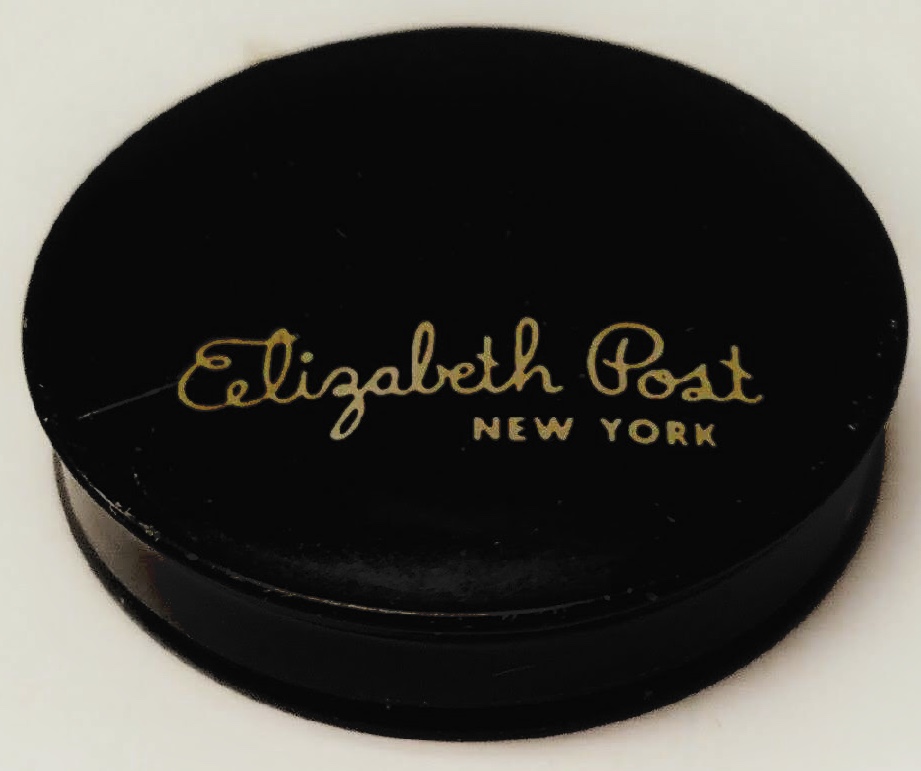
For centuries, books of manners and proper etiquette, had advised young women especially against wearing cosmetics. Lipsticks and powders, etc... were supposed to do no more than enhance one’s “natural charms” and not “gild the lily.” A young woman was seen to be reckless if she were to appear during the day and out in public, in a “made-up” manner. But, by the end of WWI, as more women were smoking and drinking in public, among other things, American women felt much more comfortable in cosmetics, and it wasn’t long before even a few etiquette authorities were promoting its use. Soon, women around the world were taking their cues from their American sisters.   – Along with being the first successor to Emily Post’s etiquette media business, Elizabeth Post, Emily’s only grand-daughter in-law, had a line of “Correct Cosmetics” that were marketed to American women.


American  Beauties

Listen to this girls! A newspaper writer on beauty methods quotes a “famous Frenchman who is a leading light in the cosmetic field” as follows: “To me the most alluring thing about the American girl and woman is that she acts as though she were beautiful, whether she is or not. In France, only the most attractive women have the courage to carry themselves off in the charming manner that is part of almost every American girl and woman.” There is more to this, it appears, than a mere boost for American use of cosmetics. Also, there is more than is meant by the saying, “Beauty is as beauty does.”
 

American women, with or without classic features and perfect natural coloring, do not hesitate to groom themselves smartly and develop ease of manners and charm. The result is that America has acquired international fame as a land of beautiful women. As a woman thinketh, apparently so is she. Courage, good health, independence, cleanliness and—ahem!—wise use of cosmetics, have worked marvels. Only a grouch will raise the question. “What is beauty?” – Lompoc Review, 1930


Etiquette Enthusiast, Maura J. Graber, is the Site Editor for the Etiquipedia© Etiquette Encyclopedia 

Morals and Manners in Schools

A series of recommendations for improvement of California’s school system will be presented to the next legislature. Among the recommendations were: Definite instruction should be given in “morals and manners.” There should be more health supervision in rural schools. 


A series of recommendations for improvement of California’s school system will be presented to the next legislature. The suggestions were made by the California Commission for the Study of Educational Problems. Among the recommendations were: Definite instruction should be given in “morals and manners.” There should be more health supervision in rural schools. Correspondence schools should be licensed by the federal government. There should be more emphasis on the fundamentals—reading, writing, spelling, arithmetic, geography and the correct use of English. 

The law relating to instruction in the evil effects of narcotics and alcohol should be given more attention. State printing of basic elementary texts should be continued but a revised method of selecting high school texts should be adopted. The part time school law should be amended to provide for part time classes in every district where fifteen or more children between 16 and 18 years of age, who have not graduated frim high school, want to work. Part time education should be compulsory for those without the equivalent of a tenth grade education but optional for others. — Lompoc Journal, 1931


Etiquette Enthusiast, Maura J Graber, is the Site Editor for the Etiquipedia©️ Etiquette Encyclopedia 

Elements of a Winning Personality

“Tact in dealing with persons and situations and open mindedness are other cardinal virtues to insure an agreeable personality.”  — Professor I. S. Westerberg was in demand throughout the county as a speaker on problems of educational interest, and was the President of the Education Professors of the Colleges and Universities of Southern California.

 Sarcasm may win us laughter, but not friends,” he stated. “Tact in dealing with persons and situations and open mindedness are other cardinal virtues to insure an agreeable personality.” Another important element is a sense of proportion, including a sense of humor, accessibility though not “gushiness,” confidence and self-reliance, attractiveness of manners, freedom from idiosyncrasies, which interfere with effectiveness, idealisms and ‘genuiness,’ “that translucency of character that attracts people and makes them trust implicitly.” The necessity of vitality was emphasized, Professor Westerberg quoting the late Charles Frohman who said that an artist’s life depended on vitality. Vitality means supreme ability and vibrant energy, although not necessarily beauty. — San Bernardino Sun, 1932


Etiquette Enthusiasts, Maura J Graber, is the Site Editor for the Etiquipedia©️ Etiquette Encyclopedia 

Sunday, March 1, 2020

Holiday Gift Giving in 1906

The soul of Christmas is thoughtfulness and remembrance, rather than display of reckless generosity

The Social Diary on Christmas Etiquette

There is etiquette in Christmas gifts, as in all the amenities of life. And every Christmas brings, with its good cheer, a world of unfortunate blunders in sending presents. Promiscuous Christmas gifts are only defensible if the token is of no intrinsic value and really amounts to no more than a greeting. It is pleasant if those who can afford it, send some pretty trifle of the season to their acquaintances, all around. The little token causes no embarrassment to the recipient and establishes no obligation. There are hundreds of forms of little baubles that lend pretty color to that idea. Blessed are they who buy Christmas gifts with taste, rather than with lavish expenditure. 


The soul of Christmas is thoughtfulness and remembrance, rather than display of reckless generosity. An inexpensive gift of rare good taste —showing that the giver took pains—is far more agreeable than a mere lump of cost that, perhaps, is of no use to the one receiving it, causing more regret over the waste of money than pleasure. That point is the secret of happy Christmas giving. How much better to be able to send a pretty thing to all on your list than to blow yourself for some of them and abandon the others. The artistic little gift is the salvation of the hard-up who would otherwise indulge in the folly of going on short rations through January and February to make a Christmas splurge. 

Christmas is pre-eminently the children's time and the old people's time. Parents who double-cross their children by waiting until Christmas to buy them what they must have, anyhow, commit a peculiar cruelty. And the sons and daughters who forget their old parents are even more cruel, for while the disappointment of children passes away, the aged have nothing sweeter than being remembered and nothing sadder than being forgotten. –Grace Grundy’s “Social Diary”, 1906

Etiquette Enthusiast, Maura J Graber, is the Site Editor for the Etiquipedia© Etiquette Encyclopedia

1930’s U.S. Drivers Polite

Volvo admits that its self-driving cars are unable to detect kangaroos because hopping confounds their systems. The company’s “Large Animal Detection system” can identify and avoid deer, elk and caribou, but early testing in Australia shows it cannot adjust to the kangaroo’s unique method of movement. – VolvoHouston.com

WASHINGTON.—BeIieve it or not, American drivers have better motoring manners than some of their foreign colleagues. Commissioner H. H. Newell of New South Wales, Australia, after driving several thousand miles in the United States and Great Britain, remarks, “in no country visited did I find more orderly traffic than that which is to be found in the United States.” He compared rule-of-the-road behavior of the U. S., Great Britain and New South Wales and found that drivers in his own state have the worst record for crossing the center line of the road. –1938


Etiquette Enthusiast, Maura J Graber, is the Site Editor for the Etiquipedia© Etiquette Encyclopedia