Tuesday, May 19, 2015

Etiquette of the "Well Bred"

Though the original, priggish "Dame Grundy" may, or may not, have been a fictional character, one can find her in real life and in period dramas. Titanic's Ruth DeWitt Bukater was so overly pretentious and conscious of everyone's manners around her, she wasn't aware she was breaking a cardinal rule of glove etiquette. Molly Brown may have been viewed as ill-bred and vulgar, but she certainly wasn't having her tea with her gloves on! ~ Countess of Rothes: "Look, here comes that vulgar Brown woman." Ruth DeWitt Bukater : "Quickly, get up before she sits with us!"

Little, things so often indicate good breeding, and the manners of those with whom one associates, that a person can not be too careful in observIng the rules of etiquette. For instance, to say "What?" as an interrogation, when not understanding a remark or question, is considered rude and bad form. It is too brusque, according to the theories of Dame Grundy.   
Curiosity, amusement or disdain? Upon observing the "well-bred," the emotions can sometimes be hard to distinguish.
Either "I beg your pardon" or "well," as an interrogation, is correct, and children, particularly, should be trained on these points. To go in front of a person without saying "Excuse me," denotes carelessness in minor points of breeding; also leaving the room without going through the form of asking permission is a solecism, "Excuse me a moment," if the person is soon returning, is correct, or should the absence be for an indefinite time, "Excuse me" is enough to say. 

To seal an envelope the whole length of the gum on the flap is another trifling matter for which a person is judged unfavorably. Unless the envelope contains an enclosure that might slip through an opening, only the very tip of the flap should be fastened. And, while on the subject of stationery, no two things are more indicative of ill breeding than to put a stamp on the left side of an envelope or, indeed, any place but squarely in the upper right-hand corner; and for a woman to sign her name with a prefix of Mrs. or Miss. to a note or letter, if she wishes to indicate her formal name she should put the prefix in parenthesis beside her name in full, or, in the case of a married woman, she signs her own name with her formal name in brackets beneath, as "Mary Jane Smith." and below, ("Mrs. John James Smith"). This is a form that should never be forgotten. 
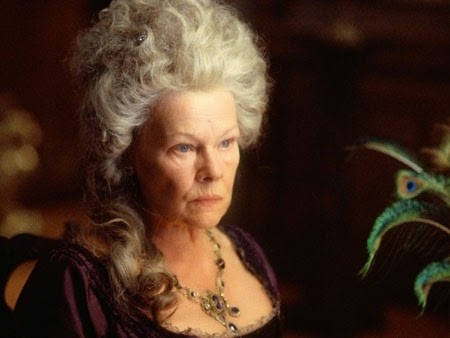
 Pride and Prejudice's Elizabeth Bennet found that "nothing was beneath this great lady's (Lady Catherine DeBourgh) attention, which could furnish her with an occasion of dictating to others." The Lady Catherine De Bourgh is another priggish, Dame Grundy, tsk-tsking at every perceived lack of "good breeding."
Leaving a spoon in a tea or coffee cup is not uncommon but it is ill bred, and to butter a whole slice of bread at once and eat from it is another social mistake. The slice must be broken into small pieces and each buttered as it is eaten. Loud talking in public places is vulgar, as it is to push and shoulder in a crowd. If every person would remember his or her manners at such times crowds would cease to be objects for dread. —From The Los Angeles Herald, 1909


Etiquette Enthusiast, Maura J. Graber, is the Site Editor for Etiquipedia© Etiquette Encyclopedia

Monday, May 18, 2015

Etiquette and Early 20th C.Tea Rooms

Mrs. Mayme Lee Clinkscale, was the African-American proprietress of "The Ideal Tea Room," a beautifully appointed tea and dining establishment in Chicago. The advert above is from about 1925 ~  According to VintageTeaRooms.net, "Tea rooms were enormously popular in the first half of the 20th century. Their history is nearly forgotten, but is a fascinating aspect of women's history. Most were owned or managed by women. Almost everyone, from schoolteachers to recent college graduates to homemakers, wanted to run one. Most tea room patrons were also women. In the 1920s, especially, tea rooms became the fashionable places for women to meet friends in small towns, big cities, and suburbs alike."

Traditional Tea Table
"Necessity is the mother of invention." Someone, probably having reflected upon the easy social character of the English five o'clock tea, solved the problem for the American hostess by instituting the afternoon reception, which, somewhere between the hours of four and six, summons a host of friends to cross one's threshold and meet informally, chatting for a while over a sociable cup of tea, each group giving place to others, none crowding, all at ease, every one the recipient of a gracious welcome from the hostess, who by the hospitality thus offered has tacitly placed each guest on her visiting list for the season." Agnes H. Morton


"In the early 20th century almost all tea rooms used paper napkins, often dainty ones imported from Japan or China. They also did away with tablecloths, leaving tabletops bare or using doilies or placemats.

Tea room proprietors were motivated not only by a wish to cut laundry expense but also because they were of a time and social class that believed it was more sanitary to rid interiors of the excessive furbelows of the Victorian age.

Reflecting this mentality, Alice Foote MacDougall remarked in a 1928 article titled 'Eating Aesthetically,' 'There is nothing particularly alluring about long rows of tables, standing like shrouded sepulchers in winding sheets of more or less unsanitary tablecloths.'

As the 20th century wore on most restaurants got rid of tablecloths making them something of a rarity, resulting in the term 'white-tablecloth restaurant' for more luxurious establishments." - From Jan Whitaker's, "Restaurant-ing through history" blog


Jan Whitaker

We eat in restaurants several times a week and yet know very little about their history. I plan to dip into my archive of research and images every so often to present a little tidbit that highlights aspects of our American restaurant culture. Let me know your thoughts- Restaurant-ing through history.


Etiquette Enthusiast, Maura J. Graber, is the Site Editor for Etiquipedia© Etiquette Encyclopedia

Sunday, May 17, 2015

Etiquette and a "Woman Problem"

Was this a "Woman Problem" or in reality, a "Man Problem?"  In the 1890s, British women were more quiet and reserved in their etiquette and mannerisms, compared to their American counterparts, throughout all levels of society. Between the 1870s and the outbreak of World War One, more than 200 daughters of America's wealthiest families, went to Great Britain and Europe to exchange cash for a place in the British aristocracy and Europe's royal families. Finding many eligible young men who were the heirs to cash-strapped, large estates and titles, these marriages were rarely "love-matches," but America's young women with affluence, ingenuity, and a different set of manners, brought permanent changes to the English aristocracy and ruling classes of the day.

"The Woman Problem in England"

A superior and well educated class of young women in England, daughters of officers and clergymon, of professional men as well, are seeking employment in the London shops, where hours are shorter and wages are better than in the more genteel occupations of nursery governess and schoolteacher. 

One of these independent young women says she infinitely prefers the business work to the hopeless monotony of the village home life and the painfully patronizing attention of the squires. And indeed if titled ladies open tearooms and millinery establishments in town, why is the shop life dishonorable for those of lower rank? 

The problem of what to do with the daughters of Great Britain is hopelessly involved by the great excess of women over men in the population, by the tendency of the English bachelor to-wed with American beauty and gold and the petty conventionality which prescribes certain phases of work as unbecoming the dignity and rank of the daughters of impoverished country squires or clergymen in poor livings, professional men of small means and large families. 
From the New York Sun, 1893


Etiquette Enthusiast, Maura J. Graber, is the Site Editor, for the Etiquipedia© Etiquette Encyclopedia 

Etiquette and French Tea Customs

"le 5 o'clock," has by this time become thoroughly domesticated in Paris


French Tea Drinking

The afternoon tea habit, or as it is known to our French cousins, "le 5 o'clock," has by this time become thoroughly domesticated in Paris. It is not so long ago that the name was greeted with an indulgently superior smile as "so English you know," and therefore hardly worth the serious consideration of the Parisienne, whose duty was not to follow fashions, but to set them. Yet gradually the tea table began to make its appearance in Paris salons. 

Those who had been in the habit of paying calls where mere words were exchanged found it pleasant also to receive a dainty cup of tea. The visitor, when her turn as hostess came about, repeated the refreshment, and the fashion spread. But the foreign custom in passing into Parisian life is always, to a certain extent, transformed and Parisianised.
Tea gown, circa 1902

The case of afternoon tea was to transplant the little function from the home circle, making it a feature of more public life. Between 4 and 6 o'clock every afternoon, French society now betakes itself to certain well known tea rooms.

Visits must, of course, be paid at this season, but they are cut short so as not to interfere with the tea. A Parisian now says, "Come and have tea with me at Ritz's," whereas not so long ago she would have said. "Come and see me at home." 
                 – From The Los Angeles Herald, 1904


Etiquette Enthusiast, Maura J. Graber, is the Site Editor for Etiquipedia© Etiquette Encyclopedia

Saturday, May 16, 2015

Etiquette and Victorian Tea Science

Making Tea Scientifically 

An English Analyst Sets Down the Rules of the Process


Professor Goodfellow, the well known English analyst, gives these rules for making "good" tea: 

1. Always use good tea. 

2. Use "two" hot, dry earthenware teapots. 

3. Use soft water which has just got to the boil. 

4. Infuse about four minutes. 

5. Pour off into the second hot, dry teapot. 

6. Avoid second brews with used tea leaves. 

The fact that tea, as served in France is so often bad, may be accounted for by the omission of some one, or perhaps all, of the above rules in its preparation. They are all necessary to make a, cup of really good tea, and if they were more often strictly adhered to tea would oftener be a delicious beverage. Even at the best "afternoon tea" rooms in England, America and France I do not believe that "two" hot, "dry" teapots are often used to make tea "fresh for each customer," or that the tea leaves thereafter are thrown away.– The Los Angeles Herald, 1899


Etiquette Enthusiast, Maura Graber, is the Site Moderator for Etiquipedia Etiquipedia© Etiquette Encyclopedia


Tea Etiquette in Scotland

It is a most distracting matter to decide whether to take strawberry, raspberry or black currant or damson jam...

We asked Clarice this morning if tea drinking is as general a custom in Scotland as it is in England, and she immediately threw up her hands.

"Oh, much more so," she said, "especially in Glasgow: I must tell you about the Glasgow tearooms, which are just about the brightest spots in that very interesting city, and so inexpensive. Fancy being able to lunch to repletion on 6 pence that's 12 cents of our money, you know; and where too, the girls with a taste for sweets can indulge in it for the same price, since nearly everything in sight is sweet!

Every variety of bread known to Scotland– scones, potato scones, sweet milk scones, currant scones, brown scones
"Fancy a table spread with every variety of bread known to Scotland– scones, potato scones, sweet milk scones, currant scones, brown scones, all rather heavy and suggesting indigestion, but so good: bread and butter with carvies (caraway seeds covered with sugar), "bawbee baps," oatcakes, and endless other varieties of doughy confection. Then come cakes, and cookies, and buns, and little tarts, and then, best of all, arranged in a neat square in the center of the table, diminutive pots of jam each holding enough for one person of good, but not too greedy, appetite."
Take a small cup of tea for two pence, on the chance of not wanting another, or to take the large cup for three pence in the beginning, and in the end save a penny! ~ When stirring your tea, do so quietly, without clinking your spoon on the cup. When done stirring, quietly place your tea spoon to the right of the cup on the saucer, in the 5:00 position. Always leave your saucer on the table if you are seated. Do not lift it up with the cup. Lastly, keep your pinky finger curled! A pinky finger up in the air exhibits an affectation and poor manners when drinking from a cup, regardless of what you've heard or read!


But after your artistic sense has been delighted by a birds eye view of all these glories your real difficulties begin. In the first place it is a most distracting matter to decide whether to take strawberry, raspberry or black currant or damson jam, and having decided to chase the last to lose the berry around and around the bottom of the jar before catching and depositing it on your plate."


"Then, unless you are of such extravagant turn of mind that you disregard the price list propped up in a neat frame in the middle of the table, there are other most complicated calculations to be made. If a potato scone and butter cost a penny and a sweet milk's scone cost two pence, and a bun also costs a penny, shall I eat a sweet milk scone, which I like, or a potato scone and a bun, which I do not care for, but which will appease my ravenous appetite better than the sweet milky scone? It is a dreadful problem, but no more so than to decide whether to take a small cup of tea for two pence, on the chance of not wanting another, or to take the large cup  for three pence in the beginning, and in the end save a penny."
                   

Oh yes, they drink tea in Edinburgh too!
"On the whole, the better way is to say 'never mind expenses,' and eat regardless, and then, when having consumed so many scones and cakes, that the suggestion of 'another bun' is horrifying, you begin a laborious calculation of what you have really eaten, and experience and unexpected thrill at discovering you have devoured the enormous sum of eight pence, half penny."

"Oh yes, they drink tea in Edinburgh too, but then Edinburgh is so beautiful that you do not need anything like tea to brighten you up. Edinburgh is conceded by globe trotters to be one of the most beautiful cities in the world, and the view from Calton Hill is always a favorite with the tourist." – San Francisco Call, 1909


Etiquette Enthusiast, Maura Graber, is the Site Moderator for Etiquipedia© Etiquette Encyclopedia

Thursday, May 14, 2015

Spain's Royal Etiquette Past

                                         
Maria Christina Henriette Desideria Felicitas Raineria of Austria, was Queen of Spain as the second wife of King Alfonso XII. She was regent during the minority of their son, Alfonso XIII, and the vacancy of the throne between her husband's death and her son's birth, from 1885 until 1902. 


Tobacco at the Court of Spain

The Queen Regent of Spain is simple in her manners and is slowly relaxing the rigid etiquette of the Spanish court. Formerly it was impossible to smoke before the Queen. At a recent court dinner, however, she ordered cigars to be produced. Everybody was astonished and no one seemed inclined to take the first step. The officer of state next the Queen held the silver basket containing the cigars, but did not know what to do with them." Finally the Queen took one, lighted it, and said : "Pass around the cigars, gentlemen." –From the Daily Alta California, November 1889

                                                     
Spain's young King with his mother, the Regent Queen ~ "one requires very little stimulating to "enthuse" over the ruler of Spain. Partly because he is the sort of youth that an ordinary citizen—were he, too, an ordinary citizen—would be very friendly with, and would speak about behind his back as a very decent fellow indeed, and partly because he is a monarch, isolated from the contact of common men, surrounded by what seemed insurmountable walls of etiquette and tradition, and apparently at the mercy of wire-pullers and courtiers, and yet has broken through the steel girdle and proved himself a wise ruler and a very human being."
👑 👑 👑 👑 👑 👑 👑 👑 👑 👑 👑

The New Spain — And Some Stories of 
King Alfonso in 1906 

        
An engagement card features Alfonso in uniform with his helmet and sword and his fiancé, Victoria Eugenie, wearing a fashionable, squared necked, evening dress. “People who know Spain from books will tell you with bated breath of the cast-iron etiquette that surrounds the royal personage of Spain, of dreadful dinners eaten in solemn silence, of bows to the left and curtsies to the right, of mace-bearers and cup-bearers and sword-bearers, of orders of precedence; such as that between the Infanta who was born at 7.25 and the Infanta who entered this wicked world at 7.29.”

There came to meet me at the North Station at Madrid a cheerful boy—a boy who had obviously come straight from a tennis court, who was dressed "slack" as only the English can dress "slack" and remain respectable. In the carriage that drove us through the uneven streets of Madrid he told me about a "rotter" of our acquaintance, used twelve different school-slang phrases in as many minutes.

That night he came to the Fornos to dinner, and I asked him why his friends called him by a Spanish name.

"Because I am Spanish," was the reply, and the answer staggered me.

"But you are unique?"

"Not a bit of it. Dozens of fellows in Madrid like myself have been educated in England."

And this boy, I discovered, was the son of a noble house that goes back to the year 1, and that he was by no means alone in his Anglicisation I soon discovered.

The royal marriage and the enthusiasm it has aroused through Spain are only symptomatic of the extraordinary respect in which Great Britain is held throughout Spain. The word "Inglesi" has a meaning outside the narrow limits of appellation, and the young Spain that is growing up with the boy-King has possibilities which the boldest may speculate upon and fall short of the mark.

A LITTLE MAD

Remember that old Spain does not quite understand Alfonso. It loves him; he is the darling of the people, and your ultra-Republicans, exceedingly voluble on all pertaining to kingship, have a pleasant word for the slim youth with the everlasting smile.

But none the less old Spain does not quite take him in. To be perfectly frank, old Spain, watching in wonderment as the young man sweeps away the cobwebs that hamper his administration, confesses sadly that the King is a little mad. This same old Spain, be it noted, has for generations regarded the "Inglesi" as a nation of amiable lunatics, and for very much the same reason as England has deserved the stigma, King Alfonso bears it.

People who know Spain from books will tell you with bated breath of the cast-iron etiquette that surrounds the royal personage of Spain, of dreadful dinners eaten in solemn silence, of bows to the left and curtsies to the right, of mace-bearers and cup-bearers and sword-bearers, of orders of precedence; such as that between the Infanta who was born at 7.25 and the Infanta who entered this wicked world at 7.29.

There have been customs handed down from the days of the gloomy builder of the Escurial. They have been handed down from king to king—even Joseph Bonaparte "carried on"—and they were handed over, heirlooms of procedure, to the patient little boy whose unceasing education earned for him the sympathy of all the little boys in the world.

Where are those customs now?

If we are to believe the aged masters of ceremonies, who—so it is said—go moaning about the Corridors of the Palacio Real, weeping for glories gone, they have vanished. Pruned here and omitted there, remodelled, improved, renovated, the irreverent youth (he has just streaked past my window in a motor-car) has, in the language of the soap advertiser, "made home comfortable."

THE IRON HAND BENEATH

And his influence is felt throughout Spain. Not because he has led the Spanish gentry to wearing English clothes, English collars, and English cravats (I saw a "smoking jacket" ticketed in the window of a cheap tailor to-day), nor because he has infused into a languid people something of that restless energy which is peculiarly his, but because you see his hand in the great acts of administration.

There was a Minister in Spain who had a friend. The friend's past was not exactly blameless: there was a sort, of "war stores scandal" in the background, but the Minister was anxious to put his friend into the Cabinet. And the Minister, who was sufficiently powerful to he blind to his own weakness had not the slightest doubt that his nomination would be accepted. It is unfortunately true that corruption in the public service has been by no means rare in Spain, and is not regarded in a very serious light, and the Minister was perhaps justified in his belief that the unfortunate affair bad been conveniently forgotten.

But the King's memory, like the King's digestion, is remarkably good, and without a word he struck his pen through his name. The Minister was thunderstruck.

"I shall place my resignation in your Majesty's hands," he said stiffly; but the awful threat did not alarm the young man.

"That is my wish," he said gravely.

Again. The present marriage is by no means regarded with approval in Germany. You are aware that there are great German Princes whose "military duties" will prevent their attending the ceremony.

It is an unfortunate fact that one cannot show preference without offending the unpreferred. The attachment of the King has drawn him closer to Great Britain; but King Alfonso is a shrewd youth, and he has certainly no desire to antagonise a powerful State like Germany. The spirit of "manana," which is at once the joy and curse of Spain, extends to every class of Spaniard—even to the Spaniard ambassadorial—and there are to be celebrations this year in Germany at which the crowned heads of Europe are to be represented. Somehow the Spanish Ambassador at Berlin failed to notify the King of these celebrations, with the result that there was no time for the fitting representation of Spain. Alfonso's hand fell on the Ambassador. A prompt Gazette announced his recall and the reason.

ALL THE TO-MORROWS SHALL BE AS TO-DAY

This is how Alfonso XIII. is creating a new Spain. By substituting promptitude for procrastination; by replacing "manana" by "to-day"; by refusing to recognise the plea of custom; and lastly, and most important of all, by doing himself the things that he asks his people to do.

The story that best illustrates the sane, practical spirit that underlies most of his acts is the story of the reservoir disaster. In the course of constructing a reservoir near Madrid, part of the works collapsed, and hundreds of workmen were buried beneath tons of earth. The boy King was at the royal palace when the news was telephoned through, and he ordered his car and drove through to the scene of the catastrophe. Crowds had gathered in the vicinity, and the King was recognised as he drove up. Accident or royal procession, all's one to the Spaniard, so long as it be in the nature of sight- seeing, and "Viva el Rey!" was roared by a thousand throats. It was an indignant young monarch who stood up in his car and harangued the crowd. "If you were helping to dig these poor fellows out, instead of shouting, 'Viva,' you would be doing a far better thing." he said—and the crowd took the hint.

It is customary at such a time as this for the writer to say the nicest things he can remember about his royal subject. Kings, with two notable exceptions, are very uninteresting people, who do a great deal of work and listen patiently to a great number of national anthems. But one requires very little stimulating to "enthuse" over the ruler of Spain. Partly because he is the sort of youth that an ordinary citizen—were he, too, an ordinary citizen—would be very friendly with, and would speak about behind his back as a very decent fellow indeed, and partly because he is a monarch, isolated from the contact of common men, surrounded by what seemed insurmountable walls of etiquette and tradition, and apparently at the mercy of wire-pullers and courtiers, and yet has broken through the steel girdle and proved himself a wise ruler and a very human being.
–Reproduced from The Star (New Zealand), August 11, 1906


🍽️Etiquette Enthusiast, Maura J. Graber of The RSVP Institute of Etiquette, is the Site Editor for the Etiquipedia© Etiquette Encyclopedia

Etiquette and American Tea Culture

Now and then one sees men scattered through the fashionable throng enjoying a cup of fragrant tea instead of a more masculine kind of drink. It is the fashion now to invite your friends to take tea with you and a fashion that is both sane and enjoyable. 

Will You Have a Cup of Tea? 
Every Woman is Serving It Now 

Everybody takes afternoon tea now. Society women meet for a little chat and a bite to eat when sipping their favorite Ceylon or Formosa; business women leave their work a few minutes early or snatch a short respite for the pleasure of the tea drinking hour; matinee girls have transferred their affections from ice cream sodas to Oolong and sweets, and now and then one sees men scattered through the fashionable throng enjoying a cup of fragrant tea, instead of a more masculine kind of drink. It is the fashion now to invite your friends to take tea with you and a fashion that is both sane and enjoyable.
    
Tea was always fashionable in some circles. 

If there is the least lingering doubt in the mind of any one as to the popularity of the tea our glimpse through any of the fashionable restaurants or small tearooms will dissipate the suspicion forever. Once it was the luncheon hour at which Women gathered for gossip and refreshment, but now that tea hour is the time set for this combination of pleasures. Luncheon parties are still given, but they are not half so popular and entertaining as the 5 o'clock tea gathering.

Informal tea drinking at home exists, or rather the fashion is being introduced in many homes with the serving of afternoon tea was an event instead of a daily occurrence. Friends dropping in on their way home from A shopping tour or after the matinee supply the atmosphere of the chatty crowded two rooms overlooking Fifth Avenue, but the home tea is never quite the same as the more brilliant and kaleidoscopic scene of the restaurant tea room. There women meet their friends
, see the newest fashions, and hear the latest tidbit of gossip.
               
Tea was introduced to Americans by the British 

Having been introduced to the tea drinking habit by the English, we have made of variation or two in which does not diminish the social function's popularity, though it converts it into a more substantial repast than the original afternoon tea. Either we shall have to advance the regular tea hour, or adjust the dinner one hour, said a well-known restauranteur when discussing the growing habit of tea drinking in this country.


Oh yes! We American women are fond of eating cakes and French pastry! 

American women are so fond of eating cakes, sandwiches, French pastry, and ices with their afternoon tea that their appetites must suffer and their weights increase. They partake of a substantial tea at 5:00 or 5:30 and dine between 6 and 7. There is a greater demand each season for French pastry with tea while the modest little sandwich and the wafer recede further and further into the deep recesses of the stewards' domain.
                                
                                 A plate of cakes and dainties.

Tea and muffins, tea and toast, or tea and crumpets, used to form the menu for either a restaurant tea or one served at home, and when these dainties are perfectly prepared and brought in crisp and hot, there is nothing more delicious. Currant buns are a sweet and appetizing accompaniment to a fragrant cup of tea and in certain tea rooms, they are a specialty.

                 
Americans now have the distinction of being called tea connoisseurs — and this is a distinction indeed when one has sampled a few of the foreign brew afternoon beverages that are made in a teapot.

The hostess can pick up many useful ideas on tea serving and what to have with tea from the best restaurants and tea rooms. She will find that her guests like muffins, sandwiches and buns and that they revel in sweets, so that it is always wise to include some cakes among the tea table viands.

A plate of plain bread and butter sandwiches cut very thin and perfectly fresh should be served with the other delicacies. There will be some guests who prefer the simple fare to the more elaborate sweets of the American tea table. Brown bread treated in the same way is excellent with tea and offers a little variation to the white bread. The home tea table should excel in this particular dainty, for it is easy to prepare and one of the most difficult orders to have filled satisfactorily in a restaurant.
Nut mixtures spread between thin slices of bread, thin layers of cheese or cream cheese mixed with seasoning and nuts and either brown or white bread with crisp lettuce leaves and a bit of mayonnaise will prove an inspiration to the woman who is flagged from a tiresome shopping trip or a long interview with her dressmaker. The host of palatable tea table sandwiches is almost limitless if the hostess will only take the trouble to prepare them, or see that they are prepared.
                  
Reading tea leaves to tell one's fortune, was a popular pastime. 

Where the cook is accomplished in the art of scone making, these delicious Southern dainties should by all means have a place of honor on the afternoon tea table. One woman owes a large part of her social success and popularity to the scones and tea she serves two or three afternoons a week.

Women as well as men are susceptible to culinary attractions, and few can resist the crisp yellow brown scones that come piping hot from the oven and are spread with melting butter.
                                    
A samovar is worth its weight in gold in the making of perfect tea. In fact, tea rooms depend entirely upon those tall Russian water heaters for the perfect preparation of their afternoon tea, where cup after cup is made in quick succession. And in nearly all the fashionable tea rooms you will see these brass ornamental objects steaming merrily behind tall vases of flowers and surrounded by a regiment of china teapots. 

A much prized recipe for afternoon tea biscuits, one that is not even confided to a friend, but has been treasured by a single household for generations, has a mixture of mustard and cheese that baffles the analytical powers of all who partake of this delicacy. It is one of the simplest tea table accompaniments. Tea biscuits, either homemade or those that come from a good bakery, form the foundation of this appetizing viand.

The biscuits are split open, and each half is spread with a little mustard, then sprinkled with grated cheese and spread with butter, and the disks are ready for a visit to the hot oven, where they should remain long enough to convert the tops of the biscuits into a rich yellow brown crust and to heat them all the way through. Afterward, they should be taken from the oven and served immediately before the cheese takes on a gummy consistency. This unusual and simply prepared tea delicacy will tempt any woman to run the risk of spoiling her appetite for dinner, even spoiling her complexion, one might almost say, for the sake of tasting the dainty piquant morsel, as it fairly melts in her mouth.

Americans now have the distinction of being called tea connoisseurs — and this is a distinction indeed when one has sampled a few of the foreign brew afternoon beverages that are made in a really. Not only do we know good tea, but we understand the art of serving, which is quite as important as the selection of leaves. English breakfast tea with cream is the favorite brand served in the restaurant tearooms, while Ceylon, Formosa, and some of the special blends taken with thin slices of lemon and sugar have a host of devotees.

                                     
Tea connoisseurs? 

Novices who preside over a samovar, often encounter a great difficulty deal of difficulty in lighting the charcoal and keeping the fire burning. Where the tea hour extends over a long period and hot water must be at hand all the time the Samovar requires occasional replenishing both with water and fuel. After the handful or more of charcoal has been dropped into the chimney — and it must be remembered that the charcoal should be sorted and only the good pieces retained as the others will smoke — a little alcohol poured over the fuel before lighting will start it burning merrily. Afterward one need only glance into the chimney now and then to see that there is enough fuel.

Sparks and black cinders will fly upward and then settle over every object in the room, including the guests, if the charcoal is dropped into the fire carelessly. The proper way is to let it fall gently to the bottom of the chimney or else remove the samovar from the room during the act of replenishing.

Studio tea hosts and hostesses favor the samovar on account of the picturesque note it gives to the surroundings. Others have looked upon the Russian water heater as an affectation, useless and awkward, because they did not know how to use it. Restaurants have given it a place of honor on the tea table and consider it essential to perfect tea making and serving. — From The San Francisco Call, November 1908

Etiquette Enthusiast, Maura Graber, is the Site Editor for the Etiquipedia© Etiquette Encyclopedia