Friday, March 20, 2020

A Respiratory Etiquette Debate

The consensus of the etiquette experts is that a yawn or a sneeze is only one degree removed from the gravest of all social errors – eating peas with a knife. – Photo source, Pinterest 


WASHINGTON, Oct. 18– Just as the nation was moving safely out of the hay-fever season into winter's cold-in-the-head era, the question of the proper etiquette for sneezing arose today and split the ranks of the distinguished scholars who have studied the subject. It seems to be a clear-cut fight, winner take all, between Dr. Severance Burrage, professor of public health at the University of Colorado, on one side, and the United States Government and Mrs. Emily Post on the other. 
FAVORS SNEEZE 
Burrage came out flatly in favor of a good, healthy uninhibited sneeze. He went through a process which we Americans have come to refer to as hurling a defi at the Namby-Pamby persons who seem to stifle sneezes and yawns. The argument runs that as an expression of your personality, there is nothing like a leisurely 80-second yawn, which closes with a contented “ho hum.” Never suppress one; not even when the boss, just back from his vacation, tells you for the third time about the view from his hotel window and how he and the missus got the room for $5 a day dirt cheap, with meals included. But there is another point that Burrage wishes to hammer home:

“Influenza, pneumonia and other diseases often are caused by the contamination of food and utensils by food handlers whose fingers have been placed over the mouths to settle a sneeze or a yawn.” Stop shuddering, Mrs. Post, and just tell the court in your own words why you disagree with the doctor. The witness testifies that sneezes and yawns must be suppressed at any cost or the social fabric of the nation will collapse. The consensus of the etiquette experts is that a yawn or a sneeze is only one degree removed from the gravest of all social errors – eating peas with a knife. To the support of the etiquette experts rushes the United States public health service with a charming little essay on how influenza germs leap from yawn to yawn and from sneeze to sneeze. The author writes lyrically:

ONLY ONE VOICE
“True, I am only one voice, but I lift up that voice like a foghorn on a misty morning to protest against the habit of the tobacco clerks who dampen their fingers on their tongues and then serve a harmless customer with a package of cigarettes.” But the public health service goes even further. Not only does it want to suppress yawns and sneezes, but it wants to do something about kissing too. “The Chinese custom,” the essay continues, “of bowing and shaking one's own hand is far more desirable from a sanitary standpoint.” Begging your pardon, United States public health service, but the comment that comes readily to the mind is: “Kerchoo!” — By Harry Ferguson (United Press Correspondent), 1933

Etiquette Enthusiast, Maura J Graber, is the Site Editor for the Etiquipedia© Etiquette Encyclopedia

CDC Respiratory Etiquette

How they practiced respiratory etiquette during Hollywood’s Golden Age — Photo source, Pinterest  


The national Centers for Disease Control and Prevention (CDC) urge all individuals to observe “respiratory etiquette” to prevent the spread of infectious diseases, including influenza (flu), colds and pneumonia.

The principles of respiratory etiquette are simple:
  1. Cover your nose and mouth when coughing or sneezing. Do this either with a tissue or your inner elbow.
  2. Wash your hands frequently. This is the single most important thing you can do to stop the spread of disease.
  3. In a hospital or medical setting, masks should be worn by anyone who has symptoms of respiratory infection (cough, fever). If you are in a waiting room and have these symptoms, please ask for a mask to wear so that others will not get sick. —Anne Arundel Medical Center, 2018

Etiquette Enthusiast, Maura J Graber, is the Site Editor for the Etiquipedia©️ Etiquette Encyclopedia 

1920’s Radio Party Etiquette

This week has witnessed a series of radio parties with a pretty well systematized etiquette. The convention radio party of 1924 goes something like this: In the coolest of sports attire, you arrive and are ushered into a room, “all done up” in its summer-time toggery of cool looking linens or gay chintzes. The blinds are drawn just so; inside, a deliciously shadowy coolness; outside a blistering sun. 


Washington’s Society Opens ‘Radio Season’
Stay-At-Homes Listened in On Democratic Convention 
‘At Smartest Parties’


Washington, June 28.— Nowadays the convention “radio party” is the thing. Coincidentally with the start-off of the Republican session at Cleveland, Washington stay-at-homes, from the White House right down the line of officials, “foreign and domestic,” began sitting in on the great quadrennial political performances. This week has witnessed a series of radio parties with a pretty well systematized etiquette. 


The convention radio party of 1924 goes something like this: In the coolest of sports attire, you arrive and are ushered into a room, “all done up” in its summer-time toggery of cool looking linens or gay chintzes. The blinds are drawn just so; inside, a deliciously shadowy coolness; outside a blistering sun. 

Tea Carts Are Kept Rolling 

The tea cart stands in the offing. Huge glass tankards, flanked by rows of tall glasses filled with cracked ice, await the steaming teapot's arrival. On the side there's a fragrant mass of mint piled high in a bowl of cracked ice; there's a crystal dish of sliced lemon, too. Take your choice for "flavor". A dash of powdered sugar to suit your individual taste, and a straw completes the “ensemble.” There are petite gateaux and sometimes tiny sandwiches. 

Convention oratory, relieved by burst of melody and the wildly reverberating howls and huzzahs of the rooters, furnish the program. There you are; qualified by first hand information to hold your conversational own with the returning hordes who “fought and bled” for entrance to the “garden.” Thursday’s baseball celebration proved a counter-attraction for the White House family. John and Calvin, Jr., have just got back to town from a visit, so the President and Mrs. Coolidge, both of whom are pretty good baseball fans, were reinforced by their sons, who are enthusiasts.— Special to the Sun, by Jean Jarvis, 1924


Etiquette Enthusiast, Maura J Graber, is the Site Editor for the Etiquipedia©️ Etiquette Encyclopedia  

Thursday, March 19, 2020

The Etiquette of Smiles

"Let us always meet each other with smile, for the smile is the beginning of love." —Mother Teresa


Language is the medium of communication between people, it allows you to convey your thoughts to another person. So what is better communication than a smile? Smiling is good manners and good for your business, as this is one of the easiest ways to immediately connect with others. It conveys a feeling of warmth and goodwill to another instantly. Smiling doesn't need a language. Yet, many people still underestimate the impact of first impressions which can either unite or alienate people forever, and smiles are something that can easily be misinterpreted by people from different cultures. Here is a little collection of what does smile mean in some countries around the world...

Smile Mask - Asia
In China for instance a smile can mean the person is embarrassed, trying to be helpful, curious, happy or friendly. In the middle of an argument, smiling means that the speaker doesn't want this to become personal. When all else fails, just smile in China. The contrary applies for India, where smiling is linked to falsity.

Even in the Japanese culture, non-verbal expressions use the eyes more than the mouth, which makes it easier for the Japanese to determine if a smile is genuine or fake, smiling is still a way to show respect or to hide what you’re actually feeling. This is also the reason why Japanese emoticons used in texting and chatting on the Internet are often mostly expressed with the eyes than the mouth. - ^_^ - Japanese emoticon to express happiness, main focus on the eyes.

Thailand is often referred to as “The Land of Smiles.” because a smile is much more than just a smile: it is a form of subtle interpersonal-messaging. A smile is appropriate in a variety of different situations including when one is happy, embarrassed, or even fearful, and there are at least 12 different smiles that a Thai person may use, each one having a very specific meaning:
The “I’m so happy I’m crying” smile.
The “polite” smile for someone you barely know.
The “I admire you or I’m proud of you” smile.
The teasing, or “I told you so” smile.
The “I am the winner” smile
The stiff smile, also known as the “I should laugh at the joke even though it’s not funny” smile.
The smile which masks something wicked
The sad smile.
The dry smile, also known as the “I know I owe you the money, but I don’t have it” smile.
The “I disagree with you” smile.
The “smiling in the face of an impossible struggle” smile.
The “I’m trying to smile, but can’t” smile.
It's almost impossible for a non-Thai person to read the Thai smiles, but once you have more of an understanding of the meanings behind the smiles, you will be able to read social situations easier and have a better understanding of Thai culture.

In Cambodia, the smile also plays a very important role in communication. It can mean hello, a simple acknowledgement, but smiles are also used to hide worries, embarrassment or anger. The smile is connected to Buddhist religion, where an inner smile represents harmony and spirituality.

In Korea, smile is not just an expression of joy and humor, but smiling can also indicate that one is feeling ashamed or embarrassed. For example: a Korean may smile when they make a mistake.

Smile Limited Union- Europe

Switzerland, as a culture with some of the happiest people in the world, Swiss people do not smile that much. However, smiling in Switzerland is a way to express respect during a conversation more so than it is to outwardly express one’s internal emotions. The same applies to the Scandinavian nations, where the level of happiness reportedly high, still people don’t tend to smile a lot. The Norwegian government even humorously explains that when a stranger on the street smiles at Norwegians, they may assume that the stranger is insane.

Germans are very conservative when it comes to outwardly showing expressions of happiness, especially via smiling. Russian people don’t smile, because it implies that you are at best foolish or at worst, sneaky and manipulative. In Hungary, people don’t smile a lot, or at least in the capital, people are less likely to smile at strangers or smile at all. Hungarian people are not rude, but rather pessimistic. The same true in Poland and Slovenia. People are warm and friendly, but they just don’t smile. The contrary true for Lithuania, where you should always greet others with a smile.

Peace Broker Smile - Africa

Smiling is a cross-cultural language that means a lot to people living in the African continent, as this is the only language understood by all Africans. A smile means acceptance, love, agreement and its meaning usually depends on the circumstances and occasion, in most cases Africans share freely and enjoy smiles with everyone including strangers. Smiles are also used to solve issues among themselves, and this is an important tool for chiefs and clan heads. They use their smiles to resolve disputes. After solving the problem with talks, chiefs and traditional authorities normally ask the disputing parties to shake hands and smile to each other.


Jolly Joker Smile - America

Smiling in North-America is a sign of happiness and confidence, and the American smile is not as fake as it seems. North Americans value high-energy, happy feelings more than some other countries, so many people are genuinely happy, with a positive mindset, who usually give strangers the benefit of the doubt. There are plenty of cynical Americans, but when it comes to one-on-one interactions, they often assume that the other person is a good person, so that makes them sincerely smile. However in Argentina for instance smiling is associated with dishonesty.The opposite true in Brazil, where people smile every time, all the time, even while they apology, they smile. Brazilians treat smile as their calling card, although historically, if a Brazilian had a nice smile, it indicated that the person comes from a wealthy family.


Gabriella Kanyok is a diplomatic protocol, etiquette and communication expert with more than 10 years' experience in working with EU institutes, NGOs, internaionalorganisations, and supporting professionals. She not only advises and trains government- and EU officials, and businessmen in the field of diplomatic protocol and business etiquette, but she leads the communication department of an international organisation. Gabriella holds a Master’s degree in International Studies, and a Master’s in Protocol, Diplomacy and Cross Cultural Relations. She speaks Hungarian, English and French, and is currently learning Mandarin Chinese.


Etiquette Enthusiast, Maura J Graber, is the Site Editor for the Etiquipedia© Etiquette Encyclopedia

Wednesday, March 11, 2020

Etiquette for Strangers on a Train

“I have done nothing unbecoming to a gentleman,” he declared before the court. “In the book of etiquette of 1922, I can prove that a gentleman can approach a lady and speak to her.” – Simply because it is in a book of etiquette, does not make it so. Etiquette books are published all of the time, with misinformation disguised as “the new etiquette.” In reality, too often someone is promoting relaxed standards, as opposed to actual etiquette which has evolved organically over time. – Photo source, Pinterest


YORK, England – Nov. 14. That is is not etiquette for a man to speak to an unknown lady in a train has just been formally declared by the magistrates of this city.

Felix Roberts, of Newcastle, had dinner in the smoking portion of a buffet and afterwards went into a non-smoking carriage, where Miss Monstaglio, of Whitley Bay, was sitting. 

He attempted to open up a conversation with her, but resenting this, she complained to the conductor, who asked Roberts to go back to the smoking section. But later in the journey, Roberts made a second attempt to make the lady's acquaintance and he was arrested.

“I have done nothing unbecoming to a gentleman,” he declared before the court. “In the book of etiquette of 1922, I can prove that a gentleman can approach a lady and speak to her.” But, despite the book of etiquette Roberts was heavily fined. – International News Service, 1922


Etiquette Enthusiast, Maura J Graber, is the Site Editor for the Etiquipedia© Etiquette Encyclopedia 

Tuesday, March 10, 2020

Sneeze Snub is Influenza Etiquette

Image
Avoid worry and turn your back on sneezes — In a time when the world faces another influenza pandemic, and briefly changes the etiquette for greeting others (avoid handshaking by touching elbows and avoid cheek kissing by putting one’s hand over one’s heart), it’s time to take a look at what was taught a hundred years ago. –An image of a Red Cross nurse published in Illustrated Current News, 1918. — Photo source, National Library of Medicine


Cover Coughs and Sneezes 🩺 Wash Hands Frequently and Thoroughly 🩺 Self Quarantine if Sick 🩺 Avoid Handshaking 🩺 Forego Cheek Kissing 🩺 Work from Home if Possible 🩺 Avoid Large Crowds🩺 Avoid Others Who May be Sick


The following is a summary of the talk given last week by Dr W. W. Crawford on the subject, “Preventive Measures Against Colds and Influenza.” An ordinary so-called cold may be the forerunner of such specific diseases as Measles, Influenza, Whooping Cough, Bronchitis and Tuberculosis. The germs of Colds and Influenza leave the body in the secretions of the mouth and nose, and enter the body through the same route. It is health etiquette to turn your back on sneezes. Remember coughing, sneezing and dust spread Influenza, and overcrowding helps these along. 

Remember, the close relationship between the nose and throat with the ears and sinuses. Therefore, see to it that your nose and throat are kept clean. Keep away from a house when the lady is sweeping with a broom or buy her a vacuum cleaner. Immunity may be artificial or natural. Keep your natural immunity up to the highest possible point by leading clean, wholesome lives. A great deal to do in keeping well is in your hands. Remember, doctors are only human and cannot do the impossible.— From an article in the San Diego Union, 1920


Etiquette Enthusiast, Maura J Graber, is the Site Editor for the Etiquipedia©️ Etiquette Encyclopedia 

Wednesday, March 4, 2020

Full Time Manners Teacher for School

Students were taught more than common courtesy — “What it all boils down to is attitude ... the right attitude ... more respect,” says Mrs. Hogan, the manners teacher. Because more mothers are working today and the lifestyle is faster paced, manners may not be getting as much attention as they once did, Mrs. Hogan said. The curriculum varied from class to class and ranges from table manners to how to react “if you come across a person with no legs,” Mrs. Hogan says. How should one react? “Physically, it makes him different,” Mrs. Hogan says to her students. “But, inside, he is just like you. He has feelings.”


Poor School has Full-Time Teacher of Good Manners


LIBERTY, Okla. (AP) This tiny community has one of the poorest schools in the whole state, but it has a full time teacher who does nothing but teach the children good manners. It was the idea of Leroy Taylor, the school principal for 18 years, who says there is “a national mood a national need for more respect.” The federal Department of Health, Education and Welfare put up $16,000, through the Oklahoma Department of Education, to hire a manners teacher this fall for Liberty's 210 school children and to buy the necessary supplies. If an evaluation to be made this spring shows the program is worthwhile, it could be funded for two more years. Taylor has no doubts that it will. 

“It, potentially, is the finest program we have ever had here,” he said in an interview this week. “It's not like a good calculus course. It can involve every child it just has to. From the most gifted to the one with the least ability, they all can prosper from it.” Most of the parents of Liberty's students work in nearby Fort Smith, Ark. In terms of taxable property, the school district is the second poorest in Oklahoma. So far, there has been no criticism from parents, educators said. Instead, there have been reports the program is working. For instance, first grader James Allsup surprised his mother by quietly pulling back a chair for his fifth-grade sister at a hamburger dinner. Noticing a bit of food at the corner of his sister's mouth, James twirled his napkin into a point, leaned over and deftly dabbed it away. 

“What it all boils down to is attitude ... the right attitude ... more respect,” says Ann Hogan, the manners teacher. Because more mothers are working today and the lifestyle is faster paced, manners may not be getting as much attention as they once did, Mrs. Hogan said. The Liberty curriculum varies from class to class and ranges from table manners to how to react “if you come across a person with no legs,” Mrs. Hogan says. How should one react? “Physically, it makes him different,” Mrs. Hogan says to her students. “But, inside, he is just like you. He has feelings.” The program deals with a variety of topics including how to accept compliments and criticism, bragging and boasting, introductions, and proper dress and conduct, whether on the playground, on a first date or at a funeral. — 1979


Etiquette Enthusiast, Maura J Graber, is the Site Editor for the Etiquipedia©️ Etiquette Encyclopedia

Tuesday, March 3, 2020

Etiquette and Gilding the Lily

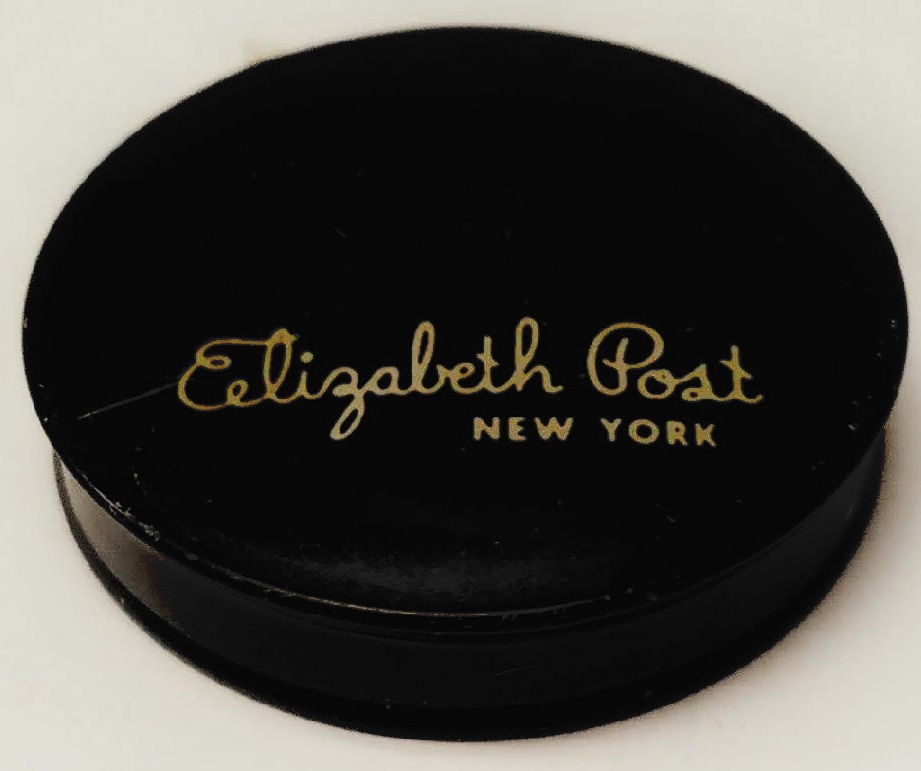
For centuries, books of manners and proper etiquette, had advised young women especially against wearing cosmetics. Lipsticks and powders, etc... were supposed to do no more than enhance one’s “natural charms” and not “gild the lily.” A young woman was seen to be reckless if she were to appear during the day and out in public, in a “made-up” manner. But, by the end of WWI, as more women were smoking and drinking in public, among other things, American women felt much more comfortable in cosmetics, and it wasn’t long before even a few etiquette authorities were promoting its use. Soon, women around the world were taking their cues from their American sisters.   – Along with being the first successor to Emily Post’s etiquette media business, Elizabeth Post, Emily’s only grand-daughter in-law, had a line of “Correct Cosmetics” that were marketed to American women.


American  Beauties

Listen to this girls! A newspaper writer on beauty methods quotes a “famous Frenchman who is a leading light in the cosmetic field” as follows: “To me the most alluring thing about the American girl and woman is that she acts as though she were beautiful, whether she is or not. In France, only the most attractive women have the courage to carry themselves off in the charming manner that is part of almost every American girl and woman.” There is more to this, it appears, than a mere boost for American use of cosmetics. Also, there is more than is meant by the saying, “Beauty is as beauty does.”
 

American women, with or without classic features and perfect natural coloring, do not hesitate to groom themselves smartly and develop ease of manners and charm. The result is that America has acquired international fame as a land of beautiful women. As a woman thinketh, apparently so is she. Courage, good health, independence, cleanliness and—ahem!—wise use of cosmetics, have worked marvels. Only a grouch will raise the question. “What is beauty?” – Lompoc Review, 1930


Etiquette Enthusiast, Maura J. Graber, is the Site Editor for the Etiquipedia© Etiquette Encyclopedia