Tuesday, October 13, 2020

The Royal Favourite Tokay Wine


Tokaji Eszencia can be left for approx. 200 years. It has been described by Louis XIV described Royal Tokay as “the wine of Kings, King of wines.” From Empresses, Tsars, Queens, and Kings to composers, writers and notables, they all describe Tokaji a drink to be cherished and to be known the world over.


“Tokay is a sweet wine that was highly thought of by the Victorians. It is produced near the Carpathian Mountains of northeastern Hungary. 

Tokay can range from dry to sweet, but the best known, although not the most common, form of Tokay is Aszu. In fact, the term “Tokay” is widely used to mean “Aszu Tokay.”

Aszu Tokay is a wonderful sweet dessert wine with high alcohol content. Even in Victorian times it was a bit hard to acquire as the Austrian Emperors, the Tsars, and the Popes acquired most of it.

Aszu Tokay has its own legendary beginnings. In 1650, the area's wine producers, fearing an attack by the Turks, who ruled most of Hungary at that time, delayed the harvest. This delay allowed the “noble rot” to begin to grow on the grapes.

Tokay was a great favorite of the Sun King, Louis XIV, and Peter the Great. Peter used to have armed soldiers guard his yearly shipment of the wine to Russia. It was possible to ship Aszu Tokay far from its point of origin, even over bad roads, because its high alcohol and sugar content made it more stable than regular wine.

As a Princely gesture, the Austrian Emperor, Franz Joseph, began sending Queen Victoria, Aszu Tokay wine on her birthday — a dozen bottles for each year of her age. Unfortunately for him, it turned out that both he and Queen Victoria were among the longest reigning rulers in the history of Europe — so year after year, more and more bottles of this rare wine went to London. By the year 1900, the total was up to 972 bottles.

Following the Communist takeover of Hungary, the quality of Tokay is said to have gone down as the collective mentality was not conducive to producing great wines. However, with the fall of the Iron Curtain, the situation is changing, and the expertise and investment is flowing into Hungary and improving the product. Perhaps to distinguish the post-Communist product, the wine today is called “Tokaji” — its original spelling. Under either name, Westerners can again enjoy the “Wine of Kings.”

The sweetness of the wine is graded by how many baskets of specially picked grapes with the noble rot, are added to a cask of normal wine. The more the better. The Hungarian word for basket is “puttonyos.” The bottles are labeled by how many puttonyos they have. The highest grade is 6 puttonyos wine.” — From “Forgotten Elegance,” 2001


More on Tokay

More specifics of the world famous Hungarian sweet wine.... Tokaj or Tokaj-Hegyalia is a northeastern wine region in Hungary, bordering the Slovakia grape growing area, called similarly Tokaj or Tokajský. The wine region is naturally bordered by the Bodrod and Tisza rivers and encased by the Zemplén hills. The Tokaj-Hegyalia region contains 5700 hectares of vineyards and over 25 towns and villages.

Research suggests that Aszú grapes were purposely grown and treated from 1550 onwards and sold as sweet wine. However, legend has it that Hungary was set for an Ottoman invasion between the 16 to17th century, so grapes were left there after harvesting. Once landowners came back, namely Prince György Rákó I, and went back to reclaim their family property and fields, the grapes had rotted. The Balkan tradition known as Hegyalja, may have been used to make wine from these grapes.

The grape used is the indigenous major grape varieties of Furmint and Hárslevelű grape, affected by noble rot or Botrytis cinera, a mold, known as aszú berries that concentrates the grape sugars. Minor grape varieties that can also be used are: Sárgamuskotály, Kövérszölö, Zéta, Kabar and Sárga Muskotály.

The sweetness of the wine is measured by the number of puttonyos or baskets. Each basket is 25kgs a unit for the level of sugar, it is traditionally measured by the number of hods of grape affected by noble rot.

3 puttonyos – residual sugar levels 60 grams per litre

4 puttonyos – residual sugar levels 90 grams per litre

5 puttonyos – residual sugar levels 120 grams per litre

6 puttonyos – residual sugar levels 150 grams per litre

Tokay Eszencia - residual sugar levels 450 grams per litre

The rarely made Tokay Eszencia is highly concentrated sweet essence of low alcohol, famous for its restorative effects. It is made in a completely different process that sees the alcohol served in a honey-like consistency. You can today purchase a 1957 Monimpex Aszú Eszencia from 320.00 € for a 500ml bottle.

Once the Tokaji is made, it is stored for many years. The higher residual levels of Tokaji can be left in the deep, mouldy volcanic cellar for decades. These mould lined cellars stabilise the level of humidity averaging 95% all year long. The wine is put into barrels, then transferred to bottles. Some bottles will be laid vertically, however some will be stored upright. Bottles may need re-corking every few years.

Tokaji Eszencia can be left for approx. 200 years. It has been described by Louis XIV as “the wine of Kings, King of wines.” From Empresses, Tsars, Queens, and Kings, to composers, writers and notables, they all describe Tokaji as a drink to be cherished and to be known the world over.

One of the traditions of the Imperial Court of the Hapsburg, was to store barrels and bottles of Tokaji. This would be found on the dining tables of the royal family and given as gifts of goodwill to other European Monarchs.

To consume Tokaji, it is best to serve it between 11 to 14 degrees C. The warmer the wine is, it can appear to be less fresh, and cooled is best. The best pairing to this wine is Magyar Libamáj or otherwise known as Foie Gras. It can be matched with desserts that are perhaps more tart in flavour, than overly sweet.

Today many around the world apply the name tokay, that barely resembles the genuine Hungarian grape or process to make tokay. hopefully the ministry of agriculture of Hungary or Agrárminisztérium, will get closer to applying for the protection of the Tokaji name.


The grape used is the indigenous major grape varieties of Furmint and Hárslevelű grape, affected by noble rot or Botrytis cinera, a mold, known as aszú berries that concentrates the grape sugars


For many years, Etiquipedia contributor, Elizabeth Soos, has had a keen interest in cultural customs. With her European background and extensive travel, Soos developed an interest in the many forms of respect and cultural expectations in the countries she has visited. With her 20 years’ experience in customer service within private international companies based in Australia, and her lifetime interest in manners and research, she decided to branch out into the field of etiquette and deportment. Through her self-directed studies and by completing the Train-The-Trainer’s course offered by Emma Dupont’s School of Etiquette in London and by Guillaume Rue de Bernadac at Academie de Bernadac based in Paris and Shanghai, she founded Auersmont School of Etiquette.


Etiquette Enthusiast, Maura Graber, is the Site Editor for the Etiquipedia© Etiquette Encyclopedia

Monday, October 12, 2020

Social Dilemma Solved by Sardines


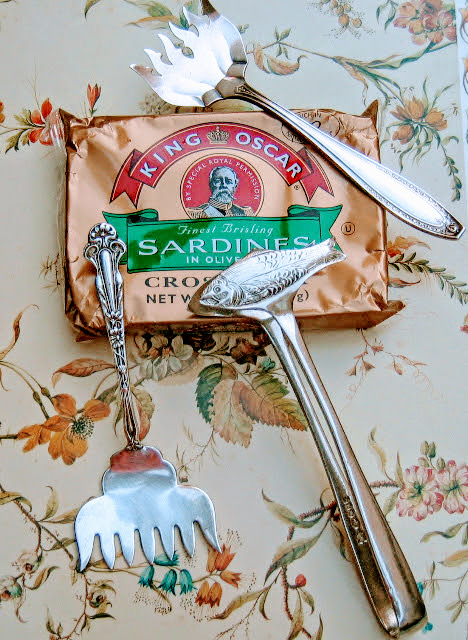
Antique silver sardine servers — Knives are really only used with any dish that requires to be cut, such as cutlets, oxtail, filets de boeuf, grenadines of veal, hashed venison or beef, for these and similar dishes, a knife is a requisite. Sweetbreads are never eaten with a knife, for if they are properly cooked, they are so tender that a knife is quite wrong and out of place. Any mince with poached eggs, or puree of meat, game, or poultry, is also eaten with a fork only. It is usual to eat salads with both knife and fork, mayonnaise also. Omelettes, both savoury and sweet, are eaten with the fork alone; toasted cheese or Welsh rarebit with both knife and fork, which would also be used for most savouries, such as “sardines on toast,” “bloaters,” Anchovy toast, with poached eggs, all kinds of  ‘devils,’ ‘ham toast.’ Forks only would be used in eating ‘macaroni au gratin,’ ‘soufflés,’ whether savoury or cheese, ‘scalloped oysters,’ ‘tartlettes,’ whether savoury or sweet, creams, jellies, iced puddings, blancmanges, indeed all kinds of sweets of sufficient consistency to admit of it. — Lady Constance Eleanora C. Howard

SOCIAL DILEMMA 

Unexpected guests for an evening will often tax your ingenuity for a suitable luncheon. You can solve this social dilemma by having on hand always Booth’s Crescent Brand Sardines. One tin will make a splendid luncheon for four, and a more delicious, tid-bit was never tasted by anyone, than these savory little fish from the Bay of Monterey. They are larger than ordinary sardines and better, so much better that you will wonder why they are called sardines. 

Try a can and you’ll buy a case, for you’ll never want to be without them. 20 cents a tin at grocers everywhere. One tin is enough for a luncheon for four. Put up by Monterey Packing Company, Monterey, California. F. K. Booth, Sole Agent, San Francisco. Booklet of recipes for serving Crescent Brand Sardines mailed free if you send the name of your grocer. — Stockton Independent, 1910

Antique porcelain sardine box with antique silver set of sardine knife and fork, sardine lifters and sardine tongs — “Early tinned and canned items were too expensive for those in the lower, and even middle-class income brackets, at the time. Sardines were one imported tinned food that the wealthy could afford to serve, so sardine servers, dishes and tongs, were offered in abundance at the time. Tinned sardines and other such foods, suddenly offered an elegant way to not only outdo one’s neighbors, but another way illuminate one’s home.” — Maura Graber in “Reaching for the Right Fork”


Etiquette Enthusiast, Maura Graber, is the Site Editor for the Etiquipedia© Etiquette Encyclopedia

Saturday, October 10, 2020

Are Kind and Polite the Same?

‘A man may have a kind heart and atrocious manners; he may have fine manners and be cruelly selfish; he may have neither a good heart nor good manners, and he may have both. So The Call was not correct when it said Gladstone had good manners because he performed kindly acts. It was twisting the meaning of “good manners.”’ ??? — British Prime Minister, William Ewart Gladstone, 1892
Public domain image


Where Do Good Manners End?

A READER of The Call writes to question the editorial on Gladstone in last Saturday’s issue. The writer of that editorial said that the great English prime minister displayed good manners when he brought home a girl of the streets and gave her food and shelter. The reader questions that statement and says it wasn't good manners, but simple kindness, that Gladstone was displaying. The two things, he says, are distinctly different. A man may have a kind heart and atrocious manners; he may have fine manners and be cruelly selfish; he may have neither a good heart nor good manners, and he may have both. So The Call was not correct when it said Gladstone had good manners because he performed kindly acts. It was twisting the meaning of “good manners.” 

Before there is any argument on that question it may be wiser to see what the dictionary says on the subject. The dictionary defines manners “with reference to social life or morality” as “morals as shown in conduct, social conduct or rules of conduct as shown in the prevalent customs.” It defines manners “with reference to politeness or deportment” as “habitual conduct, behavior, good or polite deportment and appropriate acts of courtesy.” One can see from this that there are two apparent definitions of good manners. 

The most common conception of manners is the acts of courtesy—removing one’s hat in the presence of women, helping women across the street, being polite to one’s associates and observing all the rules of etiquette. The other definition is less common, but older. Manners, in its sense, include all the acts of man. It is the interpretation, for instance, of the Ten Commandments in the actual conduct of people who profess Christianity. 

It is being considerate of all people, it is being friendly and kind hearted and it is a much broader thing than the practice of the thousand rules of society etiquette. To say that Gladstone was good mannered is to broaden the ordinary meaning of the term; and the writer of the letter objects to any such broadening. He says that good manners mean one definite thing now and that kindness means something else. 

Of what possible advantage can it be, except to confuse, to merge these two and to make good manners apply both to goodness of heart and exactness of social training? But at just what point is the distinction to be made between good manners and kindness? It is good manners, let us say, to help a perfectly healthy woman across the street. If she slips and falls, is it good manners to help her to her feet—or is it kindness? What is the motive, after all, behind good manners? Is it always accidental custom, always an inheritance of superstition from savagery, or is it most often consideration of others? 

Emerson said: “Good manners are made up of petty sacrifices.” He meant polite manners. But kindness of heart also demands sacrifices—some petty and some great. And how is anyone to say at what point in human actions etiquette ceases and greatness of heart begins? It would change the ordinary meaning of the phrase to make good manners mean kindness. And some people would object to that. But it might also improve the actions of human beings. And who could object to that?— San Francisco Call, 1921


Etiquette Enthusiast, Maura Graber, is the Site Editor for the Etiquipedia© Etiquette Encyclopedia

Strict Spanish Etiquette was Deadly

The strictest etiquette in Spain would prevent a young man from ever being left alone with his fiancée.


Courtship in Spain is regulated by the strictest etiquette. As is well known, a young man is never left alone with his fiancée. Near Malaga, a beautiful young girl of twenty, committed suicide by drinking a cup of coffee in which phosphorus had been dissolved. It appears that the girl had been driven to the deed by the adverse comments of neighbors who became aware that she had given her sweetheart a kiss.—London Mail, 1906


Etiquette Enthusiast, Maura J Graber, is the Site Editor for the Etiquipedia© Etiquette Encyclopedia

Friday, October 9, 2020

Japan’s 21st C. Etiquette Crisis

From Japan’s “Do it at home” Campaign 


Japan Wonders Where Its Manners Went


The Japanese are feeling under attack these days, less by a decade-long economic downturn or the threat of North Korean missiles than by the scourge of rudeness--a guerrilla hiding in their midst, infiltrating their institutions, kidnapping their children.

Young people have become an obvious target for people’s ire at the insidious changes around them. Teachers complain that students refuse to sit, listen or stop their private conversations. And the media last month blasted the young when annual rite-of-passage ceremonies for 20-year-olds were marred by drunkenness, fistfights and taunts of “your speech is too long,” “stuff it” and “go home.”

“Are Good Manners a Thing of the Past?” blared a headline in the daily Yomiuri Shimbun.

Although elders everywhere complain about young people, the etiquette erosion here is not confined to “space aliens,” the nickname many in Japan have given to their youth.

Japanese airlines report a five-fold increase in highly inappropriate behavior by passengers during the past three years. Trains, restaurants and television stations have taken to lecturing the masses on how to be considerate. And parliament recently compiled a primer on decorum after one lawmaker doused another with water. “Don’t heckle,” the work advises. “Stay in your seat unless called upon.”

By global standards, this island nation is still incredibly polite. Indeed, Westerners inured by road rage and soccer hooliganism may wonder what all the fuss is about.

For those brought up in one of the world’s most refined cultures, however, the changes threaten to undermine a core value: the willingness to put aside individual differences in favor of group harmony.

At Tokyo’s Seishikai finishing school, students face their kimono-clad teacher on tatami mats and practice their bows-— a 15-degree tilt for routine greetings, 30 for entering a room or greeting VIPs, 45 for apologies or heartfelt gratitude.

Manners have been on a steady slide since the school opened 25 years ago, said Principal Tamami Kondo, but in the past few years they’ve hit rock bottom. “Japanese have been such nice people,” she said. “What a shame.”

A generation ago, most students enrolled to learn about such refined arts as the tea ceremony, but in recent years far more time has been devoted to basics once considered common sense.

“I got very embarrassed when I started working and realized I didn’t even know how to be polite on the phone,” said Kyoko Izawa, a 33-year-old advertising employee. “I suddenly realized just how much I didn’t know.”

Public Actions That Top the List of Offenses

High on the list of offenses in various surveys these days are people who eat or kiss on the street or openly discuss intimate details of their lives on cell phones.

For a culture steeped in form and the value of privacy, treating public areas like your kitchen or bedroom is highly offensive. And watching people kiss, in particular, can be as shocking to many older Japanese as seeing sex in the open might be for Europeans or Americans.

“I know it’s a Western way to express yourself,” said Katsue Tanaka, a 50-year-old restaurant owner. “But I always find myself thinking, ‘Oh my God, isn’t that disgusting.’ ”

Also not appreciated are young women applying their makeup on crowded trains. For Miyuki Okada, a 20-year-old college student with artificially tanned skin and dyed brown hair, however, it’s natural.

“I’d do it at home if I had time, but I just can’t bear the thought of meeting someone without my makeup,” she said as she touched up her mascara between stops on Tokyo’s Chiyoda Line one afternoon.

Nearby, 68-year-old Tokie Ishii looked on perplexed. “I just can’t understand their behavior,” she said. “Aren’t they embarrassed? In my childhood, people learned how to behave.”

The decline in social decency has prompted various countermeasures. Hirohisa Nemoto, a 46-year-old salaryman, said he tries single-handedly to exert social pressure. “I give them the evil eye,” he said. Several rail and subway operators have banned cell phone use on their lines, with limited effect. And a series of campaigns tries to teach people how to behave in public, although sponsors concede that they’re in a losing battle.

The 1,300-member Ad Council has launched a television campaign depicting animated insects— in Japanese the words for bug and egotistical rhyme— making annoying phone calls on trains, parking their cars illegally, throwing garbage and spitting. “The increase of bugs disguised as human beings has become a social problem,” the narrator says. “Watch out for them!”

Companies, meanwhile, complain that recruits have no idea how to be polite, treat customers or make eye contact. Fast-food and other service industries with high employee turnover say even teaching basic skills can be difficult given ever-shorter attention spans. Some chains recently replaced written instructions with simple pictures of rude behavior, each overlaid with an X.

Along with a decline in basic courtesy, traditionalists say, is a deterioration in this society’s subtle, complex and highly refined language. In one recent survey, 81% of respondents felt that Japanese was being corrupted, with most concerned in particular about the rapid erosion of polite language.

There are few swear words in Japanese. But the language’s levels of formality are determined by increasingly complex verb endings. Simply using a lower form than is appropriate can be insulting. Many young people apparently don’t even realize that they are being offensive.

“It has come to the point that teaching polite language to Japanese is like teaching a foreign language,” management consultant Chieko Genma told the Yomiuri Weekly magazine.

Sociologists blame the loss of manners on factors such as economic pressures, the advent of cell phones, the emphasis on wealth and changes in the family structure that include more absentee fathers and indulgent mothers. A survey last year by the Japan Youth Research Institute found that only 27.4% of families stress the importance of politeness with their children, compared with 61.4% in China.

Although most fret over eroding social values, some analysts see a silver lining: a subtle rebellion by young Japanese against the excessive formality of past generations. In effect, they’re saying that Japan can no longer afford in today’s global economy to engage in highly ritualistic behavior based on complicated, unspoken rules.

A Culture Steeped in Unspoken Customs

In Kyoto, for instance, it was customary until recently for an unexpected guest to decline the host’s invitation to enter at least three times before crossing the threshold. And visitors were expected to know that a serving of brown tea rather than green tea meant that it was time to leave. Subtleties such as these have terrified generations of foreigners afraid that they might blink the wrong way and insult their host’s great-grandmother.

Many Japanese niceties— including the tea ceremony— originated in China and were subsequently refined by samurai elites during Japan’s two centuries of isolation. The subsequent push to become a modern, culturally unified nation state after the 1850s arrival of Commodore Perry’s Black Ships in turn saw many of these customs disseminated across the country.

Embedded in traditional mores and faux pas are values that may not match the times. Finishing school principal Kondo said that traditionally it was acceptable to be dismissive of those seen as below you socially, given this nation’s past obsession with hierarchy. The practice of saying “yes” when intending “no” and relying on hidden meanings— sometimes known as tatemae— also is under pressure as Japanese increasingly come into contact with people from overseas, she added.

“Japanese hate to say ‘no’ because they don’t want to hurt someone else’s feelings,” she said. “But foreigners have difficulty understanding this. We can’t continue tatemae in the 21st century.”

Women Expected to Be More Polite Than Men

Levels of politeness based on a Confucian hierarchy, with the emperor at the top, also helped control members of society, especially women, who were expected to be far more polite than men, said Ochanomizu University sociologist Katsuko Makino. The narrowing gap between the way young women and men use language and behave may therefore represent a positive development, said Makino, author of a study of Japanese manners.

Midori Okauchi, a 17-year-old high school student, is worried less about all that than the apparent hypocrisy when it comes to Japanese society. “Adults always criticize young people,” she said. “But there are a lot of really rude adults out there as well.” — By Mark Magnier in the L.A. Times. Rie Sasaki in The Times’ Tokyo Bureau contributed to this report, 2001


Etiquette Enthusiast, Maura J Graber, is the Site Editor for Etiquipedia© Etiquette Encyclopedia

Thursday, October 8, 2020

7 Australian Café Etiquette Tips

According to the National Coffee Association, “Coffee grown worldwide can trace its heritage back centuries to the ancient coffee forests on the Ethiopian plateau. There, legend says the goat herder Kaldi first discovered the potential of these beloved beans. The story goes that that Kaldi discovered coffee after he noticed that after eating the berries from a certain tree, his goats became so energetic that they did not want to sleep at night. Kaldi reported his findings to the abbot of the local monastery, who made a drink with the berries and found that it kept him alert through the long hours of evening prayer. The abbot shared his discovery with the other monks at the monastery, and knowledge of the energizing berries began to spread. As word moved east and coffee reached the Arabian peninsula, it began a journey which would bring these beans across the globe.”

The drinking and cultivation of coffee has a relatively short history in Australia. Coffee landed on the Australian shores from 1788 on the first fleet from abroad. It has been said that during the first fleet’s voyage, it made a stop in Rio de Janeiro for plants and seedlings to grow in the new lands. 

At the time, coffee was often mixed with “fillers” like chicory and other food products such as mustard or eggshells, that had no business being in coffee. This changed with the the arrival of immigrants to Australia, notably after the second world war, who brought their own styles of coffee-making with them. Coffee became a well-known, popular beverage and cafés were set up to accommodate a little taste of Greece, Italy, Hungary, and the former Yugoslavia, from the 1950’s onwards. These immigrants  also brought with them different coffee grinders and coffee accoutrements, such as a briki, cafeteria or moka pot, that would fill the walls, piquing the interest of the consumers enjoying coffee and dessert with friends.

By the 1970’s and 1980’s, the hot trend was for Australians to sit at a café and eat newly discovered, and even exotic desserts and biscuits, with their coffee, may it be cappuccinos, lattes, flat whites, long blacks etc. Australian’s are frequently ranked as top consumers of coffee. Many of the original coffee houses in Melbourne, Sydney and Adelaide still stand, even with their original fit out, now making icons of the Australian coffee scene. Namely: Pellegrini's Espresso Barand Mediterranean Wholesalers.

Today, cafés are on the top of many Australians daily or weekly agenda. They will discuss where to get the best coffee, ask for recommendations from friends and family. Research on the web or good food guides. Interest in where the coffee beans are sourced is another subject. Many good cafes won't just choose a certain brand for their café, but also source coffee manufacturers that will provide coffee from growing origins such as Ethiopia, Central South America, and New Guinea and make that a feature of their café.

  1. Savor your espresso the Italian way.... with a glass of water. The glass of sparkling water which often accompanies espresso is to cleanse your palate before, and after, a drink of your espresso. Due to its intensity and concentration, espresso can be a lot for the palate at once, so it is nice to have something to prepare the palate, then cleanse it, even during your cup, and at the very last of the cup.
  2. If you wish to remain long after you receive your coffee to do work, check around you. How busy is the cafe? Good manners and common sense will help you to determine whether you should stay longer. Some cafes are made for you to stay and access their free wifi and facilities, some want you to eat, drink, then leave.
  3. If you are working via phone or online or talking to friends make sure you use your 'indoor voice' so others are able to hear conversation.
  4. Bring your best manners along with you, even though the café is a very casual establishment. Cafe's tend to be small and what you say and how your behave can be overhead and seen by the café owners, employees and all other customers.
  5. If you are by yourself, choose the smallest table, rather than spreading out and taking up a table and potential earning for the café . 
  6. Stop and think before plugging your electronic gear into the walls of the cafe. First and foremost, not all cafés may welcome your added contribution to their electric bill. Besides, you may not be insured if there is a surge and you certainly don’t want to be responsible for causing one. Cords can be a tripping hazard. If someone trips over any of your ‘office on the go,’ liability may fall onto your shoulders. It's good to ask and find out the cafe's policies in advance of pulling out your cords.
  7. Cafés are a great place to meet people. Keep a smile with you and don't feel uncomfortable saying “hello” to others, while carrying on with your own day.


For many years, Etiquipedia contributor, Elizabeth Soos, has had a keen interest in cultural customs. With her European background and extensive travel, Soos developed an interest in the many forms of respect and cultural expectations in the countries she has visited. With her 20 years’ experience in customer service within private international companies based in Australia, and her lifetime interest in manners and research, she decided to branch out into the field of etiquette and deportment. Through her self-directed studies and by completing the Train-The-Trainer’s course offered by Emma Dupont’s School of Etiquette in London and by Guillaume Rue de Bernadac at Academie de Bernadac based in Paris and Shanghai, she founded Auersmont School of Etiquette.


Etiquette Enthusiast, Maura J Graber, is the Site Editor for the Etiquipedia© Etiquette Encyclopedia

Wednesday, October 7, 2020

Sticky Fingers Cause Etiquette Breach


Public Domain image of Count Paul Demidoff, Prince of San Donato

A Strict Follower of Etiquette

An amusing chapter of Laferrière’s forthcoming memoirs, according to the Paris correspondent of Appleton’s Journal, is devoted to a Russian celebrity at the Court of the late Emperor Nicholas, the Count Paul Demidoff. A young attaché to one ot the embassies, now a distinguished diplomatist, was invited to dine with Count Demidoff. On the return of the company to the salon, groups were formed here and there, and when the coffee was handed round, the young attache, carried away by the interest of the conversation in which he was engaged, took a lump of sugar from the sugar bowl with his fingers, when the servant presented the tray to him. 

Count Demidoff, indignant at this breach of etiquette, signed to the lackey to throw the rest of the contents of the sugar-bowl out of the window. The lesson was a severe one, and struck dumb those who witnessed it. But the spirituelle young offender, while understanding perfectly the insult intended, preserved an imperturbable calmness. He slowly drained the contents of his cup, and, walking deliberately to the window, he fixed his eyes on M. Demidoff and tossed carelessly into the street the cup and saucer of priceless Sèvres and the gold spoon. “I did not know that such was the usage,” he said to the Count. And then he recommended his conversation with an air of perfect nonchalance. — London Journal, 1875


Etiquette Enthusiast, Maura J Graber, is the Site Editor for the Etiquipedia© Etiquette Encyclopedia

Tuesday, October 6, 2020

Keep Elbows Off the Table!

“You never can tell from where you sit 
Where the grapefruit's juice is going to hit 
so bring along your towels and goggles,”
advises Miss Hazel Clark, the pretty Los Angeles bridge player, 
who is shown here demonstrating how to whiten elbows... but not how to sit properly at the table. 


Lean Arms on Table 

The Little Hemispheres Are Rather Elusive... but if that age-old decree of social etiquette that one should never put his elbows on the table has been proven all wrong. Also now popular idea that a grapefruit's only social usage is that of a morning appetizer, or as one of the innocent concomitants of salad or cocktail, has been proven fallacious. Nowadays, in really smart society, you plaster your elbows brazenly upon the festal board. Furthermore, you plaster them in your grapefruit! A whole one to each guest. Cut it in half to be sure, and one part is employed by each elbow for a parking place. Elbows inspired the new fad. 

Elbows are highly important parts of the anatomy in these days when women's sleeves are usually short or absent altogether. Some one discovered that the juice of grapefruit is softening and bleaching when applied to the elbows, and so efficacious that it seems as though the gods of feminine beauty designed it for arm angles. Someone else discovered that the way to combine business and pleasure is to play bridge with the aforesaid elbows resting in the damp, stinging nests of grapefruit. It is said to be difficult to get onto the knack of it at first. The little hemispheres are exceedingly elusive. With the expanding scope of the new fad it is said that all grapefruit-bridge players will arrive at a party equipped with their own towels and goggles.– Miss Hazel Clark, 1922


Etiquette Enthusiast, Maura J Graber, is the Site Editor for the Etiquipedia©️ Etiquette Encyclopedia