Tuesday, March 3, 2020

Morals and Manners in Schools

A series of recommendations for improvement of California’s school system will be presented to the next legislature. Among the recommendations were: Definite instruction should be given in “morals and manners.” There should be more health supervision in rural schools. 


A series of recommendations for improvement of California’s school system will be presented to the next legislature. The suggestions were made by the California Commission for the Study of Educational Problems. Among the recommendations were: Definite instruction should be given in “morals and manners.” There should be more health supervision in rural schools. Correspondence schools should be licensed by the federal government. There should be more emphasis on the fundamentals—reading, writing, spelling, arithmetic, geography and the correct use of English. 

The law relating to instruction in the evil effects of narcotics and alcohol should be given more attention. State printing of basic elementary texts should be continued but a revised method of selecting high school texts should be adopted. The part time school law should be amended to provide for part time classes in every district where fifteen or more children between 16 and 18 years of age, who have not graduated frim high school, want to work. Part time education should be compulsory for those without the equivalent of a tenth grade education but optional for others. — Lompoc Journal, 1931


Etiquette Enthusiast, Maura J Graber, is the Site Editor for the Etiquipedia©️ Etiquette Encyclopedia 

Elements of a Winning Personality

“Tact in dealing with persons and situations and open mindedness are other cardinal virtues to insure an agreeable personality.”  — Professor I. S. Westerberg was in demand throughout the county as a speaker on problems of educational interest, and was the President of the Education Professors of the Colleges and Universities of Southern California.

 “Sarcasm may win us laughter, but not friends,” he stated. “Tact in dealing with persons and situations and open mindedness are other cardinal virtues to insure an agreeable personality.” Another important element is a sense of proportion, including a sense of humor, accessibility though not “gushiness,” confidence and self-reliance, attractiveness of manners, freedom from idiosyncrasies, which interfere with effectiveness, idealisms and ‘genuiness,’ “that translucency of character that attracts people and makes them trust implicitly.” The necessity of vitality was emphasized, Professor Westerberg quoting the late Charles Frohman who said that an artist’s life depended on vitality. Vitality means supreme ability and vibrant energy, although not necessarily beauty. — San Bernardino Sun, 1932


Etiquette Enthusiasts, Maura J Graber, is the Site Editor for the Etiquipedia©️ Etiquette Encyclopedia 

Sunday, March 1, 2020

Holiday Gift Giving in 1906

The soul of Christmas is thoughtfulness and remembrance, rather than display of reckless generosity

The Social Diary on Christmas Etiquette

There is etiquette in Christmas gifts, as in all the amenities of life. And every Christmas brings, with its good cheer, a world of unfortunate blunders in sending presents. Promiscuous Christmas gifts are only defensible if the token is of no intrinsic value and really amounts to no more than a greeting. It is pleasant if those who can afford it, send some pretty trifle of the season to their acquaintances, all around. The little token causes no embarrassment to the recipient and establishes no obligation. There are hundreds of forms of little baubles that lend pretty color to that idea. Blessed are they who buy Christmas gifts with taste, rather than with lavish expenditure. 


The soul of Christmas is thoughtfulness and remembrance, rather than display of reckless generosity. An inexpensive gift of rare good taste —showing that the giver took pains—is far more agreeable than a mere lump of cost that, perhaps, is of no use to the one receiving it, causing more regret over the waste of money than pleasure. That point is the secret of happy Christmas giving. How much better to be able to send a pretty thing to all on your list than to blow yourself for some of them and abandon the others. The artistic little gift is the salvation of the hard-up who would otherwise indulge in the folly of going on short rations through January and February to make a Christmas splurge. 

Christmas is pre-eminently the children's time and the old people's time. Parents who double-cross their children by waiting until Christmas to buy them what they must have, anyhow, commit a peculiar cruelty. And the sons and daughters who forget their old parents are even more cruel, for while the disappointment of children passes away, the aged have nothing sweeter than being remembered and nothing sadder than being forgotten. –Grace Grundy’s “Social Diary”, 1906

Etiquette Enthusiast, Maura J Graber, is the Site Editor for the Etiquipedia© Etiquette Encyclopedia

1930’s U.S. Drivers Polite

Volvo admits that its self-driving cars are unable to detect kangaroos because hopping confounds their systems. The company’s “Large Animal Detection system” can identify and avoid deer, elk and caribou, but early testing in Australia shows it cannot adjust to the kangaroo’s unique method of movement. – VolvoHouston.com

WASHINGTON.—BeIieve it or not, American drivers have better motoring manners than some of their foreign colleagues. Commissioner H. H. Newell of New South Wales, Australia, after driving several thousand miles in the United States and Great Britain, remarks, “in no country visited did I find more orderly traffic than that which is to be found in the United States.” He compared rule-of-the-road behavior of the U. S., Great Britain and New South Wales and found that drivers in his own state have the worst record for crossing the center line of the road. –1938


Etiquette Enthusiast, Maura J Graber, is the Site Editor for the Etiquipedia© Etiquette Encyclopedia

Wednesday, February 26, 2020

Floriography and Etiquette


Floriography is a means of cryptological communication, through the use or arrangement of flowers and plants. In Kate Greenaway’s illustrated “Language of Flowers.”, there are over 30 meanings for as many types of roses. — photo source Cliff Graber


Symbolic meaning has been attributed to flowers for centuries. Originating in the Courts of Constantinople in early 18th-century Turkey, and spreading throughout the world, the term for this is “Floriography.” Floriography has been practiced in some form in traditional cultures throughout the world. 

Both flowers and plants are used as symbols in the Hebrew Bible, particularly for love and lovers. In the “Song of Songs,“ flowers and plants are symbolic for the Israelite people, as well as for the coming Messiah. 


In Western culture, popular authors like Shakespeare, ascribed symbolic meanings to flowers, which encouraged readers to employ the symbolisms. 
Interest in floriography soared in popular culture in Victorian England and in the United States during the 19th century. 

Most books on etiquette and decorum offered lengthy lists of flowers and their meanings. Coded messages, created with flowers, were sent as romantic gestures. The sender of such a bouquet could express feelings which would not be socially appropriate to verbalize or send in writing, during the Victorian era. 

Numerous books on flowers, plants and their meanings, were published in The 17th and 18th centuries. The most popular book in Western culture on floriography is Victorian, Kate Greenaway’s illustrated “Language of Flowers.” The book’s popularity continued into the Edwardian era and beyond.

In Greenaway’s book, no flower was left off of her extensive list. Roses had many meanings, depending on the type and color, as shown below:

  1. Rose, Austrian — Thou art all that is lovely
  2. Rose, Bridal — Happy love
  3. Rose, Burgundy — Unconscious beauty
  4. Rose, Cabbage — Ambassador of love
  5. Rose, Campion — Only deserve my love
  6. Rose, Carolina — Love is dangerous
  7. Rose, China — Beauty always new
  8. Rose, Christmas — Tranquillize my anxiety
  9. Rose, Daily — Thy smile I aspire to
  10. Rose, Damask — Brilliant complexion
  11. Rose, Deep Red — Bashful shame
  12. Rose, Dog — Pleasure and pain.
  13. Rose, Guelder — Winter, Age
  14. Rose, Hundred-leaved — Pride 
  15. Rose, Japan — Beauty is your only attraction 
  16. Rose, Maiden Blush — If you love me, you will find it out 
  17. Rose, Multiflora — Grace 
  18. Rose, Mundi — Variety
  19. Rose, Musk — Capricious beauty
  20. Rose, Musk, Cluster — Charming 
  21. Rose, Single — Simplicity 
  22. Rose, Thornless — Early attachment 
  23. Rose, Unique — Call me not beautiful 
  24. Rose, White — I am worthy of you 
  25. Rose, White (withered) — Transient impressions.
  26. Rose, Yellow — Decrease of love, Jealously
  27. Rose, York and Lancaster — War 
  28. Rose, Full-blown, placed over two Buds — Secrecy 
  29. Rose, White and Red together — Unity 
  30. Roses, Crown of — Reward of virtue 
  31. Rosebud, Red — Pure and lovely
  32. Rosebud, White — Girlhood 
  33. Rosebud, Moss — Confession of love
        *From a variety of sources, including Wikipedia 


Etiquette Enthusiast, Maura J Graber, is the Site Editor for the Etiquipedia©️ Etiquette Encyclopedia 

Tuesday, February 25, 2020

Japanese Etiquette and Manners

As with the French, the Japanese believe in promoting good manners, social skills and etiquette at an early age.— “Little girls of 10 will one see here, whose finish of breeding would have awakened the envy of a Duchess at the Court of Louis XIV at Versailles. Female servants one will encounter, at a dinner in the house of a Japanese gentleman, whose grace, charm and dignity are the quintessence of lady-like refinement.”— Meme fromThe Free Thought Project.com


Etiquette Has Become Second Nature In the Land of the Mikado

Given a highly imitative people like the Japanese, and let one undeviating standard be set before them. Then, generation after generation, will no change be witnessed. The standard will act like that of the French academy on the language of France. Now, at home, in America, we have 50 standards of manners—the reserved and reticent New England manners, the slap you on the back far western manners, the demagogue’s manners, the drummer’s manners, the cut and dried business man’s manners—these and dozens of others might be specified. And it must be admitted by even the most patriotic, that the man who should try to model his deportment on all these schools at once would come to a somewhat mixed result. Nothing of this bewildering complexity has ever existed in Japan. 

From Mikado at the top to cooly at the bottom of the social scale, one undeviating standard has always prevailed. Originally an importation from China, it has been elaborated through centuries of study of the most elaborate ceremonial etiquette ‘til at last, through constant practice, it has become second nature. No one ever saw anything else, ever dreamed of anything else. There was one way of saluting a superior, one of saluting an equal, one of saluting an inferior, and one’s head would have been cut off had he departed from it. No Japanese child ever saw a drummer—saw only prostrate artisans saluting samurai, samurai saluting daimios, daimios saluting shoguns. The whole ceremonial became organized into them as much as their instinctive habits into our setters and pointers, perhaps the best mannered of our population. 

Little girls of 10 will one see here, whose finish of breeding would have awakened the envy of a Duchess at the Court of Louis XIV at Versailles. Female servants one will encounter at a dinner in the house of a Japanese gentleman whose grace, charm and dignity are the quintessence of lady-like  refinement. “Trifles make perfection, but perfection is no trifle. ” The simple fact is that the young woman of 20 has been doing the thing for a thousand years. — Christian Register, 1894


Etiquette Enthusiast, Maura J Graber, is the Site Editor for the Etiquipedia© Etiquette Encyclopedia

Profiles in Etiquette — June Dally-Watkins

The Australian elocution, etiquette and modeling circles grieve for June Dally-Watkins, whom shall forevermore remain synonymous with elegance, grace, etiquette and poise. The doyenne of Australian etiquette, and the Australian Amy Vanderbilt of her time, she inspired men and women to aspire to good manners, humanity, eloquence and kindness throughout the decades. In doing so, she created a legacy that etiquette teachers such as myself aspire to furthering. My thoughts are with her family at this time. — Elizabeth Soos (picture from jdwbrisbane)

June Dally-Watkins, as photographed by Max Dupain, was awarded the Medal of the Order of Australia for services to business in 1993. — public domain photo, source Australian National Gallery

Australia's first etiquette doyenne and true style icon was June Dally-Watkins. She was the woman who brought good posture, carriage and good manners to Australia, which was said to be a Herculean task, but seen as vital for those who aspired to all of the finer things in life.

Born to humble circumstances in 1927 near Tamworth, in New South Wales, she became Australia's first “supermodel.” Her stunning looks set her on the path to modeling and in 1949, Watkins was crowned Australia’s ”Model of the Year.” In 1950, she established the June Dally-Watkins School of Deportment. A testament to her popularity, style and grace, the school is still in operation today.

Over the years, Watkins trained hundreds of Australian women and men in deportment, becoming Australia's best known style and etiquette expert, after she established the first modeling agency in Australia in 1951. Later, she opened a business college. 

She was awarded the Medal of the Order of Australia in 1993 for services to business, and was named as one of the 100 Australian Legends and a National Treasure. According to News.com.au, Ms Dally-Watkins spent her final years teaching etiquette to young women in China. “They want to be westernised, the Chinese,” Mrs Dally-Watkins told 2GB last year. “They want to have good western manners. They want to know how to carry their body.”

Overnight on February 23rd, her family announced she passed away peacefully, with her family at her side. Ms Dally-Watkins is survived by her four children, her seven grandchildren and a great-grandchild.


For many years, Etiquipedia’s newest contributor, Elizabeth Soos, has had a keen interest in cultural customs. With her European background and extensive travel, Soos developed an interest in the many forms of respect and cultural expectations in the countries she has visited. With her 20 years’ experience in customer service within private international companies based in Australia, and her lifetime interest in manners and research, she decided to branch out into the field of etiquette and deportment. Through her self-directed studies and by completing the Train-The-Trainer’s course offered by Emma Dupont’s School of Etiquette in London and by Guillaume Rue de Bernadac at Academie de Bernadac based in Paris and Shanghai, she founded Auersmont School of Etiquette.


Etiquette Enthusiast, Maura J Graber, is the Site Editor for the Etiquipedia© Etiquette Encyclopedia

Thursday, February 20, 2020

Left-Handed Etiquette

Etiquette Tips for Left-handed Folks

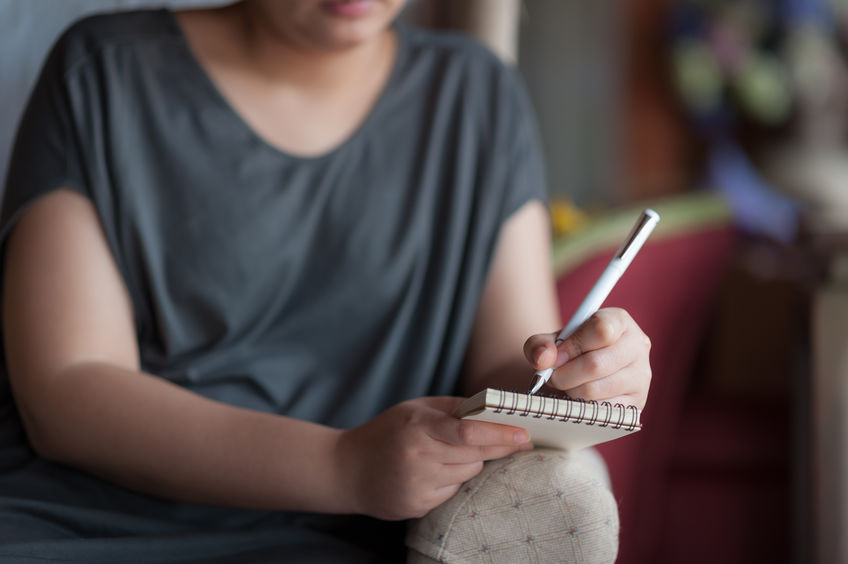
Left-handed Woman Writing
Left-handedness occurs in 10% of the population.  While the dominant use of the left hand many times goes unnoticed, there was a time when left-handers were reinforced in a variety of ways to learn to write, eat, and generally function as right-handed people do.

My father was one of these left-handed folks.  Fortunately, past the learning stages, which he didn’t share, he never regretted learning how to do things well with his right hand and became ambidextrous.  Sadly, many people have not had my dad’s experience.

About Learning

While right-handed training for lefties is not as popular as it once was, there are still some adaptations necessary.

At a recent home training, as I demonstrated ways left-handers often choose to deal with their utensils, one person became frustrated because she “couldn’t do it” when asked to cut using the global cutting position (right hand holds knife and left hand holds fork).  

I learned a great deal that evening.  She was able to completely mirror the right-handed experience with her left hand.  In other words, she could hold all utensils properly—but it all began with reversed global cutting position with her knife held in her left hand. 

I encouraged her to always feel comfortable eating in this mirrored fashion.  She was happy to learn that the utensils had a proper way of being held and was able to tidy up her utensil use habits.  I am sure she will dine “under the radar” at all events, as she is comfortable and confident that she knows how and doesn’t doubt herself.

Coping When Dining

As the above example shows, it is entirely possible for a left-handed person to adapt a dining style that doesn’t draw attention.  Dining with others, especially those you don’t know very well, is all about enjoying food and camaraderie.

Many hosts will check with guests before an event or occasion to ensure that specific needs are met.  This is the time to mention that you are left-handed and any accommodation preference.
  • Sometimes left-handed diners prefer to sit at the end of a table so that they don’t elbow a fellow diner.  This can happen when diners are eating American, cut and switch style, as is common in the U.S.  
  • If a host knows that one of her guests is left-handed she might seat him at a left-hand corner of the table.  
  • At a business dining setting or at your boss’ home, unless you are asked, it’s best not to mention special seating for yourself. 
  • Food is served from the left to each guest, unless the guest lets the host know he is left-handed, in which case the host may arrange to have that guest served from the right.
  • Food is passed to the right, which can be advantageous for someone who prefers to receive with her left hand.  
  • Tables are set for right-handers.  If left-handed, it is difficult to butter your roll from the bread plate.  Do your best, as you won’t be flying under the radar if you move dishes around.

Shaking Hands

Yes, the handshake is traditionally performed with the right hand.  But not always.

When a person is unable to shake with his right hand, it is customary that when someone reaches for his hand, he offers the backside of his left hand. 

If a person knows that another person is unable to shake with her right hand/arm, offering his left hand is a kind gesture. However, as people who have been in the situation know, it can get complicated. Those who need to have developed their own way of handling a greeting situation.

Being mindful is always key.

Geared Toward Right-handedness

We live in a predominantly right-handed world with traditional social practices geared to right-handed people.

However, etiquette does not require uniform practices.  Etiquette does require acceptance and consideration for and by anyone wishing to participate in a social practice.

As Judith Martin (aka Miss Manners) has said, “While it is true that table manners are geared toward the right-handed majority, we should all be able to eat peacefully together with the hand of our choice, and without having to get up from the table to march for minority rights.”

While efforts should be made to avoid drawing attention to oneself, sometimes the easiest way to do this is to adapt a unique style of blending in.  And the kindness and acceptance of those with whom you are blending will make this a celebration of individuality.

Contributor, Candace Smith is a retired, national award-winning secondary school educator, Candace Smith teaches university students and professionals the soft skills of etiquette and protocol. She found these skills necessary in her own life after her husband received international recognition in 2002. Plunged into a new “normal” of travel and formal social gatherings with global leaders, she discovered how uncomfortable she was in many important social situations. After extensive training in etiquette and protocol, Candace realized a markedly increased confidence level in meeting and greeting and dining skills and was inspired to share these skills that will help others gain comfort and confidence in dining and networking situations. Learn more at http://www.candacesmithetiquette.com/


Etiquette Enthusiast, Maura J Graber, is the Site Editor for the Etiquipedia©️ Etiquette Encyclopedia