Showing posts sorted by relevance for query pakistan. Sort by date Show all posts

Monday, March 10, 2025

A Tale of Impressive Hospitality

After being abandoned by the young, catfishing Pakistani man she had flown in from the United States to marry, then refusing to leave Pakistan, Onijah Andrew Robinson was eventually being admitted to a psychiatric ward for evaluation. This was after Yahoo News reported that Onijah had “gone viral for her interactions with local press where she’s demanded insane amounts of money and insisted she was going to ‘fix up’ the place.” It was reported that Onijah had left Pakistan and was on her way back to New York City on February 19, 2025– 4 months after her ordeal began. It is rumored that Onijah is being held in Dubai, however, and not yet back in the U.S.  – Image source of a Pakistani press conference with Onijah Andrew Robinson, Geo News


This is the incredible story of a country embracing one woman's dream, and it's been quite the journey. The world has been on edge, watching and reading Onijah Andrew Robinson’s crusade to meet love, which has put Pakistan in focus.

What do we know so far about Onijah Robinson? She is a 33-year-old woman from the United States who has become a viral sensation travelling to meet her 18-year-old online boyfriend, Nidal Ahmed Memon, in Karachi, Pakistan.

Onijah found herself in difficult circumstances. Memon and his family shut up the house and fled, but by using her resourcefulness, Onijah’s journey took on mission of sorts. Onijah set up camp in front of his house. There, concerned citizens surrounded her, and the media was alerted.

“America honours Pakistani officials who looked after Onijah” praised @newsglobeofficial, and Keri Hilson said she is so "grateful the Pakistani people have handled Onijah Robinson with so much patience," via @hollywoodunlocked. These Instagram posts, along with many more, celebrated and thanked Pakistan for their care and welcoming the viral sensation into their country.

What One Usually Expects in Pakistan
Having spent time in Pakistan, I have generally found the people to be warm, friendly, talkative, and ready to listen. They are curious people who want to understand things that are foreign to them and watch the unexpected—and the unexpected is what they get. But how did they react to Andrew’s persona?

The Pakistanis navigated her unusual requests gracefully by listening and acknowledging them without upsetting her. They came to her defence without offence, which put a smile on everyone's face. Instagrammers and TikTok’ers alike loved that she was bold by stating things that may have been true about the country. However, they were holding their proverbial breath, so to speak. Unfortunately, due to religious, political, and ideological views, Pakistan has been tarnished with the ‘difficult’ brush, which has contributed to a negative perception in other countries.

Pakistani Cultural Customs
Did you notice something about Onijah? I did, and this is something I truly appreciated about her: She was culturally appropriate. Yes, she wore clothing right for Pakistan. From her head covering to her pants, she dressed culturally and conservatively. I've travelled to Islamic countries, where I've seen tourists from China to America wearing short skirts, knee-high boots, and crop tops. Onijah really took her cues from her surroundings.

The Pakistani culture is vibrant; they live and love family, dancing, singing, and food. I know this all too well, being married to a local. Marriage celebrations are weeklong and come in a series of three. Family unit branches beyond your typical Western family, where there are cousins of cousins, great aunties, and uncles, and everyone has their own title to distinguish who they are in relation to your age and which side of the family.

When eating with Pakistanis, you may be given a fork and spoon, never a knife, unless you are dining at an expensive restaurant. Invariably, you will use your fingers to rip roti, chapati, naan, and paratha bread to scoop or swish together rice and dry curries with gravy or tandoori. They generally don’t have sweets to finish the meal off; instead, they may choose to eat sliced fruit or a hot, piping chai—without crushed and boiled spices.

Cricket is the way to go if you want to strike up a positive conversation. It has produced some of the world's best players, including legends such as Wasim Akram, Asif Iqbal and Imran Khan. Modern players such as Shoaib Malik, Mohammed Amir and Azhar Ali that you can casually mention. Cricket brings joy and pride to Pakistani’s and evokes satisfaction.

My Thoughts about Pakistan
Pakistan is an amazing place, but you need to heed caution, as not everywhere is safe. The landlocked nation is home to over 180 million people, each with their own distinct values, beliefs, and practices. There is so much to see, do, and write about, this and many of my articles only touch the surface of this beautiful country. Till next time! Khuda Hafiz


For many years, Etiquipedia contributor, Elizabeth Soos, has had a keen interest in cultural customs. With her European background and extensive travel, Soos developed an interest in the many forms of respect and cultural expectations in the countries she has visited. With her 20 years’ experience in customer service within private international companies based in Australia, and her lifetime interest in manners and research, she decided to branch out into the field of etiquette and deportment. Through her self-directed studies and by completing the Train-The-Trainer’s course offered by Emma Dupont’s School of Etiquette in London and by Guillaume Rue de Bernadac at Academie de Bernadac based in Paris and Shanghai, she founded Auersmont School of Etiquette. Elizabeth has just returned to her home of Melbourne Australia, from a year living abroad and traveling.


 🍽Etiquette Enthusiast, Maura J. Graber of The RSVP Institute of Etiquette, is the Site Editor for the Etiquipedia© Etiquette Encyclopedia

Wednesday, April 24, 2024

Pakistani Culture and Etiquette

Pakistan is a place of mystery to many, yet I have found it to be a place of curiosity and old world wonder that is emerging into the spotlight of global recognition.

The partition of British India in August of 1947 resulted in the birth of two separate nations, Pakistan and India, with Pakistan comprising two geographically and culturally distinct regions: West Pakistan, now known as the Islamic Republic of Pakistan and East Pakistan, now known as the People's Republic of Bangladesh. With this separation of the newly formed Pakistan, nearly a century ago, citizens had the liberty to indelibly grow culturally. 

Pakistani hospitality is renowned worldwide. Guests are treated with the utmost respect and warmth. It's customary for hosts to go above and beyond to ensure their guests feel welcomed and comfortable. I can vouch for this fact as I had married into a Pakistani family from one of its larger cities. Here is what you need to know when being invited to a Pakastani home.

It's polite to bring a small gift, such as sweets, nuts, dates, or flowers, or if you have flown in from another country, then something different that may not be found in Pakistan. When giving the gift to your host, hand it over with two or right hands, from woman to woman or man to man. Avoid gifting alcoholic drinks or products that contain non-halal items. Consider when you are being invited, clothing will change from day to night and on other specific occasions. Also, contemplate the city you are visiting, as each city in Pakistan has its dress code. 

For example, Karachi is a modern city; therefore, you will see women wearing jeans and joggers. Islamabad will vary as it's known as the ambassadorial area where semi-formal office wear is the norm mixed with traditional dress. Lahore is an older and more conservative city and, therefore, the traditional three-piece suit for women and semi-casual for men. Check-in with your host on what to wear, and always remember to dress modestly.

Before you leave your hotel or accommodation, you must understand that time can be flexible or rigid. Time is rigid if the host is currently serving in the military. Military families are well accustomed to being on time and the value of not wasting it. When you arrive at the host's house, remember to remove your shoes before entering the home because the roads are dusty and unsealed. Upon arriving, stand to greet a person when they enter a room. Greet the elders first with a polite "Assalam-o-Alaikum" and accept their blessings if they offer it. A blessing might be a hand on the front part of your head. Once you enter you are sitting it's vital that your compliment your hosts exterior or interior of the house, it will win you many bonus points for being observant and complimentary.

Depending on the family's views which could be conservative or modern, yourself and your partner maybe escorted away from each other into two rooms, one for men and one for women. Or you will be invited to sit down with the family to eat and enjoy time together in one room. You could be seated on a lounge or floor; remember to cross your legs or lean to the side with the sole of your foot facing the wall, never outstretched in front of you.

Likely, there will be children running around from room to room, it’s imperative to ask the welfare of children and talk over five minutes or more about each of them. Pakistanis put immense value on children in the family unit and are a great source of pride and joy. During the event, you will be peppered with personal questions. This is because it is a way to get to know you so they can hierarchically place you according to their social system. Questions could range from your family's background and your own family. What do you do for work, which university do you attend, and so on? I advise you to be prepared and answer respectfully; you in turn, will be able to ask the same type of questions as they value the questions importance.


For many years, Etiquipedia contributor, Elizabeth Soos, has had a keen interest in cultural customs. With her European background and extensive travel, Soos developed an interest in the many forms of respect and cultural expectations in the countries she has visited. With her 20 years’ experience in customer service within private international companies based in Australia, and her lifetime interest in manners and research, she decided to branch out into the field of etiquette and deportment. Through her self-directed studies and by completing the Train-The-Trainer’s course offered by Emma Dupont’s School of Etiquette in London and by Guillaume Rue de Bernadac at Academie de Bernadac based in Paris and Shanghai, she founded Auersmont School of Etiquette. Elizabeth is currently traveling throughout India and brushing up on her Hindi.


 🍽Etiquette Enthusiast, Maura J. Graber of The RSVP Institute of Etiquette, is the Site Editor for the Etiquipedia© Etiquette Encyclopedia

Thursday, May 7, 2026

Airport Etiquette

Our resident travel etiquette guru, Elizabeth Soós of Auersmont School of Etiquette, is traveling again. So I asked if so would share some of her favorite etiquette tips for when at the airport. Her advice is below…

You have chosen and bought tickets to your dream destination, and you cannot wait to start your holidays, relax, and completely disconnect from everything... but can you? With proper preparation and by remaining punctual, you’ll be able to breathe easily and enjoy your trip from the get-go. 

Before you even leave home you, of course, checked your bag to see if you have your passport. When you finally get to the airport in peak-time traffic, you are herded through security, having to pack and unpack, pulling out your boarding pass repeatedly, not the experience you want to start with! Going on holidays or traveling for business has its own set of guidelines, even at the airport. Here is what you need to know.

What Is Airport Etiquette?

Part of it is proper preparation. If you want a smooth, hassle free experience, make sure you have these items in a folder ready to-go: A valid and up-to-date or in-date passport, visa, insurance, travel itinerary and driver’s license or other similar ID. You never know what the check-in officer will ask. Recently, I quickly realized that I may need an e-visa, thanks to the recent shift in geo-politics. Realizing this, I was breaking out in cold-sweat. Fortunately, the check-in officer never asked for a visa. I was traveling to France and required to purchase a e-visa if I was staying over 90 days, I was staying a little over 30 days. That was a narrow escape!

Before leaving home make sure you weigh your baggage one or twice. Airlines take pleasure in making money from your overweight suitcase to beat the money drain, pre-buy extra weight or leave a 1kg-500g margin of error when it comes to your luggage weight. This has been drummed into me at my expense. When travelling from developing nations, checking the weight of your baggage becomes main point of contention and some countries don’t allow you to pay via credit card! Also make sure that any liquids are placed in your luggage and not your carry-on, you do not want to throw out that expensive hand lotion you just purchased.

Airport Dress-Clothing Etiquette

Take a good look of yourself in the mirror…I am here to tell you that a neat and well-arranged outfit is defiantly “the go-to” flight and airport outfit. Leave the tracksuit and the Pilates pants in the suitcase. Being well dressed shows that you are a seasoned traveller and if anything goes wrong, you look credible and serious. It could be that you wear comfortable, ironed pants, a sleeved top with a jacket or jumper with an immaculate bag and clean shoes. It could be jeans with a shirt and clean, white sneakers. Keep it simple but chic.

You have now got your boarding tickets safely between the pages of your passport and you have directly put it in your bag. That prevents loss and scamming. Now it is time to relax….Well, we are not there yet!

Airport Security Etiquette

Passing through passport control your next crucial step. It’s always important to act respectfully and refrain from alarming the staff. Stay mindful of those around you who most likely will be concerned about your frame of mind and security. I remember going on my first trip back to Pakistan after marriage. I must have looked so tired and was asked a question by a member of immigration personnel, which didn’t really register with me. This led him to ask me if I was comfortable going back to Pakistan. Realizing the stir I was causing, I promptly smiled and said that I had been to Pakistan many times and found it a great place to travel. Crisis adverted!

Take time to walk around looking at duty-free products and casually siting where your gate is located. It will help with the hours of sitting that you must do once you board. Go and eat and drink something small. If you like plane food, then avoid eating too much. I remember sitting around a table in Mayotte discussing Air Austral’s new “gourmet” invention, dubbed by travelers, “the pizz-wich”. It is a pizza sandwich, much to the horror of French food sensibilities. I found a lot of hilarity in watching the reactions of French flyers, who were both disgusted and amused when talking about this 2-in-1 food item.

Airport Lounge Etiquette

If you have enough points or purchased an airport lounge access, then enter and remember to use your time waiting mindfully. 
Airport lounges are great place to relax and are meant to make you feel like you are possibly in a hotel and not a stuffy, boring airport. Don’t over-drink or go crazy at the bar (noticeable intoxication can mean you’ll probably be visited by the sky marshal or airport police). 

Lounges provide all types of amenities from food and beverage services to shower service and nap stations. Lounges are wonderful if you want to freshen up early, so that when you step off the plane you are ready to walk straight into that business meeting you’re headed to. Regularly check the time to get to your gate before boarding. Take out any items that you need close to you when sitting down in your allocated seat, then lock your case or your cabin bag, for security, as the boarding hustle will start just in a few moments…

You hear the announcement that you will soon board. Be aware that on larger planes, you will be asked to board section by section. This is where you will truly use your etiquette and politeness. Allow those who are accompanying the elderly, or those with young children, or who are wheelchair bound to board and be seated first. Airlines want you to listen because it actually makes sense. Allow the ones who are seated at the back of the plane then enter first. If boarding goes smoothly, it becomes a quicker board time, and the plane gets to leave earlier. This is a plus, especially if you have a connecting flight.

Be not only the savvy traveler, but the elegant traveler, too. Make it comfortable for everyone including yourself!


For many years, Etiquipedia contributor, Elizabeth Soos, has had a keen interest in cultural customs. With her European background and extensive travel, Soos developed an interest in the many forms of respect and cultural expectations in the countries she has visited. With her 20 years’ experience in customer service within private international companies based in Australia, and her lifetime interest in manners and research, she decided to branch out into the field of etiquette and deportment. Through her self-directed studies and by completing the Train-The-Trainer’s course offered by Emma Dupont’s School of Etiquette in London and by Guillaume Rue de Bernadac at Academie de Bernadac based in Paris and Shanghai, she founded Auersmont School of Etiquette


🍽Etiquette Enthusiast, Maura J. Graber, of The RSVP Institute of Etiquette, is the Site Editor for the Etiquipedia© Etiquette Encyclopedia

Friday, July 11, 2014

A Breach of British Royal Etiquette

An Indian Maharajah's Daring Act 
When George V was proclaimed “Emperor of India”: Each Indian ruler or "native prince" was expected to perform proper obeisance to the King-Emperor by bowing three times before him, then backing away without turning. As Delhi prepared to mark 100 years as India's capital, a previously lost diary written by an Anglo-Irish aristocrat provided a fascinating insight into an extraordinary but largely forgotten act of dissent against colonial rule by an Indian maharajah.

Lilah Wingfield witnessed the moment 100 years ago when, in front of 100,000 spectators, the Gaekwar of Baroda, otherwise known as Maharajah Sayyaji Rao III, bowed improperly when presenting himself before the British monarch, then turned his back disrespectfully and walked away.

It was an audacious act of defiance at an event that contemporary observers have described as a thousand times grander than royal weddings over the past 60 years in London.
Grainy image from BBC News of the maharajah "Laughing disrespectfully" while walking away."It was one of the strongest gestures of dissent by a princely ruler," he said, "and took place against a backdrop of growing support for India's independence movement." The maharajah's act of dissent came as colonial rule in India reached its zenith. According to author Jessica Douglas-Home, the maharajah's gesture caused shock among British officials attending the event.
The 1911 Delhi durbar, or mass assembly - when George V was proclaimed Emperor of India - was the only such assembly to be attended by a British monarch in person.

The durbar was a display of unparalleled grandeur attended by nearly all of the great and the good in British India, who stayed in a tented city near Delhi that accommodated 250,000 visitors, guests and their servants.

Each Indian ruler or "native prince" was expected to perform proper obeisance to the King-Emperor by bowing three times before him, then backing away without turning.

The maharajah not only ignored royal etiquette by turning his back on the king and queen after formally introducing himself but compounded his perceived insolence by reportedly "laughing disrespectfully" as he departed from their presence.

Lilah Wingfield's observations are recorded in a book by her granddaughter, Jessica Douglas-Home, about her travels in India at a time when it is now realised that British colonial rule had reached its zenith. Within 40 years, India would be independent.

Although Mrs Douglas-Home inherited her grandmother's photos of the durbar, the diary detailing Miss Wingfield's views of the event was lost for many years before being discovered in an English secondhand bookshop and sent on to her.
The Viceroy of India, Charles Hardinge.  The Viceroy originally was the head of the British administration in India. After Indian independence in 1947, he became the representative of the Indian monarch and head of state.
“They reveal that the Gaekwar of Baroda - second in importance only to the Nizam of Hyderabad - broke every rule in [Viceroy of India] Lord Hardinge's book,” Mrs Douglas-Home writes in A Glimpse of Empire.

"He arrived at the amphitheatre in full dress and covered in the historic Baroda jewels, but removed them all just before the moment came for him to approach the king.

“On reaching the shamiana (the dais) he made a cursory bow from the waist, stepped backwards and then, wheeling around, turned his back on the royal couple and walked from their presence nonchalantly twirling a gold-topped walking stick.”

Mrs Douglas-Home said the maharajah's gesture caused shock among British officials attending the event.

From then until his death in 1939 he was for the most part ostracised by the British authorities even though he wrote a letter of apology soon afterwards which said that if he had not seemed to conform to the ritual, it was due to “nervousness and confusion in the presence of Their Majesties”.

The maharajah was partly rehabilitated in 1919 when he was made a Knight Grand Commander by the British.
Maharajah Sayyaji Rao III's "Commendable Bravery" ~ Princely states (also known as "native states" or "Indian states") were nominally sovereign entities of India during the British Raj. They were not directly governed by the British, but rather by local rulers under a form of indirect rule, subject to a subsidiary alliance and the suzerainty or paramountcy of the British Crown. Indian historian Amar Farooqi says that while the maharajah's actions showed "commendable bravery" it was not at the time - or in later years - given as much attention as it merited.  Officially, there were 565 princely states in India at the time of India's independence in 1947, but the great majority had contracted with the Viceroy of India to provide public services and tax collection. Only 21 of the major princely states had actual state governments, and among them only four were large (Hyderabad, Mysore, Baroda and Jammu and Kashmir). They acceded to one or other of the two new independent nations of India and Pakistan between 1947 and 1949. The accession process was largely peaceful except in the case of Jammu & Kashmir (whose king decided to accede to India, but only after an invasion by Pakistan based tribal militia) and Hyderabad. All the princes were eventually pensioned off. 
The actions of the maharajah are today seen by Indian and British historians as coinciding with the beginning of the end of British rule in India.
King George V ~ It was planned as a show of strength in which Indian royal families paid homage to their king ~The Delhi Durbar, of 1911 was held for the formal purpose of enabling King George V as Emperor of India to announce his coronation to his subjects in India, and to receive homage from the Viceroy and his officers, and from the Indian ruling princes. The Emperor and Empress, Queen Mary, sat on a covered dais in an arena composed of two amphitheaters. The total number of participants and spectators was estimated at 100,000, including over 30,000 British and Indian soldiers.


"It was a brave and symbolic act of resistance carried out at an enormous event in front of anybody who was anyone in British India," says Anna Jackson, head of the Asian department of the Victoria and Albert Museum in London.

"No-one could have predicted that barely three decades later the entire British edifice would collapse.

"The event was supposed to be a show of strength in which Indian royal families paid homage to their king."

Indian historian Amar Farooqi says that while the maharajah's actions showed "commendable bravery" it was not at the time - or in later years - given as much attention as it merited.

"It was one of the strongest gestures of dissent by a princely ruler," he said, "and took place against a backdrop of growing support for India's independence movement."

Prof Farooqi says that while the British played down the maharajah's dissent, few Indians - apart from well-connected nationalist leaders - would even have known that it had happened.

"It is not recognised much now because nationalists campaigning for Indian independence at the time and in later years did not want to be associated with princely rulers," Professor Farooqi said. "Their perceived decadence was a source of some embarrassment.

"They wanted that part of the independence struggle to be be deleted from history because maharajahs were seen as too closely associated with the worst excesses of the Raj.
                            
Sayajirao, who had already caused consternation among the British officials by refusing to wear his full regalia of jewels and honours, was third in line to approach the King-Emperor. Eyewitness reports state he walked away "laughing" after  perfunctorily bowing only once, before turning his back on the King-Emperor. Other accounts state that he refused to bow at all.  For several years previously, Sayajirao had angered the British by his open support for the Indian National Congress and its leaders. His granddaughter Gayatri Devi, states in her autobiography that due to some reason he had been unable to attend the rehearsals and didn't know how to greet The King-Emperor. Either way, the breach of royal etiquette proved to be the last straw. He was openly forgiven when he was awarded a GCIE* in 1919.
“That is why today in India so few schoolchildren know about the rulers of princely states. Princely India simply does not exist in the textbooks”. Prof Farooqi says, however, that the maharajah has received recognition for the pioneering reforms he introduced - many ahead of their time - in Baroda.

He was the first Indian ruler to introduce compulsory and free primary education in his state in 1906, placing it far in advance of the rest of British India.

In addition he played a key role in the development of Baroda's textile and banking industries, expanded women's rights, improved access to education, banned child marriages and legislated against discrimination between different castes.

But he is probably most widely remembered in India today for his decision in 1913 to finance three years of postgraduate studies for BR Ambedkar, revered as the principal author of the Indian constitution, at Columbia University.

The maharajah's legacy is one which his late-grandson, Ranjitsinh Gaekwad, said at the time was a “constant source of pride.”

“At that time it boosted the morale of all those working towards achieving independence for India,” he said.

“He wanted to instil in his countrymen a sense of pride and self esteem, which he achieved by this and many other actions. Baroda state was the one of the best administered states of British India.”


*The Most Eminent Order of the Indian Empire is an order of chivalry founded by Queen Victoria in 1878. The Order includes members of three classes : Knight Grand Commander (GCIE), Knight Commander (KCIE), Companion (CIE). No appointments have been made since 1947.

Main article from BBC News, 2011

Etiquette Enthusiast, Maura J. Graber, is the Site Editor for the Etiquipedia© Etiquette Encyclopedia 


Thursday, March 3, 2016

The Etiquette of Royal Gents


Prince Luigi Amedo, Duke of the Abruzzi and "the Prince of Climbers", was an Italian adventurer, explorer and an accomplished mountaineer. A member of the Royal House of Savoy and the cousin of  Italian King Victor Emmanuel III, he is known for his for his mountaineering expeditions, particularly to Mount Saint Elias (Alaska–Yukon) and K2 (Pakistan–China), and his Arctic Explorations. He served as an Italian Admiral during World War I.

Royalty Met at Court

The Etiquette of Prince Luigi, Count Ceni and Prince Poniatowski

Prince Luigi, Count Ceni and Prince Poniatowski met and regaled themselves over in the Palace Hotel court yesterday afternoon. Count Ceni had come out from the hotel office booted and spurred, with a riding-whip in his hand. Prince Luigi appeared in the court about the same moment, and he also was rigged for riding. Each strode forward with dauntless air. About this time they espied Prince Poniatowski and he saw them. 

Poniatowski had come in, it appeared, from the grillroom. Such another lot of bowing and rushing for chairs for one another was probably never seen before. Each nobleman bowed low and often, and seemed to feel that it would be the greatest occasion of his life if he could only get a chair or two for the others before they did for him. Prince Luigi was as active as the other titled gentlemen. 

The three sat down and began to converse in French. Finally Poniatowski said something to one of the waiters at his elbow. The others did likewise, and presently three glasses were brought forward. One was a foaming beaker of something with the hue of whisky and soda. This was for the Polish nobleman. The others were two small glasses of liqueuer, and these and the big glass the three notables quaffed, while they continued their conversation in French. At length Ceni and the Duke arose and made their obeisance. It was a deep-rooted, heartfelt obeisance, apparently, and Poniatowski felt it as such, and showed his appreciation of it by retaliatory bows. 

Count Ceni and the Duke of Abruzzi, otherwise Prince Luigi, were setting out for the Ingleside races. Their horses were ready, and they vaulted into their saddles, waving other adeiux to Poniatowski, who waved a few more back to them, and the etiquette of the affair was over.

Mayor Sutro has, by the way, at last figured out the difficult problem as to whether he should first call on the Prince or wait for the latter to call on him. After much consulting of authorities on etiquette and asking the advice and aid of those who have had experience with royalty, he has come to the conclusion that it is his place to call on Prince Luigi on board the Italian cruiser Cristoforo Colombo and not wait in his office for his Highness to take the initiative. In order that the municipality, judiciary and Federal authorities may be well represented he has invited Chief Justice of the Supreme Court Beatty and Collector of the Port to accompany him. 

The party will leave Harrison-Street pier at 10 o'clock this morning on a special tug and will be welcomed on board the cruiser with the pomp and ceremony befitting the standing of the members. An invitation will be extended to the Prince to visit the various departments of the City and United States Government. — San Francisco Call, 1896


Etiquette Enthusiast, Maura J Graber, is the Site Editor for the Etiquipedia© Etiquette Encyclopedia

Monday, October 9, 2023

Coronation Fever Grips World

A collectible Queen Elizabeth II Coronation tea cup and saucer from 1953, These were popular amongst tourists and the Queen’s subjects, as well.


LONDON (U.P.) Queen Elizabeth II, radiant in a summery cream colored dress, entertained 11 Prime Ministers of her Commonwealth at a state lunch today while thousands of her subjects set up camps, complete with cooking stoves along tomorrow’s Coronation parade route.

Little Prince Charles, 4-year old heir to the throne, delighted the thousands massed outside Buckingham Palace by appearing at a window to hear a guard's band play “Teddy Bear’s Picnic” while his mother received the premiers. Only the weather man refused to cooperate. He forecast occasional showers, blustery winds and “perhaps hail” with only an occasional glimpse of the sun, in prospect.

The great Coronation invasion approached its peak. Ocean liners channel steamers, planes, trains and buses brought more thousands to London. The Queen’s guests at the palace lunch were Prime Ministers Sir Winston Churchill of Britain, Louis St. Laurent of Canada and the premiers of Australia, New Zealand, South Africa, India, Pakistan, Ceylon, Southern Rhodesia, Northern Ireland and Malta. 

Stands With Husband

Queen Elizabeth received her guests in the palace picture gallery, standing with her husband Prince Philip, Duke of Edinburgh, in front of a portrait of King George III who lost the American colonies. The Queen wore, with her cream dress, white gloves, white peep toed shoes and a spray of diamonds.

She was smiling, bubbling with happiness as she talked gaily to the statesmen about her Coronation tomorrow. After the reception the lunch was held in the state dining room. Present, in addition to the premiers, were members of the Royal family and high commissioners of Commonwealth countries.

Weather Uncertain

Every train and bus brought in early birds to claim their spots on the six-mile route that will be crushed with more than 2,000,000 persons by the time Elizabeth and Prince Philip ride by in their golden state coach. The queen's honors list was released late last night and the public particularly was delighted at the Knighting of Gordon Richards, fabulous English jockey who has won 4,662 races in his career. He will ride the favorite, Pinza. against the Queen's horse Aureole in the Derby next Saturday.

👑 👑👑👑👑👑👑
4:34 OUR TIME 
LONDON (UP) Queen Elizabeth II will be crowned at 12:34 p.m. Tuesday (4:34 a.m. PDT) according to the split-second, 10% hour time table worked out for the Coronation.

– From The Madera Tribune, 1953


👑🍽Etiquette Enthusiast, Maura J. Graber, is the Site Editor for the Etiquipedia© Etiquette Encyclopedia🍽👑

Friday, May 10, 2024

Etiquette and Culture in Oman


I recently traveled to Oman and not knowing what to expect, was pleasantly surprised. Visiting Oman is a very Arabian experience. It offers a blend of ancient traditions, mountainous landscapes, and welcoming people. It is often overshadowed by its flashy neighbour - Dubai. Oman however, is authentic and relaxing. From receiving my tourist visa and going through immigration to getting to my hotel, visiting a place nestled on the Arabian Peninsula was a straightforward process.

Oman is officially called the Sultanate of Oman, sharing land borders with Saudi Arabia, the United Arab Emirates, and Yemen. You will find that in Oman, there are several UNESCO-listed sites, ancient forts, which I was so happy to visit in Nizwa, and ancient watchtowers dotted over rugged mountains which straddle the capital city of Muscat. At the bottom of these mountains, you will find wadis, seasonal riverbeds that are bone dry in the summer and flowing with fast-running water in winter.

You will notice that the streets are very well-policed, with drivers who are respectful and polite, and they only use the horn to warn other cars very kindly. The downside is that taxis are looking for quick work, and while walking on the sidewalks, you will be tooted non-stop, which can be annoying. Because of the intense heat, Omanis and expats only drive, and do not walk the streets. The Omani national transport company runs on time and  is rider friendly, however it is not extensive, therefore many places are dependent on taxis. Roads are immaculate, with no animals roaming around except an occasional cat. It’s a real change from living in India, as I have been for several months now.

Before you leave the airport, you will be met by traditionally dressed Omani men wearing perfectly ironed white ‘dishdasha’ and a hat known as ‘kumma’. I found men respectful and happy to help if asked; otherwise, it was business as usual. I found that when the male Omani tour guide spoke, he chose to talk to men in the group; however, their words and information imparted to everyone. 

 Omani women are beautiful, take pride in dressing and looking good. They are always accompanied by family or friends. Most will wear a black head scarf with an abaya in the city areas. Also, there are different combinations of modest dressing and wearing the traditional mask. For the traveller modest clothing is also accepted which can be in the form of T-shirt, jeans, joggers or long sleeved top and pants.

Omanis are a very family-orientated culture where the family unit is traditionally patriarchal. They have large families in which the men carry the most authority. The women are the caretakers and responsible for looking after the family. Women are essential to society today and can work and drive, despite Oman’s history regarding such matters. 

Omanis are renowned for their hospitality. The concept of wasta-social connections emphasises building relationships and treating guests with respect. A friendly smile and a cup of kahwa, Omani light coffee, not to be confused with Turkish coffee, which is heavier. Tea is called ‘Karak’ and is a mixture of milk, cardamon, and black tea. As an accompaniment, I was to have, now a clear favourite, date dipped in tahini, which tingled the taste buds– salty and sweet all in one bite.

The Omani spirit continues in the healthy treatment of workers from countries such as the Philippines, Pakistan, India and Bangladesh. The Filipino receptionist at the hotel at which I had stayed, described her life in Dubai, where she worked six days a week, and life was extremely hectic. She moved to Oman following the recommendation of a friend. She found that life was far more relaxing in Oman, where she received the weekends off, and Omanis employers were laid back and respectful.


As an Islamic Sultanate, certain etiquette and protocols are observed. For instance, during Ramadan, it is prohibited by law to eat, drink, smoke, play loud music, or dance in public places during daylight hours, applicable to both Muslims and non-Muslims, with penalties for non-compliance. Moreover, discussing any aspect of the Sultan's personal life is illegal in Oman and is considered inappropriate in conversation. 

One anecdote from a fellow traveller illustrates this cultural sensitivity; she recounted being asked by Omani citizen to delete a photo she inadvertently took at the airport. Additionally, public displays of affection are uncommon among Omanis and discouraged among other nationals.

Omani cuisine is a delightful fusion of flavours, reflecting neighbouring countries' influences and maritime heritage. Delicious fresh seafood or smoked dishes, and slow-cooked stews, infused with fragrant spices are on most menus. A typical Omani day will consist of bread and egg in the morning, and the main meal will be lunch, which is rice and meat, which would be chicken, beef or goat. Evening, dips, dal, vegetables, or salad are served in the evening. Flavours are delicate and well-balanced. The consumption of alcohol and pork is prohibited, and cleanliness before and after meals is practised, as hands are used to eat with, rather than a fork, knife, or a spoon.

Oman's beauty extends far beyond its vast deserts, I was reliably told that on school holidays, families from Muscat will migrate to the fertile plains of Salalah, which offer a verdant escape during the monsoon season. Those who live in the surrounding Muscat will find their way into the city to experience its excellent malls and Western-influenced restaurant scene. One interesting thing I found in the malls of Oman, selling of fragrances and incense is very popular. The air is infused with the distinct scents of smell frankincense, oud, bakhoor. 

 A recommendation when coming to Muscat is to spend time at the Oman Museum. It helps you to understand more deeply what has shaped the Omani people to the modern day. After viewing the museum and palace, then get back on the local air-conditioned bus to view Muscat’s clean coastline meets the road. To swim and snorkel with beautiful sea creatures such as dolphins and whales, take the bus and ferry to Omans islands.— By Elizabeth Soos, Founder of Auersmont School of Etiquette& Protocol

For many years, Etiquipedia contributor, Elizabeth Soos, has had a keen interest in cultural customs. With her European background and extensive travel, Soos developed an interest in the many forms of respect and cultural expectations in the countries she has visited. With her 20 years’ experience in customer service within private international companies based in Australia, and her lifetime interest in manners and research, she decided to branch out into the field of etiquette and deportment. Through her self-directed studies and by completing the Train-The-Trainer’s course offered by Emma Dupont’s School of Etiquette in London and by Guillaume Rue de Bernadac at Academie de Bernadac based in Paris and Shanghai, she founded Auersmont School of Etiquette. Elizabeth is currently traveling throughout India and brushing up on her Hindi.
www.auersmont.com | +61 466 344 331 | auersmont@gmail.com

🍽Etiquette Enthusiast, Maura J Graber, is the Site Editor for the Etiquipedia © Etiquette Encyclopedia

Tuesday, December 21, 2021

Etiquette Challenges in 1992

Letitia Baldridge was a wise woman: “For every step forward in electronic communications we've taken two steps back in humanity,” Ms. Baldrige said. “People know how to use a computer and answering machines but have forgotten how to connect with one another. Our society is unraveling. We're too self-obsessed. Look at all those unattractive people talking about depraved things all day long on TV talk shows. People can talk about themselves, yet the art of conversation, which has to do with sharing, is disappearing. I feel as though I am chasing a runaway locomotive.” Sadly, Baldrige died in 2012, at the age of 86. One has to wonder what she would have thought of today’s social media platforms.


At Tea with Letitia Baldrige
(She was the Calming Voice of Civility in Uncivil Times)

O TEMPORA! O mores! The mores are enough to make Letitia Baldrige, the guru of social niceties, put down her cup of tea and wring her hands in Ciceronian despair. She reeled off some recent examples.

The bride-to-be who faxed her wedding invitations. The cellular phone that rang during Mass. The young executive who goes from word processor at work to VCR at home and does not know how to make small talk.

“For every step forward in electronic communications we've taken two steps back in humanity,” Ms. Baldrige said. “People know how to use a computer and answering machines but have forgotten how to connect with one another. Our society is unraveling. We're too self-obsessed. Look at all those unattractive people talking about depraved things all day long on TV talk shows. People can talk about themselves, yet the art of conversation, which has to do with sharing, is disappearing. I feel as though I am chasing a runaway locomotive.”

In this automated society, etiquette has an anachronistic ring. But in reality, Ms. Baldrige’s message is not one of clinging to old-fashioned manners when all around are losing theirs but how best to adapt with civility to a changing world.

That's often where tea comes in: people need it more than ever, Ms. Baldrige said. (Yes, Ms. “I'm a businesswoman, and Ms. is an appropriate form of address,” she said. She is known as Tish to friends.) Ms. Baldrige views tea not as a ceremonial or snobbish throwback, but as a relaxing break in the daily routine, and one that is quieter, less complicated and often less demanding of one’s time than lunch or dinner.

With a background in governmental protocol and 18th-century decorative arts, Ms. Baldrige, 66 years old, has progressed from updating Amy Vanderbilt's book of etiquette in the 1970's (with advice on how to address an invitation to a couple who are not married, revolutionary stuff at that time) to writing a guide to manners for executives in the 1980's to sorting out the “new manners” of the 1990's. She is currently revising the executives’ guide, paying attention to issues like sexual harassment, child care and the proper use of beepers.

Before catching a shuttle from New York to Washington, where she lives with her husband, Robert Hollensteiner, a real estate developer, she was having tea at the Mayfair Regent Hotel, one of her favorite places. “They know how to serve it here,” she said as she poured some orange pekoe from a china pot through the silver strainer balanced on her cup. “You'd be surprised how much easier it is to conduct business over tea than over lunch or dinner in a bustling restaurant.”

She selected her tea without hesitation from an assortment of eight. Her utter confidence and sense of command in making her choice, as much as in handling introductions or in keeping a conversation going, are warmly reassuring, never intimidating.

Tea can make people comfortable in a similar fashion. In business situations, Ms. Baldrige believes, the logistics of tea are actually easier to handle than those of a full meal, especially for people who have yet to figure out which side their bread-and-butter plate is on. Once the formality of pouring is out of the way, the participants can get down to business, without spending too much time. No need to worry about elbows on the table because the table is often too low.

“I've seen business deals confirmed over tea and people fired over tea,” she said.

Ms. Baldrige, who now conducts seminars on behavior and corporate relations, cut her social teeth as the personal secretary to the Ambassador at the American Embassy in Paris. That job was the beginning of her career in protocol: she went on to Rome with Ambassador Clare Boothe Luce and then, in 1961, to Washington with the Kennedys. More afternoon teas than she can remember. And enough stories to last for a month of afternoon teas.

“In Rome, I accidently introduced a new Ambassador from Pakistan as the Ambassador from India in front of the entire diplomatic corps,” she recalled. “He exploded and left, and I spent the next four days apologizing with calls, letters, visits, flowers. If I did something like that today, it would be all over the media, and I would probably have been fired. I learned to apologize in a major way.”

She is more careful about introductions and greetings these days. As Ms. Baldrige was considering a little tray of tea sandwiches at the Mayfair Regent, a woman recognized her and stopped, mentioning an occasion when they had met several years ago. No flicker of puzzlement crossed Ms. Baldrige's generous, open face as she waited for the woman to finish. “Of course,” she said brightly, as though the previous encounter had occurred just yesterday. Afterward, she said: “I never would have recognized that woman, but she had the good sense to introduce herself by name. Everybody forgets names and faces, and it's just inconsiderate to expect someone who isn't your boss or your sister-in-law to know exactly who you are.”

What do you do if you fail to pin a name on a familiar face? “You come right out and ask the person's name and then say something about how you know you've met before, but there are days when you even forget your own children's names.”

Not that she is likely to, in the case of her own children. Her daughter, Clare Smyth, 26, is named for Mrs. Luce, and her son, Malcolm Baldrige Hollensteiner, 24, is named for her oldest brother.

She confesses she is somewhat appalled at her son's table manners. “I think he really does it to twit me,” she said. “He's always got the spoon in the ice cream carton, because he can't be bothered with a dish.”

Ms. Baldrige has written a dozen books, many about etiquette. But these days instead of merely talking about manners in her seminars, she digs beneath the formalities to reveal the logical, civilizing nature of social protocol.

“There are major C.E.O.'s who do not know how to hold a knife and fork properly, but I don't worry about that as much as the lack of kindness,” she said. “There are two generations of people who have not learned how important it is to take time to say ‘I'm sorry’ and ‘please’ and ‘thank you’ and how people must relate to one another.

“But that does not extend to allowing perfect strangers to address you by your first name. With me they're better off sticking with Baldrige, because too many people have trouble getting Letitia right.”

Ms. Baldrige admits to having some old-fashioned values and holding views that some would call sexist. “I marched in the pro-feminist parade with everyone else in the late 60's,” she said, “but that does not mean that women should abdicate their roles in the family. Women have the babies, and they have to be the ones to teach manners and ethics. Men won't do it because they're more concerned with making money, keeping fit and having a good sex life.”

Ms. Baldrige grew up in Omaha, but you'd never know it from her Eastern establishment accent. She still loves the Midwest for what she calls its relative lack of artifice. She went to Vassar and then, in 1946, enrolled in graduate school, the Jean Jacques Rousseau Institute of Psychology at the University of Geneva. “I fell in love with Europe and decided I would do anything to get back there after I finished my studies,” she said.

She landed the job at the American Embassy in Paris after reluctantly taking a secretarial course, a requirement for a woman trying to get a job in those days. “For me to be in that atmosphere, with people like Dean Acheson coming to the Embassy, was incredible,” she said. Once in the Embassy, even with steno pad in hand, her career was off and running.

When she returned home after three years, she began liberally sprinkling her conversation with French words. “I was thoroughly obnoxious, a big blond snob, really bad news,” she said.

She then worked at the Central Intelligence Agency on a psychological warfare project. “In retrospect, what they were doing was not so different from public relations today,” she said. In 1953, thanks to her command of Italian, she became special assistant to Ambassador Luce in Rome. By 1956, she was in New York at Tiffany & Company as the first director of public relations and the first woman to be an executive there.

“Those were the glorious days of Walter Hoving,” she said, referring to Tiffany's former chairman. “He would not sell scarfs and handbags.”

She took advantage of her job at Tiffany’s to purchase a full set of sterling silver flatware for herself. “I was single, a career woman, but you do not have to be a bride to want beautiful things and to use them when you entertain,” she said. “It should be no different today.”

Then this arbiter of taste looked around the area off the Mayfair Regent lobby where tea is served. Her eyes lighted on the giant floral arrangement in the center of the room. “Look at those fabulous flowers,” she said, adding in a conspiratorial voice, “Sometimes they put in a few fake ones to help out.”

Oh?

“I know it,” she went on, “because I felt them when no one was looking. I'm always doing things like that.” – The Living Section, NYT, 1992


Etiquette Enthusiast, Maura J. Graber, is the Site Editor for the Etiquipedia© Etiquette Encyclopedia


Wednesday, April 17, 2024

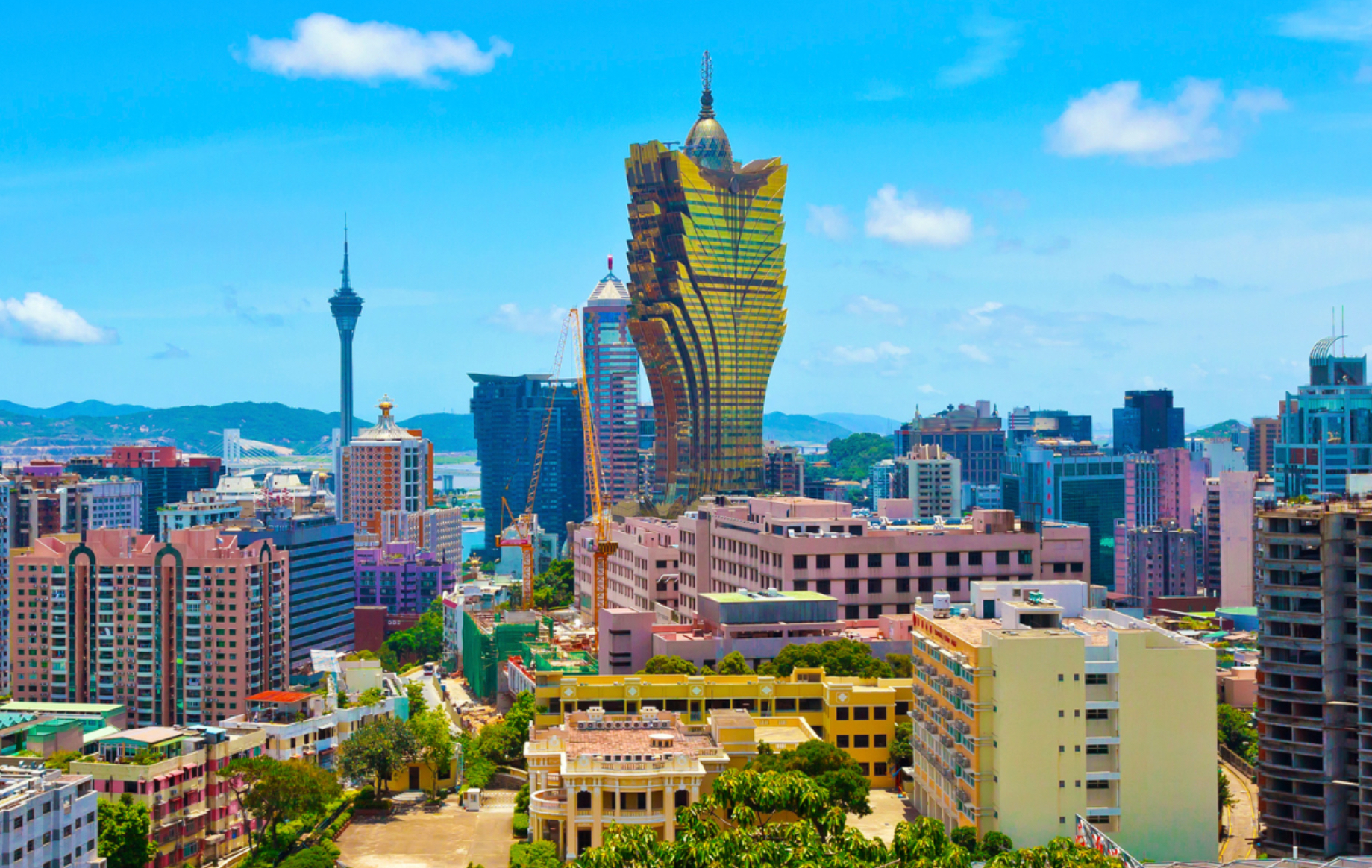
History, Food and Etiquette of Macau

My sister and I embarked on a ferry journey from Hong Kong to Macau, where upon submission of our passports, we were issued a paper insert akin to a train ticket before boarding. Upon arrival at the Macau ferry terminal, we effortlessly wheeled our suitcases to the complimentary bus services that transported us to our hotel-cum-casino. 

The luxurious accommodations and impeccable service at the hotel pleasantly surprised us, showcasing the advantages of staying in casino-affiliated establishments. After settling into our rooms, we donned our comfortable walking shoes and ventured down the main street to admire the charming Portuguese-inspired architecture that graced the cityscape.

Macau's story begins before explorers investigated new lands for trade, and colonisation. It belonged to the vast Ming Dynasty. It was in the mid-16th century. Portuguese traders arrived using it as a trading post in 1557, looking for new wares to take back to Europe and expand their empire.

An agreement allowed the Portuguese to settle on the Macau peninsula in exchange for rent and adherence to Chinese laws until 1887. This agreement laid the foundation for the world's first and longest-lasting European settlement in China until its handover in 1999. Today, it is a significant resort city and a top destination for gambling tourism and is more critical than Las Vegas.

The first known written record of the name "Macau", rendered as "A Ma Gang", is found in a historical material from 1555. It is a particular administrative region of the People's Republic of China.

Over the next 400 years, Macau flourished as a trade hub. European and Chinese cultures intermingled, creating a unique blend evident in its architecture, cuisine, and traditions. Now that it has become a major destination for economic thrill seekers, a new influence of Western luxury clientele etiquette has made its mark. What does this mean for locals and short- and long-haul travellers?

Etiquette plays a vital role across various facets of life in Macau, from business, dining, hospitality, and tourism. Visitors to Macau are encouraged to familiarise themselves with these etiquettes to ensure an enjoyable experience in Macau’s multicultural environment.

Respect for Elders: Confucian values heavily influence Macau's society, emphasising respect for elders. It's customary to address elders with deference and to offer them precedence in social situations.

Greetings: Traditional Chinese greetings involve a slight bow or nod of the head, often accompanied by a handshake. Addressing someone with their title or honorific, followed by their surname, is considered polite.

Gift Giving: Presenting gifts is a common practice in Macau, especially during festivals or social gatherings. Gifts are typically exchanged with both hands as a sign of respect. Avoid giving items in sets of four, as the number is associated with death in Chinese culture.

Language and Communication: While Portuguese is one of Macau's official languages, Cantonese and Mandarin Chinese are predominantly spoken. Learning a few basic phrases in either language can go a long way in showing respect and getting around faster.

Dress Code: Macau's dress code is generally conservative, particularly in formal settings and religious sites. Modest attire is expected, with women often opting for dresses or blouses and skirts, while men typically wear suits or dress shirts and trousers.

Tipping – You will find that restaurants will include a 10% service charge in the bill, while hotels may even levy a higher 15% charge. While tipping is not actively discouraged and won't be refused if offered.

Dining etiquette is particularly significant in Macau's rich culinary culture. A study by Jong-Hyeong Kim et al. (2023) emphasises the importance of understanding cultural factors such as customs, beliefs, and social norms that shape unique tourist dining experiences. These cultural intricacies contribute to the overall uniqueness of Macau's gastronomy scene, highlighting the need for tourists to be mindful of local dining customs to enhance their experiences.

One of these tips when ordering and earing Macanese food, you will need either implements which are chopsticks or a spoon and fork. Here is a list of mouthwatering gastronomic foods that you will find there:
• Porco Bafassa – Slow cooked stew with turmeric, pork and potatoes.
• Capela – minced meat with potatoes, chirozo, bacon, olives and tomatoes.
• Portuguese Chicken – Slow cooked with chicken, curry and potatoes, alternative toppings are eggs, sausage and olives, turmeric and coconut milk.
• Tacho – Casserole with cabbage mixed with pork skin, pork knuckles, chicken wings, roasted pork and Chinese sausages.
• Minchi - Minced beef or pork which could be served together with diced potatoes.
• Pork with Balichao and Tamarind – Casserole with cabbage, sausage, red beans, black beans, pig ear and pig knuckle.

Interestingly, Macau’s etiquette has been shaped by the many Westernised hotels and casinos that have slowly filtered through from places such as America and Australia. These hotels extend to conditional hospitality, as described by Luofu Ye (2018) and as noted by Yi-weiChang and M. Polonsky (2012); their study indicated the importance of polite and respectful interactions in maintaining a high standard of hospitality. Furthermore, the role of etiquette in shaping tourist behaviour and enhancing their experiences is critical in the multicultural context of Macau. You will find those in customer service in these hotels from China, Pakistan, Bangladesh, India and the Philippines.

You don’t need to be in Macau long to experience its fantastic history and note the difference in Asia. My sister and I loved being there; the cultural mix was unique. Macau is recommended for a one- to two-day stay that is easily accessible via Hong Kong.


For many years, Etiquipedia contributor, Elizabeth Soos, has had a keen interest in cultural customs. With her European background and extensive travel, Soos developed an interest in the many forms of respect and cultural expectations in the countries she has visited. With her 20 years’ experience in customer service within private international companies based in Australia, and her lifetime interest in manners and research, she decided to branch out into the field of etiquette and deportment. Through her self-directed studies and by completing the Train-The-Trainer’s course offered by Emma Dupont’s School of Etiquette in London and by Guillaume Rue de Bernadac at Academie de Bernadac based in Paris and Shanghai, she founded Auersmont School of Etiquette. Elizabeth is currently traveling throughout India and brushing up on her Hindi.

 🍽Etiquette Enthusiast, Maura J. Graber, is the Site Editor for the Etiquipedia© Etiquette Encyclopedia