Tuesday, March 8, 2022

Gilded Age Card Style Etiquette

An elegant use of the card distinguishes the well-informed in social usage. This distinction shows when the distribution of cards begins.

STYLE OF CARDS

The prevailing style of cards for women is nearly square (about 2 x 3 inches). A fine smooth-finished card-board of medium weight and stiffness is used. The color is pearl-white, not cream. The engraving is plain script of medium size. A man's card is smaller and narrower, proportionately (about 1 x 2 inches), and is of slightly heavier card-board. The engraving may be somewhat larger and heavier, but should not appear coarse.

The responsibility of furnishing the correct style of card rests with the engraver, whose business it is to know the ruling fashion of the day. Any one may have an elegant card by intrusting the choice to a first-class stationer. But it is not half the battle to secure an elegant card. An elegant use of the card distinguishes the well-informed in social usage. This distinction shows when the distribution of cards begins.— Agnes H. Morton, 1899


Etiquette Enthusiast, Maura J. Graber, is the Site Editor for the Etiquipedia© Etiquette Encyclopedia

Monday, March 7, 2022

Japanese Knot Etiquette

There is one way to tie the brocade bag of the tea jar when the latter is empty and another when it is full. Not only general ignorance of social customs but deadly insults may be communicated by the way a knot is tied, foreigners often making dreadful mistakes either through not knowing or from ignoring the niceties of knot etiquette. 


Tying Knots in Japan
It Is a Serious Art, as a Mistake May Mean no Insult

Like the arranging of flowers, the tying of knots has been carried to the point of a complex art by the Japanese. There is one way—one right way, that is—to knot the cord that confines a birthday or New Year's present. There is one way to tie the brocade bag of the tea jar when the latter is empty and another when it is full. Not only general ignorance of social customs but deadly insults may be communicated by the way a knot is tied, foreigners often making dreadful mistakes either through not knowing or from ignoring the niceties of knot etiquette. 

Hooks and eyes, buttons and buckles are unknown so far as Japanese dress is concerned. They do not have much to fasten, but what they do have, they fasten with cord. That is why they have carried the tying of cord so far. The Japanese have hundreds of ornamental knots, some of them so old that they antedate written history. 

Japanese children are taught to make knots just as they are taught to write and draw. All sorts of flower and animal forms are copied. There is the chrysanthemum knot, the iris knot, plum blossom, pine tree and cherry blossom knots. There is a stork knot, a turtle knot, a knot named for the sacred mountain Fujiyama. An easy knot is called the “old man’s knot.” There is-also an “old woman’s knot.” – Hanford Journal, 1904


Etiquette Enthusiast, Maura J. Graber, is the Site Editor for the Etiquipedia© Etiquette Encyclopedia

Sunday, March 6, 2022

What Not to Do At the Table

6 Categories of "Never-do"

 Table Manners
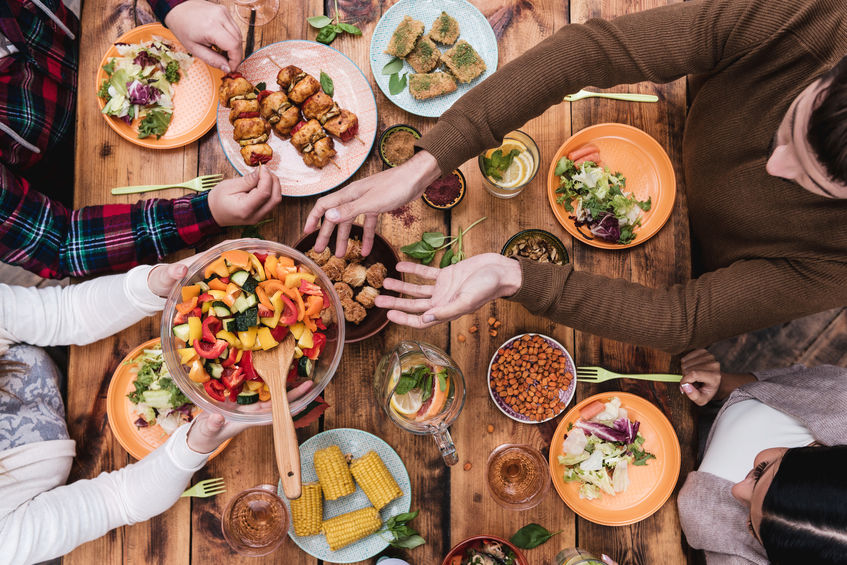
Friends Having Dinner

Sharing a meal is an inclusive experience.  The company, the food, and the conversation work together to blend the time at the table into a nourishing of body and soul.  

Part of this experience includes individuals "flying under the radar" of being noticed for how we eat and, therefore, avoiding the judgments of fellow diners.  No one is perfect and we all commit faux pas when dining with others.  

But whether or not our dining skills are polished or a little rough around the edges, there are things we never do that would bring our common courtesy into question.

Napkin “No-no’s”

  • Using it to blow your nose, wipe your face, or blot lipstick.
  • Tossing the napkin on the table.
  • Spitting food into your napkin is no way to be rid of it.
  • Napkins belong nowhere but on your lap.
  • Don't place on the table at the end of the meal until your host does.  

Properly used, napkins are the most important tool a diner has.  Their use signals the beginning and ending of the meal by the host, and they are convenient for catching crumbs and drips.

Space Invasions

  • Never reach or lean over someone else’s plate or across the table.  This includes shaking hands when others are already sitting.
  • Helping yourself to bread before the host has signaled the meal has begun. 
  • Taking food from someone’s plate.
  • Asking another diner for a bite.
  • Moving plates around to suit yourself. 
  • Placing unwanted food from your mouth on the table. 
  • Drinking before the host has signaled that the meal has begun. 
  • Eating before others have been served or before the host signals it’s time.
  • Talking or laughing loudly such that it's interruptive.  
  • Being anything other than kind to the server.

Our space at the table is our own, but at the same time, we share common space with all the other diners, too.  Being mindful of the boundaries between personal and shared space can prevent accidents and spills and help everyone feel respected and honored.

Unmannerly Sights and Sounds

  • Picking your teeth with your finger or a toothpick.
  • Using your tongue to cleanse outer limits of your mouth.
  • Scratching yourself or repeatedly touching your face, mouth or hair.
  • Swishing your food in your mouth.  Slurping!
  • Belching or burping.
  • Fidgeting or playing with silverware.
  • Knife blade scraping or screeching on the plate.
  • Talking with your mouth full.
  • Taking really big bites that cause difficulty chewing. 
  • Applying lipstick at the table.
  • Slouching in your chair.
  • Making a mess of your table space with your food.
  • Eating with one arm on the table or leaning on the table.
  • Leaning back in your chair with your hands on the back of your head.
  • Eating with your fingers - when you're not eating finger foods.
  • Shoving food onto your fork with your fingers.

What we can’t help but see and hear while dining together can leave unpleasant impressions.  Being aware that only we can manage ourselves as we engage with others over a meal, and being mindful of shared space, will make everyone glad they are with you.

Utensil and Glassware Errors

  • Leaving utensils hanging off your plate.
  • Bringing wine or beverage to the table from previous reception.  (Unless invited to do so.)
  • Licking or sucking on utensils.
  • Stabbing your food.
  • Knife blade aimed outward.  (Read by others as "aggressive.")
  • Waving or pointing with utensils during conversation.
  • Using a butter knife for anything but spreading butter.
  • Placing a used utensil on the table or tablecloth.  ("Used" always belongs on a plate.)
  • Bringing a thermos or water bottle to the table when it is already set with glassware.
  • Picking a dropped utensil or napkin up from the floor.  

A well-set table feels orderly and comforting, unless it’s not there—or unless diners upset the balance by mindlessness.  Disorder doesn’t have the same appeal as order.

Table Conversations that Raise Eyebrows

  • Updating everyone on your latest diet.
  • Complaining or bringing up unpleasant topics.
  • Engaging in ‘conversation stoppers’ such as politics, religion, or topics of a very personal nature. 
  • Talking to one neighbor at the table, but forgetting the neighbor on the other side.

When people dine together they have given their permission to be involved in pleasant conversation.  At a dining table, everyone should feel welcome.  This means sharing talk time and engaging in topics that will contribute to the general good (and good digestion) of all.

General Bad Dining Habits

  • Sitting down without first being invited to sit.
  • Hanging handbags on the back of chairs.  This is not only potentially disruptive, it might also invite trouble.  

When you dine, assume that not everyone knows the guidelines for table etiquette.  There is no need to correct someone if a rule is broken.  Leading by example usually makes a stronger statement of your good manners.


 Contributor, Candace Smith is a retired, national award-winning secondary school educator, Candace Smith teaches university students and professionals the soft skills of etiquette and protocol. She found these skills necessary in her own life after her husband received international recognition in 2002. Plunged into a new “normal” of travel and formal social gatherings with global leaders, she discovered how uncomfortable she was in many important social situations. After extensive training in etiquette and protocol, Candace realized a markedly increased confidence level in meeting and greeting and dining skills and was inspired to share these skills that will help others gain comfort and confidence in dining and networking situations. Learn more at http://www.candacesmithetiquette.com/

Etiquette. Enthusiast, Maura J Graber, is the Site Editor for the Etiquipedia© Etiquette Encyclopedia 


Saturday, March 5, 2022

Gilded Age Playground of Newport

“The Breakers,” summer residence of Mrs. Cornelius Vanderbilt – “There is a revival of the use of various wines with different courses and the rarer and more expensive the vintage the greater the glory. This champagne and scotch whiskey, which is held the favor of fashion for some years are being relegated to the background of the wine closet.” – New York Times,1899

For the Gilded Age Four Hundred, the Newport season was mandatory. Ward McAllister suggested that Newport was “the place... to take social root in.” Elizabeth Lehr was frank: “So much prestige was attached to spending July and August at the most exclusive resort in America that to have neglected to do so would have exposed a definite gap in one's social armour.” 

The armor reflected an impeccable pedigree, irreproachable comportment, and wealth. The “gap” was to be avoided at all costs. Each rival hostess, the queen of her palace, jealously guarded her guest lists, the armament of social power. Mrs. Lehr recalled that the six or seven summer weeks were “crowded with balls, dinners, parties of every description, each striving to eclipse the other in magnificence.” In “the spirit of rivalry. ... colossal sums were spent.”

If elegance was the watchword, novelty was the stimulant. Elizabeth Lehr hinted at the tedium: “Another season, the same background of dinners and balls, the same The same set, the same faces.” Added May Van Rensselaer, splendours. “The restlessness of the summer colony is well known. All amusements pall after a couple of seasons.” In a kind of entertainment arms race, at “Rosecliffe,” one summer, two hundred dinner guests of Mrs. Hermann Oelrichs were treated to a performance by the Russian Ballet, imported from the city for the occasion.

At William K. Vanderbilt's cottage, “Marble House,” the visiting Duke of Marlborough (spouse of the former Consuelo Vanderbilt, now the Duchess of Marlborough) found the indoor fountain surrounded by three hundred live hummingbirds. One especially memorable ball prompted McAllister to record the “brilliant effect” of “two grottos of immense blocks of ice” with a “jet of light thrown through each of them, causing the ice to resemble the prisms of an illuminated cavern, and fairly to dazzle one with their coloring.” As the ice blocks melted, McAllister continued, the effect was a “charming glacier-like confusion, giving you winter in the lap of summer.” “All Newport,” McAllister concluded, “was present to give brilliancy to the scene.”— From 2018’s, “What Would Mrs. Astor Do?”


Etiquette Enthusiast, Maura J. Graber, is the Site Editor for the Etiquipedia© Etiquette Encyclopedia

Friday, March 4, 2022

12 Steps of Dance Class Etiquette

Listen while the dance teacher is talking. That means no talking while they’re talking. Not even quietly to your neighbor.

Everyone wants to be an A+ dance student, but before you become the apple of your dance teacher’s eye, there are a few simple rules of etiquette every newbie should take to heart in preparation for that first dance class:
  1. Go jewelry-free. Obtrusive jewelry is potentially dangerous to you and others.
  2. Listen while the dance teacher is talking. That means no talking while they’re talking. Not even quietly to your neighbor.
  3. Stow away the cell phone. Turn off—don’t just silence—your cell phone. Putting it on vibrate can still make distracting noise.
  4. Don’t film or take pictures in class. Always ask your dance teacher’s permission before recording or photographing any portion of your dance class.
  5. Pay attention at all times, especially when waiting for your turn. You don’t want to get caught slouching or looking bored. And don’t ever sit down unless you’re asked to.
  6. Stay for the entire class. It’s always best to stay for the entire duration of the class, but if you must leave early, talk to the teacher beforehand and make your exit as quick and discreet as possible.
  7. Don’t leave and come back into your class. Stay in the studio for the entirety of class—no ins-and-outs. This can be distracting to your fellow dancers.
  8. Always arrive on time. If you can’t avoid being late, enter very quietly and wait for the OK from your teacher to enter the dance floor. After class, be sure to apologize for your late arrival.
  9. Let advanced students stand in front. Even if you arrived first, avoid the front of the room unless you know the combination.
  10. Demonstrate good spatial awareness. This includes giving the instructor space, but don’t crowd those in the back of the room to do so.
  11. Try your best. If you make the mistake of taking a dance class that’s above your skill level, never walk out of a class or sit down in frustration—hang in there and try your best, no one will fault you for that.
  12. Be courteous and respectful. At the end of class, applaud and thank the instructor.— From The Rockettes.com site blog, 2015


Etiquette Enthusiast, Maura J. Graber, is the Site Editor for the Etiquipedia© Etiquette Encyclopedia

Thursday, March 3, 2022

What to Do at the Table


6 Categories of "Always Do" 
Table Manners

Friends Having Dinner Outdoors

As opposed to the things we never do while sharing a meal with others, there are things we should always do.

Using the following “Always Do” examples as a checklist will make you a delightful dinner guest, dining partner, and one who leads by example.

Perfect Punctuality

  • Have a heart for your host.  This is the person who went to the trouble to organize the party you’re attending and then worries if a diner will show up, has the inconvenience of holding off on calling people to the table when someone is late, or has to adjust or rearrange the evening’s time frame. 
  • Whether for a host or a fellow guest, your arriving on time is important for providing a positive dining experience for everyone.  

Promptness is the first element to consider in making and leaving a positive impression.

A Smile Shows It!

  • It’s impossible to wear a smile and not affect others or yourself positively.
  • Your smile is evidence of your positive attitude – one of the most important qualities to have when spending time with other people. 
  • Smiling affects your own body as a stress reliever, mood improver, blood pressure adjuster, immune booster.  It’s only natural that others will be drawn to you when you smile.

Smiles are peaceful and relaxing to others.  It’s no wonder that laughter also has a place at the table.

Contribute to Winning Table Conversations

  • It’s a great idea ahead of time to write down ten possible conversation starter questions.  No one will know you aren’t a natural born conversationalist. 
  • Say positive things about the food and be generous with “Thank you” and “Please.”
  • If asked if you like (or don’t like) the food, simply say, “I am enjoying my food!  Thank you for asking,” or “Thank you!  Everything is lovely!”
  • When you leave the table, pick up on someone’s departing comments and compliment the statement.  Or offer a final reflection of the good time you had.  
  • Even if a gathering is for a somber event, being as convivial as possible according to the occasion, will be experienced as a relief and peace of mind. 
  • Listening well is helpful to not only the table conversation but your own mindfulness of the food and why you are there. 

Sharing and caring thoughts are general guidelines for good conversation.

Offer Little Gestures of Respect

  • The gift you bring for your host is an expression of gratitude for being invited.  It won’t be a topic of conversation.
  • When food has been passed to you, continue to pass the food to the person next to you after serving yourself.
  • If a person has spinach on her teeth, silently get her attention and gesture quietly.  
  • When someone has something to say, find a positive response or respectful question to ask about it.  
  • If another person makes a faux pas, let it slide by unnoticed. 
  • If you need to leave the table, do so between courses, first saying, “Excuse me.”  
  • If you finish your meal first, wait until the host signals that the meal has ended before loosely folding and placing your napkin on the table. 

Etiquette is the physical means of showing respect for others.  And we know that it’s the little things that count.

Follow the Leadership of Your Host at All Times

  • Your host will welcome you and let you know where and when to sit.
  • The host will welcome the group and will place his napkin on his lap to signal the beginning of the meal.
  • If the host notes a time constraint, model your order at a restaurant similar to his.
  • If a toast is offered, participate.  It’s okay to follow suit if you have a toast to make later in the meal.  Toasting the host is appropriate.
  • When the meal is over the host will place her napkin on the table.  Everyone else at the table should do the same as quickly as possible.  (It’s true: you may have to leave food unfinished.  No doggie bags/boxes, please.)

Hosts carry a lot of responsibility.  They are the leaders of the event.

Wrap It Up with Gratitude

  • Thank your host for the wonderful occasion and let her know she’s appreciated. 
  • A written thank-you note will reinforce your gratitude.

Beneficence or generosity is a main pillar of society.  To paraphrase Adam Smith, 19th century moral philosopher, when someone chooses to do something good for you, this calls for a reward—perhaps a gesture of appreciation—because of the gratitude you feel.

Remembering what you should always do when sharing a meal with other people is easy when summarized.  The bottom line is that you remain positive, kind, and grateful.  The magic of possessing these qualities is that you find yourself surrounded by positive, kind, and grateful people!


 Contributor, Candace Smith is a retired, national award-winning secondary school educator, Candace Smith teaches university students and professionals the soft skills of etiquette and protocol. She found these skills necessary in her own life after her husband received international recognition in 2002. Plunged into a new “normal” of travel and formal social gatherings with global leaders, she discovered how uncomfortable she was in many important social situations. After extensive training in etiquette and protocol, Candace realized a markedly increased confidence level in meeting and greeting and dining skills and was inspired to share these skills that will help others gain comfort and confidence in dining and networking situations. Learn more at http://www.candacesmithetiquette.com/

Etiquette. Enthusiast, Maura J Graber, is the Site Editor for the Etiquipedia© Etiquette Encyclopedia 


Wednesday, March 2, 2022

Peter Post on Hygiene Etiquette

The easiest way to deal with the problem is to wash regularly-once a day—and use a deodorant, preferably one with little or no scent. Fresh clothes each day are another must. At the very least, give your shirt or other clothes the "sniff" test-and be honest with yourself about the results.


Hygiene in the Workplace

People who don't wash often enough, or who don't use a deodorant and consequently smell unpleasant, are hurting their opportunity to have good relationships with colleagues and negatively impacting their chances for promotion. 
The easiest way to deal with the problem is to wash regularly-once a day—and use a deodorant, preferably one with little or no scent. Fresh clothes each day are another must. At the very least, give your shirt or other clothes the “sniff” test-and be honest with yourself about the results.

The other big problem area involves scents-cologne, perfume, or scented deodorants. Splashing on the cologne or perfume might make heads turn when you walk by-but maybe for the wrong reason. In fact, many organizations now have “no-scent” policies. –Peter Post in “Essential Manners for Men,” 2003


Etiquette Enthusiast, Maura J. Graber, is the Site Editor for the Etiquipedia© Etiquette Encyclopedia

Tuesday, March 1, 2022

Defining “Modern Manners”

Traditional Manners in a Modern World

Rude Woman at the Dentist's Office

We often learn etiquette within the traditions that are passed down from generation to generation, or through specific cultural traditions.  

One thing’s for sure, the idea that manners never go out of style is a tradition that lives on!  

It's important to each of us that we know what the etiquette is in a given social situation.  The trick is that etiquette must be learned.  You don't necessarily pick it up on your own.  Learning the standards of polite behavior are both observed and practiced.

Traditional Manners Today

The principles of traditional manners and etiquette just don’t change.  And consistent practice aims us toward civility.

You don’t learn the importance of these principles from a book, but from your own experience in social groups.

These manners are always in style:

  • Being polite 
  • Being neighborly and friendly
  • Being a good sport
  • Being kind
  • Being gracious

Tradition drives respectful behavior.

~ Emily Post

While these are basic manners we humans all share, the responsibility for practicing them belongs, bottom line, to each individual.  It’s only you who can choose to seek it and to practice it.  Only you can aim for “etiquette-ful” behavior.  

Etiquette skills help keep you comfortable with yourself.  Which, in turn, affords the opportunity to focus on others.

We are forever challenged by changing technology, even as these innovations eventually reveal a newly-found etiquette.  I was recently at a film screening on a university campus, and right along with the instructions to “Turn off all cell phones!” it was announced that “Your neighbor will remind you if you’re cheating.”

Some Things Never Change

Knowing the standard traditional manners and practicing your ability to adapt them to individual situations gives you great confidence.  You have the security of knowing that each of these are an expression of politeness and kindness.  By putting them into action, you are also helping others.

  • Greeting, introducing and welcoming others.  
    And initiating conversations that invite participation and inclusion. 
  • Lending a helping hand when you can.  
    Holding a door for someone whose arms are full, or offering your seat in the restaurant waiting area.
  • Letting others go first.  
    Whether walking on a crowded sidewalk, standing in the grocery line, or at a four-way stop.
  • Mindfully speaking to and about others.  
    That’s why we don’t have cell phones on the table, take a call during dinner, are rude or sarcastic about someone’s appearance, gossip, or talk over someone.
  • Expressing gratitude and appreciation.  
    Thus, a thank you note is a tradition that will have a long shelf life!
  • Respecting the privacy, property, and the traditions of others.  
    Never take something that doesn't belong to you, but show interest the holiday traditions of other cultures.  
  • And yes, eating politely.  
    Chewing with your mouth closed and not too full, and keeping your table tools to yourself is always mindful.

Have you ever experienced that moment when you realize you haven’t been getting it right?  Or when you see others doing things you know aren’t what you would do.  Remind yourself of your tradition of good manners. Because even if others aren’t getting it right, you have to strive to set a good example.  

Etiquette is about choosing to be the person you’re supposed to be no matter what!  It’s about feeling comfortable that you are doing the right thing in certain situations. And this is why traditional manners will always have a place in our modern society.


 Contributor Candace Smith is a retired, national award-winning secondary school educator, Candace Smith teaches university students and professionals the soft skills of etiquette and protocol. She found these skills necessary in her own life after her husband received international recognition in 2002. Plunged into a new “normal” of travel and formal social gatherings with global leaders, she discovered how uncomfortable she was in many important social situations. After extensive training in etiquette and protocol, Candace realized a markedly increased confidence level in meeting and greeting and dining skills and was inspired to share these skills that will help others gain comfort and confidence in dining and networking situations. Learn more at http://www.candacesmithetiquette.com/

🍽Etiquette. Enthusiast, Maura J Graber, is the Site Editor for the Etiquipedia© Etiquette Encyclopedia