Sunday, August 22, 2021

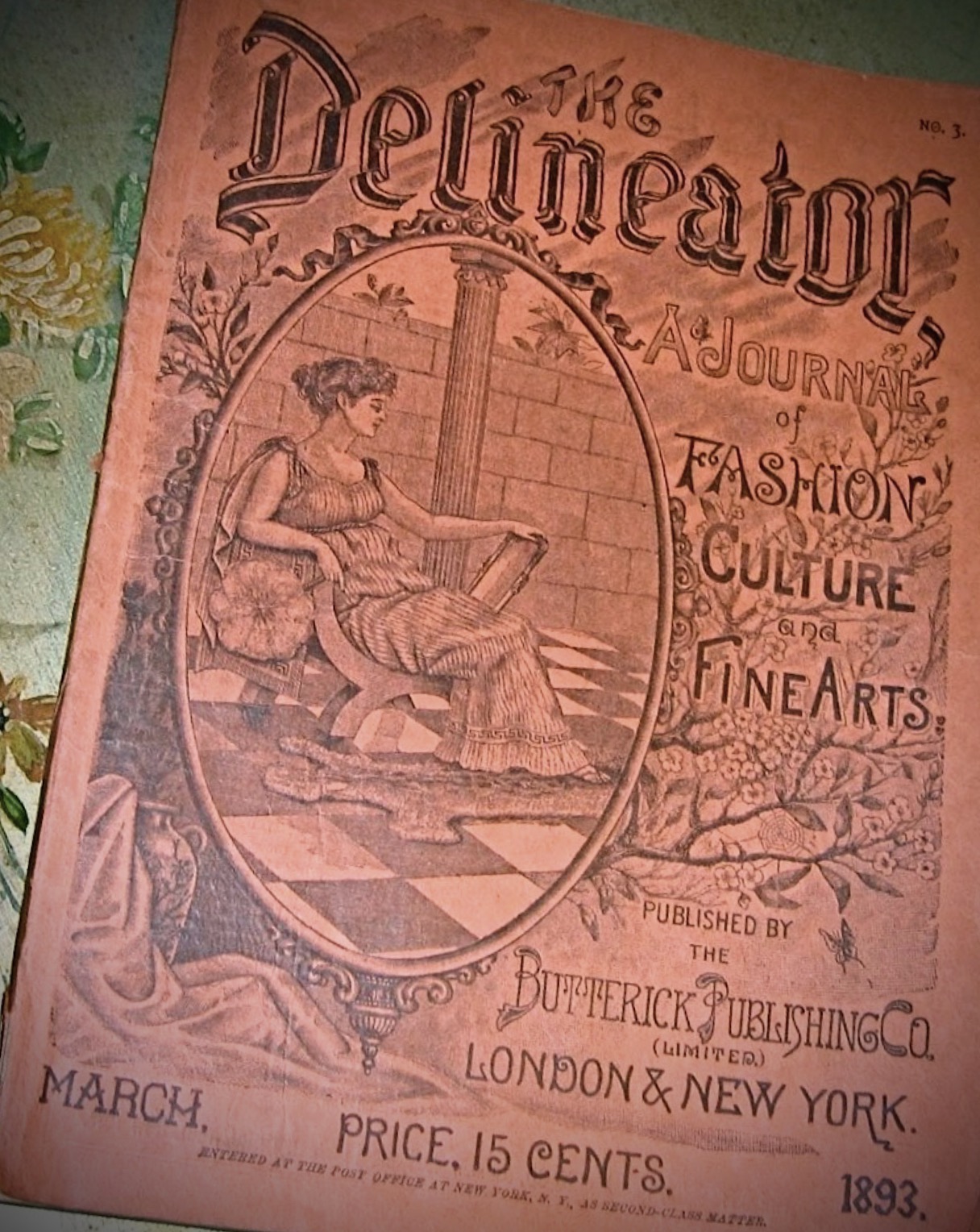
Gilded Age Teas and Tea Fads

“And oh! by the way, society has had a laugh this Winter at some ultra-important women who have had butlers and footmen serve the tea. It's not good form at all. The servants are in attendance at the tea table to change the spirit lamps, replenish, and assist the ladies who preside in any needed way, but to hand the tea, never!”

“There has been a demand for Empire gowns at teas this Winter. I have assisted in receiving at a number, and have invariably been asked to wear such a toilet. The receiving party arrange their gowns to harmonize, of course. I poured tea yesterday afternoon at a place, and for fun I tried to count how many cups were taken from my hand. 

“And oh! by the way, society has had a laugh this Winter at some ultra-important women who have had butlers and footmen serve the tea. It's not good form at all. The servants are in attendance at the tea table to change the spirit lamps, replenish, and assist the ladies who preside in any needed way, but to hand the tea, never!

“But to get back to my tea statistics. I poured over 200 cups of tea alone, and the other women serving chocolate and bouillon seemed equally busy: of that number not one cup had cream in it. Many took sugar, and everybody took lemon and cordial or rum; some asked for more cordial than I at first put in. 

“The fashionable cordial for tea this Winter is Kirschwasser, and it is served either in the tiny cordial cups or ladled in spoonfuls in a cordial spoon of Norwegian enamel. The tea caddies are lower than have been used heretofore, and a Russian one of silver and gold inlaid is most esteemed.

Low, flaring tea cups, very small, are oftenest seen, some holding as little as an after-dinner coffee oup. There are fewer flowers at teas, too, and, except for the musicians screened by palms and other potted plants, the florist has not been in much demand for these affairs. Many society women are noted for some specialty at their teas, as Mrs. Robert Roosevelt, whose chocolate is famous, with its dash of sherry, and Mrs. Butterfield, whose clam broth is incomparable.

“Punches have been revived this year. They fell rather into disfavor since a few seasons ago, when it was whispered that punches offered at teas at some houses were too strong for women’s heads. But they have been offered this season, and all tea has its dash of something.”– New York Times, 1893


🍽️Etiquette Enthusiast, Maura J. Graber of The RSVP Institute of Etiquette, is the Site Editor for Etiquipedia© Etiquette Encyclopedia

Saturday, August 21, 2021

Novelties for Edwardian Era Hostesses

Formerly the good housekeeper was content to have a padding of canton flannel cloth for the dining room table, but nowadays she may have an asbestos pad, which has the merit of keeping the table from damage by heat or moisture, a thing the flannel pad fails to do.

NOVELTIES SEEN IN THE SHOPS

Formerly the good housekeeper was content to have a padding of canton flannel cloth for the dining room table, but nowadays she may have an asbestos pad, which has the merit of keeping the table from damage by heat or moisture, a thing the flannel pad fails to do. These new pads can be made to order for tables of odd sizes and shapes; an in these days, when doilies so often displace damask cloths for luncheon and tea service, it is an undoubted advantage to keep one’s table in the best possible condition, free from stains and spots.  

The woman who takes pleasure in giving bridge whist parties, will find a unique prize in a perfume named after the game; this is produced by a well-known importer of perfumes, and is a composite odor; it comes in two sizes, and one size is about $2 a bottle. A bridge box holds two pads, two pencils and two packs of cards.

In these warm Summer days ginger ale and other “fizzy” things are so popular that a little patent bottle stopper, contrived for the purpose of preserving the “fizz” in the bottle, after it has been opened, is of interest to the housekeeper and the persons planning a picnic party. This stopper is of rubber and nickel, and by moistening the rubber before inserting the stopper in a bottle, it is guaranteed to keep the bottle airtight. They cost 20 cents each.– New York Times, 1912


Etiquette Enthusiast, Maura J. Graber, is the Site Editor for the Etiquipedia© Etiquette Encyclopedia

Friday, August 20, 2021

Gent’s Travel Etiquette of 1901

A gentleman should dress modestly and avoid display. A dark or light-colored wool suit, linen shirt, overcoat, soft felt or Derby hat, gloves and an umbrella are the essentials. His traveling case should contain plenty of clean linen, socks, toilet articles, etc…


Gentlemen’s Dress in Traveling

A gentleman should dress modestly and avoid display. A dark or light-colored wool suit, linen shirt, overcoat, soft felt or Derby hat, gloves and an umbrella are the essentials. His traveling case should contain plenty of clean linen, socks, toilet articles, etc…

The trunk should always be marked plainly with the owner’s initials and address. A gentleman will never quarrel with the employes of the road, no matter how annoying their conduct may be.

Courtesy Upon Leaving a Hotel

Notice should be given at the desk of the hotel a few hours previous to one’s departure for some other point. This will enable the clerk to have bill ready, baggage brought to the door and such other matters attended to as may be necessary. It is quite the polite thing to say a few pleasant words of farewell to the proprietor or clerk as the case may warrant, thus leaving with him a good impression and a desire that you come again.


Miscellaneous Hints in Traveling

He must remember that an ordinary acquaintance ends with the day’s journey.

He can offer his paper to one sitting in the same seat with himself. He will behave at a hotel table in precisely the same quiet fashion that he would at a friend's house, or his own home.

He must be cautious how loudly he talks and not recount his family history in his sleeping berth, or room in a hotel, for the partitions and walls of such places are proverbially thin.– Annie Randall White, 1901


Etiquette Enthusiast, Maura J. Graber, is the Site Editor for the Etiquipedia© Etiquette Encyclopedia

Thursday, August 19, 2021

Etiquette On Board a Steamer

Good-breeding forbids that one monopolize the steamer piano or do all the talking in the ladies’ cabin. Pay some regard to the comfort of those who retire earlier than yourself. Politeness which springs from a kind heart is opposed to boisterous laughter and loud talking.


Steamer Acquaintances

On a steamer where people are thrown together for days, many pleasant acquaintances spring into existence, and some warm friend ships which have stood the test of time have been formed.

But even here, where much freedom is allowed, it is conceded that a certain degree of reserve should be observed on the part of a lady, and that no familiarity should be permitted; also that an acquaintance formed on board a ship need not proceed further than the place which gave it countenance.

Good-breeding forbids that one monopolize the steamer piano or do all the talking in the ladies’ cabin.

Pay some regard to the comfort of those who retire earlier than yourself. Politeness which springs from a kind heart is opposed to boisterous laughter and loud talking.

Table Etiquette on Board Steamer

At the table do not eat hastily and greedily. It is not only ill mannered, but is not a healthy practice. Time is ample here, and you have not the excuse of a hastily-eaten meal at a railway station. Besides, the hundred or more pairs of eyes that are observing you will comment unfavorably.

Never allude to sea-sickness at the table. Most every one is squeamish on the water, and any allusion of this sort is in bad taste.

Remember here, as elsewhere, to avoid giving offense, and regard the rights of all.

Hold yourself ready to pass anything should occasion require. – Annie Randall White, 1901


Etiquette Enthusiast, Maura J. Graber, is the Site Editor for the Etiquipedia© Etiquette Encyclopedia

Wednesday, August 18, 2021

Edwardian Phone Etiquette

“Is this an instrument of communication or torture?” 


“The universal use of the telephone is another factor in the modification of social customs. Among familiar friends, the little chat over the ‘phone largely takes the place of the informal call. Also, invitations to any but strictly formal functions are now sent by telephone, if agreeable to both parties; though it is still considered better to adhere to the more respectful written form if there is any doubt about the new way being acceptable to the party of the second part. 

While I counsel conservatism in these changes, I am convinced that the new dynasty of wire and wireless is destined to dominate us; and as discovery continues and inventions multiply, the time is near when immediate communication will be had at long range; possibly telepathy—who knows? Or, possibly tele-photography with it—why not? Then, the slow, laborious writing of messages will be as much out of date as the super-annuated stage-coach.

But—not yet; we are still in the process of evolution. It is still safe to heed Pope's famous advice: ‘Be not the first by whom the new is tried, Nor yet the last to lay the old aside.’” –Agnes H. Morton's “Etiquette” from 1900


Etiquette Enthusiast, Maura J. Graber, is the Site Editor for the Etiquipedia© Etiquette Encyclopedia


Tuesday, August 17, 2021

Teaching Children Table Manners

Deck out the table prettily, with special linen, china, silver, with flowers and, possibly, lighted candles. Then make it a rule not to fuss with the children about anything at all, table manners, accidents, how much or how little they eat. Just see that the conversation is pleasant, mind your own manners, and you'll make the desired impression. A child isn’t ready for a regular seat at the family table until he is eight or nine.

Five-year-old David's table manners are a source of real concern to his parents. No doubt the problem is exaggerated in their minds because the youngster takes most of his meals with them. There are many bad features to such an arrangement. First, there is a tendency at the family table to judge manners by adult standards. There is likely, therefore, to be too much attention paid to essentally unimportant details. As a result, not only will the child's manners remain unimproved, but he will lose interest in the meal itself. 

A child, moreover, is expected to sit quietly at the adult table and not act bored, although the conversation may be way over his head. He is not supposed to show dissatisfaction when more interesting food than what he gets is served to mother and father. Under the circumstances, one of the chief reasons for having a child eat with his parents—to let him learn table manners by imitation—is defeated. But where a child takes the majority of his meals alone, the occasion of eating with mother and father becomes for him both a privilege and a special event. 

Such a meal easily can be built around dishes which all like and can partake of. A party atmosphere can be made to prevail. Deck out the table prettily, with special linen, china, silver, with flowers and, possibly, lighted candles. Then make it a rule not to fuss with the children about anything at all, table manners, accidents, how much or how little they eat. Just see that the conversation is pleasant, mind your own manners, and you'll make the desired impression. A child isn’t ready for a regular seat at the family table until he is eight or nine.– By Jane Coward, 1942


Etiquette Enthusiast, Maura J. Graber, is the Site Editor for the Etiquipedia© Etiquette Encyclopedia

Monday, August 16, 2021

Etiquette and Unsealed Letters

Especially unsafe is it to place in an unsealed package articles of large money value. Would any sane man send a $50 bill in an unsealed envelope by the hand of a friend or anybody whomsoever? The friend himself, if he knew the nature of the enclosure, would be very apt to protest against this sacrifice of common sense at the shrine of etiquette.

The point of etiquette, in regard to not sealing letters sent by the hand of a friend, is to be considered, undoubtedly, as settled by the usage of polite society. And yet there are two sides to the question. To intrust to a friend an unsealed letter to a third person is a compliment to the friend; but why should it be thought necessarily uncomplimentary if the letter be sealed? On the other hand, the sealing of a letter may be deemed always advisable, for one good reason at least. The contents of an unsealed letter are never safe. They are safe so far as the honorable friend is concerned, but not safe in any other sense. 

They may be lost from the envelope easily and innocently. They may be abstracted and read by the servant to whom the note is delivered at the door, or by any prying individual who may find the missive lying on the hall table and awaiting the owner's arrival. Especially unsafe is it to place in an unsealed package articles of large money value. Would any sane man send a $50 bill in an unsealed envelope by the hand of a friend or anybody whomsoever? The friend himself, if he knew the nature of the enclosure, would be very apt to protest against this sacrifice of common sense at the shrine of etiquette.- “C. S. E.” in New York Commercial Advertiser, 1888


Etiquette Enthusiast, Maura J. Graber, is the Site Editor of the Etiquipedia© Etiquette Encyclopedia

Sunday, August 15, 2021

An Emperor’s One-Armed Eating

Over the years, numerous “amputee” forks and one-armed eating tools have been invented. Dining in a dignified manner, using only one hand, was made easier by combining a fork and knife in one utensil. This one shown is from the book, “What Have We Here?” and is a post-World War I era fork and knife combination for cutting food and then bringing it to the mouth. The stainless steel blade with tines has a Bakelite handle.– The news article does not describe the Kaiser’s dining “implement” so we can only guess what type of these it might have been.


Why the Dinner was Late
An Exhaustive Search Was Necessary to Discover Important Utensils
An 1860’s American Civil War era Army officer’s folding spoon and combination knife and fork, fully unfolded.
An 1860’s American Civil War era, Army officer’s folding spoon and combination knife and fork. 
A modified version of a Nelson Fork, made some 40 to 50 years later, designed for the general public’s one-handed eating of pickles, pies and cakes.

A “Nelson Fork” - Named for Admiral Nelson who lost his arm fighting Napoleon’s forces at Tenerife


An incident which occurred two or three years ago. on the occasion of the young German Emperor's visit to Greece, illustrates anew the fact, which no one ever doubted, that the etiquette of a Court may bring as much discomfort to the King as to the people who surround him. The Kaiser holds the honorary rank of Admiral in the British navy. The commander of the British squadron in Greek waters tendered his Majesty a dinner on board his ship. Of course, the banquet was to be a most elaborate and magnificent affair. 

The hour arrived, and the Royal guest and his suite and officers, all in brilliant uniform, were assembled. Then it was discovered that an important implement was missing. Where was the Emperor’s knife and fork? For the Kaiser, having but one arm that he can use —his left arm is withered—can wield the scepter, the sword or the pen, but cannot use a knife and fork as other people use them. In their place, he employs an ingenious contrivance which combines in one implement both knife and fork, and does very well with it. Just at that moment it was discovered that the Imperial knife and fork had not been placed by the Imperial plate. It was sought for, but it could not be found. 

The Emperor’s attendants were inquired of; no one knew where it was. Then the knife and fork might have been left ashore, perhaps. A picked crew were put into one of the ship’s boats, and brawny backs bent over the oars, for the errand was one that called for dispatch. The Emperor’s quarters in the city were searched, but no knife and fork could be found. All this time, the dinner was spoiling. The search had been made with all possible energy, but it was now two hours since the table had lacked only the Kaiser's knife and fork. But the dinner could not be eaten until the Kaiser was ready to eat, and his eating implements must he found. Perhaps before this time the happy thought had occurred to more than one person, “The Emperor may know where it is.” But up to this time no one had ventured to ask him. Would he, under the melancholy circumstances, take it amiss if he were questioned? 

Hunger rendered the host bold: with decorus delicacy the Emperor was approached, and the momentous question was put. Could he tell where his knife and fork might be found? “Why, yes, here it is,” replied William II, and reaching inside his uniform he produced the much sought implement from an inner pocket. The host forthwith led the way to the table, not only greatly relieved in mind, but deeply impressed with the fact that the affairs of Germany were in safe hands. —Youth’s Companion, 1892


Etiquette Enthusiast, Maura J. Graber, is the Site Editor for the Etiquipedia© Etiquette Encyclopedia