Showing posts sorted by relevance for query hong kong. Sort by date Show all posts

Sunday, June 30, 2024

Fascination and Manners in Hong Kong

Hong Kong’s image as “Asia's world city,” is further enhanced by promoting its unique, cosmopolitan lifestyle to international audiences, showcasing Hong Kong's sophisticated blend of Eastern and Western etiquette norms. (S. Chu, 2011). I saw cafes featuring all kinds of Western bakery sweet treats, along with restaurants that offer European – Asian fusion dishes.

I love action movies; all my friends know I will watch an action movie over a romantic flick, any day or night. When traveling with my sister, some of the best sites we saw in Hong Kong have been featured in films such as James Bond (at the exclusive Peninsula Hotel) in “The Man With the Golden Gun,” starring Roger Moore. The skyscraper featuring ‘The Rock’ Dwayne Johnson, Lara Croft: Tomb Raider – The Cradle of Life with Angelina Jolie. And last, but not least, Jackie Chan’s movies.

Walking around Hong Kong is fascinating. It is located in hilly to mountainous areas. From the mountain apartments to the Kowloon Peninsula, elevators help you make it up and down. In the mornings, you will be helped down quickly on these escalators. In the afternoon, they switch gears to help office workers make it back home without catching a sweat. As a tourist, I love observing, and whilst traveling down these feats of energy-saving engineering masterpieces,

Hong Kong’s image as “Asia’s world city,” is further enhanced by promoting its unique, cosmopolitan lifestyle to international audiences, showcasing Hong Kong's sophisticated blend of Eastern and Western etiquette norms. (S. Chu, 2011). I saw cafes featuring all kinds of Western bakery sweet treats, along with restaurants that offer European – Asian fusion dishes.

Although it straddles East and West, Chinese etiquette is very much alive in Hong Kong. Despite its status as a global financial hub and a melting pot of different cultures, Hong Kong retains a strong connection to traditional Chinese customs and manners. And that is what I was there for.

I was in Hong Kong to experience the culture it is so famous for — dim sum being just one of them. Fortunately, my sister's friend was available for an early morning experience and took us to Central Hong Kong, renowned for its traditional Chinese tea and authentic dim sum.

Lin Heung Tea House, which opened its doors in 1918. They were able to guide us in how to order dim sum because, without them, we would have appeared to be a pair of ‘stunned mullets’ trying to work out how to get food to our table!

Even before you get to your table, you will be waiting in a line that goes outside and possibly around the corner. Once you are inside, then you will have to find a table very quickly which may be shared with travellers or locals, which is a beautiful, enriching moment.

Tea is served first which ranges from Oolong tea, Pu’er tea, Jasmine tea to Shoumei tea. The waiter provides two teacups one large for steeping tea and the small tea sup for drinking. To request more tea, tap two fingers next to your cup on the table. This gesture originated from a historical legend involving Emperor Qian Long and his servant, signifying gratitude.

You may be given a white pair of chopsticks, which his for eating and another colour, which may be black, for serving from communal dishes. A traditional Chinese spoon called ‘tanggeng’ on your right side is for serving only. If both chopsticks are the same colour, use the closest one for eating and the farthest one for serving.

The dim sum is offered on traditional trolleys. You will need to follow the trolleys with the tally card. Once you have selected what you want to get stamped and get back to your table while your food is hot. Quite the dim sum experience.

After finishing your meal, place your chopsticks together on the right-hand side of your plate. At dim sum, avoid placing chopsticks on top of your bowl or plate; return them to the designated chopstick rest. Avoid stick chopsticks into food or cross them, as it's considered rude.

Discarded bones and food should not go inside the small bowls, but on the designated plates or on the table. Some places provide plastic sheets for disposing of bones after the meal.

Hong Kong offers a cinematic experience both on and off the screen. From exploring its hilly terrain to navigating its innovative transportation systems, one is provided a glimpse into the city's blend of tradition and modernity.

Amidst the action-packed adventures, my sister and I, found solace in the diverse culinary scene. I was so pleased to holiday in Hong Kong and felt it wasn’t enough to just stay there for one week.


For many years, Etiquipedia contributor, Elizabeth Soos, has had a keen interest in cultural customs. With her European background and extensive travel, Soos developed an interest in the many forms of respect and cultural expectations in the countries she has visited. With her 20 years’ experience in customer service within private international companies based in Australia, and her lifetime interest in manners and research, she decided to branch out into the field of etiquette and deportment. Through her self-directed studies and by completing the Train-The-Trainer’s course offered by Emma Dupont’s School of Etiquette in London and by Guillaume Rue de Bernadac at Academie de Bernadac based in Paris and Shanghai, she founded Auersmont School of Etiquette.

www.auersmont.com | +61 466 344 331 | auersmont@gmail.com


🍽️Etiquette Enthusiast, Maura J. Graber, is the Site Editor for the Etiquipedia© Etiquette Encyclopedia

Monday, December 16, 2024

Worlds Apart

Empty subway car seats in Hong Kong in 2018

Hong Kong & Mainland China…

Found to be Worlds Apart

Here I am, standing in a crowded van-bus full of people who don’t know even one word of English. There are little kids staring at me along with a few people wearing U.S. Army uniforms. On this particular bus, some of the people are not even speaking Mandarin but some sort of local dialect. Imagine a bus full of Chinese farmers and me. In this place, I was not just Sean the UC Davis student, I was ambassador of a whole different world. I’m from a world of McDonald’s, the Internet, private cars, movies, TV, video-games and fancy schools. 

The world of the Chinese countryside is much different from the Chinese metropolitan cities. Here it is rare to find a person with a private car. Taxis almost don’t exist outside of larger cities, and the normal Western food chains are all absent. It is a slower-paced world, and many people can be seen just taking their time walking around the streets or sitting on some empty steps, Students wearing colorful uniforms are racing around on bicycles, and small shops are selling produce instead of clothes or knockoff watches. However there is one thing I have found consistent no matter where I am in mainland China: The people are all so friendly and so willing to help. And they are always very surprised if you can speak a few words of Mandarin — even badly. Traveling to mainland China has once again renewed my interest in learning Mandarin. 

Cantonese, as is spoken here in Hong Kong, is also interesting, but it is so much harder to learn with the nine tones (most locals can’t make all nine). The locals are not as willing to help you speak it and are not very patient if you speak it badly. Plus, I always think Cantonese people sound angry when they talk. Cantonese is a very limited-use language, while Mandarin is spoken by countless millions of Chinese. 

On the way back to Hong Kong I made a quick stop in Shenzhen, a city on mainland China just across the border of Hong Kong. Since the subway is new there, I decided to give it a try. On my particular trip I saw men lying down on the bench seats, taking up three or four spaces while others, most likely from Hong Kong, were getting annoyed. There were many empty seats, but no one seemed to be particularly interested in sitting. Since this is a new subway, maybe the “rules of etiquette” are not yet totally established, but in Hong Kong they clearly are. 

On the Hong Kong subway system people generally move about at a normal to lazy pace on the escalators, in the gate areas, or wait on the platform. However, when you get to an interchange station, something totally different happens. It is easy to tell when an interchange station is coming up; all the people on board who had previously been maneuvering for the best seats now totally shift their attention to being the first one to the doors that will soon open. Then there is a mad rush. Everyone is like a racehorse out of the gate, and people literally run across from the one train to the other. The goal is to be the first to the new train and once again get the best seat. However, as soon as you get to the seat, it seems you have to stand in front of it, stretch a little, act like you don’t really want it, and then slowly sit. 

So it seems mainland China and Hong Kong are very different worlds; the people look the same but that is about where it ends. The food is very different, the language is different, the actions are different and the way of thinking is different. I personally like both places, and I always feel at ease when in mainland China. — By S. Donohoe for California Aggie, 2006


🍽Etiquette Enthusiast, Maura J. Graber, is the Site Editor for the Etiquipedia© Etiquette Encyclopedia 

Sunday, June 22, 2014

China's Etiquette Guide for Chinese Tourists Abroad

The rules urge travellers to behave and “abide by the norms of civilised tourist behaviour.” No urinating in the pool, nose picking or stealing life jackets from the plane: China issues 'civilised' travel guidebook for tourists heading abroad.
Occupying public toilets for long periods of time and leaving footprints on the seat are discouraged.

Drinking soup straight from the bowl and slurping is not appreciated.


Refrain from limp handshakes. 


Don't pick your nose in public and keep your nasal hair trimmed at all times. 


All are of the above rules are outlined in a 64-page booklet, "Guidelines On Civilised Travel Abroad" from China's National Tourism Administration. Many are country specific. (Asking Britons whether they have eaten is deemed impolite.) China's list of dos and don'ts came in 2013, at the launch of ‘Golden Week’, a public holiday that began on October first.


Do not coerce locals into taking your photo.
Beijing's handy rule book, aimed at curbing the unruly behaviour of Chinese tourists abroad who have developed an ‘uncivilised’ stereotype, is all in an effort to smooth out international relations.  China's Vice Premier Wang Yang said in May 2013, that the tourism louts had 'damaged the image of the Chinese people'.
 China's new guidebook for tourists warns that peeing in the pool is not optional.
In the book, which also comes with helpful illustrations, tourists are urged not to occupy public toilets for long periods or leave footprints on the seat.

Life jackets should be left underneath the seat in aircraft, the rulebook states, because ‘if a dangerous situation arises then someone else will not have a life jacket’.
China's list of dos and don'ts came in 2013, at the launch of ‘Golden Week’, a public holiday that began on October first.
The handbook also dispensed country-specific advice: Chinese visitors to Germany should only snap their fingers to beckon dogs, not humans. Women in Spain should always wear earrings in public -- or they could be considered effectively naked. Diners in Japan should not play with their clothes or hair during a meal. Tourists are reminded that all air-conditioned places in Hong Kong and Macau are no-smoking areas, and mainlanders should not try to get refunds for food.

One tourist from Guizhou said the new rules provided tourists and locals with a better environment.

THE ETIQUETTE MANIFESTO

Don’t...

  • Talk about people behind their backs in Chinese (because someone nearby might understand you).  
  • Give a handkerchief in Italy as a gift because it is deemed inauspicious.
  • Ask Britons whether they have eaten.
  • Touch people's belongings in Nepal with a foot.
  • Ask for pork in Islamic countries.
  • Call Africans 'Negros' or 'black'.
  • Use the left hand to touch other people in India.
  • Eat a whole piece of bread in one mouthful or slurp noodles noisily inside an aircraft.

Do...
  •  

  • Use shower curtains in a hotel.
  • Keep quiet when waiting to board a plane.
  • Keep mobile phones turned off until the aircraft has come to a complete stop.
  • Be punctual if taking part in a tour group.
  • Arrive at a banquet hall 15 minutes early and adhere to a formal dress code.
Source: Guidelines on Civilised Travel Abroad, released by China National Tourism Administration
At the time, a 33-year-old tourist visiting Hong Kong from central Anhui province complained that the guidelines were too many and too specific.

'You cannot possibly look through all of the rules before you go travelling.


'Also the rules are different in different places,' he told the South China Morning Post. 'I think it's not very feasible.'


But one tourist from Guizhou said the new rules provided tourists and locals with a better environment.


While several countries have eased visa restrictions to attract affluent Chinese tourists, complaints about etiquette have made international headlines lately.


A Luxor, Egypt site, originally built by Amenhotep III in the 14th century BC and completed by Ramessess II, has been defaced by a Chinese teen.  By carving his name into it in May of 2013, the 15 year old vandalised a 3,500-year-old Egyptian temple relic.  The "Ding Jinhao visited here" in Mandarin, was carved into one of the sandstone carvings. It was then photographed by another Chinese tourist, who posted it on Weibo, accompanied by the comment: "My saddest moment in Egypt. Ashamed and unable to show my face." 
Luxury French fashion Zadig and Voltaire sparked a huge controversy last year by claiming its new 40-room boutique hotel, due to open in 2014, will not be open to Chinese tourists.

In February, a mainland Chinese man reportedly relieved himself in a bottle in a crowded Hong Kong restaurant, sparking anger online and prompting some locals to deride mainlanders as 'locusts'.


Chinese tourists in North Korea have been accused of insensitive behaviour, such as throwing sweets at children ‘like they’re feeding ducks’.


Despite the rulebook, some mainland tourists appear to have retained their own set of standards, however.


Outside Golden Bauhinia Square, one of Hong Kong’s main tour group hotspots, a mother could be seen helping her son urinate into a plastic bag, the Post reported today
.


Etiquette Enthusiast, Maura J. Graber, is the Site Editor of the Etiquipedia© Etiquette Encyclopedia

Sunday, December 8, 2024

Cross Cultural Etiquette in 1985

Many things have changed, and have gone in and out of fashion over the past 40 years, but good manners are always in style. Social media is full of etiquette and cross cultural tips. It pays in many ways to study up on any possible cultural differences before you travel to another country. – Image source, Instagram

Time To Get Some Etiquette

I’ll bet you think you already know good manners. You put your napkin on your lap, keep your elbows off the table in fact, you probably know how to behave perfectly, if you must. But here comes the hitch – manners are different in every country! Oh no! How are you supposed to know what to do in Hong Kong? Or India? Or Germany? 

Here are a few rules to follow:
  • Let's say you've just arrived in Hong Kong. You want to say. “Hi! How are you?” to the hotel clerk. Since Hong Kong is a British colony, they understand English greetings, but it is better to use Chinese greetings. So, like the Chinese, you say “Have you eaten rice yet?”
  • Next you go to India. Better stop whistling. it’s rude to whistle in India! You better not slap your Indian pals on the backs either; they don’t see it as a friendly gesture like we do.
  • Now you're in Germany. Don’t cut your fish and potatoes with a knife. Just use a fork. If you want to chew gum, you better do it in private. It’s impolite to chew in public. Most people don't wear sneakers except for playing sports; so put away your Nikes!
  • Let’s go to Egypt now. When’s dinner? Sometimes Egyptians don't eat till 10:30, or even later! You'll probably get lots of food once you do get served, though. Don’t feel pressure to eat everything on your plate. The host might think you didn't get enough.
Don't worry about remembering all these rules, though. You'll do fine in any country if you pay attention to what people there do. – Julie Langsdorf in Pennywhistle Press, 1985


🍽Etiquette Enthusiast, Maura J. Graber, is the Site Editor for the Etiquipedia© Etiquette Encyclopedia

Tuesday, September 1, 2020

Bird Etiquette for Hong Kong’s Elites

Even walking adheres to a strict etiquette. Cages are draped with starched white-cotton covers to protect its occupants from traffic noises and passers-by, and, allegedly, to ward off cockroaches and mosquitoes. Most highly prized are the song birds, including the seung see (a miniature canary with yellow/green plumage), the wah mei (brown thrush with a white streak over the eyes), crimson cockatoos and gray finches. 


The Elites and Tweets Around Hong Kong


A man’s reputation here rests not on the company he keeps or the dogs he owns, but on the birds he walks.

You’ll find there’s more to Hong Kong than shopping and dim sum. For in this high-density, high-rise city, the popular pet of choice is the bird.

If you are up early, like most of the locals, you can hear the song of the thrush as it hops about its cage swinging from the limb of a mulberry tree, joining a host of others in an arbor of trees dripping bird cages.

“Bird lovers,” as they are called, sling these bamboo domiciles on branches, creating a special primeval forest for their feathered pets.

Devotees, believing that birds cooped up indoors in the city’s crowded apartments will become depressed and lose their will to sing, head for parks with their caged companions at about 5 or 6 a.m. everyday. They hope to make the bird’s day brighter and to enhance their warbling through discourse with other birds.

Chances are you’ll encounter a little Oriental man swinging his bird cage gently as he saunters into Kowloon Park for his morning ritual.

Network of Narrow Paths

He meanders up and back the network of narrow paths. No lost soul, he is a man with a mission: to increase the contentment of his winged friend.

Every so often he will stop, greet friends, place the cage at his feet and join them on a park bench where they will talk. This is a daily social event for both man and bird. Shortly, the old man will rise, carefully raise his cage and continue his stroll.

It’s 7 a.m. and more friends and their birds await on the tree-lined terrace amid the “shadow boxers,” the ubiquitous tai chi exercisers.

Behind the old man, a young man in jogging suit, carries two white draped cages— one perched on his shoulder, the other carefully balanced on one palm like a waiter carrying a tray.

He removes the covers and hangs each cage from a branch of a tree, then begins his stretching. The little warblers serenade each other, joining the caroling, squawking and chirping that fills the park.

The men (women reportedly walk their birds later in the day) are observing an ancient Chinese ritual dating back centuries to the Imperial Qing dynasty of the Manchus.

When these nomads broke through the Great Wall in 1644 and conquered Beijing, they introduced the art of bird raising.


A Privileged Elite

The conquerors became privileged elite, favored for life by the emperor with an imperial living allowance, which freed them from the drudgery of working for a living.

They spent their idle time in tea houses, gossiping, listening to storytellers and discussing the intricacies of feeding and raising birds.

Ancient cartoons captured these idle rich fanning themselves with one hand, while holding a bird cage in the other.

In 1911, the former noble loafers, lacking work skills, were forced into the common market— street vendors, porters, rag collectors— but their fanatic devotion to birds survived to this day.

Such devotion has spawned a street devoted exclusively to the selling of birds and their accouterments.

The hobby has also given rise to restaurants that cater to these fanciers, supplying them with bamboo poles on which to hang their cages while they eat and socialize.

However, it’s not all fun and games. Bird raising is a time-consuming and exacting hobby. The feathered creatures must be bathed and the white sand at the bottom of the cage (newspapers are forbidden) changed daily.

Strict Etiquette

Even walking adheres to a strict etiquette. Cages are draped with starched white-cotton covers to protect its occupants from traffic noises and passers-by, and, allegedly, to ward off cockroaches and mosquitoes.

A chick has to be swung gently to strengthen its wings and so it can adapt to its new environment. Adult songbirds, on the other hand, need less walking, but require dialogue with others to increase their tonal range. The best have been known to mimic as many as seven voices.

Toward this end, following the outing, somewhere between 7 and 8 a.m., bird lovers with their cages rendezvous daily for morning tea at one of many “bird restaurants” to compare pets and argue the finer points of care and feeding.

Cage-Carriers Congregate

For half a century, the most popular meeting place for this ritual has been the top floor of Wan Loi restaurant, 484 Shanghai St., where hundreds of cage-carriers have been known to congregate, particularly on Sundays and holidays.

There’s a restaurant for dim sum and strong Chinese tea on the ground and first floors. Exotic odors waft from large wooden boxes of herbs and spices at the entrance.

On another floor, the top of a wide, curving staircase opens onto a large room of tumultuous squawking and chirping and a frenzy of fluttering wings from cages of birds perched on tables, suspended from poles and set before open windows.

Regulars arrive when the restaurant opens at 5:30 a.m. to reserve a spot at the window. By 7 a.m., the room is bustling.

Up and Down the Aisles

Some owners walk cages up and down the aisles so their birds can converse or eavesdrop on their chums to pick up a chirp or two; others sit at tables with cages open, drinking tea and stroking their pets.

By 9 a.m. the room has emptied as executives in suits rush off to offices and the retired elders return home to feed and bathe their companions. A fancier may own as many as five birds, which are rotated, usually by twos, for outings.

It’s an expensive hobby--birds reportedly costing $30 and up, plus accessories that raise the ante even more.

The shopping mall for birds and supplies is Hong Lok Street, alias “Bird Street,” in Mongkok, near the junction of Argyle and Shanghai streets, just off Nathan Road, Kowloon’s main shopping avenue.

This narrow-canopied alley, reserved for foot traffic only, features a maze of accessories and birds in all colors and sizes, from tiny sparrows to large, colorful parrots. Many of the birds come from China and southeast Asia. Life expectancy is about 10 years.

Song-less Females

Most highly prized are the song birds, including the seung see (a miniature canary with yellow/green plumage), the wah mei (brown thrush with a white streak over the eyes), crimson cockatoos and gray finches.

In China, he who mistakenly buys a female thrush chick loses face. In maturity it’s the males who sing; the females remain songless.

When a sale is completed, after lively bargaining with onlookers joining in, the new owner departs, adopting the prescribed protocol of newly purchased bird handling.

Cages are carried at head or chest level for maximum display of the new purchase and to safeguard the serenity of the bird en route home.

Cages range in price and degree of artistry from an inexpensive mock bamboo of reddish brown plastic to a carved, polished and stained bamboo that can cost more than $60.

Cage Accouterments

Ivory carving for cage accouterments is an honored profession perpetuated in families from one generation to the next.

Cages are usually outfitted with four small bowls— two for grains or seeds and morsels of fruits and vegetables, and two for water.

A delicate vase is often placed inside for decoration. Many hobbyists even theorize that each species has a preference in cages.

But the birds have a food preference. Their favorite delicacy, live grasshoppers, is imported from China with special dispensation from the customs department and eaten at a rate of three to 50 daily per bird.

Grasshoppers vary in price according to season (winter higher than summer). You also can buy a cage to house the grasshoppers to ensure a steady, fresh supply. A bird’s diet is given serious consideration--special balance of seed, fruits, vegetables and live fare, carbohydrates and vitamins.

Nothing Is Too Good

In other stalls, worms slither in open containers and cicadas and crickets click and hop in display cages— for a sometimes steep price.

But pay it they do; nothing is too good for the birds: Complex sliding doors for cages, elaborately carved ivory perches and ornate cloisonne or blue-and-white ceramic water bowls resembling ancient porcelain vases.

An old Chinese saying alleges that he who keeps a contented bird in his house brings in nature and relaxes the mind. — J. Florman, 1988


Etiquette Enthusiast, Maura J Graber, is the Site Editor for the Etiquipedia© Etiquette Encyclopedia

Friday, October 14, 2022

The Chinese Man’s Coffin

“The rules around death are very important to all members of Chinese society. Special attention is paid to the care of the dead and very specific rules are followed. It is widely believed that bad luck will come to the family that does not honor the rules. In Chinese culture, traditions can vary depending on the deceased’s role in the family, their age, the manner of death, and their position in society. Care for one’s parents is complete and without question, so when a parent or elder dies, funeral planning falls to the eldest son and his children. A parent may not perform funeral planning for their child, so an unmarried person is taken to a funeral home upon death. Chinese rules also say that an older person must not show formal respect to a younger person. A child is therefore buried in silence and no funeral ceremonies are performed.Funeral traditions differ throughout China. Some Chinese people follow Christian beliefs and burial traditions. In Mainland China, there is land available for cemeteries, so Christian burials take place. Some Chinese people believe in the teachings of Buddha. In Hong Kong, the Buddhist practice of cremation is encouraged because the land there is needed for farming.” —Royal Palm Memorial 

The idea of the Chinese man is that when he dies he ought to be buried in the trunk of a tree, and so it comes about that all coffins are designed with a view to keep up the illusion. They consist of four outside tree boards, and are so fashioned together as to look very much like a tree at a little distance. They are, of cource, tremendously heavy; but then that is considered an excellent fault. If a son wishes to be very polite to his father, or one friend desires to obtain the good will of another, he makes him a present of a good, solid, heavy coffin. 

The gift is put in an honored place in the house, ready for use, and is shown for the admiration of any friends who may call. The owner would rather go into his coffin than part with it, and generally speaking, though a Chinaman may get into debt and be very harshly treated by his creditors, they will leave him his coffin, not wishing to prejudice his entry into the next world, which, according to the Celestials, depends very much upon the way in which a man is buried. I was told that half the Chinese living in Hong Kong were already in happy possession of their coffins, and ready to enter them when wanted.— The London Telegraph, 1884


🍽Etiquette Enthusiast, Maura J Graber, is the Site Editor for the Etiquipedia© Etiquette Encyclopedia

Wednesday, April 17, 2024

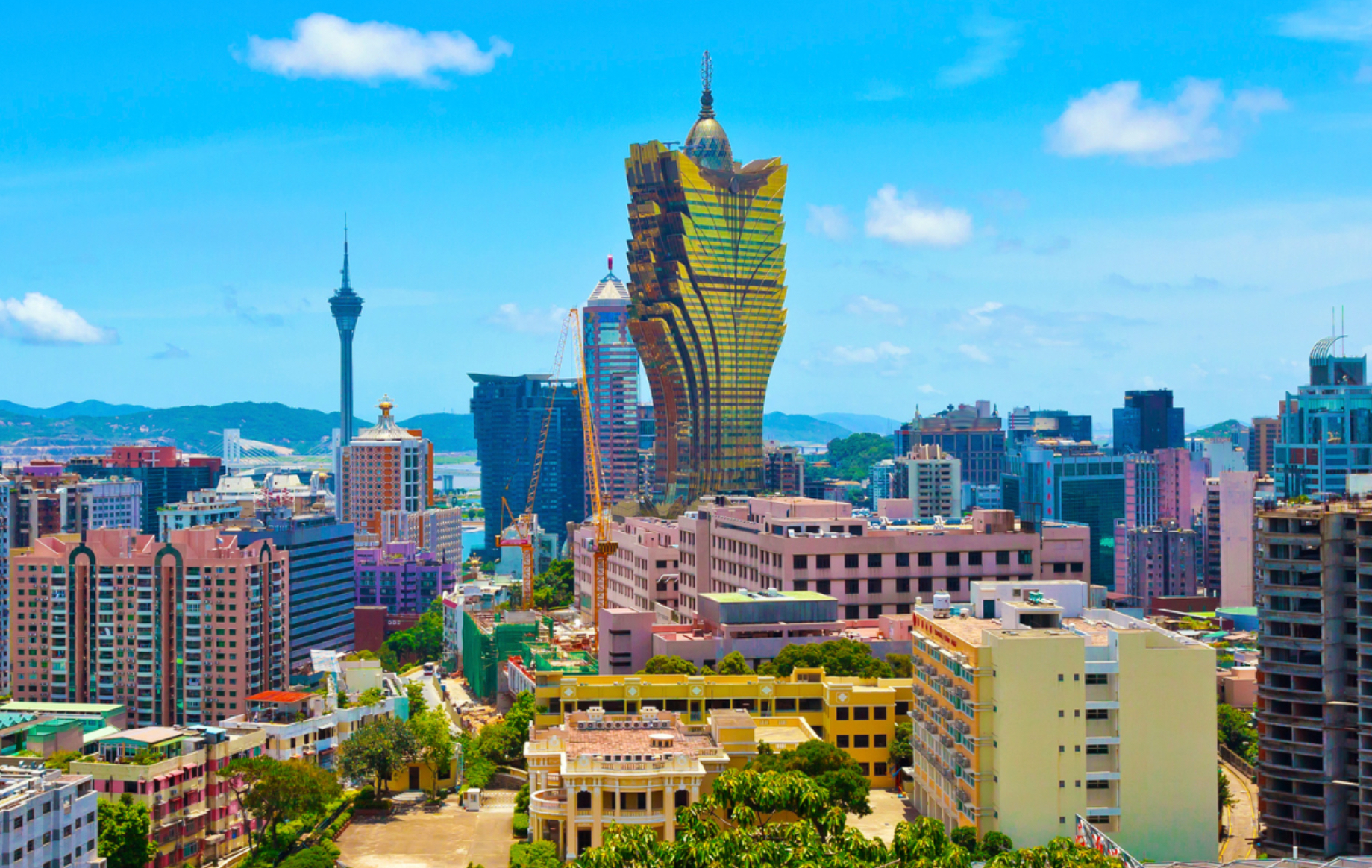
History, Food and Etiquette of Macau

My sister and I embarked on a ferry journey from Hong Kong to Macau, where upon submission of our passports, we were issued a paper insert akin to a train ticket before boarding. Upon arrival at the Macau ferry terminal, we effortlessly wheeled our suitcases to the complimentary bus services that transported us to our hotel-cum-casino. 

The luxurious accommodations and impeccable service at the hotel pleasantly surprised us, showcasing the advantages of staying in casino-affiliated establishments. After settling into our rooms, we donned our comfortable walking shoes and ventured down the main street to admire the charming Portuguese-inspired architecture that graced the cityscape.

Macau's story begins before explorers investigated new lands for trade, and colonisation. It belonged to the vast Ming Dynasty. It was in the mid-16th century. Portuguese traders arrived using it as a trading post in 1557, looking for new wares to take back to Europe and expand their empire.

An agreement allowed the Portuguese to settle on the Macau peninsula in exchange for rent and adherence to Chinese laws until 1887. This agreement laid the foundation for the world's first and longest-lasting European settlement in China until its handover in 1999. Today, it is a significant resort city and a top destination for gambling tourism and is more critical than Las Vegas.

The first known written record of the name "Macau", rendered as "A Ma Gang", is found in a historical material from 1555. It is a particular administrative region of the People's Republic of China.

Over the next 400 years, Macau flourished as a trade hub. European and Chinese cultures intermingled, creating a unique blend evident in its architecture, cuisine, and traditions. Now that it has become a major destination for economic thrill seekers, a new influence of Western luxury clientele etiquette has made its mark. What does this mean for locals and short- and long-haul travellers?

Etiquette plays a vital role across various facets of life in Macau, from business, dining, hospitality, and tourism. Visitors to Macau are encouraged to familiarise themselves with these etiquettes to ensure an enjoyable experience in Macau’s multicultural environment.

Respect for Elders: Confucian values heavily influence Macau's society, emphasising respect for elders. It's customary to address elders with deference and to offer them precedence in social situations.

Greetings: Traditional Chinese greetings involve a slight bow or nod of the head, often accompanied by a handshake. Addressing someone with their title or honorific, followed by their surname, is considered polite.

Gift Giving: Presenting gifts is a common practice in Macau, especially during festivals or social gatherings. Gifts are typically exchanged with both hands as a sign of respect. Avoid giving items in sets of four, as the number is associated with death in Chinese culture.

Language and Communication: While Portuguese is one of Macau's official languages, Cantonese and Mandarin Chinese are predominantly spoken. Learning a few basic phrases in either language can go a long way in showing respect and getting around faster.

Dress Code: Macau's dress code is generally conservative, particularly in formal settings and religious sites. Modest attire is expected, with women often opting for dresses or blouses and skirts, while men typically wear suits or dress shirts and trousers.

Tipping – You will find that restaurants will include a 10% service charge in the bill, while hotels may even levy a higher 15% charge. While tipping is not actively discouraged and won't be refused if offered.

Dining etiquette is particularly significant in Macau's rich culinary culture. A study by Jong-Hyeong Kim et al. (2023) emphasises the importance of understanding cultural factors such as customs, beliefs, and social norms that shape unique tourist dining experiences. These cultural intricacies contribute to the overall uniqueness of Macau's gastronomy scene, highlighting the need for tourists to be mindful of local dining customs to enhance their experiences.

One of these tips when ordering and earing Macanese food, you will need either implements which are chopsticks or a spoon and fork. Here is a list of mouthwatering gastronomic foods that you will find there:
• Porco Bafassa – Slow cooked stew with turmeric, pork and potatoes.
• Capela – minced meat with potatoes, chirozo, bacon, olives and tomatoes.
• Portuguese Chicken – Slow cooked with chicken, curry and potatoes, alternative toppings are eggs, sausage and olives, turmeric and coconut milk.
• Tacho – Casserole with cabbage mixed with pork skin, pork knuckles, chicken wings, roasted pork and Chinese sausages.
• Minchi - Minced beef or pork which could be served together with diced potatoes.
• Pork with Balichao and Tamarind – Casserole with cabbage, sausage, red beans, black beans, pig ear and pig knuckle.

Interestingly, Macau’s etiquette has been shaped by the many Westernised hotels and casinos that have slowly filtered through from places such as America and Australia. These hotels extend to conditional hospitality, as described by Luofu Ye (2018) and as noted by Yi-weiChang and M. Polonsky (2012); their study indicated the importance of polite and respectful interactions in maintaining a high standard of hospitality. Furthermore, the role of etiquette in shaping tourist behaviour and enhancing their experiences is critical in the multicultural context of Macau. You will find those in customer service in these hotels from China, Pakistan, Bangladesh, India and the Philippines.

You don’t need to be in Macau long to experience its fantastic history and note the difference in Asia. My sister and I loved being there; the cultural mix was unique. Macau is recommended for a one- to two-day stay that is easily accessible via Hong Kong.


For many years, Etiquipedia contributor, Elizabeth Soos, has had a keen interest in cultural customs. With her European background and extensive travel, Soos developed an interest in the many forms of respect and cultural expectations in the countries she has visited. With her 20 years’ experience in customer service within private international companies based in Australia, and her lifetime interest in manners and research, she decided to branch out into the field of etiquette and deportment. Through her self-directed studies and by completing the Train-The-Trainer’s course offered by Emma Dupont’s School of Etiquette in London and by Guillaume Rue de Bernadac at Academie de Bernadac based in Paris and Shanghai, she founded Auersmont School of Etiquette. Elizabeth is currently traveling throughout India and brushing up on her Hindi.

 🍽Etiquette Enthusiast, Maura J. Graber, is the Site Editor for the Etiquipedia© Etiquette Encyclopedia


Monday, June 1, 2026

Introducing Our Travel Etiquette Guru


Our Resident “Travel Etiquette Guru”
Elizabeth Soós


Elizabeth Soós of Auersmont Etiquette is our resident “Travel Etiquette Guru”. Over the past several years, Elizabeth has been writing some extremely popular articles on the etiquette for visiting numerous countries around the globe, along with the etiquette needed to get to and from your destination in a polite and well-mannered pace. 
Wherever you’re headed… whether you’re flying commercial or private jet… if you’re on a yacht or a train, Elizabeth has you covered on global travel! Her articles are routinely found in our Top 20 daily posts. The following are links to her long list of ever growing articles on travel and travel etiquette. Elizabeth is traveling at the moment, but as more articles are published, they will be added to this list. These are in alphabetical order:
  1. Aboriginal Dining Etiquette in Australia
  2. Airport Etiquette
  3. Basic Flight Etiquette and Courtesy
  4. Cambodian Etiquette, Culture and Customs
  5. Commuting Etiquette in Mumbai
  6. Egypt’s Rich Culture and Etiquette
  7. Etiquette Expectations in New Zealand
  8. Etiquette for Private Yachts
  9. Etiquette for the Maldives
  10. Etiquette in Tanzania and Zanzibar
  11. Etiquette in Vietnam
  12. Etiquette and Culture in Kenya
  13. Etiquette and Culture in Oman
  14. Etiquette and Culture in Uganda
  15. Etiquette and Culture of Myanmar
  16. Etiquette and Customs in Samoa
  17. Etiquette and Customs of Ethiopia
  18. Etiquette and Customs of Fiji
  19. Etiquette and Customs of Réunion
  20. Etiquette and Indigenous Australians
  21. Etiquette and the People of Peru
  22. Etiquette of Mauritius or Mini India
  23. Etiquette When Visting Australia
  24. Fascination and Manners in Hong Kong
  25. Greeting Etiquette in India
  26. History, Food, and Etiquette of Macau
  27. Hungarian Social and Dining Etiquette
  28. Indian Dining and Table Etiquette
  29. Indian Food Culture
  30. Pakistani Culture and Etiquette
  31. Polite Train Travel Etiquette
  32. Private Jet Etiquette
  33. Thailand’s Manners and Customs