🍽️Etiquette Enthusiast, Maura J. Graber of The RSVP Institute of Etiquette, is the Site Editor of the Etiquipedia© Etiquette Encyclopedia
Etiquipedia© is an Etiquette Encyclopedia and Etiquette History Blog. It is published to Educate, Enlighten and Entertain… Regarding the images and articles used, no copyright infringement is intended. Images and articles are shared for archival and historical purposes only.
Wednesday, January 14, 2026
Presidential Dining Etiquette and More
Tuesday, January 13, 2026
Famous Faux Pas in History
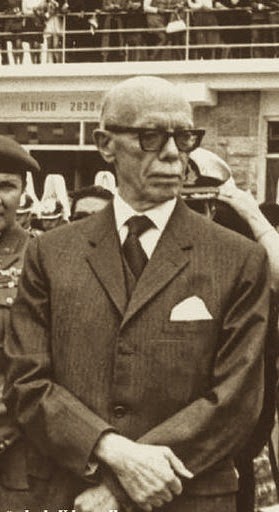
José María Velasco Ibarra
Former British Prime Minister Harold Wilson


Monday, January 12, 2026
Good Breeding in Teachers, Part 3
The Voice
Possibly you have heard a great artist sing a noble production in a foreign language. You did not understand a word, but you were enthralled by the beauty and power of her wonderful voice. Of all instruments of expression, the human voice is the most wonderful. We feel its possibilities when we hear a great singer or a great actor, but unfortunately we are too often neglectful of its value in common life. In America very little attention is given to the speaking voice, even in normal schools. This is a great mistake, and its results may be seen in almost any schoolroom.
I have seen teachers who would have been quite ideal had it not been for an unfortunate voice. I recall a delightful young woman, attractive in personality, charming in her relation to children, effective in handling both subject-matter and classes, whose work was marred by a sharp voice pitched several intervals above the normal. This one defect was such a serious handicap that I would not give her a place in a school under my charge. The harsh, strident voice with a suggestion of the cicada, the loud, metallic voice typical of the old-style stump orator, the weak, vanishing, ineffective voice which does not carry conviction, are other types common in the schoolroom. The difficulty of controlling a school is greatly augmented if the teacher's voice has no authority and resolution in it.
The unpleasant quality in the American voice has been often commented on both by foreigners and Americans who are familiar with the rich tones of the English women. The difference has been charged by some to climate, but I think it due rather to imitation. Children acquire tones of voice quite as they learn language, through imitation of what they hear. The English child has better models than has the American child.
Where the difference between American and English voices originated I am unable to say. To offset the results of imitation, schools for training of teachers should give more attention than they are now doing to training the voices of those who are to serve as models for the young. The burden of improvement lies with them. A teacher should be able to detect and assist in correcting unfortunate qualities in the voices of children; she at least should not be a “horrible example” of what should be avoided.
It may seem to some that I am over-emphasizing what in reality are relatively insignificant items. Are social conventionalities and language and voice so very essential, after all, in the personality of a teacher? They certainly are, and for two very good reasons, in addition to the purely commercial ones which I mentioned at the opening of the chapter; first, they are refinements of life which the young should acquire. All right-minded parents want their children to possess them, and society in general desires its members to have them. They are social and economic assets to anyone who acquires them. They are therefore accomplishments to which a child has a clear right, and consequently should be taught in the school.
Unconscious Influence
The second reason why the teachers should possess these refinements lies in the manner by which they are most effectively taught by the teacher and taken on by the child; namely, through the unconscious life of the teacher and the unconscious imitation of the child. The tendency to imitate is one of the striking characteristics of children. It is one effective means of their adjustment to the world. They start life with no language, no manners, no methods of dealing with the situations they meet; but nature has given them the imitative instinct. They are unconsciously the keenest observers and the cleverest mimics, and, chameleon-like, easily take the color of their surroundings.
Observe a group of children at play at “keeping house” or “keeping school” or “going calling” or “tea party,” and note how they reproduce the niceties of manner and voice which they have seen in their elders. Silently, as flowers drink in the dew, children absorb the manners of speech and behavior which they hear and see. Some things may be taught by rule and precept, but true refinement of character comes best by contagion. It is silently and unconsciously taken in.
I am not saying that direct instruction in manners and morals has no value, for I believe it has, but I am saying it will have little value if not reinforced by the daily unconscious life of the teacher; while, on the other hand, a refined teacher will infuse her ideals into her children though no word of precept be spoken. “It is worth the hour to be in her class in the presence of her charming and refined womanhood,” said a student of a certain teacher of literature.
“One lasting benefit I got from his class was an appreciation of beautiful English,” said another student of a teacher of psychology. Says Bishop Huntington: “Still another of the silent but formative agencies in education is that combination of physical signs and motions which we designate in the aggregate as manners.”
What I said of the way by which children acquire speech and manners is true of adults. We were once children. We are still children in that we are yet influenced by our surroundings. But we teachers are now old enough to determine to a considerable degree what elements in our environment we shall appropriate and what reject. I say “to a considerable degree,” for we are not omnipotent in this respect.– From “The Personality of the Teacher,” by Charles McKenny, 1910
🍽️Etiquette Enthusiast, Maura J. Graber of The RSVP Institute of Etiquette, is the Site Editor of the Etiquipedia© Etiquette Encyclopedia
Sunday, January 11, 2026
Good Breeding in Teachers, Part 2
I have one perpetual and bitter quarrel with slang, and that is because of its tendency to impoverish and bankrupt the English of the user. Few young people can become proficient in both slang and correct English, and too often they become skilled in the wrong one. Be sure your sin will find you out; you cannot use slang and slovenly English in daily conversation without paying the penalty. The goblin of habit will get you. |
Observance of Social Forms
Of equal, or perhaps of greater importance than personal appearance, are personal manners. To be well-mannered stamps one as a gentleman or a lady, and to be a gentleman or a lady, in the true meaning of the terms, is worthy the ambition and effort of every one. The difference between a community of savages and a community of cultured people does not lie wholly in the latter's intellectual superiority, but fully as much in its respect for the gentle courtesies and refinements of life. Many estimable people are totally regardless of even the most obvious social forms. I have known admirable teachers who did not think it worth while to return calls, to send acceptances or regrets in reply to formal invitations, to give heed to be prompt when guests at a dinner, or to make “party calls” afterwards on a hostess. To be remiss in such social courtesies is to cause comment and to reflect on one's good breeding. Young men are especially sinners against the rules of social etiquette. They are often quite oblivious of them, or they look upon them with a species of mild contempt, as something quite beneath the attention of a strong, independent manhood. This attitude of mind is wholly wrong and limits the possibilities of anyone who holds it. Society will not and should not tolerate a boor. A person who has so little regard for cultivated society that he will not attempt to qualify himself to become an agreeable member, should not expect much consideration, and certainly should not be a teacher. I am not pleading for snobbery or foppery, but for culture and refinement in men and women.
Good English
If one should give heed to his manners and dress, much more should he give heed to his speech. It would be difficult to over- estimate the importance to a teacher of a command of English that is at once correct, effective and graceful. A great thought or a fine sentiment in slovenly English is like a genius in soiled linen; our attention is attracted from the thought to its garb as from the genius to his clothes. I have one perpetual and bitter quarrel with slang, and that is because of its tendency to impoverish and bankrupt the English of the user. Few young people can become proficient in both slang and correct English, and too often they become skilled in the wrong one.
Be sure your sin will find you out; you cannot use slang and slovenly English in daily conversation without paying the penalty. The goblin of habit will get you. At the very moment when you desire to appear at your best your speech will betray you. How many times have I seen young men and women humiliated (at least they should have been) by using slang in company where such language was most inappropriate! Many times the teachers in normal schools are compelled to criticise the use of slang on the part of practice teachers. I have known students, and high school graduates at that, who were withdrawn from practice teaching because of their inability to use good English. Slang expressions kept creeping into their conversation in the schoolroom. The goblin of habit caught them. On the other hand, few characteristics of a teacher are more quickly noticed by a good superintendent than his ability to use good English; and as I have already said, this ability counts for promotion.
Even were it otherwise, I should still put in a plea for our noble language and urge upon every teacher the duty of preserving to future generations its dignity and its beauty, undiminished and uncorrupted. Our mother tongue is one of our great inheritances. It is a priceless treasure. It is incomparable as a medium of expressing every shade of human thought and emotion. It proved equal to the genius of a Shakespeare and a Milton, a Thackeray and a Webster, an Emerson and a Tennyson. This language, which more than any other seems destined to become the world language, it is the especial duty of the school to keep pure and uncorrupted; but the schools will fail in this responsibility if the teachers are slack and indifferent in their use of their Esther tongue. To be a master of good English should be a goal of daily effort.– From “The Personality of the Teacher,” by Charles McKenny, 1910
🍽️Etiquette Enthusiast, Maura J. Graber of The RSVP Institute of Etiquette, is the Site Editor of the Etiquipedia© Etiquette Encyclopedia
Saturday, January 10, 2026
Good Breeding in Teachers
Besides the basic virtues which we have been discussing, there are other attributes of personality which, while not so vital to worthiness of character, are nevertheless essential in one who essays to be a companion and teacher of the young. Among these are those evidences of good breeding which appear in the personal manner, the dress, the speech of a person, and in his recognition of the amenities of life.
These things have a commercial value which few young men and women recognize. In my experience as head of a normal school I have received hundreds of letters of inquiry from school boards and superintendents concerning candidates for position; and the four qualifications usually insisted upon in a teacher are character, scholarship, ability to teach, and refinement in manner and dress. The best positions can be had by no other sort of person. I have known many young men and women who have failed to secure the positions that character and general ability clearly qualified them to fill, because they lacked refinement in dress and manner. I have advised young people to give up their purpose to teach, simply because they lacked, and, I believed, would never be able to acquire, the social refinements necessary to a teacher.
Personal Appearance
A man or woman who has a good bearing, who dresses appropriately and whose general appearance is pleasing, has a decided advan- tage before a superintendent, a school board, or a school, over one who is lacking in these particulars. A man who is careless about his personal appearance, whose linen is soiled, whose shoes are not polished, whose clothes are untidy, whose general appearance, from finger-nails to shirt front, gives evidence of his disregard for the standards which cultivated society sets up for a gentleman, need never look for great advancement in the teaching profession.
Good Form in Letter Writing, Etc…
It should also be observed that many persons make written applications to school officers and superintendents, and that social and business forms regulate such correspondence quite as much as custom regulates dress and etiquette. To be able to write a letter of application that shall in a modest way state what a school officer needs to know about a candidate, and that in stationery and composition conforms to social standard, is no mean accomplishment, as anyone knows who annually reads scores of letters from applicants for positions. An “exhibit” of a collection of letters of application would be interesting and instructive both as to what is excellent and what should be avoided.
I recently received a letter of application from a woman of unusual scholarship and experience; moreover, her testimonials were uncommonly strong; but her letter was written on a nondescript piece of stationery, in a careless and untidy manner, and I gave her no consideration. Another energetic and enterprising young woman, a graduate of college of good repute, recently wrote me about as follows:
🍽️Etiquette Enthusiast, Maura J. Graber of The RSVP Institute of Etiquette, is the Site Editor of the Etiquipedia© Etiquette Encyclopedia
Friday, January 9, 2026
Are Good Manners Antiquated? No!

Showing up in a polite, positive, or good way means that you are behaving well. Adults enjoy seeing children who mind their manners; children form etiquette-ful habits and behaviors from the example of adults; and everyone appreciates the kindnesses shown by others.
Yet, as an etiquette instructor, I hear comments about how etiquette skills are antiquated in modern society. Ironically, this perception only holds when people, and those around them, are behaving well.
Tradition
Custom may inform us on how to govern, manage or conduct ourselves, and it’s wise to observe the local circumstances and try our best to adjust behaviors accordingly. Only individuals, however, can conduct or comport themselves.
Conducting oneself responsibly is the crown on considering oneself grown-up. How good it feels when someone recognizes you for not only being appropriate, but going a step further in kindness, and consideration for the feelings of another.
Longstanding language expressions call us to serve our better selves:
- Act politely
- Mind your manners
- Make good choices
- Mind your p’s and q’s
- Play fair
- Observe the rules
- Tow the line
- Keep the peace
- Act reasonably
- Do the right thing
- Be nice and kind
- Be on your best behavior
- Observe the Golden Rule
- Act with decorum
These reminders have been heard throughout our lives on various occasions. Not only are they traditional phrases, they are instructions for behaving well.
Behaving Well Encourages Positivity
In the 18th century, Adam Smith claimed that agreeable manners inflame our natural love of virtue and increase our tolerance of imperfection. They often correct or ascertain our natural sentiments with regard to the propriety of conduct. Suggesting many nice and delicate intentions, they shape us to a more exact justness of behavior—without which instruction we would have been at a loss to think of.
The above list of reminders, and the fact that we hear or say them often, offers clues to the difficulties of acting on them. It also prompts us that another person may be struggling with their own good behavior, calling us to patience and compassion as they choose to act with propriety and kindness.
Though a person who has been reminded that he needs to behave more suitably may feel that the idea is antiquated and instead retorts, “Whatever,” humans might have long understood, the building of mental strength is about self-regulating emotions, managing thought expression, and aiming for the positive, despite circumstances.
Behaving well, or acting in a manner of kindness, courtesy and respect, flies under the radar of noticeable actions. Why? Because it is assumed that everyone aims for good rapport and harmony with each other in every circumstance. As long as this is the norm, conducting oneself properly will never become an antiquated idea.
🍽️Etiquette Enthusiast, Maura J. Graber of The RSVP Institute of Etiquette, is the Site Editor of the Etiquipedia© Etiquette Encyclopedia
Thursday, January 8, 2026
Happiness and Etiquette
Etiquette and the Happiness Factor

Fundamental to human nature is the desire to be happy. One thing the pandemic brought us is the time to reassess this basic fundamental.
Relationships are at the core of happiness—relationships with family, friends, colleagues, animals, your environment, yourself and your higher sense of being. Being social creatures, we long for connectedness.
When I teach etiquette seminars, the emphasis is always on the reasons why we would want to apply etiquette: the confidence, comfort, and connectedness it brings.
Connectedness is the essence of happiness, and the happier you choose to be, the more confident and comfortable you are.
Being Connected
Our human need for connection drives us to engage in social interactions with others. These interactions create experiences that lead to acquaintanceship, friendship, romance, dislike, or confrontation.
Etiquette plays a direct role in determining the outcome of your attempts to connect with someone.
Five outwardly etiquette-ful actions to help others connect with you:
- Smile when you speak to someone. Even while wearing a mask, be physical with your smile.
- Looking directly at others when speaking is a necessary part of your smile. Keep the gaze going.
- Keeping your distance, your body language conveys your being present. Arms to your side, palms open when you speak conveys openness. Quick or unnecessary movement, keeping your arms crossed, or appearing distracted, shows the opposite.
- Validating other people’s views, even if you don’t agree, makes them feel as if they’ve been heard.
- Occasioning communication means that you are committed to showing up. Encourage others to speak about themselves. Even if you can’t spend time in person, texting, emailing or social media go a long way in communicating.
Five inwardly etiquette-ful actions that help others connect with you:
- Create a desire to make others feel important. It will challenge your creativity.
- Choose to pay attention! Cut out distractions when communicating. Keep the phone out of sight and off the table when spending time in person.
- Engage even if you don’t really feel like it. Stay positive, share happy news, find something uplifting to share.
- Adopt the philosophy that you are a giver. Then give of yourself.
- Be available to ask others for advice. This is easy if you engage another in something positive about that person’s life and look for something you genuinely appreciate.
When we are etiquette-ful and kind to others and ourselves, we are bound to experience a level of happiness. It is the same concept of the giver of a gift experiencing the same amount of joy and appreciation as the receiver of a gift. Practicing etiquette guidelines during our interactions with people is a form of kindness in action.
Sharing Happiness
Some believe that being joyful is a responsibility of being human. The HeartMath Institute has conducted many studies that help support this belief. Their research shows that the emotions we feel – happiness, anger, uncertainty, fear – are shared energetically when we connect or interact with another being.
Mindful of this, we can all celebrate moments of humility realizing that we can’t begin to know everything, but that we can contribute to the greater good by the little things we do inwardly and outwardly in kindness. From this perspective, we can look around and appreciate everyday experiences – that the sun did rise, that seasons are occurring, and that we are all connected in some way. How joyous! How etiquette-ful!
🍽️Etiquette Enthusiast, Maura J. Graber of The RSVP Institute of Etiquette, is the Site Editor of the Etiquipedia© Etiquette Encyclopedia
Wednesday, January 7, 2026
Table Settings for the 1970’s
| SUMMER INDOORS IN A GARDEN-FRESH SETTING. Field flowers caught in Oneida’s gold-plated bowl coordinate elegantly with the striking blue and white Spode bone china called “Blue Colonel” and crystal goblets by Spode. Yellow cloth, placemats, and napkins of Irish linen. Gold electroplated flatware, Oneida’s “Modern Baroque.” |
If you've just promised to “love, honor, and cherish” (August is beginning to gain on June as one of the most popular months for weddings), or moved into your second home, chances are a housewarming is in the offing. And the focal point will be the table you set.
🍽️Etiquette Enthusiast, Maura J. Graber of The RSVP Institute of Etiquette, is the Site Editor of the Etiquipedia© Etiquette Encyclopedia