Friday, July 16, 2021

Stocking Clocks Approved for Mourning


As hemlines rose in the coming decades, clocks remained a decorative, if not functional feature of women’s stockings.


A Texas man was married while dying, and the fashion journals, after a lengthy discussion, have decided that although his widow must wear full mourning for thirteen days, etiquette, under the circumstances, will permit her to have clocks on her stockings. — Indianapolis Journal, 1882


Etiquette Enthusiast, Maura J. Graber is the Site Editor for the Etiquipedia© Etiquette Encyclopedia

Thursday, July 15, 2021

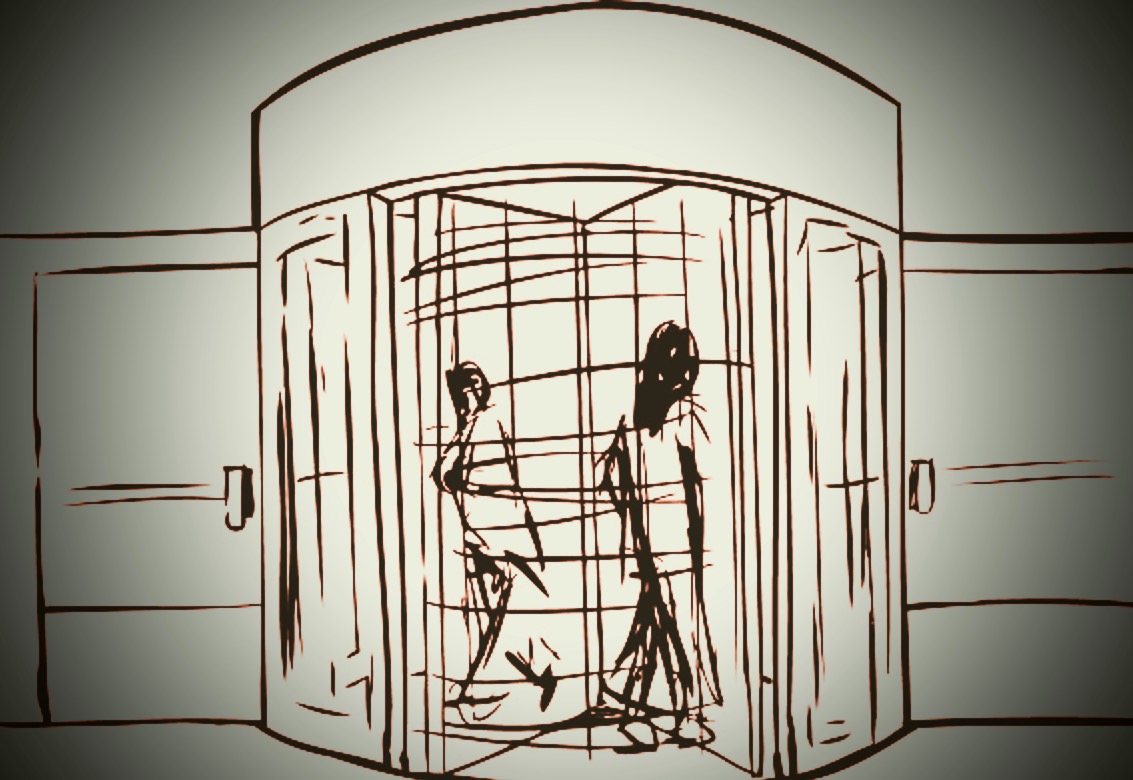
Revolving Door Etiquette

Some think the man should precede the woman furnishing the motive power, while she follows idly in the next compartment. Others hold that the rule “Ladies first” can have no exception…
The following chapter is from the book is entitled “Concerning Revolving Doors.” Listen to a bit of it: 
There has been some discussion of late as to the etiquette of the revolving door. When a man accompanied by a woman is about to be revolved in it, which should go first? Some think the man should precede the woman furnishing the motive power, while she follows idly in the next compartment. Others hold that the rule “Ladies first” can have no exception, therefore the man must stand aside and let the female of his species do the rough work of starting the door’s revolution, while the man, coming after, keeps it going and stops it at the right moment.

 “Starting something” is perhaps of all pastimes in the world, the most popular with the sex we are accustomed to call the gentle sex; one might almost say that “Starting something” is woman’s prerogative; on the other hand there is nothing on earth so abhorrent to that same gentle sex as the thing called Consistency; and though she may be perfectly charmed to start a revolution in South America, or in silk pajamas, or suffrage, or the rearing of children, it does not follow that she will take kindly to the idea of starting the revolution of a revolving door. – La Jolla Light, 1923


Etiquette Enthusiast, Maura J. Graber is the Site Editor for the Etiquipedia© Etiquette Encyclopedia

Wednesday, July 14, 2021

Etiquette and Being Fashionably Late

Being “fashionably late” is not good manners, as when it is considered fashionable to annoy others, is when fashion and etiquette are at odds! – “Sticklers on social etiquette class being late to a dinner engagement, as one of the unpardonable social errors.”

There are several kinds of lateness to indulge in which is ranked as a positive social error. Sticklers on social etiquette class being late to a dinner engagement, as one of the unpardonable social errors. Being late at the opera or theater is still something that people permit themselves, although it does sometimes seriously disturb those of the audience who wish to be present when the curtain rises. But to be late to a dinner engagement is another matter entirely. –By Mrs. Mary Morton, 1924


 Etiquette Enthusiast, Maura J. Graber, is the Site Editor for the Etiquipedia© Etiquette Encyclopedia

Tuesday, July 13, 2021

Good Etiquette and Surface Veneer

I beg of you—don't mistake condescension for tolerance! Learn to like the butcher because he is a person—and, by the way, a person that knows something that you don’t. Respect him because he has learned a trade that may not be very savoury—but it is important. 


I was having an argument the other day as to the correct definition of the word “etiquette.” My opponent insisted that it meant merely the surface veneer of manners that people in the higher walks of life have acquired —that it is something that is not vitally necessary to the average person. I claim that “etiquette,” to me at least, is much larger than is any set of manners alone. It gees deeper than the surface of conformity to conventions, and relies on the basis of tradition that our many forefathers have given us. 

I think it was Emerson who said: “There is always a best way of doing everything . . . Manners form a rich varnish with which the routine of life is washed and its details adorned. If they are superficial, so are the dewdrops that give such a depth to the morning meadows.” I have never known anyone, no matter how great a person he was, who could “get away” with just a superficial veneer. Manners, although important, are truly of secondary importance—it is one's manner that is most important. Once the few basic rules are learned, you can forget the details and build up the biggest thing – your personality. 

You can’t possibly leave a feeling of graciousness and calmness with your fellow beings when you are worried by doubts and a feeling of uncertainty. I think the basis of all manners lies in that old proverb— “Politeness is to do and say the kindest thing in the kindest way.” I don't know who first said that, but I can remember it being dinned into me from the age of dependence until I was old enough not to need it. Make a habit of courteousness always and everywhere. Manners that are brought out only on state occasions usually fit as poorly as clothes that are worn only occasionally. If you feel kindly and act kindly toward everyone—even toward the person you most dislike—before long you will have developed an unconscious courtesy. 

After you have developed this kindliness of manner, there is another thing to learn—a true sense of people’s worth. Never estimate men for what they possess, but for what they are. The truly well-bred man or woman has simple tastes and makes no glorification of money. A display of wealth is as vulgar as a contempt for those who do not have it. Never treat anyone with contempt – remember that there is at least one fine quality in every person. A sense of values will give you a good-humored tolerance of others. When I was a young girl I was an awful snob—and I can see now that I must have been a rather odious person. I had utterly no reason to consider myself better than anyone else—yet I did because my sister and I had a nursery-governess and went away to a private school when all the other youngsters in our funny little town went to the local grammar school, and no doubt had a much better time than I did! 

Since I have been out of school and have lived more or less intimately with the Nobility of Europe, with rough American engineers in South America, and with Mexican peons in ranches along the border—I have learned that tolerance is one of the greatest assets that can be obtained. But—I beg of you—don't mistake condescension for tolerance! Learn to like the butcher because he is a person—and, by the way, a person that knows something that you don’t. Respect him because he has learned a trade that may not be very savoury—but it is important. – By Deborah Ames, 1936


Etiquette Enthusiast, Maura J. Graber, is the Site Editor for the Etiquipedia© Etiquette Encyclopedia
Monday, July 12, 2021

Etiquette and the Restive King

“He loves horses, and every moment that he can contrive to escape from the confining duties of his position as King he spends on the race track, or in the company of jockeys, bookmakers and the general run of race-goers. Then, he is like a boy, free from the straint of home or school, a man among men, a good fellow…” Alphonso “would hie him with his family to some South American republic, to raise horses and forget Madrid. He would flee from his Queen mother, a strict follower of the Royal Code of the House of Hapsburg and a stickler for the letter of the rule and every word of tradition in regard to court functions.” 


Uneasy rests the head that wears the crown of Spain. Alfonso, harassed by politics and bored by the formalities and limitations of Court etiquette, longs to doff the glittering symbol of authority and become a private gentleman. He could be a horse breeder and trainer. He loves horses, and every moment that he can contrive to escape from the confining duties of his position as King he spends on the race track, or in the company of jockeys, bookmakers and the general run of race-goers. Then, he is like a boy, free from the straint of home or school, a man among men, a good fellow. 

He knows whereof he speaks when horses form the subject of his discourse, whereas, alas, even the wisest wearer of the purple cannot always be sure that he knows what he is talking about when he gives oracular utterance to his decisions upon affairs of state. So he would hie him with his family to some South American republic, to raise horses and forget Madrid. He would flee from his Queen mother, a strict follower of the Royal Code of the House of Hapsburg and a stickler for the letter of the rule and every word of tradition in regard to court functions. 

But the addition of a real Spanish King to a South American republic is something not to be contemplated lightly. No place in South America that we know of could be trusted to maintain its republican equilibrium a day after he had taken up his abode there. A Monarchist party would be formed on the night of his arrival, and a revolution would be afoot the following morning. The United States, in the interest of peace, would have to ship poor, weary Alfonso back to Spain and its surfeit of pomp and ceremony. – Chico Record, 1920


Etiquette Enthusiast, Maura J. Graber, is the Site Editor for the Etiquipedia© Etiquette Encyclopedia

Sunday, July 11, 2021

Etiquette of Foreign Ministers at D.C.

A failure to seat a member of the corps or his wife in the precise seat belonging to his or her rank at the table would probably destroy the pleasure of the occasion. Not one inch farther from the host or hostess than belonged to the country they represent, would be tolerated.– Public domain image of a map of South America from 1892


Foreign Ministers demand the most scrupulous observance of the stereotyped rules of etiquette, and watch with scrutiny every attention and inattention to them. A failure to seat a member of the corps or his wife in the precise seat belonging to his or her rank at the table would probably destroy the pleasure of the occasion. Not one inch farther from the host or hostess than belonged to the country they represent, would be tolerated. The placing of the diplomats in line to be presented on occasions of ceremony must be done in strict observance of rank and importance of each. 

Hence, persons dining or entertaining these dignitaries must first post themselves accurately on the status of every Kingdom, province and principality, if they expect to give their guests pleasure and to avoid a scene, such as has characterized occasions where “second-class South America” has occupied positions a few paces above “first-class Europe,” or where little European provinces have been given more conspicuous places than greater Kingdoms. — American Magazine, 1888


Etiquette Enthusiast, Maura J Graber, is the Site Editor for the Etiquipedia© Etiquette Encyclopedia

Saturday, July 10, 2021

Etiquette and Unsolicited Advice


Vintage etiquette advice from Miss Manners in the 1990’s, that still holds true today.


Judith Martin, who writes the syndicated “Miss Manners” column, said: “The first rule of giving advice is you only give it when it's sought. It's rude to go around giving advice to people who haven't asked for it. And it's futile, too, because they won't take it. It's more than a rule of etiquette. It's a rule of practicality.”– Santa Cruz Sentinel, 1992


Etiquette Enthusiast, Maura J. Graber, is the Site Editor for the Etiquipedia© Etiquette Encyclopedia

Friday, July 9, 2021

Etiquette and “Food for Thought”

As a guest, don’t stick around longer than you should, no matter how entertaining you believe yourself to be. – The ideal tactic for guests who stay too long is that of painter Walter Sickert, who saw two guests to the door and told them, “Do come back when you've a little less time to spare.”  


Now here's some food for thought… In an essay on dinner party etiquette in a recent Esquire, writer John Berendt extrapolates the lessons in classic tales of classic dinners: 
  • The ideal tactic for guests who stay too long is that of painter Walter Sickert, who saw two guests to the door and told them, “Do come back when you've a little less time to spare.”   
  • At a London party in the 1920s, Mrs. Ronald Greville slipped her inebriated butler a note saying, “You are drunk. Leave the room at once!” He put the note on a silver tray and presented it to the guest of honor, British Foreign Secretary, Austen Chamberlain. 
  • At a dinner party in the late 19th century, French playwright Victorian Sardou spilled a glass of wine. The woman sitting next to him spilled salt on the stain. Sardou threw some of the salt over his shoulder for luck. The salt went into the eye of a waiter who dropped a platter and the family dog pounced on the food. A bone lodged in the dog's throat, and when the son of the host attempted to pull it out, the dog bit him. His finger had to be amputated. – From Sentinel Wire Services, 1993


Etiquette Enthusiast, Maura J. Graber, is the Site Editor for the Etiquipedia© Etiquette Encyclopedia