Tuesday, August 25, 2020

Etiquette for Meeting Princess Margaret

Princess Margaret must not be photographed while eating, drinking, or smoking or with skirts at an unflattering angle. Unfortunately, none of the national publications is about to use pictures chosen from a pool. But beyond that, the ball promises to be a magnificent affair. — Princess Margaret looks at a black cat miniature, emblem of the San Francisco Press Club, after being presented with it by Robert Nicholas, club past president. Peeking from behind is her husband, Lord Snowdon.

Taking Lessons from the English

Mrs. Wilson E. Haas and her husband are poring over two closely typewritten pages that tell them exactly how to behave when they meet Her Royal Highness Princess Margaret and Lord Snowden next Monday evening at the WAIF Ball. Only . . . their chances of meeting the royal couple are distinctly dim, both because there are going to be at least 1,500 people crowded into the Hollywood Palladium for the dinner dance, and because the schedule of protocol states with typically British blandness that “no one will be introduced to Her Royal Highness and Lord Snowden.” 

It does say that later, the distinguished pair may care to walk among the guests and, perhaps, meet a few. Should this occur, the male introducee will bow his head, and address Her Royal Highness as “Your Royal Highness” or “Ma’am,” (if he feels more chummy), and her consort as “Sir.” His female counterpart (and she; SHOULD be wearing long white gloves) will curtsey if she’s either a British subject, a member of WAIF, or thinks this kind of thing is important. Otherwise she, too, will bow her head gracefully and murmur magic titles. Under no circumstances will they speak unless spoken to. 

As for autographs . . . FOR GET IT! The Hasses and other members of WAIF, along with their guests, were all sent copies of the protocol rules for the $lOO a couple benefit certainly is bound to be a high point of the autumn social season in Los Angeles. One of the most heartbreaking (to WAIF) behind- the-scenes is the matter of photography. Life Magazine had planned to cover the ball; so had Harper’s Bazaar and Holiday, among others. But the word went out — No photographers will be allowed, except the two chosen by the royal party, for Princess Margaret must not be photographed while eating, drinking, or smoking or with skirts at an unflattering angle. Unfortunately, none of the national publications is about to use pictures chosen from a pool. But beyond that, the ball promises to be a magnificent affair. 

Cocktails and dancing to Freddy Martin’s orchestra will open the program; by 8:15 all the guests must be seated so that Princess Margaret and Lord Snowden may make their entrance as the guests rise again. The national anthems of both Britain and America will then be played. Dinner will be marked by an all British fashion parade, followed by a stage show starring, among others, Bob Hope, Polly Bergen, and Frank Sinatra. Then the dancing will begin again, this time led off by Princess Margaret and her husband. Guests are asked to join them immediately so that their dance does not become an “exhibition.” Setting the mood of the distinguished party is the last sentence in the protocol instructions which says that the affair must be steeped in the “beauty and dignity befitting our honored guests.” — By Lee Christopher, for the Desert Sun, 1965


🍽Etiquette Enthusiast, Maura J. Graber of The RSVP Institute of Etiquette, is the Site Editor for the Etiquipedia© Etiquette Encyclopedia

Royals Wed with Etiquette, Excitement

The fresh royal face that added a new dimension to the fascination with England’s Royal Family... Sarah Ferguson.
 ————
The first televised British royal wedding was Princess Margaret’s in 1960. As recently as the late 1930s though, ardent royalists even argued against broadcasting royal weddings over the radio as the etiquette had not yet been sorted... It was posited that some men might rudely listen irreverently with their hats on!

————
When the reporters managed to locate the Royal bride to be at a Caribbean hotel where she had gone for a secluded, pre-wedding vacation last month, she neutralized them by sending champagne to their table. They all immediately ceased snooping to write stories instead ... a combination of media hype, the inherent attraction of a royal romance and the emergence of the 26-year-old bride as an unusually receptive, fresh royal face has added a new dimension to this nation’s fascination with its Royal Family.
Photo source—Andrew and Sarah in Townsville, 1988, Queensland State Archives • CC BY 3.0 au


This sleepy farming village goes back 900 years, but no one who lives here doubts that Wednesday will be its greatest day— the day a local girl becomes a princess. A British Army parachute display team will drop into the village, 50 miles southwest of London, a brass band will march, television teams will film and, about the time that Ronald Ferguson’s daughter, Sarah, arrives at Westminster Abbey to marry Prince Andrew, most of Dummer’s 350 residents will be down at the Queen Inn enjoying one of the biggest feasts ever. “It’s started to get a bit crazy,” admitted John Holland, who owns the inn, the village’s only pub. “Americans here yesterday, Belgians tomorrow and then next week some Japanese. Still, it’s exciting to live a bit of history.”

Wedding Mania


Royal wedding mania may not be quite so intense elsewhere in Britain, but almost. No public holiday has been declared for the wedding, only a few heads of state are included on a comparatively modest guest list of 1,700— Prince Charles and Princess Diana had more than 2,000— and Westminster Abbey is smaller than St. Paul’s Cathedral, where Charles and Diana were married. But a combination of media hype, the inherent attraction of a royal romance and the emergence of the 26-year-old bride as an unusually receptive, fresh royal face has added a new dimension to this nation’s fascination with its Royal Family. “It’s helped keep the show going,” commented Robert Houston, editor of Royalty Monthly, a glossy pictorial magazine devoted exclusively to coverage of the Royal Family. That it has.

Daring Secrets

The country’s popular tabloid press, true to its style of packaging royalty as a real-life soap opera, has wallowed in the festivities, trumpeting endless “exclusives” about Ferguson’s innermost thoughts, revealing daring secrets of the wedding gift list and employing marriage counselors to mull over the couple’s compatibility.

The Daily Mirror recently joined in the spirit of the occasion by dressing its daily page-three pinups in wedding veils— and little else. The royal couple’s image smiles out from every conceivable piece of printed matter, from horoscope and crossword-puzzle magazine covers to specially issued 12- and 17-pence commemorative stamps. Last Thursday, Madame Tussaud’s wax museum installed a lifelike figure of Ferguson.

The new bride’s name —or nickname, “Fergie”— has been attached to perfume (Fergie— A Fragrance of Today), a cocktail (Fergie’s Fizz) and tours (the Fergie tour of London— including stops at her home, her office at an art publishing firm, her father’s office and Westminster Abbey). Agricultural machinery producer Massey Ferguson has even linked her name to a tractor ad that says: “I love my Fergie.”

Debrett’s, the London publisher of a reference book on etiquette for royal occasions, has established a telephone service for participants unsure of how to get through the royal events. Among the advice given to date: Men should leave swords at home, polish those parts of the soles of their shoes that don’t touch the ground and forget buttonhole flowers— the latter are only for ushers and families. “We’ve had about 30 calls a day, mainly on matters of dress,” noted one of the advisers, Charles Kidd. For those in the business of promoting royalty, the wedding has produced a boom in times that were already seen as plentiful.


Announcing their engagement in 1973 —Captain Mark Phillips, a confirmed bachelor, not only faced the daunting prospect of marriage when he fell in love with Princess Anne, but he knew he would also have to conform to some of the restricting etiquette rules of royalty. In an interview two days before their wedding, Phillips was asked whether he was warned about the responsibilities that devolve on those connected with, and marrying into, the royal family. Looking at Princess Anne, who sat at his side in Buckingham Palace during the interview, Phillips said: “Yes, I think she did try to explain.” The Princess added: "Of course, if you have lived in one way all your life, you cannot imagine anything different.” But, she added comfortingly, it could not be worse than the persistent attention they got from reporters and photographers when they were competing in horse shows and denying the fact they were so often together, meant there was a serious romance. 

Boon for Circulation

Editor Houston says Royalty Monthly’s pre-wedding issue has run to double its normal 30,000 circulation, and a post-wedding special edition is expected to sell three times the normal number. Another magazine devoted to Royal Family affairs, titled Majesty, hopes to sell 150,000 copies of its wedding issue, twice its normal circulation, plus an even larger number of a special wedding album. “For us, the wedding is especially wonderful,” said Ingrid Seward, Majesty editor. That such mania surrounds the marriage of someone fourth in line for succession— Andrew comes behind brother Charles and his two sons, William and Henry— reflects the unique link that still binds the British public to their Royal Family.

‘Mindful of Heritage’

“We’re a society mindful of its heritage,” commented Nigel Dempster, who, as the country’s best-known gossip columnist, devotes much of his efforts to revealing royal tidbits. “We’ve all lived together for a thousand years, and if a member of royalty marries, we all celebrate together.” But the fever extends far beyond Britain. Americans at a rate of two per minute are dialing overseas into brief recorded messages providing details of the present royal wedding and the history of previous ones. (The number: XXX-XX-XX-LOVE-XXX)

Britain’s tourist industry has latched onto the wedding to revive fortunes depressed by fears of terrorism and a weak dollar. The Berkeley Hotel, for example, has reported a brisk response for its $4,200 weeklong package featuring champagne lunch from a terrace overlooking the wedding procession route. The wedding will also be televised live to 32 countries and a global audience estimated at about 300 million, including, for the first time, viewers in China.

Titled Commentators

Four American television networks will transport their stars across the Atlantic and transmit the wedding live. Each has employed several, preferably titled, expert commentators to lend authority to its coverage. The networks will be able to use a remote-controlled camera placed above and in front of the couple, enabling viewers to see royal faces at the alter of the famous abbey.

Although wedding planners at Buckingham Palace initially argued that the actual exchange of vows was too intimate a moment to expose to the face-on camera, they agreed last week to permit its unrestricted use. Now producers have expressed worries that the Archbishop of Canterbury, Robert A.K. Runcie, who will officiate at the wedding, may block the camera’s view at the crucial moment. The decision to allow the face-on camera reflects the gradual easing of the restraints that once surrounded such grand occasions.

Listening With Hats On

The first televised royal wedding was Princess Margaret’s in 1960. As recently as the late 1930s, ardent royalists even argued against broadcasting royal weddings over radio because some men might listen irreverently with their hats on.
Exposure has brought popularity, affection and a curiosity that has spawned an insatiable appetite among Britons for news about the “Royals.” No detail about the royal wedding is too small to report, no morsel about the royal couple too insignificant to savor, no topic too small for discussion and controversy. Ferguson’s preference for the traditional wedding vows “to love, honor and obey,” instead of the “love, honor and cherish” promised by her good friend Diana, touched off a debate that extended into Parliament.

Labor Criticism

“If Fergie wanted to give a lead to modern women, this is not the way,” stated opposition Labor member of Parliament Clare Short. Conservative member Ann Winterton disagreed. “I vowed to obey my husband, and he thinks I do obey him,” she revealed. Predictably, news accounts quickly reported that waves of British brides-to-be were deciding to “obey” rather than “cherish.”

Speculation about the style of Ferguson’s wedding dress has also bordered on a national pastime, with rumors about how she plans to disguise hips that the tabloid press has unkindly reported at up to 42 inches. The Mail on Sunday predicted a beaded dress with a bustle at the back, while competitor News of the World claimed that the dress will sport a large bow.

New Trend Expected

Chelsea designer Lindka Cierach, who is making the dress, predicts nothing except that it will set a trend. With the likes of garment manufacturer Sidney Ellis around, that projection seems safe. Ellis is poised to copy Ferguson’s dress and have it in the display windows of Debenham’s, a London department store, within hours of the wedding. He already has 20 orders, sight unseen, for the dress, which he estimates will cost a maximum of $1,400. Copies of Princess Diana’s wedding dress are still selling five years after her wedding, he said.

Midweek Wedding

Wednesday’s wedding has also proven an ideal excuse for Britain’s tabloids to review past sexual exploits of the prince they nicknamed “Randy Andy.” The Daily Mirror recently draped a semi-nude photograph of American soft-porn actress Koo Stark over several columns to help illustrate an article on Andrew headlined, “Farewell My Lovelies.” Stark was widely reported to have been one of the prince’s girlfriends. “I think the palace is very relieved to have him married off,” commented Houston.

But the bulk of media coverage has focused on the bride as the new royal face.
Quickly dubbed “Fergie” by the British press, Ferguson has so far handled the pressure of constant, intense media coverage with an ease that has won admiration even from veteran royals watchers.

Relaxed, Uninhibited

“There hasn’t been a (royal) bride more relaxed and uninhibited,” stated Godfrey Talbot, who was the British Broadcasting Corp.'s court correspondent for more than four decades before his recent retirement. “She a nice girl who’s given a lot of hope to other girls with red hair and freckles,” said Dempster. Many believe her relative maturity and extensive travel have given her a confidence and ability to deal with pressure that Diana, as a 19-year-old bride, lacked. Although a commoner, she has frequently mingled with royalty because her father, a former cavalry officer, works as Prince Charles’ polo manager.

Unruffled by Critics

She has remained unruffled in the face of biting criticism from fashion commentators complaining of her lack of taste in clothes, ruminating how best she should hide a figure that the more discreet refer to as “Rubenesque,” and by comments about her divorced mother’s husband. He is an Argentine polo player referred to in the press as “The Awkward Guest” because of Britain’s lack of diplomatic ties with Argentina since the two countries went to war over the Falkland Islands in 1982.

Whereas Diana broke into tears after constant press hounding, Ferguson has managed to charm the so-called “rat-pack” of tabloid reporters into submission. When the reporters managed to locate Ferguson at a Caribbean hotel where she had gone for a secluded, pre-wedding vacation last month, she neutralized them by sending champagne to their table. They all immediately ceased snooping to write stories instead about their “exclusive” champagne encounter with the future princess. Despite the clamor for news about the royal bride-to-be, the British media have so far failed to sensationalize stories about Ferguson’s previous loves.

Affairs Mentioned

Her affairs with racing driver manager Paddy McNally and businessman Kim Smith-Bingham are occasionally mentioned in passing, but rarely in a negative context. “Today’s 26-year-old with two serious past boyfriends is the virgin of 1947, the year the Queen married,” the London Observer, a Sunday newspaper, commented. Some argue that the subject is too sensitive even for scandal-thirsty British tabloids, but others claim that the tabloids have simply been unable to persuade the two men to discuss their relationships with the future princess. “Believe me,” said Majesty editor Seward, “if they could, they’d love nothing better than to print every detail of those stories.” — 
By Tyler Marshall, Times Staff Writer, Dummer England, July 1986


Etiquette Enthusiast, Maura J Graber, is the Site Editor for the Etiquipedia© Etiquette Encyclopedia

Monday, August 24, 2020

The Etiquette Defining Black Tie

“Black Tie” generally means a tuxedo for men, but women have a variety of options... Too much of a variety, it seems! — “Men generally follow the custom of wearing a tuxedo, but at any given black-tie event, women show up in trousers, ball gowns and dresses of all descriptions starting with minis and heading south to the floor.”

Designers Dance to Different Tunes When Defining Black Tie


The invitation arrives in the mail. Two words loom large in one corner. They’re engraved: BLACK TIE.

The question is, what does black tie mean today? Well, definitely not long white kid gloves—it hasn’t meant that since Daisy went to East Egg. Your girlfriends say it means a gold lame mini. Maybe they’re right, if you’re 22 and going out on the town with Tim Hutton.

Men generally follow the custom of wearing a tuxedo, but at any given black-tie event, women show up in trousers, ball gowns and dresses of all descriptions starting with minis and heading south to the floor.

When you get right down to it, not even Nancy Livingston knows for sure. She says she’s “confused” like everyone else.

The always-correct president of the Music Center’s Amazing Blue Ribbon sighs: “It’s the hardest thing to decide what to wear and end up with something that’s appropriate for the occasion.” A pause. “I really haven’t conquered any of this.”

If she’s not sure, who is?

We asked 10 designers in New York and Los Angeles what the new evening etiquette is and found that hardly any two agree. Here are their responses:

Carolina Herrera: “For me, black tie means floor length. If it is a very, very dressy mid-calf dress, perhaps with embroidery, then maybe. The mood is changing. Things are going in a very elegant direction. Everybody wants to be very glamorous and chic for evening. The rules are more relaxed, but the elegant things are coming back because women want to look like women.

“I suppose you have to dress according to the event. If you’re going to dance at the Viennese Ball, where you know the room is very big, then big ball gowns that move are pretty. If you’re going to the theater or the opera or a dinner where you are going to be seated for most of the night, you cannot wear a ball gown because it won’t fit in the chair. I see that happen many times. It’s going to be very uncomfortable for you and for your partner.

“I don’t like sandals for evening. I never liked them. The shoes should be very slinky pumps, not too heavy and not too open. Maybe open at the back, but never at the toe. I don’t like the way toes look. And real silk stockings should be worn in ivory or white, although sometimes you have to wear black. The minaudieres (hard-cover purses) are all right if you already own one, but I wouldn’t buy one now. There are too many copies around. I like satin bags, grosgrain and gold lame. For ball gowns, I also like capes, usually satin lined in ermine or sable. Jackets can be velvet on the outside and Russian broadtail or sable inside.”

Bill Blass: “That’s what’s marvelous about now. Somebody can wear trousers, somebody can wear a strapless ball gown, somebody can wear a short, ruffly dress. I like the idea that there are so many options. I don’t think that it should be a problem; choices give a woman individuality.

“I do think the general rule is a long dress. You’d probably feel better and safer in a long dress, properly covered. When the party is in somebody’s home, I think that when in doubt, dress up to please the hostess. . . . The biggest mistake women make is wearing clothing that looks as if they didn’t make an effort. I’m not sure understated works anymore. A simple short dress is not a compliment to the hostess.

“There is a school that thinks ball gowns are still quite romantic. About a third of the women wear them in New York when there’s dancing involved. A ball gown— very apt to be strapless, full-skirted and very, very romantic— is marvelous when there’s a lot of dancing, but they’re awkward in someone’s home.

“I think pants are very important, although I take a dim view of a woman wearing a tuxedo. Important pants with a great beaded jacket are fine.”

Oscar de la Renta: “I loathe black tie, to tell you the truth. All the waiters wear black tie. I always associate black tie with boredom. If anybody invites me to a black-tie party, I think about it twice.

“I think the biggest mistake women make is either overdressing or underdressing. One should assess the occasion and wear the right thing. One should delineate the uses of clothes. For the theater or an opening, everything goes. It’s much more comfortable to wear a very dressy short dress, rather than something that drags on the dirty floor. It’s uncomfortable to sit in a long dress for a long period of time. There’s no distinction at all between a cocktail dress and a short formal dress. Both are the same thing. No one dresses for cocktails and then goes home and changes for dinner.

“Minis? I hate them. They’re for young people, people who didn’t have a chance to wear them in the ‘60s. Anyone of the age to have worn them in the ‘60s should not wear them now.

“With jewelry, again it depends on the occasion. I like either the real McCoy or costume jewelry with its own look--some fantasy. You can express good design with any materials. Absolutely, you can combine real with costume. . . . I don’t like sandals. There’s nothing prettier than satin pumps, any color. Unless you have the most beautiful feet in the world, avoid sandals. There’s nothing worse than ugly toes. . . . A woman can wear a fur shawl, a coat, a lot of things. A beautiful cashmere shawl doesn’t wrinkle that much. You can smash it away or fold it up.”

Arnold Scaasi: “What’s nice is that women are dressing now. No one is going straight from the office anymore thinking that they can take off their tweed jacket and wear their satin blouse and tweed skirt. There was a time when women did that, but that’s finished. You have to go home, take a bath, set your hair, put on fresh makeup and feel festive.

“I went recently to a black-tie charity dinner, and a woman had on a very boring short black silk dress. I think that’s wrong. Women should wear something that looks gala and fun. Nobody wants a dumb, boring dress anymore. There used to be a rule that you wore a long-sleeve crepe dress. Now you can wear something bare and short, long and covered up or bare and long--whatever.

“But what you wear depends on the group of people who are going to be at the party. Is it a dressy group of people or a casual group of people? You also have to consider what kind of event it is. If you’re going to a charity ball, you definitely wear a dress to the floor. For a black-tie dinner-dance where someone’s being honored, you can wear long, midi or a very dressy short dress. For a dinner at home— not as formal as a ball— wear a long or a short, very dressy dress. Short to me is no shorter than knee-length. I don’t like mini dresses for my women. When you’re spending $1,500 or $2,000, I don’t think you should buy a dress that’s just a fad. I’m very bored with pants and a beaded top. I think that’s a cop-out. And I think women’s tuxedos are awful.

“If you wear a short dress, the shoes and stockings become all important. I like high-heel sandals and a bare, nude-color stocking, but I don’t mind a sheer black stocking. I sort of hate plum-color stockings with a plum dress. I think that looks awful for evening.

“I’d also rather see someone wear fake important jewels than real tiny, teeny boring jewelry with a wonderful dress. I hate that.”

Akira: “Women should wear what they feel comfortable in. The most important thing to me is that they be individuals. That’s the new approach.

“My customers are young. I’m 36 and I design for women my age or younger. I think long dresses for black tie are old-fashioned. I don’t like knee length either--that to me is too daytime. I like mid-calf or ankle length, and I like my customers in short dresses— way above the knee— 2 1/2 to three inches.

“But a woman who is going to wear a short, short dress has to know how to put it together with the proper accessories. The total look becomes more important. I recommend that women talk to the designer, a makeup artist, a hairdresser. You can’t wear the same hair style if your dress is way above the knee. Dark hair tends to look heavy with short skirts. I prefer less hair, a lighter look--like a chignon. Blondes can have fuzzy, big, long hair and still look light.

“With a short dress, you also need nice earrings— I like simple but large— and I see people wearing real stones again. If you’re going to play around with fakes, they should look obviously fake. You need well-made shoes. With ankle-length dresses, I like a lower heel. But with short-short, I like a 4 1/2- to five-inch satin pump. You’re showing your leg, so you need a long leg look. I also like matching stockings. If you’re wearing a lace dress with a short taffeta skirt, I’d put lace stockings with it. Or a fuchsia dress, fuchsia stockings and silver or platinum pumps. I think it should be totally coordinated.”

Michael Novarese: “I’d consider the hostess, where the party is held and who the party is for. It’s common sense. Some hostesses are known to give very elaborate, important parties. Others give black-tie parties but keep them in a more subtle vein. When there is a ball with a great theme, that in itself would establish the mode of dress. For example, when the Rodeo Drive Committee honored (James) Galanos, the clothes were very opulent. If it’s a party for the Cardinal, dress accordingly. If it’s the Academy Awards, less is better.

“For black tie, usually the gown should be long, but it can be mid-calf. Preferably long. . . . Until now, there have not been that many short important dresses available. Now there are more than there ever have been. I think for traveling--and that is becoming a very big factor today--it’s easier to pack a short elaborate dress. A short formal dress is appropriate if you are an out-of-towner. The short dress must be important, perhaps beaded, dramatic and in a color that would carry the look of formality. As a rule, a very shocking purple or a brilliant emerald green would do that. A plain black dress, if it is not adorned with jewelry, will not do it.

“Pants are also very important as long as they are elaborate. Tuxedos are excellent. If the lady has the correct figure, height and hair, tuxedos can be very sensual.

“The jewelry goes back to the importance of the evening. The more important the evening, the more important the jewelry. Imitation jewelry of quality is acceptable and amusing. There’s also the area of mixing fake with real. That’s OK, as long as the quality is there.

“Shoes are always high heel, either a sling pump, a closed pump or a sandal, usually in a dark silk. Dyed-to-match shoes are trying to make a comeback. They solve a lot of problems.”

Fabrice: “When it calls for black tie, a dress can be short or long, but I find short is really more important. More people are wearing short than long. A dress can be three inches above the knee, but it has to be major, something really major, either wonderfully beaded or with humor to it. It cannot be a boring garment.

“If you’re wearing an important dress, only the real jewelry. . . . I like a plain satin or peau de soie pump, preferably the color of the garment. A little minaudiere is chic to carry. And I like beautiful cashmere capes. They go over short or long. If it’s warm, a person wearing a bare dress should buy a jacket or stole or scarf to match the dress.”

Mary McFadden: “I don’t think length makes any difference, nor do I think silhouette makes any difference. I think it’s attitude. In order to be dressed up, a dress has to have embroidery or sequins and jewels or be in a unique fabrication like a very heavy silk crepe or a beautiful organza. Some dresses look better to the ankle, some look better to the ground. Short is all right too, but not any shorter than two inches below the knee.

“I’m not really in favor of short mink evening jackets. I much prefer wraps and stoles and throws in fox and ermine. If it’s cold, a full-length mink coat is very good because it doesn’t cut up the dress. If a woman doesn’t have fur, she can wear a full-length cloth coat. I don’t like in-between.

“I think closed shoes look better with evening clothes and complete the look. I happen to like a black, white, silver, bronze or gold satin with at least a three-inch heel. . . . I think fake jewels add a great deal of theater. The larger they are, the more dazzling they become, but if you’re going to wear fakes, keep them all fakes. If you’re going to wear real, keep it all real.”

Tracy Mills: “I’d say black tie is certainly any length now as long as the dress is dressy enough. I know the trend is very much toward short dresses, but you can’t take a short dinner dress and make it black tie. It’s perfectly acceptable to wear a short formal, but the dress should look very dressy. It cannot be too understated--like a boring little black dress. It’s got to have some sort of oomph--it can have some sparkle, although it doesn’t have to, or it can be in really dressy fabrics, such as polished organza, taffeta, crepe trimmed in stones or feathers or flowers. Definitely lace is in, and maybe an open kind of neckline. . . . For a short dress, the heels should be a little shorter. A medium-heel, dressy sandal is fabulous for short dresses. It makes the foot look so pretty.

“I love pants. I do know that pants are not so in; they’re not in the wind right now. But for California, I don’t see anything wrong with them if they’re really dressy.

“My first choice, though, is a long gown. I’m more traditional. If people are spending a lot of money to attend a party out of respect to the organization, long to me is just more elegant. That’s what it’s all about. I prefer to see people as elegant as possible. And to me, elegance is long rather than short.”

Jill Richards: “My feeling is that you can have many choices: long, mid-calf, a handkerchief hemline or a short bare dress just hitting the top of the knee or just below the knee. If a dress is bare enough, it becomes black tie--like a little strapless or a spaghetti strap. So does elaborate fabric, like sequined lace.

“Unless you’re the hostess and the party is in your home, I don’t think pants are where it’s at, especially not at a hotel black-tie function. My personal choice is a long gown, because, really, there aren’t that many opportunities to wear one, and they make you feel regal.

“For black tie, I think sandals are more delicate than pumps, and I’m a pearl freak. Diamonds and pearls are always a lovely combination. I don’t care for imitation jewelry at all.

“Wraps? That’s where the problems come in. To tell you the truth, I think women wear short dresses because they don’t have a coat to wear with a floor-length dress.” — 
By Betty Goodwin, Times Staff Writer, 1985


Etiquette Enthusiast, Maura J Graber, is the Site Editor for the Etiquipedia© Etiquette Encyclopedia

Evolving Etiquette in Brazil


Restaurant Dining Etiquette in Brazil

Up until the last 10 to 15 years, Brazilians commonly ate in the Continental style, with the knife held in the right hand and the fork remaining in the left. As with many other countries, after the advent of the internet, social media and “fast foods” becoming more common, dining trends in Brazil became more casual. They have become a nation of the more relaxed American style, right-handed dining. 

  • Brazilians wash their hands before eating and refrain from touching food with their hands while eating. In fact, foods such as bread and boned-chicken, should be eaten with a napkin. (Yes... a paper napkin is used instead, when a knife and fork are inappropriate for the task, such as eating takeaway or takeout breads or small pieces of chicken, etc...)   
  • Even at “smoking tables” Brazilians don't smoke while eating, nor do they use toothpicks publicly, even if they are offered to you at the table. 
  • Avoid making noises while dining. As delicious as your meal may be, lip smacking and chewing noises are considered impolite and ill mannered. 
  • Before each time a person drinks during the meal, the mouth is wiped.  
  • After meal conversation often takes place over “cafezinho,” a cup of strong black coffee. 
Cheerful, colorful, easy-going... our table mimics our people! About a decade ago, a movement of increasing interest in table decoration and table etiquette began.


The Brazilian Table


Cheerful, colorful, easy-going... our table mimics our people! About a decade ago, a movement of increasing interest in table decoration and table etiquette began. The slow (but visible) socio-economic growth in Brazil allowed a majority of women to enjoy the taste of setting a beautiful and correct table for Brazilian dining. Social media sites, notably Facebook and Instagram, were responsible for the expansion of this trend. Today, we have creative ceramic industries with increasinglay better quality. We also have large sales centers and fairs, that help move millions in tableware each year.


The meeting of friends and family at the Brazilian table, due to the acceleration of the fast pace of life, is being revalued in Brazil, bringing into its center, the values ​​of family, conviviality and home. Our table is generous and welcoming. Family service is our style and essence. Like Americans, we hold the fork in our right hand. We like to gather around an abundant and spontaneous table, however, we don't eat bread before meals, nor do we drink wine every day. Wine is reserved for special occasions.


Because of the very youth of our own Brazilian table etiquette, we have almost no scholarly works and few etiquette authorities. We lack good national etiquette schools and have few reliable etiquette teachers to fill the need in Brazil. I feel, as many others do, that we need to create a Brazilian code, and not simply copy American or European etiquette. We must, of course, make use of traditional teachings, but build on them our own style of etiquette.


Brazil’s future is bright! The country has just made important political and social changes, which are already bringing us benefits. The best is yet to come! I am extremely honored and grateful to @etiquipedia, a site so well structured and reliable, for the kind invitation that was made to me to talk about the Brazilian table. Thank you!


Our newest contributor, Valana Ferreira, credits her family (most notably her grandfather and mother) for instilling in her good manners and the importance of education and ethical values. In her teens, planning to pursue a diplomatic career, she moved to Brasília, the capital of Brazil, and began her studies, immersing herself in books on protocol and etiquette. Recalls Valana, “My professional career took other directions, I studied business administration at Fundação Getúlio Vargas and earned an MBA at the Universidade de São Paulo. I was an executive of large national and multinational companies and lived in several cities. I was also a university professor and professional proofreader of Portuguese language for several published books. At the same time, I did volunteer work for 30 years. Now, retired, I discovered on Instagram the recent relevance given to the world of setting the table — A mix of good news, along with many misunderstandings— I decided to help as much as possible. Today, I am involved for my own personal satisfaction: satisfaction in studying, in living with people (even if virtually), and in bringing reliable information and helping in whatever way I can.”


Etiquette Enthusiast, Maura J Graber, is the Site Editor for the Etiquipedia© Etiquette Encyclopedia

Friday, August 21, 2020

A German Society of Etiquette

“What could he be hiding?” — It has always been considered rude to keep one’s hands in one’s pockets. Nowadays, it can display an uncaring casualness, a defensiveness or even sloppiness of posture, but in decades and centuries past, it showed a cavalier attitude that was overtly rude and showing no respect to one’s ‘betters’ or those of higher social rank. It was also a way of concealing a weapon and continues to be so in modern times. Keeping a gloved hand in a pocket is especially suspicious. 
Photo source, Pinterest 


Edwardian Era Societies 

Germany, like England and America too, is full of societies and clubs with curious names and purposes. The newspapers announce that a very bizarre one has been set up in Berlin: the partners who co-operate in politics are obliged never to commit acts of bad manners and, above all, to never stand with their hands in their pockets. Someone who, by distraction, shows up with his hands in his pockets, is sentenced to pay five Deutschmark in fines. 
And if a serious club member commits some bigger rudeness, such as scratching his head, spitting, or something else, he pays a greater fine. What would you say if a society of this kind, which angers us, were to set itself up? Of course, in Italy we would give it a slightly more agile name than it has in Germany. Do you know what they call it? Simply “The Hand Holding the Pocket Association.” — Translated from Italia News, San Francisco, 1913 


Etiquette Enthusiast, Maura J Graber, is the Site Editor for the Etiquipedia© Etiquette Encyclopedia

Wednesday, August 19, 2020

19th C. Wives‘ Etiquette of Mexico and Spain

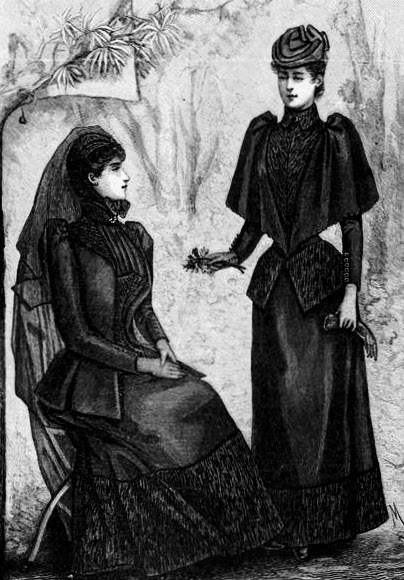
An 1891 advertisement for mourning dresses. — The etiquette of funerals in Mexico does not permit the female relations of deceased to attend. Only men attend the departed to the church and the tomb. 


The etiquette of funerals in Mexico does not permit the female relations of deceased to attend. Only men attend the departed to the church and the tomb. Funerals are so expensive that they often ruin business men. All female relatives, even to cousins and children, must wear deep mourning for two years. During the mourning none of the ladies of the household must be seen in public. Bodies are buried encased in laces and decked with precious stones. 

In Mexico, as in Spain and other southern countries, a lady retains her maiden name after marriage, and though she annexes to it, that of her husband by means of a “de,” she is universally known by her own family name. It is considered more courteous to address even elderly married ladies Señorita (Miss), instead of Señora (Madame.) The lady of the house is always called by her servants and dependents La Niña (the little girl), though she may have attained the age of eighty. — From ‘Of General Interest,’ 1884


Etiquette Enthusiast, Maura J Graber, is the Site Editor for the Etiquipedia© Etiquette Encyclopedia

Tuesday, August 18, 2020

Etiquette for a “No” Response

When You Have Trouble Accepting “No” for an Answer

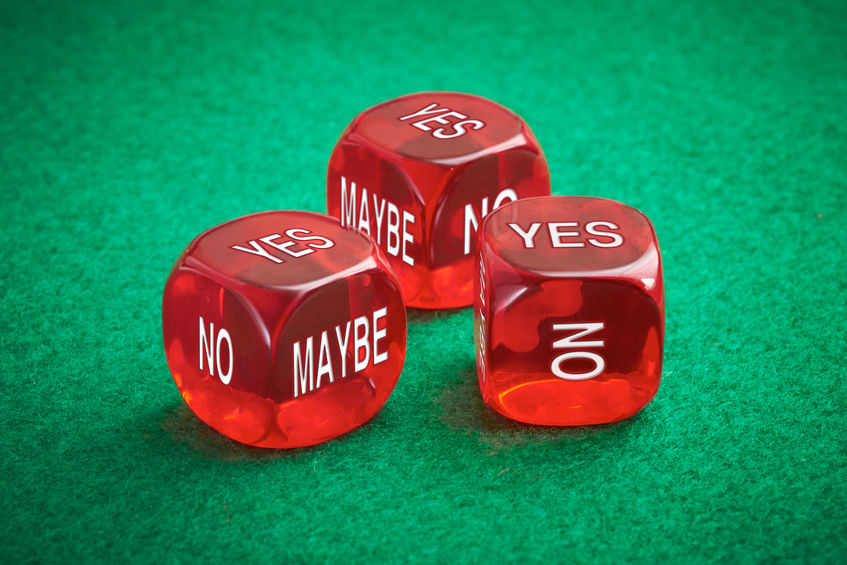
Roll for Yes
“No” comes in many forms throughout your day.  The horn blowing in traffic to let you know you can’t move into the next lane, the cashier who closes his line when you’re ready to check out, the toddler who screams “No!” as you try to put away a toy, the spouse who declines your suggestion of dinner out.

Whenever you think you deserve a “yes,” and know what that looks like, you probably shift into the attitude of, “Don’t take ‘no’ for an answer!”  Or you might become defensive and use “Why not?” as a challenging reply.

We know when we ask a question that the chance of receiving the answer we want is like a roll of the dice.  Why is accepting “no” such a difficult thing to do?

Early Messages

Intellectually, we know that limits and boundaries make it possible for humans to harmoniously exist together socially.  However, “no” can be an emotionally charged word depending on how you learned it as a child.

“No” can represent protection or safety as in, “I’m telling you no for your own good.”  But it can also present the message that you are a bad person, you can’t do anything right, or you are being rejected. 

Think of it this way: if you ever passed notes in school that read, “Do you like me?  Yes or No” and you received multiple notes back with “No” circled, it’s no wonder you have issues with the word as an adult.

Accepting Graciously

Etiquette, at times, asks that you set personal issues aside to do what is right in that moment.  One of these times will be when you are told “No.”

In that moment, you are called upon to accept the answer graciously:
  • Make eye contact with the person who is saying no or delivering negative feedback directly.  Keep your eyes and face relaxed.
  • Acknowledge with a simple, “Okay,” or an acknowledgment that it’s been said.
  • Ask for the reason if you don’t understand.
  • Really listen to what’s being said and remember to breathe.  
  • If it’s the right time and place to disagree, do so, or wait until later to have further discussion.  
Accepting “no” doesn’t necessarily mean the subject is closed.  If you’ve calmly received negative feedback at work, ask to set up a time when you can learn more about how you can improve.  After good use of the interim time, come prepared with your own ideas for improvement to discuss in the follow-up meeting.

In the case of personal situations when you are told “no,” understand that everyone needs boundaries.  Just as you protect yourself with personal boundaries, others do as well.  The “no” may not be all about you.

Ensuring Your “No” Can Be Accepted

Learning to gracefully and appropriately accept “no” for an answer is an etiquette-ful way to help others be more likely to say “yes” to future requests.

One way to pay it forward and help others accept your “no” is to deliver it respectfully and considerately.  You can do this by saying “yes” in some form before you say “no.”
  • If your next-door neighbor asks for help with a garage sale and you really don’t want to take time away from your day off, be appreciative that she asked you.
    “Cecilia, it’s nice of you to think I would be capable of this and thanks for asking.  I’m pounding out my entire set of lesson plans for next week so, unfortunately, I am going to have to decline.” 
  • Your boss has given you a second big assignment and you know that there isn’t going to be time to get it done.
    “Mr. Johnson, of course I’m ready to take on the task you’ve given me, and I also have the Porter project deadline to meet.  Which one should be my focus to finish by Friday afternoon?”
  • A person you’ve had one date with takes the fun evening as a sign that you’re ready to go out with him again soon, but you really don’t want to go so fast.
    “John, thank you for a very nice time.  I’m flattered that you want to go out again soon, but I’m not ready to go forward so quickly right now.”   
Etiquette is about being sensitive to time, place and circumstances.  The skills we learn as children can be fine-tuned as we gain self-command and grow into the people we are meant to be.

It is necessary to say “no” sometimes.  Keep in mind that how you say it can determine how well it is accepted.  The word “decline” is a softer version of the word “no,” or you might substitute with an appropriate phrase.

But however you choose to say it, you have a right to your own decision.  And, from an etiquette standpoint, you are obligated to accept the decisions of other people.


Contributor, Candace Smith is a retired, national award-winning secondary school educator, Candace Smith teaches university students and professionals the soft skills of etiquette and protocol. She found these skills necessary in her own life after her husband received international recognition in 2002. Plunged into a new “normal” of travel and formal social gatherings with global leaders, she discovered how uncomfortable she was in many important social situations. After extensive training in etiquette and protocol, Candace realized a markedly increased confidence level in meeting and greeting and dining skills and was inspired to share these skills that will help others gain comfort and confidence in dining and networking situations. Learn more at http://www.candacesmithetiquette.com/


Etiquette Enthusiast, Maura J Graber, is the Site Editor for the Etiquipedia© Etiquette Encyclopedia


Tipping Etiquette for Deliveries

Current Appropriate Tip
Amounts for Deliveries

Delivery App
During the COVID-19 pandemic, while many of us are homebound to some degree, there are many others who are providing services to make our stay at home more convenient and comfortable.

They deliver food from our favorite restaurants, groceries, and prescription medications.  And many of us agree that these delivery people are putting themselves in potential harm’s way.

For this reason, we are noticing a shift in the tip amounts given.  As many other rules and practices are in suspension during this health crisis, there seems to be a consensus that tipping rules are being amended.

Today’s Tipping Amounts

The standard tip for a delivery person has typically been in the 10% to 20% range, depending on the service.  However, several people I have informally surveyed testify giving delivery people 25% during the pandemic.

Even if a tip has been included with the bill, some people prefer to leave a cash tip of a few dollars, which has been placed in an envelope or sealed baggie to give the delivery person a safer way to be thanked.  This helps to ensure the delivery person receives the entire tip, which is not always a guarantee depending on the delivery service you use.  It is also important to remember that the service fee or delivery fee itemized on your bill is not the tip. 

Curbside pick-up is also a popular trend for restaurants.  But even with social distancing guidelines in place, pick-ups still bring people in closer proximity to one another.  This brings tipping back into conscious consideration.  Many of the people in my informal survey report leaving a 15% to 25% on their bill or in the still-present cash tip jar when they pick up food rather than the standard 10%. 

Some people I interviewed have mentioned that the delivery person’s service and attitude is still a consideration when determining a tip amount.  Pleasant communication and tone, a warm greeting, and good eye contact have a positive impact on the person purchasing.  Yes, attitude matters, even when the buyer is hoping he is “paying it forward.”

Touchless Delivery

Phone apps have provided numerous delivery methods for food and other items.  Almost all of them encourage “touchless” delivery, providing instruction options such as “leave at front door” or “leave on porch.”   These options ensure that you make no personal contact with your delivery person.

Some who use these technologies report they don’t necessarily feel as connected to the helping hand idea mentioned above, and that they are mostly interested in the getting the food or items they ordered as cleanly and quickly as possible. 

However, even though separated by technology and “touchless” delivery, remember that another human is providing a service that allows you to stay in the safety of your home.

Going Forward

Many of us are showing our loyalty to favorite restaurants and local establishments.  When this pandemic is over, we want them to still be there and able to return to business as usual.  There is a sense that we play a part in serving the common good when we order from them.

Only time will tell as we fall out of these economically and socially challenged times.  But for sure, once we get more into “life as it was” mode, restaurants will have much catching up to do.  I am surmising that standard tips will rise from 18% to 20%.       

Ultimately, the amount of your tip is entirely up to you.  With appreciation, kindness, and respect as your anchors, putting yourself into the shoes of someone else will help in choosing to be the best version of yourself, regardless of the situation. 

And, a generous tip may just be what it takes to make someone else’s day a little better.  After all, much is being accomplished in making your life easier and safer these days.


Contributor, Candace Smith is a retired, national award-winning secondary school educator, Candace Smith teaches university students and professionals the soft skills of etiquette and protocol. She found these skills necessary in her own life after her husband received international recognition in 2002. Plunged into a new “normal” of travel and formal social gatherings with global leaders, she discovered how uncomfortable she was in many important social situations. After extensive training in etiquette and protocol, Candace realized a markedly increased confidence level in meeting and greeting and dining skills and was inspired to share these skills that will help others gain comfort and confidence in dining and networking situations. Learn more at http://www.candacesmithetiquette.com/


Etiquette Enthusiast, Maura J Graber, is the Site Editor for the Etiquipedia© Etiquette Encyclopedia