Sunday, January 20, 2019

Tackling Bad Table Manners

A meal is not a marathon; there are no prizes for speed. So don't race. Eat small bites, one at a time, and never take two bites from the same forkful or two sips from the same spoonful. 

Bad Table Manners Will Give Indigestion to Others

There are two ways to get indigestion. One is to eat. The other is to watch someone else eat. For every chow-hound who gets dyspepsia from wolfing his food, there's a spectator with dyspepsia from watching him. Give pig’s knuckles to a pig and if the pig doesn’t suffer, a fussy onlooker will. Greasiness in managing a barbecued rib, will cause queasiness in many a solar plexus if not the eater’s, the spectator’s. Bad table manners, in other words, not only offend another’s sensibilities. They offend his digestive tract as well. Many people will forgive the former, but never the latter. So, in the interest of preventive medicine, if not of etiquette, it's wise to winnow out the truly horrendous “boners.” 
  • Eating shouldn’t be auditory. Chew quietly, with your lips closed. Keep sound effects at a minimum. Don't chew and chatter simultaneously. 
  • If you’re a professional hostess flatterer, say: “M-mm, good!” and let it go at that. Licking your fingers or smacking your lips contributes nothing and detracts much. 
  • A meal is not a marathon; there are no prizes for speed. So don’t race. Eat small bites, one at a time, and never take two bites from the same forkful or two sips from the same spoonful. 
  • While handling the cutlery, keep your arms at your sides. Flapping elbows both imperil neighbors’ ribs and show gusto unsuitable to the occasion. 
  • Liquids should be sipped, not gulped. Soup slurping is a cardinal sin. Thanks to the law of gravity, it's generally unnecessary to “wash down” your food. If you get a hot bite, of course, water makes a good fire extinguisher, but otherwise drink only when your mouth is empty. Even then, wipe your mouth with a napkin before drinking. Food marks on a glass rim aren't the most appetizing sight. 

If you think the following don’ts pertain only to the high-chair set, you’re wrong. Some adults haven’t heard of them, either. 
  • Don’t eat windmill style. 
  • Don’t root in your plate. 
  • Don’t blow on your food to cool it. 
  • Don’t make goulash where goulash wasn’t intended. Keep separate portions separate. 
  • Don’t submerge everything in catsup or gravy. Catsup is particularly risky. Used in excess, it’s clearly a slur on the cuisine. 

Q & A ON P’S & Q’S – 
(Q) “I find it disgusting when somebody blows his nose at the dinner table. Don’t you agree?” J. B. 
(A) What disgusts one man doesn’t daunt another. Etiquette, as it happens, ordinarily doesn’t require a person to leave the table to blow his nose. It’s considered sufficient to bury your head, shield your nose well and not make a production of it. Nose-blowers, in any case, should never apologize. This merely calls attention to the act. – Don Goodwin, Copyright 1964


Etiquette Enthusiast, Maura J Graber, is the Site Editor for the Etiquipedia© Etiquette Encyclopedia 

Tuesday, January 15, 2019

Mid 20th C. Etiquette and Chivalry

Some men report finding it hard to concentrate on their papers, what with all the female straphangers above them grumbling about the “Death of Chivalry.” 
Some rules about etiquette don’t last...
From “Male Polish,” 1961


To hear some women tell it, we are now deep in a recession in manners. If you’ve been to New York recently, you may have noticed they particularly tell it in buses and subways. Some men, in fact, report finding it hard to concentrate on their papers, what with all the female straphangers above them grumbling about the “Death of Chivalry.” 

HAS CYCLES: Etiquette, like business, has cycles. Whenever there is a slump, it's pretty certain some excess preceded it. And 50 years ago etiquette had excesses aplenty. Take this rule in a Victorian etiquette book: “When a gentleman offers a lady his chair, he should engage her in conversation for a few minutes, thus giving the seat time to cool.” Presumably this would save the lady the trouble of using her fan. But hot seats are not considered a problem today. What bothers a modern man is whether to give up his seat, period. 

Etiquette takes a practical view of the matter: In public conveyances men should relinquish their seats for pregnant women, women burdened with children or bundles, old and infirm women but not for every frisky young thing who climbs aboard. In a social setting, the better part of polish is to offer your seat to any standing female, whether she just won the Olympics or not. 

OPENING DOORS Even more sticky is the problem of when to open a woman’s door. Writes S.J.: “Sure, a man ought to practice etiquette, and I believe most men would, if women would only let them. Take the rule about opening doors. Nine times out of 10, just when a man starts to open a door for a woman, she grabs the knob and opens it herself, as if to say, ‘Look, Buster, who needs YOU?’” 

Etiquette indeed specifies that men should open doors for women. But whenever one persists in opening her own, all you can do. obviously, is let her. You should not make a thing of it. S.J. also has a peeve against doors that push in rather than open out. “Here you are.” he said, “standing at the still, trying to hold a push-door in front of you, so your date can enter the room first. To do so, she has to duck under your arm, and what started out to be a helping hand ends up resembling the minuet or London Bridge.” 

RULES CLASH Here is a case of two rules clashing one about opening doors, the other about “ladies first.” In this instance “ladies first” is sacrificed. Coming to a push-door, the man correctly precedes the woman through the door in order to hold it for her. In the event she pushes ahead, he has only to extend his arm over her head to take the door's weight from her as she passes through. – Don Goodwin, Copyright 1961


Etiquette Enthusiast, Maura J Graber, is the Site Editor for the Etiquipedia© Etiquette Encyclopedia 

Male Polish on Wine Etiquette

(Q.)“Must I toast EVERY time?” J. J. M., New Haven, Conn.
(A.) Yep, or risk insulting the guest of honor. But you don't have to down a glass with every toast (regardless of what boozehounds and traditionalists say). By sipping and fake sipping, you can toast till dawn on a single drink. –
Did you know? “Gourmet” is old French for “wine taster” and the word is used properly in this 1957 etiquette advice column. A “gourmand” and not “gourmet” is the proper term for someone who loves food.

Don'ts Of Drinking Wine

Discovering that “Male Polish” today is all about wine etiquette, non-drinkers may be tempted to sashay elsewhere. But stick around, fellows. Wine etiquette reserves its most ticklish problem for people who never touch the stuff. 

WITH GOURMETS: The problem is, in fact, how in this boozy world do you avoid touching the stuff gracefully? You're dining with gourmets. Wine is served. For reasons of conscience or constitution, you don't want any. So what do you do? Put your hand over the glass? Turn it upside down? Both smack of histrionics. Or do you go into a spiel about the “Evils of Drink,” or the “Virtuous Life,” or “Wine Gives Me Heartburn?” Spellbinding as these subjects may be, they aren't likely to inspire a dinner companion whose chablis glass is lipward bound. 

JUST SAY NO: The thing to do, of course, is say “No, thank you” without any fuss whatever. No person in the world has less need to explain or apologize than a teetotaler. A wine etiquette for non-wine drinkers obviously is not too complicated. What about men who do drink wine? The biggest goof is to guzzle. Wine is not beer. To swill it in large daughts is to miss the subtleties of bouquet and flavor. Apart from this, gluttony in any form is bad manners. 

The second biggest goof is to be a Connoisseur with a capital C. The “Wine Snob” doesn't drink much; he just talks. But his lectures on vintage and vintner, body and bouquet, are so rapt and endless, many guests wish he would drink up and shut up. 

Goof No. 3 is to know nothing at all about wines. This is not really the world-shaking goof Connoisseurs would have us believe. All the same, if you expect to do any fancy hosting, it's well to have a nodding acquaintance with Bacchus. 

ALMOST as important as the wine itself is the technique of serving it. Traditionally, the host pours a little in his glass before serving counter-clockwise around the table. This is to assure bits of cork will land in his glass, not in the guests’. Some hosts even sip the wine before pouring, though others feel this is carrying tradition too far. 

Wine bottles should not be swathed in a napkin. Highly sedimented wine should be decanted or at least served from a basket. Wine glasses should be filled only two-thirds full, giving the bouquet room to rise.

Traditionally white wine (chilled) goes with light meat and seafood; red wine (room temperature) with red meat and game; and rosé wine with nearly anything. Many people feel that, with respect to wine anyhow, palate and pocketbook count more than tradition. They're probably right.

Q & A ON P’S & Q’S (Q) “I went to a bachelor party the other night and everybody was toast-happy. There were a dozen toasts, so I had a dozen drinks. Felt awful the next day. Must I toast EVERY time?” J. J. M., New Haven, Conn. (A) Yep, or risk insulting the guest of honor. But you don't have to down a glass with every toast (regardless of what boozehounds and traditionalists say). By sipping and fake sipping, you can toast till dawn on a single drink. – Don Goodwin, Copyright 1957

 Etiquette Enthusiast, Maura J Graber, is the Site Editor for the Etiquipedia© Etiquette Encyclopedia 

Monday, January 14, 2019

Equals in Etiquette?


(Q.) “We had a party the other night and afterward my wife chided me for lighting another woman's cigarette before her own. Since the woman was a guest, I think I did the right thing.” R. T., Boston (A.) You did, technically. However, if your wife is touchy about such matters, forget the niceties and light hers first. By the way, how pretty was the guest?– Though he wrote an etiquette column, the male columnist blasting women for the downfall of men’s manners in the 1950’s, couldn’t help himself to a joke about the guest’s appearance at the end of the Q & A.
Gals Deplore His Manners!

A favorite subject with women these days is the decline of masculine manners. For all their grievances, they forget who caused the decline. Women, that's who. 

EQUAL RIGHTS Years ago Female Eternal set out to acquire equal rights. She got them, too, in politics, education, the professions. But in the process she torpedoed Chivalry. Etiquette or that part of it governing men's actions toward women, was based on the notion that girls were frailer than boys. When girls stopped acting frailer, Etiquette took a nosedive. Men, of course, still respect women and feel protective toward them; women still want to be respected and protected. 

NOT SURE: But "equality" has wrought such confusion men aren't sure what is expected of them, and women aren't sure what to expect. Take this business of lighting a woman's cigarette. Invariably, when a man wants to show off his knowledge of etiquette, he says, piously, “When using a match, never light a woman’s cigarette before your own. The fumes, you know.” He's Wrong. The fumes from modern matches are negligible. If the man lets the match burn a second, he'll neither asphyxiate her nor blunder himself. Then there's the man who, knowing not a jot else about etiquette, knows you should ALWAYS light a woman's cigarette. Seeing one emerge from a purse, he bolts 30 feet across the room to light it. He looks foolish and she feels the same way. 

IN BOTH instances the men have good intentions. True, you should spare ladies discomfort. True, you should if convenient light ladies' cigarettes (some nonsmokers, in fact, carry matches for that express purpose). HE GOOFED! Here's a draw. It's a boner, all right, light the lady's first; ask permission to smoke in cars or other closed places; forego smoking when walking with a woman; offer her a cigarette every time you have one yourself. But, unfortunately, a blurring of roles means a blurring of rules. And men, in their bafflement, either go too far, not far enough, or abandon etiquette altogether. 

IN SOME cases, alas, equality has not only confused the roles of men and women; it has reversed them. You have, as a result, those familiar types, the Henpecked Male and Domineering Female. This unhappy switch encourages, not poor manners, but no manners. Normal women don't enjoy wearing trousers. Normal men don't enjoy being Dagwoods or Walter Mittys. So the first step toward restoring normalcy, clarifying roles and rejuvenating manners, is for men to practice those amenities that distinguish the sexes. 

Q & A on P’S & Q’S 
(Q) "We had a party the other night and afterward my wife chided me for lighting another woman's cigarette before her own. Since the woman was a guest, I think I did the right thing." R. T., Boston 
(A) You did, technically. However, if your wife is touchy about such matters, forget the niceties and light hers first. By the way, how pretty was the guest? – Don Goodwin’s Male Polish, Copyright 1959

Etiquette Enthusiast, Maura J Graber, is the Site Editor for the Etiquipedia© Etiquette Encyclopedia 

Male Polish and Etiquette

Smooth off the rough edges with “Male Polish”– the gateway to good manners.
“New Do’s/Don'ts Feature”
for 1956

How do you introduce VIP's? When do you shake hands with a woman? What's the fastest way to win a friend? Lose a friend? Make a speech? How do you propose marriage, remember names, write love letters, make a speech, give the brush-off, interview for a job? These and many other questions on etiquette will be answered in The Sun and Telegram's new feature, “Male Polish,” appearing for the first time in the Men's section, Saturday evening and Monday morning, Nov. 10, 12. “Male Polish” will provide readers with do's and don'ts for all types of social occasions, plus the necessary points of finesse at work and in the home.

Written by Don Goodwin, “Male Polish” is a weekly illustrated feature that shows in a photograph just how a social boner was made and then explains how it should be corrected. Other similar blunders are discussed in detail, including methods of anticipating and side-stepping them in the future. Readers will find a question box for their personal inquiries dealing with etiquette. Special consideration will be given to “Proper Dress,” “Table Manners,” “Office Etiquette.” Dating, going steady, escort manners, and business gifts are other important concerns for Sun and Telegraph readers. Smooth off the rough edges with “Male Polish,” the gateway to good manners, starting next week. – San Bernardino Sun, 1956


Etiquette Enthusiast, Maura J Graber, is the Site Editor for the Etiquipedia© Etiquette Encyclopedia 

Tuesday, January 8, 2019

Men’s Glove Etiquette

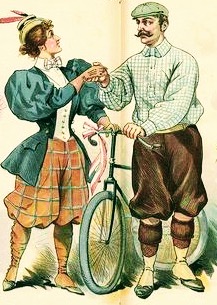
In the “bad old days” it was a capital offense to shake a woman’s hand with your glove on.

Male Polish – Good Taste Dictates Glove Etiquette

By Dot Goodwin

Dressing right is always a partly subjective proposition and in our era a lot of the old rigid “rules of dress” have been loosely treated and lightly taken. As a result, many “must” matters are now matters of taste. Take gloves. It's possible today to go gloveless and still be thought well dressed (except on formal occasions such as weddings where gloves are strictly required). Gloves, like hats, have dropped from the “necessary” to the “optional” class. But with the best-dressed men, and with those who put even a little extra time and thought into their wardrobes, both gloves and hats are indispensible throughout the winter months. 

“What gloves do I wear, and when?” Here are a few guideposts: 
Buck leather or dark gray suede gloves look best with gray or black coats. 
With a navy blue coat, pearl gray suede gloves are the ultimate in good dress. With coats in the brown group (including tan and beige), wear brown leather. In general, contrast the glove shade against that of the coat. 

For example, with a light tan or copper pepper-and-salt tweed, dark, grained pigskin gloves are in order. Note that this combination unites a casual coat with a casual leather. With a solid color or quiet herringbone topcoat, pick a more formal, smooth leather or suede. 

In the bad old days, it was a capital offense to shake a woman’s hand with your glove on. Not so today. Manners have become jet-propelled. It’s now far worse to keep a woman waiting while you shuck off your glove than to shake with it on. Nor should you apologize for a begloved shake. In truth, you're doing HER the favor by not dawdling. 

It’s unnecessary to remove your gloves when shaking a man’s hand. Indoors, you will have shed the things anyhow, leaving them with your hat. In the case of white-gloved ushers at weddings and funerals, of course, the gloves stay on. – The Sun, 1963 


Etiquette Enthusiast, Maura J Graber, is the Site Editor for the Etiquipedia© Etiquette Encyclopedia

Etiquette and Food Service

With “Butler Service,” a diner helps himself or herself from a serving platter or plate, held by the butler or waiter.


Silver Service (in British English) or Service à l’Anglaise (French for “English Service”) is a method of serving food that normally will include serving food at the table. It is a method of transferring food from the service dish to a guest's plate from the left. It is performed by a waiter by using service forks and spoons from a diner’s left hand side.

Butler Service or Service à la Française (“French Service”) a diner helps himself from a serving plate held by the waiter or the butler. Traditionally, this type of service was used on Sunday evenings, when the wait staff had the evening off and the butler help serve the dinner.


Russian Service or Service à la Russe, is at once the simplest and most elegant manner when guests are present, as it is only necessary to pass the dishes of each course in rotation, beginning alternately at the right and the left of the guest.

Buffet Service is when the food is placed and displayed on a separate table or sideboard, in a public area, from which diners help serve themselves to the food, before being seated at a dining table to eat. “Buffet Service” comes from the least humble of beginnings in 18th century Europe, when chefs and confectioners wanted to impress those coming to balls and parties in grand homes, upon their arrival. Foods designed to impress were laid out for guests to feast their eyes on, prior to dining. 

Family Service dining, also known as “Homestyle Service” or “Casual Service” is the least formal style of dining.  Popular in private homes worldwide, food is placed on the table in large serving dishes from which diners serve themselves.


Etiquette Enthusiast, Maura J Graber, is the Site Editor for the Etiquipedia© Etiquette Encyclopedia

Sunday, January 6, 2019

Red Carpet Posing Etiquette


Red-Carpet Red Flags: How Not to Pose at the Oscars

From the "Kiss of Death" to the "Flapper," The Hollywood Reporter names the top 5 red carpet no-nos when it comes to striking a pose.

THE PEACE OUT
Cyrus goes for this one, which fits with her "Party in the U.S.A." songbook. Surely there's a better way to show your commitment to world peace.

THE JESSICA RABBIT
Note to Angelina: Roger Rabbit's vampy, slit-up-to-there-wearing better half is merely a cartoon, and she should only be channeled on Halloween.

THE FLAPPER
Katy Perry is a fan of this saccharine pose that tries -- too hard -- to convey bubbliness. It's cute for a second, then the novelty wanes.

THE KISS OF DEATH
Lindsay Lohan made this popular around Mean Girls, and everyone knows how that turned out. Recent offenders: Selena Gomez and Vanessa Hudgens.

THE PIGEON TOE
A good choice -- if an actress actually wants her hips to look bigger. Word of advice: Pretend you're doing Pilates, and keep those toes straight.


Illustrations by Todd Detwiler for The Hollywood Reporter


Etiquette Enthusiast, Maura J Graber, is the Site Editor for the Etiquipedia© Etiquette Encyclopedia