Monday, January 14, 2019

Equals in Etiquette?


(Q.) “We had a party the other night and afterward my wife chided me for lighting another woman's cigarette before her own. Since the woman was a guest, I think I did the right thing.” R. T., Boston (A.) You did, technically. However, if your wife is touchy about such matters, forget the niceties and light hers first. By the way, how pretty was the guest?– Though he wrote an etiquette column, the male columnist blasting women for the downfall of men’s manners in the 1950’s, couldn’t help himself to a joke about the guest’s appearance at the end of the Q & A.
Gals Deplore His Manners!

A favorite subject with women these days is the decline of masculine manners. For all their grievances, they forget who caused the decline. Women, that's who. 

EQUAL RIGHTS Years ago Female Eternal set out to acquire equal rights. She got them, too, in politics, education, the professions. But in the process she torpedoed Chivalry. Etiquette or that part of it governing men's actions toward women, was based on the notion that girls were frailer than boys. When girls stopped acting frailer, Etiquette took a nosedive. Men, of course, still respect women and feel protective toward them; women still want to be respected and protected. 

NOT SURE: But "equality" has wrought such confusion men aren't sure what is expected of them, and women aren't sure what to expect. Take this business of lighting a woman's cigarette. Invariably, when a man wants to show off his knowledge of etiquette, he says, piously, “When using a match, never light a woman’s cigarette before your own. The fumes, you know.” He's Wrong. The fumes from modern matches are negligible. If the man lets the match burn a second, he'll neither asphyxiate her nor blunder himself. Then there's the man who, knowing not a jot else about etiquette, knows you should ALWAYS light a woman's cigarette. Seeing one emerge from a purse, he bolts 30 feet across the room to light it. He looks foolish and she feels the same way. 

IN BOTH instances the men have good intentions. True, you should spare ladies discomfort. True, you should if convenient light ladies' cigarettes (some nonsmokers, in fact, carry matches for that express purpose). HE GOOFED! Here's a draw. It's a boner, all right, light the lady's first; ask permission to smoke in cars or other closed places; forego smoking when walking with a woman; offer her a cigarette every time you have one yourself. But, unfortunately, a blurring of roles means a blurring of rules. And men, in their bafflement, either go too far, not far enough, or abandon etiquette altogether. 

IN SOME cases, alas, equality has not only confused the roles of men and women; it has reversed them. You have, as a result, those familiar types, the Henpecked Male and Domineering Female. This unhappy switch encourages, not poor manners, but no manners. Normal women don't enjoy wearing trousers. Normal men don't enjoy being Dagwoods or Walter Mittys. So the first step toward restoring normalcy, clarifying roles and rejuvenating manners, is for men to practice those amenities that distinguish the sexes. 

Q & A on P’S & Q’S 
(Q) "We had a party the other night and afterward my wife chided me for lighting another woman's cigarette before her own. Since the woman was a guest, I think I did the right thing." R. T., Boston 
(A) You did, technically. However, if your wife is touchy about such matters, forget the niceties and light hers first. By the way, how pretty was the guest? – Don Goodwin’s Male Polish, Copyright 1959

Etiquette Enthusiast, Maura J Graber, is the Site Editor for the Etiquipedia© Etiquette Encyclopedia 

Male Polish and Etiquette

Smooth off the rough edges with “Male Polish”– the gateway to good manners.
“New Do’s/Don'ts Feature”
for 1956

How do you introduce VIP's? When do you shake hands with a woman? What's the fastest way to win a friend? Lose a friend? Make a speech? How do you propose marriage, remember names, write love letters, make a speech, give the brush-off, interview for a job? These and many other questions on etiquette will be answered in The Sun and Telegram's new feature, “Male Polish,” appearing for the first time in the Men's section, Saturday evening and Monday morning, Nov. 10, 12. “Male Polish” will provide readers with do's and don'ts for all types of social occasions, plus the necessary points of finesse at work and in the home.

Written by Don Goodwin, “Male Polish” is a weekly illustrated feature that shows in a photograph just how a social boner was made and then explains how it should be corrected. Other similar blunders are discussed in detail, including methods of anticipating and side-stepping them in the future. Readers will find a question box for their personal inquiries dealing with etiquette. Special consideration will be given to “Proper Dress,” “Table Manners,” “Office Etiquette.” Dating, going steady, escort manners, and business gifts are other important concerns for Sun and Telegraph readers. Smooth off the rough edges with “Male Polish,” the gateway to good manners, starting next week. – San Bernardino Sun, 1956


Etiquette Enthusiast, Maura J Graber, is the Site Editor for the Etiquipedia© Etiquette Encyclopedia 

Tuesday, January 8, 2019

Men’s Glove Etiquette

In the “bad old days” it was a capital offense to shake a woman’s hand with your glove on.

Male Polish – Good Taste Dictates Glove Etiquette

By Dot Goodwin

Dressing right is always a partly subjective proposition and in our era a lot of the old rigid “rules of dress” have been loosely treated and lightly taken. As a result, many “must” matters are now matters of taste. Take gloves. It's possible today to go gloveless and still be thought well dressed (except on formal occasions such as weddings where gloves are strictly required). Gloves, like hats, have dropped from the “necessary” to the “optional” class. But with the best-dressed men, and with those who put even a little extra time and thought into their wardrobes, both gloves and hats are indispensible throughout the winter months. 

“What gloves do I wear, and when?” Here are a few guideposts: 
Buck leather or dark gray suede gloves look best with gray or black coats. 
With a navy blue coat, pearl gray suede gloves are the ultimate in good dress. With coats in the brown group (including tan and beige), wear brown leather. In general, contrast the glove shade against that of the coat. 

For example, with a light tan or copper pepper-and-salt tweed, dark, grained pigskin gloves are in order. Note that this combination unites a casual coat with a casual leather. With a solid color or quiet herringbone topcoat, pick a more formal, smooth leather or suede. 

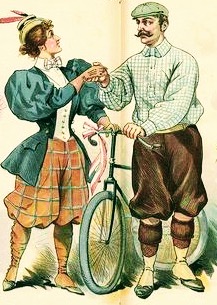
In the bad old days, it was a capital offense to shake a woman’s hand with your glove on. Not so today. Manners have become jet-propelled. It’s now far worse to keep a woman waiting while you shuck off your glove than to shake with it on. Nor should you apologize for a begloved shake. In truth, you're doing HER the favor by not dawdling. 

It’s unnecessary to remove your gloves when shaking a man’s hand. Indoors, you will have shed the things anyhow, leaving them with your hat. In the case of white-gloved ushers at weddings and funerals, of course, the gloves stay on. – The Sun, 1963 


Etiquette Enthusiast, Maura J Graber, is the Site Editor for the Etiquipedia© Etiquette Encyclopedia

Etiquette and Food Service

With “Butler Service,” a diner helps himself or herself from a serving platter or plate, held by the butler or waiter.


Silver Service (in British English) or Service à l’Anglaise (French for “English Service”) is a method of serving food that normally will include serving food at the table. It is a method of transferring food from the service dish to a guest's plate from the left. It is performed by a waiter by using service forks and spoons from a diner’s left hand side.

Butler Service or Service à la Française (“French Service”) a diner helps himself from a serving plate held by the waiter or the butler. Traditionally, this type of service was used on Sunday evenings, when the wait staff had the evening off and the butler help serve the dinner.


Russian Service or Service à la Russe, is at once the simplest and most elegant manner when guests are present, as it is only necessary to pass the dishes of each course in rotation, beginning alternately at the right and the left of the guest.

Buffet Service is when the food is placed and displayed on a separate table or sideboard, in a public area, from which diners help serve themselves to the food, before being seated at a dining table to eat. “Buffet Service” comes from the least humble of beginnings in 18th century Europe, when chefs and confectioners wanted to impress those coming to balls and parties in grand homes, upon their arrival. Foods designed to impress were laid out for guests to feast their eyes on, prior to dining. 

Family Service dining, also known as “Homestyle Service” or “Casual Service” is the least formal style of dining.  Popular in private homes worldwide, food is placed on the table in large serving dishes from which diners serve themselves.


Etiquette Enthusiast, Maura J Graber, is the Site Editor for the Etiquipedia© Etiquette Encyclopedia
Sunday, January 6, 2019

Red Carpet Posing Etiquette


Red-Carpet Red Flags: How Not to Pose at the Oscars

From the "Kiss of Death" to the "Flapper," The Hollywood Reporter names the top 5 red carpet no-nos when it comes to striking a pose.

THE PEACE OUT
Cyrus goes for this one, which fits with her "Party in the U.S.A." songbook. Surely there's a better way to show your commitment to world peace.

THE JESSICA RABBIT
Note to Angelina: Roger Rabbit's vampy, slit-up-to-there-wearing better half is merely a cartoon, and she should only be channeled on Halloween.

THE FLAPPER
Katy Perry is a fan of this saccharine pose that tries -- too hard -- to convey bubbliness. It's cute for a second, then the novelty wanes.

THE KISS OF DEATH
Lindsay Lohan made this popular around Mean Girls, and everyone knows how that turned out. Recent offenders: Selena Gomez and Vanessa Hudgens.

THE PIGEON TOE
A good choice -- if an actress actually wants her hips to look bigger. Word of advice: Pretend you're doing Pilates, and keep those toes straight.


Illustrations by Todd Detwiler for The Hollywood Reporter


Etiquette Enthusiast, Maura J Graber, is the Site Editor for the Etiquipedia© Etiquette Encyclopedia 

Wednesday, January 2, 2019

Elizabeth Post’s Wedding Etiquette


Wedding etiquette... one of society's most perennial problems

By Elizabeth Post

Details...

Dear Mrs. Post: Who has the right to plan the wedding reception details, such as number of guests’ to invite, planning for decorations and food, etc.? It has been a question between mother and daughter. —Laura

Dear Laura: Although I don’t like putting it on that basis, it is the bride’s right to make the decisions. It’s her day, not her mother’s, and while they should consult with each other, of course, the final decisions should be the bride’s

Wedding Cake

Dear Mrs. Post: Is there a rule that says the wedding cake should be a fruit cake for a formal wedding, and a white cake for an informal wedding? —Linda 

Dear Linda: No, there’s no such rule. Years ago the wedding cake was traditionally dark fruit cake. Nowadays, even at the most formal wedding, it is a white or yellow cake with white icing. There may be, in addition, a “groom’s cake” which is dark fruit cake. This is generally cut into small portions in advance and packaged in small white boxes to be given to the guests “for good luck.”

Turtleneck? No!


Dear Mrs. Post: What do you think of a prospective bridegroom who plans to wear a turtleneck shirt with a tuxedo at his wedding? —Ellen 

Dear Ellen: I don’t like it. A wedding is one place where tradition is most important. I imagine that a wedding picture of a groom in a turtleneck will come back to haunt him years from now, just as we laugh at pictures of brides in flapper outfits of the twenties. The traditional bridal gown and the tuxedo with shirt and tie will never look out of style. 

Wedding Presents 


Dear Mrs. Post:Yesterday, I received from a bride of three weeks my wedding gift to her, with a note reading, “Since our marriage was only temporary, I feel obliged to return your lovely wedding present.” I know she was right. I know that all wedding gifts are given for the couple’s married life, and should this state not be realized, the present must be returned. But, on the other hand, wasn’t I on the receiving end at the wedding reception? Couldn’t the bride keep my gift? —Marion 

Dear Marion: The girl was right in her thoughtfulness, but wrong in her action. Wedding gifts need not be returned, no matter how brief the marriage. The exceptions are presents to her from the groom himself, or presents of particular sentimental value given to them both from his family. These should be returned. – Highland Park News, June 1968


Etiquette Enthusiast, Maura J Graber, is the Site Editor for the Etiquipediag tiquette Encyclopedia

Etiquette and Royal Baby Surnames

The Duke and Duchess of Cambridge and their children. – Photo courtesy of Herald Mail


Prince Louis Arthur Charles Will Not Have a Last Name, ... but here are a few options in case he decides to use one: Mountbatten is Prince Phillip's surname, and Queen Elizabeth II's grandfather, King George V, took on Windsor—after Windsor Castle—as the British royal family's official surname in 1917, as Saxe-Coburg-Gotha sounded “too German” during World War I.

Most families pass down a last name from one generation to the next, but the British royal family follows their own rules and traditions. They have formal titles (some are made up of up to 15 words), but tend to only use Prince or Princess in front of their given name. However, following the birth of Prince William and Kate Middleton's third child, Prince Louis Arthur Charles, many are curious as to whether he will adopt the surname the descendants of Prince Phillip and Queen Elizabeth often use on certain occasions: Mountbatten-Windsor.

Royal historian, author and blogger of  “Royal Musings,” Marlene Eilers Koenig, said the baby will not. “The royal baby will not have a last name,” Koenig tells TownandCountrymag.com. “The name on the birth certificate will say HRH Prince or Princess, and all three names of Cambridge.” HRH is an abbreviation for His or Her Royal Highness. The three names of Cambridge refers to the three first names given to each royal child. For instance, Prince George’s three first names are George Alexander Louis, and Princess Charlotte's three first names are Charlotte Elizabeth Diana.

“The House name is Windsor and the family name for those who do use a surname is Mountbatten-Windsor,” Koenig adds. Mountbatten is Prince Phillip's surname, and Queen Elizabeth II's grandfather, King George V, took on the name “Windsor” —after Windsor Castle—as the British royal family's official surname in 1917. 

Prince George, the royal baby's oldest sibling, is listed at school with the surname Cambridge, which is part of his father and mother's official titles as the Duke and Duchess of Cambridge. Prince William and Prince Harry similarly adopted part of their father's title as their last name when they enlisted in the military under William Wales and Harry Wales, The Independent reports. Prince Charles is, of course, the Prince of Wales.– Town and Country Magazine, 2018


Etiquette Enthusiast, Maura Graber, is the Site Editor for the Etiquipedia© Etiquette Encyclopedia 

Tuesday, January 1, 2019

Profiles in Etiquette – Elizabeth Post

                               
Etiquette writer and authority, Elizabeth L. (Libby) Post, was the wife of Emily Post’s only grandson, (Bill) Post. It was Elizabeth who took over as the spokesperson and author for The Emily Post Institute in 1965, five years after Emily Post’s death in 1960. 

Born in Englewood, New Jersey, and educated at the Dobbs Ferry Master’s School, She was the first successor to Emily Post’s family business, working for more than 30 years on behalf of The Emily Post Institute. During her tenure as author and spokesperson, Mrs. Post revised and updated Emily Post’s book “Etiquette” five times from 1965 to 1992.

Along with helming the company throughout the sweeping social changes of the 1960’s and 1970’s, Post authored many other books, all under the “Emily Post” name. The books were frequently revised, and included “Emily Post’s Complete Book of Wedding Etiquette,” “Emily Post’s Wedding Planner,” “Emily Post’s Table Manners for Today,” “Emily Post on Business Etiquette,” “Emily Post on Second Weddings,” “Please, Say Please,” “The Complete Book of Entertaining” with co-author Anthony Staffieri, and “Emily Post’s Teen Etiquette” with co-author Joan M. Coles.                 

Along with her books, she wrote a monthly column for Good Housekeeping magazine entitled “Etiquette for Everyday” and even created and marketed a line of “Correct Cosmetics” sold in small department stores nationwide, which included face powder, lipsticks, scents and more. She gave hundreds of media interviews annually and frequently appeared as a guest speaker across the country. She enjoyed an active outdoor lifestyle and traveling with her husband, and divided her time between their homes in Florida and Vermont. Post retired in 1995 and passed away 15 years later, in April of 2010.

Doing the Right Thing 
By Elizabeth L. Post, 1968


Expressions of Sympathy
Dear Mrs. Post: I often encounter a situation which I find very awkward. What does one say to a girl or boy whose brother is leaving for Vietnam? What does one do if the boy or girl begins to show signs of crying? M.H.
Dear M.H.: This is a situation we are all facing more and more. The best answer is to say little, especially if the other person is very emotional. A word or two, such as "Wish him good-luck for me," or "Tell him we'll be thinking of him,” or possibly "I hope the year will pass quickly for you. I will remember him in my prayers,’’ is enough to indicate your sympathy.

Corsage for Godmother
Dear Mrs. Post: I will be married soon and I would like to get a corsage for my godmother. When I was baptized my godparents weren’t married, now they are, but not to each other. Do I have to get a corsage for my godfather’s wife, too, or just for my godmother? Ellen
Dear Ellen: You need not give your godfather's wife a corsage, but since you are giving your godmother one, I would suggest that you give your godfather a boutonniere.


 Etiquette Enthusiast, Maura J. Graber, is the Site Editor for the Etiquipedia© Etiquette Encyclopedia