Tuesday, August 26, 2014

Etiquette and the Minefield of Friendships at School

Cliques and gangs (carried to an extreme degree) offer love, approval, protection and support, and sometimes bullying. Low self esteem can cause bullies to seek power over other teens. The more the clique puts people down, the cooler they feel.

Friendships, and just plain dealing with other students in school, can be difficult. Do your teens ever come across students who put others down for being smart, well-behaved, industrious and moral?  Bullying behaviour is done to devalue those traits that others have, but they don’t have themselves. They can often reflect the low self-esteem of the person doing the bullying. Help teens navigate through some of these challenges of this “minefield” called "school" that they might encounter.

Cliques, and Why do cliques form?  

Cliques form because teens can feel unsure of themselves socially. They lack confidence and social skills. Cliques and gangs (carried to an extreme degree) offer love, approval, protection and support. The more the clique puts people down, the cooler they feel. Help your teen to decide on whether being part of a clique is worth the time or if it is that important.  If it is not that important, encourage teens to politely ignore or avoid a troublesome clique, and develop their own friends based on those who are warm, interesting and inviting.


According to Alex J. Packer who wrote, “How Rude: A Teenagers’ Guide to Good Manners, Proper Behavior and not Grossing People Out” when teens choose to practice good manners with peers, they can avoid that suffering and anxiety that exists in school corridors.  They will enjoy closer and more rewarding relationships with friends. They can still act cool but without the attitude. 

Peer Pressure

Friends may become involved in questionable activities… just politely, and assertively, say "NO." No is the ultimate self-control.  “No, thank you,”  “I’d prefer not to,”  “Count me out.”  No further explanation is required – stand firm.  Responding with an explanation can put you on the defensive. Saying it aggressively can send the wrong message. Besides, once your teen says "No," others may follow their lead.

Back Biting

Person A tells you your friend has been saying nasty thing about YOU.  What should you do?  Did Person A hear it from your friend or has it been passed on from person to person.  Check out backbiting rumor with your friend – give him or her the benefit of the doubt.  Tell him or her what you heard and how it made you feel.

Shunning

For no reason, friends start to avoid your teen… stop talking, don’t return calls, etc.  Your teen feels sad and lonely.  Suggest that your teen ask him or herself some questions – have I changed?  Have I done something that might be causing problems?  If nothing comes to mind, chat with one trusted friend alone.  Hopefully, he or she will shed some light. If it’s a misunderstanding, then it can be set straight.  Sometimes, friends break up for no reason.  If this is the case, remind your teen to hold their head high and make new friends.
"Am I good company? - This is largely a matter of disposition, cheerfulness, kindness, that old ability to put others at their ease and make them feel good. But, believe me, it's also a question of common courtesy and good manners. Before we hit the teen age, the law of the jungle is apt to prevail. It is socially acceptable for one friend to hit another over the head with his "tinker toys" if things don't go his way. But by the time we reach the teens we've discovered that our relationships at parties, school, home, between each other, in the little things as well as big ones, just won't stand this jungle type friction. If we are the ones who create friction, we are squeaky wheels and not at all attractive. Courtesy (and this includes consideration in such areas as use of the telephone, borrowing, please and thank you, table manners) - all courtesy is simply the oil we use to keep the machinery of friendship running smoothly." Pat Boone on Teens and Friendship

Taking Sides

If two friends are at odds with each other, let your teen know to refrain from taking sides even if they enlist his or her support.  Don’t let either person badmouth the other to your teen.  However, your teen could relay good information like, “If only Sue would apologize, I’d forget the whole thing.”  Report that information to the other friend in the hopes that there can be a reconciliation.

Telling Secrets

Keeping secrets can be difficult because information is POWER.  The friend may not be acting with malice.  He or she may think that they’re passing on a secret to a trusted friend.  But then that friend may tell their “trusted” friend and so and so on.  One sure-fire way of not having secrets revealed is never tell any in the first place.
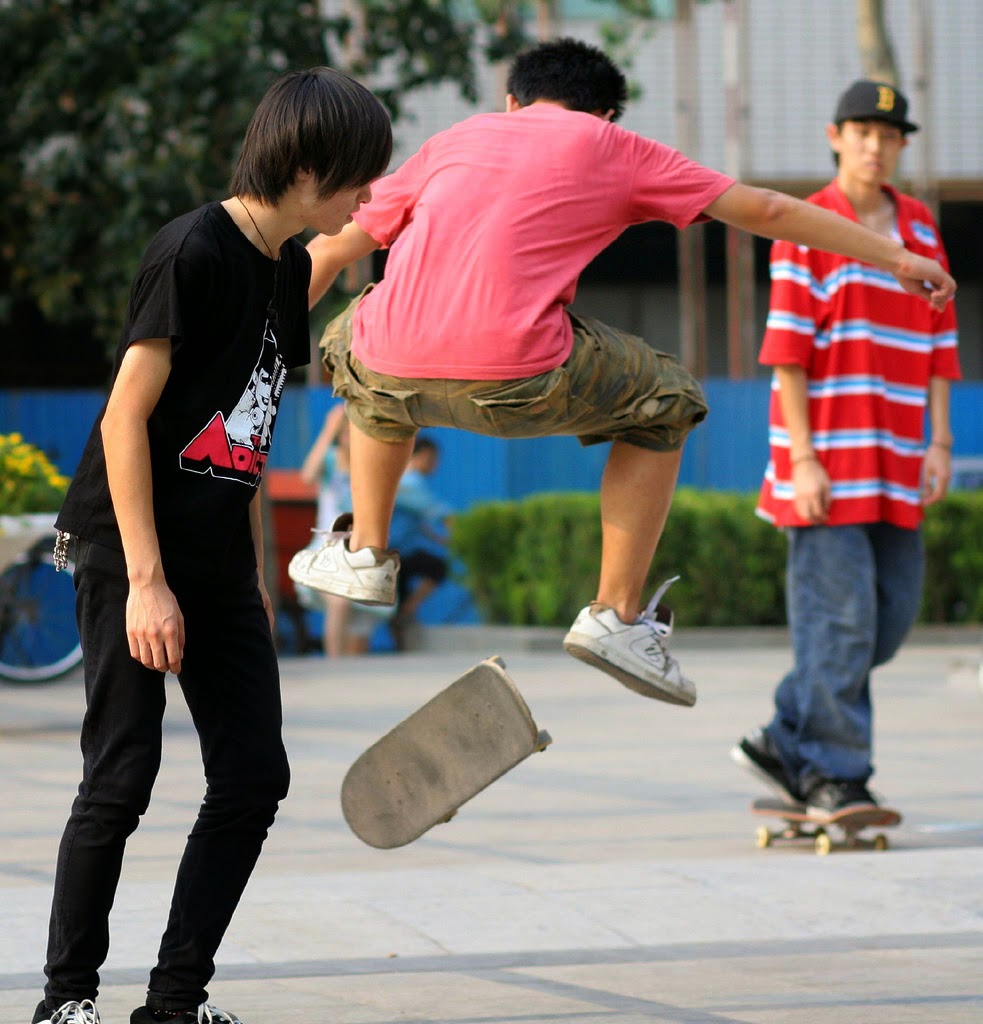
"Manners ... are different from etiquette because they are not put in a closet, like fancy clothes, for special occasions. Your speech, actions, posture, attitude toward friends and neighbors, behavior at home and at school, driving habits, and telephone habits all call attention to the general way in which you think about yourself in relation to the rest of the world. These are your manners." Dick Clark on Teens, Manners and Friendship

Jealousy

Teach your teen to be happy for their friends’ achievements.  Never feel jealous or compare themselves to others.  They are different and your teen has many talents, too.  Focus on the positive.


By Canadian Contributor Maria Doll ~ An etiquette coach, Maria has been conducting personal consultations, workshops, camps and seminars for children, teens and young adults since 2009.  Her etiquette program and company Leadership Matters has been featured in print, radio & television media. 

Etiquette Enthusiast, Maura J. Graber, is the Site Editor for the
Etiquipedia© Etiquette Encyclopedia

Monday, August 25, 2014

Amy Vanderbilt on Etiquette Books

Amy Vanderbilt had style and exhibited a grace rarely seen today. The fact that she referred to herself as an "Etiquette Adviser," and not an "Etiquette Expert" (as so many people deign to do today) makes her special to those of us at Etiquipedia. Though we have all taught and studied etiquette for many years, and in some cases, many decades, the majority of us consider ourselves "Etiquette Enthusiasts." Even Amy Vanderbilt admitted that she had to  occasionally use her own book for reference, as there is just so much information one retains and she could remember, "only those details that have, or have had relevance to" her own way of living.
"Who needs a book of etiquette? Everyone does. The simplest family, if it hopes to move just a little into a wider world, needs to know at least the elementary rules. Even the most sophisticated man or woman used to a great variety of social demands cannot hope to remember every single aspect of etiquette applying to even one possible social contingency. 
The human mind is so constructed that even if a person were to read through a book such as this from cover to cover he could retain only that information that had interest for him at the time of reading. Consciously, at least, the rest would be discarded as irrelevant to his way of life. But let some new way of living open up for him a move from city to country, a trip to a new part of the world and his etiquette book becomes his reference book, ready to piece out his own store of information.  
You might imagine that the writer of an etiquette book would certainly know everything in it and therefore have no need for it as reference or guide. But even this is not the case. After ten years as an etiquette adviser, four years of writing this book four years of interviewing dozens of authorities in their own fields for material to be incorporated here I, too, can remember only those details that have or have had relevance to my own way of living. If you asked me, for example, some detail of a wedding in a faith other than my own, I might have to refer to my own book. The information is here the result of my research but in the writing of such sections I made no attempt to memorize all these details. However, in this book, I, like you, have such information in simple, complete form all in one place, and it can be readily found if needed.  
The word "etiquette" for all the things I have tried to discuss is really inadequate, yet no other will do. It covers much more than "manners," the way in which we do things. It is considerably more than a treatise on a code of social behavior, although all the traditional information still of value has, I feel, been included in a way that is simple and concise, shorn of mumbo- jumbo and clearly learnable. For we must all learn the socially acceptable ways of living with others in no matter what society we move." Amy Vanderbilt

Etiquette Enthusiast, Maura J. Graber, is the Site Moderator for Etiquipedia© Etiquette Encyclopedia 

Sunday, August 24, 2014

Etiquette's Importance in WWII

Amy Vanderbilt
"During World War II the Government understood the importance of teaching our military men and women some of the subtleties of proper social behavior in foreign lands. Proper American social behavior was not enough. Our soldiers and sailors learned to remove their shoes before entering a Japanese home, or a Mohammedan mosque, or a Buddhist temple. They squatted or sat cross-legged at table and ate out of communal dishes in Mohammedan lands and in various Oriental countries.
They tried to remember certain shibboleths and taboos and what English words could not be politely used in English drawing rooms "bloody" and "fanny," for example. They noted that in England "napkin" or "nappie" often meant diaper; "flannel" meant a washcloth, and "serviette" meant a napkin as it does on the Continent. 
Our truck became a "lorry" or a "van," and our trolley was a "tram," a closet was a "cupboard," and molasses "treacle." "Tea" could be just that or the equivalent of our Sunday night supper. A shower was a "douche" and a tiny toy, a "dinkie," a boutonniere, a "button-hole." To charge something was "to put it down," and to do an errand was "to run a message." Shortly, under military instruction and because it was more convenient, our men and women learned to do in Rome as the Romans.  
If this works under the stress of war, it will work in peacetime. As much as possible, while still identifying ourselves as Americans, we should behave as those we visit behave, not try to take the freest manners and language of our Main Streets abroad." Amy Vanderbilt
Etiquette Enthusiast, Maura J. Graber, is the Site Editor  for Etiquipedia© Etiquette Encyclopedia  

Saturday, August 23, 2014

The 8 Ps and Qs of BYOB Etiquette

It’s up to the patrons to reciprocate that courtesy by following some basic manners when participating in the BYOB practice.
    Have you carefully stored a special bottle of wine for an anniversary or birthday? And are you planning on popping its cork at your favorite dining spot? If you are, please do the restaurant a favor by minding your Ps and Qs while you BYOB.
    

    Most diners, myself among them, feel that the customer is usually right. If I want to eat my dessert first and appetizer last, that’s my business. The restaurant’s business is to serve me what I order, in any order I wish. But when it comes to bringing in a bottle of wine or champagne, the restaurant gets to call the shots as they are under no obligation to do so, and the laws vary wildly from place to place. 

    Generally, the restaurants in states, counties, provinces, or countries where it is legal, will usually allow their patrons to bring their own wine into a restaurant as a courtesy. And it’s up to the patrons to reciprocate that courtesy by following some basic manners when participating in the BYOB practice. The following is a list of etiquette to keep in mind: 

  1. Call ahead of time to check with the manager regarding bringing your own bottle, or check online. Some restaurants may not allow BYOB, or may not have a license to serve alcohol of any kind, or may not have a permit to sell their own, but can serve you yours. This gets very tricky, so if you are traveling, always check ahead of time.
  2. Don’t cause a scene or make a fuss if the restaurant doesn’t allow you to bring your own wine, even if their local ordinances allow the practice. Different insurance companies will advise establishments of possible liabilities and restaurants will take these in to consideration when making policies regarding alcohol, so if you’ve made a reservation and would like to go back to this particular restaurant, keep the reservation.
  3. Ask  about any corkage fees so that there are no surprises when you are handed the bill. Fees in upscale restaurants can go as high as $25.00 or more, per bottle, and will vary from restaurant to restaurant. Some restaurants charge nothing at all. Fees can sometimes change with the time of day and with the day of the week with slower and less busy hours offering the best rates. Ask when you call ahead, to find out if this is a policy that they practice. 
  4. Ask if the particular bottle of wine you would like to bring is already on the restaurant’s wine list. If it is something the establishment normally offers, then don't bring it or choose another wine to bring. It would be extremely gauche to bring something they offer just as it would be to bring your own burger to Mc Donald’s to enjoy, along with their fries and a shake. 
    BYOB if your wine is somehow unique. Don't BYOB just to pinch pennies.
  5. Don’t BYOB simply to save money. BYOB because because you have a special bottle that you’ve always wanted to open, or maybe you have a bottle from your birth year and it you are celebrating your birthday, or you have a bottle that’s more interesting than anything the restaurant offers. BYOB if your wine is somehow unique. If you think the restaurant charges excessive markups on wine, skip that restaurant. 
  6. Tip well, especially if you have made special requests regarding your bottle/s. This might include asking the staff to have the bottle uncorked prior to your arrival to allow time for your Cabernet to breathe, or keeping your White Burgundy chilled to a specific temperature an hour before serving.
  7. Don’t be snobbish if the restaurant’s Cellar Master, Sommelier or Wine Steward wants to chat with you about your wine. If you thought it was special enough to bring in to drink, it will probably arouse curiosity or possibly be a conversation starter. The most gracious of patrons will offer him, or her, a taste.
  8. This shouldn't need to be said, but I have to repeat it often: Please follow all basic dining etiquette while you dine out, especially if you have made special requests of an establishment. It is simply good manners!


Compiled by contributor Maura Graber, who has been teaching etiquette to children, teens and adults, and training new etiquette instructors, for 30 years, as founder and director of The RSVP Institute of Etiquette.  She is also a writer, has been featured in countless newspapers, magazines and television shows and was an on-air contributor to PBS in Southern California for 15 years. 


Etiquette Enthusiast, Maura J. Graber, is also the Site Editor for Etiquipedia© Etiquette Encyclopedia 

Thursday, August 21, 2014

Etiquette of of Al Desko Dining

Up to 75% of workers are estimated to eat lunch at their desks at least twice a week due to  the pressure to achieve more at work in less time, increased pressure on people and the difficulty of juggling work and family life.
Why do employees bring their lunches to eat at their desks, when there are diners, cafes and fast-food places desperate for their lunch break business?  In offices around the world, time-pressed workers can't find space in their busy work days for a proper lunch break, so they eat at their desks, leaving folks munching on snacks or scoffing sandwiches while simultaneously sending off emails at their desks. Dining al desko has become more than just a trend these days. It is now becoming the norm, and there is etiquette for this dining phenomenon.  Here are the top ten etiquette rules to follow:
Leave the fish at home. Nothing smelly should be in one's cubicle.
  1. Don't eat anything smelly at your desk.  This rules out dining on most pickled foods and most fish, along with a host of other offenders, like garlic. If you have to eat a raw onion salad take your lunch to the break-room, the parking lot or the nearest park bench.
  2. Eat quietly please. No slurping, burping, loud crunching or loud munching.
  3. Try to eat when others are out to lunch themselves. Stop eating if a co-worker pauses by your cubicle or stops by your office. People always have to answer a question just as their mouths are filled.
  4. Keep your meal in your own cubicle or office space.  Don't wander around the office while eating. It annoys others and mishaps can happen easily.
    Don't share your opinion of your lunch via noises you may make. Put yourself in a zen-like, private zone... Along with its ping-pong tables and hammocks and free food, über-workplace "Google" now holds a monthly "silent lunch" at its Californian headquarters.
  5. Keep a mirror handy at your desk. Check for stray pieces of food on your clothes, face, or in your teeth.  If you need to remove something from any of those three places, please go to the restroom to remove it.
  6. Don't share your opinion of your lunch via noises you may want to make. Put yourself in a zen-like, private zone. Don't make eye contact with colleagues while eating either. It can come off as creepy.
  7. Pick up crumbs and any other dropped food immediately and pop it into your trash bin. If you eat at your desk often, keep some wet-wipes handy for quick clean-ups.
  8. Don't share your lunch with your keyboard or any other office equipment that may have to be replaced. Clear a space along your desk to eat away from electronics or important paperwork. 
  9. If you spill in the lunchroom or break-room microwave oven, clean it up.  The same goes for the company refrigerator.
  10. Never steal a co-worker's lunch, or any food for that matter, regardless of how good it smells or looks. It is the worst of manners. It is very polite to share however!    
If you have something tasty, and have more than enough, do offer to share.

Etiquette Enthusiast, Maura J. Graber, is the Site Editor for the Etiquipedia© Etiquette Encyclopedia


Wednesday, August 20, 2014

1920's Kids’ Lunchroom Etiquette

"Girls are usually daintier and more easily taught than boys, but most children will behave badly at table if left to their own devices. Even though they may commit no serious offenses, such as making a mess of their food or themselves, or talking with their mouths full, all children love to crumb bread, flop this way and that in their chairs, knock spoons and forks together, dawdle over their food, feed animals—if any are allowed in the room—or become restless and noisy." Emily Post 1922
School Lunch Room Etiquette for Girls and Boys in 1921
"Cleanness of body was ever deemed to proceed from a due reverence of God." — Bacon

1) See that your hands are clean.

2) Avoid rushing into or through the Lunch Room. Walk.

3) When carrying your food to your table, pay strict attention to getting it to its destination in safety.

4) Eat in the Lunch Room,—not in the corridors, nor in the Assembly Hall, nor on the street. Give four excellent reasons for this direction.

5) Eat slowly and noiselessly; don't "feed." Avoid talking when your mouth is full. Take small mouthfuls, so that you may talk without giving offense. Keep your lips closed when chewing. Never use your knife to carry food to your mouth.

6) In the Lunch Room, as elsewhere, sit with your knees together and with both of your feet on the floor, not on the rounds of your chairs.

7) Don't throw paper and refuse into the receptacles provided; drop it there.

8) Avoid boisterous talking and laughing.


The tones of the voice proclaim quite accurately the social background of the boy, the girl, the man, the woman. Her voice was ever soft, gentle, and low,—an excellent thing in woman.—Shakespeare 
9) Keep elbows and wraps off the Lunch Room tables; furthermore, do not sit on the tables.

10) Leave your place in the Lunch Room tidy and spotless, with your chair pushed up to the table.

11) Rise when an older person enters the room; remain standing until your courtesy is acknowledged, or until the older person is seated. (Optional with the teacher in the schoolroom.)

12) Boys, when a girl or an older person drops a pencil, a book, or anything of the sort, pick it up and return it unobtrusively, but with a little bow.

13) Avoid rushing from the room when the bell rings. Walk.

14) Open the door, boys, but let the girls pass out first, whenever practicable. When many are passing in opposite directions, keep to the right.

15) Never laugh at the accidents or misfortunes of others, even if they have a ridiculous side. Nothing shows ill-breeding so surely. He who laughs at others' woes finds few friends and many foes.


Compiled by contributor Gero-Dynamics©

Etiquette Enthusiast, Maura J. Graber, is the Site Editor for the Etiquipedia© Etiquette Encyclopedia 

Monday, August 18, 2014

5 Etiquette Tips to Create a Good Relationship with Your Child's Teacher


Strive to be a good role model in etiquette for your child - "Although character education is a hot topic in schools across the nation, education in manners generally receives scant attention. With growing demands on teaching time, etiquette is rarely a priority. But it might be a mistake to ignore the adage that actions speak louder than words." From Education World, 2010
Now that the children have made the adjustment back into school mode, begin to develop a good working relationship with your child’s teacher.  You are both team players working for the best interest of your child.  Being adversarial only aggravates the situation and your child will suffer from either embarrassment or not getting the help he/she really requires.  The following tips will assist you towards making a good impression.

1. Make a polite effort to open up the lines of communication – If possible, have a face to face introduction with the teacher and your child even before the school schedules a “Meet n’ Greet”.  Exchange email addresses to express any concerns that may develop.  Teachers may give out their home phone numbers to schedule a phone conversation. Please don’t abuse this privilege by telephoning about unimportant topics. Remember that your child is just one of many that makes up a classroom, and the teacher has limited free time available.

2. Respect the parent/teacher conference schedule – Arrive on time and use your alloted time wisely. Your child’s teacher often has more than 25 students in a class, and their families to interview as well. If you will be late for some reason, contact the teacher to reschedule. He/she may not be able to stay longer at the school to accommodate you.

"In 1999, 73% of Americans in an ABC News/World News Tonight poll thought manners were worse than 20 or 30 years ago. Respondents primarily placed the blame on inadequate parenting. They also cited movies and television shows that encouraged children to be less respectful of others. Under those circumstances, it's no surprise that manner illiteracy is rampant in classrooms from coast to coast." From Education World, 2010
3. Don’t place unrealistic expectations on the teacher 
– If your child seems bored or gifted, asking for extra work or special treatment may be unfair until yearly testing is done.  However, if your child has issues like allergies, behavioural problems, or a learning disability, the school needs to know and will make every effort to accommodate his/her needs.
The fine points of acceptable manners will vary slightly from place to place and from decade to decade. Experts agree however, that behavior based on respect is still the ultimate goal. Sadly, too many adults are exhibiting less civility toward one another, and children are unfortunately following suit with their peers and teachers in the classroom, and at school.
4. Reduce chaos in your child's morning – Preparing the night before will make the morning rush less chaotic. Set a structure for your child to follow. Help your child to be prepared each day with lunch made, homework completed and clean clothes to wear.  

5. 
Punctuality is polite – Be punctual for school. Ten minutes before the first bell. This is a good life lesson for your child as it shows respect for people’s time.  Tardy children disrupt their classmates and the teacher in the middle of instructing.  If your child will be late arriving by bus or absent from school, please let the school know in a timely manner.

Working together will mean the greatest success for your child.  Be open to the observations that your child’s teacher may reveal to you in areas of socialisation as well as scholastics that may assist your child.  Keeping a positive outlook will mean a terrific school year for you, your child and your child’s teacher.


By Canadian Contributor Maria Doll ~ An etiquette coach, Maria has been conducting personal consultations, workshops, camps and seminars for children, teens and young adults since 2009. Her etiquette program and company Leadership Matters has been featured in print, radio & television media.


Etiquette Enthusiast, Maura J. Graber, is the Site Editor for the Etiquipedia© Etiquette Encyclopedia

Sunday, August 17, 2014

A Need for Robot Etiquette

          
Hey, wise-guy and show-off robots, news flash: Humans would like you a lot more if you didn’t act like you knew everything all the time. A study conducted by Cornell and Carnegie Mellon scientists found that people respond to robots better if they act less authoritative and use meaningless filler words to soften their communication. “People use these strategies even when they know exactly,” Susan Fussell, associate professor of communication at Cornell University, wrote in a statement. “It comes off more polite.” 

Polite Robot Overlords Will Be More Persuasive 

Baking cupcakes can be as much a matter of social interaction as it is a mechanical exercise. Never is this more true than when your kitchen partner is a robot. Their always-right, ego-deflating advice can be off-putting, reports social psychologist Sara Kiesler and her colleagues from Carnegie Mellon University, in Pittsburgh. But having them employ a different type of rhetoric could help soften the blow.

In one study, Kiesler’s former student Cristen Torrey, now at Adobe, observed how expert bakers shared advice with less-experienced volunteers. She recorded the interactions and extracted a few different approaches the experts used. For instance, “likable people equivocate when they are giving help,” Kiesler says. That is, they say things such as “Maybe you can try X” rather than simply “Do X.” They also soften their advice with extraneous words such as “Well, so, you can try X.”

So Torrey filmed a few of her own scenarios in which either robots or people shared advice with actors pretending to learn how to bake, using various combinations of the language the experts used. Then she asked a new group of volunteers to watch the videos and rate how likable, controlling, and competent the experts were. They found that equivocation, or hedging, made the experts appear more competent, less controlling, and more likable. The effect was even stronger for the robots, suggesting that people find robots less threatening than humans when the robots use humanlike language. Kiesler presented some of these results on 4 March at the ACM/IEEE International Conference on Human-Robot Interaction, in Tokyo.

“I think this is quite important, and most people who come maybe from a more engineering perspective, or computer science or technical perspective, are not paying attention to that,” says computer scientist Kerstin Dautenhahn of the University of Hertfordshire, in England. Dautenhahn works with experimental companion robots designed to help older people with daily tasks. “People don’t normally ask the question, ‘What can we do to make elderly people want to be helped?’ ” she says.

Part of why the volunteers accepted the robots’ advice might be that they were less worried about incurring an obligation or harming their own reputations when interacting with nonhuman helpers. That’s not to say that people can’t build up a relationship characterized by increasingly sophisticated expectations with robots over time. In fact, another of Kiesler’s students, Min Kyung Lee, found that they do. She ran a study with a robot called Snackbot. The 1.4-meter-tall white-and-orange-trimmed robot rolled around an office with a tray of goodies, speaking with office workers and offering them snacks.

Her study sought to understand what factors help a robot build a rapport with humans. Just as in human relationships, she found that variety helped. With half the workers, Snackbot referred to previous encounters, building up a shared social history. Three-quarters of the human participants reported that they liked the pseudosocial interactions. Lee calls that result, which she presented at the same conference last year, her most exciting, since other human-robot interaction studies have found that most people grow bored with robots that repeat themselves. The research was supported by the National Science Foundation.

That’s useful information for coaches, dieticians, and designers of future robotic advisors, such as Autom. Such robots will need to learn to listen well, for starters. At first, Snackbot’s real-world voice recognition was so bad its operators ended up piping its audio to a remote operator, who selected responses from a prerecorded menu of statements. But today artificial intelligence is good enough to allow a robot to interact more independently with humans, says Dautenhahn. Those robots will need to borrow tricks on cultivating relationships and being polite from humans. Kiesler says her next step is to personalize how the robot interacts with each individual, much as an intern might learn to behave differently around a cheerful mentor or a grumpy boss.

Another important step will be to train people to have realistic expectations for their robots. Kiesler says, “It’s always been surprising to me how people assume when a robot speaks that it also thinks.”— Written by
Lucas Laursen for IEEE Spectrum, August, 2014


Submitted with permission by Site Contributor, Demita Usher  of Social Graces and Savoir Faire

🍽️Etiquette Enthusiast, Maura J. Graber, is the Site Editor for the Etiquipedia© Etiquette Encyclopedia