Showing posts with label Breach of Diplomatic Etiquette. Show all posts

Saturday, September 24, 2022

Diplomatic Protocol Crisis of 1887

The English diplomat, accustomed to being second socially only to the Royal family, delayed his courtesy call for months after Hobart, a New Jersey native, snubbed Lord and Lady Pauncefote’s invitation to a British garden party. Washington was entranced with the squabble. Finally, after advice from the crown itself, Lord Pauncefote buckled and paid the first call on Hobart.  

All the fuss over Nancy Reagan’s china and interior decorating at the White House has caused some to urge that official Washington return to an era when leaders wasted little time on questions of etiquette and social standing. Apparently there never was such a time.

The National Historical Society recently recalled the crisis of protocol that gripped Washington 85 years ago. It seems the British ambassador, Sir Julian Pauncefote, and William McKinley’s first vice president, Garret Augustus Hobart, embroiled themselves in a raging public controversy over who should sit next to the President at State Dinners, and who should call on the other first.

The English diplomat, accustomed to being second socially only to the Royal family, delayed his courtesy call for months after Hobart, a New Jersey native, snubbed Lord and Lady Pauncefote’s invitation to a British garden party. Washington was entranced with the squabble. Finally, after advice from the crown itself, Lord Pauncefote buckled and paid the first call on Hobart. Hobart later missed a chance at being President by dying in office in 1899. – San Bernardino Sun, 1982


🍽Etiquette Enthusiast, Maura J. Graber, is the Site Editor for the Etiquipedia© Etiquette Encyclopedia

Friday, July 15, 2022

A Question of Official Precedence

A quarrel which led to a duel originated in London and was caused by a dispute over the question as to which of the gentlemen’s wives should have precedence on social and official occasions. – Public domain image of Count Franz Deym, Austrian Ambassador and Duelist

  Dueling Over a Question of Etiquette 

VIENNA, Dec. 31.– Count Franz Deym, the Austrian Ambassador to Great Britain, and Count de Lutzow, Secretary of the Austrian Embassy in London, fought a duel near this city to day. Pistols were the weapons selected for the encounter. Several shots were exchanged without effect, neither of the men being hit. The quarrel which led to the duel originated in London and was caused by a dispute over the question as to which of the gentlemen’s wives should have precedence on social and official occasions.– The New York Times, January 1, 1891


🍽Etiquette Enthusiast, Maura J. Graber, is the Site Editor for the Etiquipedia© Etiquette Encyclopedia

Friday, August 10, 2018

Gilded Age Diplomacy and Precedence

“The waves of the tempest in the samovar have subsided and the bits of lemon float serenely upon the placid surface of the brewing in eggshell cups. The new matrons, debutantes, daughters and belles may not have known it, but they need never to have fluttered a single flutter or puzzled their pretty brains for a moment... In this glorious country of ours, which we are proud to call absolutely democratic, and to whose private, and semi-private social functions, no rigid lines of dogmatic court etiquette are known, we have declared with vaunting vanity, the social gospel of the national capital is made, hammered, riveted and clinched with fastenings more stern than steel, by the chieftains who surround the President.”

Precedence: The Burning Topic of the Hour at Washington D.C.
Aroused by the Fact That Lady Pauncefote Led the New Year's Reception at the White House – Cabinet Dictates; Society Dare Not Disobey –By a Woman in Official Life at Washington

QUITE a tempest in a teapot it was while it lasted, to certain matrons, debutantes, daughters and belles newly launched upon Washington society, and a flutter of agnation deeper under the surface than it appeared outwardly was the result of considerable nervousness that followed the first official function of the season. That Lady Pauncefote should have led at the New Year's reception in the White House seems a slight incident, but that it overthrew or waved aside the very gospel of Washington society became apparent in the not too silent attitude in which it was subsequently regarded. But it is all over now. The waves of the tempest in the samovar have subsided and the bits of lemon float serenely upon the placid surface of the brewing in eggshell cups. The new matrons, debutantes, daughters and belles may not have known it, but they need never to have fluttered a single flutter or puzzled their pretty brains for a moment.

In this glorious country of ours, which we are proud to call absolutely democratic, and to whose private, and semi-private social functions, no rigid lines of dogmatic court etiquette are known, we have declared with vaunting vanity, the social gospel of the national capital is made, hammered, riveted and clinched with fastenings more stern than steel, by the chieftains who surround the President. The Cabinet dictates, and society dare not disobey. More than that, the Cabinet has swayed its social scepter these many years, and is, in its turn, compelled to defer to the rigidly established rules laid down by court chamberlains in other parts of the world.

If Mrs. Senator doesn't know how her diplomatic guests are to be placed, like as not, they will attend to that matter themselves. For they know, and their courts insist that they shall know, just how to fall in line at the functions. In order, however, that Mrs. Senator may not betray her quandary as a novice, she has merely to read the Cabinet's order and to consult the diplomatic list, which is compiled by the Department of State, in accordance with precedence established on the lines adopted at the Vienna Congress of 1815. 

Herr von Holleben, the German Embassador, has had some little difficulty in explaining that Lady Pauncefote should have assumed first place on the New Year's reception in the White House in the absence of her husband, the dean of the Diplomatic Corps. The suggestion that she occupy the place that Lord Pauncefote would have been in did not meet the approval of diplomats, who would as soon violate an international law as the ironclad rules of their social training and instruction. The idea that the representative of a country really does represent the regimes in power, is apparently quite forgotten at times, in what we may call our national desire to have things “go smoothly.” 

There is a story told of a dinner given in Washington when the wife of the English Embassador was taken in by, or rather assigned to, the escort of the young son of the house, the reason given being that he was the only “heir apparent.” Like most of the stories about precedence, this cannot be verified, but it serves as a capital anecdote to relate. It will be remembered that at the time of General Grant's funeral, there was a most serious discussion anent who should lead, the English Embassador or the Vice President, and it was said the only way to set the difficulty was to let the Embassador ride on the hearse.

 The rule that the foreign Embasaador who has held his office for the longest term of years is the dean, and ranks first, has simplified matters somewhat, for none can be found to cavil at so practical a rule. The rule as to the wife of each Minister is carried out in the same order. The rule that an Embassador or Minister shall always take in to dinner the wife of someone of rank is rarely ever broken. Another of the Washington stories is to the effect that one daring young hostess gave a Minister a place between two young and pretty girls, and when sharply called to task for having done so by some of the women present, replied that she thought “the poor man had had such a hard winter of it, without any fun, she was unwilling to have him go back to his court without one enjoyable dinner, and she “had sent for him before the dinner and asked him what he wished.”

Every hostess needs to know her “Washington” now, for the sharp eyes that are watching the newly launched, especially, are very tenterhooks to she who may inadvertently “put her foot into it.” Social precedence is the grammar, the arithmetic, the algebra of the woman who would, or who must, entertain. ‘Must,’ sounds a bit harsh, perhaps, to the lay mind, but “must” it is, for the laws of the Medes and Persians were no more impregnable than the inflexible edict, backed by the Cabinet, to which even the “First Lady” must yield. Mrs. Roosevelt must hold just so many public receptions; the wives of Cabinet members must entertain at intervals. None has dared defy, or will ever one ignore this requirement.   

The formal, official entertainments are past; but there still remain the semi-official functions, and in these must the statute of social precedence be regarded no less scrupulously. At even a private entertainment, must the rights of diplomatists be observed with the nicest delicacy. Indeed, in the light of the adequate means at the disposal of a hostess for her guidance, an error in this matter would seem to be inexcusable. Of course, the “newly launched” are not supposed to know, offhand or intuitively, the exact seniority of service upon which depends the precedence of members of the Diplomatic Corps. That they may learn, the Department of State in this Government, under which democracy of social relations is fondly supposed to be absolute issues a little book for limited circulation among those who may be called upon to face what would, without its aid, prove to be a dilemma. – San Francisco Call, 1898


Etiquette Enthusiast, Maura J. Graber, is the Site Editor for the Etiquipedia© Etiquette Encyclopedia

Sunday, January 7, 2018

Etiquette and a Majarajah Snubbed

Royal snobs and royal snubs –“The relationship between Queen Victoria and her handsome, young Indian attendant Abdul Karim was deemed so controversial and scandalous by her family members that, upon the monarch’s death in 1901, they scrubbed his existence from royal history ... But why was the relationship so controversial—beyond the interclass curiosity of the Queen of England confiding in a servant—that it warranted full censure? According to historians, Victoria’s family and staff members exhibited prejudice of the racial and social variety, which compounded with jealousy as Victoria became closer with Karim and afforded him privileges including traveling with her through Europe; titles; honors; prime seats at operas and banquets; a private carriage; and personal gifts.” - VanityFair.com 


Why Was an Indian Prince Left Out of a Diplomatic Procession?
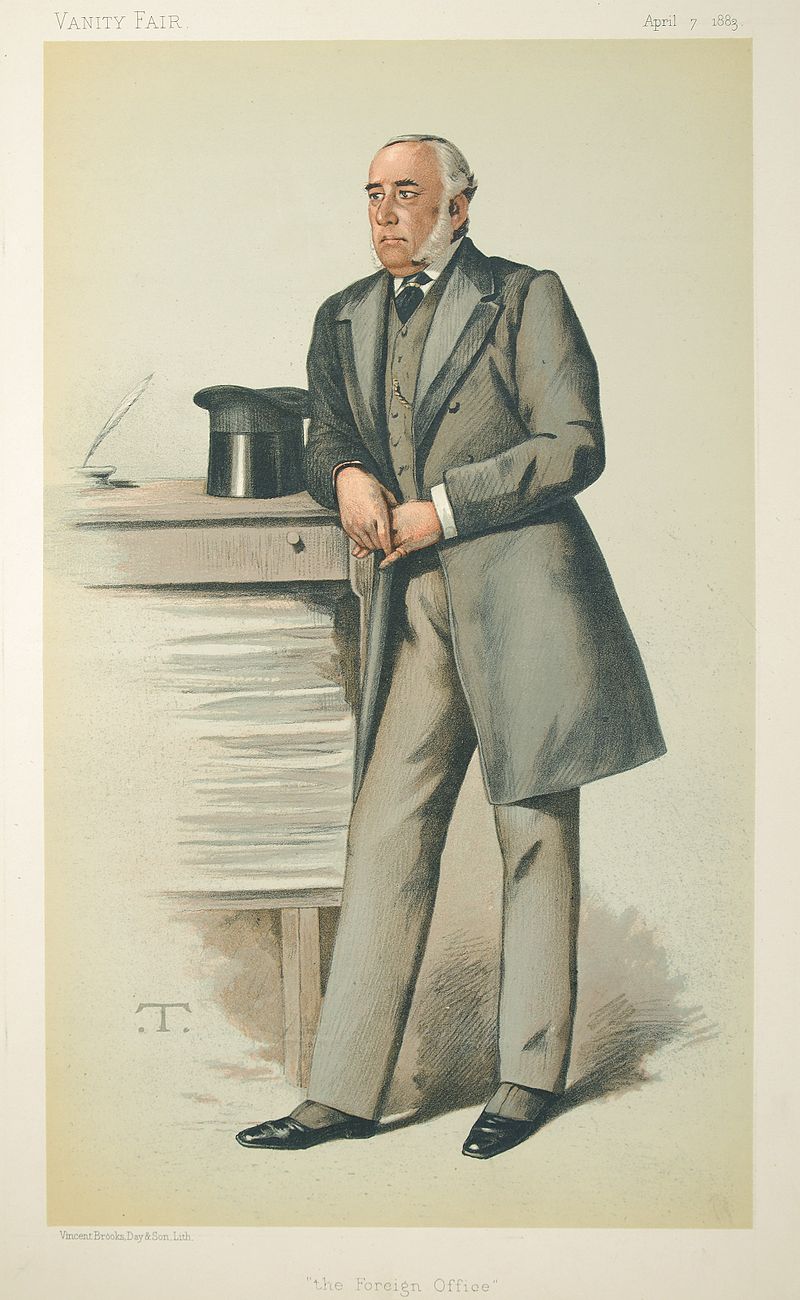
There occurred at the Foreign Office in London, the other day, even what might be called in the diplomatic world an incident. The occasion was the party given in honor of the Queen's Birthday by Lady Kimberley, wife of the Minister of Foreign Affairs. The party was a very numerous one. Experts thought that never before had so many guests been collected in the spacious reception-rooms of the great building in Downing Street. The crush was tremendous. Perhaps the superior sex will form a better notion of it if I say that one well-known lady took up her position in the west gallery against the balustrade and declined to move. When asked why she would not make the grand tour about the quadrangle, she explained that her gown was trimmed with a quantity of very fine old lace, and that she did not care to sacrifice it. So there she stayed. 

As it happened, the spot she chose was near the door of the Royal supper-room, which happens also to be the point where the Royal procession is formed. This procession makes the tour which the lady with the lace gown declined to attempt. The Royalties were many on this occasion and there was a long delay at the start —longer than the number of persons to be marshaled the way they should go would explain. The Embassadors, Ministers and other distinguished persons form part of the procession. It presently became known that a question of precedence had arisen. With the Prince of Wales was the well-known Maharajah of Kuch Behar—he who was such a striking figure in London during the Queen's Jubilee. This Indian Prince, though, I believe, of no very exalted rank among the great sovereigns of the Peninsula of Hindustan, knows his value and desires it to be fully recognized by others. He signified his wish to take place in the procession next alter the English Royalties. 

The Master of Ceremonies was aware, no doubt, that the position was one to which this dusky potentate was not entitled. But he was aware also that Kuch Behar, as he is commonly called, is a favorite with the Royal family, and he thought he had better see what could be done. He approached the Russian Embassador with the remark that perhaps he would not mind if Kuch Behar walked before him. “Indeed I should mind very much,” replied M. de Staal. “Personally, I would give way with pleasure, but as representative of the Emperor of Russia, I must keep the place I am entitled to.” One or two other Embassadors were applied to with the same result—indeed, if one objected the wish of the Indian could not be carried out, and on a question of etiquette the diplomatic body stick together like wax. It ended in the procession being formed without the ornamental presence of the Maharajah of Kuch Bebar. While these negotiations were proceeding, the head of the procession remained ; halted at the place indicated above, just beiore the junction of the two galleries.

The Prince and Princess of Wales, the Duke and Duchess of Connaught, the Princess Louise and others of the family stood in a group. All at once a well-known official of the royal household, in uniform, blazing with gold lace and orders, was seen making his way to the front. As he came near a friend who was standing with his back to the wall at the side of the royalties, this official remarked, in a voice rather louder than is supposed to be suited to royal ears: “It is no easy business to get all the Royalties and Embassadors into their right places.” He was, of course, quite unaware that he had come to the head of the waiting procession and was in the midst of the royalties as he spoke. 

The Duke of Connaught turned round, laughing, and said: “Well, X, I suppose we are very much in the way, but we are doing the best we can.” The Princess of Wales, who had heard, also turned to X with a smiling face and a word of gentle pleasantry. So did one or two others. X, I must say, stood there while he made his excuses, of course, but with dignity, and without appearing to be aware that he was in danger of being led to instant execution, nor was he, nor did he suffer in the esteem of his royal masters either by his indiscretion or by his coolness. The only sufferer that evening was the Maharajah of Kuch Behar, who was left out of the Royal procession.—Correspondent New York Tribune, 1894

🍽Etiquette Enthusiast, Maura J Graber of The RSVP Institute of Etiquette, is the Site Editor for the Etiquipedia© Etiquette Encyclopedia 

Wednesday, September 14, 2016

Romanian Queen's Faux Pas

Officials were busy trying to hush up criticism of the Queen’s violation of diplomatic etiquette in holding a State Dinner here last night without first making a courtesy call on President and Mrs. Coolidge

Queen Marie ‘In Dutch’ 
————————
Already in National Capital 
Gives Dinner, Failing to Call On President and Wife

By United Press


WASHINGTON, D. C., October 19th - The onward sweep of Queen Marie’s American popularity tour hit a snag today. Officials were busy trying to hush up criticism of the Queen’s violation of diplomatic etiquette in holding a State Dinner here last night without first making a courtesy call on President and Mrs. Coolidge. Although her Majesty’s banquet was described by the Roumanian legation as “a family dinner,’’ invitations were sent to the Ministers of Poland, Czecho-Slavakia, Jugo-Slavia, the Charge d’Affairs of Great Britain and France and other officials. 


Critics of the Queen’s diplomatic dinner said her impropriety could have been avoided had she called at the White House immediately after arriving in Washington, the original plan announced by the State Department. With these worries on its hands, the Department was undecided today what reply if any should be made to protests of newspaper publishers against alleged exploitation by the Queen for commercial purposes of this government’s hospitality. — Healdsburg Tribune, 1926


Etiquette Enthusiast, Maura J Graber, is the Site Editor for the Etiquipedia© Etiquette Encyclopedia

Friday, July 29, 2016

Diplomacy, Etiquette and Regret

Nikolai Novikov was the Soviet Ambassador to the United States in 1946 and 1947
They Regret Action on Russian Envoy Case 

Washington, Oct. 15—The State Department said today it, “deeply regrets” any discourtesy shown to Russian Ambassador Nikolai Novikov by U. S. Customs officials in New York, but added that an investigation showed no evidence of intentional discourtesy or other breach of Diplomatic etiquette. —1946


Etiquette Enthusiast, Maura J Graber, is the Site Editor for the Etiquipedia© Etiquette Encyclopedia