Showing posts with label Early Telephone Etiquette. Show all posts

Thursday, September 26, 2024

Early Telephone Etiquette of Costa Rica

The Costa Rican gentleman or lady never answers the telephone — that duty is left to a servant… “All calls are made by asking the operator for the other subscriber. Consequently, putting through a call is sometimes long process —something like diplomatic negotiations.
Costa Rica Is World Leader In ‘Phone Etiquette

CHICAGO, Jan. 3.-Costa Rica is setting the telephone etiquette of the world, according to Frank м. Kenney of the International Western Electric Company, just back after a visit of seven months to San Jose. He says the Costa Rican gentleman or lady never answers the telephone — that duty is left to a servant.

“Costa Rica has absolutely no use for telephone numbers,” said Mr. Kenney. “All calls are made by asking the operator for the other subscriber. Consequently, putting through a call is sometimes long process —something like diplomatic negotiations, particularly if the servant happens to be out of sorts or the telephone operator is not up on all the social registers of the community.”

Virtually all telephone calls in Costa Rica are put through between three and five in the afternoon and very few at night. The Costa Rica business day begins at seven. Eight in the morning is late. Then at 10:30 the shops close for breakfast, to reopen again at 12:30.

Last January fire destroyed the exchange at San Jose and put all the lines out of commission. Mr. Kenney superintended the rebuilding of the entire communication system of the city. — Associated Press ,1924


🍽Etiquette Enthusiast, Maura J. Graber, is the Site Editor for the Etiquipedia© Etiquette Encyclopedia  

Tuesday, October 24, 2023

Insulting Operators is Rude


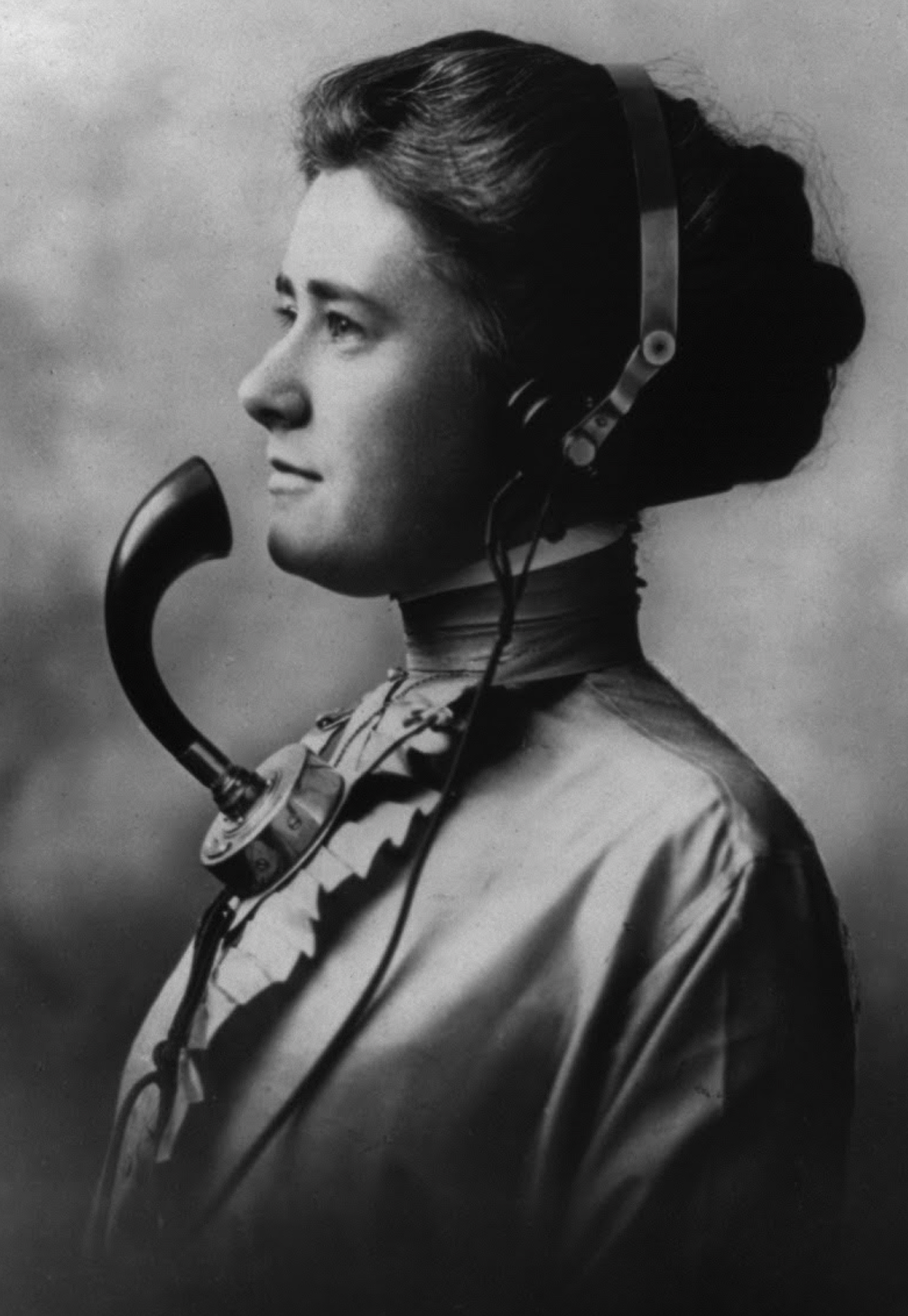
The chief operator and the central-office girls of a telephone company went on strike because the company refused to take out the telephone in the residence of a prominent society woman who persisted in using abusive language toward the telephone girls, although requested and warned not to do so. – Image of Female Telephone Operator Wearing Earphones And A Mouth Piece. Circa 1911 from Pinterest

Prince Insults “Central,” is Given a Fine
Over in Wurzburg they have a proper and wholesome code of ethics with reference to correct treatment of telephone girls. Prince Charles, of Wrede, had the temerity to tell a telephone girl what he thought of the telephone service at Ansbach. For his indiscretion he was fined seven dollars by a court-martial. The Prince admitted he said that the Ansbach telephone office was a hog pen and that the girls evidently were reading novels between the switches. His only plea in extenuation was that he was exasperated over the bad service. 
It was conceded in the court-martial proceedings that the telephone service at Ansbach was superlatively bad. Even so, it was found that the Prince's telephone manners were superlatively bad in directing insulting remarks to the telephone girls. It were well if the same correct code of telephone manners were in vogue in this country. Even though the service at times may be exasperatingly bad, and even though the telephone girl apparently may be neglectful of her duty at times, these things do not excuse insulting, abusive language. 
Over in Wheeling, W. Va., a few days ago, the chief operator and the central-office girls of a telephone company went on strike because the company refused to take out the telephone in the residence of a prominent society woman who persisted in using abusive language toward the telephone girls, although requested and warned not to do so. Merely because a young woman is employed in a telephone exchange, where the public may talk to her in the course of telephone service, does not make it proper, gentlemanly or lady-like for patrons of the telephone to insult or abuse her. She is just as much entitled to considerate treatment as the exclusive Young lady in fine apparel in the most aristocratic home. -Morning Union, 1913


 🍽Etiquette Enthusiast, Maura J. Graber, is the Site Editor for the Etiquipedia© Etiquette Encyclopedia

Monday, February 20, 2023

Early 20th C. Telephone Manners


Antique sterling rotary phone dialers, to help with manicured nails and sanitary dialing — From the book, “What Have We Here? The Etiquette and Essentials of Lives Once Lived, from the Georgian Era through the Gilded Age and Beyond...”

The telephone is a nuisance and no one denies it, but it is a necessity also and no one denies that, either, and one of the greatest conveniences in an age of great conveniences. Some of the disagreeable features connected with it cannot be done away with but must be accepted with as much tranquility as we can master, like the terrific noise which an aëroplane makes or the trail of smoke and cinders which a railway train leaves behind. 

The one who is calling, for instance, cannot know that he is the tenth or eleventh person who has called the man at the other end of the wire in rapid succession, that his desk is piled high with correspondence which must be looked over, signed, and sent out before noon, that the advertising department is waiting for him to O. K. their plans for a campaign which should have been launched the week before, that an important visitor is sitting in the library growing more impatient every minute, and that his temper has been filed down to the quick by an assortment of petty worries. (Of course, no office should be run like this, but it sometimes happens in the best of them.)

Some one has said that we are all like islands shouting at each other across a sea of misunderstanding, and this was long before telephones were thought of. It is hard enough to make other people understand what we mean, even with the help of facial expression and gestures, and over the wire the difficulty is increased a hundred fold. For telephoning rests upon a delicate adjustment between human beings by means of a mechanical apparatus, and it takes clear thinking, patience, and courtesy to bring it about.– “The Book of Business Etiquette,” by Nella Henney, 1922


🍽️Etiquette Enthusiast, Maura J. Graber, is the Site Editor for the Etiquipedia© Etiquette Encyclopedia

Wednesday, August 18, 2021

Edwardian Phone Etiquette

“Is this an instrument of communication or torture?” 


“The universal use of the telephone is another factor in the modification of social customs. Among familiar friends, the little chat over the ‘phone largely takes the place of the informal call. Also, invitations to any but strictly formal functions are now sent by telephone, if agreeable to both parties; though it is still considered better to adhere to the more respectful written form if there is any doubt about the new way being acceptable to the party of the second part. 

While I counsel conservatism in these changes, I am convinced that the new dynasty of wire and wireless is destined to dominate us; and as discovery continues and inventions multiply, the time is near when immediate communication will be had at long range; possibly telepathy—who knows? Or, possibly tele-photography with it—why not? Then, the slow, laborious writing of messages will be as much out of date as the super-annuated stage-coach.

But—not yet; we are still in the process of evolution. It is still safe to heed Pope's famous advice: ‘Be not the first by whom the new is tried, Nor yet the last to lay the old aside.’” –Agnes H. Morton's “Etiquette” from 1900


Etiquette Enthusiast, Maura J. Graber, is the Site Editor for the Etiquipedia© Etiquette Encyclopedia


Friday, May 21, 2021

1920’s Telephone Etiquette

Telephone manners are important, for voice-to-voice courtesy is as important as face-to-face politeness. Impatient “jiggling” of the hook to signal the operator does not flash the small lamp on the switchboard. The right and effective way is to move the hook up and down slowly.


Telephone Etiquette No. 5:
If you talk directly into the mouthpiece with lips a half-inch away, you will enable the one to whom you are speaking to get your message without straining to hear you. –Peru News, 1928


Etiquette Enthusiast, Maura J Graber, is the Site Editor for the Etiquipedia© Etiquette Encyclopedia