Showing posts with label Etiquette and Tact. Show all posts

Friday, July 26, 2024

“Office Etiquette for Business Women”

“Etiquette in an Office” of the day featured in a newspaper.


Good Manners Essential to Success

The great majority of successful business men and women have been and are possessors of strong personalities of the right sort, and by analyzing their climb to success it is amazing to discover how large a part good manners, good breeding and correct behavior have had in helping them to win the goal. There are, naturally, men and women who have reached the top by other than unselfish or courteous means, but they are in the minority and their perch is frequently a precarious one.

Value of Courtesy and Tact 

Courtesy also includes tact, an indispensable attribute if one is to attain even the slightest degree of success in the world. Tact has been occasionally spoken of as a somewhat hypocritical trait, but it need not necessarily be so. A tactful person is one who must exercise good judgment in “sizing up” a proposition, a present circumstance, the temper of a certain group of people or the idiosyncrasies of a particular individual. Such a person will make no move to antagonize, but will instead bring the utmost courtesy to bear in meeting the demands of the occasion. By this consideration, this polite and tactful manner of dealing with the issue in hand, he will be able to win others to his point of view or, at least, to make a favorable impression that can be productive of good results in his future. On the contrary, by rudeness, by a display of selfishness and a lack of the right consideration for the feelings of others one is deliberately closing and double-locking the door to every good the future may hold.

It is not in the business world alone that the little courteous habits we form add to the charm of our personality, for once such habits are formed we shall carry them with us everywhere. They will give us added value in the world outside the office; they will bring us added affection from our friends and even our immediate family. For we have, after all, to live in a very crowded world today we are being jostled on every side by men and women of all sorts and conditions and if we do not want to sink below the surface of the great tide of humanity, if we want instead to raise ourselves a little above it, we cannot afford to neglect anything which will serve to mark us favorably from among those surrounding us. The men and women who do this are those of outstanding personalities.

Opening the Door to Opportunity

Personality is the magic key that will open all the doors to opportunity and success. Of course courtesy alone will not build personality, one may be perfectly courteous and still be negligible; but there is rarely found a man or woman of fine personality who does not also show a courteous con sideration for others, a real kindness in his or her dealings with them and a genuine interest in matters which concern them. Each of us has to come into contact with so many different people every day of our busy lives that we should make almost any effort to draw them to us and to make a good and lasting impression on them. In many offices a woman's greatest chance of success rests with this power she has of making a good impression on the business men and women who have personal dealings with her employer.

Some men and women have been fortunate in being endowed at birth with a personality that all the world might envy; others have to develop personality as they go through life. And there is no royal road to its attainment; but by being, among other things, courteous, tactful and really interested in others, one can learn the full meaning of this undefined word and can enjoy to the utmost the advantages it will procure. – From “Office Etiquette for Business Women,” by Ida White Parker, 1924


🍽️Etiquette Enthusiast, Maura J. Graber, is the Site Editor for the Etiquipedia© Etiquette Encyclopedia 

Monday, August 1, 2022

Tactfully Teaching Table Etiquette

“James,” she said, with quick tact, looking all around among the tables, “did you ever notice that men and women eat differently? When a man finishes a meal he always places his knife and fork across each other, while a woman invariably places them side by side. It's funny, but I've often noticed it.”


A Tactful Girl:
The Way She Gave James a Lesson in Table Etiquette


They were an engaged young couple and were having a quiet dinner while the band played alluring music. The girl was sweet and refined looking and the man big and strong. Her manners were perfect, but his left much to be desired as far as etiquette is concerned. After they had finished their meal an interested observer noticed that the big, wholesome man placed his knife and fork like the crossbones under the skull. With a blush the girl, whose own implements were placed correctly side by side, noticed the break.

“James,” she said, with quick tact, looking all around among the tables, “did you ever notice that men and women eat differently? When a man finishes a meal he always places his knife and fork across each other, while a woman invariably places them side by side. It's funny, but I've often noticed it.”

“Which is correct?” anxiously questioned her fiance while he gingerly toyed with the objects of comment.

“Why, placing them side by side, dear, of course,” she said. “But, then, men are so busy that I suppose they have no time for such details.” And then she became interested in the band leader, while the erring James slyly adjusted his knife and fork according to regulations.

“There's a woman who is going to manage her husband without letting him know it,” observed a sweet old lady who had overheard. “It all depends upon the way you do it, whether you can get a man to come round.” Philadelphia Record, 1905


🍽Etiquette Enthusiast, Maura J. Graber, is the Site Editor for the Etiquipedia© Etiquette Encyclopedia

Tuesday, July 19, 2022

Prepare to Talk and Feast

Lord Ribblesdale held his friend up to ridicule, laughed at his stores of neatly assorted anecdotes, pooh-poohed at his collection of old magazine articles, and in general scoffed at the thought of preparation for conversation.
 —
Public domain image of Lord Ribblesdale


Why Shouldn't People Prepare Themselves to Talk as Well as to Feast?


We remember reading in the Nineteenth Century an article by Lord Ribblesdale on “The Art of Conversation.” Just what was in the article we do not altogether clearly remember. That there was some description therein of the methods of a certain friend of the writer who had attained to some distinction in London drawing-rooms as a conversationalist, we remember very well. 

This gentleman, it seemed, prepared himself for “tea fights” and “muffin-scrambles,” as we have heard them called in England, and for other social functions where tea, women, and conversation were the staple, much as an undergraduate prepares himself by “cramming” for an examination. Lord Ribblesdale held his friend up to ridicule, laughed at his stores of neatly assorted anecdotes, pooh-poohed at his collection of old magazine articles, and in general scoffed at the thought of preparation for conversation.

To those, however, who are much dined and tead, and drawn into the social labyrinths where conversation obtains as the main relaxation, the thought of preparation for conversation— on the part of other people— comes as a very welcome suggestion. When a man goes to another man's house as his guest he usually prepares himself as to everything except his mind. But he goes ofttimes as a whited intellectual sepulcher, cleansed and shining without; dull, tired, eaten up with worries within. Nor is he usually in the least conscience-stricken to go thus mentally naked into the presence of his friends. Just why one should not take fifteen minutes or a half hour in a easy chair to collect one’s self and to prepare one's self to drop honey here and salt there, and thus do his share at feast or function, we know not.

If men and women were so constructed that the business of life could go on interminably and thus be the staple product of conversation wherever they met together, it were well enough to trust to “shop” for all one’s needs. But this is not so. It is not merely agreeable to have change and rest, it is a necessity of human existence, and wherever and whenever man or woman lifts the curtain upon a new scene, or provides a new picture of life, or leads one beside the still waters or into pastures fresh and green, there is a new impetus given to life; and of the innumerable ways in which such inspiration may spend itself for the good of humanity, no one can calculate or determine. 

It may or may not be a heroic part to play, but wielding a sword is not so efficacious in a case of fainting as waving a fan. Just to give a little freshness to the social air is often enough to do a very good deed in a tired world. No one need be ashamed, therefore, we should think, to give himself a little private coaching with this end in view. The beasts rush at their meals and rend and tear and chew and swallow, but this is neither wholesome nor proper for men and women. And yet in some households the gathering together about the table is a sullen, silent affair, where no one feels responsible for cheerfulness, and where, in consequence, the clouds and thick darkness of dyspepsia settle down, without a flash of social lightning or a roar of conversational thunder to break the dull dripping of the monotonous shower. 

We remember very distinctly, on the other hand, an establishment where from ten to fifteen members of a large family gathered daily at the table and where it was a mark of infamy almost upon each one who did not make an effort to add to the general fund of conversation. They were busy people, too— the men busy with affair sometimes of large dimensions, the women busy with the care of a large establishment and the demands of a widely varied social life. They all had cares and disappointments, and some of them very real sorrows but when they met together they gave in, each one, something to the store of general happiness.—Boston Gazette, 1891


🍽Etiquette Enthusiast, Maura Graber, is the Site Editor for the Etiquipedia© Etiquette Encyclopedia

Tuesday, August 18, 2020

Etiquette for a “No” Response

When You Have Trouble Accepting “No” for an Answer

Roll for Yes
“No” comes in many forms throughout your day.  The horn blowing in traffic to let you know you can’t move into the next lane, the cashier who closes his line when you’re ready to check out, the toddler who screams “No!” as you try to put away a toy, the spouse who declines your suggestion of dinner out.

Whenever you think you deserve a “yes,” and know what that looks like, you probably shift into the attitude of, “Don’t take ‘no’ for an answer!”  Or you might become defensive and use “Why not?” as a challenging reply.

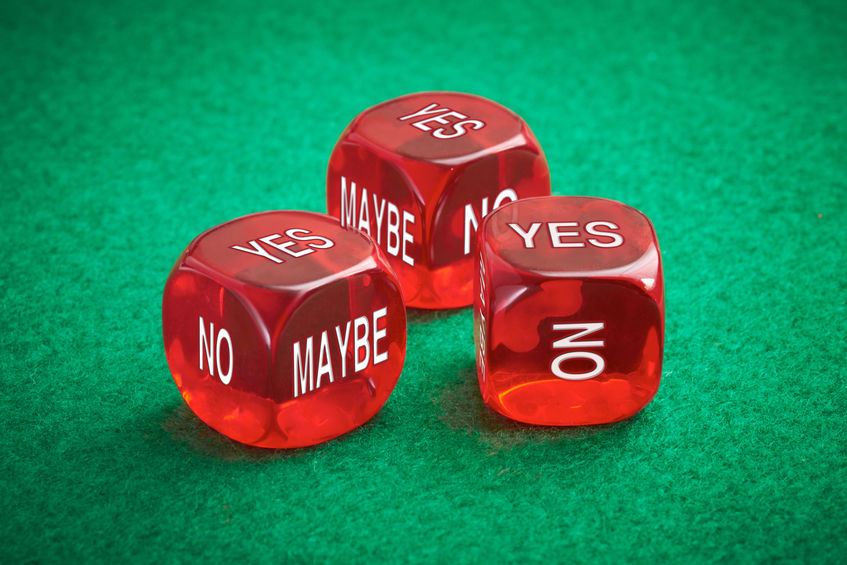
We know when we ask a question that the chance of receiving the answer we want is like a roll of the dice.  Why is accepting “no” such a difficult thing to do?

Early Messages

Intellectually, we know that limits and boundaries make it possible for humans to harmoniously exist together socially.  However, “no” can be an emotionally charged word depending on how you learned it as a child.

“No” can represent protection or safety as in, “I’m telling you no for your own good.”  But it can also present the message that you are a bad person, you can’t do anything right, or you are being rejected. 

Think of it this way: if you ever passed notes in school that read, “Do you like me?  Yes or No” and you received multiple notes back with “No” circled, it’s no wonder you have issues with the word as an adult.

Accepting Graciously

Etiquette, at times, asks that you set personal issues aside to do what is right in that moment.  One of these times will be when you are told “No.”

In that moment, you are called upon to accept the answer graciously:
  • Make eye contact with the person who is saying no or delivering negative feedback directly.  Keep your eyes and face relaxed.
  • Acknowledge with a simple, “Okay,” or an acknowledgment that it’s been said.
  • Ask for the reason if you don’t understand.
  • Really listen to what’s being said and remember to breathe.  
  • If it’s the right time and place to disagree, do so, or wait until later to have further discussion.  
Accepting “no” doesn’t necessarily mean the subject is closed.  If you’ve calmly received negative feedback at work, ask to set up a time when you can learn more about how you can improve.  After good use of the interim time, come prepared with your own ideas for improvement to discuss in the follow-up meeting.

In the case of personal situations when you are told “no,” understand that everyone needs boundaries.  Just as you protect yourself with personal boundaries, others do as well.  The “no” may not be all about you.

Ensuring Your “No” Can Be Accepted

Learning to gracefully and appropriately accept “no” for an answer is an etiquette-ful way to help others be more likely to say “yes” to future requests.

One way to pay it forward and help others accept your “no” is to deliver it respectfully and considerately.  You can do this by saying “yes” in some form before you say “no.”
  • If your next-door neighbor asks for help with a garage sale and you really don’t want to take time away from your day off, be appreciative that she asked you.
    “Cecilia, it’s nice of you to think I would be capable of this and thanks for asking.  I’m pounding out my entire set of lesson plans for next week so, unfortunately, I am going to have to decline.” 
  • Your boss has given you a second big assignment and you know that there isn’t going to be time to get it done.
    “Mr. Johnson, of course I’m ready to take on the task you’ve given me, and I also have the Porter project deadline to meet.  Which one should be my focus to finish by Friday afternoon?”
  • A person you’ve had one date with takes the fun evening as a sign that you’re ready to go out with him again soon, but you really don’t want to go so fast.
    “John, thank you for a very nice time.  I’m flattered that you want to go out again soon, but I’m not ready to go forward so quickly right now.”   
Etiquette is about being sensitive to time, place and circumstances.  The skills we learn as children can be fine-tuned as we gain self-command and grow into the people we are meant to be.

It is necessary to say “no” sometimes.  Keep in mind that how you say it can determine how well it is accepted.  The word “decline” is a softer version of the word “no,” or you might substitute with an appropriate phrase.

But however you choose to say it, you have a right to your own decision.  And, from an etiquette standpoint, you are obligated to accept the decisions of other people.


Contributor, Candace Smith is a retired, national award-winning secondary school educator, Candace Smith teaches university students and professionals the soft skills of etiquette and protocol. She found these skills necessary in her own life after her husband received international recognition in 2002. Plunged into a new “normal” of travel and formal social gatherings with global leaders, she discovered how uncomfortable she was in many important social situations. After extensive training in etiquette and protocol, Candace realized a markedly increased confidence level in meeting and greeting and dining skills and was inspired to share these skills that will help others gain comfort and confidence in dining and networking situations. Learn more at http://www.candacesmithetiquette.com/


Etiquette Enthusiast, Maura J Graber, is the Site Editor for the Etiquipedia© Etiquette Encyclopedia


Tuesday, March 3, 2020

Elements of a Winning Personality

“Tact in dealing with persons and situations and open mindedness are other cardinal virtues to insure an agreeable personality.”  — Professor I. S. Westerberg was in demand throughout the county as a speaker on problems of educational interest, and was the President of the Education Professors of the Colleges and Universities of Southern California.

 Sarcasm may win us laughter, but not friends,” he stated. “Tact in dealing with persons and situations and open mindedness are other cardinal virtues to insure an agreeable personality.” Another important element is a sense of proportion, including a sense of humor, accessibility though not “gushiness,” confidence and self-reliance, attractiveness of manners, freedom from idiosyncrasies, which interfere with effectiveness, idealisms and ‘genuiness,’ “that translucency of character that attracts people and makes them trust implicitly.” The necessity of vitality was emphasized, Professor Westerberg quoting the late Charles Frohman who said that an artist’s life depended on vitality. Vitality means supreme ability and vibrant energy, although not necessarily beauty. — San Bernardino Sun, 1932


Etiquette Enthusiasts, Maura J Graber, is the Site Editor for the Etiquipedia©️ Etiquette Encyclopedia 

Wednesday, September 4, 2019

Legacies of Lords and Their Queen

Lord Stanley, the 17th Earl of Derby, was a Conservative Party politician in the United Kingdom. He was a British soldier, diplomat, and racehorse owner. He was twice Secretary of State for War and also served as British Ambassador to France. His father, also “Lord Stanley” and the 16th Earl of Derby, was the sixth Governor General of Canada, and gave Canada a treasured national icon, hockey’s Stanley Cup.

On the late Lord Derby – The man who was the life and soul of the Conservative party in England for years was in private life one of the most genial and childlike of men. To the last, his spirit of natural gayety never left him, and his wife was, as it were, the shadow of himself. A story was current in London society about this characteristic buoyancy of his, and his son’s no less characteristic ponderosity, not to say boorishness. Dining with the Queen one day, he had been speaking of light and amusing matters, entirely sinking the statesman in the polished man of the world, when the Queen, during a pause in the conversation, suddenly asked him his opinion on a certain political matter then before Parliament. 

He gave it at once, whereupon his royal hostess, seemingly very much amused, said to him, “Lord Stanley (his eldest son now Lord Derby, and a very able politician) was dining with me the other day, and I asked him the same question, which he answered very differently; so I said to him, ‘Your father does not think so.’” ‘No, ma’am,’ he said very gravely, ‘I know it; but my father, ma’am, is a very sanguine man.’” Lord Derby laughed, and, assuming all his son’s cumbersome manner and cumbersome, guttural speech, said with a roguish twinkle in his eye, “And my son, ma’am, is a very cautious man.” 

This anecdote is a capital illustration of the oral characters to whom it refers, the Queen delighting and having great tact in drawing out her guests by judicious little remarks of her own. Thus those Windsor dinners, despite the very strict etiquette of the English court, were skillfully shorn of their tedium, and rendered a pleasant remembrance to all who partook of them. That, however, was before Prince Albert’s death. 

In his own house in St. James’ Square, London, Lord Derby was peculiarly charming. Indeed, he was more charming than absolutely clever, yet it was so strange to think that the same man who at the informal meal of luncheon (of which, unlike many men, he was very fond) could so sparkle with harmless vivacity of spirits, was the same whom other men, cleverer than himself, could, listen to without wearying for a whole night in the House of Lords. 

Sometimes at dinner, when his son was present (which never happened except under moral compulsion), he would purposely start a heavy argument, and keep up a close fire of political repartee with his solemn younger self, to the immense but suppressed amusement of his guests, while Lord Stanley would fall unconsciously into the trap, and miss the kindly satire of his father’s imitative voice. Then after awhile, the elder man would drop the argument as if weary of it, and conclude thus: “But then, Stanley, you are so much older and wiser, and know things so well. You must be right.”— Lady Blanche Murphy, in the October number of Lippincott's Magazine, 1872


Etiquette Enthusiast, Maura J Graber, is the Site Editor for the Etiquipedia© Etiquette Encyclopedia 

Wednesday, August 14, 2019

Etiquette and Fortunes Told

“What if you see indications in a palm that the owner of the hand will die or incur some other awful misfortune at an early date?” The lady answered that in such a case she always dissembled, and she led me to understand that it was a, matter of professional etiquette among really conscientious palmists not to make known the truth when it was of such a nature that to impart it might be dangerous.  – Reading palms, tea leaves, cards and consulting one’s planets through astrology, enjoyed great popularity as social pastimes in the last few decades of the 19th century and early decades of the 20th century. These pseudosciences, along with Tarot cards and other forms of divination, were promoted in most etiquette books from the late 1800’s. Sadly, the art of tactfully giving one’s social circle any of one’s terrible predictions of “doom and gloom” seen in the palm, a crystal ball or cards, was never mentioned.


Philosophy of Palmistry - Logic Wasted on Those Who Consult Fortune-Tellers

Last week a poor egotistical creature, who had been employed as a barmaid, drowned herself, chiefly, as would seem from her letters, on account of the sinister predictions which she read in her palm, combined with her ‘‘planets.” No doubt this girl was weak-minded, if not actually insane, but there is a good deal in her case worth thinking about, says a writer in London Truth. Some years ago, when I conducted some researches into palmistry with the assistance of a lady who claimed to be an expert in that craft, I put the question to her: “What if you see indications in a palm that the owner of the hand will die or incur some other awful misfortune at an early date?” The lady answered that in such a case she always dissembled, and she led me to understand that it was a, matter of professional etiquette among really conscientious palmists not to make known the truth when it was of such a nature that to impart it might be dangerous. 


This is all very well but no one can prevent people who dabble in palmistry or astrology or other occult means of reading the future from discovering their own fate for themselves. Those who discover by such means that the outlook for them is very black may not all commit suicide, like the unfortunate barmaid, but such knowledge is bound to have an injurious effect on all but persons of the toughest moral fibre, and persons of the toughest moral fibre, I may remark, are not in the habit of dabbling in the occult sciences. As a rule, fortune-telling in its various shapes, is chiefly denounced as a swindle and a means of obtaining money under false pretenses, but I question whether the moral mischief which may result from efforts to ascertain what the future has in store for us may not be far worse than any trifling financial loss. 

Nothing is more certain than it is to the advantage of mankind on the whole act to know the future. In saying this, I do not lose sight of the fact that it would be a profitable thing to many to know, for instance, who is going to win the next year's Derby, or the price at which any particular stock will stand at the end, of the next account. That knowledge, however, can only be profitable so long as it is in the exclusive possession of one or two individuals. If it were made accessible to all, the knowledge of the future would cease to have any more value than the knowledge of the past. On the other hand, the knowledge of the coming misfortune —if it is so preordained that it can be predicted—can only have a demoralizing effect, and on the whole, life has generally as much of the unpleasant as of the pleasant in store, for the majority of humankind. – San Diego Union News, 1899


Etiquette Enthusiast, Maura J Graber, is the Site Editor for the Etiquipedia© Etiquette Encyclopedia 

Friday, March 16, 2018

Etiquette for the Uncomfortable

Sometimes people just want to dig into your personal business, or think they're being helpful by patronizing you. 


Dealing with an Uncomfortable Subject

I've said it before: humans are unpredictable. And interacting with our fellow humans can place us in unpredictable situations that challenge our behavior. Like when you're having a conversation with someone and that person all of a sudden brings up an uncomfortable subject. Maybe she forgot the hints you've given that you don't want to discuss it. Or maybe he is trying to get a reaction from you. Either way, your first reaction may be to cut and run. Or to react defensively. But neither of these will resolve the situation appropriately.

The Games People Play

Aunt Sally knows that you don't wish to discuss your relationship status. Being single during the holidays gets to you sometimes. And yet, as she does nearly every year, at Thanksgiving dinner she pipes up, “Has the marriage bug stricken you yet?” Almost worse than the invasive question is that you know she has a hidden agenda. She’s always wondered about your lifestyle leanings.

Or maybe your co-worker grimaces every time you use up-talk in his presence. Sometimes he says, “Really?” You try to pay attention in order to break the habit, but you're also very tired of feeling scrutinized in most conversations. Does he want a reaction from you? Or is this his way of helping you break the habit? Does he really just forget that you’ve asked him before not to bring up this topic?

These, or similar situations are common. Sometimes people just want to dig into your personal business, or think they're being helpful by patronizing you.
In the past you have tried changing the subject directly, laughed it off, looked away and pretended you didn’t hear, or brought someone else into the conversation with a fresh topic. Now it’s on the line. You are being confronted with a situation that requires tact and direct solution. And in the company of others.

Take Your Stand

You have every right to stand up for yourself when you feel put upon or are unfairly pushed into the spotlight.

To deal with similar scenarios as with Aunt Sally or a co-worker, relax your face, put on a friendly (not smirky!) smile, and say with an even tone:
“Aunt Sally, why would the answer to your question be of interest?”

Or

“Jonathan, is perfecting my speech habits a top office priority?”

Each of these responses will put these folks on the spot. And as there is no place for them to go without losing dignity, they will probably sputter and you can easily move on.


To recap - follow these three steps to stand up for yourself:
  • Keep agitation and anger in check.
  • Confront the person in a friendly, but firm, manner.
  • Verbally respond by getting straight to the heart of the matter. Keep it short - you don't want to talk about this subject.

You also don't want to get pulled into a long, private conversation afterwards. So if an apology is issued, you might respond with: 
“Aunt Sally, thank you. I appreciate your words. Let’s head on back to the kitchen and get on with cleaning up. We can drop this subject forever now, can't we?”

Or, 
“Jonathan, it’s ok. We both have so much to contribute and we’re going to do just that! Let’s walk down the hall and see if Mary has time to review our project.”

In personal and professional communication, truth-telling should be a way of life. But there are some things that, for whatever the reason, you do not want to talk about. And that’s perfectly fine - you always have a choice.

Just remember that you can be honest and kind simultaneously with ruffling everyone’s feathers.

Contributor, Candace Smith is retired, national award-winning secondary school educator, Candace Smith teaches university students and professionals the soft skills of etiquette and protocol. She found these skills necessary in her own life after her husband received international recognition in 2002. Plunged into a new “normal” of travel and formal social gatherings with global leaders, she discovered how uncomfortable she was in many important social situations. After extensive training in etiquette and protocol, Candace realized a markedly increased confidence level in meeting and greeting and dining skills and was inspired to share these skills that will help others gain comfort and confidence in dining and networking situations. Learn more at http://www.candacesmithetiquette.com/

Etiquette Enthusiast, Maura J. Graber, is the Site Editor for the Etiquipedia© Etiquette Encyclopedia 

Wednesday, January 24, 2018

Etiquette, Social Graces and Locality

The sloppy woman, hunched over with her elbows on the table is obviously unaware how bad she looks. The woman on the right will need tact to break herself from the acquaintance.  – “It has sometimes happened that undesirable residents have invaded good neighborhoods—it requires time to make discoveries of that nature —and kind-hearted women are frequently led into an embarrassing intimacy. It must be broken, of course, but the woman passes through the experience successfully must be a woman of tact.”

More of “Betty Bradeen’s Daily Chat”

Etiquette is largely a matter of locality—politeness is an important department of everyday life. Among “fashionables” etiquette is a finicky list ot details for which girls are trained, and to which new members of the fashionable set come straight from the polishing hands of persons who are versed in the ways of that particular set. In middle-class localities there is a varying degree of etiquette, and in lower circles formality is entirely dispensed with. 

Kindness prompts one to call upon new arrivals in a neighborhood and if the call is not returned, or objections are found to prolonging the acquaintance, the matter may be allowed to settle down to a pleasant exchange of greetings at accidental meetings. The cut direct is a form of rudeness that is never excused, save on the ground of personal grievance. It costs nothing to be agreeable, and saves much in the way of unpleasant, feeling. 

It has sometimes happened that undesirable residents have invaded good neighborhoods—it requires time to make discoveries of that nature —and kind-hearted women are frequently led into an embarrassing intimacy. It must be broken, of course, but the woman passes through the experience successfully must be a woman of tact. I have seen it done by absence from home or a period of exaggerated invalidism—I have also seen it done without a thought of injured feelings and the hatred they are capable of engendering. Kindness prompts assistance to neighbors and friends in time of trouble. A timely answer to letters, prompt acceptance of invitations and immediate notification of inability to accent or keep an engagement. The hostess who is kept on the anxious seat without good reason is badly treated, and would be justified in meting out proper punishment. 

There is one point where general carelessness is shown – few of us even try to be prompt in meeting appointments. In the lobby of any playhouse, one may always find men and women anxiously awaiting the arrival of tardy companions, and my own experience holds numerous occasions where the opening number of concerts was entirely lost and the first act of plays so nearly, so that the thread of the plot was hard to pick up. There may be an occasional good reason for tardiness, but the bulk of it is caused by sheer carelessness or indifference. Men are the real victims, because women who are lax expect to find the same fault in members of their own sex – but men are martyrs from choice, as a systematic course of neglect would reform the whole world of women. – Sacramento Union, 1912

Etiquette Enthusiast, Maura J Graber, is the Site Editor for the Etiquipedia© Etiquette Encyclopedia
Thursday, September 10, 2015

Etiquette and the Unfamiliar

It's sad, but true; People will judge you by how you stand, walk, talk and evidently, how you eat your celery or oysters. So it is good to learn all the etiquette and manners one can, in preparation of social success.


The prettiest face in Christendom will not counteract glaring signs of ill-breeding. I can call to mind a perfect specimen of young womanhood who came from the heather fields of Scotland to a city famed for its culture; She was a joy to the eye, healthy, sweet, young and gifted with that greatest of all blessings — style. As you might imagine, masculine attention awaited her at every turn, and among her admirers was a wealthy bachelor, who gave a dinner in her honor.
 
The girl had one other gift that I forgot to mention — she talked very little, and was thus able to hide many deficiencies in education. Her great beauty would cover up minor faults, naturally. To the dinner, over which I would not dare say how much time and thought had been poured by the host, went this girl and her married sister. It was perfect in every detail and the guest of honor did it credit by her irreproachable toilet. 
Amongst other good things out of season was celery, which, when passed to the young woman, was accepted as a matter of course, although she had never seen a piece until that evening. She calmly ate the leaves and discarded the succulent stalks, while her host was simply helpless from amazement. 
He ate little or nothing, was uncommonly silent all through the meal, and ended his attentions when he deposited the girl and her chaperon at the outer door of their home. She wondered at the falling off, but never knew the reason— that she had cured him of his infatuation by a bad break which, everybody noticed.
Look for etiquette clues and cues from others who are socially welcome everywhere. You'll find that grooming before dinner, away from the table, makes a much better impression on others. As does watching how hosts and hostesses use their dinglehoppers.

Two years later I met her again, still healthy and pretty, still stylish, but with a tinge of coarseness in her manner which savored of companionship somewhat lower in the social scale. She had drifted downward simply because she did not possess tact enough to make the most of her advantages, and had grown bitter with the change. You see, she was not the least bit clever, despite her ambition. She could not adapt herself to circumstances — those in which a kind fate had placed her.
 
She ought to have avoided strange food, like celery, until she had learned something of it: she should have been able to assume good manners by imitating those near her. Lack of this kind of cleverness deprived her of worldly advantages to which her stock of good looks entitled her, yet she did not seem to be able to avoid the vulgarity which is now her portion. 
In contrast to this, I can cite the case of another girl to whom nature had been unkind. She had not a single personal charm outside of small and delicately formed hands and feet, both of which were made much of, by the way. As compensation for her ugliness she was given a brain which landed her at the top of the line of fortune's favorites, and she is now enjoying the fruits of it. I do not think more than one story will be necessary to give an idea of her nature. 
She was dining with a number of state dignitaries who were being entertained on shipboard. It was a brilliant occasion, and the opening course of the elaborate dinner was the usual plate of oysters. She took one and suddenly realized that it was not all it should be. Just then a prominent man at her right turned toward her with a remark which called for an answer, and all hope of getting rid of the oyster except by way of the throat was gone. It required some will power to avoid a breach in good manners, but it saved her from something far more unpleasant than the flavor of a bad oyster— the sacrifice of a position she was striving to hold against heavy odds. 
It was by just such means that she realized her ambitions and became an honored member of society, not the little circle of 400 or so fashionable and wealthy folk, but the big, big world of refined men and women. By tact she won, by tact she will retain her hold upon the world. –By Mrs. Martha Taft Wentworth, in San Francisco Call, 1901


Etiquette Enthusiast, Maura J. Graber is the Site Editor tor for Etiquipedia© Etiquette Encyclopedia