Showing posts with label Asparagus Etiquette. Show all posts

Tuesday, January 13, 2026

Famous Faux Pas in History

                       A Second Debut Article from 2014            

                                                            
   Former U.S. President George H. W Bush 

1. George Bush senior may hold the record for the most embarrassing behavior at a state dinner. In 1992, the former president vomited, then fainted, after experiencing sudden and violent gastric distress during a state dinner in Tokyo. Unfortunately, he vomited — as the news reports put it – “copiously” into the lap of then Prime Minister Miyazawa. Mr. Bush, formerly with the diplomatic corps, was always a model of gentlemanliness, manners and propriety. His mortification the next day upon seeing the press reports of the mishap must have been horrific. One writer wondered, "Did Japanese hardliners harbor suspicions that the presidential sickness had been no accident?" After all, 48 years prior, Bush had been shot down by the Japanese while trying to torpedo one of their warships. 
                                    
                                      José María Velasco Ibarra 
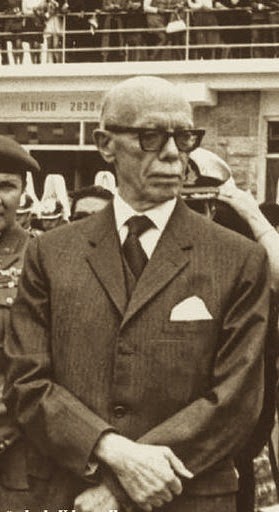
2. José María Velasco Ibarra was President of Ecuador five different times, but sadly, he was always being deposed. On one occasion, he turned up at an embassy reception. Accounts on this vary. He either vomited over the West German ambassador or he urinated in the punch bowl. According to one version of the story, he actually did both. The army immediately deposed him for having “compromised the dignity of the Republic.” 
                  
                    Former British Prime Minister Harold Wilson 

3. The White House state protocol took a holiday it seems, when Prime Minister Harold Wilson visited Washington in the 1960s. It was at a time when the sun appeared to be setting on the British Empire — colonies everywhere were clamoring for independence, it was post-Suez canal, there was the free-falling pound, not to mention labor strikes. Upon arriving at the White House for the formal welcoming ceremonies, Wilson pointed out to then U.S. Chief of Protocol, Jimmy Symington, that two of the Union Jacks were flying upside down — the international sign of distress. The next day, the Washington Post newspaper ran an enormous photo of the flags with the caption, “Oops!” 
      
These people are dancing the Viennese Waltz. They are not dancing to the Austrian State anthem. 

4. As the story goes, former British Foreign Minister George Brown was at a state dinner in Vienna in 1966, and after enjoying some wine, he turned to "an exquisite creature in violet" sitting beside him, upon hearing the orchestra strike up a tune. Saying, “Madame, you look ravishing. May we dance?” The exquisite creature in violet turned to him and said, in perfect English, “No, Mr. Brown, for three reasons. Firstly, this is a state dinner, not a ball. Secondly, were this a ball and not a state dinner, this would still be the Austrian state anthem, and not a waltz. And thirdly, were this a ball and not a state dinner, and were that a waltz and not the Austrian state anthem, I would still be the Cardinal Archbishop of Vienna.” 

                                        
       Polish leader Lech Walesa was unfamiliar with artichokes.

5. When Polish leader Lech Walesa visited Queen Elizabeth II at Buckingham Palace, he was served artichokes. Never having encountered an artichoke before, he began to eat the spiny leaves. The Queen generously offered, “Why don’t you eat the bottom part? It takes so long to eat the leaves.” That’s what's known as noblesse oblige — a French phrase literally meaning "nobility obliges." It is the concept that nobility extends beyond mere entitlements, to acts of generosity and nobility toward those less privileged. 

                                            
Mozaffar ad-Din Shah Qajar did not know the etiquette for eating asparagus. 

6. The Shah of Persia, Mozaffar ad-Din Shah Qajar, visited London in 1902. At the Edwardian Era dinner, he was served asparagus, which was a legume evidently unknown to the occupant of the Peacock Throne. After eating each spear, he would toss the stalk over his shoulder onto the floor. Feelings of anxiety ensued with those dining with the Shāh. Not wanting to embarrass the world leader, and in a show of true diplomacy, everyone else began tossing their stalks onto the floor.


🍽️Etiquette Enthusiast, Maura J. Graber of The RSVP Institute of Etiquette, is the Site Editor of the Etiquipedia© Etiquette Encyclopedia 

Wednesday, April 30, 2025

Gilded Age “Etiquette Testers”

To the uninitiated, a stalk of asparagus is a formidable object. To get it into his mouth without dropping it inside of his vest requires tact. He observes that the popular way is to use it as a bow, with his mouth as the fiddle. It is rarely he ventures on this plan from an exaggerated opinion of its magnitude. And the caution is proper enough, perhaps, as in applying the bow he may miscalculate the exact location of the fiddle, and to offend in this respect, even in the smallest degree, is to disarrange one's nose or mar one's chin.

The Etiquette Testers?

A Discourse by Jim Bailey

We are sorry to see a disposition on the part of some of our exchanges to make jests of asparagus eating. It is by nature a delicious vegetable, but in build it is designed to prove a decided injury to people of infirm digestion, that is, when cooked in the whole, which is the popular way. A man unused to table etiquette should, when invited out, or when at a hotel table, decline such articles that he is confident he cannot dispose of with ease. These are, principally, asparagus, green corn on the cob, chipped potatoes, small game, oranges and stewed fruits whose pits are too large to be swallowed with safety. 

However, he does not always use his firmness, and his plate becomes filled or surrounded by things which are designed to build him up, but which threaten to tear him down, and before them he quakes in fear and confusion. If he does not have the strength to decline them when passed, he must either leave them about his plate as embossed monuments of his folly, or risk his life, and the garments of his neighbor, in their disposal.

To the uninitiated, a stalk of asparagus is a formidable object. To get it into his mouth without dropping it inside of his vest requires tact. He observes that the popular way is to use it as a bow, with his mouth as the fiddle. It is rarely he ventures on this plan from an exaggerated opinion of its magnitude. And the caution is proper enough, perhaps, as in applying the bow he may miscalculate the exact location of the fiddle, and to offend in this respect, even in the smallest degree, is to disarrange one's nose or mar one's chin. 

Then, again, is another danger. The stalk may lap down, causing an entirely new effect to be made; or it may part in the middle from too great an enthusiasm in closing upon it, leaving a very small particle in the mouth, with the handle in the fingers, and the most palatable and larger part inside the vest. 

If taken up as a whole on the fork, and we find that new beginners generally pursue this course, it has to be coaxed and crowded into the mouth with as much demonstration as though it were a dog being put out doors. And when safely housed there is the indigestible end or handle to be disposed of. It cannot be returned to the plate. To be swallowed at all it must be chewed very fine, and in this process all the delicacy and rich flavor of the balance of the stalk is lost in the depraved taste of the tough skin.

A man should become thoroughly familiar with asparagus before going into society with it. Corn on the cob is rather difficult to manage. Perhaps the better way is to cut off the corn, but to the beginner very unsatisfactory results quite frequently attend this operation. It he bears too hard, and he invariably will, on the top of the cob, the lower end, resting on the plate, will suddenly slip from its place, and plough through the dishes with awful ferocity, leaving ruin and desolation in its train. 

Stone fruits should be prepared without the pits, except in the case of cherries whose pits are so small as to readily permit of their being bolted into the system in great quantities. But with prunes and peaches it is an altogether different matter, and unless a man's esophagus is of a most accommodating nature a less alarming disposition of the pits than swallowing them must be discovered. This is a serious dilemma to the diffident man. 

In the home circle they may be spilled out on the cloths thrown under the table. But in society these simple means of escape are frowned upon. If a man has a goodly number of hollow teeth they can be quietly conveyed to such receptacles for the time being, but in absence of this he must either eject them into a spoon and thence to the plate, as society demands, or carry them banked under his tongue until he can get away from the table and slip them back of the ottoman.

Next to asparagus chipped potatoes are a source of well-grounded apprehension in the mind of the man who has given no study to table etiquette. Of a strikingly tempting appearance, he takes them on his plate without realizing the awful danger he is rushing upon. He does understand that a knife is tabooed in lifting food to the mouth, and he resorts to his fork, and begins to think that there are some things which are more easily lifted with the latter than with the former article. 

A chipped potato is such a thing in appearance only. It cannot be speared without breaking it, and to get one across the tines is only to follow it four times around the circumference of the plate, and to have it roll off nineteen out of every twenty times it is secured. A slice of chipped potato, if untrammeled in its movements, will weaken the most powerful intellect, unsupported by experience. So, really, there is nothing in these things to make sport of, but very much indeed to deplore and dream over. –Danbury News, 1877


🍽️Etiquette Enthusiast, Maura J. Graber, is the Site Editor for the Etiquipedia© Etiquette Encyclopedia

Wednesday, September 25, 2024

Etiquette in “Fine Manners”

Squabs should not be gnawed from the fingers - they, must be dismembered with a fork on the plate. – Lobby card for the 1926 film Fine Manners.

“Don't Gnaw Squab From the Fingers,” Advice in Gloria Swanson's Latest Picture

Under the head of “etiquette,” on a poster advertising Gloria Swanson's latest Paramount starring production, “Fine Manners,” which starts showing at the Victoria Theatre next Sunday, the following has been observed:
  • Peas should not be eaten with a knife-sword swallowers are de trop in good society.
  • Don't drink from a finger bowl - someone may have used it before you.
  • Squabs should not be gnawed from the fingers - they, must be dismembered with a fork on the plate.
  • Asparagus should be gently nibbled from the fingers.
  • Don't tuck a napkin under your pearl necklace– you might break the string and lose your beads.
  • If you get a spot on the tablecloth, cover it with your glass.
All of which gives one. some slight idea of the laughs in store for the movie goers, who see Gloria as a little burlesque chorus girl taking a course in “Fine Manners.” Eugene O’Brien plays opposite the star. – San Pedro News Pilot, 1926

🍽Etiquette Enthusiast, Maura J. Graber, is the Site Editor for the Etiquipedia© Etiquette Encyclopedia 

Sunday, November 28, 2021

Gilde Age Food and Drink Etiquette

“The menu of to-day is simple. It consists of oysters or clams, according to season, soup, fish, entrée, roast and vegetables, game and salad, ices and dessert… In New Orleans, boiled shrimps are often served at small dinners. The skins and heads are on, and you remove these with your fingers. After this course, finger bowls with orange leaves are passed around, and the perfume of the water will remove the odor of fish from your fingers.”

I have compiled a list of certain viands, which society does require should be eaten at a special meal and in only one manner…

Breakfast and Luncheon Dishes

Eggs —It is much better form to have egg cups than egg glasses for boiled eggs. Cut the top of the egg off with a dexterous blow of a sharp knife and eat it in the shell with a small egg spoon.

Sugar —Lump sugar if served is always taken with the sugar tongs.

Butter —Butter is only served at breakfast or luncheon. It is passed around in a silver dish, with a little silver pick with which to spear it. Butter plates—i. e., the small round silver or china affairs—have given place to bread and butter plates, which are of china and are somewhat larger than an ordinary saucer. The butter plate of a few years ago was never seen outside of America, and is now destined to vanish from our tables. It is needless to add that butter is never served at dinner.

Radishes —Radishes appear at luncheon. Put them on your bread and butter plate and eat them with a little salt.

Cantaloupes are served cut in half and filled with ice. They are eaten as a first course, a fork being better to eat them with than a spoon. Salt is the condiment to use with them, but sugar is allowable. In southern climates they are sometimes served at dinner as a separate course between the fish and roast. This is a Creole custom.

Grape fruit is served as a first course (vide chapter Diner-Out) at a late breakfast or luncheon. It is eaten with a spoon.

Dinner

The menu of to-day is simple. It consists of oysters or clams, according to season, soup, fish, entrée, roast and vegetables, game and salad, ices and dessert. Sorbets or frozen punches are not served, except at public banquets and hotel table-d'hôtes.

Oysters or clams are placed on the table in plates for the purpose before dinner is announced. They are imbedded in ice and arranged around a half-sliced lemon, which is in the middle of the plate. Oysters or clams are eaten with a fork only. Gourmets say that they should not even be cut with it, and should be swallowed whole. I would not advise any one to try this with large oysters. The oyster fork is the first in the number of the implements placed beside your plate. Condiments, such as pepper and salt, will be passed you. Sauterne is served with oysters.

Oyster cocktails have been in vogue in place of oysters. These are a mixture of the bivalve with Tabasco sauce and vinegar, and they are said to be excellent appetizers. They are eaten with a small fork from cocktail glasses. Bachelors frequently serve them in place of oysters.

Soup —At large and formal dinners a clear soup is in vogue. Your soup spoon will be on the knife side of your plate. Soup is eaten from the side and not from the end of the spoon. The motion of the hand guiding the spoon is toward and not from you. Take soup in small spoonfuls, and use your napkin in wiping your mouth and mustache after each, especially if the soup is thick or a purée. This will avoid the dripping of that liquid from your upper lip. Never after this operation throw your napkin back into your lap with the greasy side toward your clothes, but use the inside of it for this purpose.

Fish is eaten with a silver fish fork. Chasing morsels of fish around your plate with bits of bread is obsolete. Silver fish knives have been put in use, but they are not generally the vogue.

Cucumbers are served with fish on the same plate. Little plates or saucers for cucumbers, vegetables, or salads are bad form.

Sherry is served with fish.

Celery, olives, and salted almonds are placed on the table in small dishes. Sometimes the guests are asked to help themselves, but at formal dinners they are passed around after the fish. Celery is eaten with the fingers and dipped in a little salt placed on the tablecloth or on the edge of your plate. It is also served as an entrée raw, the stalks stuffed with Parmesan cheese. It should then be eaten with a fork.

Entrées require a fork only. Among these are patties, rissoles, croquettes, and sweetbreads.

Mushrooms are eaten with a fork, and served as a separate course in lieu of an entrée.

Terrapin is served sometimes in little silver saucepans either as an entrée or as fish, and again in a chafing dish, and sometimes with salad. It is more of a supper than a dinner plate, and should be eaten with a fork.

Asparagus is eaten, except in the intimate privacy of your own family circle, with a fork. Cut the points off with the end of the prongs. The stalk or white part is not eaten. It is allowable to eat it with your fingers, as I have said, in private. It is served after the roast as a special course. One can not drink champagne with asparagus except at the risk of a severe headache.

Artichokes are served as a separate course after the roast. They should be placed in the center of your plate and the inside tips of the leaves alone eaten. The leaves are removed with the fingers and dipped in salt, sauce vinaigrette, or melted butter. The center of the artichoke is called the heart. The hairy part is removed with the fork, and the heart itself, which is deliciously tender, is conveyed to the mouth with the fork.

Champagne is served in small tumblers or claret glasses. The champagne stem glasses are out of fashion. The dry may be served from the fish to the close of dinner, but the old rule was to give it with the roast, claret with the entrée, and Burgundy with the game.

Salad is eaten with a fork only. In cutting game or poultry, the bone of either wing or leg should not be touched with the fingers, but the meat cut close off. It is better to sever the wing at the joint.

Savories, a species of salt fish and cheese sandwich, is served in England hot, about the end of dinner. They should be eaten with a fork. Undressed salad is sometimes served with them, or radishes, butter, and cheese. This is the only occasion when one sees butter on a dinner table, and this at informal dinners. The salad undressed can be eaten with the fingers. At bachelor dinners and at luncheons cheese is served with salad. The French soft cheeses are the favorites.

Pastry, ices, and desserts are eaten with a fork.

Fruit, such as peaches, pears, and apples, are served frequently already pared. When this is the case, finger bowls are dispensed with, but as yet this is not a general rule. Usually at dessert there is placed before you a finger glass and doily and a dessert plate, with the dessert knife and fork on either side. Remove the glass and doily; put it in front of your plate a little to the right. Fruit must be pared or peeled with a silver knife.

Strawberries are now served with the stems on, and sugar and cream are passed around and are taken on your dessert plate.

Pineapples are eaten with a fork. 

A cracker is used for nuts, and silver picks are brought in with the dessert.

Corn on the cob is a favorite at small informal dinners as a separate course. In polite society you must remove the grains of the corn with your fork or your knife and fork, and never eat it off the cob holding the end with your fingers. By holding one end with your napkin, you can plow down the furrow of the grains with your fork, and you will find that they will fall off easily. Corn is always served, when given in this style, on a white napkin. You help yourself to the ear with your fingers.

Macaroni and spaghetti should only be eaten with a fork. 

In New Orleans boiled shrimps are often served at small dinners. The skins and heads are on, and you remove these with your fingers. After this course, finger bowls with orange leaves are passed around, and the perfume of the water will remove the odor of fish from your fingers.

Black coffee is served after dinner. Milk or cream does not accompany it, except in the country, where sometimes a little silver pitcher of cream is placed on the tray. Coffee is drunk from small cups. 

Coffee and milk are never served during dinner, nor again is iced milk. These are barbarisms. 

Chartreuse, kümmel, curaçoa, and cognac are the liqueurs usually served after dinner.

Claret, in many French families, especially those of the middle class, is placed on the table in decanters. You are expected to help yourself. There are also carafons or decanters of water to mix with the wine. The claret decanters are called carafes. Claret is drunk at the twelve o'clock déjeuner, as well as at dinner.

Tea is passed around in old-fashioned English houses about an hour after dinner. In some places buttered muffins accompany it, but this extra refreshment is only seen now in very old-fashioned houses.

Scotch whisky and hot water or mineral waters are served in country houses before bedtime. — 
The Complete Bachelor, by Walter Germain, 1896


Etiquette Enthusiast, Maura J. Graber, is the Site Editor for the Etiquipedia© Etiquette Encyclopedia

Wednesday, November 25, 2020

Gilded Age Table Novelties


It would be possible to duplicate this arrangement by combining two sizes of bowls already in possession in these days, when many glass closets show shelves well-stocked in this line. 

Many asparagus servers do not serve satisfactorily to the purposes for which they are designed. It remains to be seen if this will. It certainly has a plausible appearance.


A Floral Finger Bowl and One More Sort of Asparagus Dish


Housekeepers will be glad of a look at the two novelties shown. The double finger bowl is a simple arrangement of two bowls, one inside the other, the larger one holding a little water, enough to moisten the few flowers needed to give the upper and actual finger bowl the appearance of resting in a wreath. 

It would be possible to duplicate this arrangement by combining two sizes of bowls already in possession in these days, when many glass closets show shelves well-stocked in this line.


The second novelty is an asparagus rack for serving that rather difficulty-handled vegetable, with a sauce boat at each end, in which may be offered respectively, the plain melted butter and white sauce served with the course.


Manufacturers seem weary of offering improvements and suggestions in the way of asparagus dishes, tongs, forks, and spoons. Many of them do not serve satisfactorily to the purposes for which they are designed. It remains to be seen if this will. It certainly has a plausible appearance. — The New York Times, 1894


Etiquette Enthusiast, Maura J. Graber, is the Site Editor for the Etiquipedia© Etiquette Encyclopedia


Monday, March 30, 2020

Cale-Assiette and French Etiquette

Among the small objects found in flea markets, people are intrigued by funny little glass tabs with notches. Some sellers believe these to be knife holders. But they are not very practical for that use. They are, in fact, cale-assiette or ‘plate holders’ — inclined planes with notches, allowing to slightly raise a plate on one side. What purpose? They were very useful when eating artichokes or asparagus. Very fashionable at the end of the 19th beginning of the 20th century, these objects fell a little in obsolescence, although it is still possible to get some. Manufactured by the majority of large French glass and crystal glassworks, they could also be made of silver and other metals or porcelain.” These appeared in the old catalogs including that of Baccarat, but under the name ‘plate holder’. — information from Andre Ganter of  Verrelene

The Baccarat cale-assiette shown above, and others like it, were produced and used at French tables not so long ago, but have become all but forgotten. Unsure regarding the etiquette of cale-assiette, as Site Editor for Etiquipedia, I decided to ask the debonair, Guillaume Rué de Bernadac, of Academie de Bernadac about them. 

Guillaume is one of the most sought after etiquette instructors in the world — Etiquette runs in his blood. His great-grandfather tutored Moroccan royalty. Cale-Assiette are so archaic, even Guillaume, who learned etiquette at a very early age, admitted he had to ask family members for more details on them. He has not seen them used in many years.

I have a lovely box of Baccarat cale-assiette, but I have never found information on exactly how they were used, so I had several etiquette questions for Guillaume: 

  • Were cale-assiette part of mid-19th century French place settings? 
  • If not part of each place setting, were cale-assiette brought out to the table by the server? 
  • Did the server prop the dish up on one side for each diner? 
  • If the server did not, did the dinner guest prop up one side of the plate? 
  • Were cale-assiette ever used for tilting soup plates or bowls of soup?

Baccarat cale-assiette tilting a plate of asparagus with  sauce —According to Guillaume, cale-assiette, can mean two different things. “What we nowadays call “cale-assiette” in French can designate either something to tilt the plate or something to sort plates out on the table.” Adding that they were, “very trendy during the second part of the 19th century and early 20th. There are some at my grand-mother’s and it’s not uncommon to see a few of them at some flea markets in France.”
The staff would place one on the table first and then the plate on top of it. The guest could potentially place the plate higher on the ’steps’ at the end of the meal to have more sauce...
And the etiquette for their use? “They were indeed specifically for artichokes and asparagus, and any other type of dishes which were supposed to be served with a sauce and dipped in with the fingers. For private use mostly, in the bourgeoise familles, the staff would place one on the table first and then the plate on top of it. The guest could potentially place the plate higher on the ’steps’ at the end of the meal to have more sauce collected. It was removed once the dish was finished.” 

Cale-Assiette do work well when eating soup, provided one is eating soup from the olde-fashioned, low and wide, soup “plates” as opposed to soup bowls, as cale-assiette will easily tip a deeper soup bowls over if moved too far under one side of the bowl.


Guillaume Rué de Bernadac is the President & Founding Director of the luxury etiquette institution, Académie de Bernadac in Shanghai and Paris. He has been featured in Michelin Guide, L’Officiel, Global Times, The Guardian, M6, CNN, etc... Académie de Bernadac


The Verrelène company was created in 2011. The blog provides all of our research on antiques and flea markets, in the form of small notices sometimes also published in the regional press (Vosges Matin, l'Echo des Vosges and Vosges Info). The illustrations used generally come from our personal documentation and our photos. When we use illustrations and / or extracts from articles, we generally put references. If we forgot to quote this or that person or reference, please be so kind as to let us know so that we can correct our mistakes and give back to Caesar what belongs to him.


Etiquette Enthusiast, Maura J Graber, is the Site Editor for the Etiquipedia© Etiquette Encyclopedia 

Thursday, January 24, 2019

Etiquette for Berries and More

Before berry forks came spoons– Berries can be eaten using either a berry fork, a dessert spoon or dessert fork, to suit however the berries are served.


Q. In eating berries as dessert, is it against the rules of etiquette to crush the berries with one’s spoon, or should they be eaten whole with sugar and cream? – Signed, “Anxious”
A. It is not correct to crush the berries and there is no reason for doing it. They should be taken whole on the spoon and then eaten. – Sotoyome Scimitar, 1930

A writer at Harper's Bazaar takes up her pen to put us all to rights on our behavior at the table. We give a part of her lecture as follows: “A cream-cake, and anything of similar nature, should be eaten with knife and fork, never bitten. Asparagus may be taken from the finger and thumb. Peas and beans, we all know, require the fork only. Potatoes, if mashed, should be mashed with the fork. Green corn should be eaten from the cob, but it must be held with a single hand. Celery, cresses, radishes, and all that sort of thing, are, of course, to be eaten from the fingers; the salt should be laid upon one’s plate, not upon the cloth. Fish is to be eaten with the fork, without the assistance of the knife; a bit of bread in the left hand sometimes helps one to master a refractory morsel. Berries, of course, are to be eaten with a spoon. It is not proper to drink with a spoon in the cup; nor should one, by the way, ever quite drain the cup or glass. Spoons are sometimes used with puddings, but forks are the better style. A spoon should never be turned over in the mouth.” – Pacific Rural Press, 1879 


Etiquette Enthusiast, Maura J Graber, is the Site Editor for the Etiquipedia© Etiquette Encyclopedia