Showing posts with label Beau Brummell. Show all posts

Saturday, June 25, 2022

More Criticism of McAllister’s Manners


Nathan Lane as Ward McAllister and Carrie Coon as the fictional Berth Russell in HBO’s “The Gilded Age”

Another small portion of a dismal review of 

Ward McAllister’s book, 

“Society as I Have Found It”


The Paris dressmaker Worth receives an extensive advertisement throughout the pages of “Society As I Have Found It.” The author’s “distinguished” friends– an adjective which he applies indiscriminately to all of his friends, but which is quite superfluous, since we are perfectly aware from his own admissions that he would avoid the acquaintance of anyone who was not distinguished– are invariably described as having been arrayed in magnificent Worth gowns at the entertainments recorded in his book. The impression which he thus endeavors to convey, that the ladies in the foremost ranks of New York society get their dresses from Worth, is likely to create a considerable impression among his feminine readers in the Western and Southern States, and to prove of much pecuniary value to the once famous faiseur in question. 

For there has been a very marked decrease in the latter’s formerly important transatlantic clientele since the American élégante have at length began to realize that his Vogue disappeared with the fall of the Empire, and to discover that his European customers are almost entirely restricted to the wives of Levantine bankers and to the princesses of the stage and of the demi-monde. No leader of fashion in either London, Vienna or St. Petersburg, nor indeed any Parisian élégante, would ever dream of confining the construction and design of her toilette to the somewhat heavy hands of the Gallicized Yorkshire man in the Rue de la Paix, whose questionable and inartistic taste betrays his north-country origin, and who invariably strives to conceal the vulgarity of his coupe by overloading his creations with parvenu magnificence.

Mr. McAllister's readers, especially those who hope to derive from its pages social experience and a knowledge of etiquette, would likewise do well to avoid following too closely “the forms of invitations used by Mr. McAllister.” It is possibly owing to his connection with trade that he has adopted the commercial method of abbreviating words, such as, for instance, “yrs.” for “yours.” Abbreviations infer that the writer does not regard the person whom he is addressing as worthy of the trouble involved by writing out the word in full, and are therefore discourteous.

More over, it is hardly good form to refer in a letter to a “polite” invitation, while the expression “pray present me most kindly to Mrs. I and believe me yours, etc.,” must surely be an Americanism pure and simple, and the use of which is restricted to Mr. McAllister's “swell” friends. For it is certainly never used in Mayfair or Pall Mall. All these lapses, not only of language, but also of ordinary breeding and education, appear trivial, however, when we come to the appalling confusion of pronouns, which he introduces in his attempts to show his readers how to write a note in the third person.

In conclusion, permit me to express the earnest hope that young America will not regard as a model of European fashions, nor Europe consider as an example of American fashion, this feeble imitation of the Calais– not the London– Beau Brummel, whose manners, breeding, education and form are like his Huguenot legs– “very, very groggy.” –
 By an Ex-Diplomatist in the New York Tribune, 1890 


🍽Etiquette Enthusiast, Maura J. Graber, is the Site Editor for the Etiquipedia© Etiquette Encyclopedia

Friday, January 12, 2018

Etiquette and Beau Brummell’s “Cut”

The “cut” employed by both the Prince Regent and Beau Brummell, was the ultimate social weapon of the Regency Era. It equates today, to a major “dis” of someone who is no longer a friend, but a frenemy. It’s the final social solution. It was not something to be used lightly, for using the cut, (sometimes called the “cut direct”) signaled your terminating a relationship. That “cut” was literally cutting your bonds of friendship. Rules about when and how a “cut” should be used, were as important as those rules on who could use the “cut” – Unmarried ladies were never to cut married ladies; gentlemen were never to cut a lady regardless of what she’d done; a gentleman cutting another gentleman had to be careful not to let the cut lead to a duel; a host could not cut a guest; etc... While it would seem to be a breach of etiquette to publicly cut someone, failure to follow the rules of cutting would be a serious breach of etiquette.

Shortly after Beau Brummell had joined his Hussars regiment, he inherited a large fortune from his father. He soon found military life uncongenial, and sold his commission. He then set up a bachelor establishment in the most fashionable quarter of London. Here, he entertained lavishly, and always had about him a coterie of the best dressed men of the city, who aped him in everything he did. The father of the Prince of Wales was the mainstay of Brummell's position at this time. Aside from his accomplishment that has made him famous, he was also exceedingly clever at repartee. The Prince was particularly fond of him for his witty conversation. The dandy had unlimited assurance, and even the Royal favor he was able to turn to the very best advantage. He was admitted to what was then termed the very best society, for he was extremely popular with the officers of his regiment. All that he could claim of social distinction for his own family was that his father had been secretary to Lord North. 

When Brummell reached the ago of 25 he found the proudest Dukes of England turned to him for advice in matters of dress, and with the proper spirit of the despot, he ruled on all such matters with brusque finality, “I want your opinion on this coat, Brummell.” said the Duke of Bedford. “Do you call that thing a coat, Bedford?” replied Beau. Finally his manner assumed such an arbitrary turn that he undertook to snub the Prince of Wales, who aspired to be the finest gentleman in Europe. Coolness sprang up between the two and the Prince cut the Beau. 

One story has it that when the Prince and Brummell were dining together, the latter asked him to ring the bell. It is said the Prince did ring the bell, and when the servant came, ordered Mr. Brummell’s carriage. The Beau denied the story, and gave the cause of the quarrel his own sarcasm on the Prince's increasing corpulency and his resemblance to Mrs. Fitzherbert's porter, “Big Ben.” Following his break in friendship, Brummell lounged about, made amusing remarks on his late friend and patron, swore he would “cut” him, and, in short, behaved with his usual aplomb. 

Soon after the bell affair, the “Beau” met his former friend in St. James street and resolved to cut him. Each antagonist was leaning on the arm of a friend. Jack Lee, who was thus supporting the “Beau” was intimate with the Prince, who, to make the cut more marked, stopped to talk to him without taking the slightest notice of Brummell. After a time both parties moved on, and then came the moment of triumph and revenge. It was sublime. Turning ‘round half way, so that his words could not fail to be heard by the retreating Regent, the Beau asked of his companion in his usual drawl, “Well, Jack, who's your fat friend?” The coolness, presumption and impertiness of the question perhaps made it the best thing the Beau ever said and from that time, the Prince took care not to risk another encounter with him. 

There are a great many stories told of the wit of Beau Brummell, always exercised at the expense of the defenseless or less brilliant and fashionable. On one occasion at least its unmitigated insolence brought its fair rebuke and that was when he sneeringly assured a wealthy brewer, Alderman Combe, from whom he had won a large sum at cards, that in future he would drink no one elses porter. “I wish, sir,” said Combe, “that every other blackguard in London would tell me the same.” – Sacramento Union, 1912


Etiquette Enthusiast, Maura J Graber, is the Site Editor for the Etiquipedia© Etiquette Encyclopedia

Wednesday, January 10, 2018

Etiquette and Beau Brummell

Beau Brummell influenced royals, and set trends in Regency England, including that of regular bathing. An iconic figure of the Regency Era, he was the arbiter of men's fashion, and a friend of the Prince Regent, the future King George IV – “Beau Brummel’s fashion ideals favored simple, classic and largely unadorned beauty. He eschewed the bright colors, wigs and showy fabrics of the previous generation, promoting clean lines, understated hues and impeccable tailoring. Brummell took a similar approach to bathing and grooming, refusing to douse himself with the stifling scents and lotions prized by young men and women of his day. Many of his followers would eventually adopt this simpler ethos, relying on a healthy soak in the tub rather than copious amount of perfume to smell fresh and clean.” –History.com 


Of all the famous men of fashion and devotees of the most strict in the art of manners, Beau Brummell stands at the lead, and his name has become so synonymous with the name “dandy.” that it has almost passed into the English language. George Brummell he was Christened, but “Beau” Brummell was applied to him at a very early age, and he lived up to the name through his entire life, setting the fashion of the English not alone in dress, but in deportment, in manners and etiquette. His reign as the arbiter of fashion in the early part of the nineteenth century was as extraordinary as that of any other tyrant in history. Not even Earls and Dukes were exempt in his dominant power over fashion and not even the Prince of Wales, who afterwards became George IV, dared offer any advice against his dictation in his particular field. His depotism in this respect was partly by chance and partly by nature. In the former, he had the favor of distinguished personages. 

His aunts, who were well-bred, but unfortunately having reached redticed circumstances, were given employment as gatekeepers in the comfortably furnished lodge at Greenwich by George III and were allowed to keep cows in the park and sell milk. The Prince of Wales was accustomed to frequently visit the lodge to see the gatekeeper’s cows milked. Upon one of these occasions, Brummell, who had but recently returned from Eton, had the pleasure of meeting the Prince. They struck up considerable of a friendship, and the latter used his influence to make Brummell a Cornet of Hussars in a desirable regiment. George was an exceedingly handsome youth when he got out of Eton; by no means a mere dandy, but he became so much interested in clothes and how to wear them to the best advantage, that he was shortly looked upon as the best-dressed gentleman of the day. Neckcloths were his greatest victories. At his neck they were starched. He was fastidious in trying them. “These X.” solemnly said his valet, bearing forth a pile of crumpled linen, “these are our failures.” – From 7 Famous Beaux, 1911

Etiquette Enthusiast, Maura J Graber, is the Site Editor for the Etiquipedia© Etiquette Encyclopedia

Friday, December 22, 2017

Ferry Police Patrolled Manners

The Palace Hotel in San Francisco, 1880 – “The hotel runners solicited passengers with a Beau Brummel politeness, and passengers were much impressed with their first experience with San Francisco manners.” 


Ferry Boat Police Keeping Manners in Check

So great has been the rivalry between the different hotels of this city during, and since the rush, caused by low rates, that several quarrels have taken place on the ferry boats over passengers. This became such a nuisance that the passengers protested. Yesterday everything was quiet. The hotel runners solicited passengers with a Beau Brummel politeness, and passengers were much impressed with their first experience with San Francisco manners. The cause was apparent, as a big policeman was seen patroling the decks. He had been placed there at the request of the railway company to preserve order. It is a point well taken; as he will be eminently useful in suppressing mashers, as well as quarrelsome hotel runners. – The Daily Alta, 1886


Etiquette Enthusiast, Maura J. Graber, is the Site Editor for the Etiquipedia© Etiquette Encyclopedia 

Tuesday, May 13, 2014

Etiquette Advice for Gents from a Georgian and Regency Era Dandy

"Every one cannot indeed be an Adonis, but it is his own fault if he is an Esop." The 'fop' pictured above, was sorely in need of some advice on style and dress from the 'dandy' of later days.
First impressions are apt to be permanent; it is therefore of importance that they should be favourable. The dress of an individual is that circumstance from which you first form your opinion of him. It is even more prominent than manner, it is indeed the only thing which is remarked in a casual encounter, or during the first interview. It, therefore, should be the first care.
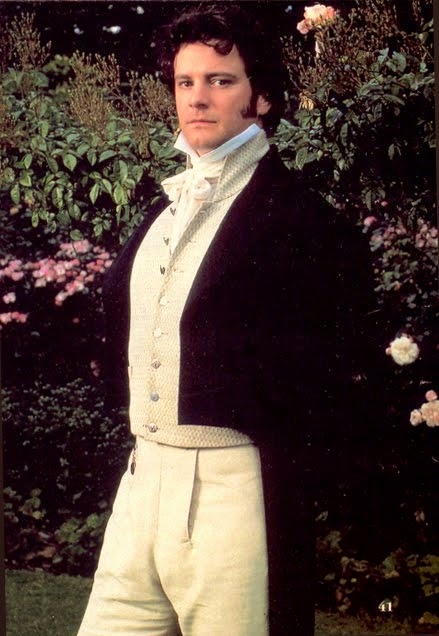
Beau Brummell, the most famous "dandy" of them all ~ Brummell was an English dandy, famous for his friendship with George, Prince of Wales (regent from 1811 and afterward King George IV). Brummell was deemed the leader of men's fashion at the beginning of the 19th century.  Those who followed his lead were known as 'dandies,' 'beaus,' and 'gallants.'  They were known to place particular importance upon physical appearance, refined language, and leisurely hobbies, pursued with the appearance of nonchalance in a 'cult of Self.'  Historically, especially in late 18th- and early 19th-century Britain, a dandy, who was self-made, often strove to imitate an aristocratic lifestyle despite coming from a middle-class background.  Previous to this, foolish men who were overly concerned with their appearance and clothes, were known as 'fops.'  17th century England saw many fops.  These men were also known as 'coxcombs,' 'fribbles,' 'popinjays' (meaning 'parrots') 'ninnies,' and 'fashion-mongers.'
The first 'fop?'  Engraving of a painting of the English actor Colley Cibber as "Lord Foppington" in the Restoration comedy The Relapse (1696) by John Vanbrugh
What style is to our thoughts, dress is to our persons. It may supply the place of more solid qualities, and without it the most solid are of little avail. Numbers have owed their elevation to their attention to the toilet. Place, fortune, marriage have all been lost by neglecting it. A man need not mingle long with the world to find occasion to exclaim with Sedaine, "Ah! mon habit, que je vous remercie!" In spite of the proverb, the dress often does make the monk. Your dress should always be consistent with your age and your natural exterior. That which looks outré on one man, will be agreeable on another. As success in this respect depends almost entirely upon particular circumstances and personal peculiarities, it is impossible to give general directions of much importance. We can only point out the field for study and research; it belongs to each one's own genius and industry to deduce the results. However ugly you may be, rest assured that there is some style of habiliment which will make you passable. 
“Before going to a ball or party it is not sufficient that you consult your mirror twenty times.” Beau Brummell once responded to a query on boot blacking, by a young man fascinated with with the brilliancy of his boots, “Well, you know, for blacking I never use anything but the froth of champagne.” Another man asked Brummell the name of his hairdresser. "”I have three : the first is responsible for my temples, the second for the front part of my head, and the third for the back of it.”
If, for example, you have a stain upon your cheek which rivals in brilliancy the best Chateau-Margout; or, are afflicted with a nose whose lustre dims the ruby, you may employ such hues of dress, that the eye, instead of being shocked by the strangeness of the defect, will be charmed by the graceful harmony of the colours. Every one cannot indeed be an Adonis, but it is his own fault if he is an Esop. If you have bad, squinting eyes, which have lost their lashes and are bordered with red, you should wear spectacles. If the defect be great, your glasses should be coloured. In such cases emulate the sky rather than the sea: green spectacles are an abomination, fitted only for students in divinity,-- blue ones are respectable and even distingué.
“Let your wig be large enough to cover the whole of your red or white hair.”
Almost every defect of face may be concealed by a judicious use and arrangement of hair. Take care, however, that your hair be not of one colour and your whiskers of another; and let your wig be large enough to cover the whole of your red or white hair. It is evident, therefore, that though a man may be ugly, there is no necessity for his being shocking. Would that all men were convinced of this! I verily believe that if Mr. -- in his walking-dress, and Mr. -- in his evening costume were to meet alone, in some solitary place, where there was nothing to divert their attention from one another, they would expire of mutual hideousness.

 
Willy Wonka... A fictional dandy for the modern era
If you have any defect, so striking and so ridiculous as to procure you a  nickname then indeed there is but one remedy,--renounce society. In the morning, before eleven o'clock even if you go out, you should not be dressed. You would be stamped a parvenu if you were seen in anything better than a reputable old frock coat. 

If you remain at home, and are a bachelor, it is permitted to receive visitors in a morning gown. In summer, calico; in winter, figured cloth, faced with fur. At dinner, a coat, of course, is indispensable. The effect of a frock coat is to conceal the height. If, therefore, you are beneath the ordinary statue, or much above it, you should affect frock coats on all occasions that etiquette permits.

Before going to a ball or party it is not sufficient that you consult your mirror twenty times. You must be personally inspected by your servant or a friend. Through defect of this, I once saw a gentleman enter a ball-room, attired with scrupulous elegance, but with one of his suspenders curling in graceful festoons about his feet. His glass could not show what was behind.

“Upon the subject of the cravat – (for heaven's sake and Brummel's, never appear in a stock after twelve o'clock) – We cannot at present say anything.”
If you are about to present yourself in a company composed only of men, you may wear boots. If there be but one lady present, pumps and silk-stockings are indispensable. There is a common proverb which says, that if a man be well dressed as to head and feet, he may present himself everywhere. The assertion is as false as Mr. Kemble's voice. Happy indeed if it were necessary to perfect only the extremities. The coat, the waistcoat, the gloves, and, above all, the cravat, must be alike ignorant of blemish.

Upon the subject of the cravat– (for heaven's sake and Brummel's, never appear in a stock after twelve o'clock)– We cannot at present say anything. If we were to say anything, we could not be content without saying all, and to say all would require a folio. A book has been published upon the subject, entitled “The Cravat considered in its moral, literary, political, military, and religious attributes.” This and a clever, though less profound, treatise on “The art of tying the Cravat,” are as indispensable to a gentleman as an ice at twelve o'clock.

  
She approves of his attire ~ “That your dress is approved by a man is nothing;--you cannot enjoy the high satisfaction of being perfectly comme il faut, until your performance has received the seal of a woman's approbation.”
When we speak of excellence in dress we do not mean richness of clothing, nor manifested elaboration. Faultless propriety, perfect harmony, and a refined simplicity,--these are the charms which fascinate here. It is as great a sin to be finical in dress as to be negligent. Upon this subject the ladies are the only infallible oracles. Apart from the perfection to which they must of necessity arrive, from devoting their entire existence to such considerations, they seem to be endued with an inexpressible tact, a sort of sixth sense, which reveals intuitively the proper distinctions. That your dress is approved by a man is nothing;--you cannot enjoy the high satisfaction of being perfectly comme il faut, until your performance has received the seal of a woman's approbation.
There are many ways for dandies to fold their cravats.
If the benefits to be derived from cultivating your exterior do not appear sufficiently powerful to induce attention, the inconveniences arising from too great disregard may perhaps prevail. Sir Matthew Hale, in the earlier part of his life, dressed so badly that he was once seized by the press-gang. Not long since, as I entered the hall of a public hotel, I saw a person so villainously habited, that supposing him to be one of the servants, I desired him to take my luggage upstairs, and was on the point of offering him a shilling, when I discovered that I was addressing the Honorable Mr. * * *, one of the most eminent American statesmen.


Author Unknown, 1836  

Etiquette Enthusiast, Maura J. Graber, is the Site Editor for the Etiquipedia© Etiquette Encyclopedia