Showing posts with label Demita Usher. Show all posts

Sunday, August 27, 2023

Language Etiquette: From Preppy to PC

The Blurry Line Between Political Correctness and Absurdity


There is a very blurry line between political correctness & silliness. Are you tired of your offspring and their offspring reminding you that, "We Don't Use That Word Anymore"? Well, I certainly am tired of hearing those words. I have no children of my own, but I work with them regularly.


When I first saw my copy of "The Official Politically Correct Dictionary and Handbook" in 1993, I thought it was a hoot! Like the "Preppy Handbook" of the 1980s, which was one of the funniest books I had ever read.

I knew several "preppy" people and the book just nailed them; Names like Biff and Muffy, Ralph Lauren polo shirts (bonus points for popping the collar), Sperry topsiders (it was "de rigueur" to wear them without socks), plaid 'kilt" type skirts for girls, etc... It was a great trend at the time, so a book satirizing it was bound to hit the shelves. The trend died out. The die hard preppies stayed the way they were, and most younger people moved on to trends they had seen in music videos. 
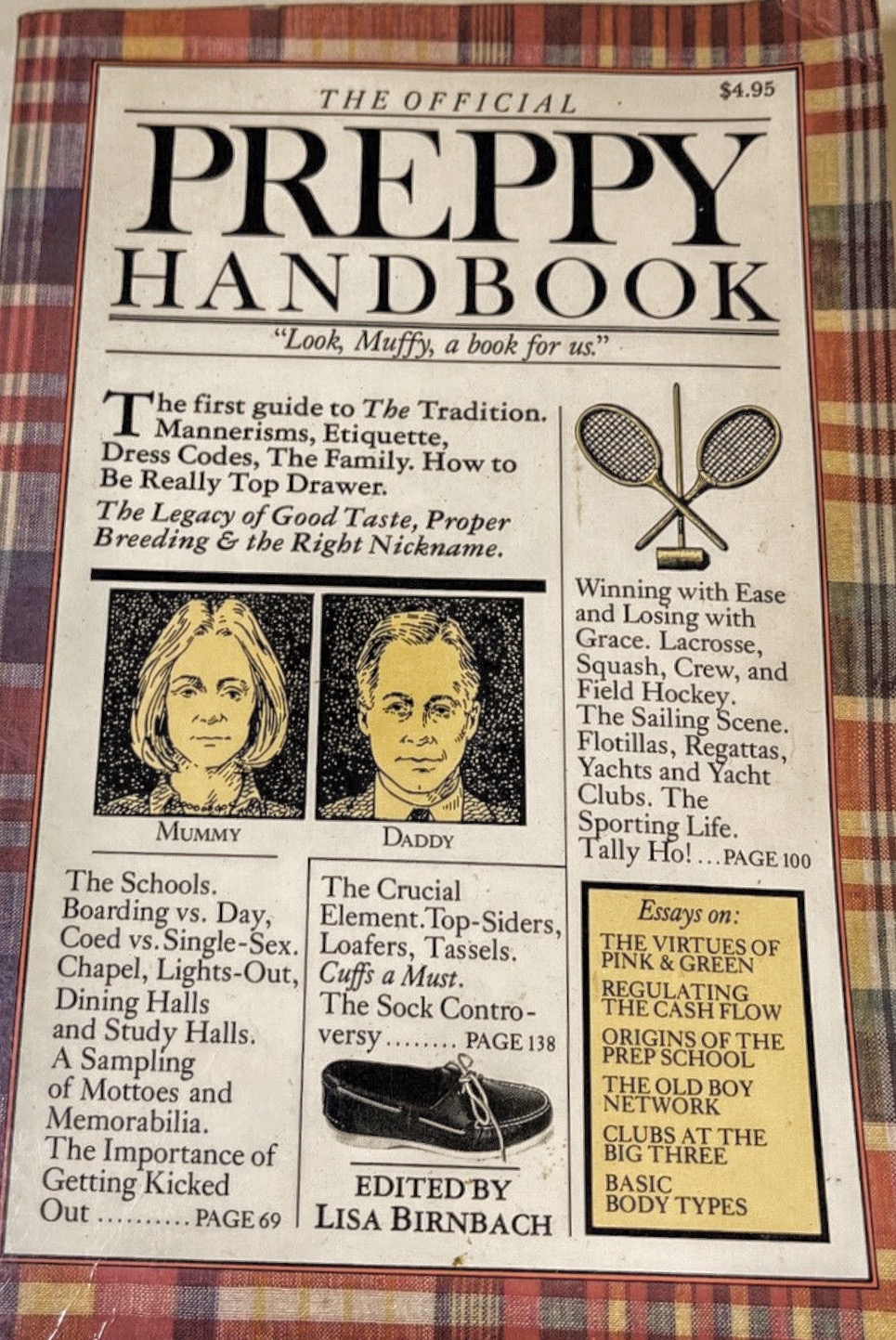
My Preppy Handbook copy is dog eared and so worn, I have nearly tossed it out on several occasions!

I’m an old fashioned gal. I’m certain I was born in the wrong era. I love the clothing and styles from the 1950’s and am a fan of most all things retro, even though poodle skirts pretty much died out long before I was born. But this “retro” subject has overstayed its welcome. I had assumed the new "PC" words and terms would die out as well. How wrong I was! Political correctness has grown even more absurd as time marches on, yet in some instances, it works well.

"The Official Politically Correct Dictionary and Handbook" is full of crazy terms, that evidently someone had thought were just fine. Some are commonly used now but the very absurd terms and words have not come into common use. Yet.

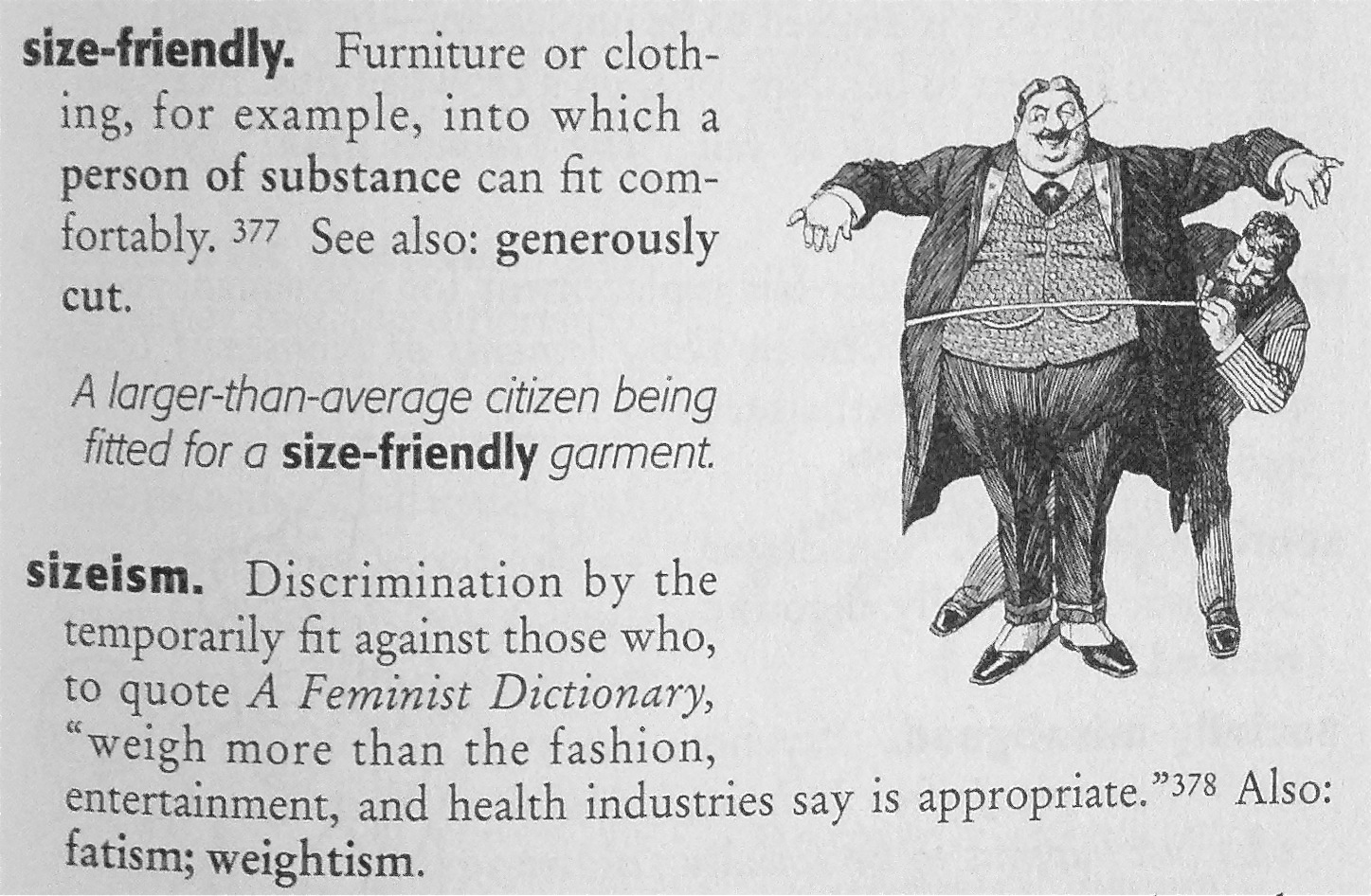
Take for example, "person of substance". In my mind, a person of substance is a person of quality and character. Basically, he or she has something substantial to add to a conversation or situation. But size? No.


I've seen or heard "generously cut" and "size-friendly" many times. I like those terms. "Fatism" I have never heard, but when I heard a chirpy, cheery, and very polite morning show host say, "He's not fat!" when speaking with surprise of an encounter she had on the street with a television personality, my first thought was, "Couldn't she have phrased that a bit differently?" (Personally I prefer the term “Big-Boned”). Her co-host chimed in, "But he's fat on the show!" and they went into a long discussion as to why someone would want to "look fat" on t.v. Yes, sadly they went from awful, to much worse. And they came off incredibly, but unintentionally, rude.

Reader, meet 'prewomen'. You read that right! According to the 'Politically Correct' dictionary, the word 'prewoman' is for a young girl and was coined by cartoonist, Jeff Sheshol, in 1990. Thankfully, I have never heard either word in use.


Pro-choice is a word I have never understood. It only seems to be pro-choice for those who believe abortion should be legal. Those I know who choose to have many children (and pay fully for them, as opposed to say "Octomom") or those who feel abortion is killing a living being, are looked upon with scorn. Pro-abortion would be a better term, and more accurate unless it favors all. PWA and PLA I have not seen. As for "protector"? I'll start using it the minute a cat starts protecting me!
     
Etiquette authority Maura Graber has a few words to say about the word retard, as does her outspoken daughter!

I remember a story of Maura Graber's about the word "retard" and an argument with her daughter. According to Graber, she was prepping for an after-school etiquette class, and was speaking with a teacher from the school. Graber described a brief discussion about something capable of retarding a child's social growth, when her daughter walked in carrying the food for class. "My daughter heard the word 'retard' and snapped that the word 'retard' was not acceptable, paying no attention to which syllable I had put the accent on." The teacher, who clearly knew what Graber's daughter had missed, chuckled as Maura tried to explain to her daughter that the word, used properly, was not offensive. Her daughter continued to tell her she was wrong. Ms. Graber said, "I gave up. “Flame-retardant” Halloween costumes and such? She wasn't interested in hearing that. Once kids reach the ages of 18 to 21, suddenly they think they are adults and know everything. They don't." How true! 


This article was first published in 2012 on the “Social Graces and Savior-Faire” blogspot of dear friend and contributor to this site, the late-Demita Usher

🍽Etiquette Enthusiast, Maura J. Graber, is the Site Editor for the Etiquipedia© Etiquette Encyclopedia

Sunday, February 14, 2016

Etiquette Knows No Color

A "blast from the past," when attendees dressed for all sporting matches, not just for once a year, Kentucky Derby-type sporting events.

Troubling Notions
After a very brief exchange with a woman, when I stated how improper behavior and the lack of proper manners is hurtful to people wanting to advance and improve their lives, I was left troubled. Her response to me was, “You can’t impose middle class values on the ghetto!” She clearly did not understand that proper behavior has nothing to do with race or one's financial status, but more with the respect we show to each other and to ourselves.

It's disconcerting that a great number of people in the African-American community seem to view any type of proper behavior as “selling out” or “acting white.” It's as if carrying oneself respectfully will erase their “identity” from existence. Many also seem to want to disconnect from any type of proper behavior or etiquette with the notion that it has nothing to do with them, when in reality, it has plenty to do with them.

Etiquette's Surprising History
In my research on the practices involved with training etiquette, I uncovered a tidbit of interesting history written by Judith Martin, the author known as “Miss Manners." When it came to teaching manners to the children of wealthy Southern plantation owners, the job was that of the household slaves. According to Miss Manners:
“The plantation owners thought they were being English country gentlemen, but who was teaching etiquette to their children? The house slaves. The house slaves often came from a more elevated background than the masters. They were chosen among the slaves as the people who were more refined. They had been captured and brought over from Africa, whereas, of course, voluntary immigrants came because things weren’t so great at home. 
The house slave, usually the mammy, taught manners to the children. So she taught them the manners she knew. The “y’all come see me” kind of hospitality is an African tradition that they brought over.”
The way I see it, proper manners and respectful behavior are not our shame, they are our birthright! Sadly while these women and men who were teaching their master's children proper manners, it was a valuable education they could not pass on to their children lest they be accused of being “uppity” and it could have cost them dearly. But what about today? Why do many still shy away from it seeing it as something “they do," but not  something “we do," when we have had a family of color, an African-American "First Family," residing for these past several years in the White House?

After slavery, many blacks sought to better their fortunes by taking advantage of the opportunities to become educated and to learn the proper usage of the social graces of their day to fit in. The racism that banned them from being educated in white institutions did not stop them from educating themselves and setting up their own schools and implementing the social graces practiced at that time. These practices continued into the 20th century, when blacks enjoyed their own social dinners, dances and cotillions. 

Maxine Powell, Motown’s, "Artist Development Coach," taught The Temptations, The Supremes and all the other famous Motown acts, the finer points of charm, etiquette and social graces. This training was just as important to their successes, as their ability to sing and, in many social situations of the early 1960s, even more important.

Other Cultures Understand
People of other cultures who are advancing, and prospering on a global level, understand that if they want to interact with people and expand their influence, they have to refine their manners and social behavior.

Dr. Charlotte Hawkins Brown, the founder of Palmer Memorial Institute and author of the 1940’s social graces handbook for African Americans, “The Correct Thing to Do, to Say, to Wear," had this to say 72 years ago during a live radio broadcast:

“After all, the success of the American Negro depends upon his contacts with other races who, through the years, have had greater advantages of learning the proper approach to life and its problems. The little courtesies, the gentle voice, correct grooming, a knowledge of when to sit, when to stand; how to open and close a door; the correct attitude toward persons in authority; good manners in public places, such as railroad stations, moving picture houses, and other places where we are constantly under observation—the acquisition of these graces will go a long way in securing that recognition of ability needed to cope with human society, and will remove some of the commonest objections to our presence in large numbers.”
During the time of Jim Crow segregation, she understood even back then, that proper conduct and behavior was important in working with people of other races and cultures to advance one's fortunes was of the utmost importance. At the same time, she was also very aware that despite those efforts, many African-Americans would still suffer unfair treatment, so to not carry oneself respectfully would only make matters worse.

According to TIME magazine, the #1 course that students take at the Shanghai Institute of Foreign Trade, is the manners course training the students in etiquette. With their newfound prosperity, they understand that their old behaviors are no longer acceptable if they want to stay on the competitive edge. We in the African-American community, need to get with the program if we want a place in the global market and the accompanying respect we are due. If not, we will be left behind, holding on to our right to “keep it real."

Speaking of our right to “keep it real,” how has this false code of honor served us? I for one can say not very well. I believe that the breakdown began in the 1970’s and has continued to this day. We have abandoned many of the practices of social graces and etiquette in the light of “self-discovery.” We made the decision that good manners and celebrating the notion that “black is beautiful," could not co-exist. Go
od manners and proper conduct were seen as “white” attributes to be shunned and so the baby is thrown out with the bath water so to speak. Dr. Brown also spoke about this:
“It is perfectly natural that we want to forget much that was associated with slavery and its aftermath; at the same time it is very necessary that we pay attention to some of the things gained by our fore parents through intimate association with an aristocracy schooled in the finer things of life. Well may we add to our modern culture and educational efficiency some of the fine manners of those bygone days.”
Dr. Brown understood that despite the fact that proper conduct was associated with white society (though race has nothing to do with behaving properly), she urged African-Americans to not forget the benefits that carrying oneself properly could provide, despite the poor attitude of the people who wielded the most power and influence. 

To a certain degree, I understand the rebellion against these established practices and the attempts to be more independent. But what was gained from outward rebellion? Nothing. It has done nothing but isolate us, and it has robbed many of us, of the things we desire to obtain and achieve. We must take measures to correct this behavior, and quickly, if we want to not just survive, but also thrive.

When in Rome...
There's no crime in wanting to be independent. Utilizing wisdom is the key. The children of foreign rulers and diplomats are sent to finishing and boarding schools to learn Western social graces, but at home they still utilize their cultural protocol. They understand the best gift they can give their children is to empower them to be well prepared for whatever environment they find themselves in. It is not about conforming, but about knowing when it is appropriate to compromise for what one is trying to accomplish.

The world is becoming more globally interconnected, and if we do not get with the times, as aforementioned, we will be left behind. A practical compromise for a greater investment in one's future, if done correctly, is not “selling out." It is not to impress other people as much as it is to value ourselves.


This was from a favorite contributor to this site, the late Demita Usher. She wanted it shared and we thought this would be an appropriate time to edit and post it, as it's Black History Month. Demita, who died suddenly in June of 2015, said that she was continually working to dispell the notion that etiquette is just "for white people." Demita wanted others to understand that etiquette knows no color. Her friendship and passion is missed by many!


Etiquette Enthusiast, Maura J. Graber, is the Site Editor for the Etiquipedia© Etiquette Encyclopedia 

Monday, June 15, 2015

Gilded Age Table Etiquette

This post is in honor, and memory, of one of our closest friends and finest contributors, Demita Usher. Her death was sudden and unexpected. Demita had always dreamt of a more polite world, but sadly passed away yesterday. The last post on her blog was the following quote ~ “Life is short, but there is always time enough for courtesy.” - Ralph Waldo Emerson
   

  • Gloves are not to be worn at the table under any circumstances. 
  • No argumentative, or in any way unpleasant topic, should be broached at the table. 
  • There should be no difference between " company manners " and those in daily use. 
  • The napkin is not folded, but is simply crushed and laid beside the plate on rising. 
  • Coffee may be served at any time during breakfast, but should come at the end of dinner. 
  • Do not overload the plate of a guest, or press upon any one that which he has once declined. 
  • Remember the maxim of Confucius: "Eat at your own table as you would at the table of the King." 
  • Never say or do, or countenance in others the saying or doing, of anything rude or impolite at the table. 
  • Never notice or comment upon any accident, but render unobtrusively any assistance which may be necessary and possible. 
  • The side of the spoon is to be placed in the mouth, except in the case of a man wearing a moustache, when the point of the spoon leads the way. 
  • Where wine is served at dinner it may be declined without breach of courtesy, and should no more than any other article be pressed upon the guest. 
  • Teach the children to eat at table with their elders, and do it in a dignified manner. 
  • It is impossible to foretell what moment may require them to exemplify their home training. 
  • Letters, newspapers or books should never be brought to the table, though a very important message may be received and attended to, permission being asked of the hostess.
—From Good Housekeeping Magazine, 1893


  Rest in peace, Demita. Your smile, enthusiasm and grace will be missed by all who knew you!  


 🍽Etiquette Enthusiast, Maura J. Graber of The RSVP Institute of Etiquette, is the Site Editor for the Etiquipedia© Etiquette Encyclopedia

Sunday, March 22, 2015

The Definitive Selfie Etiquette Guide


The Approved Selfie... There is someone behind you. Is he aware he is in the photo? This is what is known to many, as a “Relfie”... a “Relationship-Selfie.”
Selfies can be fun to take and share, however, as with anything involving a camera or photos, etiquette needs to be followed. The etiquette guidelines below will help you stay well-mannered and safe...
Hey you! Yes, you in the back left side of the ride... You are at Disneyland! Remember? Pass the phone to the friend next to you if you need a photo of yourself, while on the ride. Don't forget to ask with the word "please" and to be extra polite, offer to then return the favor if the person wants a photo too!
The "Wait... What?" Selfie: Are you so busy taking selfies, that you even know what is actually going on around you? Are you still able to enjoy yourself? Or did you kill the moment trying to "save the moment" in a cell phone photo? Think about it for a minute. Allow yourself some time to enjoy what you are doing.

Get approval before posting selfies with babies, or others, to social media sites.
The Approved Selfie: Ask for permission before you post a selfie with someone else's baby, child, etc... They may not want the photograph online and it is their right to decline permission.   
Super famous, B, C or D-list celebrity, it doesn't matter. Always ask permission before you take that selfie. Tori Spelling kindly obliged our favorite “selfie” model, out in front of the Staples Center in Los Angeles.

The Celebrity Selfie: A celebrity in a recent interview mentioned that people do not politely approach her anymore. They just walk up with their cell phones in hand, stand close to her, and take a photo. Super famous or "D-list" celebrity, ask permission before you take that selfie. They may not want to be photographed and it is their right to decline.
“Selfie-Sticks” are great for group selfies, or “Groufies”
The Safe Selfie: Is that selfie worth endangering yourself for? Are you trying to get a selfie on top of a train perhaps? A moving train? Or is that "selfie-stick" not far enough back for you as you unwittingly creep closer to the edge of that cliff? Never put your life at risk for that “really cool” selfie. There have been numerous accounts online recently of people taking selfies in dangerous places that turned even more dangerous.
                    
"Technically Incorrect: The contestants are gathered in Miami for Miss Universe. Israel and Lebanon are still at war. This is not the time for modern diplomacy. Can a selfie cause an international incident? Yes, it can." CNET.com, Tech Culture

The Kind Selfie and The Controversial Selfie: Do not take photos with others conspicuously in the background, simply to poke fun at another person or shame them. I recall a young woman posting a photo on a group social media page she had taken with a man who was sound asleep with his mouth open on the subway. She posted a caption making fun of him snoring. I asked her why she thought it was funny to humiliate this man and to post a photo with her near him without his permission. She got defensive but took the photo down.  This also applies to photo bombing someone else's selfie. It is bad manners to photo bomb, unless you know the person very well, and know they wouldn't mind.

Sometime later, I witnessed teens using their cell phones to take selfies with others nearby and all the people had partially exposed rear ends. This was without their knowledge and the teens were immediately uploading them on line. It is one thing to post humorous photos of yourself, quite another to post them with someone else and without their consent.


The Miss Universe Controversy Groufie
Clearly, we've all learned many lessons from Miss Universe over the years. How to answer inane questions with short elegant words, for example.

However, this time Miss Israel's alleged photobombing of a selfie including Miss Lebanon – taken in Miami – has caused uproar.

As NBC News reports, media in Lebanon weren't happy with this image. The two countries are still at war. And this was, well, Miss Universe, an event that is the barometer for all things political.

For her part, Miss Lebanon – Saly Greige, who has a civil engineering degree – was forced to turn to Facebook to disavow the image.

She wrote: 'Since the first day of my arrival to participate to Miss Universe, I was very cautious to avoid being in any photo or communication with Miss Israel (that tried several times to have a photo with me) ... I was having a photo with Miss Japan, Miss Slovenia and myself; suddenly Miss Israel jumped in, took a selfie, and put it on her social media.'
 

Miss Israel – Doron Matalon – countered by turning to Instagram. She wrote of Greige's reaction: 'It doesn't surprise me, but it still makes me sad. Too bad you cannot put the hostility out of the game, only for three weeks of an experience of a lifetime that we can meet girls from around the world and also from the neighboring country."' from CNET.com
                                             
The sweet selfie. No one is offended and your etiquette is just fine.
The Respectful Selfie: If you witness an accident, unless you are taking photos for evidence sake, do not take selfies in the name of seeing something fascinating to post later. The same goes for funerals, in hospitals and any other sensitive environment. Unless it serves a specific purpose that is helpful, refrain from taking selfies.

The Risqué Selfie: I have seen more than my share of people posting inappropriate selfies. As an individual, you are free to do certain things, but once you post it on the internet, it will remain there forever because people will copy, save, repost, create meme’s, etc... 

The riot... I was there drinking beer, bro!
The Self Destructive Selfie: Keep in mind that employers routinely look into people’s social media activity prior to hiring and are terminating employees for things they post that they feel may cast a negative light on the company. A flight attendant was fired a few years ago for taking selfies on an empty plane.
                                            
Kim Kardashian is Selfie-Obsessed: Are you selfie-obsessed? According to psychiatrist Dr David Veal: “Two out of three of all the patients who come to see me with Body Dysmorphic Disorder since the rise of camera phones have a compulsion to repeatedly take and post selfies on social media sites. Cognitive behavioural therapy is used to help a patient to recognise the reasons for his or her compulsive behaviour and then to learn how to moderate it,” he told the Sunday Mirror.

The Over-Saturation Selfie: There is the saying “a little goes a long way” and it definitely applies to Kim Kardashian. While you are free to document every aspect of your life, do not think people are waiting by their computers for every update. If you like to share, pick a photo or two that tastefully summarizes the day, post them and move on.

Taking selfies can be a fun activity but let us use caution that taking selfies does not cause us to act 
selfish.


Compiled  by the late-Demita Usher, Contributor to Etiquipedia


📱Etiquette Enthusiast, Maura J. Graber, is the Site Editor for the Etiquipedia© Etiquette Encyclopedia

Wednesday, February 18, 2015

Chinese New Year Etiquette

The Lunar New Year holiday is celebrated by many Asian cultures. It is usually celebrated over a minimum three-day period, to about fifteen days, surrounding the first full moon of the year. Festivities begin the day before the full moon, the day of the full moon, and the day following the full moon.
                           
Chinese tourists in Chiang Mai and Chiang Rai Thailand, have been the target of numerous complaints from locals who've accused the visiting Chinese of causing traffic accidents with reckless driving, defecating in the city's moat and defacing several popular tourist attractions. Officials announced Monday that thousands of Chinese tourists visiting Thailand during the New Year holiday will receive tourism etiquette manuals in an effort to curb "offensive behaviour." The city of Chiang Mai, the most popular destination for Chinese tourists, will be the focal point of the Mandarin-language manuals, with some 90,000 of them expected over this week's holiday period. According to Thai news agencies, the manual will list museum etiquette, such as not touching paintings, warn against using public property as lavatories, and encourage proper driving behaviour, according to the Tourist Authority of Thailand office in Chiang Mai.

The following are some of the etiquette practices that the Chinese community,  in particular, observe in preparation for the arrival of the Lunar New Year:

1. Settle all debts before the Lunar New Year begins. The goal of settling one's debts is to begin the New Year with a "clean slate" or fresh start. It is to ensure that sufficient funds will be available to provide all that will be needed to ensure a joyous celebration will be had by all.

2. Use special paper greetings, flowers, and fruits to decorate your home. Greeting cards and good luck symbols are tied on a blooming tree along with an abundance of fragrant flowers and fruits. It is a cultural belief, that the more abundant the tree is with these beautiful items, the more good luck the family will experience in the Lunar New Year.

             
2015 ~ Year of the Goat... Or Year of the Lobster? Lots of American lobster is now on the menu in Beijing for this 2015's Chinese New Year. Actually, exports of U.S. lobster to China have skyrocketed over the past couple of years, in an effort to satisfy the appetites of China's increasingly growing middle class. The steamed, whole crustaceans are flown in live from the U.S.  Serving the festive, red delicacy is a mark of prosperity and they happen to be good luck symbols too.

3. Celebrating the Lunar New Year is a family affair in Chinese culture, with plenty of food and drink. This time is utilized to heal and reconcile and strengthen relationships as we transition into the year. Make sure all your favorite dishes, plus a few traditional foods, are in abundance. Running water during the first day in the New Year is frowned upon because doing so denies the earth and water a day of rest.


4. "Happy Birthday to me, Happy Birthday to you, Happy Birthday to all!" Everyone becomes a year older with the Lunar New Year, no matter when your birthday is celebrated. Children are given red “Lai See” envelopes with “good luck” money inside. This tradition is also used for many other festive occasions, in lieu of more modern, gift-giving practices.

5. Visit family, friends and build new friendships. The first day in the New Year is spent with your immediate family, the second day is often spent with good friends and special guests. Modern traditions dictate that the third day be spent celebrating with teachers and business associates.This is also a great opportunity to create new friendships and start the Lunar New Year off together.


6. Pay significant attention to your actions. Recognize the first acts you perform in the Lunar New Year. Displays of anger, lying, raising your voice, indecent language and breaking anything during the first three days of the New Year is forbidden, especially the first day.


Hopefully these tips will help you celebrate with your friends in the Asian community and enjoy the wonderful traditions that accompany them. 


Happy Lunar  New Year!
                                               

Lai See Etiquette 

(From Geo Expat.com)

During Chinese New Year, and stretching into the following week, you may notice a flurry of red envelopes being exchanged almost everywhere you go. These fancy little red envelopes, called "lai see", are packets that contain good luck money. Giving lai see to people is a big part of Chinese New Year celebrations, so you don't want to miss out on giving (or receiving!) them in the following couple of weeks. 
But giving lai see is not like handing out candy to children on Halloween (unless you're one of those grumps who don't like giving treats to the kids without costumes). There's a set of rules you have to abide by when giving out lai see. 
Locals give out lai see like it's second nature to them, but in fact, there are different amounts distinguished for different people and people with different marital statuses and also people with different job positions. Starting to feel a little weary about this whole business? You'll get the hang of it once you understand proper lai see etiquette. 
Lai see is bestowed from "big to small", "old to young", and "senior to junior". For example, if you are the boss or manager, you should give lai see to your employees. If you live in an apartment complex with its own management staff, you should give lai see to your security guard, cleaners, and doorman. Married couples also give to their single, younger relatives, and may give two lai see packets to each recipient (one from each spouse). If you are unmarried, you will usually only need to give one packet to each recipient. 
You don't have to give lai see to everyone you know, but keep in mind that there is a chance you may forget somebody. People usually bring a pile of red envelopes with them whenever they go out, just in case they might bump into someone accidentally. It's best to keep a mixture of $10, $20, $50, and $100 envelopes on you to be ready at all times. The amount you put in the lai see is up to you.  
Use this handy guide to avoid any lai see faux-pas. Don’t forget to give and receive with both hands as this is regarded as a sign of courtesy. Also, never let children give out lai sees to older folk or service staff – this is considered insulting.


Compiled and submitted by Demita Usher of Social Graces and Savoir Faire 

Saturday, June 7, 2014

Vintage and Modern Picnic Etiquette

Outdoor Meals Away from Home ~ The “Nose-Bag is News”

"Painless picnics! Let's have more of them. Is your family the sort that's always getting the urge to lock the door, jump in the car and get away from it all? If so, then maybe you have already learned that picnics can be less trouble than staying at home. Or, has your glow of enthusiasm become dimmed by too much sandwich making, salad fixing and egg deviling? From now on resolve to do it the casual way. Get out the hamper and the list. The hamper holds the ready packed plates, salt, sugar and napkins. The list begins with coffee and ends with matches. Best of all, it takes just about twenty minutes to run down the list and drop in things. Makings are taken instead of finished dishes. In place of sandwiches, sliced bread, butter, spreads and cold meats are tucked in. Deviled eggs simply mean that eggs were boiled while breakfast was eaten, then put in the basket along with prepared mustard, lemon and mayonnaise. By the way, have you ever eaten deviled eggs that were made while listening to the pounding of the surf or to the lilt of a bird's song in the woods? They taste twice as good. Try it for yourself sometime. On the other hand, perhaps your family likes to do everything at home and then just loaf at the picnic. Then the nose-bag is news. Many find it a distinct improvement over the regular kind of picnic because the clearing up and unpacking afterwards are eliminated this is the system: New paper bags are used, one for each member of the party. Food is packed so that it is removed in the order it is to be eaten – sandwiches, salads (in paper containers) and pickles at the top of the bag; fruit and cookies at the bottom. Chill all foods, putting them into the bag just before leaving the house. At beach picnics, the children will like to have stunts in order to fill that long stretch between lunch and swim time. Occasionally put "stunt and penalty" slips in each nose-bag, for after lunch performance. Lunch over, each person leaves his leavings in his bag, after which the bags are collected and burned.
Forster IDEAL Picnic Package ~ Before modern day plastic sporks were available, wooden utensils like these were used for picnics.  They'd be tossed into the bags of “leavings” after the picnic, then burned before you left the picnic grounds. 
Then there are the families who go in bunches. Possibly a group of neighbors enjoy spending the day together at a park in the country. In order not to work a hardship on any single one, this plan has been most successfully tried: Each family takes its turn acting as general picnic host. The host family plans the days program from start to finish assigns to each of the six guest families a certain food to bring for the whole crowd (salad from one family, sandwiches from another, cake from another, etc...) ; furnishes the picnic dishes, the hot or cold drink, the tablecloth, the paper and kindling for the fire, and games; and assumes all table setting and clean up responsibilities. By the time summer is over, each family has served its turn only once as host, and has had six rollicking picnics to enjoy and guest role."  From "Sunset's Host and Hostess Book," 1940

The well stocked picnic hamper for your guests.

Picnic Etiquette

The summer months provide people with many wonderful opportunities to dine outside their homes; be it in their backyard, or at a park, or at the beach, picnics are a very popular dining option for people who want to enjoy the great outdoors. Meals outdoors were probably first enjoyed during the Middle Ages, when hunting feasts became a favorite activity of the leisure class. The English word “picnic" is said to come from the French word “pique-nique,” which was used in the 17th century to describe gourmands who provided their own wine when dining with out with friends.  It does not require special occasion to enjoy a picnic; just good food , good weather and good company.

For the Guests:

  • Offer to bring a dish.  If the hosts accepts your offer, double the recipe in case extra guests attend.
  • Ask your host if children are allowed, if not specified on the invitation.  Sometimes the host does not specify when it is an “adults only” affair.
  • If the hosts have the food arranged buffet style, just take one serving.  You can always go back for seconds. Everyone has attended events where the guests in front of them pile their plates high, and then there is hardly any food remaining, by the time the people at the end of the line are ready to help themselves.
  • If you are a vegetarian, the time to ask your host about the meatless options available is when you are responding to the invitation, not when the food is being served.
  • Be considerate when playing outdoor games, especially if your group is sharing space with others who are having picnics of their own. 
  • Watch foul language, avoid heated discussions, and watch your alcohol intake.  Keep the environment festive and fun.
  • Clean up after yourself.  Your hosts will have enough to deal without having to be on trash duty.
  • Thank your host for an enjoyable time. Following up with a written note of thanks is always a nice touch.

For the Host and/or Hostess:

  • Make sure your guests have a comfortable environment to enjoy the foods you have prepared.
  • If possible, use colorful, partitioned plastic picnic dishes.  Partitions make it easier to put meat, vegetables and salad all on one plate. Regular plates are fine, but partition plates can make serving oneself easier.
  • Have a variety of refreshing beverages on hand, alcoholic and nonalcoholic in nature, along with plenty of water to keep your guests refreshed and hydrated.
  • Old standby picnic foods such as hamburgers, hot dogs and vegetarian versions of these for your vegetarian guests, are always great comfort foods. Other finger foods, such as corn on the cob are usually enjoyed by all in the picnic setting.
  • If you are hosting a picnic away from home, invest in a sturdy hamper, a basket that is light , with a long life and plenty of room for the food, utensils and beverage containers. Waterproof paper bags for leftovers, paper napkins and such, are wise to have on hand if there are no waste receptacles nearby.
  • No matter how choose to picnic, make sure you have a good time and thank your guests for coming. Remember, there are other places they could’ve chosen to spend their time and they chose to spend it with you!
The Art of Packing a Picnic Hamper 
by Amy Vanderbilt, 1957

"It’s an art to pack a picnic hamper with the kind of food that makes picnickers glad they didn’t stay at home. Cold fried chicken or little cold veal or ham pies, English style, make delicious out-of-hand eating. Chicken or potato salad in a glass jar combine easily at the picnic spot with crisp lettuce which has been brought separately in a damp towel and like the other foods mentioned are, to my mind, more palatable than a much traveled sandwich. There are all sorts of good things that can be put in picnic jugs and served piping hot hours later – spaghetti with mushrooms and chicken livers, for instance, or baked beans or even thick fish chowder.

If you are going to a distant picnic ground, it is preferable to take food in vacuum jugs and bottles rather than to light a fire, unless specific campsite has been set up in safe places. Or, if there are really able woodsman in your party that can manage a campfire so it doesn’t smoke of the gas and ruined the food, be sure every spark is extinguished with water or loose dirt before you leave, and obliterate all signs of your presence, so others may enjoy the woods or beach as you have."


Compiled by contributor Demita Usher of Social Graces and Savoir Faire


🍽️Etiquette Enthusiast, Maura J. Graber, is the Site Editor for the Etiquipedia© Etiquette Encyclopedia

Thursday, June 5, 2014

BBQ Etiquette for Grillers and Guests

"The barbecue is not something new.  Since the time when men were hunters and gatherers, the meat of their hunt was cooked or roasted over an open fire for their families and other members of their tribes to enjoy.  The word "barbeque" is derived from the word "barbacoa," a word used by the Taino Indians in the Caribbean to describe an elevated wooden rack on which they slow-smoked fish, lizards, alligator, and other game." —Margaret Visser 
From colonial times up until today, while different countries around the world have their own version of barbecue, the United States has really taken it close to heart and made it a very "American" culinary expression.

Every region has their own "style" of barbecue; from Memphis to Mississippi to Texas to Louisiana, etc... regardless of the region, the passion of barbecue is so vast and diverse, it would be difficult to try to explain, much less understand it.  It goes from major competitions where men will have a special brand of hickory wood chips shipped in, so that the smokey flavor of their ribs will have their distinct signature, to men donned in aprons in their backyards, overseeing slabs of meat and hot dogs on a grill, while conversing with other men, while the women stand guard over the macaroni and potato salads.

Guest Etiquette for BBQ's:

Dress Code: If you are planning on being sociable and enjoying yourself, please don’t wear white.  Any other pale colors that won’t camouflage, or coordinate well with splotches of BBQ sauce, aren't a good idea either. You may have impeccable manners, but the casual environment of a BBQ simply invites stains to join you and whatever you're wearing for the ride home.

Stay in the "No Grill Zone": Unless invited in by the chef, please stay out. For some, that grill, and all that it entails, is "sacred ground." So hands off the grill and please offer no suggestions to the host about how to handle the grill.

Host or Hostess Gifts:  These are always appreciated, but keep the item in the range of a bottle of wine, serving plates or serving trays, or even something to be added to the dessert offerings.  A gourmet BBQ sauce or an expensive BBQ rub might can wrongly imply that you think you have better taste in BBQ offerings than what the host or hostess is serving.

Offer an Extra Hand: Enjoy yourself but make sure you are not adding to the stress of your host or hostess. If they need a hand, offer to assist if you are able (Bring out extra ice, help restock snacks, etc.)

Use Table Manners: You might be wondering, "How do I eat this without making a big mess?" You may not be able to do that. Accepting it early on, will give you the comfort that you'll need, in order to enjoy your meal. Use a lot of napkins, if they are provided.

Whether you eat with your hands or a fork depends on the cut of the meat. Food like sausage and brisket are fork dishes, while ribs are usually eaten "caveman-style." If your host has provided utensils and you feel you'd be more comfortable using them, even though everyone else is using their hands to eat, go ahead and use the utensils.  If, however, you host or hostess has not provided knives and forks, do not ask for them.

If you’re at a BBQ that is serving meats with a dry rub and you don’t see any sauce sitting around, don't ask for any sauce.

If you are vegan or vegetarian, keep your opinions regarding meat to yourself.  If you feel obligated to reform others, do your host and hostess a favor and do not attend a BBQ where meats are being served.

Drink Responsibly: When it’s hot, our thirst increases and before we know it, we have had 4 Margaritas in less than two hours, so watch your alcohol intake.

Show Gratitude: Be sure to thank your host and/or hostess for a great party as you leave. A handwritten, and mailed, note of thanks always shows your good manners.


The "McRib" Sandwich : The fast-food giant McDonald's started as a BBQ restaurant..."McDonald's Barbeque Restaurant" opened at 14th and E streets in San Bernardino, California in 1940. With a staff of 20 carhops, the McDonald brothers opened the joint as a conventional drive-in, serving ribs, beef and pork sandwiches. It soon became a teen hotspot, since E Street was the area's cruising capital at the time. The place was packed, but teens could be a pain. The restaurant had to contend with racing engines, peeling tires and cussing. By 1948, the McDonald brothers decided to revamp their BBQ eatery by adding speedy service to appeal more to the young family market. The "fast-food" business was born. In the 1950s, entrepreneur Ray Kroc convinced the brothers to let him franchise McDonald's, and he later bought the brothers out. The original restaurant was eventually demolished and today the site is home to the McDonald's museum. 

Some Tips If You are Hosting a BBQ:

  • Theme BBQ Parties are a great way to make them memorable. Perhaps you can include games or contests to add to the fun.
  • A filthy grill is a turn-off for guests. Make sure your grill is clean with fresh charcoal. Have a clean work space if you are having guests to dine. 
  • Different tongs and spatulas for raw foods and cooked foods are a must, to keep your guests healthy and happy while they are there.
  • Try to have appetizers ready for your guests when they arrive, especially if they have driven a long distance to get to you.
  • Try to have all foods ready at about the same time. That way, things do not risk spoiling by being out for too long.
  • If you possibly have vegetarians or vegans attending, offer some vegan choices like Boca-Burgers, and have lots of fruits and vegetables on hand.
  • Provide lots of extra napkins and utensils.  Not everyone wants to eat their meat with their hands.  Wet wipes for your guests are a thoughtful touch, especially those with kids along!
  • Provide designated drivers for those who've over imbibed.  They need to get home safely.
  • One final note... Whatever you do, please don't serve BBQ at your next Afternoon Tea!
Reportedly, on Martha's Vineyard, Emily Post was accused of “losing it” when she served members of the Garden Club barbequed meats, rather than the anticipated tea sandwiches.  When town members gossiped about her social gaffe, she responded that grilled meats seemed more festive for the occasion than “old-fashioned ladies food.”
From Demita Usher of Social Graces and Savoir Faire


🍽Etiquette Enthusiast, Maura J Graber, is the Site Editor for the Etiquipedia© Etiquette Encyclopedia