Showing posts with label Edwardian Telephone Etiquette. Show all posts

Tuesday, October 24, 2023

Insulting Operators is Rude


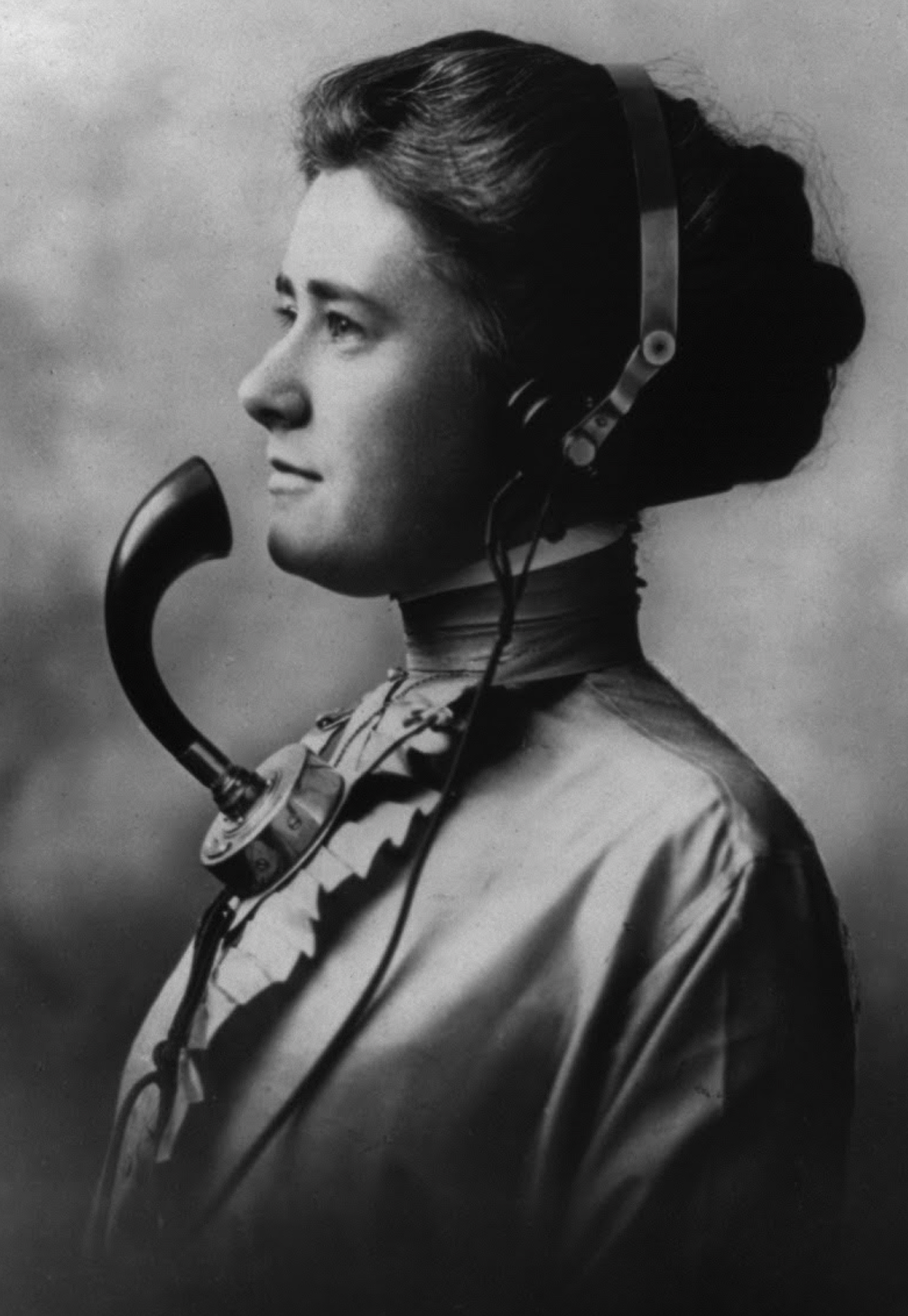
The chief operator and the central-office girls of a telephone company went on strike because the company refused to take out the telephone in the residence of a prominent society woman who persisted in using abusive language toward the telephone girls, although requested and warned not to do so. – Image of Female Telephone Operator Wearing Earphones And A Mouth Piece. Circa 1911 from Pinterest

Prince Insults “Central,” is Given a Fine
Over in Wurzburg they have a proper and wholesome code of ethics with reference to correct treatment of telephone girls. Prince Charles, of Wrede, had the temerity to tell a telephone girl what he thought of the telephone service at Ansbach. For his indiscretion he was fined seven dollars by a court-martial. The Prince admitted he said that the Ansbach telephone office was a hog pen and that the girls evidently were reading novels between the switches. His only plea in extenuation was that he was exasperated over the bad service. 
It was conceded in the court-martial proceedings that the telephone service at Ansbach was superlatively bad. Even so, it was found that the Prince's telephone manners were superlatively bad in directing insulting remarks to the telephone girls. It were well if the same correct code of telephone manners were in vogue in this country. Even though the service at times may be exasperatingly bad, and even though the telephone girl apparently may be neglectful of her duty at times, these things do not excuse insulting, abusive language. 
Over in Wheeling, W. Va., a few days ago, the chief operator and the central-office girls of a telephone company went on strike because the company refused to take out the telephone in the residence of a prominent society woman who persisted in using abusive language toward the telephone girls, although requested and warned not to do so. Merely because a young woman is employed in a telephone exchange, where the public may talk to her in the course of telephone service, does not make it proper, gentlemanly or lady-like for patrons of the telephone to insult or abuse her. She is just as much entitled to considerate treatment as the exclusive Young lady in fine apparel in the most aristocratic home. -Morning Union, 1913


 🍽Etiquette Enthusiast, Maura J. Graber, is the Site Editor for the Etiquipedia© Etiquette Encyclopedia

Wednesday, August 18, 2021

Edwardian Phone Etiquette

“Is this an instrument of communication or torture?” 


“The universal use of the telephone is another factor in the modification of social customs. Among familiar friends, the little chat over the ‘phone largely takes the place of the informal call. Also, invitations to any but strictly formal functions are now sent by telephone, if agreeable to both parties; though it is still considered better to adhere to the more respectful written form if there is any doubt about the new way being acceptable to the party of the second part. 

While I counsel conservatism in these changes, I am convinced that the new dynasty of wire and wireless is destined to dominate us; and as discovery continues and inventions multiply, the time is near when immediate communication will be had at long range; possibly telepathy—who knows? Or, possibly tele-photography with it—why not? Then, the slow, laborious writing of messages will be as much out of date as the super-annuated stage-coach.

But—not yet; we are still in the process of evolution. It is still safe to heed Pope's famous advice: ‘Be not the first by whom the new is tried, Nor yet the last to lay the old aside.’” –Agnes H. Morton's “Etiquette” from 1900


Etiquette Enthusiast, Maura J. Graber, is the Site Editor for the Etiquipedia© Etiquette Encyclopedia


Thursday, August 25, 2016

Delineator's "Lessons in Etiquette"

It could be called tact... If you know a fat girl with a slim sister, always mistake the fat one for the slim one, and vice versa
  • When a lady gives you her seat in a street car, thank her, but in such a manner that she will not be emboldened to open a conversation with you. 
  • Going down the aisle of a theater allow the lady to precede you, unless you are attending the play alone. In that case you go first. 
  • When some one calls you by phone and says: "Do you know who is talking?" and you answer that you do not, and the person continues to ask if you don't or can't guess, utter a joyous peal of laughter and say you know it is the sanitarium. Then hang up the receiver. 
  • If you are walking along the street, carrying packages in both hands, and meet a lady who speaks to you, hold the packages in your teeth while you lift your hat to her. 
  • If you know a fat girl with a slim sister, always mistake the fat one for the slim one, and vice versa. 
  • When waltzing with a lady who steps upon your toes, it is nice, if you have a wooden leg, to keep the foot of that leg where she will step upon it oftenest. You can do this unobtrusively with a little practice. — The Delineator, 1910

Etiquette Enthusiast, Maura J Graber, is the Site Moderator and Editor for the Etiquipedia© Etiquette Encyclopedia

Friday, April 8, 2016

Edwardian Telephone Etiquette

                    
Early Bell Telephone literature explained how "courteous and considerate co-operation is essential at the telephone..." —The instrument is not to be used as a means of paying a social visit to a man in his office without the bother of going there in person. 

Etiquette When Telephoning 

BOOKS of etiquette should be expanded to contain a chapter on the courtesies of using a telephone. To begin with, the instrument is not to be used as a means of paying a social visit to a man in his office without the bother of going there in person.

There is no possible objection to calling a friend down town during the day, when there is a question to be asked or a bit of informatlon that should be conveyed. But the woman at the other end of the line must bear in mind that a man in the office is having endless demands upon his time and that he must meet them. Also, that business is absorbing at the moment, and however much pleased he may be at being remembered, his mind is not then in social trend.

So to respond to a continued conversation about the uptown side of life he must switch his mental equilibrium, and the less he is obliged to do this when pressed for time, the more popular his acquaintances will be with him. When occasion arises that a man is to be telephoned to, the message should be as brief as is consistent with perfect courtesy, without brusqueness, and then the woman should end the talk.

Must Pay Hostess for Out-of-Town Calls

To use the instrument of another person as though it were one's own is a mistake frequently made through thoughtlessness. It is not good form to make a practice of asking permission to do so when paying a call. Some women have the habit of asking to use the phone quite as they would were the house a public station, and this is an abuse of good nature. The idea that an offer to pay regular toll rates for the message makes it right is a mistake. It is sometimes a great inconvenience to a hostess to allow an outsider to use the phone. For Instance, it may not be situated in a place where she cares to take a stranger, and it is not well to use one's hostess as a "convenience."

In cities where public phones are in every block there is rarely justification for using the phone of a friend unless one is visiting in the same house. But if it is employed it should be regarded as a courtesy and nothing said about paying for the message, except where it is without the regular radius and is known to be an extra charge. Then the person who has talked should offer to pay and a hostess should accept the tariff.

No Long Conversations on Phone

Tradespeople in the country complain that it is almost impossible to get their customers on the telephone in time to get out orders as back in the day as they are wished. Because country residents have a comfortable way of sitting down before the instrument soon after breakfast and paying social visits with their neighbors.

Of course there ls always a question or answer at the beginning which made the call necessary, and with that, they begin a long conversation. The consequence is that those who need to get the phone for business pertaining to the household are entirely prevented, and the butcher, who has the best desire to get out meat in time for luncheon, does not have the opportunity to ask for his order much before the moment it should be delivered.

If one must hold lengthy conversations over the wire, by all means let them be in the afternoon or evening, when they will not interfere with business. To tell personal affairs over the telephone is unwise. Though the person talking may not see any one else, everything she says is audible to at least one other besides the one whom she is addressing, and sometimes more than "central" hears. Much gossip in the country comes out in this way and it is a fact to be regretted. — Rosanna Schuyler, 1909

Etiquette Enthusiast, Maura J Graber, is the Site Editor for the Etiquipedia© Etiquette Encyclopedia