Showing posts with label Candace Smith on Etiquette. Show all posts

Tuesday, April 1, 2025

Contributor Spotlight on Candace Smith


As Etiquipedia’s most prolific contributor, Candace Smith is so valued by us for her contributions to this site, we are delighted to focus on her for our Contributor Spotlight during the month of April 2025.
Contributor, Candace Smith is a retired, national award-winning secondary school educator, who for the last dozen years has been teaching university students and professionals the soft skills of etiquette and protocol. She found these skills necessary in her own life after her husband received international recognition in 2002. Plunged into a new “normal” of travel and formal social gatherings with global leaders, Candace discovered how uncomfortable she was in many important social situations and she sought out lessons in etiquette to help her smoothly fit in with everyone – from world leaders to struggling university students.


What was the impetus for starting her Etiquette business?
A life-changing event was the impetus for Candace Smith’s interest in teaching and writing about etiquette. When her husband was awarded a Nobel prize in 2002, Candace found herself traveling the world with him and dining at some very formal social gatherings. In the years that followed, she said that she gradually became aware of how uncomfortable she was in many of these social situations.  

Awakening to a long-felt desire to know appropriate social graces that would put her at ease and help her feel ≥confident in social situations, Candace decided to attend etiquette and protocol certification classes, and these kicked off a deep immersion into the study of the importance of etiquette and its practical application to many of the problems of life. 

By 2012, after her first classes in etiquette and protocol course work, Candace and her husband attended a formal event in Scotland. The experience was like night and day from the others, she says. She noted a markedly increased comfort level in dining and socializing skills and she truly enjoyed the occasion. It was her confirmation that a knowledge and training in social skills do matter. She realized then and there that she had a desire to help others gain the confidence and poise so vital to feeling comfortable in not only social, but professional, settings. 

Published weekly, her Etiquette Blog now features over 475 etiquette articles. They are filled with straightforward considerations and solutions aimed to address social and workplace challenges of not only daily, but professional life. We are thrilled and thankful that she allows Etiquipedia to repost so many of them.
 
Below are links to a small amount of Candace Smith’s popular articles on etiquette which you’ll find on Etiquipedia:

What do you enjoy teaching the most regarding Etiquette?

What is often thrilling is that participants in my hands-on seminars report being very pleased that their comfort and confidence levels have increased in such a short time. Fears are reduced through their new knowledge. I enjoy thinking of my projects and services as public goods.


What do you find rewarding about teaching Etiquette?

am always learning, too. Questions posed to me, or that come to mind and the need to research them, lead me on to new appreciations. The concept of civility, which interrelates with etiquette and fine manners has grown in mind and practice. It is through my engagement with others that spur ideas for my blog articles. I am writing a book, “Etiquette in the Business of Life Day by Day,” that I hope will offer inspiration each day by engaging readers in civility appreciation through practicing etiquette a little each day. 

What age group do you enjoy working with most? And why?
I enjoy adult groups as they aren’t forced into taking the class or in need of being persuaded.

Who are some of the older etiquette authors or authorities you enjoy reading?
Letitia Baldrige, Judith Martin, Amy Vanderbilt, – Candace’s favorite quote of Amy’s is, “I am a journalist in the field of etiquette.” And Emily Post.

If you would like to reach Candace, you can get in touch with her through her website, Candace Smith Etiquette. Her book, Etiquette in the Business of Living, Day by Day was published in February of this year. It is available on Google Books.


🍽Etiquette Enthusiast, Maura J. Graber, is the Site Editor for the Etiquipedia© Etiquette Encyclopedia


Thursday, July 6, 2023

Etiquette Helps You Restart

Restart Your Best Self

Woman Looking in a Mirror

The decision to restart your best self can be made for a variety of reasons.  Maybe you’ve noticed you might be the person repeating unpleasant things, you don’t like the way you’re coming across to others, or you’d like to perk up your social media presence.

You might sense that you’re not being perceived as the person you want to be: cheerful, gracious, convivial, and respectful of others.  This can feel disappointing.

If you’ve already committed to living by the etiquette-ful code – operating on the principle of sympathy, kindness, and consideration for other people – try making the same commitment to yourself.  What might you do out of kindness for you?  This is a great place to begin when you want to restart your best self.

Find a Source of Inspiration

We all know someone with qualities we want to possess.  Consider those qualities and what your life would look like if you had them.  Perhaps you already do, you simply need to live them more externally.

The most admired people I can think of are friendly, considerate of others, engaging, good listeners, trustworthy, and confident.  They are comfortable being themselves and appreciate other people who have this same quality without judging them.

In your effort to restart your best self, refresh your memory by listing the people who have inspired you.  You might reach out to someone who has served as a source of inspiration and let them know of your gratitude.  

You might also look to a spiritual source of inspiration.  Spend time in meditation and prayer.  Ask for blessing of your renewal and give honest thought to what you most want for yourself.

Let Etiquette Help Restart Your Best Self

Once you have the inspiration for the kind of “best self” you want to be, put it into practice when you interact with others.  Especially if your interactions have been limited.

  • Friends or colleagues will enjoy a friendly note, reminding them of how much they mean to you.
  • Think about the neighbors and family members who haven’t recently heard your encouraging voice and write, call, or text them just to say hello.
  • Offer to schedule a friendly meet-up via teleconference.

Etiquette is your guide to showing your best self when spending time with other people.  Your conscious consideration will be appreciated by everyone and may create opportunities for deeper relationships.  

  • Let others go first in conversation.
  • Do not interrupt when someone is speaking, and quickly apologize if you do.
  • Notice if you’re talking too much about yourself and stop if you are. 
  • Yield the right of way in conversation so everyone has a chance to speak.
  • Spare the feelings of others by speaking about subjects that aren’t delicate or intrusive or boastful. 
  • Open the door for someone or signal that you wish someone to enter the room or go down an aisle before you. 

Etiquette can work as a funnel to slow down thinking before speaking and acting.  It’s a great tool to help you manage your time and gives you the space you need to make the time you spend with others more enjoyable for everyone.  

Become a contagious source of cheer; restart your best self and live by example the ethics of everyday life.  Do this, and you will begin inspiring other people to do the same.


Our etiquette-ful contributor, Candace Smith is a retired, national award-winning secondary school educator, Candace Smith teaches university students and professionals the soft skills of etiquette and protocol. She found these skills necessary in her own life after her husband received international recognition in 2002. Plunged into a new “normal” of travel and formal social gatherings with global leaders, she discovered how uncomfortable she was in many important social situations. After extensive training in etiquette and protocol, Candace realized a markedly increased confidence level in meeting and greeting and dining skills and was inspired to share these skills that will help others gain comfort and confidence in dining and networking situations. Learn more at http://www.candacesmithetiquette.com/

🍽️Etiquette Enthusiast, Maura J Graber, is the Site Editor for the Etiquipedia© Etiquette Encyclopedia

Tuesday, January 10, 2023

Etiquette, Compassion and Dementia

Talking with People Who Are 
Living with Dementia

Father and Daughter Memories

Around 55 million people worldwide are living with dementia, according to the World Health Organization. Many of us know someone who either has some form of dementia or cares for someone who has it.

A good friend who lives in an assisted care community suggested I cover the topic of speaking with someone who has a memory disease. She finds that persons living with dementia are sometimes disregarded, perhaps because, as one person explained to her, “They’ll forget anyway.”

Back to Basics

My friend offered these polite tips for communicating with a memory-challenged person, and they happen to be at the core of every good communication.

  • Maintain eye contact and sit as close as possible without invading the person’s space.
  • Wear your smile along with a relaxed facial expression. 
  • Be patient and let the person finish their thought. If they falter, interrupt only to say, “And you were telling me about …”
  • If someone forgets where they are or that their loved one is gone, go along by saying something like
    “Mom, when Dad was alive you used to tease him about his jokes. You always said that he made the silliest jokes.”
    “Jackie, last week you told me there are several good things about living here. Let’s see, what did you say that happens here that makes you smile?”

Principles of Kindness for Someone Living with Dementia

Cognitive and memory illnesses are most often chronic and progressive, so those who have them are aware of the challenges they are experiencing. This knowledge creates anxiety and many times social withdrawal as well.

When spending time with someone who has this type of disease, or even meeting them when out and about, the key is to be kind and to do your best to meet them where they are. 

  • Always speak in a respectful tone of voice.  People with dementia often are uncomfortable as they experience stress within their forgetfulness. 
  • Anticipate the repeating or revisiting of questions or thoughts.  Try bringing up the subject or question that you already know will be posed. 
    “Grandma, tell me again about when you were little and used to teach school.” 
    “What is your favorite question to ask me when I visit you?”
  • Listen and be present and available.  Letting a loved one know you are there by validating that you want to hear and understand what they are saying. 
    “Grandpa, I am here and am ready for a hug anytime you like. Tell me more about what you’ve been thinking.”
  • Acknowledge emotions.  When someone is losing a sense of their ability to express thoughts and memories, they may become upset and even angry.  If an unreasonable demand is made, focus on the feeling. 
    “Jonny, I hear you saying you don’t want to live here. It must be very frustrating to wake up and not know where you are.”
  • Divert with positivity.  “Dad, I understand that you are sad. I get sad when you are sad.  Let’s head down to the community room and you can show me the week’s activity calendar and we can go through those together.”

Arguing with or correcting a person with dementia is off limits. “Yes, Mary, I understand you feel that way,” is a good way to offset a challenging moment. Those of us on the other side can remind ourselves that for someone living with dementia, thirty years ago may be closer than thirty minutes ago.


Contributor Candace Smith, teaches university students and professionals, the soft skills of etiquette and protocol. She found these skills necessary in her own life after her husband received international recognition in 2002. Plunged into a new “normal” of travel and formal social gatherings with global leaders, she discovered how uncomfortable she was in many important social situations. After extensive training in etiquette and protocol, Candace realized a markedly increased confidence level in meeting and greeting and dining skills and was inspired to share these skills that will help others gain comfort and confidence in dining and networking situations. Learn more at http://www.candacesmithetiquette.com/


🍽️Etiquette Enthusiast, Maura J. Graber, is the Site Editor for the Etiquipedia© Etiquette Encyclopedia

Sunday, March 27, 2022

Etiquette and the Grief of Others


Guidelines for Offering Condolences

Grieving women

Offering condolences can be challenging when you struggle to say just the right thing.  

Unfortunately, times of challenge and loss are a part of our lives.  What matters most is that you show compassion when others experience difficult life events.

In the case of death, when consolation is not possible, just to let the bereaved know that you care is doing your best.  Offer your own words in the most considerate, genuine, kind, and courteous manner.

Reach Out to Comfort

As soon as you have the news from a legitimate source, it is appropriate to reach out directly to the person or people affected.  

Compassion, courtesy, and common sense should serve as your guides to communication.  A phone call is thoughtful, but be understanding if your call goes unanswered or is sent to voice mail.  Your friend may be overwhelmed with phone calls at the time, and simply unable to handle them all.

Pay a visit to the bereaved only if you know this will be appreciated.  Some people prefer to handle grief or challenges in private.

In the case of a funeral or wake, briefly visit with the family who lost their loved one, with respect to the number of other people who also wish to speak to them.  

The etiquette of offering condolences requires that we do what we can to comfort and offer assistance.  And giving the person or people affected plenty of space to be alone and include others as they wish.

Offering Condolences in Writing

If you are better at writing your words of comfort than speaking them, you could consider doing so via email or text.  

However, use these methods only if you know the bereaved very well and know she is comfortable receiving condolence messages this way.

In today’s age of instant technology, it may be that the person most affected has announced the situation on social media, indicating his comfort in that medium.  Social media has given many the sense of immediate community and find it helpful and comforting to communicate online.

Should you choose to communicate via email, text, or social media, please follow up with a handwritten card or letter.  Receiving a card or letter that you took the time to write and send will mean a great deal during times of struggle and grief.

What to Write

Keep It Sensitive and Simple!

What you write will vary according to the relationship you have with the recipient - family, friend, co-worker, or close acquaintance.

Here are some basic guidelines to keep in mind.

What to Say:

  • An expression of sorrow.  "Sorry" is most often used.  "I'm sorry to hear about your father."
  • Relating a genuine, personal memory of affection for the deceased is kind.
  • Offering practical assistance when possible is considerate.

What to Avoid Saying:

  • Unsolicited advice.
  • Words meant to “cheer up” or encourage.
  • Words of clichéd wisdom or of your own experience.

Some things are just better left unsaid, but your most personal and authentic means of offering condolences is the rule.

Remember to stick to the basics of "less is more" as a good rule of thumb, especially if you default to “chatty.”

How to Write It

Remembering that condolence notes and letters are too personal to follow one template, here is just a sample of what to include in a note or letter of sympathy:

  1. Salutation:  Dear ________
  2. Expression of sorrow
  3. Something heartfelt about the person who died
  4. Your offer to help
  5. Wishes for the best
  6. Closing

Dear Sam,

I am so sorry to learn about your Dad.

He always greeted me with kind words and was so good at making others feel welcome in your home.

If there is anything I can do for you during this difficult time, please do not hesitate to let me know. 

You are close in thought and mind.

Respectfully and with love,
Mary 

Whom to address:
If you knew the deceased well, but not the family, address the note to the closest relative.  You can also add “and Family” if you wish.

Write to the person you know the best to express your condolence.  If it’s a friend whose parent has died, write to the friend.

Send your card or letter within a week of learning of the death.  Otherwise, don’t let the time frame prohibit you from reaching out!  

During times of deep, personal loss, it can be difficult to know what to say when offering condolences.  Also when expressing comfort for the loss of a job or relationship, or other challenging events.  But the most important thing to do is reach out.

Letting people know they are supported and cared for can help make tough times more bearable.


 Contributor, Candace Smith is a retired, national award-winning secondary school educator, Candace Smith teaches university students and professionals the soft skills of etiquette and protocol. She found these skills necessary in her own life after her husband received international recognition in 2002. Plunged into a new “normal” of travel and formal social gatherings with global leaders, she discovered how uncomfortable she was in many important social situations. After extensive training in etiquette and protocol, Candace realized a markedly increased confidence level in meeting and greeting and dining skills and was inspired to share these skills that will help others gain comfort and confidence in dining and networking situations. Learn more at http://www.candacesmithetiquette.com/

Etiquette. Enthusiast, Maura J Graber, is the Site Editor for the Etiquipedia© Etiquette Encyclopedia 

Monday, April 26, 2021

Etiquette and Manners for Vaping

 The Need for Vaping Etiquette

Vaping Outdoors

First came smoking, now comes vaping.  A much less invasive activity but, nevertheless, one which I've received etiquette questions about.

E-cigarettes (electronic cigarettes) and other vaping devices are fast gaining in popularity, and I believe the mannerly behavior of those who partake should, too.

What is vaping?

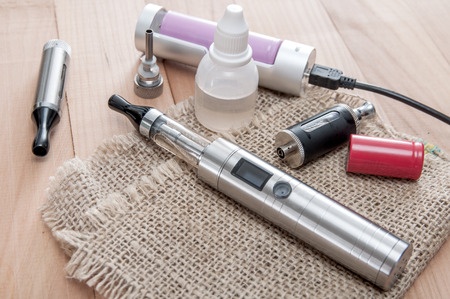
Vaping is the use of an electronic device from which you inhale the vapors of a liquid.  The liquid may contain various flavors and nicotine.  

e-cigarette

Because the devices are small (some akin to cigarettes), and because "smoke" is produced when you exhale while enjoying the activity, many people around you may think you are smoking.  And here in the United States, smoking is banned in many public areas, office buildings, shops, and restaurants.

Many vapers (or, people who are vaping), receive glares and comments from people in their vicinity.  They may be told they cannot smoke even though, technically, they're not.

Vaping is not necessarily a smelly activity like smoking is.  The mild fragrance that may be emitted is not typically strong enough to be disturbing to others.

While this may be true, until vaping and smoking are easily distinguishable, they are bound to be considered the same in many opinions.

Appropriate Vaping Etiquette

One thing vapers can do to win over anti-smoking opinions is show courtesy and understanding.  As is the basis of etiquette, show consideration for the people around you and the environment in which you find yourself.

For instance, it may be perfectly acceptable to vape while attending an outdoor concert, but not in a restaurant.

Other mannerly behaviors for vapers are . . .

  • When in public or surrounded by other people, ask if they are okay with vaping before you do it.
  • Avoid vaping around children.
  • If you are in an establishment where smoking is prohibited, do not vape.
  • If you are in a place where smoking is prohibited, but vaping may be acceptable (like a bar or outdoor venue), ask the management of the establishment, and the people around you, for permission.
  • Be respectful when someone asks you to cease vaping.

Though vaping has advantages over cigarette smoking - it's a healthier and more economical alternative - the acceptance of vaping will spread more quickly when vaping etiquette is observed.  After all, people who observe mannerly behavior are more easily respected by others.

For more vaping etiquette guidelines, take a look at this infographic, courtesy of Steve Barrett at purplebox vapours.  


Contributor Candace Smith, teaches university students and professionals, the soft skills of etiquette and protocol. She found these skills necessary in her own life after her husband received international recognition in 2002. Plunged into a new “normal” of travel and formal social gatherings with global leaders, she discovered how uncomfortable she was in many important social situations. After extensive training in etiquette and protocol, Candace realized a markedly increased confidence level in meeting and greeting and dining skills and was inspired to share these skills that will help others gain comfort and confidence in dining and networking situations. Learn more at http://www.candacesmithetiquette.com/


Etiquette Enthusiast, Maura J. Graber, is the Site Editor for the Etiquipedia© Etiquette Encyclopedia



Friday, April 2, 2021

Etiquette and Eye Contact

Create Connections Through 
Eye Contact

Couple Making Eye Contact

Making eye contact is a natural part of daily life for most people.  You probably don't even realize how many times each day you do it.

When you look directly at someone with a relaxed facial expression you use one of the best methods of acknowledging that person, making yourself memorable, and keeping everyone honest.

Creating Connections

Have you ever noticed how babies meet or follow your gaze?  If you look directly at a baby, she will look into your eyes.  Look away, and she will follow your eyes to their change of direction.  Studies support this, proving that eye contact is natural, human habit.

Why?  Because humans want connections with other humans.  And the eyes have it.

When you first meet someone, etiquette guides you to look them in the eye as you shake hands.  It's a global response indicating that you acknowledge this person and validate his presence.  You are giving the gift of two things all humans crave - acknowledgement and validation - with one look and the touch of your hand.

This is also where the term "love at first sight" comes from.  The simple act of locking eyes with someone lets you know instantly if there is an attraction.  The longer the eyes meet, and the frequency of those glances, are a telltale sign of how strong the attraction is.  Keep this in mind the next time you attempt to get the attention of a potential special someone.

Reading People

Most of us think we can spot a liar because he doesn't make eye contact.  Well, this is sometimes true and sometimes not.

Research indicates that dishonest words are often coupled with purposeful eye contact.  Yes, a person will look you in the eye and lie to you!

However, if you suspect someone is not on the up-and-up and you confront her about it, attempt to make eye contact with her as you do so.  If she avoids your gaze, she's most likely lying to you.

In other situations, looking away can indicate shyness, sadness, or an attempt to avoid discord.  Be sure you consider the environment and situation you are in as you read the individual.  It's best not to jump to conclusions about someone.

But you can imagine how someone feels when shaking hands and eye contact is not made, and you may have experienced that yourself. 

Notice the body language of people when they greet and introduce people.  You'll know when eyes were met and when they were not.

When and How to Make Eye Contact

There's rarely a bad time to make eye contact.  When doing so, you make someone feel he has your full attention, that he is important, and that he is being heard.  Use this method of connecting with another person when . . .

  • You are participating in a conversation
  • You say hello, arrive at a meeting, see a friend at a party
  • You are introduced to someone

When you meet someone's gaze with a smile, you instantly create a positive connection in that person's mind.  This is important when you are entering a job interview, need to comfort someone, or are attracted to someone. 

But remember, staring or holding a gaze too long can make others uncomfortable.  Maintaining good eye contact leaves room for blinking and looking away for a second.  This provides a little relief, especially if you are concentrating on making sure you are doing it correctly.  I use the term, “long glances” as a way to think about it.

Culture is another consideration when employing eye contact to make a connection.  When traveling to another country, study the culture-specific rules.  Even though we value this practice here in the United States, there are some countries where it is considered offensive.

It is said the eyes are the windows of the soul.  As you peer into those belonging to other people, make sure yours are "open" as well.  Human connections are sometimes the best gifts we can offer.

Sources:  

"Eye contact detection in humans from birth," Teresa Farroni, Gergely Csibra, Francesca Simion, and Mark H. Johnson, accessed September 27, 2016, http://www.pnas.org/content/99/14/9602.abstract

"The Science of Eye Contact Attraction," The Art of Charm, accessed September 27, 2016, http://theartofcharm.com/flirting-and-attraction/science-eye-contact-attraction/


Contributor Candace Smith, teaches university students and professionals, the soft skills of etiquette and protocol. She found these skills necessary in her own life after her husband received international recognition in 2002. Plunged into a new “normal” of travel and formal social gatherings with global leaders, she discovered how uncomfortable she was in many important social situations. After extensive training in etiquette and protocol, Candace realized a markedly increased confidence level in meeting and greeting and dining skills and was inspired to share these skills that will help others gain comfort and confidence in dining and networking situations. Learn more at http://www.candacesmithetiquette.com/


Etiquette Enthusiast, Maura J. Graber, is the Site Editor for the Etiquipedia© Etiquette Encyclopedia



Wednesday, March 31, 2021

Properly Addressing Correspondence


How to Address an Envelope

Stack of Letters

It takes seconds to address an envelope.  And yet, we rarely receive a piece of mail with our name handwritten on it.

Sad, because this is the mail that makes our day!

When you check your mail, which pieces do you open first?  That's right, the cards and letters sent to you from someone who cares enough to take a moment and write a few lines - no special occasion required. 

In case you're out of practice, or were never sure how to address an envelope correctly, here are some basic rules for this meaningful task.

Titles

Men are addressed as Mr. and women are addressed as Ms.

Miss is used for girls up to the age of eighteen.  It can be used for single women as well, but the use of Ms. is the standard for adult women today.

Mrs. is used with a husband's name for a woman who is married.  If used with her given name, it signals that she is divorced.

Mrs. Thomas Banks (married)
Mrs. Sarah Banks (divorced)
Ms. Sarah Banks (any relationship status)


The Order of Names

Unmarried couples are addressed on two separate lines.  The woman's name is listed first.  For same sex couples, names may be listed alphabetically.

         Ms. Sarah Johnson
         Mr. Thomas Banks
         123 Alpha Street
         Anywhere, USA  09876

         Mr. James Allen
         Mr. Toby Welchel
         456 Alpha Street
         Anywhere, USA  09876

Married couples are addressed on a single line.

Mr. & Mrs. Thomas Banks
    or
    Mr. Thomas Banks and Ms. Sarah Johnson

If both names do not fit on one line, place the second name on a separate line, and indent it.

                                               Mr. Thomas Banks
                                                   and Ms. Sarah Johnson

When both recipients have military rank, the person with highest rank is listed first.

Colonel Thomas M. Banks and Lieutenant Sarah J. Banks

This also applies to non-military rank.

Senator Sarah J. Banks and Mr. Thomas M. Banks

Dr. and Mrs. Thomas M. Banks

But if both are doctors, you may shorten it a bit.

The Doctors Allen

Address an Envelope with Good Thoughts

Once you have the names of recipients listed correctly, be sure and double-check the mailing address.  You can look up zip codes and find additional tips on how to address an envelope on the United States Postal Service website.  

As you write the name and address on the envelope, think something positive about the person you're writing to.  Not only does this give you a good feeling in that moment, you may find that it carries over to the moment the envelope is opened!  Give it a try.  


Contributor Candace Smith, teaches university students and professionals, the soft skills of etiquette and protocol. She found these skills necessary in her own life after her husband received international recognition in 2002. Plunged into a new “normal” of travel and formal social gatherings with global leaders, she discovered how uncomfortable she was in many important social situations. After extensive training in etiquette and protocol, Candace realized a markedly increased confidence level in meeting and greeting and dining skills and was inspired to share these skills that will help others gain comfort and confidence in dining and networking situations. Learn more at http://www.candacesmithetiquette.com/


Etiquette Enthusiast, Maura J. Graber, is the Site Editor for the Etiquipedia© Etiquette Encyclopedia


Friday, February 5, 2021

The Art of Modern Introductions


How to Introduce Yourself 
and Others

(Socially and Professionally)

An Introduction

When you know how to introduce yourself and others in social and business situations, your confidence level reaches new heights and you suddenly find yourself unstoppable.

Can knowing this one little piece of etiquette really do this for someone?

Yes!

The art of introductions is the cornerstone of bringing people together.  And once mastered, you automatically assume the role of host wherever you go.  But remember, great hosting comes with great responsibility.

Allow me to provide some guidelines . . .

How to Introduce Yourself

No matter where you go, you're bound to see someone you don't know.  And in appropriate settings like a networking event, a birthday party, a big get-together at a friend's home, you should make the most of these social opportunities by introducing yourself. 

A self-introduction is as simple as saying, "Hi, we haven’t met.  I’m (insert your name here)," as you extend your hand for the common handshake.

If you're approaching someone you are familiar with, you could make your introduction a bit friendlier by using his name, "Mr. Robinson, my name is _________.  It's a pleasure to meet you."

Introducing Other People Socially

Now let's stretch your comfort zone and begin introducing others.  Here is the four-part formula for making correct introductions.

If the people you're introducing are:

  • Same age range, same gender - it doesn't matter whose name you say first.
  • Same age range, different gender - say the female's name first.

"Claire, this is my coworker, Troy.  Troy, this is Claire."

Different age range - say the older person's name first.

"Uncle John, this is my friend, Marilyn Mims.  Marilyn, this is my uncle, John Pike."

If one person is a VIP - the VIP's name is spoken first.  VIP = guest of honor, military officers, judges, elected officials.

"Mayor Smith, I'd like to introduce Emma Gold.  Emma, this is our Mayor, Tita Smith."

Also Keep in Mind

  • When introducing relatives, be sure and give their full names.  Your friends wouldn't call your parents "Mom" or "Dad", but won't have any other option unless you tell their names.
  • In business, and more formal occasions, use first and last names when introducing people.
  • It is always helpful to give a little more information about the people you are introducing.  "Troy, this is Claire.  She enjoys horseback riding, too."  You've just given Troy a terrific conversation starter, for which he will be grateful!
  • Smile and shake hands.  A warm, friendly smile wins people over every time.  Use it with the standard American greeting of shaking hands, and you'll definitely make a great impression.  And remember to make eye contact! 
  • Notice that in social introductions there are two sentences.  Be sure you don't interrupt before the introduction is complete.

Introducing Others at Business Events

Introductions in the professional world are based on position and rank in the company/organization.  State the name of the highest-ranking person first.

“Mr. Williams (boss), this is our new office assistant, Karen Staker.”

“Ms. Johnson (company president), may I introduce the head of 
our production department, Bill Sable.”

When a client or special sponsor/benefactor is being introduced, state the client’s name first, even if the person from your company/organization has a higher position in his/her company.  For example, your client is a VP of her company, and you are introducing her to your company’s President.

“Sally Jacobs, I’d like you to meet Dr. Richard Strong, who is our 
Founding Director of Simple.org.”

When you are introducing two people of equal rank in the corporate or academic hierarchy, introduce the one you know less well to the one you know better.

“John Kelly (you know him pretty well), I’d like you to meet Gretchen 
Smith (you’ve only recently met).”

Also and Always

  • After the introduction, continue addressing the person as Mr. or Ms. unless you are given permission to use his/her first name.  (You may choose to accept the offer or not.)
  • In formal/official business situations and at dinners, your host meets and greets you, and also introduces you to others.  In networking situations, introduce yourself. 
  • Re-introductions are helpful.  Someone is always struggling to remember a name.
  • If someone enters your office or work area and introduces himself as Bill Smith, "Welcome, Mr. Smith" always works.  Formality shows respect.
  • Don't forget to use your first and last name when introducing yourself!

Make the Most of Introduction Opportunities

Meeting someone new is like opening a gift.  You never know if your new acquaintance will turn into a best friend, an important client, or the love of your life.  The thrill of surprise is endless.

Now that you know how to introduce yourself and other people, there are many opportunities awaiting you.  Remember, the only true faux pas you can make here is not introducing yourself or someone else in your presence.

Practice these guidelines as often as you can.  And keep me posted on your progress!


 Contributor, Candace Smith is a retired, national award-winning secondary school educator, Candace Smith teaches university students and professionals the soft skills of etiquette and protocol. She found these skills necessary in her own life after her husband received international recognition in 2002. Plunged into a new “normal” of travel and formal social gatherings with global leaders, she discovered how uncomfortable she was in many important social situations. After extensive training in etiquette and protocol, Candace realized a markedly increased confidence level in meeting and greeting and dining skills and was inspired to share these skills that will help others gain comfort and confidence in dining and networking situations. Learn more at http://www.candacesmithetiquette.com/

Etiquette. Enthusiast, Maura J Graber, is the Site Editor for the Etiquipedia© Etiquette Encyclopedia

Saturday, January 30, 2021

Etiquette and Confidentiality

 Keeping a Confidential Conversation Private

Young Couple

Knowing when to share a piece of information, and when not to share it, is a life-long learning process.  No one is perfect and we all make mistakes in this regard.

At the same time, to be someone others can count on, you have to know when to keep a confidential conversation to yourself.  If you can't do this, you won't be considered trustworthy, and this can be costly when you think of the friendships and opportunities you may be losing.

How to Know When It's Confidential

You know you're in a confidential conversation when someone says, "This is just between us," "Please don't say anything, but . . ." or, "I can trust you not to tell anyone about this, can't I?"

However, a request for confidentiality is not always verbalized, so it is important to train yourself for mindfulness.  If the person with whom you are speaking changes the tone of or lowers his voice, you are likely to hear something that shouldn't be repeated.

If you're comfortable doing so, ask the person directly if what she is sharing is private.  Or you might just say, "I'll keep this confidential."

In fact, when it comes to sharing information, establishing some ground rules for yourself may be helpful:

  • Always consider the information from another person's perspective.  Can the facts be misconstrued at all?
  • Never say anything personal about someone unless that person is present, or if you can imagine her standing right next to you.
  • Never participate in gossip or harshly delivered messages.
  • The Bottom Line Rule of Thumb: if information is revealed that seems in any way personal to someone or his business, never repeat it.


When a Confidential Conversation Goes Public

What do you do if a friend or co-worker doesn't respect a confidential conversation?  You can always ask the person if he has permission to share what he's telling you.  And if what he's sharing is not professional or friendly, you can stop him and mention that you prefer not to participate.

You might also call for a higher standard of conversation: "John, I know you are a person who doesn't like office gossip, so let's raise the bar here."

When you are the brunt of the conversation, however, it is very difficult not to take it personally.  But try to remain cool, calm, and collected.

After much thought on what you will say, go to the source of the gossip and discuss the situation.  Try and understand, without direct accusation, what the underlying concern is.  It may be that what you told her was misunderstood and then not handled appropriately.

Consider your own behavior and words.  Did you share a confidential conversation with the wrong person?  Someone you shouldn't have trusted?  Or did you share information that wasn't yours to share?

If you were seeking relief by relying on a trusted friend, you probably feel very betrayed if that person did not keep your confidence.  You may need to take a stand with that person and be clear that what is being said (or done) is not appropriate.  Unfortunately, you may also have to accept that it can take time for publicized information to die down.

Communication is Key

Remember, communication is the goal of any conversation.  Having a reason, a purpose, for talking with someone else helps you keep your words aligned with that purpose.  And, hopefully, that purpose is never to spread confidential information.


 Contributor, Candace Smith is a retired, national award-winning secondary school educator, Candace Smith teaches university students and professionals the soft skills of etiquette and protocol. She found these skills necessary in her own life after her husband received international recognition in 2002. Plunged into a new “normal” of travel and formal social gatherings with global leaders, she discovered how uncomfortable she was in many important social situations. After extensive training in etiquette and protocol, Candace realized a markedly increased confidence level in meeting and greeting and dining skills and was inspired to share these skills that will help others gain comfort and confidence in dining and networking situations. Learn more at http://www.candacesmithetiquette.com/

Etiquette Enthusiast, Maura J Graber, is the Site Editor for the Etiquipedia© Etiquette Encyclopedia