Showing posts with label Covid-19 Etiquette. Show all posts

Monday, December 21, 2020

Minding One’s Virtual Manners


Be grateful, be kind, and mind your virtual manners. It’s actually quite natural for us to be kind; we are born hard-wired to be that way, so keep it up. It doesn’t take much time, and you rarely need any money to be kind. Reach out and check-in. Simple acts of kindness can make someone’s day, including yours. Etiquette skills will help you succeed in your professional and personal life, and they will hold their value long after the pandemic ends. So, put your best virtual foot forward. Your image, your friends and family relationships, even your career, may thank you for the effort.


The Importance of Etiquette in a Virtual World


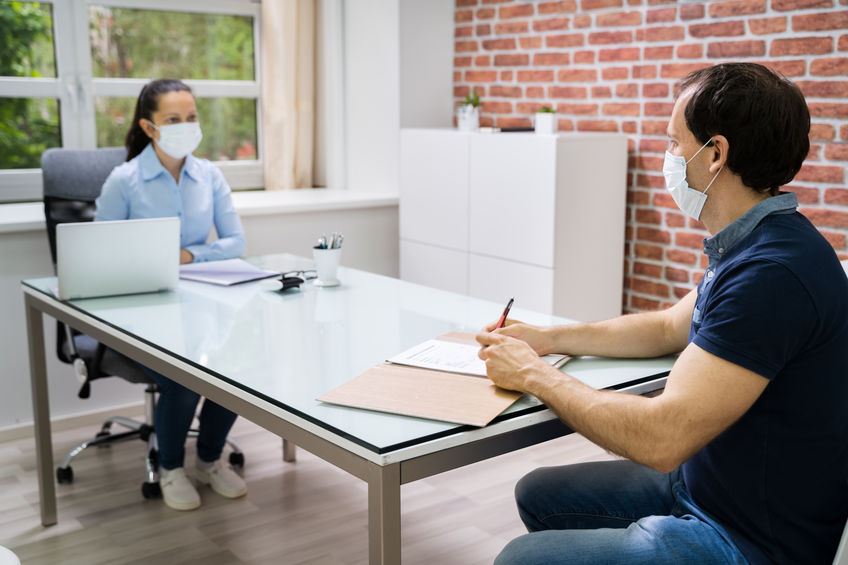
Technology has offered a lifeline during the Covid-19 global pandemic. In 2020, society made a big move, but we didn’t need to pack a thing, or hire movers. We moved to a new, virtual world, which requires unique skills to navigate and communicate with respect and politeness. Most companies, schools and even churches, now regularly conduct business almost entirely on a virtual stage. Further, technology isn’t all business; it’s a social outlet for friends and family to connect. Every single day, there are more than 300 million users on Zoom, 100 million on Google Meet, and 115 million on Microsoft Teams, among the most popular virtual communication platforms.

So, how are we conducting ourselves in this virtual world? In other words, are we minding our virtual manners? Well, not as well as we should. Virtual comportment begins with respect. It continues with good listening skills, speaking prowess, empathetic leadership, emotional intelligence, gratitude, and ends with kindness. Those are higher level soft skills, but there are some foundational practices that not enough of us consistently employ that can have a huge impact on our ability to communicate more effectively in a virtual environment.


Here are the top 5 ways to mind your virtual manners:


1. Be on time. Whether attending a business meeting or a virtual social gathering, be on time. It’s rude to show up late online, just as it is in person. Being late signals that you and your time are more important than everyone else. Your tardiness also interrupts the flow of the meeting while the leader briefs you on what you’ve missed. Whenever possible, be early. It can be a great time to connect outside the event.


2. Dress the part or dress a notch above what you’d typically wear. Stand out with respect. Please resist the urge to wear your sweats in virtual company. Dress in appropriate attire. For formal business meetings, dress as you would if you were in person. For less formal gatherings, dress “at-home professional.” Be neat and well put together. Your clothing should be pressed, fit well, and suit your body type. The same goes for virtual social events; dress in what suits you and the occasion. It is disrespectful to wear your binge-watching lounge-wear on camera. It sends the message that others are not worth the effort to dress the part.


3. Learn to listen. Do not interrupt. Do not speak over others. Just as you would in-person, engage your listening skills virtually. Be present, and listen. Wait until it’s your turn to speak, and utilize the “Raise Hand” function. Everyone wants a chance to contribute to the conversation; please be polite and do not interrupt. Interrupters send a signal that their ideas or comments are more important than everyone else’s. Be respectful and wait for your turn to talk. Meanwhile, enjoy the conversation by listening. When it is your turn, or if you are leading the meeting, be inclusive. Use an agenda to manage time, and ensure that everyone can contribute.


4. Be empathetic. Please remember to be empathetic when gathering virtually. As our stress levels climb — 2020 could be synonymous with previously unheard of levels of stress — our patience wanes, and our temper can fly. Be mindful and take an empathetic walk in someone else’s shoes. Use your emotional intelligence and try to understand what others feel. You may need extra patience, but it may help to imagine those who are homeschooling children, taking care of aged parents, and trying to work from home — they might need a little TLC. In business, if possible, be flexible. Socially, take time to reach out to a friend who could use a strong “virtual” shoulder to lean on.


5. Be grateful and kind. We should always be on our best behavior, in-person, or in the virtual world. Treat others how you want to be treated, with respect and kindness. Say, “please,” and “thank you” with sincerity. Research shows that being grateful will improve your mental and physical well-being and help relieve stress, which we could all use. In particular, be kind on social media. Remember that everything you post on social media is immortal. So, despite how easy it may be to leave a sarcastic comment, resist. Take the high ground, and embrace positivity. Remember your core etiquette skills.


Our newest contributor, Heidi Dulebohn is an international cultural consultant and etiquette expert. A coach for emerging and established leaders, she specializes in building advanced level soft skills like emotional intelligence, cultural competence and executive presence. She can be reached at heididulebohn.com


Etiquette Enthusiast, Maura J. Graber, is the Site Editor for the Etiquipedia© Etiquette Encyclopedia


Thursday, September 24, 2020

Etiquette and Contagious Diseases

They are kind of cute! — “Why don’t the contagious among us stay home or wear those cute little paper nose and mouth covers or at least feel bad about putting the rest of us at risk of sharing their misery? More people died in the post-World War I influenza epidemic than died in the war. Garden variety flu germs can be life-threatening to the elderly or those with vulnerable respiratory systems.”
— Photo, Etiquipedia’s private library

In 1998, the State of California banned indoor smoking in many public places, much to the delight of non-smokers and those suffering from respiratory problems. A law professor from UC Berkley wrote the following article, which appeared in the Los Angeles Times. The importance of respiratory etiquette that the professor outlined is timely, considering the world continues to deal with Covid-19 and our normal “cold and flu season” is nearly upon us.


Thank You for Not Sneezing


California’s assault on secondhand smoke reached its historic high this New Year’s, when even indoor areas in bars and casinos became smoke-free by force of law. The rules on smoke exposure have taken a 180-degree turn in less than a generation. In the United States of my youth, every citizen was hostage to other people’s cigarettes in airplanes, in offices and in almost every other public space. Now the indoor areas of public life are all nonsmoking zones— an inconvenience for the 25% of adults who smoke, but a benefit of large proportions to the respiratory systems of the 75% who do not.

But even smoke-free California is not a safe place to take your lungs to the office, on a bus or anywhere else in public. In this the season of cold and flu, the greatest hazard of appearing in public is not tobacco smoke, but rather contagious disease. And strangers who would not dream of blowing smoke in your face seem happy enough about coughing and sneezing whenever they see you coming.

Isn’t there a double standard here, when the same folks prohibited from smoking in my office building can sneeze me home for a week of hell with the reigning bacterium of the season? Why don’t the contagious among us stay home or wear those cute little paper nose and mouth covers or at least feel bad about putting the rest of us at risk of sharing their misery?

Could it be that the analogy between secondhand smoke and free-flying germs is farfetched because tobacco is deadly while colds are merely inconvenient? Nonsense. More people died in the post-World War I influenza epidemic than died in the war. Garden variety flu germs can be life-threatening to the elderly or those with vulnerable respiratory systems, a much quicker and much clearer threat than the statistical associations and 30-year time lags that constitute the case against environmental tobacco smoke. And anyone who thinks that this year’s killer colds are merely inconvenient does not have one. The only larger harm a stranger can inflict requires a deadly weapon.

Is the difference between environmental smoke and environmental germs the fact that there is no way to protect against disease contagion that is as simple as not smoking? But what if sick people stay home or cover their mouths? I am sure it is a burden to take such precautions, but isn’t the whole point of our smoking restrictions to impose the inconvenience on those who would otherwise cause harm?

Perhaps the difference is that potential victims can defend themselves more easily from public germs than from secondhand smoke. There are, after all, flu shots to be had every fall. But not all flu bugs respond to the shots available. And if anybody ever finds a vaccine that protects against colds, the financial rewards will make Bill Gates seem middle class. The only way to avoid the urban germ highway is to live alone and stay home all winter.


I’m not advocating passing a law that requires germ-free public spaces. But two smaller lessons do come from the contrasting treatment of germs and cigarettes. The first lesson is that what we tolerate in public is much more a matter of particular social expectation than scientific studies. The French read scientific journals just as assiduously as do Americans, yet the average French café contains more smoke than a forest fire. You are more likely to encounter a face full of tobacco smoke if you go to Japan this year than you would in Los Angeles. But you will also notice hundreds of people on the subway in Japan who wear paper masks to avoid spreading contagious disease that they carry. Which culture is more considerate depends on the particular subject of the inquiry. The standard for what is polite in public varies tremendously from one social setting to another.

Now for the optimistic lesson. If the social customs concerning secondhand smoke can change over time, maybe there is hope for some controls on germs as well. What we need is not a law, but an etiquette of contagious disease. Perhaps the near future can bring us to a standard where we expect more effort from ourselves and one another to avoid multiplying the bacterial miseries of our winters. — Franklin E. Zimring, U.C. Berkley, 1998


Etiquette Enthusiast, Maura J Graber, is the Site Editor for the Etiquipedia© Etiquette Encyclopedia

Tuesday, August 18, 2020

Tipping Etiquette for Deliveries

Current Appropriate Tip
Amounts for Deliveries

Delivery App
During the COVID-19 pandemic, while many of us are homebound to some degree, there are many others who are providing services to make our stay at home more convenient and comfortable.

They deliver food from our favorite restaurants, groceries, and prescription medications.  And many of us agree that these delivery people are putting themselves in potential harm’s way.

For this reason, we are noticing a shift in the tip amounts given.  As many other rules and practices are in suspension during this health crisis, there seems to be a consensus that tipping rules are being amended.

Today’s Tipping Amounts

The standard tip for a delivery person has typically been in the 10% to 20% range, depending on the service.  However, several people I have informally surveyed testify giving delivery people 25% during the pandemic.

Even if a tip has been included with the bill, some people prefer to leave a cash tip of a few dollars, which has been placed in an envelope or sealed baggie to give the delivery person a safer way to be thanked.  This helps to ensure the delivery person receives the entire tip, which is not always a guarantee depending on the delivery service you use.  It is also important to remember that the service fee or delivery fee itemized on your bill is not the tip. 

Curbside pick-up is also a popular trend for restaurants.  But even with social distancing guidelines in place, pick-ups still bring people in closer proximity to one another.  This brings tipping back into conscious consideration.  Many of the people in my informal survey report leaving a 15% to 25% on their bill or in the still-present cash tip jar when they pick up food rather than the standard 10%. 

Some people I interviewed have mentioned that the delivery person’s service and attitude is still a consideration when determining a tip amount.  Pleasant communication and tone, a warm greeting, and good eye contact have a positive impact on the person purchasing.  Yes, attitude matters, even when the buyer is hoping he is “paying it forward.”

Touchless Delivery

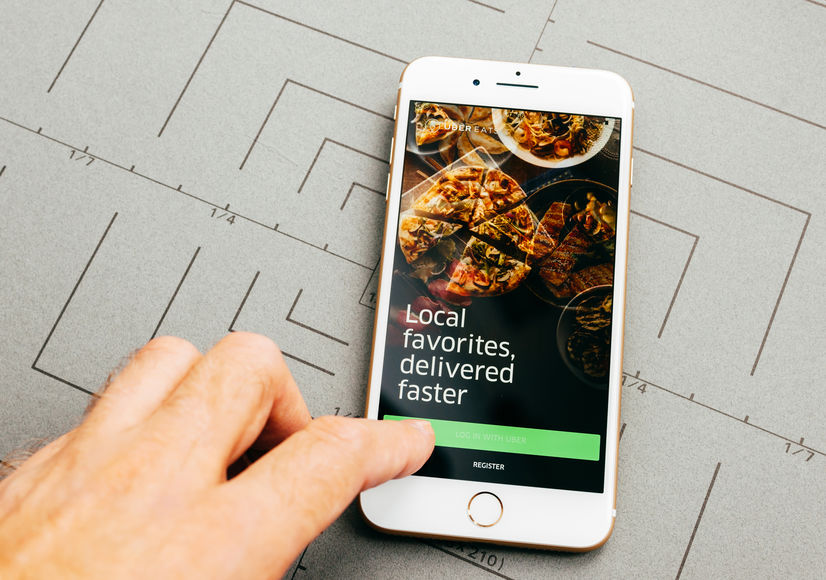
Phone apps have provided numerous delivery methods for food and other items.  Almost all of them encourage “touchless” delivery, providing instruction options such as “leave at front door” or “leave on porch.”   These options ensure that you make no personal contact with your delivery person.

Some who use these technologies report they don’t necessarily feel as connected to the helping hand idea mentioned above, and that they are mostly interested in the getting the food or items they ordered as cleanly and quickly as possible. 

However, even though separated by technology and “touchless” delivery, remember that another human is providing a service that allows you to stay in the safety of your home.

Going Forward

Many of us are showing our loyalty to favorite restaurants and local establishments.  When this pandemic is over, we want them to still be there and able to return to business as usual.  There is a sense that we play a part in serving the common good when we order from them.

Only time will tell as we fall out of these economically and socially challenged times.  But for sure, once we get more into “life as it was” mode, restaurants will have much catching up to do.  I am surmising that standard tips will rise from 18% to 20%.       

Ultimately, the amount of your tip is entirely up to you.  With appreciation, kindness, and respect as your anchors, putting yourself into the shoes of someone else will help in choosing to be the best version of yourself, regardless of the situation. 

And, a generous tip may just be what it takes to make someone else’s day a little better.  After all, much is being accomplished in making your life easier and safer these days.


Contributor, Candace Smith is a retired, national award-winning secondary school educator, Candace Smith teaches university students and professionals the soft skills of etiquette and protocol. She found these skills necessary in her own life after her husband received international recognition in 2002. Plunged into a new “normal” of travel and formal social gatherings with global leaders, she discovered how uncomfortable she was in many important social situations. After extensive training in etiquette and protocol, Candace realized a markedly increased confidence level in meeting and greeting and dining skills and was inspired to share these skills that will help others gain comfort and confidence in dining and networking situations. Learn more at http://www.candacesmithetiquette.com/


Etiquette Enthusiast, Maura J Graber, is the Site Editor for the Etiquipedia© Etiquette Encyclopedia
Tuesday, July 28, 2020

What is Covid-Etiquette?

Recently I surveyed a number of people to ascertain their views on Covid-19. Some weren't so concerned, feeling that it is just one virus amongst many that will eventually go away. Others are, understandably, on high alert, concerned and taking all necessary precautions. However, everyone understood the need for respiratory etiquette and social distancing at this time.  Many are wearing gloves to add an extra layer of protection, as well as a reminder not to touch their faces. 


What is Covid-Etiquette?


Covid-19 is a coronavirus that can cause significant respiratory illness especially in the aged and those with chronic disease. As a pandemic, its effects have touched every corner of the globe, and our lives have been changed. We can't work, go to school, play and interact in the same ways as before - we must distance ourselves socially in order to protect ourselves and others. Thus, we've needed to adapt to a new set of social etiquette rules:

The Delayed Greeting:


Recently I surveyed a number of people to ascertain their views on Covid-19. Some weren't so concerned, feeling that it is just one virus amongst many that will eventually go away. Others are, understandably, on high alert, concerned and taking all necessary precautions. However, everyone understood the need for respiratory etiquette and social distancing at this time.  Many are wearing gloves to add an extra layer of protection, as well as a reminder not to touch their faces. 

With this in mind, handshakes are on pause everywhere. When making an introduction, wait for a few seconds and observe the person you are greeting and allow how they want to greet you. You may be the person who will initiate the introduction. If so, use open body language, smile your acknowledgement, wave and promptly make an introduction, perhaps a small nod. The other person may want to just say a verbal greeting or an elbow bump or foot tap. (Tip or side of each elbow/tapping on someone shoe side on).

‘The Elbow Bump or Foot Tap’:

For those who do not mind very minimal contact, then the elbow bump may be in order. When doing so, you can have your face positioned to the side to minimise being in their personal space.

Personal Space:

Most cultures have ideals about personal space. In many western cultures personal space is estimated to be the space approximately 70cm around a person. Governmental authorities are advising today to keep at least 1.5m away. So when a person is talking to you, or positioned close to you, take note and move yourself to ensure a greater personal space.

You may be the one enclosed by a few people and feel uncomfortable. If you do, don't hesitate to politely speak up and remind others gently about the need to be distanced from each other. You may choose to quietly remove yourself from the situation.

Use Good Hygiene:

This will help prevent spread of the virus and other microbes.  Use soap and alcohol gel extensively. If you feel you are about to sneeze and there are no tissues available in that moment, use the inner side of your elbow to “catch” the sneeze. Then go to wash your hands and wipe your face. Most local governments have websites with helpful health procedures that one can follow as directed.

Wearing a Face Mask:

Given that Covid-19 is passed primarily through droplets (when breathing, talking, coughing, sneezing), wearing a face mask has become de rigueur worldwide. It has been enforced by regulations in many enclosed and non-enclosed public spaces, depending on what country or city you are in. Therefore, protect your community and yourself by keeping a few face masks handy at home, in the car, your bag or back pocket. For example, in his latest media release, Daniel Andrews, State Premier for Victoria, Australia, stated that from 22nd July 2020, face masks are mandatory and anyone caught not wearing a face covering will be fined $200.

Simply put, etiquette demonstrates care, concern and kindness for yourself and others. It has never been more important on a personal, and global scale. By using the gestures listed here, you can help stop the spread of Covid-19.

Personal Information:

Revealing whether or not you have tested positive for Covid-19 is a personal choice, but only to a certain extent. If you have been advised by your physician to tell those you have been in contact with, of your positive test result, you have an obligation to do so in order for them to seek out medical assistance. But what if it is a friend or family member who has tested positive? Do you have the right or the obligation to tell others who may come into contact with them? 

There is a very fine line between personal privacy and public safety. If someone is sick and knowingly goes out in public, exposing everyone to something like Covid-19, which is so highly contagious, they need to extend the courtesy to others of letting them know. If they do not extend this simple courtesy, and you know the person who is contagious actually has tested positive for Covid-19, others may be furious with you for not letting them know. In this case, the law may require you to disclose this information. 

If it is not a legal requirement to say that you, or someone you know, has or has not tested positive for Covid-19, use your common sense and discretionary powers to decide how much information you wish to give. Keep in mind, however, your obligations in the workplace versus those in your family or social circles, are considerably different. 


For many years, Etiquipedia contributor, Elizabeth Soos, has had a keen interest in cultural customs. With her European background and extensive travel, Soos developed an interest in the many forms of respect and cultural expectations in the countries she has visited. With her 20 years’ experience in customer service within private international companies based in Australia, and her lifetime interest in manners and research, she decided to branch out into the field of etiquette and deportment. Through her self-directed studies and by completing the Train-The-Trainer’s course offered by Emma Dupont’s School of Etiquette in London and by Guillaume Rue de Bernadac at Academie de Bernadac based in Paris and Shanghai, she founded Auersmont School of Etiquette.


Etiquette Enthusiast, Maura J Graber, is the Site Editor for the Etiquipedia© Etiquette Encyclopedia


Sunday, May 31, 2020

Etiquette in a Covid-19 World

Etiquette-fully Doing What's Best for Your Health and Safety

Social Distancing at Work
Our accustomed work availabilities, personal services, shopping routines, opportunities, schedules, deliveries, get-togethers, savings accounts, parties, eating out, routine health visits . . . the list goes on -- all but disappeared within a month.  As society is adjusting, we’re observing angst in simple communication of needs regarding individual and family health concerns.
Today’s health and safety issues loom large, reflecting widespread fear and concern about public policies and outcomes.  Disconcertingly, civil conversation can seem reserved only for those holding similar views.  Deeply-held beliefs about our safety and health loom large, and can affect our civility towards others, obstructing or interfering with constructive discourse or simple statements and requests regarding one's health needs.

Asking for What You Need

We're hearing a lot of un-etiquette-ful comments these days outside the margins of expressing one's personal needs.  Do any of the following comments sound familiar to you?

Stating a health need, but prefacing or adding an opinion or belief about reality.
  • “The virus is real, not a national conspiracy, so I want some social distancing if you don’t mind!” 
  • “I want my deliveries placed on the bottom step not close to my front door, as delivery people are sources of infection.”
  • “Get a proper mask or stand further away from me.”
Demands and accusations.
  • “I don’t care what the store manager says, you don’t have the right not to wear mask and serve the public.  Fact is, you’re breathing on my food as you’re ringing it up!”   
  • “You have no right to open your restaurant, as someone is bound to get sick with the virus.” 
  • “I don’t wear a mask, and you’re nutty to be pushing all this fear.”
Blurt-outs 
  • “You’re crazy going to a restaurant and risking infection.  Do you really think that is wise?”  
  • “Isn’t it now a bit of over-reaction to stick to quarantine rules and refuse to go out until there is a vaccine?”
  • “You can’t make me come to work until you prove that I am safe.”
There is no better time than now to ask Etiquette to come to our rescue!  After all, you should be able to state what you believe is best for you or a family member in your charge, directly and respectfully.  
Asking directly, clearly and kindly for what you need is etiquette-ful.
  • “John, you’re a little close for me.  Let’s stand further apart.”
  • “Family, I want to develop a TV use schedule, as I need one half hour for myself for some exercise video time.”
  • “I hear your apology for standing too close.  I will stand back a little and help out, too.”
  • “Ginny, I’m so grateful you can babysit for me again.  I hope you don’t mind my asking, for your reassurance that there be frequent hand-washing.”
  • “Hey guys, if we’re going to get together, just know my boundaries include social distancing—with love, of course!” 
  • “I know you and friends don’t wear masks, but I know you will honor my request that when we’re together, we all do.”

Civility Self-checks

“Etiquette can be at the same time a means of approaching people and of staying clear of them.”

~ David Riesman
Is the issue at hand a matter of “live and let live?”
Whether vendors are wearing face masks is not a confrontational issue.  Instead of arguing with those who aren’t wearing face masks, simply choose to shop elsewhere.

Ask yourself, “Am I being ‘recognizably respectful’ to others?” 
For example: Assume you are sheltering at home, and your washing machine has gone out.  You notify the company of your health safety expectations, instructing that anyone who enters your home must wear a mask, put on fresh gloves in front of you, and wear the shoe covers that you’re providing.  Acknowledge you are adding burden and that you appreciate their care and concern for your health.  Your gratitude might extend to a hand-written note.

Am I being cool, calm, and collected?
If you sense that emotion is involved, take a pause and think through what you want to convey.  Active listening and an encouraging statement may be just the right thing to do.

The person with whom you are speaking may have a completely different perspective and mindset on what the situation at hand is.  That person may be in the same position as you, trying to figure out how to ask for something regarding her own health and safety or needing to be respected for a different view on what’s being called for.

For all of us, things can seem a bit too much.  It may be helpful to remember that though our current generation has not dealt with a pandemic, humans have dealt with them before.  Then, as now, everyone did the best they could to get through it.  The most important thing is, they got through it.  And we will, too.


 Contributor, Candace Smith is a retired, national award-winning secondary school educator, Candace Smith teaches university students and professionals the soft skills of etiquette and protocol. She found these skills necessary in her own life after her husband received international recognition in 2002. Plunged into a new “normal” of travel and formal social gatherings with global leaders, she discovered how uncomfortable she was in many important social situations. After extensive training in etiquette and protocol, Candace realized a markedly increased confidence level in meeting and greeting and dining skills and was inspired to share these skills that will help others gain comfort and confidence in dining and networking situations. Learn more at http://www.candacesmithetiquette.com/


Etiquette. Enthusiast, Maura J Graber, is the Site Editor for the Etiquipedia© Etiquette Encyclopedia

Tuesday, May 26, 2020

Social Etiquette and Masked Messaging

Wearing face masks has become de rigueur Covid-19 etiquette for many around the world. They are being worn for one’s piece of mind, safety and health. But as Gabriella Kanyok explains, they can damage an important part of human communication. — This piece of textile covers half of our face, taking away what we have developed over centuries, our visual cues, which are part of our everyday interactions. By wearing a mask, our communication tool-kit is partially dwindled away. The movement of our lips, our facial expressions remain hidden. Our face as a whole is the gateway, which shows the reality of our feelings and mood, and is the focal point. With a global effort to defeat Covid-19, we have currently lost part of this focal point of that kind of communication, which only increases the distance between us, and slows down communication. These times, I would say, the mask protects us and alienates us at the same time.


Smile and the world smiles with you. Unless you’re wearing a mask, because then no one in the world can see you smiling, so they don’t smile with you, or if they do, you will never know it for sure. We don’t realize how many times we wear a smile a day: when we greet someone, when we express appreciation, when we like something, when we're embarrassed etc... Smiling is particularly important in the human gesture system. A smiling person makes a very positive impression and is extremely attractive. On the other hand, there are many different types of smiles, which are particularly important while interacting with each other.

Nowadays, we wear more often protective masks than our smile. This piece of textile covers half of our face, taking away what we have developed over centuries, our visual cues, which our part of our everyday interactions. By wearing a mask, our communication tool-kit is partially dwindled away. The movement of our lips, our facial expressions remain hidden.

Have you thought about that yet? Yet non-verbal cues play a central role in shaping our relationships, and right now, when we talk to someone, we don’t know how the other person feels, we can’t read his face, we don’t know what his intentions are. The eye is a mirror of the soul… but our eyes alone are not sufficient for the purpose. The movement of our eyebrows carries so many different meanings (confused, angry, surprised etc...), and shouldn’t be taken for granted. 

Our face as a whole is the gateway, which shows the reality of our feelings and mood, and is the focal point. We have currently lost part of this focal point of that kind of communication, which only increases the distance between us, and slows down communication. These times, I would say, the mask protects us and alienates us at the same time.

Furthermore, communication, and human to human interactions are not just transactional exchanges. The aim is to build relationships, and connect with each other, which is challenging these days. If the situation remains for months, then perhaps we need new, socially distanced non-verbal cues, otherwise how could we bring the message across? Will this be the new normal?

We don’t know it yet, but what we surely know is that currently we cannot rely on the non-verbal cues. What we could do is to clarify, and make sure that our messages are going across. 


Gabriella Kanyok is a diplomatic protocol, etiquette and communication expert with more than 10 years' experience in working with EU institutes, NGOs, internaionalorganisations, and supporting professionals. She not only advises and trains government- and EU officials, and businessmen in the field of diplomatic protocol and business etiquette, but she leads the communication department of an international organisation. Gabriella holds a Master’s degree in International Studies, and a Master’s in Protocol, Diplomacy and Cross Cultural Relations. She speaks Hungarian, English and French, and is currently learning Mandarin Chinese.


Etiquette Enthusiast, Maura J Graber, is the Site Editor for the Etiquipedia© Etiquette Encyclopedia

Wednesday, April 8, 2020

Etiquette for Covid-19 Remote Work

Interruptions kill your focus. Before sitting down in front of your computer, make sure that the needs of your children, even your pet’s are met. Try to work your schedule around the quality time spent with them. This gives children a sense of priority and security given the circumstances. 


EtiquetteWise™ Tips for Remote Work due to Covid-19


Following the recent pandemic caused by Covid-19, many governmental offices, international organizations, corporations and other professional institutions have advised their employees to work remotely from home. This sudden switch has created new rules to follow at home – namely our interim office location, at least for the foreseeable future. Working from home is not an excuse to loose your professionalism or your motivation. Nevertheless, overcoming these unprecedented circumstances needs self-discipline, patience and etiquettewise™ skills.

As I often work from home, I must say that it can be an advantage because I don’t have to commute, nor stress about the morning traffic, I have more flexibility in my schedule all the while carrying on my responsibilities as needed. However, I understand that this may not be the case for many of you. Therefore, I have prepared a short list of tips to help you manage your situation during this current lockdown.

Once Awake, Don’t Stay Long in Bed

This may be quite tempting, especially during rainy days, but it actually reduces your motivation and thereby your productivity for the day. Getting up early, even if not as early as usual, will help you sustain an efficient routine and organize your day better.

Exercise

If you own a home workout machine, then use it by all means. If not, I suggest working out at your own pace with safe exercise moves to keep your body active and healthy. If possible, use also online videos to practice some yoga moves as this can ease your anxiety and help you maintain your mental health. For those of you who own an outdoor facility such as a garden or a balcony, make use of it to stimulate your mind and get in touch with nature. Otherwise, let the fresh air in from the windows to boost your morale and increase your productivity.

Dress for the Day

For the professionals who need to work from home, act like as if you are actually going to work. Of course you don’t need to wear a suit and put on your shoes, but certainly take a shower, remove your pyjama and get into comfortable cloths. This creates a momentum to help you carry on with the day with a decent level of professionalism as you would in your office.

Prevent Interruptions

I know this is easier said than done, but interruptions kill your focus. Before sitting down in front of your computer, make sure that the needs of your children, even your pet’s are met. Try to work your schedule around the quality time spent with them. This gives children a sense of priority and security given the circumstances. If your phone rings while you’re working, prioritize the calls according to rationale. If it’s the number of an elderly family member, pick the phone up to ensure their wellbeing. Otherwise, keep all distractions, including social media, to a minimum until you get a break to catch up with everything. At home it is also tempting to take breaks for cooking, doing your laundry, chitchatting with your spouse or checking on the kids. If you feel like pausing often, then schedule short breaks to avoid distractions.

Keep it Professional

When you need to connect with your colleagues from your virtual office, stay focused and keep the conversation mostly related to work. Avoid complaining about the situation as you won’t accomplish much from stating the obvious but you could come across as a moaner. You might enjoy sipping your drink while talking, that’s fine of course as long as you keep all types of food away from your mouth while you’re on the phone. If you’re on a video call, mind your voice tone and body language, as you must still be perceived as a professional.

Assign a Space for Work-Only Purposes

Find a space in a less crowded room where you can keep your work papers, computer and other important documents without having to remove them on a daily basis. Some find the kitchen table as an alternative for a work desk or even the dining room as a compromise for a virtual office. The important thing is to establish a fixed area for your workload. Should there be family members besides you who needs work space as well, be supportive and give each other room. With patience and respect you can all be more constructive and efficient.

Develop a Routine

Organize a daily routine including an official start and an end time for work. This is crucial for your work-life balance at home. Manage your entire day developing rituals at your own rhythm from waking up early, exercising, doing your morning chores, showering, dressing up, eating at same time slots and working at determined hours. Just as you plan to start on time, plan as well to finish in a timely manner. As you know, Life ends but work never ends! Use the rest of the day to bond with your loved ones, connect with friends or even explore a new hobby. Creating such practices incorporates self-discipline and increases your productivity at all levels.

Be Human Again

Besides avoiding handshakes and social distancing, Coronavirus reminded humanity about what should matter most to mere mortals. Financial success, politics, economy, stock markets, commodities, banking, entertainment, tourism, you name it… they all have shaped the purpose of humankind in the era we live in. But with all these aspects on hold, human beings are back to survival mode. Your priority is to stay alive and healthy, embrace your family, appreciate what you have and empathize with the ones who are loosing these treasures today one way or another.

You may be unable to interact with others physically, but you can still use your well-mannered skills to show compassion, gratitude, respect, and humility with a caring phone call, a warm video connection or a kind message via social media.

With the Covid-19 crises, try to have a positive outlook, learn from your experience, focus on what really matters, stay safe and enjoy your loved ones. Remember you’re not alone, we’re all in this together!


Meet our newest contributor, Irma Vartanian Balian, founding Director of ProtocolWise ™. She has lived in North America, Europe and the Middle East. Her rich cultural background, her commitment to excellence, along with her expertise in Protocol and Soft Diplomacy, equipped lrma to provide valuable advice to her clients while putting them at ease. Irma trains leaders, corporate teams, diplomats, individuals, families and professionals, both regionally and internationally with assurance and professionalism.


Etiquette Enthusiast, Maura J Graber, is the Site Editor for the Etiquipedia©️ Etiquette  Encyclopedia