Showing posts with label Dinner Napkins. Show all posts

Tuesday, December 26, 2023

Dinner Napkin Etiquette

The Five Uses of Dinner Napkins

Napkins are used as signals as wells as tools during a meal. If you've ever assumed you didn't need one, perhaps knowing the five uses of a napkin might help you reconsider.

1. The Napkin Begins a Meal
Your napkin signals the start of a meal. If you are hosting, you should lead the way by first placing your napkin in your lap so that your guests will follow suit.
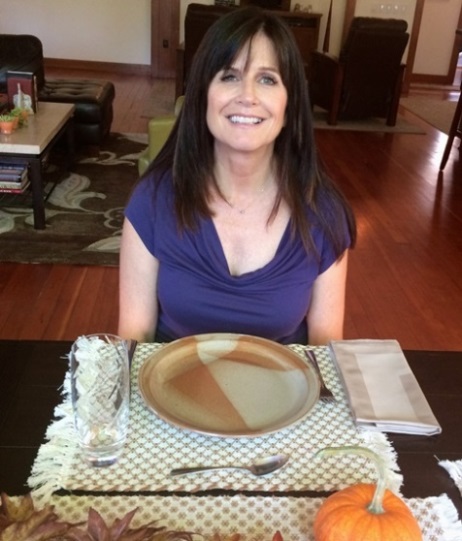
Your napkin is placed to the left of the forks, or decoratively on the place setting
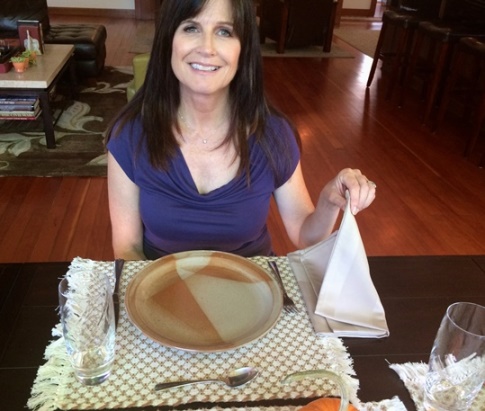
Pick up the napkin at the bottom right edge with your left hand
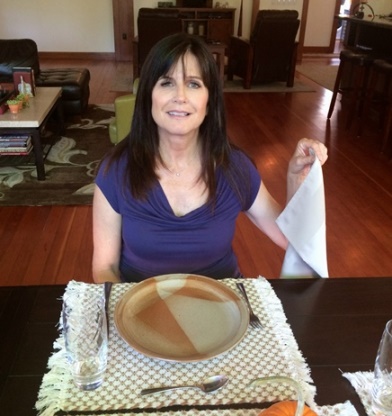
Lift your napkin off the table as it unfolds
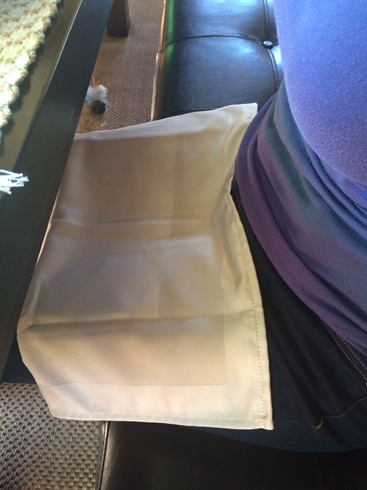
Place the napkin, folded in half, on your lap with open edges toward your waist

2. Catches Crumbs
We don't often stop to think about the true purpose of placing a napkin in our laps. Until we spill or drop something. 

How wonderful when there is an extra piece of fabric in our lap to catch those little mishaps!

3. Wipes Mouth Edges
Gently wipe the sides of your mouth as needed to remove crumbs or sauces. 

If you hold your napkin so the inside of the top layer is used to wipe, you can avoid having a visibly stained napkin in your lap and keep the stain from jumping onto you or the tablecloth.
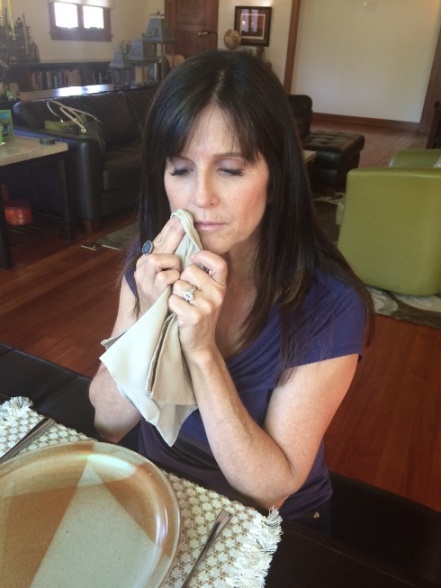
4. Contains Coughs and Sneezes
Napkins come in handy when you need to cough or sneeze at the table. Cover your mouth and nose with your napkin to help keep germs contained. 

However, if you can't stop coughing, or if that sneeze was a bit much, quickly excuse yourself and leave the table to take care of the issue.
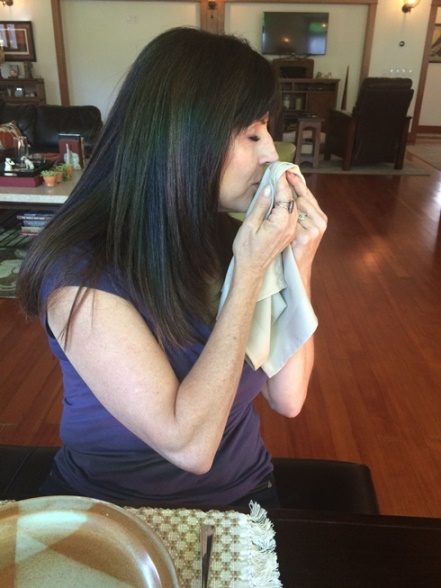
5. Napkins End the Meal
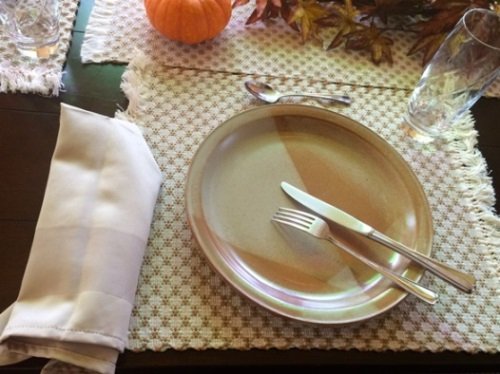
When the meal is done, loosely fold your napkin and place it on the left side of your place setting. 

This signals to fellow diners and the wait staff that it is time for you to leave.
What Not to Do with a Napkin
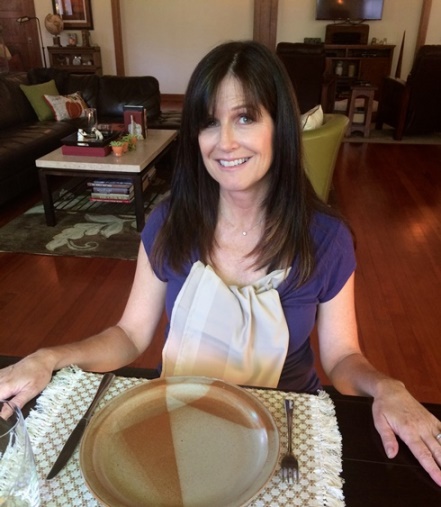
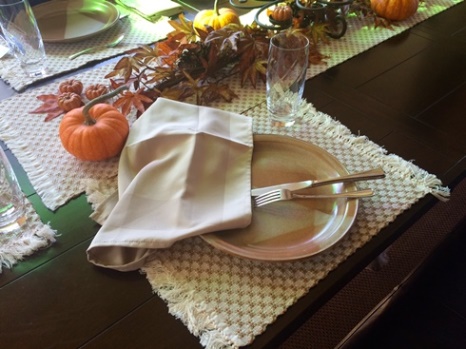
Place it anywhere on your body other than your lap
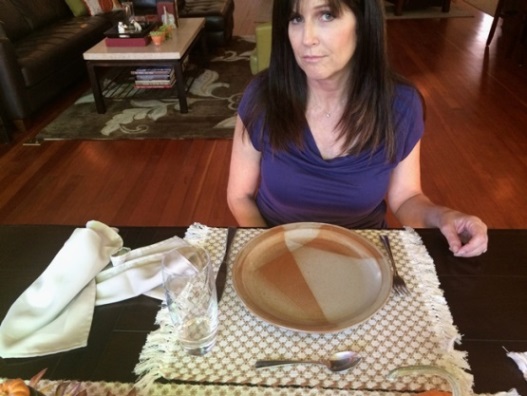
Lay it on the plate at any time
Place it anywhere on the table other than to the left of your place setting
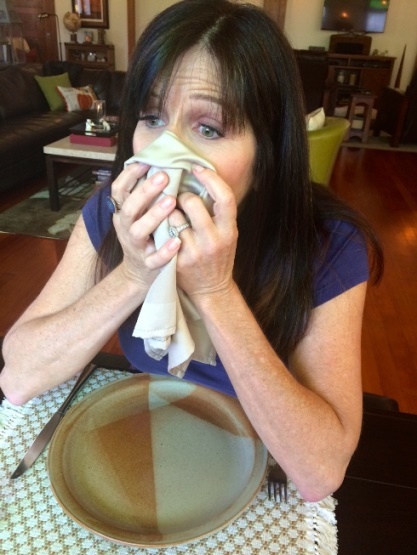
Blow your nose or wipe your face
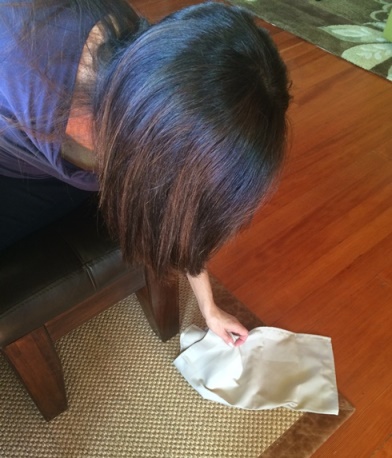
Pick it up off the floor if you drop it when you are at a restaurant. (At a restaurant, you would kick it under the table.) Simply ask your waiter or host for a new one
Just toss it anywhere on the table as you leave

In a variety of ways, proper use of napkins keeps your meals flowing in an efficient manner. Used as a signal, or a functional tool, your napkin is a most welcome helper.


 Contributor, Candace Smith is a retired, national award-winning secondary school educator, Candace Smith teaches university students and professionals the soft skills of etiquette and protocol. She found these skills necessary in her own life after her husband received international recognition in 2002. Plunged into a new “normal” of travel and formal social gatherings with global leaders, she discovered how uncomfortable she was in many important social situations. After extensive training in etiquette and protocol, Candace realized a markedly increased confidence level in meeting and greeting and dining skills and was inspired to share these skills that will help others gain comfort and confidence in dining and networking situations. Learn more at  http://www.candacesmithetiquette.com/


🍽Etiquette Enthusiast, Maura J. Graber, is the Site Editor for the Etiquipedia© Etiquette Encyclopedia

Friday, June 16, 2023

Table Setting – The Napkin

It is no longer good form to put bread or a dinner roll in the napkin– too many embarrassing moments resulted from that custom.

Proper Napkin Placement

The napkin is usually placed at the left of the forks and parallel with them. If the napkin is folded in a square or otherwise folded so that the corners are up, it is placed so that the open corners are toward the plate.

Often one sees the napkin placed on the service plate, but unless space demands this, it is not to be recommended. Service plates are usually of such loveliness that none of their beauty should be sacrificed.

It is no longer good form to put bread or a dinner roll in the napkin– too many embarrassing moments resulted from that custom, for it was most natural, when one was engrossed in conversation, to take up the napkin unthinkingly and discover the roll flying for the regions under the table. – From “The American Woman’s Cookbook,” 1951


🍽Etiquette Enthusiast, Maura J. Graber, is the Site Editor for the Etiquipedia© Etiquette Encyclopedia

Friday, June 2, 2023

Table Setting — The Linen

In the colored damasks every woman will find an opportunity to vary her table setting effects occasionally with a harmonious combination of pastel shades in tablecloth, glass, china and centerpiece. But the conservative woman still uses white damask for her formal dinners, and undoubtedly will continue to do so.

White linen damask is the classic covering for the dinner-table. Linen and lace are often combined and sometimes elaborate all lace tablecloths are used. When a lace cloth is used, it is placed on a bare table.

In the colored damasks every woman will find an opportunity to vary her table setting effects occasionally with a harmonious combination of pastel shades in tablecloth, glass, china and centerpiece. But the conservative woman still uses white damask for her formal dinners, and undoubtedly will continue to do so.

Tablecloths

Before you buy your tablecloths, carefully measure your tableand allow a twelve-to-fifteen-inch overhang for your dinner cloths, and an eight-to-twelve-inch overhang for your luncheon cloths.

Tablecloths should be French hemmed, with the hem three-eighths of an inch to one-half an inch wide, and napkins, also French hemmed, have hems of from one-eighth of an inch to one-quarter of an inch wide.

A white linen damask cloth is as appropriate for the formal or informal luncheon as for the formal or informal dinner. Gay colored sets of damask or of less formal materials are often used. Linen runners, with small luncheon napkins to matchare popular, especially on long tables like refectory tablesAn especially beautiful table is sometimes left bare except for the mats under the centerpiece, plates, and glasses. Damask napkins are used with these.

Luncheon sets are appropriate for use at breakfast, luncheon, an informal dinner, or supper.

For the tea table one may use an embroidered or hemstitched teacloth, or a simple or elaborate lace cover, or a combination of linen and lace.

Napkins

Tablecloths and napkins should match. For formal dinners an unusually large napkin is smart, but nowadays napkins, like most other “furnishings,” have shrunk, and one rarely encounters dinner napkins larger than twenty-eight inches and usually not larger than twenty-four inches.

Luncheon napkins are from thirteen inches to eighteen inches square. White hemstitched luncheon napkins are often used with a white linen damask cloth.

Breakfast napkins, often colored or with a colored border to match the cloth, are usually a bit smaller than luncheon napkins but may be the same size.

Appropriate to the appointments of the tea table are the small tea napkins, sometimes of fine handkerchief linen with scalloped edges, sometimes of damask with hemstitched borders, and sometimes of heavy linen with drawnwork borders. In houses with Early American furnishings —and with excellent laundry technic— the old-fashioned damask napkins with fringe edges add a charmingly quaint touch. But with uncertain laundering these are very apt to be unattractive looking. — “The American Woman’s Cookbook,” 1951


🍽Etiquette Enthusiast, Maura J. Graber, is the Site Editor for the Etiquipedia© Etiquette Encyclopedia

Thursday, June 13, 2019

Napkin Folding Etiquette

“If the monogram was placed in the corner, she turned in three corners of the square to give a shield shape. Sometimes she folded in two corners, which gave a six sided figure.”


Fashions in Folding
Followed by “Nancy Page”

When Nancy came to arrange her new linen closets, she decided that she might as well settle upon some definite rules for folding her freshly laundered linen. Then having settled that it would be easy to keep the shelves looking neat and tidy. She had small napkins of tea size, napkins used for breakfast and luncheon and the larger dinner napkins. 

In addition, there were the tiny fruit or cocktail napkins, but these small bits of linen needed no folding. She instructed her laundress to fold the tea napkins in triangular folds. The breakfast napkins were folded into squares and then diagonally across. The dinner napkins were folded into thirds, length-wise and then thirds, cross-wise. Sometimes she placed them folded this fashion on the dinner plates. Sometimes she gave them a narrow long appearance by turning in the two sides of the large square. 

If the monogram was placed in the corner, she turned in three corners of the square to give a shield shape. Sometimes she folded in two corners, which gave a six sided figure. All of these last folds were done loosely at time of setting the table. She instructed the laundress to fold towels so that they could be hung on racks with no refolding, and sheets were to be folded into thirds. length-wise and then in as many cross folds as necessary. This always brought the monogram on sheets in center top. – “Nancy Page” is by Florence La Ganke, 1929 


Etiquette Enthusiast,Maura J Graber, is the Site Editor for the Etiquipedia© Etiquette Encyclopedia

Tuesday, April 19, 2016

Napkin Etiquette at Versailles

The Table Napkin — Curiously enough, that article now considered almost indispensable, the table napkin, was first used only by children and was only adopted by elder members of the family about the middle of the 15th century. In etiquette books of an earlier date than this, among other sage pieces of advice for children, are instructions about wiping their fingers and lips with their napkins. It seems that the tablecloth was long enough to reach the floor and served the grown people in place of napkins. When they did begin to use napkins, they placed them first on the shoulder, then on the left arm and finally tied them about the neck.—Youth's Companion, 1893


French Court Napkin Etiquette

The French court imposed elaborate codes of etiquette on the aristocracy, among them the way to use a napkin, when to use it, and how far to unfold it in the lap. A French treatise dating from 1729 stated that "It is ungentlemanly to use a napkin for wiping the face or scraping the teeth, and a most vulgar error to wipe one's nose with it." And a rule of decorum from the same year laid out the protocol:

"The person of highest rank in the company should unfold his napkin first, all others waiting till he has done so before they unfold theirs. When all of those present are social equals, all unfold together, with no ceremony."

Fashionable men of the time wore stiffly starched ruffled collars, a style protected while dining with a napkin tied around the neck. Hence the expression "to make ends meet." When shirts with lace fronts came into vogue, napkins were tucked into the neck or buttonhole or were attached with a pin. In 1774, a French treatise declared, "the napkin covered the front of the body down to the knees, starting from below the collar and not tucked into said collar."


Etiquette Enthusiast, Maura J Graber, is the Site Editor for the Etiquipedia© Etiquette Encyclopedia