Showing posts with label Animal Behavior and Etiquette. Show all posts

Wednesday, February 4, 2026

Canine Etiquette

When talking canine etiquette, we’re not speaking of anything quite this formal!

In their relations with one another dogs have a keen sense of etiquette. A well known traveler makes this unexpected remark about a naked, native tribe of men living on one of the south sea islands: “In their everyday intercourse there is much that is stiff, formal and precise.” Almost the same remark might be made about dogs. Unless they are on very intimate terms they take great pains never to brush against or even to touch one another. 

For one dog to step over another is a dangerous breach of etiquette unless they are special friends. It is no uncommon thing for two dogs to belong to the same person and live in the same house and yet never take the slightest notice of each other. We have a spaniel so dignified that he will never permit another member of the dog family to pillow his head upon him; but, with the egotism of a true aristocrat, he does not hesitate to make use of the other dogs for that purpose.-Henry C. Merwin in The Atlantic, 1910


 🍽️Etiquette Enthusiast, Maura J. Graber of The RSVP Institute of Etiquette, is the Site Editor of the Etiquipedia© Etiquette Encyclopedia 

Friday, November 24, 2023

A 1936 Petiquette Lesson

It’s true. Studies have shown that just as with their children, humans are judged by their dogs’ behavior. An unruly, ill-mannered dog is a poor reflection on a person, whereas a well-mannered dog, trained to behave in front of visitors, is a sign of respect for others by the pooch’s owner. Before adding a dog to a household, it is good to ask a veterinarian or animal behaviorist which types of dogs would fit in to one’s home with the least amount of friction or upheaval. Numerous recent articles have tackled this topic in great detail, making suggestions for which breeds of dogs differing types of families should own. Calmer breeds of dogs are better suited to large, noisy households, while more highly animated breeds work well in homes which have fewer young children and distractions. While also like humans, every dog is different from another, the dog breeds rated best to avoid for families with kids include Chihuahuas, Rottweilers, Chow Chows, Pit Bulls and Dalmatians, according to parent24.com.
You Are Judged By Your Dog’s Behavior

What nice manners Jack and Jill have! They’re a credit to their mistress, thanks to her wise training. How did she teach them to lie down so obediently at her command? She trained each pup by itself. She let no other person help or even look on. 
While Jack, for instance, was sitting, she grasped his collar with one hand and with the other gently stretched his front legs out on the ground. Meanwhile she repeated, “Down! Down!” After several trials Jack proudly took the proper position himself, at the word “Down!” Then she rewarded him with a pat on the head! – Santa Ana Journal Home Service, 1936


🍽Etiquette Enthusiast, Maura J. Graber, is the Site Editor for the Etiquipedia© Etiquette Encyclopedia

Wednesday, December 8, 2021

Etiquette Found in Nature

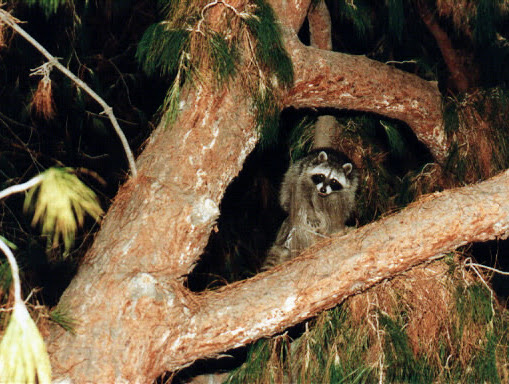
No “social pressure” can have been put upon the raccoons at the zoo to make them conform to the laws of the ‘coon etiquette, but they do so all the same…
-Image source, Cliff C. Graber


The Raccoon

The common American Raccoon (or “Coon”) is a slave to an unusual form of etiquette, which in its case has grown almost beyond the forms of conventional observance and become a kind of conscience to it. It will wash everything which it eats, if there is any water near. The fact seems to have been questioned by some writers, but it is certainly the habit of raccoons when kept in captivity with access to water. They are very fussy, particular creatures, much given to picking up and carrying off anything odd which takes their fancy. And this, whatever it may be, is duly taken to the water and well “rinsed out,” whether vegetables or bits of cloth, or even solid hard things, like shells and shiny stones.

No “social pressure” can have been put upon the raccoons at the zoo to make them conform to the laws of the ‘coon etiquette, but they do so all the same, and it is a fact that, last spring, one which had a litter of young ones, to which she was much attached, was suddenly seized with a desire to wash them, and carrying them down one by one to her little stone bath paddled and washed the poor little creatures as if she had been washing cabbages. It may be doubted whether the kittens did not owe their death to this perverted feeling of social duty in their parent, for they did not long survive their immersion. – London Spectator, 1895 


Etiquette Enthusiast, Maura J. Graber, is the Site Editor for the Etiquipedia© Etiquette Encyclopedia