Showing posts with label Buckingham Palace Etiquette. Show all posts

Friday, April 7, 2023

Royal Protocol Changed for President

Those in charge of the details of the arrangements, particularly the officials at Buckingham Palace, are at times puzzled over the niceties of etiquette, the result of the unique situation that there be no Royal guest at the palace. 
Public domain image of Buckingham Palace
Plans for President in London
The “Belgium Suite” Will Be Occupied by Mr. and Mrs. Wilson While Guests of King George at Buckingham Palace, and the Matter of Etiquette Has Been Simplified  

London, Dec- 23.—The “Belgium Suite” of Buckingham Palace, reserved exclusively for Royal guests until now, will be occupied by President and Mrs. Wilson during their stay in London. In the years of its interesting history it has had within its halls many crowned heads, one of the latest but least mentioned being the former German Emperor. It was given its name during Queen Victoria's reign. 
At the request of President Wilson, who evidently found too much is being crowded into his short stay in England, the proposed dinner at Manchester House Saturday night has been eliminated. 

Those in charge of the details of the arrangements, particularly the officials at Buckingham Palace, are at times puzzled over the niceties of etiquette, the result of the unique situation that there be no Royal guest at the palace. The puzzle, however, has been only momentary, except among some of the attendants, who have been casting about for guidance. It is understood that they have been informed that it will be plain “Mr. Wilson and Mrs. Wilson,” much to their relief.— Associated Press, 1918


🍽Etiquette Enthusiast, Maura J. Graber, is the Site Editor for the Etiquipedia© Etiquette Encyclopedia

Sunday, February 12, 2023

The Etiquette of a Palace Buffet

Traditionally the buffet was a means of impressing guests with the wealth and power of the monarch. In England the buffet has always been a purely decorative feature: although many of the items on the buffet were practical they were not intended to be used during the meal. The Venetian Ambassador to the court of Henry VIII in July 1517 wrote of a 'buffet 30 feet in length, 20 feet high, with silver vases and vases of gold, worth vast treasure, none of which was touched'.

At Buckingham Palace the Ballroom is decorated with two large buffets of silver gilt from the Grand Service. On display are pieces such as 17th-century candle sconces; huge dishes decorated with biblical or mythological scenes; monumental flasks, jeweled cups, ivory tankards, silver-gilt bowls and dishes. These lamps in the form of phoenixes were originally intended to warm plates or dishes supported on their outspread wings.

Traditionally the buffet was a means of impressing guests with the wealth and power of the Monarch. In England, the buffet has always been a purely decorative feature: although many of the items on the buffet were practical they were not intended to be used during the meal. The Venetian Ambassador to the court of Henry VIII in July 1517 wrote of a 'buffet 30 feet in length, 20 feet high, with silver vases and vases of gold, worth vast treasure, none of which was touched'.

George IV created extraordinarily lavish buffets. The Shield of Achilles — an enormous piece of silver gilt 90 cm (35 in) in diameter and cast with Apollo in his chariot riding forth from the centre was created for his coronation banquet and was prominently displayed on the buffet. The tradition was continued by later monarchs.— From “The Royal Table: Dining at the Palace,” 2008


🍽️Etiquette Enthusiast, Maura J. Graber, is the Site Editor for the Etiquipedia© Etiquette Encyclopedia

Sunday, November 17, 2019

Dining with British Royalty

A typical 19th century “game plate.” – The “game course” was once a staple of fine dining and expensive sets of “game plates” were purchased by fastidious hosts and hostesses, to serve the game on to each of their dinner guests. In Gilded Age dining, after the roast course, the game course was next in order (if it was included, as it generally was in an elaborate dinner). Celery was the appropriate accompaniment of the game course. The salad was sometimes served with the game; otherwise it followed as a course by itself. According to gunsonpegs.com, the Pheasant Shooting season runs from the 1st October – 1st February in Great Britain, however in Northern Ireland the Pheasant Shooting season runs from the 1st October – 31st January.

The Ever-Present Pheasant

There can be no doubt about pheasant being the favorite game dish of the Queen and Prince Philip, and when in season it appears repeatedly on the Royal menu. For this reason there is always a large number of pheasants stored in the giant deep-freeze, which the Queen had installed in the palace kitchens some years ago. Previous to this, selected game and fish were sent to several deep-freeze stores in London for the palace kitchens to draw upon when required. 

In addition to pheasant, the Queen's chefs keep a healthy supply of game deep-frozen in readiness, as seen from this typical palace list:
  • 55 pheasants 
  • 33 partridges 
  • 21 woodcock 
  • 20 grouse 
  • 3 snipe 
  • sand grouse 
  • venison
  • 33 salmon 
  • 4 lb prawns 
  • 2 lobsters
At Balmoral and Sandringham the success of the hunting and shooting on the moors and fields always has a direct bearing on the main course for dinner which is why grouse, venison, pheasant and partridge appear in a variety of forms with great regularity. After the Court returned to London from Balmoral, the Royal family would also hold regular shooting parties in Windsor Great Park. 
An individual “bird knife and fork” in the Chantilly sterling pattern. The game course could consist of partridge, pheasant, duck, woodcock, snipe or other popular birds eaten in the 1800's. The steel-bladed bird knife was the forerunner of the stainless steel, steak knife we know today, after a serrated edge was added.
In the days of Edward VII there were lavish supplies of hot food for the Royal shooting parties, even though it was relatively simple by his standards. A typical picnic lunch might consist of mulligatawny soup and Scotch broth, stewed mutton, hashed venison, Irish stew and game pies. For dessert there would be plum pudding and apple tart. – From the book, “Dinner at Buckingham Palace”


🍽Etiquette Enthusiast, Maura J Graber of The RSVP Institute of Etiquette, is the Site Editor for the Etiquipedia© Etiquette Encyclopedia 

Wednesday, June 6, 2018

Royal Garden Party Etiquette


Garden parties have been held at Buckingham Palace since the 1860s, when Queen Victoria instituted what were known as ‘breakfasts.’  More like late lunches in the afternoon, the number of garden parties held at Buckingham Palace was increased from two to three a year, in the 1950s.
Garden parties are among the most relaxed and informal Royal events one can attend. With tea, cakes, good weather and a beautiful garden to stroll in, the day can seem quite festive without going over the top.
Every summer, the Queen hosts a garden party at the Palace of Holyroodhouse, in Edinburgh. Three or more garden parties are hosted by her at Buckingham Palace, as well. Over 30,000 people usually attend these parties.

Originally taking the place of presentation parties attended by debutantes, the garden parties now are attended by people from all walks of life, having evolved into a unique way of recognizing and rewarding those who are involved in public service.  
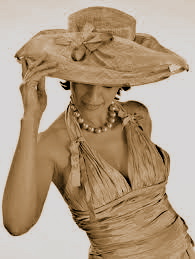
Guests need to dress up for their special day, and etiquette dictates what attendees can wear. Women are to wear a proper afternoon dress, with hats, or "fascinators". 


Gentlemen are to wear "morning dress" or "lounge suits". "National dress" and uniform are also appropriately worn to these garden parties, however military uniforms are only allowed to be worn by active members of armed forces and those members do need permission from a commanding officer to wear them to such an event.

 
The traditional full morning dress, aka "top hat and tails," is a morning coat, waistcoat, pants and a top hat. This look evolved after the French Revolution in the late 18th Century, when men looked for a dignified way of dressing that was not reminiscent of any aristocracy. Masculine, and with no embellishment, it soon caught on in popularity.

According to fashion historians, full morning dress is "a standard black morning coat matched with cashmere striped trousers and dove grey single or double breasted waistcoat. The neck wear is in grey or silver tones."

In contrast, a "lounge suit" is garments made from the same cloth, consisting of at least a jacket and trousers but can include a waistcoat and can be worn with a tie. Since the 1960s, fashion designers have tried to revolutionize the man's suit with more vibrant colors and innovative ways of cutting the suit's jacket and pants, but subtlety in color and cut works best at these garden parties. Etiquette also dictates that is it not fashionable for men to wear their wives fascinators in public, as shown in a photo experiment from an Australian Garden Party, even you think they look fetching!

The detailed description of a Royal Garden Party below, is from the official website of the British Monarchy- 

Garden Parties take place between 4.00 pm and 6.00 pm, although the Palace gates are open from about 3.00 pm. The Queen and The Duke of Edinburgh, accompanied by other members of the Royal Family, enter the garden at 4.00 pm, when the National Anthem is played by one of the two military bands playing selections of music during the afternoon.

After the playing of the National Anthem, The Queen and The Duke of Edinburgh, together with other members of the Royal Family, circulate among the guests through 'lanes' which are peculiar to Royal garden parties. Each takes a different route and random presentations are made so that everyone has an equal chance of speaking to Her Majesty and members of her family. The Queen and other members of the Royal Family eventually arrive at the Royal tea tent, where they meet further guests.

In both London and Edinburgh there are tea tents for other guests. Tea and other refreshments are served from long buffet tables. The quantities served are enormous. At a typical garden party, around 27,000 cups of tea, 20,000 sandwiches and 20,000 slices of cake are consumed. Some 400 waiting staff are involved in the serving. 


At about 6.00 pm, The Queen and other members of the Royal Family leave the garden, when the National Anthem is played to mark the end of the party. 


At Buckingham Palace the Yeoman of the Guard, Gentlemen at Arms and Gentlemen Ushers are on duty. At the Holyroodhouse garden party the Royal Company of Archers and the High Constables of the Palace are on duty.


The Queen and Duke arriving at a Palace Garden Party

This blog post was first posted on Etiquette with Maura Graber in 2012


Etiquette Enthusiast, Maura J. Graber, is the Site Editor for Etiquipedia© Etiquette Encyclopedia

Thursday, January 11, 2018

Puzzling “Niceties of Etiquette”

Though the King and his family were not in attendance for dinner, President and Mrs. Wilson were photographed with the British Royal Family at Buckingham Palace, in 1918

Mr. and Mrs. Wilson Will Occupy “Belgian Suite” While in London; Some Puzzled Over Niceties of Etiquette

“The Belgian suite,” reserved exclusively for Royal guests until now, will be occupied by President and Mrs. Wilson during their stay in London. In the years of its interesting history, it has had within its walls many Crowned Heads, one of the latest, but the least mentioned at Buckingham Palace, being the former German Emperor. It was given its name during Queen Victoria’s reign, and was always known as the “House of the King of the Belgians,” when Royalty was entertained here. 

At the request of President Wilson, who evidently found that too much is being crowded into his short stay in England, the proposed dinner at Lancaster House Saturday night has been eliminated. This was to have been a function only second to the banquet at Buckingham Palace Friday night. Instead of the Lancaster House banquet, Premier Lloyd George will entertain the President at dinner Saturday, to meet the War Cabinet. 

Those in charge of the arrangements, particularly the officials at Buckingham Palace, are puzzled at times over the niceties of etiquette, the result of the unique situation that there will be no Royal guests at the Palace. These puzzles, however, have been only of momentary duration, except among some of the aged attendants who have been casting about for guidance. It is understood that they have been informed that it will be plain “Mr. Wilson” and “Mrs. Wilson,” much to their relief. – Sacramento Union, 1918

Etiquette Enthusiast, Maura J. Graber, is the Site Editor for the Etiquipedia© Etiquette Encyclopedia