Showing posts with label Correspondence Etiquette. Show all posts

Friday, December 8, 2023

Finer Points of Letter Writing

The girls said, “Mother didn’t lick the envelope, Miss Allen, honestly, she didn't.” They seemed to think that the teacher might believe that they had opened the envelope to read the note.
The Children Learn Fine Points Of Letter Etiquette

The two Green sisters had a note for teacher. Mother had sent it with them. As the teacher took it in her hands the girls saw her eyes fall upon the open flap of the envelope before she looked at the address on the envelope itself.
The girls said, “Mother didn’t lick the envelope, Miss Allen, honestly, she didn't.” They seemed to think that the teacher might believe that they had opened the envelope to read the note.

Miss Allen said, “I am sure you did not open this, girls. You see, your mother knows that it is not correct to close the flap when she sends a note by messenger. Suppose we talk about letter writing
when the last bell rings.” During the ensuing discussion the children learned the following things about letter writing:
  • First, that simple, plain letter paper is better than any gaudy or heavily decorated stationery. Correct letter paper is always unlined and certainly not perfumed. 
  • Fashions in monogramming change but rather plain initials, not too large, are always in good taste. 
  • Gold edged cards, monograms heavily embossed or engraved in silver or gold are not as correct as the smaller ones, embossed in a color. 
  • Any note should be enclosed in an envelope, not sent with a corner of the folded paper turned down.But when the note is delivered by anyone other than a professional messenger the flap of the envelope is left unsealed. 
  • The envelope may carry the words, “kindness of,” but this is unnecessary. The recipient will know it has been brought by the bearer, so why state it on the envelope? 
  • It is silly to use colored inks. There is nothing easier to read than black on white or cream. 
  • Lavender ink, green ink, red ink may have their place on invitations for special affairs, such as a Saint Patrick's day party or a Christmas affair, but for every day use there is nothing nicer than black, or a blue so deep it looks black. – By Florence La Ganke, aka “Nancy Page,” 1936


🍽Etiquette Enthusiast, Maura J. Graber, is the Site Editor for the Etiquipedia© Etiquette Encyclopedia

Sunday, September 24, 2023

A Little on Correspondence Etiquette

A 19th century lap desk, hidden inside what looks like a book of Shakespeare’s works. It opens to stow one’s stationary, pens, ink, etc… – Don’t underscore! “Underscoring is often carried to an absurd excess, especially by very young ladies, who italicize every other word and thus rob their emphasis of all real significance. No word should be underscored unless its importance is very great.”

The Closing of a Letter

Letters of a formal character should be closed with some formal expression, as "Your obedient servant." "Yours truly," "Yours very truly," and "Yours respectfully," are reserved for business letters. "Cordially yours," "Faithfully yours," "Affectionately yours," are familiar forms for use in friendly correspondence, but ingenious people will frame a now set of words for every occasion, fitting them, as Wilkins Micawber was wont to do, to the state of his mind or to the object of his letter.

Neatness

Great care should be taken to avoid blotting and blur. ring. It is neither a compliment to your correspondent nor to yourself to send a letter or note marred by splotches. and blurr of ink. It is also inexcusable to cross your lines, as if stingy of paper as well as indifferent to the eyes of the one to whom you write. The whole sheet may be filled, if desired, but criss-crossing must never be indulged.

Underscoring

Underscoring is often carried to an absurd excess, especially by very young ladies, who italicize every other word and thus rob their emphasis of all real significance. No word should be underscored unless its importance is very great. - From “Our Manners And Social Customs,” by Daphne Dale, 1891


 🍽Etiquette Enthusiast, Maura J. Graber, is the Site Editor for the Etiquipedia© Etiquette Encyclopedia

Tuesday, September 5, 2023

1920’s Correspondence Etiquette

For the informal letter there are no arbitrary rules, except the social laws of common courtesy, and one may express his thoughts in his own best way.

Every letter one writes introduces anew the problem of what expressions to open with. Each letter presents a viewpoint of its own and requires a distinctive and separate approach. No set rule to cover all cases can be given, fortunately.

One general law may safely be given: First and foremost, do not begin a letter with an abrupt apology for neglect and delay. No one likes to receive a communication which opens with an admission of neglect, delay or worse behaviors. A formal note must not exceed one page in length is written on the first page only. The social letter is either formal or informal.

The formal letter must be written according to socially established practice. It is employed for invitations to formal affairs, for announcements, and in the acknowledgment of these letters. The third person is always used. When one receives a letter written in the third person one replies in kind. In formal notes and letters, the hour and date are written out in letters, no figures being used.

For the informal letter there are no arbitrary rules, except the social laws of common courtesy, and one may express his thoughts in his own best way. In any correspondence certain observances are requisite, namely:

  • Correct spelling, capital letters at the beginning of each sentence.
  • A new paragraph with the start of every new subject.
  • Periods, commas and question marks in proper places.
  • A blank margin on each side of the writing. 
  • Do not substitute dashes for proper punctuation.

— “From Etiquette of Correspondence, A Tuckaway Book for Milady's Desk,” by Belle Brandt, 1928


 Reminder: We have a free webinar on Dining According to Hollywood and Dining Etiquette as Presented on Film! You can watch it live on September 23rd at 4:00 pm PST (Pacific Standard Time). We have a limited number of viewers who can attend via Zoom, however, if you are registered and cannot watch the event live, you’ll be sent a video link to watch a copy at your leisure. Link to the Free Webinar –– https://events.humanitix.com/dining-according-to-hollywood-the-art-of-dining-on-film Please email any questions to: theetiquettechannel@gmail.com


🍽Etiquette Enthusiast, Maura J. Graber, is the Site Editor for the Etiquipedia© Etiquette Encyclopedia

Tuesday, April 5, 2022

Etiquette of Correspondence and Favors

“Politeness forbids any display of resentment. The polished surface throws back the arrow. Remember that a favor becomes doubly valuable if granted with courtesy, and that the pain of a refusal may be softened if the manner expresses polite regret.” – Above is a decorative, late 19th C. young woman’s lap desk, disguised as a complete book of Shakespeare’s works, for her personal correspondence.


Letters Offering Favors

Be careful in writing to offer a favor, that you do not make your friend feel a heavy weight of obligation by over-rating your services. The kindness will be duly appreciated, and more highly valued if offered in a delicate manner. Too strong a sense of obligation is humiliating, so do not diminish the real value of the service by forcing the receiver to acknowledge a fictitious value. Let the recipient of your good will feel that it affords you as much pleasure to confer the favor as it will give her to receive it. 

A letter accompanying a present, should be short and gracefully worded. The affectionate spirit of such little epistles will double the value of the gift which they accompany. Never refer to a favor received, in such a letter, as that will give your gift the appearance of being payment for such favor, and make your letter of about as much value as a tradesman's receipted bill. — From The Ladies' Book of Etiquette, and Manual of Politeness A Complete Hand Book for the Use of the Lady in Polite Society, 1860


Etiquette Enthusiast, Maura J. Graber, is the Site Editor for Etiquipedia© Etiquette Encyclopedia 

Friday, December 31, 2021

Early 20th C. Correspondence Etiquette

Out of every hundred successful men and women, ninety-nine are punctilious letter writers — A late 19th century lady’s lap- desk or travel writing desk, disguised as a book of Shakespeare’s Complete Works.


Answer All Letters Promptly

“A man may write any time if he set himself doggedly to do it.” —Samuel Johnson

I have found that out of every hundred successful men and women, ninety-nine are punctilious letter writers. One of the first things the man who wants to win in politics does, is to establish strict rules for answering letters. It would be safe to say that no man who has been elected to a high political office has ever done so without the aid of careful habits in regard to letter writing.

Surely no man has ever become President of the United States within late years, who has not early formed the habit of attention to answering letters. If you doubt this, read the biographies of Roosevelt, of Lincoln, of Cleveland, of any of the other men who have lived in the White House. And if big men like that haven't been able to win out without writing letters, how can you hope to do so?

The social leader whether she leads society with a capital “S” or is president of the woman’s club in a town of 10,000 or the most popular member of the Ladies’ Aid in a village with one church, a store and the post-office is, in nine cases out of ten, punctilious about answering letters. Let her become careless in this regard and see how soon her popularity wanes.

Are you aware of the fact that strict etiquette requires that any formal dinner invitation that is received by a note requires a definite acceptance or regret by the return post, – surely on the day that it is received?

Do you know that gifts from friends whom you cannot thank in person at once, should always be acknowledged within a week? This applies to Christmas gifts and wedding gifts. It is a careless bride who waits till after she is married to write “thank you” notes for her wedding presents. To be on the safe side make a rule that any personal or social letter that is not an answer to a letter of your own deserves an answer and that answer should be dispatched within ten days.

If keeping up what one calls a correspondence with a friend out of town, a longer interval may intervene. Remember that it would be better for you never to carry on any of these correspondences at all, than to neglect the imperative letters of social obligation and courtesy.

Etiquette requires that any invitation on which R. S. V. P. is written, should be answered within a day or two of receipt, that any invitation save that for a church wedding or tea – when R. S. V. P. is not engraved on the invitation – requires a prompt answer. Etiquette requires that the announcement by letter of an engagement, a birth, death, marriage or illnes requires a prompt reply. So much for the strict requirements of good form. 

Remember besides that courtesy prompts the well bred man or woman to write notes of congratulation on the occasion of wedding or birthday anniversaries of friends or near relatives, when it has been impossible to call for an unusual length of time, when there is illness in the family or on the occasion af any misfortune or good fortune.

But remember that promptness is the first requisite of good form in letter writing. The best way to make sure of promptness is to have suitable writing materials at hand – and if you have good black or dark blue ink, a pen and plain white paper of conventional shape and size, you have all that etiquette demands in the way of writing equipment. – By Mary Marshall Duffee, 1917


Etiquette Enthusiast, Maura J Graber, is the Site Editor for the Etiquipedia© Etiquette Encyclopedia


Wednesday, March 31, 2021

Properly Addressing Correspondence


How to Address an Envelope

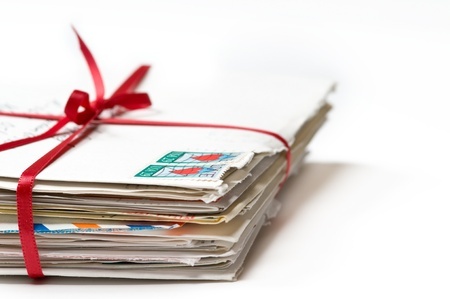
Stack of Letters

It takes seconds to address an envelope.  And yet, we rarely receive a piece of mail with our name handwritten on it.

Sad, because this is the mail that makes our day!

When you check your mail, which pieces do you open first?  That's right, the cards and letters sent to you from someone who cares enough to take a moment and write a few lines - no special occasion required. 

In case you're out of practice, or were never sure how to address an envelope correctly, here are some basic rules for this meaningful task.

Titles

Men are addressed as Mr. and women are addressed as Ms.

Miss is used for girls up to the age of eighteen.  It can be used for single women as well, but the use of Ms. is the standard for adult women today.

Mrs. is used with a husband's name for a woman who is married.  If used with her given name, it signals that she is divorced.

Mrs. Thomas Banks (married)
Mrs. Sarah Banks (divorced)
Ms. Sarah Banks (any relationship status)


The Order of Names

Unmarried couples are addressed on two separate lines.  The woman's name is listed first.  For same sex couples, names may be listed alphabetically.

         Ms. Sarah Johnson
         Mr. Thomas Banks
         123 Alpha Street
         Anywhere, USA  09876

         Mr. James Allen
         Mr. Toby Welchel
         456 Alpha Street
         Anywhere, USA  09876

Married couples are addressed on a single line.

Mr. & Mrs. Thomas Banks
    or
    Mr. Thomas Banks and Ms. Sarah Johnson

If both names do not fit on one line, place the second name on a separate line, and indent it.

                                               Mr. Thomas Banks
                                                   and Ms. Sarah Johnson

When both recipients have military rank, the person with highest rank is listed first.

Colonel Thomas M. Banks and Lieutenant Sarah J. Banks

This also applies to non-military rank.

Senator Sarah J. Banks and Mr. Thomas M. Banks

Dr. and Mrs. Thomas M. Banks

But if both are doctors, you may shorten it a bit.

The Doctors Allen

Address an Envelope with Good Thoughts

Once you have the names of recipients listed correctly, be sure and double-check the mailing address.  You can look up zip codes and find additional tips on how to address an envelope on the United States Postal Service website.  

As you write the name and address on the envelope, think something positive about the person you're writing to.  Not only does this give you a good feeling in that moment, you may find that it carries over to the moment the envelope is opened!  Give it a try.  


Contributor Candace Smith, teaches university students and professionals, the soft skills of etiquette and protocol. She found these skills necessary in her own life after her husband received international recognition in 2002. Plunged into a new “normal” of travel and formal social gatherings with global leaders, she discovered how uncomfortable she was in many important social situations. After extensive training in etiquette and protocol, Candace realized a markedly increased confidence level in meeting and greeting and dining skills and was inspired to share these skills that will help others gain comfort and confidence in dining and networking situations. Learn more at http://www.candacesmithetiquette.com/


Etiquette Enthusiast, Maura J. Graber, is the Site Editor for the Etiquipedia© Etiquette Encyclopedia


Friday, November 20, 2020

Correspondence Etiquette — the Don’ts


Whether hand written, via email or text, these tips survive the test of time—Don’t write anything in a perfunctory way; remember always that each letter or endorsement should bear the impress of the writer's dignity, courtesy and intelligence.


Some ‘Don’ts’ for Letter Writers —They Might Help You

Samuel McGowan, Paymaster General of the United States Navy, has compiled a long list of instructions for the members of his department of the service, particularly on the subject of letter writing. The Paymaster’s department is the business office of the United States Navy, and what are good rules for it are good rules for any business house. 

The following is the list of “Don'ts” for letter writers, which Paymaster General McGowan has compiled, believing that the advice is good for any person who has to write letters or conduct business negotiations. 

The “Don’ts” follow; 
  • Don’t write at all unless you have something to say; and, having said it, stop. 
  • Don’t answer a letter just because somebody else wants you to. If you did, many a purposeless correspondence might go on indefinitely. 
  • Don’t give reasons or explanations unless they are called for.
  • Don’t write anything in a perfunctory way; remember always that each letter or endorsement should bear the impress of the writer's dignity, courtesy and intelligence. 
  • Don’t hesitate to say “no” if that is the proper answer; having said it, don’t attempt to suggest an alternative aimed to circumvent your own “no.” 
  • Don’t discuss people; discuss things.
  • Don’t write anything quarrelsome; it would probably not be signed. 
  • Don’t get excited; or, if you do, don’t record the fact on paper. 
  • Don’t use long words when it can be helped (and it generally can). — Los Angeles Herald, 1914


Etiquette Enthusiast, Maura J Graber, is the Site Editor for the Etiquipedia© Etiquette Encyclopedia

Tuesday, September 29, 2020

Email and Messaging Etiquette

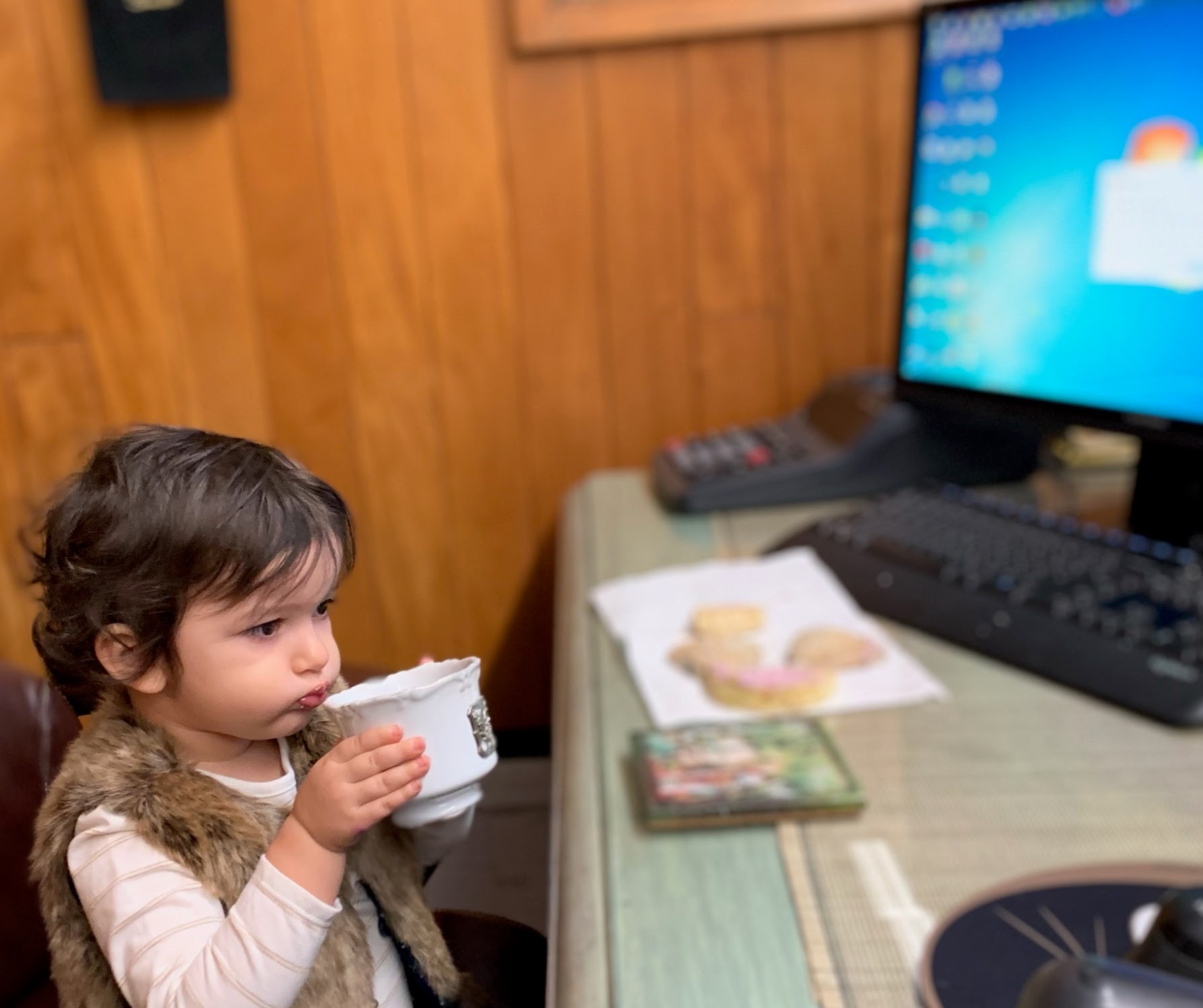
Are you frustrated waiting for that response to your email? Are you whiling away the time by filling up on cocoa and cookies? — In 2015, Market Watch reported that the majority of people (52%) who send a work-related email, expect a reply within 12 and 24 hours, citing a survey of 1,500 people by MailTime.com, but 60% of people say they will wait two days to reply to their email.
—Photo source, Etiquipedia private library

Correspondence Course... 

Are Your E-Mails Sending the Wrong Message? 


So “You’ve Got Mail.” Do you have a headache too? If you find the pace of your correspondence a bit overwhelming, you are not alone. As the speed of business accelerates with the aid of new technology, so does the communication that goes with it. In the crush of e-mail, faxes and old-fashioned mail, many of us have taken to dashing off terse letters. Indeed, being curt even seems to be good etiquette, especially in electronic mail. But writing in shorthand can sometimes leave too much open to interpretation, so it’s important to carefully consider the few words you do use.

1. Write clearly and read clearly. If you do either in a rush, you are more likely to have a misunderstanding. Think about the reasons you are sending or receiving and keep them in mind as you deal with the correspondence.

2. Factor in cultural differences and personal styles. Business people in some countries demand pleasantries in communications; others prefer humility. Some people write long and some write short. Be aware.

3. Are you too nice in your writing? Make sure to keep things professional and get to the point quickly regardless of your audience.

4. Are you too mean in your writing? If you are, you probably don’t know it. But if you hear complaints that you don’t listen to feedback well or that your directives leave no room for discussion, then you may appear mean. If you intend to be authoritative, remember that negative approaches often engender negative responses.

5. Must you reply to everything? Again, know who you are corresponding with. Generally, FYIs or policy memos do not need a response. A “thank you for the information” is always a nice touch— especially if you have useful information to return.

6. Keep copies. At least for a short time.

7. Be aware that your correspondence may be shared. If more than one person may read your document or mail, you may want to reword it. — Los Angeles Times, 1998


Etiquette Enthusiast, Maura J Graber, is the Site Editor for the Etiquipedia© Etiquette Encyclopedia

Tuesday, June 23, 2020

19th C. Cuban Correspondence Etiquette

It is de rigueur on the envelopes of ceremonious notes, invitations, etc... ladies writing to gentlemen, or to each other, or gentlemen writing to each other, use B. L. M. —“Beso las manos” (I kiss the hands). Gentlemen writing to ladies use B.L.P. —“Beso los pies” (I kiss the feet). The compliment, of course, for the hands and feet of the party written to. 


Effusive Politeness Found in Cuban Society 
Use of Certain Initials on a Letter Envelope – An Effusive Form of Correspondence — Extravagantly Polite Speech – Gallantry on the Street

I received a letter a few days ago from a Cuban. On the upper left hand corner of the outside of the envelope were the initials B.L.P. Now, any one who has studied Spanish knows that B.L.M., or B.L.P., in a letter of extreme politeness and etiquette, are used at the close of a letter; but the use of these initials on the envelope I hardly think is so familiar to the general student of Spanish. 

This is very usual, both here in Cuba and in Spain, on letters of some ceremony, and it is de rigueur on the envelopes of ceremonious notes, invitations, etc... ladies writing to gentlemen, or to each other, or gentlemen writing to each other, use B. L. M. —“Beso las manos” (I kiss the hands). Gentlemen writing to ladies use B.L.P. —“Beso los pies” (I kiss the feet). The compliment, of course, for the hands and feet of the party written to. 

The many expressions of friendship, respect, etc., used at the close of the Spanish letter are not sufficient without the usual B.L.M. or B.L.P. The following exclusive form is much used in writing to a person even of very slight acquaintance: “With the sincerest professions of sympathy and friendship from her affectionate servant, who B.L.P.” (kisses her feet), etc. To use one set of initials for the other shows a great ignorance of the etiquettes and conveniences of society. A Cuban lady of my acquaintance received on her fete day the usual compliment of a visiting card under cover from a gentleman. On looking at the envelope, she threw up her head with a jerk and remarked that “one could easily see that that man did not know anything, or he never would have put B.L.M., instead of B.L.P., on an envelope sent to a lady.” 

I must acknowledge that I could not appreciate the nice difference. But after all on reflection, there certainly is some difference between B.L.M. and B.L.P., and it is only a matter of Spanish language taste, which is the most agreeable proceeding. This is only one of the very little polite nothings of this very polite people. On being presented to a stranger—if a lady—instead of the usual bow, more or less gracious of our country, there is a cordial shake of the hand, accompanied by an extravagantly polite speech expressing the very great happiness this meeting has caused, ending with an offer to you from the lady of her house. Which is, in other words, an invitation for you to visit her. 

A single man goes through the same style of complimental speech and concludes by telling you that he lives at such a number on such a street, and begs that if you need his services, you will call on him. Whether sincere or not, these little polite forms are the flowery adornments of speech, and help to make up the refinements and illusions of life, more or less agreeable, according to the view one takes of them. 

What would be received by an American woman as an impertinence, is received by a Cuban with a gracious smile and a “gracias,” said in a most pleasant tone of voice, as, for instance, on being helped into her carriage by a man who is a complete stranger to her. If a gentleman is passing on the street when a lady is about to enter her carriage—if no gentleman is with her—he hands her into her carriage. This is considered here only what a man who is a gentleman would do under such circumstances. Compliments are sometimes paid by gentlemen to ladies on the street, but are considered “bad style.”—Cuban Correspondent, New Orleans Times Democrat, 1887


Etiquette Enthusiast, Maura J Graber, is the Site Editor for the Etiquipedia© Etiquette Encyclopedia

Sunday, September 8, 2019

Gilded Age Sealing Wax Etiquette

Most correct are the seals with beloved sentiments such as, “Forget Me Not,” “True Friendship,” “With My Hand and Sele.” – A Gilded Wax Seal 
Photo source, Pinterest

The Correct Thing
The correct thing now is to seal one’s letters with red sealing wax if you will, but preferably blue, green or cinnamon colored, and seal with your crest or coat of arms if you choose.  
But more correctly, still with emblems, such as the good old sentimental ones our grandmothers loved: “Forget Me Not,” “True Friendship,” “With My Hand and Sele.”—Chicago Herald, 1893


Etiquette Enthusiast, Maura J Graber, is the Site Editor for Etiquipedia© Etiquette Encyclopedia

Thursday, June 13, 2019

Etiquette of Written Correspondence

Miss Allen said, “I am sure you did not open this, girls. You see, your mother knows that it is not correct to close the flap when she sends a note by messenger...”

The Children Learn Fine Points Of Letter Etiquette

The two Green sisters had a note for teacher. Mother had sent it with them. As the teacher took it in her hands, the girls saw her eyes fall upon the open flap of the envelope before she looked at the address on the envelope itself. The girls said, “Mother didn’t lick the envelope, Miss Allen, honestly, she didn't.’’ They seemed to think that the teacher might believe that they had opened the envelope to read the note. Miss Allen said, “I am sure you did not open this, girls. You see, your mother knows that it is not correct to close the flap when she sends a note by messenger. Suppose we talk about letter writing when the last bell rings.” 

During the ensuing discussion the children learned the following things about letter writing. First, that simple, plain letter paper is better than any gaudy or heavily decorated stationery. Correct letter paper is always unlined and certainly not perfumed. Fashions in monogramming change but rather plain initials, not too large, are always in good taste. Gold edged cards, monograms heavily embossed or engraved in silver or gold are not as correct as the smaller ones embossed in a color. 

Any note should be enclosed in an envelope, not sent with a corner of the folded paper turned down. But when the note is delivered by anyone other than a professional messenger the flap of the envelope is left unsealed. The envelope may carry the words “kindness of” but this is unnecessary. The recipient will know it has been brought by the bearer, so why state it on the envelope? 

It is silly to use colored inks. There is nothing easier to read than black on white or cream. Lavender ink, green ink, red ink may have their place on invitations for special affairs, such as a Saint Patrick's day party or a Christmas affair, but for every day use there is nothing nicer than black, or a blue so deep it looks black. – By Florence La Ganke, 1936


Etiquette Enthusiast, Maura J Graber, is the Site Editor for the Etiquipedia© Etiquette Encyclopedia 

Tuesday, September 25, 2018

A Lady’s Writing-Desk Etiquette

Don't seal any letters that are going to tropical or very warm countries. The post-office authorities will usually reject them, as the sealing wax may melt and do damage to other mail.


Don’ts For Your Writing Desk

  • Don't address any one as “My dear friend,” or “Dear Friend.” This is old fashioned and out of date. 
  • Don't indulge in abbreviations in personal or social letters. In certain business letters certain customary abbreviations are usual which would be bad form in personal letters. 
  • Don't used lined paper. If you can't possibly write straight use black lines under your note paper to guide you.  
  • Don't write with pencil. It is bad enough to do it and worse yet to apologize for doing it. 
  • Don't use a half sheet of paper when you have a little to write on the extra sheet. The economy you effect by dividing sheets in this way is too insignificant to think of for a moment. 
  • Don't use colored inks jet black or a blue ink that dries almost black are the only sort sanctioned. 
  • Don't use perfumed stationery. It may have been in good form once but it is certainly not at the present time.
  • If there are any sachets in your writing desk, take them out. 
  • Don't seal your letters unless you are a past master in the art. 
  • Don't seal any letters that are going to tropical or very warm countries. The post-office authorities will usually reject them, as the sealing wax may melt and do damage to other mail. 

What Readers Ask... “I am a young girl of 20 and a boy friend of mine of whom I think of a good deal has gone away and has asked me to write. Would it be all right for me to write first or should I wait to hear from him?” Since he is the one who has left it would be customary to wait for him to write the first letter. It is usually the man’s place to write the first letter anyway. — Copyright, 1920, by the McClure Newspaper Syndicate.

Etiquette Enthusiast, Maura J. Graber, is the Site Editor for the Etiquipedia© Etiquette Encyclopedia
Sunday, April 1, 2018

Etiquette for Monograms


A dainty, antique sterling strawberry fork, with the letter “B” monogram.


Many antique utensils have been monogrammed. The monograms were put on the flatware not just as decoration, but also as a way of identifying the flatware’s owner and to stop pilferage by unscrupulous guests.  Throughout the 18th century, silver eating utensils and serving pieces were popular in Europe and America for only those who could afford them. Silverware was identified with women of the moneyed classes. 

At that time, women could not legally own land or other property, so their lives were limited to, and revolved around, the home and family. For this reason, silverware was significant as a woman's contribution to the financial part of a marriage, and it was often purchased for her one piece at a time and kept in what was called a "hope kchest," along with other household goods such as linens and quilts. 

Because silver flatware was bought with a woman's taste in mind, until the latter part of the 19th century, most patterns were designed for women. The silver flatware, along with other household goods, was traditionally monogrammed with the bride's initials, by the mid-20th century. Often times, one will see utensils with monograms on the back. The flatware is turned upside-down at place settings. This is considered a “French fashion,” however, it was seen by the 17th and 18th centuries on many fine British tables, as well. 

And other monograms?

Traditionally, monogramming is done in the following manners:
  • Nicknames are rarely used in monogramming personal items, unless they are done for a child’s “thank you” note cards or personal items.
  • For items belonging to the unmarried woman, a monogram using all three names is done in this order – First, last, middle initials, with the center initial larger than the two flanking initials.
  • For items belonging to the married woman, a monogram using all three names is done in the same order – First, last name, middle initials, with the center initial larger than the two flanking initials.
  • Traditionally, an engaged couple doesn’t use the same last name before their wedding ceremony. Instead, they may wish to use a duo-gram, which incorporates the couple’s first-name initials. Once they are married, they may use their full combined initials.
  • If you do want to use a duo-gram, the old custom is followed with “ladies first,” by monogramming the wife’s first initial, the couple’s married last name in the center, and the husband’s first initial last.
  • For items belonging to the single or married man, a monogram using all three names is done in this order – First, middle, last name initial, with all of the initials being the same size.
  • Monograms for those unmarried, are most times the single first-name initial. This allows for the addition of a surname’s initial at a later date.
  • It is incorrect to have one’s monogram engraved on the envelope of social stationery. The monogram should appear only on the note paper.


🍽Etiquette Enthusiast, Maura J. Graber, is the Site Editor for the Etiquipedia© Etiquette Encyclopedia

Monday, December 18, 2017

Victorian Note Paper Etiquette

The height of bad form is in the use of anything startling or pronounced. Paper that rivals the sunset in gorgeousness of hue, odd shaped sheets and envelopes or gilt edged paper stamp the user at once as one who is not familiar with the precepts of fashion. 

Etiquette in Note Paper...

Cautions That the Delicate and Refined Woman Should Remember

If there is any one thing in the world that may be said to denote the breeding of a person it is in the taste displayed in the use of note paper. Fashions change but slightly in that line, and artistic simplicity is the form to be sought after. There is nothing so offensive as eccentricity in styles of paper, for it is one of the little things that seem so trivial and count for so much in the eyes of the world. 

The height of bad form is in the use of anything startling or pronounced. Paper that rivals the sunset in gorgeousness of hue, odd shaped sheets and envelopes or gilt edged paper stamp the user at once as one who is not familiar with the precepts of fashion. And not fashion alone, by any means; it is refinement that is shown in the use of proper stationery, and refinement and fashion may not always mean the same. 

Never use a paper that is decorated with flowers in one corner, the leaves of which wander all over the sheet. Avoid anything in that way. A landscape resembling a Christmas card or fancy figures for headings are not in their proper places on note paper. There is nothing artistic in such forms, nothing refined, simply a display of bad taste and ill breeding that is shocking to the person well informed on such matters. The etiquette of note paper is dictated by taste. 

Ladies should use only the smaller size of paper, requiring but one fold, and the envelope should be square. The single correspondence cards have gone out of style and are seldom seen nowadays. The paper is generally linen or cream laid, as best suits individual taste and should be unruled. White or cream paper is the best, although a gentle shade of blue is permitted. Other tints are not desirable, neither are they proper. Do not use paper that is ragged at the edges nor envelopes with curious flaps. 

The best linen paper may be purchased at the same price as is paid for the fancy varieties, and the best is the cheapest: it is a guarantee of refinement. If a monogram is desired, have it engraved—never printed. In this country coats of arms and crests are out of place, but you may have a neat monogram or your initials for a heading with perfect propriety, only be sure that the work is in keeping with taste and not too prominent or glaring. 

The name of your country place is very good, the name of the village in which you live, or the street number, if you chance to reside in a city. In the latter case, however, omit the name of the town, and in either case the state should not be given. This is but a glance at the etiquette of note paper; it is very simple when you think of it, but so many people seem to be ignorant of the rules. The one great thing in note paper is to avoid vulgarity or show in any way, and then you know that you cannot be wrong. The simplest is the best. Oddities of tint or ornament which are the caprice of a day should be used with caution.—Harpers Bazar, 1892

Etiquette Enthusiast, Maura J. Graber, is the Site Editor for the Etiquipedia Etiquette Encyclopedia 

Wednesday, December 28, 2016

Christmas or Yule Card Etiquette

Etiquette for whose name is first, last and signatures...
Q. Whose name comes first if you use a card with your names printed or engraved on it?

A. Here the wife’s name is courteously used first; “Mary and Tom’’ (or "Mary and Tom Green”).


Q. If a Christmas card is engraved with the sender’s names, with “Mr. and Mrs.” should these be at the top or bottom of the card?

A. Always at the top. Otherwise, they might seem like a signature.


Q. When signing the card, whose name is written first the husband’s or wife’s?

A. It is courteous for the person signing the card to write the other name first. For example, if you sign the card for you and your husband, it should read: “Tom and Mary.'’ – The Desert Sun, 1966


Etiquette Enthusiast, Maura J. Graber, is the Site Moderator and Editor for the Etiquipedia© Etiquette Encyclopedia


Saturday, October 29, 2016

Letter Writing Etiquette

The calls for written expression are many, and unless the dame of fashion possesses an up to date scribe or social secretary, and the young girl will not, very likely, though the matron may, it is essential she should be well posted as to the etiquette of correspondence. 

The Etiquette of Correspondence

As the social season approaches and the young girl is just about to emerge into the world of society, a full fledged butterfly of fashion, many details in connection with the happy and auspicious event have to be considered, among them the polite art of correspondence. There is nothing which seems to reflect a general air of innate refinement and cultivation like that of being able to express one's self on all occasions with ease, elegance and fitness.

The calls for written expression are many, and unless the dame of fashion possesses an up to date scribe or social secretary, and the young girl will not, very likely, though the matron may, it is essential she should be well posted as to the etiquette of correspondence. Many hints might be dropped in regard to the manner in which to write a note or letter. For formal occasions there is always a prescribed usage, varying a little with the importance of the personage and the function and with the prevailing taste in such matters.

To illustrate my point, there are times and occasions when the stately "honor" is used in preference to the more familiar and cordial "pleasure," but the most important thing of all is to be able to compose informal notes and letters in an easy and colloquial style. The regular business letter, which women of affairs so frequently do write, should be brief and to the point, expressed clearly and concisely, at the right hours at most devoted to business is all too short for the rush and whirl of one tense and strenuous era. — Los Angeles Herald, 1908

Etiquette Enthusiast, Maura J Graber, is the Site Moderator and Editor for the Etiquipedia© Etiquette Encyclopedia
Saturday, April 9, 2016

Victorian Etiquette for Letters and Cards

Each individual can use a personal preference as to what tint shall be chosen, what style of monogram, if any, shall be impressed...

Victorian Etiquette, Letters, Stationery and Visiting Cards

If people that you are acquainted with meet a loss by death, and you think anything of such people, it would be proper for you to write a letter of condolence. You should confine yourself to a few words of sympathy. If the life of the person just gone has been a beautiful one, some allusion to that will be proper, but do not offer anything that would seem like preaching a sermon or deducting a moral. 

Etiquette demands a certain adherence to conventional forms in regard to the size and shape of the paper and envelopes used in writing letters of friendship, congratulations, condolence, etc... Beyond a compliance with this general requirement, each individual can use a personal preference as to what tint shall be chosen, what style of monogram, if any, shall be impressed, and whether the sheets of paper shall be plain or grained and rough. 

A gentleman may have a monogram on his paper and envelopes if he so desires without transgressing on the rules of etiquette; that is a matter of individual taste, but the requisite is that the stationery be of good quality, the handwriting plain and the style simple.

P. P. C. cards are not sent out when the party leaves the home for a short visit in the country. Such are used only when the person contemplates an absence from home for a long time, such as a tour of continental Europe or a visit to some other State, which may be of six months' duration or even longer. It is the duty of the person intending to absent himself or herself for a prolonged period, to make a call of adieu on friends, and if such are not at home then the visitor leaves a pour prendre conge card. — San Francisco Call, 1898 - 1899

Etiquette Enthusiast, Maura J Graber, is the Site Moderator and Editor for the Etiquipedia© Etiquette Encyclopedia