Showing posts with label Early 20th C. Etiquette. Show all posts

Sunday, November 2, 2025

Dance Etiquette vs Cultural Customs


“In Mexico it was a serious breach of etiquette for a woman to refuse a dance and then allow another man to have the same dance.” In the United States, it has actually always been considered ill-mannered to refuse a man a dance when asked politely, then to go on to dance with another gentleman who was not already written in on your dance card. Presumably, this was the reason for the popularity of the dance card and for dance cards filling up so quickly at the beginning of an evening. Gentlemen would ask for certain dances and their names would be written on the line for that particular numbered dance. A young woman’s escort or date to the dance was noted by an X on the lines for the particular dances promised to him.–   Public domain image of “Lolita & Juan” on a postcard.
RESENTS “QUEER” U.S. CUSTOMS AND LANDS IN JAIL

Ignacio Martinez. 21, Mexican, can’t understand American customs. Because his wife refused to dance with him a second time on Saturday night at a dance held by Mexicans in El Centro, and because she then accepted the dance with another man, Ignacio objected. He made such a disturbance that a city police officer was summoned and the young husband was placed under arrest. He was fined $30.00 in police court this morning. Failing to raise the money be was taken to the county jail to begin a 15 day term.
 
Ignacio said that in Mexico it was a serious breach of etiquette for a woman to refuse a dance and then allow another man to have the same dance. Martinez was recently arrested on a charge of wife abandonment, but when he agreed to provide a home for his wife and to support her, he was released. The two are said to have separated again since then. – Imperial Valley Press, 1924


🍽Etiquette Enthusiast, Maura J. Graber of The RSVP Institute of Etiquette, is the Site Editor for the Etiquipedia© Etiquette Encyclopedia

Friday, December 31, 2021

Early 20th C. Correspondence Etiquette

Out of every hundred successful men and women, ninety-nine are punctilious letter writers — A late 19th century lady’s lap- desk or travel writing desk, disguised as a book of Shakespeare’s Complete Works.


Answer All Letters Promptly

“A man may write any time if he set himself doggedly to do it.” —Samuel Johnson

I have found that out of every hundred successful men and women, ninety-nine are punctilious letter writers. One of the first things the man who wants to win in politics does, is to establish strict rules for answering letters. It would be safe to say that no man who has been elected to a high political office has ever done so without the aid of careful habits in regard to letter writing.

Surely no man has ever become President of the United States within late years, who has not early formed the habit of attention to answering letters. If you doubt this, read the biographies of Roosevelt, of Lincoln, of Cleveland, of any of the other men who have lived in the White House. And if big men like that haven't been able to win out without writing letters, how can you hope to do so?

The social leader whether she leads society with a capital “S” or is president of the woman’s club in a town of 10,000 or the most popular member of the Ladies’ Aid in a village with one church, a store and the post-office is, in nine cases out of ten, punctilious about answering letters. Let her become careless in this regard and see how soon her popularity wanes.

Are you aware of the fact that strict etiquette requires that any formal dinner invitation that is received by a note requires a definite acceptance or regret by the return post, – surely on the day that it is received?

Do you know that gifts from friends whom you cannot thank in person at once, should always be acknowledged within a week? This applies to Christmas gifts and wedding gifts. It is a careless bride who waits till after she is married to write “thank you” notes for her wedding presents. To be on the safe side make a rule that any personal or social letter that is not an answer to a letter of your own deserves an answer and that answer should be dispatched within ten days.

If keeping up what one calls a correspondence with a friend out of town, a longer interval may intervene. Remember that it would be better for you never to carry on any of these correspondences at all, than to neglect the imperative letters of social obligation and courtesy.

Etiquette requires that any invitation on which R. S. V. P. is written, should be answered within a day or two of receipt, that any invitation save that for a church wedding or tea – when R. S. V. P. is not engraved on the invitation – requires a prompt answer. Etiquette requires that the announcement by letter of an engagement, a birth, death, marriage or illnes requires a prompt reply. So much for the strict requirements of good form. 

Remember besides that courtesy prompts the well bred man or woman to write notes of congratulation on the occasion of wedding or birthday anniversaries of friends or near relatives, when it has been impossible to call for an unusual length of time, when there is illness in the family or on the occasion af any misfortune or good fortune.

But remember that promptness is the first requisite of good form in letter writing. The best way to make sure of promptness is to have suitable writing materials at hand – and if you have good black or dark blue ink, a pen and plain white paper of conventional shape and size, you have all that etiquette demands in the way of writing equipment. – By Mary Marshall Duffee, 1917


Etiquette Enthusiast, Maura J Graber, is the Site Editor for the Etiquipedia© Etiquette Encyclopedia


Thursday, September 2, 2021

British Etiquette Advice of 1900

It is not etiquette to ask a woman’s age, the price of her bonnet, or the name of her dressmaker. It is not etiquette to introduce disagreeable subjects, such as premature burial, vivisection, dissection, mother-in-law, Parliamentary patriotism, and disinterested charity.


Miss Beatrice Knollys, who has many friends in this city, and who is the writer of many of the little dialogues which have been published from time to time in “The London World,” “Black and White,” and other periodicals, has brought out a brochure, with advice on “The Gentle Art of Good Talking.” 
Some of the hints in making conversation can well be taken by many people in society. Here are a few:
  • It is not etiquette to talk of the Ten Commandments. It is unpardonably personal.  
  • It is not etiquette to talk to a widow or a widower about second marriages, for you only make them fib faithfully over the dear departed. 
  • It is not etiquette to ask a woman’s age, the price of her bonnet, or the name of her dressmaker. 
  • It is not etiquette to introduce disagreeable subjects, such as premature burial, vivisection, dissection, mother-in-law, Parliamentary patriotism, and disinterested charity. 
  • Give a person a higher title than he owns. 
  • Mistake a cad for a gentleman, a plain woman for a beauty, a silly man for a celebrity, any woman for a photographed star, any man (especially a clergyman) for a soldier. 
  • Talk shop to the young men or the young women who have just entered into their new career. They will be delighted, for no one loves shop conversation so much as those who are only on the doorstep of it.” 
This is a key, possibly, to the average British conversation. – The New York Times, 1900


 Etiquette Enthusiast, Maura J. Graber, is the Site Editor for the Etiquipedia© Etiquette Encyclopedia

Thursday, July 15, 2021

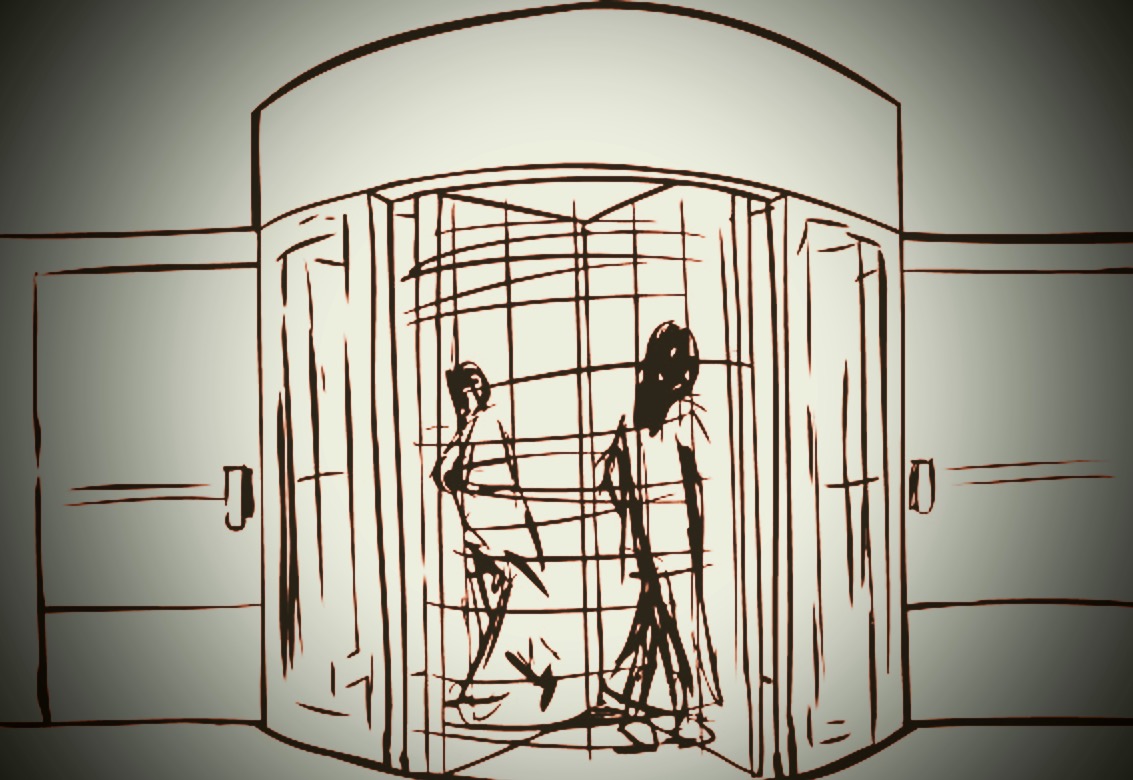
Revolving Door Etiquette

Some think the man should precede the woman furnishing the motive power, while she follows idly in the next compartment. Others hold that the rule “Ladies first” can have no exception…
The following chapter is from the book is entitled “Concerning Revolving Doors.” Listen to a bit of it: 
There has been some discussion of late as to the etiquette of the revolving door. When a man accompanied by a woman is about to be revolved in it, which should go first? Some think the man should precede the woman furnishing the motive power, while she follows idly in the next compartment. Others hold that the rule “Ladies first” can have no exception, therefore the man must stand aside and let the female of his species do the rough work of starting the door’s revolution, while the man, coming after, keeps it going and stops it at the right moment.

 “Starting something” is perhaps of all pastimes in the world, the most popular with the sex we are accustomed to call the gentle sex; one might almost say that “Starting something” is woman’s prerogative; on the other hand there is nothing on earth so abhorrent to that same gentle sex as the thing called Consistency; and though she may be perfectly charmed to start a revolution in South America, or in silk pajamas, or suffrage, or the rearing of children, it does not follow that she will take kindly to the idea of starting the revolution of a revolving door. – La Jolla Light, 1923


Etiquette Enthusiast, Maura J. Graber is the Site Editor for the Etiquipedia© Etiquette Encyclopedia

Sunday, December 20, 2020

A Noiseless Spoon for Soup

“The ‘muffler’ which has been applied to the spoon is simply a ‘lid’ that covers one half the surface of the bowl, a slit being provided at the edge through which the liquid enters the mouth of the user...” — So it was basically a “mustache spoon” with a different name? Yes!


A spoon that permits the most careless person to eat soup without noise has been invented by a St.Louis man. The inventor claims that a person using this spoon cannot make a noise, even if he feels inclined to do so. The “muffler” which has been applied to the spoon is simply a “lid” that covers one half the surface of the bowl, a slit being provided at the edge through which the liquid enters the mouth of the user. 

The device is somewhat like the old fashioned “mustache cups.” In the results obtained, and is recommended to men with heavy mustaches for use with all manner of liquids taken with a spoon. A spoon with a wider silt or aperture is to be made for use with soups other than the “clear’’ or “strained” varieties.— Los Angeles Herald, 1901


Etiquette Enthusiast, Maura J. Graber, is the Site Editor for the Etiquipedia© Etiquette Encyclopedia

Wednesday, September 23, 2020

Luncheon Party Etiquette

The size of the party naturally regulates the extent of the menu as regards quantity. The style of luncheon given is very much the same in most houses, save where men cooks are kept and plain dishes are out of the question. At ordinary luncheons, a cold entree of salmon or chicken precedes a roast, or two hot roasts, or a hot entrée and a roast. Two sweets, one hot and one cold, seldom a savory cheese taking its place. Fruit is now invariably given; sometimes it is eaten before the cold entrée, but this only as regards melon. 
 — Photo source, Etiquipedia’s private library 


Rules for Simple Luncheons

THERE is no easier mode of entertaining guests than by asking them to luncheon, and, it may be said, none pleasanter. Luncheon commends itself to a hostess in various ways and to guests also under certain conditions. There is a slight difference between giving a luncheon party and asking two or three people to luncheon. For the former, a notice of a week to ten days is given — for the latter, two days, or even one day suffices, if verbally given. 

When an invitation is given by note, it is as imperative to answer it by return of post, as it would be were it a diner invitation, and having made such an engagement, it is necessary to keep it, be the weather wet or dry, fair or foul. It may be noticed the non-dinner givers are those who give set luncheon parties, and the dinner givers give the almost impromptu invitations to two or three of their neighbors on each occasion. 

The luncheon parties are rather formal: three of a family are invited—father, mother and daughter; two families, perhaps, and three or four from different households, making a party of twelve, including host and hostess. There is a tendency at these gatherings to follow dinner etiquette and to go in arm in arm, more particularly on the part of elderly people. At all luncheon parties, large or small, the ladies should go in first together, followed by the men. The hostess should either walk by the side of the lady of highest rank, or, if she is acquainted with the house she leads the way, the hostess follows last and all the ladies precede her. 

The size of the party naturally regulates the extent of the menu as regards quantity. The style of luncheon given is very much the same in most houses, save where men cooks are kept and plain dishes are out of the question. At ordinary luncheons, a cold entree of salmon or chicken precedes a roast, or two hot roasts, or a hot entrée and a roast. Two sweets, one hot and one cold, seldom a savory cheese taking its place. Fruit is now invariably given; sometimes it is eaten before the cold entrée, but this only as regards melon. 

Name cards are not used at luncheon, except at very large parties, when to tell them where to sit would occupy too much time. The places of honor are, of course, at the right and left hand of the host, and the left and right of the hostess, and these are given to the guests according to the precedency due to them. Ladies are, as a rule, in the majority to a great extent, and when a host is not present the place of honor is by the side of the hostess, unless her son or brother acts as host. — Los Angeles Herald, 1904


Etiquette Enthusiast, Maura J Graber, is the Site Editor for the Etiquipedia© Etiquette Encyclopedia

Friday, August 21, 2020

A German Society of Etiquette

“What could he be hiding?” — It has always been considered rude to keep one’s hands in one’s pockets. Nowadays, it can display an uncaring casualness, a defensiveness or even sloppiness of posture, but in decades and centuries past, it showed a cavalier attitude that was overtly rude and showing no respect to one’s ‘betters’ or those of higher social rank. It was also a way of concealing a weapon and continues to be so in modern times. Keeping a gloved hand in a pocket is especially suspicious. 
Photo source, Pinterest 


Edwardian Era Societies 

Germany, like England and America too, is full of societies and clubs with curious names and purposes. The newspapers announce that a very bizarre one has been set up in Berlin: the partners who co-operate in politics are obliged never to commit acts of bad manners and, above all, to never stand with their hands in their pockets. Someone who, by distraction, shows up with his hands in his pockets, is sentenced to pay five Deutschmark in fines. 
And if a serious club member commits some bigger rudeness, such as scratching his head, spitting, or something else, he pays a greater fine. What would you say if a society of this kind, which angers us, were to set itself up? Of course, in Italy we would give it a slightly more agile name than it has in Germany. Do you know what they call it? Simply “The Hand Holding the Pocket Association.” — Translated from Italia News, San Francisco, 1913 


Etiquette Enthusiast, Maura J Graber, is the Site Editor for the Etiquipedia© Etiquette Encyclopedia

Monday, August 19, 2019

A Tale of Etiquette and Diplomacy

A pink granite bench honors J. J. Jusserand in Washington, D.C. The semicircular bench, dedicated by Franklin Delano Roosevelt in 1936, holds the distinction of being the first memorial erected on U.S. federal property to a foreign diplomat. Jean Jules Jusserand served as French Ambassador to the United States from 1902-1925. Soon after he arrived in D.C., Jusserand earned the confidence of President Theodore Roosevelt. Roosevelt and Jusserand shared a love for the outdoors and spent many long hours hiking in Rock Creek Park. Besides significant contributions to diplomacy between France and the U.S. (serving under 5 presidential administrations and all of WWI), Jusserand’s writings earned worldwide recognition. He won the first Pulitzer Prize in History for “With Americans of Past and Present Days,” a book recounting key contributions of Frenchmen to U.S. history. For his efforts in Franco-American relations, Jusserand also received the “Grand Croix” of the French Legion of Honor, the highest French distinction. Promoting friendship between the two countries led him to create the American Society of the Legion of Honor, recognizing Americans who make significant contributions to France.– photo source, Wikipedia 


Ever the Gentleman, He Could Not Dispense With Hat or Gloves

Roosevelt’s fondness for long walks in Rock Creek Park during his Presidency is well known. Nothing pleased him so much as to drop companions along the road unable to keep up with him. If he thought anyone was too well dressed for an outing, he would swim across a deep pool and everybody was compelled to follow. He was a great sport. Walking one day with a party among whom was J.J. Jusserand, French ambassador, President Roosevelt proposed that they all go bathing in Rock Creek, without bathing suits, out far off the public highway (says General Scott). Jusserand waded in without any clothes, except a pair of white kid gloves and a high silk hat. Roosevelt looked at him with astonishment for some time, but finally curiosity became too great and he had to ask the reason for the ambassador’s costume. “Oh, Mr. President...” Jusserand replied, “suppose some ladies should go by!” – Kansas City Times, 1929


Etiquette Enthusiast, Maura J Graber, is the Site Editor for the Etiquipedia© Etiquette Encyclopedia 


Monday, August 20, 2018

Etiquette and Washington’s Princess

A favorite of the press for flouting the expected etiquette and social norms of the era, Alice Roosevelt (daughter of U.S. President Theodore Roosevelt), made society page headlines with antics that would make some of today’s vulgar reality show “stars” blush. Taking every advantage of her wealth and beauty as a debutante in the Gilded Age’s aristocratic society, the press soon dubbed her “Princess Alice.” Commenting on her every move,  even a shade of blue-gray, which was reportedly her preferred color, was popularized in the news as “Alice blue” and later immortalized by a song it inspired, “In My Sweet Little Alice Blue Gown.” After her 1906 marriage to an Ohio State Representative, Nicholas Longworth, she devoted more time to politics, and less to society, though her personality changed little. Her scathing imitation of her first cousin, Eleanor Roosevelt, was a popular social entertainment in Republican circles, and she purportedly kept a embroidered pillow in her home which read, “If you can’t say something good about someone, sit right here by me.”  Alice remained active in political circles long after her husband’s death, earning her the nickname, “Washington’s other monument.”  Her continued commentary, biting wit and gossip on the D.C. political scene, kept Alice in the news well into her later years. She passed away in 1980.


“Strenuous Princess” Alice Jarred Prohibition Women

There is something courageous in the bellicose attitude of the ladies of the Kentucky Prohibition party who have had the temerity to criticise the President’s daughter in a set of resolutions. Though everybody should have proper respect for the President and his family, there is often a tendency to toadyism and undue obeisance. The Kentucky delegation of women Prohibitionists were recently incensed to discover that some of the “mere men” of the party had invited Mrs. Alice Roosevelt Longworth to attend the Prohibitionist Convention at Columbus, Ohio, as Kentucky’s Guest of Honor. As soon as this matter was brought to the attention of the ladies they passed some resolutions to the effect that Mrs. Longworth would not be welcome because she had attended the Lexington horse-races with a well-known man of the world, because she smokes cigarettes, and because she lately forgot her years and dignity so far as to place a tack on a chair in the gallery of the House at Washington, causing much pain and annoyance to a diplomatic visitor.


There was a great buzzing of voices to prevent the adoption of the resolution, for fear it might be construed as an insult to the President, but the resolution was passed, and the friends of the Princess were mortified. It may be that the incident is to be regretted, but if a President will give the country his strenuous daughter, she can hardly expect any other than a strenuous handling. Kentucky women are accustomed to high ideals, having been reared in an atmosphere of chivalry where etiquette and the proprieties of life have found their most delicate bloom. They can not tolerate the hoiden, or any woman whose ideas of a good time, find materialization in school-boy pranks of a character likely to cause a distinguished diplomat to spring through the ceiling or to die of lockjaw from the presence of a tack which catches its victim in the manner that the Princess caught hers. 

Possibly Mrs. Longworth is to be excused for her strenuous joking, and it is probable that the desire to catch unsuspecting quarry may have been inherited from her father, who has been trapping and hooking and shooting game for many years. The ladies of Kentucky are to be congratulated at any rate for having the courage of their convictions and refusing to tremble in the presence of the daughter of a President, when it recognizes as Princely qualities nothing that falls short of the best breeding, in the most refined American homes.— Sacramento Union, 1908

Etiquette Enthusiast, Maura J. Graber, is the Site Editor for the Etiquipedia© Etiquette Encyclopedia

Sunday, November 13, 2016

1920's Etiquette Becomes Law

1920's etiquette for making boys making calls on girls.


Don't Toot the Horn When Paying Calls

When you go calling, ring the door bell; don’t toot the horn. This has long been a matter of etiquette. Now North Carolina is going to have it a matter of law. 
A recent law in the state makes it unlawful to use the horn for any other means than a warning device, or to make any unnecessary noise, loud or harsh other than a reasonable warning. Does this mean a warning to get out of the way or a warning that the boy friend has arrived and is waiting? – The Healdsburg Tribune, 1927
Etiquette Enthusiast, Maura J Graber, is the Site Moderator and Editor for the Etiquipedia© Etiquette Encyclopedia

Saturday, October 29, 2016

Letter Writing Etiquette

The calls for written expression are many, and unless the dame of fashion possesses an up to date scribe or social secretary, and the young girl will not, very likely, though the matron may, it is essential she should be well posted as to the etiquette of correspondence. 

The Etiquette of Correspondence

As the social season approaches and the young girl is just about to emerge into the world of society, a full fledged butterfly of fashion, many details in connection with the happy and auspicious event have to be considered, among them the polite art of correspondence. There is nothing which seems to reflect a general air of innate refinement and cultivation like that of being able to express one's self on all occasions with ease, elegance and fitness.

The calls for written expression are many, and unless the dame of fashion possesses an up to date scribe or social secretary, and the young girl will not, very likely, though the matron may, it is essential she should be well posted as to the etiquette of correspondence. Many hints might be dropped in regard to the manner in which to write a note or letter. For formal occasions there is always a prescribed usage, varying a little with the importance of the personage and the function and with the prevailing taste in such matters.

To illustrate my point, there are times and occasions when the stately "honor" is used in preference to the more familiar and cordial "pleasure," but the most important thing of all is to be able to compose informal notes and letters in an easy and colloquial style. The regular business letter, which women of affairs so frequently do write, should be brief and to the point, expressed clearly and concisely, at the right hours at most devoted to business is all too short for the rush and whirl of one tense and strenuous era. — Los Angeles Herald, 1908

Etiquette Enthusiast, Maura J Graber, is the Site Moderator and Editor for the Etiquipedia© Etiquette Encyclopedia

Thursday, August 25, 2016

Delineator's "Lessons in Etiquette"

It could be called tact... If you know a fat girl with a slim sister, always mistake the fat one for the slim one, and vice versa
  • When a lady gives you her seat in a street car, thank her, but in such a manner that she will not be emboldened to open a conversation with you. 
  • Going down the aisle of a theater allow the lady to precede you, unless you are attending the play alone. In that case you go first. 
  • When some one calls you by phone and says: "Do you know who is talking?" and you answer that you do not, and the person continues to ask if you don't or can't guess, utter a joyous peal of laughter and say you know it is the sanitarium. Then hang up the receiver. 
  • If you are walking along the street, carrying packages in both hands, and meet a lady who speaks to you, hold the packages in your teeth while you lift your hat to her. 
  • If you know a fat girl with a slim sister, always mistake the fat one for the slim one, and vice versa. 
  • When waltzing with a lady who steps upon your toes, it is nice, if you have a wooden leg, to keep the foot of that leg where she will step upon it oftenest. You can do this unobtrusively with a little practice. — The Delineator, 1910

Etiquette Enthusiast, Maura J Graber, is the Site Moderator and Editor for the Etiquipedia© Etiquette Encyclopedia

Monday, August 1, 2016

Russian Dance Master on Etiquette

Vestoff is quoted as saying that the American gentleman "clasps his partner in his arms like a life preserver and then drops her in a heap in the middle of the floor to dance with some one else."


Ballroom Etiquette of America in Primitive State, Declares Russian Master
Los Angeles knights of the ballroom rally to a man in a sweeping denunciation of the statement made in San Francisco by Veronine Vestoff, a Master of the Imperial School of Dancing in Moscow, that American men do not know how to conduct themselves.

“Idiotic,” “absurd,” “childish,” “the essence of ignorance” are a few of the most delicate replies to the statement. Vestoff is quoted as saying that the American gentleman clasps his partner in his arms like a life preserver and then drops her in a heap in the middle of the floor to dance with someone else."

“Primitive,” he says... 
“Ballroom etiquette,” continued Vestoff, “in America is in a primitive state.” “Let me state that what I feel like saying in reply to Vestoff’s statement certainly would not be suitable for a ballroom function,” said Leo Youngworth today. “He knows absolutely nothing of what he is talking about. American etiquette, while not so superfluous and over-done as the European custom, is nothing that Americans should be ashamed of.

“In America we have been brought up with the idea of utmost respect for women and, although we do not bow and scrape in jewel-bedecked uniforms, we are gentlemen to the core.” “Tell our friend to put his vest back on again,” said W. K. Crawford, “his statements are utterly absurd. I think he is going a little too far when he tells us how to hold hands.”

Not Stiff and Cold
“The American people are themselves at a social function not stiff, cold figures bound by trifling rules of conventionality. Such an attitude does not prove a man is a gentleman.” “I have had the pleasure to attend quite a number of ballroom functions in my time,” said G. H. Ennis, “but never have I witnessed any of the actions that Vestoff says occur in America. “I cannot imagine where he got the idea of the dancing. When he says the gentleman drops his partner to waltz off with another, he probably refers to the old colonial custom so in vogue now of ‘breaking in,’ which means that when there is so large a number of men they are allowed to select their partners without introduction.” — Los Angeles Herald, 1914


 🍽Etiquette Enthusiast, Maura J. Graber of The RSVP Institute of Etiquette, is the Site Editor for the Etiquipedia© Etiquette Encyclopedia

Thursday, July 7, 2016

Royal Etiquette Confusion


"In an era of gentlemen adventurers, Theodore Roosevelt stood apart." — Travel and Leisure Magazine
Shortly after leaving the White House, the former U.S. President left for sites beyond the U.S. borders. World Monarchs did not know how to treat someone who no longer carried the title of "President," but that of "Colonel" and wherever he went, confusion followed.
The Colonel's Triumphal Progress in Confusing the Royal Courts 

Sore disturbance is caused by the advent of the Colonel among the crowned heads. The Court Chamberlains, the Lords of the Powder Closet and the lesser dignitaries who regulate the ceremonial observance that doth hedge a King are deeply agitated, making search for precedents and finding none. 

If Roosevelt were President of the United States the matter would be comparatively simple, but here is a man without official rank, who, nevertheless, must be received with almost royal honors. As the favorite son of the most powerful nation on the globe, Citizen Roosevelt bears a representative character that defies all precedent. 

Contemporary European Monarchs, who are men of the world, recognize the conditions and act on their judgment, ignoring traditions. But the situation causes acute distress to the custodians and interpreters of the severe and rigid etiquette that governs Courts. Any breakdown of these rules takes on the aspect of sacrilege among the minor dignitaries, who, in fact, owe their official existence to their function of making a hedge for royalty. 

At Copenhagen, for instance, the Chamberlains and superior Butlers of the Court were perplexed because the Colonel was compelled, by non-delivery of his baggage, to sit at the Royal Board in his old clothes. But the King of Denmark had more sense and at once accepted the situation. 

Emperor Wilhelm has announced that he will personally meet the Colonel at the railway station in Berlin and conduct him in one of the Royal automobiles to the castle. This is a distinction hitherto reserved for crowned heads. 

It need not be doubted that King Edward will not be outdone in courtesy by the Kaiser. It is a triumphal progress that the Colonel makes, breaking all precedents and shattering the consecrated code of Court etiquette. — San Francisco Call, 1910


Etiquette Enthusiast, Maura J Graber, is the Site Editor for the Etiquipedia© Etiquette Encyclopedia 

Wednesday, June 22, 2016

Etiquette for Former President

Theodore Roosevelt in Egypt, 1910 — Of all US Presidents, Theodore Roosevelt is the only one whose greatness and popularity increased when he left the office. When he toured Europe in 1910, as "Colonel Roosevelt," he was hailed as the most famous man in the world. Crowned heads vied to put him up in their castles and palaces. Etiquette note: When a President leaves office, the title of President is not supposed to be used, unless it is used in the title "Former President." But we continue to see and hear former US Presidents referred to as "President" on television and radio programs. The job is a temporary one and the title belongs only to the current office holder. 

Monarchs Perplexed About Etiquette Regarding “the Colonel”

WHAT to do with Roosevelt, or rather about Roosevelt? Lord Cromer is reported to have audibly thanked his God that the Colonel made no sally upon India, where the relations between the British Raj and the natives are even more strained than in Egypt. 


The cautious British statesman conceives of the Colonel as one who goes about dropping matches in any convenient powder magazine that lies in his itinerary. The Colonel has such an overpowering personality, that they never know what he will do next. But they always know it after it is done.

Therefore King Edward is reported to be no little perplexed and, in a word, frightened about the advent of the Colonel. A nice, old gentleman who has been carefully fenced about all his life with rigid barriers of exacting Court etiquette and saturated with an atmosphere of polite deference may look forward with some dread to meeting one who speaks his mind so bluntly. 


The Colonel is not skilled in the observances of a court where the worst crime in the calendar is the faux pas. So the King is reported to be anxiously considering whether the rules of Court etiquette might not be used as a convenient shelter in which to hide.

The Kaiser is different. He is not bothered by etiquette and precedent. He makes precedents, and is ready to meet Roosevelt, man to man. There is no flutter in the Imperial dovecotes at Potsdam. The Kaiser has a homely taste for plain living and high thinking. He bid his guest to potluck on sauerkraut and sausage, it may be and bids Polly put the kettle on, for a big talkfest is on the way. 


Princes and potentates are all human in their, several ways, and some prefer the heady brew, while others like to look upon the tea when it is pink. — San Francisco Call, 1910


Etiquette Enthusiast, Maura J Graber, is the Site Editor for the Etiquipedia© Etiquette Encyclopedia 

Tuesday, June 21, 2016

Millionaire's Etiquette Breach

After his breach of court etiquette, Vanderbilt went on to fight in WWI and was highly decorated for his efforts. After the war, he and his wife frequently returned to Europe, becoming friends and guests of numerous members of European royalty including former Kaiser Wilhelm II of Germany, and his brother, Prince Henry of Prussia, King Albert I of Belgium, Crown Prince Olav of Norway, Queen Marie of Romania, Reza Pahlavi of Iran, and the British monarchy.


Vanderbilt in Court —Had to Uncross His Legs
******************
Millionaire Reprimanded for Etiquette Breach 


New York, April 1 —Cornelius Vanderbilt was in Justice Goff's court yesterday, waiting to be called as a witness in the case of his banker friend, James F.D. Lanier who was, sued for running down a girl while in his auto with Vanderbilt. 

The latter, unmindful of William M. Brady's recent experience, crossed his legs. Justice Goff, who is a stickler for court etiquette, promptly ordered him to uncross them. Vanderbilt complied as gracefully as possible. — San Francisco Call, 1911


Etiquette Enthusiast, Maura J Graber, is the Site Editor for the Etiquipedia© Etiquette Encyclopedia 

Wednesday, May 25, 2016

Etiquette and Art of Introductions

When meeting the fabulous looking new neighbors, please invite them to join your card game. —  "The ceremony of introduction may be said to form the threshold of that much-sought-after state which has been defined as "the intercourse of persons on a footing of apparent equality." 

The Custom of Introductions; Its Uses and Abuses in Society And Every Day Life

As the home is known as the foundation of society, so the ceremony of introduction may be said to form the threshold of that much-sought-after state which has been defined as "the intercourse of persons on a footing of apparent equality." 

In the cities and towns of cosmopolitan America, with few exceptions, this threshold is somewhat carelessly guarded by society at large, which accounts in a large measure for the presence of many undesirable people and manners, in even the inner circles of what is known as "good society." 

Few, perhaps, of what might be called the fundamental ceremonies of society, demand more care, thought and tact than the function of making two or more people acquainted with each other, especially if the person introduced should chance to be a "stranger within the city's gates" or beneath the roof where the new addition to one's calling list may be made. 

On the other hand, thousands of people believe that a casual and friendly introduction, under almost any circumstances, can hurt no one, but the fact remains that the etiquette of that tribunal known as the "upper circles" frowns down most decidedly the custom of indiscriminate introductions. 

At the same time, it must be confessed, that so-called "exclusiveness" is often the handmaid of vulgarity, and snobbishness is often rebuked by the well-bred person, who feels that it is better to sin against formal etiquette than to do anything that is unkind. 

Common sense and tact must largely interpret all etiquette, but in the matter of formal introductions, particularly those that may launch the waiting aspirant upon the sea of social life, perhaps above all other qualities, these may be used freely to obtain the happiest and most to be desired results. — Los Angeles Herald, 1901

Etiquette Enthusiast, Maura J Graber, is the Site Moderator and Editor for the Etiquipedia© Etiquette Encyclopedia 

Monday, May 16, 2016

Etiquette and Edwardian Gents

A gentleman will borrow nothing from the fashions of the groom or the game keeper, and, while avoiding the frivolity and foolish vanity of dandyism, will take care that his clothes are of the best quality, well made and suitable to his rank and position."


Rules for Making of a "Gentleman"

Conditions Have Changed Since the Time of Lord Chesterfield 

"The appearance, deportment, and dress of a gentleman consist perhaps more in the absence of certain offenses against good taste, and in a careful avoidance of vulgarities and exaggerations of any kind, however generally they may be the fashion of the day than in the adherence to general rules which can be exactly laid down. 

A gentleman will borrow nothing from the fashions of the groom or the game keeper, and, while avoiding the frivolity and foolish vanity of dandyism, will take care that his clothes are of the best quality, well made and suitable to his rank and position." This passage is not taken from one of Lord Chesterfield's letters to his son as some people might imagine, says Phillip Gibbs in the London Chronicle. 

It is an extract from a confidential memorandum drawn up by Queen Victoria and the Prince Consort for the guidance of the gentlemen appointed to attend on the Prince of Wales, and published now in the remarkable article on the character of King Edward VII in the current Quarterly. 

These rules for his habits, dress, deportment, manners, conversation, studies and amusements seem to belong to the eighteenth, rather than to the nineteenth—and not at all to the twentieth —century. We can not imagine parents of today, however exalted their rank may be, sitting down to dictate such a code of etiquette for on their sons. 

As Moliere's character remarked. "Nous avons change tout cela"—we have changed all that. Our sons would not tolerate such dictation. They would retaliate by satirical advice upon the good behavior of parents. The word "deportment" has dropped out of the language. It has no living meaning. 

The word gentleman is getting a little rusty for the want of use. It is only in second rate suburban schools that masters call their pupils young gentlemen. Boys is a good enough word for Eton and Harrow. We no longer call a man a fine gentleman. He is a good fellow. The truth is, we are not so anxious now about our gentility. If, we have it, we take it for granted. We do not cherish it in ourselves or in our sons as a bloom or polish, which may be easily rubbed off by vulgar contact.

As for a code of etiquette— it belongs to archaeology. We have no manners nowadays. "A gentleman" writes Queen Victoria and the Prince Consort, "does not indulge in careless, self indulgent, lounging ways, such as lolling, in armchairs or on sofas, slouching in his gait or placing himself in unbecoming attitudes, with his hands in his pockets or in any position in which he appears to consult more the case of the moment than the maintenance of the decorum which is characteristic of the polished gentleman." 

That may; have been true 40 years ago, it is untrue now, for a gentleman will stand in any drawing room with his hands in his pockets and even lounge upon a sofa, without being accused of ill breeding. The very term polished gentleman gives one a little shudder. 

The test of a gentleman nowadays is to be natural and free and easy in any social set. Even the fashions of the groom and the game keeper do not shock his sensibilities. In spite of Queen Victoria, he has borrowed a little from both. "Since every Jack becomes a gentleman, there's many a gentle person made a Jack." So Shakespeare said three centuries I ago, and since Shakespeare's time, the process has continued apace. — San Francisco Call, 1911


Etiquette Enthusiast Maura J Graber is the Site Editor for the Etiquipedia© Etiquette Encyclopedia

Friday, May 13, 2016

Tea Etiquette and Debutantes

Certain formalities are observed on a special occasion of the sort for the introducing of a debutante. An engraved card is used, having the name of the daughter beneath that of her mother...


How to Give the Popular Afternoon

Afternoon teas continue to be a great feature among the entertainments of the day. Fashion calls on a mother to introduce her daughter. Certain formalities are observed on a special occasion of the sort for the introducing of a debutante. An engraved card is used, having the name of the daughter beneath that of her mother, with the date, the hours for receiving and the address in the lower left hand corner of the card may be the words, "Fridays in January," too.

Indicate other days during the winter for receiving more informally. Cards are about five inches long, by three and a half wide. The usual style of engraving is script. According to recent fashion the form is: Mrs. Archibald Robinson and Miss Edith Hobinton Will Be At Home on Tuesday, the first of December from four until seven o'clock at Seven East Seventy-third Street. 

Cards for large teas or days at home are sent out two weeks in advance; small teas a week or so in advance. Invitations to teas are in the name of the hostess, not in the united names of husband and wife. At a large tea or reception for a debutante, music for dancing is a feature. An orchestra is in the hall or in a room set apart for dancing. The musicians may be screened off by palms. – The Mariposa Gazette, 1914


🍽Etiquette Enthusiast, Maura J Graber of The RSVP Institute of Etiquette, is the Site Editor for the Etiquipedia© Etiquette Encyclopedia 

Wednesday, April 27, 2016

Edwardian Women's Etiquette


Tsk, tsk! Sprawling over the dinner table is neither graceful nor refined behavior for a young woman! She must be located in steerage. She certainly won't be found here in 1st Class.


The table manners of the twentieth century woman are being widely criticised and the worst thing said of them is this—they are not up to the standard of dress and cleverness exhibited by up-to-date femininity. It is true that women have made rapid strides in improvement, but there are those will declare that development has been one-sided. 

Women have learned to dress becomingly and take care of their bodies. They go about a good deal, which gives them self-possession, and read to give them a smattering that passes as smartness. But they are backward in real knowledge and lack the rudiments of politeness which every child used to learn. 

I have occasion to eat often in public places and there I meet instances of ill-breeding that are in marked contrast to the personal appearance of those responsible for them. It ought not to be necessary to be informed that is the first rule in eating and that small mouthfuls are better in more ways than that of comfort. 

Modern etiquette allows women to lean upon their elbows whenever they sit, but sprawling over the dinner table is neither graceful nor refined. The other night I saw a well-dressed woman powder her face with the addition of a tiny mirror before she left a public dining table. Another combed her front hair and others did things quite as baffling. 

It was at a fashionable restaurant where the bad manners were exhibited, and the young women were good-looking and well-dressed. Imagine their home life when they can be so careless in public! If mothers are careless—that is the first cause of bad breeding. They are too busy and too worried to consider the little things of life, they say, so girls grow up without any desire to remedy the maternal faults. 

Their only desire is to have pretty clothes. Generally they must earn them—and while as imitative as monkeys in matters pertaining to dress, they never attempt to copy the marks of good breeding which must come under their notice every day. 

It is so easy to teach little ones the simple manners of refined eating, and habits formed in youth remain so persistently with man or woman that it is unfair to deprive them of so valuable an equipment. One can never tell what piece of good fortune the future has in store, and being prepared to receive it saves both time and uneasiness. 

Good society is rather a stickler for forms, but the fine points of etiquette can easily be added to a bedrock of common rules, their manners should be as fine as our clothes, at least. — Betty Bradeen, Sacramento Union, 1911


🍽Etiquette Enthusiast, Maura J. Graber, is the Site Editor for the Etiquipedia© Etiquette Encyclopedia