Showing posts with label British Royal Family. Show all posts

Tuesday, April 25, 2023

The Coronation of King Charles III


The Coronation of King Charles III and Queen Consort Camilla
Picture
This coming May, millions of people around the world will gather in front of television sets and computer screens, to watch what to many, is a once in a blue moon event. Like a rather rare celestial event, the coronation of King Charles III and Queen Camilla of England, will be watched with great anticipation, and with many questions in people’s minds.

Who will be in attendance? Will it just be working Royals and the landed gentry? Or will it include commoners or nonworking Royals, who have travelled in for the event? Who will be participating in the ceremony? Will favoured charities have members in attendance? Everyone wants a seat to see the leader of this new slimmed down monarchy crowned King. Who are those favoured few who have already received “save the date” emails from Buckingham Palace. No one knows for certain.

Other questions have had the talking heads on radio, television and podcasts asking about the traditions which have long been the standard for British coronations. Will Charles and Camilla be sticking with tradition? Or will they stray from the norm. Will traditions evolve to include changes in Royal protocol? Many in the news are speculating. But we really won’t know everything until the 6th of May.

The protocol of coronations in Great Britain goes back over 1000 years.  Gleaning from European traditions, government and religion entwined and evolved over time to bring us what we have seen in the coronation of Queen Elizabeth II in 1953 and soon, King Charles III and his Queen, this May.
Picture
What To Expect
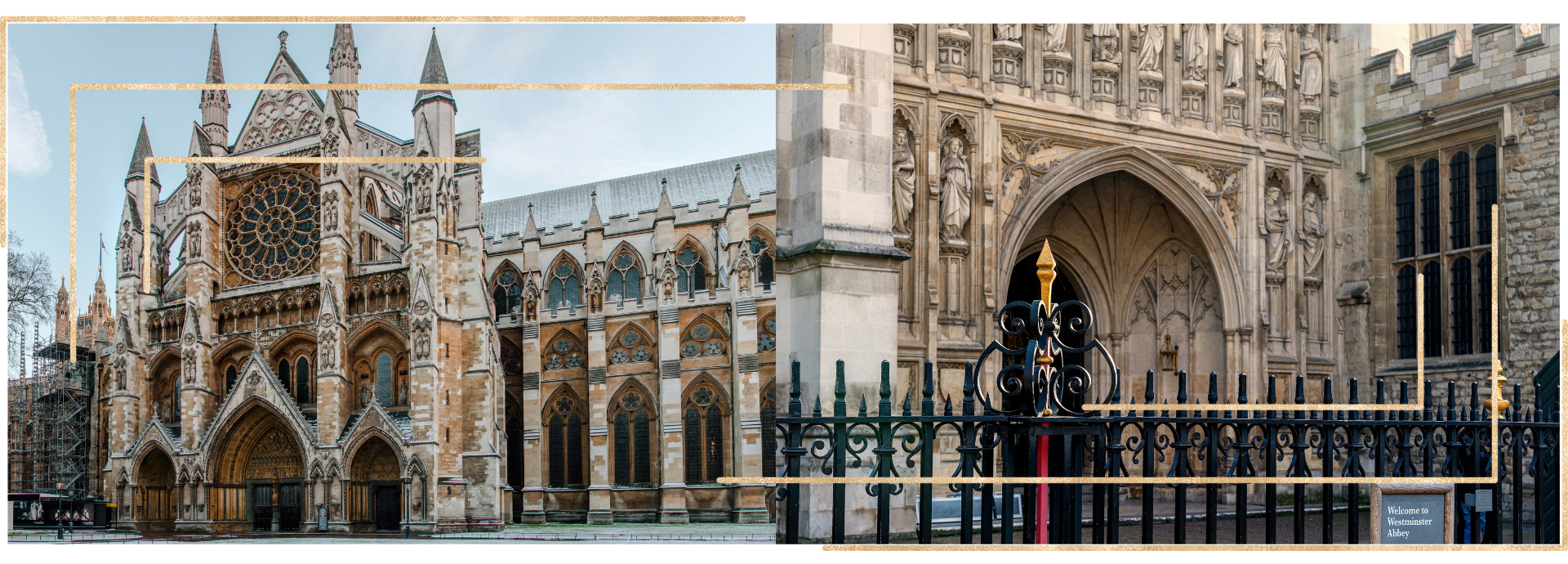
What can you expect at a coronation today?  The ultimate guidebook for the Royal family is Liber Regalis (Royal Book), created in 1382. It has assisted members for over 600 years in organising this state event.  This book may have captured elements of the event created by Saint Dunstan for King Edgar’s coronation ceremony at Bath Abbey in 973.  Then in 1066, the crowing of William the Conqueror saw proceedings take place at Westminster Abby, where it remains today. 

When Did It All Start
As Queen Elizabeth II was Lying-in-State and the fully planned State Funeral was being held, the organisation for the crowning of King Charles III began.  The significant players overseeing this momentous event are the coronation committee comprising the Government of the United Kingdom, the Royal Household, the Privy Council and the Church of England.  What do these bodies need to consider when planning a coronation?  The coronation date, its proclamation, the price, who attends, the required furniture, music and the honours conferred to mark the grand occasion. 

Of course, modern safety laws have to be adhered to, so the number of those in attendance has already been slashed by the thousands. Many are already disappointed, fearing they will never receive the coveted email and confirmation of their expected attendance from Buckingham Palace. And if someone does receive a coveted email to attend the coronation, does that mean all is well? Some members of the peerage, who wear their coronets and robes only at a coronation, have waited a lifetime for this opportunity. Will they be disheartened in the end?

Rumour has it that disappointed duchesses have had a traditional key role of theirs dismantled in the coronation ceremony. The queen wants her five grandchildren to take centre stage at the coronation alongside the King’s royal heirs, performing a role previously given to duchesses. This role has in coronations past, been performed as the new Queen is anointed with holy oil. And what of the new King’s pledge to make the coronation more inclusive of other religions? In the ceremony, the Archbishop of Canterbury by tradition, asks the King three lengthy questions. These are specifically regarding the Church of England. The coronation has now been shortened to one hour from the original three hours. Will those questions by the Archbishop be shortened or eliminated altogether? Will they and actually include the mention of other religions?
For more about the Coronation at Westminster Abbey, please go to >> westminister-abbey.org
Picture
The Crowning Event
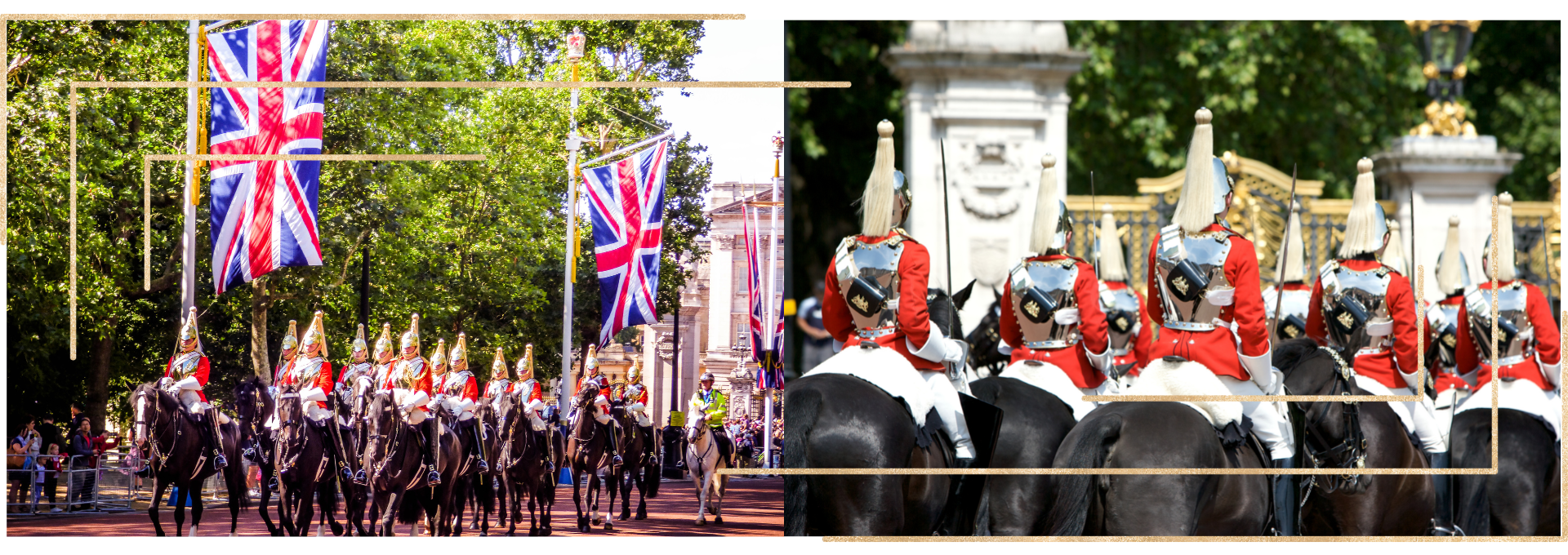
The main event occurs at Westminster Abbey, where the King will be escorted by carriage from Buckingham Palace. Rumor has it that the very uncomfortable, but exquisite gold carriage, that previous Kings and Queens have used for the ceremony, will not be used in May. Will this have the look of an ordinary, albeit exciting royal wedding, instead of an extraordinary coronation?

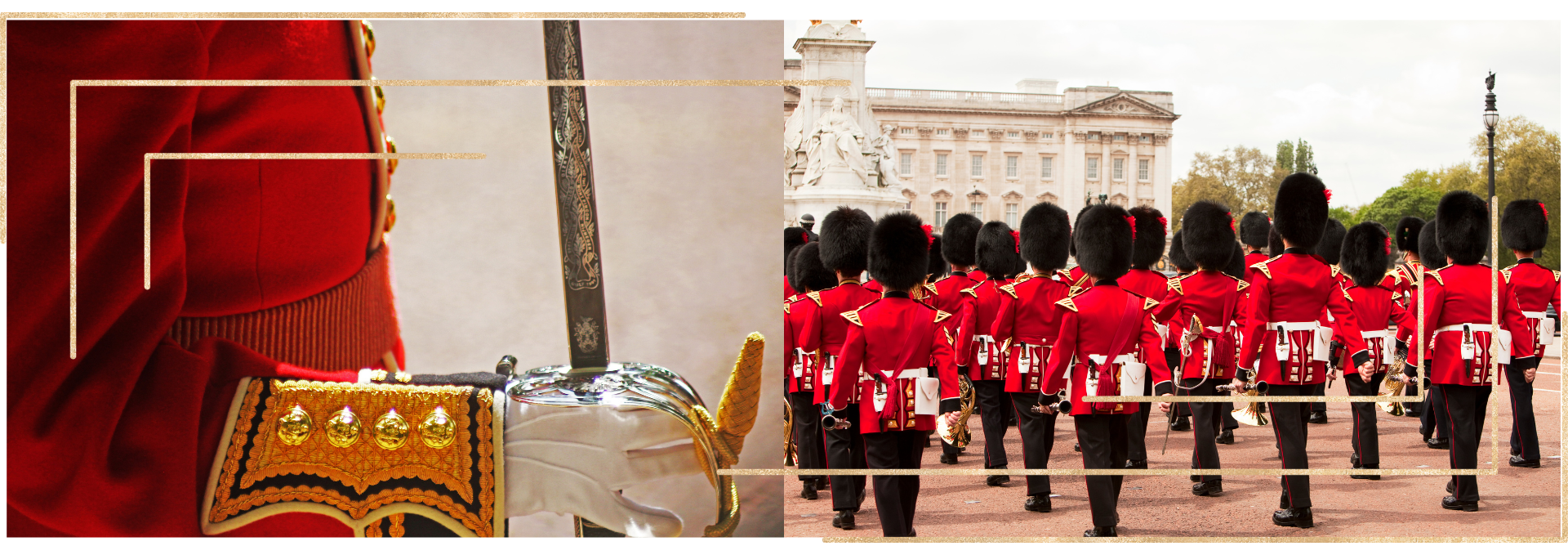
Once there, the Procession to the Abbey begins quickly  to move to the Procession inside the Abby.  There begins The Recognition of King Charles III.  After that, one can expect hymns to be sung during and after the Coronation Oath and The Anointing. The Homage is where the highly anticipated and photographed moment of a coronation occurs, where King Charles III is given the Orb placed into his right hand and the Scepter, which he holds with his left hand, as well as golden bracelets and a ring. Once this occurs, the choir will sing anthems, drums beats, trumpets sound, and joyful crying out to mark the crowing of Great Britain's new King. 

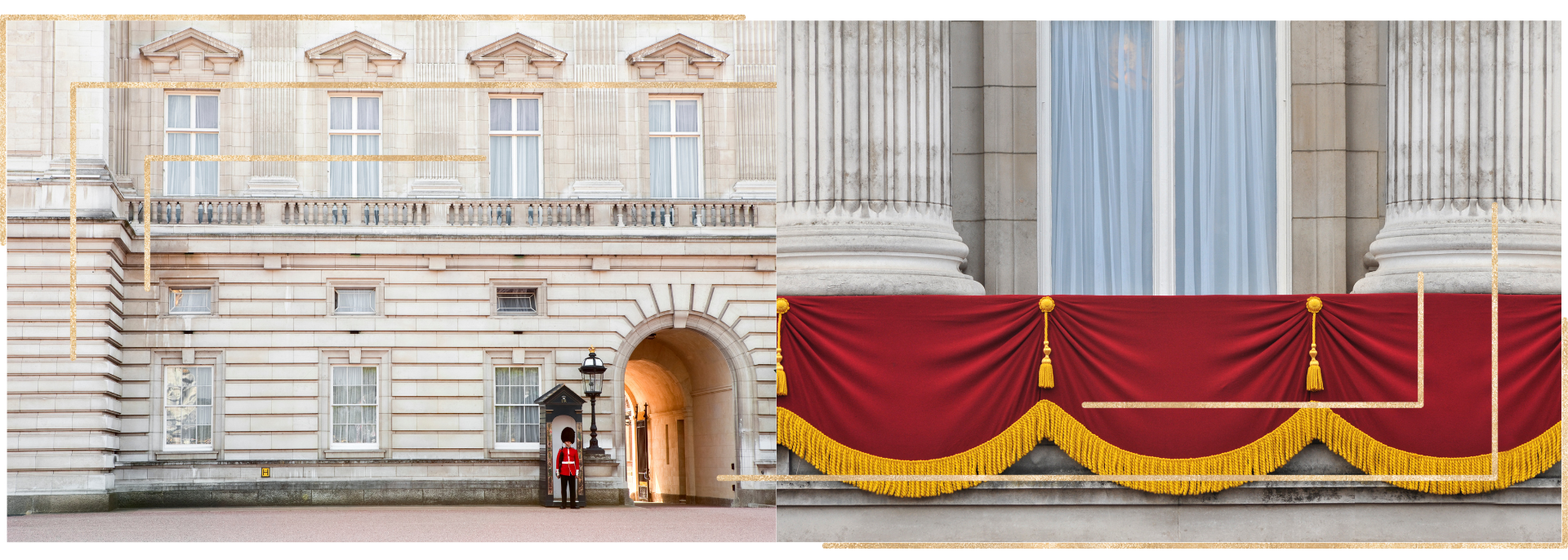
Camilla, The Queen Consort, will be crowned after the Homage takes place.  Once that is complete, the departure will occur, and esteemed guests, family and hosts will make their way from Westminster Abbey to Buckingham Palace to be seen by thousands of onlookers and broadcasted to millions.  The King and the Queen Consort, along with the Members of the Royal Family, will assemble for a perfectly Instagramable balcony appearance.  The day ends with a Coronation banquet.

Life After The Crown
In the days and months after the Coronation, there will be many public opportunities for the new King and Queen to meet their subjects. These traditionally begin with a Coronation Review of the Fleet, Service of thanksgiving, UK and Commonwealth tours, Coronation portraits, and most importantly, the Investiture of the Prince of Wales. The Investiture tells the world who will be the next in succession to the throne. — By contributor, Elizabeth Soos, at Auersmont.com 
Picture
For more about the Coronation, please go to >> cornontion.gov.uk
Picture

Contributor, Elizabeth Soos, has had a keen interest in cultural customs. With her European background and extensive travel, Soos developed an interest in the many forms of respect and cultural expectations in the countries she has visited. With her 20+ years’ experience in customer service within private international companies based in Australia, and her lifetime interest in manners and research, she decided to branch out into the field of etiquette and deportment. Through her self-directed studies and by completing the Train-The-Trainer’s course offered by Emma Dupont’s School of Etiquette in London and by Guillaume Rue de Bernadac at Academie de Bernadac based in Paris and Shanghai, she founded Auersmont School of Etiquette.


 🍽Etiquette Enthusiast, Maura J. Graber, is the Site Editor for the Etiquipedia© Etiquette Encyclopedia

Friday, January 29, 2021

Properly Addressing a Prince


According to the self-appointed arbiter of Gilded-Age New York society, Ward McAllister, “Sir” and “Ma’am” were the preferred titles for the Prince of Wales and his wife. Above — Albert, Prince of Wales, who later became King George VII, after the death of his mother, Queen Victoria. 


Princely Etiquette

The Prince of Wales is always addressed, even by his intimate friends, as “Sir.” For example, on approaching him, the etiquette is to say, “Sir, Good morning.” This is followed by one’s continually addressing him as “Sir” on every and all other occasions. The Princess is always addressed as “Ma’am.” Ward McAllister tells us so.— Boston Herald, 1895


Etiquette Enthusiast, Maura J Graber, is the Site Editor for the Etiquipedia© Etiquette Encyclopedia

Tuesday, August 25, 2020

Etiquette for Meeting Princess Margaret

Princess Margaret must not be photographed while eating, drinking, or smoking or with skirts at an unflattering angle. Unfortunately, none of the national publications is about to use pictures chosen from a pool. But beyond that, the ball promises to be a magnificent affair. — Princess Margaret looks at a black cat miniature, emblem of the San Francisco Press Club, after being presented with it by Robert Nicholas, club past president. Peeking from behind is her husband, Lord Snowdon.

Taking Lessons from the English

Mrs. Wilson E. Haas and her husband are poring over two closely typewritten pages that tell them exactly how to behave when they meet Her Royal Highness Princess Margaret and Lord Snowden next Monday evening at the WAIF Ball. Only . . . their chances of meeting the royal couple are distinctly dim, both because there are going to be at least 1,500 people crowded into the Hollywood Palladium for the dinner dance, and because the schedule of protocol states with typically British blandness that “no one will be introduced to Her Royal Highness and Lord Snowden.” 

It does say that later, the distinguished pair may care to walk among the guests and, perhaps, meet a few. Should this occur, the male introducee will bow his head, and address Her Royal Highness as “Your Royal Highness” or “Ma’am,” (if he feels more chummy), and her consort as “Sir.” His female counterpart (and she; SHOULD be wearing long white gloves) will curtsey if she’s either a British subject, a member of WAIF, or thinks this kind of thing is important. Otherwise she, too, will bow her head gracefully and murmur magic titles. Under no circumstances will they speak unless spoken to. 

As for autographs . . . FOR GET IT! The Hasses and other members of WAIF, along with their guests, were all sent copies of the protocol rules for the $lOO a couple benefit certainly is bound to be a high point of the autumn social season in Los Angeles. One of the most heartbreaking (to WAIF) behind- the-scenes is the matter of photography. Life Magazine had planned to cover the ball; so had Harper’s Bazaar and Holiday, among others. But the word went out — No photographers will be allowed, except the two chosen by the royal party, for Princess Margaret must not be photographed while eating, drinking, or smoking or with skirts at an unflattering angle. Unfortunately, none of the national publications is about to use pictures chosen from a pool. But beyond that, the ball promises to be a magnificent affair. 

Cocktails and dancing to Freddy Martin’s orchestra will open the program; by 8:15 all the guests must be seated so that Princess Margaret and Lord Snowden may make their entrance as the guests rise again. The national anthems of both Britain and America will then be played. Dinner will be marked by an all British fashion parade, followed by a stage show starring, among others, Bob Hope, Polly Bergen, and Frank Sinatra. Then the dancing will begin again, this time led off by Princess Margaret and her husband. Guests are asked to join them immediately so that their dance does not become an “exhibition.” Setting the mood of the distinguished party is the last sentence in the protocol instructions which says that the affair must be steeped in the “beauty and dignity befitting our honored guests.” — By Lee Christopher, for the Desert Sun, 1965


🍽Etiquette Enthusiast, Maura J. Graber of The RSVP Institute of Etiquette, is the Site Editor for the Etiquipedia© Etiquette Encyclopedia

Thursday, August 29, 2019

Kissing the Royal Hand That Rules

“If her Majesty be pleased to extend her hand, the fortunate one so honored, never shakes the hand. It rests on the back of the hand of the one to whom it is given, who, if highly honored, may kiss the royal fingers.”– Above, Queen Victoria receiving news of her accession from Lord Conyngham, kneeling to kiss her hand, and William Howley, Archbishop of Canterbury. –1895 photomechanical print from the BritishMuseum.org


Royal Etiquette

The etiquette accorded to royalty always interests me. I have had unusual journalistic facilities for observing all phases of this. It is as ceremonious as between the Prince and Princess of Wales and their guests. Even the daughters of the Prince address him as “Sire” and their mother as “Madame.” They never turn their backs on him, and their greeting courtesy is profound. Well, if this be ceremonious, the etiquette to the Queen is ultra-ceremonious. 

The courtesy to her is well nigh a prostration. The hands are crossed primly on the breast. If her Majesty be pleased to extend her hand, the fortunate one so honored, never shakes the hand. It rests on the back of the hand of the one to whom it is given, who, if highly honored, may kiss the royal fingers. “Thou shall have no others gods but me.” Pshaw! Why docs that sacred line linger in my memory? Anyway, one seems to rather like the courtesies extended to the Queen Empress. – London Letter in the Coronado Mercury, 1887


Etiquette Enthusiast, Maura J Graber, is the Site Editor for the Etiquipedia© Etiquette Encyclopedia

Sunday, July 28, 2019

Etiquette for Royal Neighbors


The Duke and Duchess of Sussex only moved in to Frogmore Cottage on the Windsor estate a few months ago, but their presence has quickly impacted the community. Earlier this weekend, British tabloid The Sun reported that Harry and Meghan's neighbors had been given a list of demands instructing them how to behave in the presence of the royal couple and in the vicinity of their home.

Those living near the Sussexes’ residence, including royal staff, were reportedly given a number of “dos and don'ts” which included the following guidelines:
  • Don't approach or instigate conversation if you see the Royal couple 
  • Do say 'Good Morning' or some other pleasantry if they speak to you 
  • Don't pet or stroke their dogs, even if they come over to you 
  • Don't offer to walk their dogs 
  • Don't ask to see baby Archie or offer to babysit 
  • Don't post anything through the letterbox of Frogmore Cottage 
Now, Buckingham Palace has issued a statement responding to the rumors of such a list of rules. A spokesperson has clarified that while “guidance” was offered to the community in a meeting, Meghan and Harry were not the ones to create a mandate; rather, the direction was issued by an “overly protective palace official.”

“The Duke and Duchess didn't request this, didn't know about it, and had nothing to do with the content or guidance offered,” said a spokesperson, according to ITV.

According to the Sun, a spokesperson also clarified that “this was a well-intentioned briefing to help a small local community know how to welcome two new residents and help them with any potential encounter.”

Following the birth of their first child, Archie Harrison, Meghan and Harry have sought to give him as private a life as possible. Notably, the Sussexes did not release the names of Archie's godparents, as they are private citizens, and they did not allow the press to document the royal family arriving or leaving his christening. But they have posed for a number of family portraits in recent weeks.– Town and Country Magazine, July 2019


Etiquette Enthusiast, Maura J Graber, is the Site Editor for the Etiquipedia© Etiquette Encyclopedia 

Sunday, May 19, 2019

The Etiquette of Royal Titles

The Duke and Duchess of Sussex with their newborn son, Archie Harrison - photo source Instagram


Why the Duchess of Sussex is not referred to as “Princess Meghan”


Since marrying Prince Harry in May last year, Meghan's official title has been Her Royal Highness Princess Henry of Wales.

But the rules governing royal titles forbid the Duchess of Sussex from adopting the name Princess Meghan.

This is because tradition dictates that only those with royal blood are allowed to put 'prince' or 'princess' in front of their first name.

For example, the daughters of Prince Andrew are known as Princess Eugenie and Princess Beatrice because they are in the line of succession, rather than marrying in to the Royal Family.

Diana was given the title Princess of Wales as a courtesy but was never afforded the name 'Princess Diana' despite being referred to in this way by most of the public.

Similarly, Marie Christine Anna Agnes Hedwig Ida von Reibnitz - formally titled Princess Michael of Kent after marrying Prince Michael - is not called Princess Marie Christine. – Source The Daily Mail


Etiquette Enthusiast, Maura J Graber, is the Site Editor for the Etiquipedia©️ Etiquette Encyclopedia


Wednesday, January 2, 2019

Etiquette and Royal Baby Surnames

The Duke and Duchess of Cambridge and their children. – Photo courtesy of Herald Mail


Prince Louis Arthur Charles Will Not Have a Last Name... but here are a few options in case he decides to use one: Mountbatten is Prince Phillip's surname, and Queen Elizabeth II's grandfather, King George V, took on Windsor—after Windsor Castle—as the British royal family's official surname in 1917, as Saxe-Coburg-Gotha sounded “too German” during World War I.

Most families pass down a last name from one generation to the next, but the British royal family follows their own rules and traditions. They have formal titles (some are made up of up to 15 words), but tend to only use Prince or Princess in front of their given name. However, following the birth of Prince William and Kate Middleton's third child, Prince Louis Arthur Charles, many are curious as to whether he will adopt the surname the descendants of Prince Phillip and Queen Elizabeth often use on certain occasions: Mountbatten-Windsor.

Royal historian, author and blogger of  “Royal Musings,” Marlene Eilers Koenig, said the baby will not. “The royal baby will not have a last name,” Koenig tells TownandCountrymag.com. “The name on the birth certificate will say HRH Prince or Princess, and all three names of Cambridge.” HRH is an abbreviation for His or Her Royal Highness. The three names of Cambridge refers to the three first names given to each royal child. For instance, Prince George’s three first names are George Alexander Louis, and Princess Charlotte's three first names are Charlotte Elizabeth Diana.

“The House name is Windsor and the family name for those who do use a surname is Mountbatten-Windsor,” Koenig adds. Mountbatten is Prince Phillip's surname, and Queen Elizabeth II's grandfather, King George V, took on the name “Windsor” —after Windsor Castle—as the British royal family's official surname in 1917. 

Prince George, the royal baby's oldest sibling, is listed at school with the surname Cambridge, which is part of his father and mother's official titles as the Duke and Duchess of Cambridge. Prince William and Prince Harry similarly adopted part of their father's title as their last name when they enlisted in the military under William Wales and Harry Wales, The Independent reports. Prince Charles is, of course, the Prince of Wales.– Town and Country Magazine, 2018


Etiquette Enthusiast, Maura Graber, is the Site Editor for the Etiquipedia© Etiquette Encyclopedia 

Monday, December 17, 2018

Christmas Etiquette at Sandringham

Rules are relaxed for royal family over Christmas at Sandringham. – “After arrival of the royal guests, at 4pm, all having changed into suitable outfits for tea, the family gathers in the White Drawing Room, where the Queen will encourage the young royals to help put the finishing touches to the Christmas tree — a Norfolk spruce taken from the 1,000-acre estate. Christmas Day starts with a full English breakfast, before the annual outing to Sandringham parish church at 11am, where a crowd of up to 1,000 well-wishers are expected to gather to see the family gathered together. The sermon must never exceed 12 minutes, in case the sovereign’s eyes should glaze. Back at the big house, preparations are under way for the traditional Christmas lunch — Norfolk turkey, accompanied by a selection of cold meats and an array of side dishes on silver salvers. Over home-baked scones and Earl Grey tea, the Master of the Household will give each member a timetable and room-plan so they know where to marshal themselves and when over the weekend. This is the moment they also exchange presents — not on Christmas Day, which the Queen regards as a religious festival.” – Sources Daily Mail and Travel and Leisure.com

Life at Sandringham over Christmas is ideal – State etiquette is completely abolished. 


London, Nov. 8. – Like Sarah Bernhardt, Queen Alexandra possesses the secret of eternal youth, to all outward appearances, but members of her household have noticed during the last few months that she is becoming very frail. At the royal wedding recently several guests noticed that she walked with considerable difficulty, leaning heavily upon Queen Mary for support. Everyone, however, agreed that she looked wonderful and not a day over forty. Her lameness has increased and she becomes easily fatigued, so she does not intend to spend much time in town this winter. Her daughter, Queen Maude of Norway, with King Haakon and the much advertised, little Prince Olaf, who is a very spoiled little boy, will stay with Queen Alexandra at Sandringham over Christmas. 

Life there is ideal because state etiquette is completely abolished. Princess Victoria spends her time driving and riding, while Queen Alexandra is busy looking after her dairy farm, gardens and dogs. Queen Maude of Norway is her mother’s favorite daughter and keeps the family highly amused all the time. Although long waists are out of fashion, Queen Maude, who is extremely proud of her slenderness, still cultivates the wasp figure. King George and Queen Mary have not decided whether to spend Christmas at Sandringham or Windsor castle. The Queen would prefer Windsor, but the King likes to spend his holidays with his mother and sisters. – Morning Press, 1913
Etiquette Enthusiast, Maura J Graber, is the Site Editor for the Etiquipedia© Etiquette Encyclopedia

Saturday, September 8, 2018

British Coronation Etiquette – Queen Elizabeth I

Actress Cate Blanchett in one of her fine film portrayals of Elizabeth I – By the end of Elizabeth’s I reign, in his “Court and Country,” of 1618, Nicholas Breton gives an instructive account of the strict rules which were drawn up for observance in great households at that time, and says that the gentlemen who attended on great Lords and Ladies had enough to do to carry these orders out. “Not a trencher must be laid or a napkin folded awry; not a dish misplaced; not a capon carved or a rabbit unlaced contrary to the usual practice; not a glass filled or a cup uncovered save at the appointed moment: everybody must stand, speak, and look according to regulation.”

Remarkable incidents in this most important occasion of a British ruler’s life. Striking features of ceremony from the earliest day to the last great Coronation event of the 19th Century
👑👑👑👑👑👑👑👑👑👑👑👑
The Coronation of England’s Elizabeth I


Speed's account of the procession of Queen Elizabeth contains some particulars' too remarkable to be omitted. “All things in readiness, upon the fourteenth of January, with great triumphes and suptuous shewes, shee passed thorow London, towards “Westminster, to receive her Imperiall Crowne; but before she entered her chariot in the Tower, acknowledging that the seat was God's into which shee was to enter, and shee his viceregent to wield the English sceptre: in that royall assembly, with eyes and hands elevated to heaven, upon her knees, she prayed for his assistance, as Solomon did for wisdome when he tooke the like charge: with a thankful remembrance unto God for his continued preservation, which had brought her thorow great dangers unto that present dignitie.”

She was crowned the 5th of January, 1555, by Oglethorpe, Bishop of Carlisle, the see of Canterbury being vacant by the death of Cardinal Pole. Holinshed says that she composed the following prayer as she went to her coronation: “O Lord Almightie and Everlasting God, I give thee most heartle thanks that thou hast beene so merciful into me, as to spare me to behold this joifull daie. And I acknowledge that thou has delt as wonderfullie and as merciefullie with me as thou didst with thy true and faithful servant Daniell, thy prophet, whome thou delivered out of the den from the crueltie of the greedy and roaring lions. Even so was I overwhelmed, and only by thee delivered. To thee, therefore, onelle be thanks, honor and praise for ever. Amen.” – San Francisco Call, 1901


Etiquette Enthusiast, Maura J. Graber, is the Site Editor for the Etiquipedia© Etiquette Encyclopedia 

Friday, September 7, 2018

British Coronation Etiquette – Henry II and Richard I

From the 1968 film “Lion in Winter,” Peter O’Toole (second from right) portrayed Henry II and Anthony Hopkins (third from left) portrayed Richard I – Richard I was the third son of Henry II and Duchess Eleanor of Aquitaine. Richard I reigned over England from July 6, 1189 to April 6, 1199. He was also held the titles of Duke of Normandy, Aquitaine and Gascony, Lord of Cyprus, Count of Poitiers, Anjou, Maine, and Nantes. Despite fictional representations of him, more accurate history shows him to have been at times, a violent man, but an excellent soldier. He was considered a poor King, which may explain why he spent so little of his reign in England, leaving William de Longchamp and his mother, as regents in his place.

Remarkable incidents in this most important occasion of a British ruler’s life. Striking features of ceremony from the earliest day to the last great Coronation event of the 19th Century
👑👑👑👑👑👑👑👑👑👑👑👑
The Coronation of England’s Henry II

Henry II was Crowned at Westminster on the Sunday before Christmas day, A.D. 1154, by Theobald, Archbishop of Canterbury. Although his hereditary right was unquestionable, he was formally elected by the clergy and people. It is said that Henry was Crowned again with his Queen, A.D. 1159, but this report arose from his having worn the Crown during the ceremony.


The Coronation of England’s Richard I

Duke Richard, having made all necessary preparations for his Coronation, came to London, where he assembled the Archbishops of Canterbury, Rouen and Tours, who had given him absolution in Normany for waging war against his father after he had taken the cross as a Crusader. First, the Archbishops, Bishops, Abbotts and clergy, wearing their square caps and preceded by the cross and holy water bearers and deacons burning incense, went to the door of the royal bedchamber and led the Duke in solemn procession to the great altar of the church of Westminster. When they reached the altar Richard swore, in the presence of the clergy and people on the holy gospel and the sacred relics, that he would observe peace, honor and respect all the days of his life to God, holy church and its ordinances. 

His attendants then stripped him to his trousers and shirt, the latter of which was left open between the shoulders on account of the anointing. Baldwin, Archbishop of Canterbury, who wore rich buskins of cloth of gold, then anointed the King in three places, on the head, between the shoulders and on the right arm. A consecrated linen coif and a cap of estate were then placed upon his head and he was vested with the royal robes, the lamatic and the tunic. The Archbishop then delivered him a sword to restrain the enemies of the church. Two Earls then buckled on his spurs and invested him with the pall of state; after which Baldwin conjured him in the name of God and forbade him to take the crown unless he were firmly resolved in his heart and soul to observe all the promises to which he had sworn. 

The festivities were sullied by a sanguinary and disgraceful riot. Numbers of Jews had flocked to England in the reign of Henry II, where they were honorably protected by that liberal and enlightened Sovereign. Grateful for such unusual favors, they assembled at London to subscribe themselves in order to make Richard a splendid present on the day of his Coronation. Unfortunately, Richard was persuaded by some of the bigots who surrounded him that the Jews were accustomed to practice magic on Sovereigns during the time of the Coronation, and he therefore issued an edict prohibiting any Jew from entering the church while the ceremony was being performed, or appearing at the palace during dinner. Curiosity overcame prudence. Several of the most considerable Jews mingled with the crowd and gathered around the gates of the palace. One of them, endeavoring to force an entrance, was struck in the face by an overzealous Christian. This signal aroused the fanaticism of the multitude. 

A general assault was made upon the Jews, who fled in confusion toward the city. Some wretches, eager for plunder, raised a cry that the King had given orders for the extermination of the unbelieving Jews; and, as this was by no means improbable, when the King was a Crusader, it received implicit credit. The city mob, swelled by the multitudes who had come from the country, attacked the houses of the Jews, which the inhabitants defended with great courage and obstinacy. The enraged populace, when night came on, finding, that they could not break into tho houses, hurled brands and torches on the roofs and through the windows. Conflagrations burst forth in various parts of the city, which consumed not only the houses of the Jews but those of the Christians. Richard caused several of the ringleaders and most notorious malefactors to be apprehended the next day. They were hanged, as a terror to others, a proclamation was issued taking the Jews under the Royal protection, and the tranquillity of the city was restored. – San Francisco Call, 1901


Etiquette Enthusiast, Maura J. Graber, is the Site Editor for the Etiquipedia© Etiquette Encyclopedia

Sunday, July 8, 2018

A Barbarous Etiquette?

Bertie was, according to Professor Jane Ridley, “the first English Prince to visit Jerusalem since Richard the Lionheart, but he got on much better with the Muslims than the Crusader did.” – 
Nearly 40 years prior to becoming King Edward VII, young Prince Albert, known as Bertie, was sent by Queen Victoria on a Royal tour of Egypt and the Holy Places of Palestine and Syria.This trip became the template for the British Royals and tours we know of today, not least because it was the first that the people could actually see as an official photographer, Francis Bedford, accompanied the Prince. While on the tour, in a move that even today’s Royal Princes might consider a step too far – Bertie got a tattoo on his forearm  – five crosses forming a Crusader’s Jerusalem cross.  


The order issued by the King of Great Britain for his first entry into Parliament includes a requirement that women participating shall wear dresses cut low. The affair will take place in the afternoon. The order must, therefore, shock the American flunkies, who maintain that a swallow-tail coat and a low-necked gown must never be worn before 6 o'clock, summer or winter. There are men and women who profoundly wish that neither a swallow-tail coat nor a low-necked dress should ever be worn, with an exception in favor of cutting out the dress bodice modestly for coolness in the heated term. The objection to the Royal and Imperial British order for low-necked dresses when the Emperor of India opens the houses of Parliament is, however, purely humane. 

Every woman who can will endeavor to be present on so exciting an occasion. The order is absolute as to exposure of the shoulders and bust to winter weather, whatever it may be that day. Pneumonia is as prevalent in London as in Chicago, perhaps more so. The doctors will have a profitable increase of business following the day the Emperor of India appears before Parliament. Nor should the new Monarch be hastily censured for this barbarous ritual. He has said that he will follow the steps of the late Monarch, who never relaxed or suspended this rule at her drawing rooms, always held by day, and always the cause of serious illness, with their full proportion of consequent deaths. This is one of the objects for which Monarchies are maintained — to thin out the population.— Chicago Chronicle, 1901

Etiquette Enthusiast, Maura J. Graber, is the Site Editor for the Etiquipedia© Etiquette Encyclopedia

Monday, May 28, 2018

Royal Etiquette for Diana

Diana of Wales took to the dance floor with actor John Travolta, in the White House during a 1980’s visit to the U.S. – Born and bred as “Lady Diana,” she was well versed in the finer ponts of etiquette and briefly attended a Swiss finishing school. However, learning etiquette for a royal life, would naturally take some time. It is said that someone will be working with the new Duchess of Sussex,who only last week married the late Diana’s son, Prince Harry, over a six month period to help her learn the royal ropes.

Lady Diana Briefed on Etiquette 

LONDON (AP) 

Lady Diana Spencer, who will marry Prince Charles after her 20th birthday this summer, got her first lesson in royal etiquette Wednesday over breakfast with Queen Mother Elizabeth, the Prince's grandmother. Lady Diana moved into Clarence House, the official London residence of the 80-year-old queen mother, after Buckingham Palace announced the royal wedding plans Tuesday.

The Queen Mother, one of Britain's most popular royal figures, went through the adjustment of palace life 58 years ago, when as Lady Elizabeth Bowes-Lyon, she married the Prince who became King George VI. A wedding date has not been announced, but the couple said Tuesday, it will probably be in late July. Lady Diana's birthday is July 1st. – San Bernardino Sun, 1981

Etiquette Enthusiast, Maura J. Graber, is the Site Editor for the Etiquipedia© Etiquette Encyclopedia 

Saturday, March 3, 2018

Etiquette, Royalty... and Insanity?

Countess Feodora Georgina Maud von Gleichen, was the eldest daughter of Prince Victor of Hohenlohe-Langenburg (a British naval officer and sculptor, and half-nephew of Queen Victoria) and his morganatic wife, Laura Seymour. – Photo from Pinterest 
From “Items of Interest Clipped for the Busy Reader”

“The Coming Princess Albert Victor... I hear from a high English source that the Princess Feodore of Schleswig-Holstein, who did the Eiffel Tower the other day, chaperoned by her elderly maiden aunt, Amelie, of the same house, is in all likelihood the coming Princess Albert Victor of Wales. She is a sister of the German Empress and a niece of Prince Christian, the dull old husband of the best of Queen Victoria's daughters, is going on 16, looks a good sort of girl, and is almost pretty. But she is not likely to improve when the bloom of youth departs, and she wants winsome graces. Evidently, she has not come to her full height. When she does, she will probably be as tall as her Imperial sister.

The Queen would like to secure to her the Crown of Great Britain, because she is descended from her Majesty's mother, the Duchess of Kent, whose first husband was Prince Leiningen. Princess Feodore has been a good deal here with a party of aristocratic English friends, some of whom are connections of her aunt-in-law on the maternal side, Countess Gleichen. Count Gleichen abandoned his high born German status to marry Laura Seymour, and is a professional sculptor, high in the Queen's favor. Against German etiquette, she has been latterly styling them both Serene Highnesses. An objection to the proposed Royal match is that the young lady's mother is in a madhouse. There is already more than a touch of insanity in the Royal family of England.”—Paris Letter, 1891

Etiquette Enthusiast, Maura J. Graber, is the Site Editor for the Etiquipedia© Etiquette Encyclopedia 

Wednesday, February 7, 2018

Etiquette, Royal Titles and Diana


Fondly remembered as the “People’s Princess,” Diana’s life continues to fascinate in books, traveling exhibits and television programs, over 20 years after her death.

In 1985, Titles Created a Royal Problem for the Masses, And Miss Manners Responded


She is not “Princess Diana.” You perhaps know the lady Miss Manners means –the blonde one who wears hats so nicely but has not always managed to keep her hair out of her eyes. 

Born a commoner, she was styled "Lady Diana" by courtesy because her father is an earl. She is now, having married up, “the Princess of Wales.” Only should she become Queen consort would a royal title appear before her first name, as “Queen Diana.” Is that clear? Of course not. 

We Americans decided long ago that the idea of classifying some people as belonging to a higher order of humanity was not for us. Our highest title is “Mr.,” as in “Mr. President,” and it takes the individual some doing to get it. But the British do show up on our shores now and again, so one may want to know a bit about titles. 

Besides, it is difficult to make one's way through 19th-century British novels or 20th-century British television without being able to figure out who is called what and why. The subject is infinitely complicated, and disputes have been known to last for centuries. Miss Manners will concern herself only with the basic outline. Only the reigning Queen and her mother (as the widow of the previous King) are addressed as “Your Majesty,” other members of the royal family being addressed as “Your Royal Highness.” Children of the Sovereign also use the prefix “the,” as in “Their Royal Highnesses, the Prince and Princess of Wales.”

The peerage has five grades: duke, marquess (most use the good old English spelling rather than the French “marquis”), earl, viscount and baron. The female equivalents, for wives or widows (the latter styled dowager, if the succeeding peer has a wife) are: duchess, marchioness, countess, viscountess and baroness. Except for dukes and duchesses, who are called by those titles, peers and peeresses are addressed as “Lord” or “Lady” with the name of the senior peerage they possess. Legally, the children of these people are all commoners. 

However, dukes, marquesses and earls tend to have other titles as well, and by courtesy, their oldest sons use the next family title down until after, courteously enough, the funerals, not the deaths, of their fathers. Then there are titled commoners: baronets, whose degrees of honor are hereditary, and knights, whose are not. They use “Sir” before their full names, but are addressed with the title and given name only. Their wives use “Lady” with the surname only, never with their given names (a common American error). 

This is only the beginning. Miss Manners will not bore you with collateral privileges of the siblings of heirs presumptive who succeed, the rights of duchesses who were divorced in interesting trials, the children of peers who disclaimed their peerages, and so on. She only asks you to stop saying “Princess Diana.” – By Judith Martin, October 27, 1985

Etiquette Enthusiast, Maura J. Graber, is the Site Editor for the Etiquipedia© Etiquette Encyclopedia

Thursday, February 1, 2018

Etiquette and Royal Tastes

“When the future King Edward VII was visiting the U.S., the most striking thing to him was the prevalence of the eating of oysters, the smell of them, raw, cooking, and cooked, and the sight of the shells, being unpleasant to him...” – For centuries, the royal family was not allowed to eat oysters, crabs, and other shellfish and the future King may not have acquired the taste of oysters. It has always been included in the required etiquette for entertaining Royal family members, not to serve them shellfish. Before scientists understood shellfish allergies and food poisoning, it was advised that the Royal family abstain from shellfish to avoid dying from those common ailments. Nowadays it’s more of a personal preference than a hard rule. For example, Queen Elizabeth avoids shellfish altogether, while Prince Charles will occasionally enjoy a good oyster.
Taste is in the Mouth of the Beholder... And the Country of That Mouth’s Origin

The dish for which Esau sold his birthright — a dish of lentils — was hardly equivalent to one of dried beans. To an epicure, there might have been some excuse for the barter bad it been a choice viand, but little for anything so ordinary as lentils. The flesh pots after which the Israelites longed so much while in Egypt and on their journey through the desert, would hardly be appetizing to their descendants who are now scattered through the lands where gastronomy has become an art. 

Climate, as well as race, has much to do with this. In a warm one, a sober diet of drink and food is more essential than in a cold one. The English in India who refuse to recognize this law, return in a few years with a torpid liver and a yellow complexion. The appetite of the Arab is satisfied with rice, olives, bread, and an occasional meat stew, while the Russian sates himself with greasy food aud strong liquor. If nothing more unctuous is within reach, the peasant will eat a tallow dip with relish. The Italian of Southern Italy can content himself with maccaroni, while the Dutchman, surrounded with water and fog, requires meat, ale and gin, in generous portions. 

According to a medical authority of London, when the Indians, in their long journeys, are seized with hunger, they eat small balls of clay, which remain in the stomach and stop the appetite for many hours. Germans are in the habit of eating uncooked meat in the guise of ham, sausage and fresh meat, for which a physician affirms that many of them have had 50,000 worms in one inch of their flesh, penetrating everywhere, and producing death. The promptings of nature are not much heeded in the United States, for the food which is consumed in Maine is also eaten in Florida. The same pork, salted, cured, and fresh, seen in these two geographical extremes, is also familiar to the inhabitants of California, Indiana, and Delaware. The bills of fare of the restaurants of New Orleans resemble much those of New York, the promise, however, being more faithfully kept in the northern than in the southern city.

Each nation, notwithstanding cable telegrams and rapid steamships, retains certain food characteristics. Some of these, the stranger naturally remarks on, as soon as he comes into the country. When the Prince of Wales was here the most striking thing to him was the prevalence of the eating of oysters, the smell of them, raw, cooking, and cooked, and the sight of the shells, being unpleasant to him. During his sojourn he was always endeavoring to escape from the smell of them, and to this day probably his recollections of America are intimately associated with the testaceous animals. 

The amateur of cooked oysters will affirm, and probably with reason, that the Prince did not know what was good; but that is a matter of opinion. The Prince likely, as most Englishmen are, is fond of eating lettuce and cheese together, which the amateur of cooked oysters would probably dislike as much as the royal guest did his favorite food. According to the newspapers, when another member of a royal family, not long ago, was traveling through the United States, he said his chief objection to the country was that he could not get anything to eat; the remark being made after going through the South and West, and before reaching the metropolis. The hope was held out to him in Philadelphia that in New York he would find compensation for the trials which he had undergone in other parts ot the Union ; but he was skeptical, and counted on little improvement. If a reporter of the press may be credited, he went so far as to say that we were the worst fed ot all civilized peoples. Some weight may be attached to this opinion, as he who gave it has some reputation as a gas tronomer.

To go from royalty to the proletariat, the workingmen's delegates to the Centennial Exhibition complained of the food which was placed belore them by their fellow-workmen here. They were simple toilers, unaccustomed to the delicacies of the table. Thus all classes, from well-fed foreign countries, appear to entertain much the same opinion as regards the American kitchen. Eating a particular kind of food, together with the preparation of it, is so much a matter of custom that we are apt to like that best which we have been accustomed to eat ; hence it is that the foreigner favors his own nourishment and pronounces against ours to the extent that he does. 

Man everywhere is almost as tenacious of the form of his food as is of his religion ; errors and abuses in one being nearly as difficult to eradicate as in the other. But after making do allowance for prejudice in the mind of the foreigner, there is probably foundation for at least a portion of his criticism, entertained as it is in different lands. There is such unanimity on this head that there is warrant for believing, if an international congress of gastronomy were to be organized, that the United States would not hold the rank of some other nations which we are wont to regard as considerably behind this one in general civilization. — Galaxy, 1876


🍽Etiquette Enthusiast, Maura J Graber of The RSVP Institute of Etiquette, is the Site Editor for the Etiquipedia© Etiquette Encyclopedia  

Friday, January 12, 2018

Etiquette and Pushy Tourists

Seriously?!? – Among the many applicants for admission to Marlborough House, none showed greater disappointment than 3 women from Washington. They had a fully authenticated permit, but they arrived at 8:30 in the morning. Their pass distinctly stated that the Palace was open to visitors only between 3 and 6 in the afternoon, but they implored the official in charge to let them see the children of the Prince and Princess, declaring they had come all the way from the United States with that special object. They were told it was “contrary to etiquette to allow strangers to see the children in the absence of the Prince and Princess, or without their authority.”

Poorly Mannered, but Well-Moneyed Americans, are Interested in Palaces – American Visitors Have New Fad – “Yankee” Tourists Invade Royal Residences in Droves – Admitted Freely by King's Sanction, but Detectives Watch Them

Special Cable to The Call

LONDON. Sept 2.— Never within the memory of some of the royal servants have Americans shown such an interest in the Royal Palaces of England as they have this summer. The average of nine to ten parties which used to go through Buckingham Palace and Marlborough House a few seasons ago, has increased this year to forty or thereabouts, with the result that an extra staff of attendants and guides had to be employed. Marlborough House appears to have had greater attraction for visitors than even Buckingham Palace, especially with women, who all want to see the children of the Prince and Princess of Wales. What surprised the household servants most, was that nearly every party came around with an official document authorizing admission. In every instance these were signed by the Lord Chamberlain or by Sir Dighton Probyn; the keeper of the Prince of Wales’ privy purse. 

There were so many Americans, disappointed last year, that at the beginning of the present season both the King and the Prince of Wales gave instructions that no unnecessary obstacles should be placed in the way of Americans desiring to see the Palaces, but it may be of interest to those who succeeded in obtaining ready permission to know that an extra staff of special detectives kept them under observation the whole of the time. This precaution was taken in consequence of the presence of three or four men from Chicago, who were doing London, and who were suspected of revolutionary leanings. These men could not be allowed inside the gates of the Palaces under any circumstances, even if they had succeeded in obtaining permits signed by King Edward himself. 

Among the many applicants for admission to Marlborough House, none showed greater disappointment than the three women from Washington who gave their names as Miss Ida Ingersoll, Mrs. Dereham Holtsinger and Mrs. Madeline Kurtz. They were provided with a fully authenticated permit, but they reached Marlborough House at 8:30 in the morning. On being told that their pass distinctly stated that the Palace was open to visitors only between 3 and 6 in the afternoon, they implored the official in charge to let them see the children of the Prince and Princess, declaring they had come all the way from the United States with that special object. They were told it was contrary to etiquette to allow strangers to see the children in the absence of the Prince and Princess, or without their authority. They could not wait for that as they had to leave for Southampton to catch their steamer in a few hours. – San Francisco Call, 1905

Etiquette Enthusiast, Maura J Graber, is the Site Editor for the Etiquipedia© Etiquette Encyclopedia

Tuesday, January 9, 2018

Etiquette and a Royal Wild Heir


Famous for his philandering and partying, Prince Albert, or “Dirtie Bertie” as he was nicknamed, spent much of his time in France and had affairs with the most famous Parisian actresses, courtesans and can-can dancers of the day. Victoria was not amused! –“It is impossible to blame the Queen if she takes deeper and more serious view of the responsibilities of His Royal Highness than His Royal Highness does himself. To her, at any rate, Windsor Castle is not only the home of the English Monarchy, it is the home of a multitude of august and sacred memories. To the Prince of Wales, unaccompanied by the compliant friends of his heart, Windsor would certainly be intolerable, even during the Ascot week. Excitement and society have become necessities of his nature, with which he can submit to an extraordinary amount of fatigue, without which his whole nature seems to instantly collapse...


Why Queen Victoria Declined to Invite Her Son, Albert, to Visit Windsor
At an age at which the most thoughtless and frivolous of men have a higher notion of obligation than a rigid and mechanical compliance with the dictates of conventional etiquette; when they choose their companions and regulate their ways of life in deference to other considerations than those of personal enjoyment. 

“The Prince of Wales has recently visited the Queen at Osborne, where he took up his residence in the cottage which established custom has consecrated for his use. Her Majesty's subjects may perhaps, feel disposed to ask themselves whether the time has not yet arrived when the heir-apparent should be lodged beneath a royal roof when he happens to be temporarily sojourning at a less distance from the capital than the Isle of Wight— why, in fact, when he is in the immediate neighborhood of Windsor during the Ascot week, Windsor Castle should not receive him, instead of the house –which, as matters are, it is his custom to engage within convenient distance of the course. 


“Certainly, it would be gratifying, not only to the Royal borough of Windsor itself, but to the whole nation, if the King of England that is to be, were to be installed for some days once in the year, as the chief tenent of the ancestral and traditional home of the British Sovereign. The Queen, however, has her reasons for declining to place the Castle at the Prince's disposal ; and it is not difficult to conjecture what those reasons are. As it happens, we are not justified in thinking that the day has yet come when Her Majesty will take a different view of the matter. The point, therefore, now to consider is the course which, things being as they are, the Queen would, with due regard to expediency, adopt.

“It would be idle to pretend to deny that there is any doubt why 
Windsor Castle knows so little of its future proprietor, and in the extremely difficult business the Queen has displayed nothing less or more than that sound judgment and admirable feeling which she never fails to exhibit when she is left to be the arbiter of her own actions. The Prince of Wales is now of an age at which the most thoughtless and frivolous of men have usually contracted some higher notion of obligation than a rigid and mechanical compliance with the dictates of conventional etiquette ; when they have higher ideals of duty than to refrain, if they refrain at all, from indulging the momentary whim because such indulgences would be a violation of the proprieties of an exalted existence ; when they choose their companions and regulate their ways of life in deference to other considerations than those of personal enjoyment. 


“In three months from to-day, the Prince of Wales will have entered upon his thirty-sixth year, and, with the sole exceptions that he has learnt something more about the mysteries of Court etiquette, that he has enlarged his notions of his personal irresponsibility, and that he has become the master of a manner which cannot fail to charm all who are brought into contact with him, he is precisely the same man that he was before he attained his majority subject to the same influences, regulated by the same motives, ready to go through enormous sacrifice of time and comfort to please the public, but unwilling to realize or act upon the truth, that certain petty and irksome responsibilities are the inseparable penalty which he must pay for his position, and must therefore claim his diligent submission. That, it may be said, is a hard lot, and no doubt it is — very hard indeed. The only thing is, that it is inevitable. Even a Prince of Wales is impotent to alter facts, and he must, perforce, accept the situation.

“It is impossible to blame the Queen if she takes deeper and more serious view of the responsibilities of His Royal Highness than His Royal Highness does himself. To her, at any rate, Windsor Castle is not only the home of the English Monarchy, it is the home of a multitude of august and sacred memories. To the Prince of Wales, unaccompanied by the compliant friends of his heart, Windsor would certainly be intolerable, even during the Ascot week. Excitement and society have become necessities of his nature, with which he can submit to an extraordinary amount of fatigue, without which his whole nature seems to instantly collapse. When the Prince of Wales shall have become Albert Edward of England, if years have not even brought the philosophic mind, no one will be able to gainsay him the companionship of his choice. The responsibility will rest absolutely upon himself. 


“At present tbe humors and amenities which would certainly characterize a week at Windsor spent by a young man who is not King of England, and who has merely the best chance of becoming King of England, with his customary satellites, could not be matter that would concern the Prince of Wales alone. The Queen, therefore, is, from her point of view, entirely justified in the course which she adopts. At the same time, it may be impossible that the effects of throwing Windsor Castle open to the Prince of Wales would be beneficial to himself ; and if they were beneficial, they would certainly be gratifying to the English people.” –From the London World, 1876

Etiquette Enthusiast, Maura J. Graber, is the Site Editor for the Etiquipedia© Etiquette Encyclopedia