|
| “Excuse me, waiter, but why do well bred Americans permit themselves and their children to use the fork in the right hand? And, if no bread and butter plates are used, where should bread be laid during the meal?” |
Watching the Forks
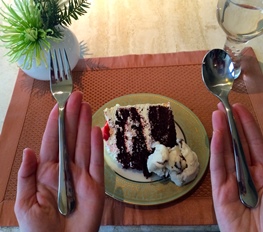
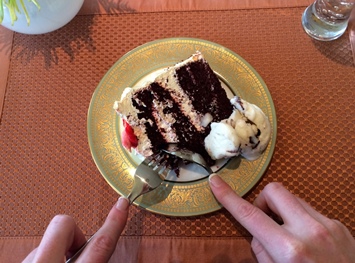
One of the questions that foreigners, especially English-bred people, most frequently ask regarding American manners is this: “Why do well bred Americans permit themselves and their children to use the fork in the right hand?” The fact is that in England, good table etiquette demands that the fork should be kept in the left hand. The knife is used, of course, in the right hand and it is regarded as bad form to shift the fork over to the right hand when the knife is not needed.
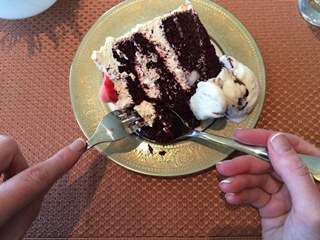
Even in eating desserts the fork is kept in the left hand, frequently being used with a dessert spoon, which is held in the right hand. And children here, unless they are children of Europeans or of parents who affect English manners, are not warned against shifting the fork to the right hand for convenience. However, it is bad form from our point of view, as well as the English, to use the fork shovelwise, scooping up large mouthfuls of vegetables or meat upon it.
Well-bred persons take care how they hold the fork until it becomes second nature to hold it well. Even if the fork is small and your hand is large, avoid placing the handle in the palm of your hand as you would handle a small screw driver, as if your object were to get the best possible grip upon it. Do not hold on too far down the handle, but on the other hand, do not affect the over-dainty manner of holding it uncertainly very far up.
Well-bred persons take care how they hold the fork until it becomes second nature to hold it well. Even if the fork is small and your hand is large, avoid placing the handle in the palm of your hand as you would handle a small screw driver, as if your object were to get the best possible grip upon it. Do not hold on too far down the handle, but on the other hand, do not affect the over-dainty manner of holding it uncertainly very far up.
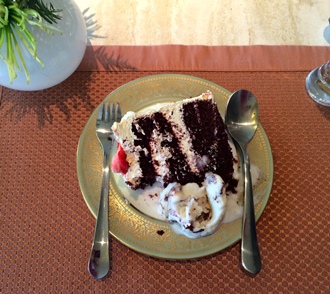
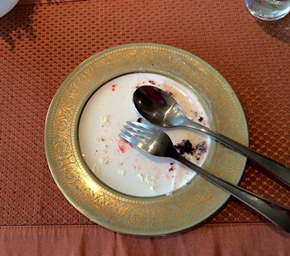
When you have finished eating leave the fork on the side of the plate, sometimes downward.
When passing a plate for a second helping, place your knife and fork on the side of the plate, blade in or tines downward.
What Readers Ask...
“If no bread and butter plates are used, where should bread be laid during the meal?”
Usually on the plate, but if there is hardly room there is no harm in allowing a roll or fairly dry bread to rest on the table cloth beside the butter-pat.— The Sun, 1921
When passing a plate for a second helping, place your knife and fork on the side of the plate, blade in or tines downward.
What Readers Ask...
“If no bread and butter plates are used, where should bread be laid during the meal?”
Usually on the plate, but if there is hardly room there is no harm in allowing a roll or fairly dry bread to rest on the table cloth beside the butter-pat.— The Sun, 1921
Etiquette Enthusiast, Maura J Graber, is the Site Editor for the Etiquipedia© Etiquette Encyclopedia