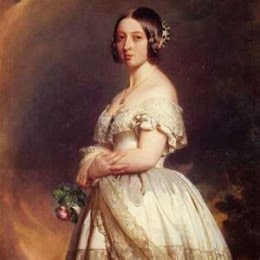
Showing posts with label Duchess of Bedford. Show all posts

Friday, April 17, 2026

Art and Etiquette of Afternoon Tea

Finally, on the top part of the stand, the third tier, small pastries are served, also typically English, which bring this moment of conviviality to a close.

The British Afternoon Tea Ceremony

Around the world, the ritual of tea is known as one of the most cherished and meaningful moments to enjoy a good infusion, alone or in company. It is well known that this precious beverage spread from China to all of Europe precisely from Great Britain, becoming a fundamental part of English life. However, not everyone knows that there are very specific rules that should be followed.

First of all, you need to choose a good loose-leaf tea and steep it in boiling water — depending on the type of infusion chosen — for three to six minutes. For each guest, the teapot should contain one teaspoon of loose-leaf tea, plus one extra “for the pot.” Separately, of course, there will be the sugar bowl and milk jug. And what about lemon? The English almost never use lemon, substituting it with milk. Do you know why? Not for a reason that’s fundamentally about taste, but for a logistical one to solve a serious problem: at one time, English teacups couldn’t withstand the heat of the tea and would break. To get around this problem, the English started putting the milk in the cup first to cool down the hot tea that would be poured in right after. 

Naturally, after 1700, with the founding of historic companies like Wedgwood, Spode, Minton, etc…, the materials used were able to keep cups from cracking under heat thanks to the use of kaolin, effectively leading to the birth of porcelain and bone china. Afternoon tea, thanks to Anna Maria Russell, Duchess of Bedford, people began to accompany the drink with both sweet and savory bites. It’s no coincidence that a three-tiered plate is served with very specific foods: on the first tier, the lowest one, sandwiches made with white and brown bread are served, filled with chicken, eggs, salmon, etc…

On the second tier, buns sometimes studded with raisins called scones are served; they are split in half by hand, never with a knife, and filled with clotted cream and strawberry jam. In reality, there’s a historic dispute between Devonshire, which says you should put the clotted cream on first and then the jam, and Cornish, which says you should spread the jam first and then the clotted cream. The latter is a sort of butter-cream similar to mascarpone that is really hard to find in many countries.
Above, a patent for a gilded age “Sandwich Plate” by Haviland. The “sandwich set” with plate and cup has a very wide saucer to hold biscuits, scones, finger sandwiches or pastries.

Finally, on the top part of the stand, the third tier, small pastries are served, also typically English, which bring this moment of conviviality to a close. Many hotels around the world recreate this ritual, adding the option to serve Prosecco or champagne. The most interesting thing, though, is seeing what tools have been invented to fill the table with dishware and surprise the guests. Among the cups, for example, there’s the “mustache cup,” which has ceramic or porcelain ledges to keep mustaches from getting dirty, or the “luncheon set” or “sandwich set,” which have a very wide saucer to hold biscuits, scones, finger sandwiches or pastries. 

Other interesting items are new utensils like the lemon fork with spread out or “splayed” tines for picking up lemon slices, the jam spoon with a chiseled edge, the bird-shaped lemon squeezer, the sugar cube tongs, and strainers of various shapes and materials. In short, it’s a ritual that becomes an experience and can be compared to the beauty of the Japanese, Chinese, French, New Zealand, or Italian tea ceremony.
Other interesting items are new utensils like the lemon fork with spread out or “splayed” tines for picking up lemon slices, the jam spoon with a chiseled edge, the bird-shaped lemon squeezer, the sugar cube tongs, and strainers of various shapes and materials.


This Month’s Contributor Spotlight

Petra Carsetti was born into a gastronomic minded family… true lovers of excellent foods and wines. From an early age she showed a great passion for the table, which she later developed by working in important, well-known Italian restaurants. Since 2005, she has written many books on food and wine, along with guides to Italian restaurants, specializing also in galateo and etiquette at the Accademia Italiana Galateo and ANCEP (the Association of Ceremonialists for Public Institute). She teaches etiquette in schools to adults and children, is a consultant for various political and economic authorities, and she has a weekly column in a historic newspaper. She also writes for various other newspapers, is a frequent television guest. Very active on Instagram @galateopetra_carsetti, Petra is happily married to well-known wine and food aficionado, journalist and author, Carlo Cambi and together they have one daughter. Her books Galatime and Galatime II are full of etiquette and entertaining advice.


🍽️Etiquette Enthusiast, Maura J. Graber of The RSVP Institute of Etiquette, is the Site Editor of the Etiquipedia© Etiquette Encyclopedia

Saturday, May 22, 2021

Madame de Circourt and Afternoon Tea


Tea as an afternoon meal, is thought to have originated in 1837 in the house of Mme. de Circourt, a Russian lady, whose salon in Paris was at that time much frequented by the most intellectual society of day. The fashionable dinner hours were then getting late, and she introduced a 4 o'clock light meal, at which tea was served, creating the custom in Paris of afternoon tea. It was later that Fanny Kemble in “Records of a Girlhood” attributes the introduction of the afternoon meal in England, to Anna, the then Duchess of Bedford. — Public domain image, Wikipedia 


From “Notes and Queries” 1882— On Afternoon Tea - “In a sketch of Comte de Circourt, by Hubert Saladin, the salon of Madame de Circourt comes prominently before us as one of those frequented by the most intellectual society of Paris in 1837. A reviewer in the Revue Britannique for this month suggests that to her (she was a Russian) we are perhaps indebted for the first 5 o’clock teas.” K.H.B.

Madame de Circourt, was born Anastasie Klustine, in Moscow in 1808, to Simon Klustine, an officer of high rank in the Russian army, and the Countess Vera Tolstoi. Intelligent and a natural at linguistics, Anastasie spoke fluent Russian, German, French and English by the age of 16. Her educational studies included religion, ethics, metaphysics, botany, and music, but her health was described as delicate. 

Subsequently, at the age of 18, with her mother, she travelled to Montpellier, Pyrenees and then to Paris to convalesce. ‘It was in Paris during the winter of 1826-27 that she made the acquaintance of Count Adolphe de Circourt’ and they soon married. 

Her later life, and the popularity of her Parisian salon, in which she entertained the most intellectual of society, was covered in author Count Nigra’s book, “Count Cavour and Madame de Circourt: Some Unpublished Correspondence.” It was in her salon that she started the custom of serving afternoon tea, prior to the Duchess of Bedford doing so in England.

For many years, Etiquipedia contributor, Elizabeth Soos, has had a keen interest in cultural customs. With her European background and extensive travel, Soos developed an interest in the many forms of respect and cultural expectations in the countries she has visited. With her 20 years’ experience in customer service within private international companies based in Australia, and her lifetime interest in manners and research, she decided to branch out into the field of etiquette and deportment. Through her self-directed studies and by completing the Train-The-Trainer’s course offered by Emma Dupont’s School of Etiquette in London and by Guillaume Rue de Bernadac at Academie de Bernadac based in Paris and Shanghai, she founded Auersmont School of Etiquette.

Etiquette Enthusiast, Maura J Graber, is the Site Editor for the Etiquipedia© Etiquette Encyclopedia

Thursday, May 7, 2020

‘High Tea,’ an Actress and a Duchess

Fanny Kemble in “Records of a Girlhood” attributes the introduction of the afternoon meal into this country, to the then Duchess of Bedford. Fanny Kemble paid a visit to Belvoir Castle in March, 1842, and she relates how a mysterious invitation was received to the Duchess’ private rooms, where she found a small group of friends partaking of tea in a private and rather shame-faced way... —Fanny Kemble was not only a notable British actress in the early and mid-19th century, but she was a well-known and popular writer. —Photo, public domain


“High tea” is said to be of American origin. The earliest mention of it, according to Dr. Murray, goes no further back than 1850. In fact, tea as an afternoon meal, is not much older. It is thought to have originated in 1837 in the house of Mme. de Circourt, a Russian lady, whose salon in Paris was at that time much frequented by the most intellectual society of day. The fashionable dinner hours were then getting late, and she introduced a 4 o'clock light meal, at which tea was served.

Fanny Kemble in “Records of a Girlhood” attributes the introduction of the afternoon meal into this country, to the then Duchess of Bedford. Fanny Kemble paid a visit to Belvoir Castle in March, 1842, and she relates how a mysterious invitation was received to the Duchess’ private rooms, where she found a small group of friends partaking of tea in a private and rather shame-faced way, and dates the 5 o’clock meal from this time. But it was several years later that the practice became general.—London Chronicle, 1904


Etiquette Enthusiast, Maura J Graber, is the Site Editor for the Etiquipedia©️ Etiquette Encyclopedia

Memories of British Tea Drinking

There are many ways to enjoy tea. Curling up by the fireplace on a cloudy afternoon with a cup of tea can be the highlight of the day. Just because it’s solitary tea doesn’t mean it should be dreary. Arrange some light food in a plate, make it look pretty and enjoy this quiet time by yourself. Kids can also entertain themselves with tea just like the young children in the “Mary Poppins” or “Alice in Wonderland” classic movies. 


Brewing the Perfect Cuppa 
(tea, that is)

To some, drinking a cup of tea is a ritual. To others, it is simply a time to spend a soothing afternoon with friends. Quite easily, visions of scones, strawberry jam, wafer-thin sandwiches and china cups come to mind. Regardless of what images partaking of tea evokes, people have long been fascinated by this charming custom. The popularity of drinking tea has both diminished and flourished since the Chinese discovered it as a suitable beverage about 4,000 years ago. According to legend, Emperor Shen Nung, who was known as the Divine Healer, made it a habit to drink only boiled water after determining that those who did were sick less often. One day, sitting by a tea bush, some tea leaves found their way into his pot. Seeing that the resulting aroma was pleasant, Nung drank his first cup of tea. But it wasn’t until the 16th century that tea was introduced to Europe by Portuguese merchants who brought silks, spices and other Eastern items into the continent. 

While other European countries found tea flavorless in the mid-1600s, England and Russia found it soothing and relaxing. In the 17th century, tea drinking found its spot in English coffee houses. By the mid-1700s, tea gardens emerged. These lush, landscaped gardens were a meeting ground for the fashionable to chat, drink tea and gossip. By the end of the century, however, tea gardens were less prevalent and tea drinking developed into an at-home activity in England. What is now known as afternoon tea can be attributed to Anna, Duchess of Bedford, who realized this ritual was a way to satisfy her appetite during the void between lunch and dinner.

In those days, a day’s worth of meals consisted of a substantial breakfast, a light lunch and a heavy dinner late in the evening. Feeling a bit faint around five o’clock, the Duchess resorted to drinking tea and petite sandwiches to make it to dinner. This sort of “afternoon tea” is quite a contrast to the “high tea” served then in working class homes where hearty cold meats, breads and cheeses were served when the men returned home from work. Although Coronadan Jan Lichty hasn’t lived in England since 1939, her memories of having tea are still fresh in her mind. “The tea I remember, was with the dainty little cups, cucumber sandwiches and wafer-thin sandwiches,” Lichty said. “As children, we had tea, milky tea, with cakes and snacks.” 

“Don’t forget the war changed everything,” she said. “It was a different world then.” Barbara Taylor, a Coronado resident for most of her adult life, remembers growing up in war-torn England and having tea with her family. During the war, Taylor said a lot of English families would sit down for breakfast with a cup of tea and other breakfast items. At school. Taylor would have a heavy meal with tea at mid-day. After school, Taylor would come home to find tea, bread and butter, jams and cakes to share with her parents and sister. Sometimes, cheese or egg dishes made their way onto the table. “Five o’clock was quite a typical time for an English (working class) family to have tea,” Taylor remarked. 

Sarah O’Sullivan, who grew up in the southwest region of England, also remembers sitting around the dinner table and having traditional tea with scones, clotted cream and jam. “That’s extremely fattening,” she joked. “It’s one of the things we miss here.” Like Taylor, O’Sullivan recalls having a hearty lunch at mid-day and coming home for tea around 5 p.m. She used to come home for lunch at times, since her Dad owned a shop nearby and could join them. “It was nice because it was family time, we all sat down together,” O'Sullivan recalled. “Times have changed a bit now in England," Taylor pointed out. “Customs have shifted somewhat.” Most men are no longer able to come home from work at mid-day to have their cooked meal with tea. That tradition has slowly faded. “England is much more like America, more on the run,” added O’Sullivan, who’s been living in Coronado for the past two years. Her husband, who is part of the Royal Navy, is on an exchange with the U.S. Navy. Nowadays, O’Sullivan and her family have their main meal in the evening when her husband returns from work. “Sunday is the closest you get to having an afternoon tea.” 

Taylor, who travels to England frequently, still drinks tea for breakfast but now has a lighter lunch. She continues to drink her afternoon tea around 4 p.m. everyday before her evening meal. “I think it gives you a lift,” she said. “It’s a shame more people don’t stop and take a break at 4 o’clock in the afternoon,’’ Having a cup of tea in the afternoon brings back fond memories for Shelia Davis Lawrence who recalls quiet afternoons drinking tea with her grandmother. “I guess it’s a quiet time in the afternoon, a more gracious time,” Lawrence said, “It can grow into an interesting past-time as an adult.” Lawrence added that she sees drinking tea as an activity for all occasions, not as something stuffy. 

There are many ways to enjoy tea. Curling up by the fireplace on a cloudy afternoon with a cup of tea can be the highlight of the day. Just because it’s solitary tea doesn’t mean it should be dreary. Arrange some light food in a plate, make it look pretty and enjoy this quiet time by yourself. Kids can also entertain themselves with tea just like the young children in the “Mary Poppins” or “Alice in Wonderland” classic movies. Tea for two? This is a great opportunity for a couple to cozy up together and share a romantic time together. Power teas are also catching on in hotels worldwide. They’re a great way to top off power breakfasts and power lunches for busy executives. What better way to spend an afternoon with friends than to throw a tea party. Delicate snacks, a good pot of tea and stimulating conversation are sure to be a success. 

“The properness of tea is not in the elegance of the implements or delicacies of the food—it’s how food is served,” Lawrence said. It is this hospitality and graciousncss as a hostess that Lawrence finds pleasing when having tea. Prompted by her memories as a young girl, Lawrence recently invited a group of Brownies for tea at Crown Manor. The experience to share tea with these young girls was something Lawrence said she cherished. “It’s like passing on a part of history.” Lawrence, like many others, prefers tea to coffee, yet drinking coffee has seen a rise in popularity with the British—for all the wrong reasons though. “My husband has learned to like coffee because he can’t stand the American tea,” noted O'Sullivan. Lichty, however, rarely drinks tea anymore because it’s more convenient to make coffee. 

“Once in a blue moon (I drink tea),” Lichty said. “But if I want to make the effort to do tea, I want to do it right ” Which brings to mind the ubiquitous tea bag, which dates back to 1904 when Thomas Sullivan, a New York tea merchant, started sending his customers samples of his teas in silk pouches. The idea caught on because of its practicality and has even been accepted now in England, according to Taylor. However, it is the way tea is served in many American restaurants that has given tea bags a bad reputation. O'Sullivan said she will never forget the first time she came across tea in the United States. A waitress at a restaurant brought a jug of lukewarm water to her table with tea bags next to it. “I thought, ‘This isn’t tea’,” O’Sullivan said with a laugh. “It tastes peculiar when the water’s not boiling.” Lichty’s great aunt also had a funny encounter with tea bags when they first came out in England years ago. Lichty remembers her great aunt cutting out the top of the tea bag and pouring the tea leaves into the cup. “She tipped it out, she didn’t know any better until I showed her how to do it,” Lichty said. — Stories by Karen Koehler, Coronado Eagle and Journal Reporter, 1991


Etiquette Enthusiast, Maura J Graber, is the Site Editor for the Etiquipedia©️ Etiquette Encyclopedia

Wednesday, May 6, 2020

Belgravia and its Aristocratic Nurses

Two Victorian medicine or invalid spoons. The lower spoon is a ”half-teaspoon.”


Aristocratic Nurses... 
The Fashionable English Dames Learning to Be Practical in the Sickroom
This antique cup and pitcher in one, was for feeding invalids more easily.

Two or three years ago, the Prince and Princess of Wales distributed badges and prizes to a large number of professional nurses and afterward entertained them royally at Marlborough House. It was expected that fashionable dames would show their appreciation of the Royal example by taking up nursing as a recreation, but little was done until a few months ago, when the National Health Society opened classes for the benefit of the aristocracy, at which something more is taught than a coquettish arrangement of caps and aprons. 


The idea is to teach ladies the value of good nursing and enable them to learn something about fit food for invalids and how to give first assistance to the injured, in all of which, it seems, Duchesses, Countesses and the like, are lamentably deficient. The Duchess of Bedford is particularly active in the work. She has placed her fine house in Belgrave Square at the disposal of the society’s lectures on every Wednesday during the winter season, and as the course includes an afternoon tea, the attendance is expected to be large. 

The proceedings should certainly be interesting, as it is announced that each lecture “will be practically illustrated with a patient, bedding, etc...” The pioneer among the aristocracy of nursing and sanitation was Lady Brooke, who, with her husband, enjoys the particular friendship of the Prince of Wales. Her Ladyship has for years been accustomed to keep a sharp eye on the water supply and sanitary arrangements of the villages on her estates in the counties of Warwick and Sussex, often to the deep disgust of the cottagers, who claimed the inherent right of a Briton to please himself in such matters, and who objected strongly to being coerced into cleanliness on pain of eviction. Puritanical people have sometimes said hard things of Lady Brooke. It is right that credit should be given her in this matter. —London Letter, 1894


Etiquette Enthusiast, Maura J Graber, is the Site Editor for the Etiquipedia©️ Etiquette Encyclopedia

Tuesday, May 5, 2020

Queen Victoria’s Jubilee Bonnet

A color photo from the 1897 Jubilee of Queen Victoria. It’s a shame her bonnet was hidden under a parasol — “When the procession reached St Paul's, the frail Queen stayed in her carriage, where she was joined by the clergy.” —
photo DailyMail.com


The Queen’s Jubilee Bonnet

The Duchess of Bedford lately told a girls’ needlework society in Mile End that the bonnet which the Queen wore at the Jubilee service was practically made by the Princess of Wales. “It was sent home,” said Her Grace, 
“looking heavy and ugly. Nobody dared return it to the milliner without the Queen’s orders, and nobody liked to ask Her Majesty for such instructions. 

“So the Ladies in Waiting showed it to the Princess of Wales, knowing how clever she is in all such matters, and her Royal Highness with her own hands altered it and twisted it till it became the extremely becoming and tasteful head-dress which we all admired on that memorable occasion. Everybody who saw it thought that the Queen had never had a prettier bonnet, but how it came to be so pretty is news of today.”—London Tit-Bits, 1892


Etiquette Enthusiast, Maura J Graber, is the Site Editor for the Etiquipedia©️ Etiquette Encyclopedia 

A Duchess of Industriousness

The Duchess of Bedford as depicted in Julian Fellowes’ latest period drama, “Belgravia.” 
—————
“When Mrs Trenchard arrives at the grand home of the Duchess of Bedford (pictured played by Naomi Frederick) - the first scene set in London's Belgravia, 26 years after the Battle of Waterloo - she informs her host she is ‘so interested by your invention of afternoon tea’”—From DailyMail.UK


Of English and American Girls


An English traveler writes she can assure you that, having lived in different castles and manor-houses of Great Britain, and been accustomed to the industrious habits of duchesses and countesses, I was utterly astonished at the idleness of American fine ladies. No Englishwoman of rank (with the exception of a few parvenues), from the Queen downward, would remain for one half hour unemployed, or sit in a rocking-chair unless seriously ill. 

They almost all, with hardly an exception, copy the business letters of their husbands, fathers or brothers; attend minutely to the wants of the poor around them, and even take part in their amusements and sympathize with their sorrows; visit and superintend the schools; work in their own gardens; see to their household concerns; think about their visitors; look over the weekly accounts, not only of domestic expenses, but often those of the farm and estate; manage penny clubs in conjunction with the working classes, to help them to keep themselves; and with all these occupations, by early hours, they keep up their acquaintance with the literature and politics of the day, and cultivate the accomplishments of music and drawing, and often acquire, besides, some knowledge of scientific pursuits. 

The late Marchioness of Lansdowne was so well acquainted with the cottagers in her neighborhood, that she used to visit and look at the corpses of the dead, because she found that her doing so soothed and comforted the bereaved. I have known her to shut herself up with a mad woman in her poor dwelling, who used to lock the door and could not be induced to admit any one else. Lady Lansdowne’s only daughter used one hundred guineas (given her by her father-in-law, Lord Suffolk, to buy a bracelet,) to build pig-styes, with his permission, at her husband’s little country residence, she educates her own children without assistance —teaching the boys Latin and the girls all the usual branches of education. 
It is said that Anna, 7th Duchess of Bedford invented afternoon tea sometime during the 1840s. Although her simple pot of tea with a light snack was originally introduced to counteract her hunger pangs, it soon developed into a popular social occasion among the fashionable classes. Now we know she was much more industrious than history has given her credit for!

The late Duchess of Bedford, I accidentally discovered when on a visit to Woburn, had for thirty years of her married life, risen at 6 o’clock, Summer and Winter, lit her own fire, made some tea for the Duke and herself, and then, as he wrote his own letters of business, she copied them, and they, came down to a large party of guests at 10 o’clock, to dispense breakfast, without saying one word of their morning avocations; so that you might have been a visitor at the house without finding out that the Duke or Duchess had transacted the necessary business of the day before, perhaps, you had risen. I rather mention those that are gone to their reward than write of women still among us ; but you may believe me when I say that I am constantly among those who live such lives of energy and usefulness, but they so employ themselves without ostentation or an idea that they are doiug more than their simple duty. — The Christian Witness, 1872


Etiquette Enthusiast, Maura J Graber, is the Site Editor for the Etiquipedia©️ Etiquette Encyclopedia 

Wednesday, February 21, 2018

Tea Rituals and Scone Etiquette

This looks delicious, but it is not "the done thing" to cut a scone, slather clotted cream and jam on, then put the scone back together to form a kind of bulky sandwich. Scones are broken, much like a bread roll. The scone (pronounced as in “gone” not as in “cone”) is to be eaten in a very particular way. Scones are served whole and preferably warm from the oven, and as with bread you break a scone with your fingers, and spread the jam and cream on, bite-size by bite-size piece. One should never be seen to cut a scone with a knife.

The Beginnings of the Afternoon Tea Ritual 

The British ritual of afternoon tea is attributed to Anna Maria, 7th Duchess of Bedford. The Duchess was staying as a guest of John Manners, the 5th Duke of Rutland, at Belvoir Castle in Leicestershire when she found herself experiencing a “sinking feeling” during the long hours between midday luncheon and late evening dinner. 

She requested a snack of tea and cake to curb her hunger and found that she so enjoyed it that she invited her friends to join her. She continued the social gatherings when she returned to her home at Woburn Abbey and even took her own silver tea equipment with her when she went to visit her friends in their castles and palaces.
A stunning, late 19th century silver and enamel tea service. Tea services added to the ceremony of Victorian afternoon tea we know today.  

As the popularity of this new found ritual spread amongst the upper and middle classes the Victorians unsurprisingly began producing new specially designed apparatus to further enhance the enjoyment of afternoon tea. So up sprang all the elegant tea pots and kettles and creamers and tea strainers, and subsequently the ceremony of afternoon tea grew into what we know today.– Contributor Rachel North

Contributor Rachel North is an etiquette and afternoon tea enthusiast with a love for anything -ancient and historical.
Etiquette Enthusiast Maura J. Graber, is the Site Editor for the Etiquipedia© Etiquette Encyclopedia