Showing posts with label Utensil Etiquette. Show all posts

Saturday, October 19, 2024

Etiquette and Utensil Signals

Using Utensil Placement 

to

Send Signals to Servers

A Second Debut of a Very Popular Article from 2019
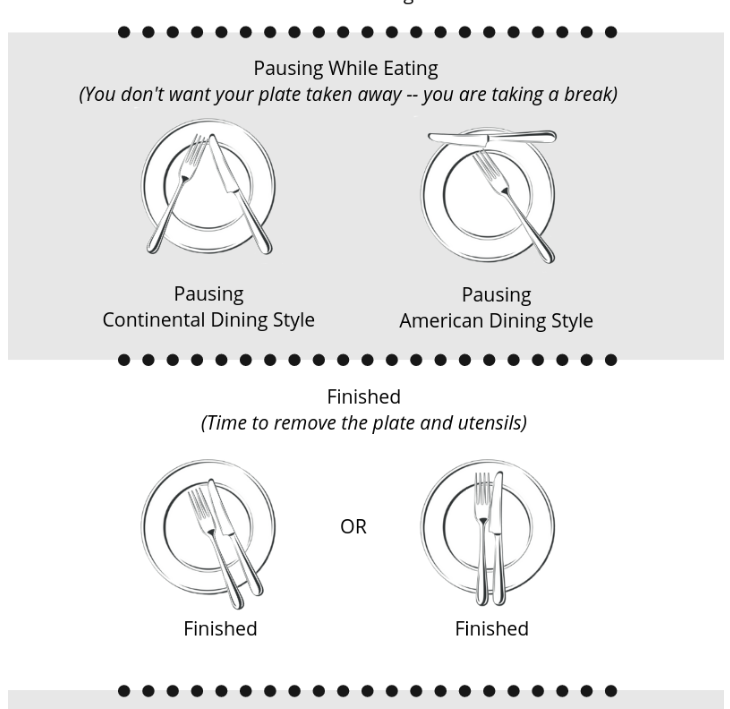
Utensil Placements
Misinformation abounds on the internet.  This is just as true with etiquette information as it is with any other subject.

When I saw a graphic circulating on social media depicting the positions of dining utensils to signal a message to a server, I had to set the record straight. In fact, fellow Etiquette Enthusiast and Educator, Maura Graber, site moderator and editor of Etiquipedia(c) Etiquette Encyclopedia has been fighting an uphill battle to call attention to a particular false  infographic that appears on dozens of websites in the U.S. and other countries where knives and forks are used. 

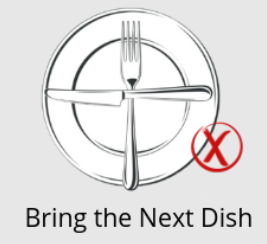
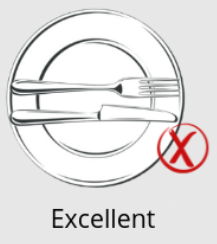
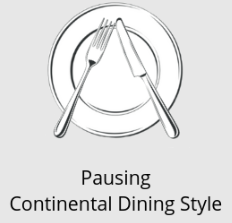
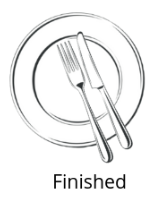
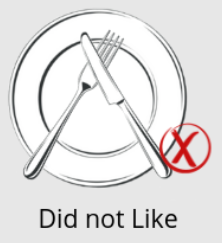
The graphic I am referring to illustrates five positions in which you can place your knife and fork to relay a message to your server.  (Two, the Pausing and Finished shown above are correct.)
Three of the five positions illustrated demonstrate very poor etiquette and are actually rude to the server.  


From the Server’s Perspective

The job of your server is to receive your food and drink order, deliver it to your table when ready, and take your plate away when you are finished eating.

Servers are busy -- juggling multiple tables and lots of information truly does take talent.  The “pause” and “finished” utensil positions let her know at a glance whether your table has plates to be removed, or if she can continue with other tasks.
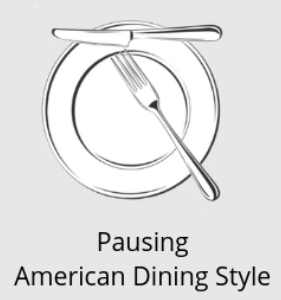
Utensils placed in the “paused” or “resting” position let your server know you are not finished eating and your plate does not need to be removed.
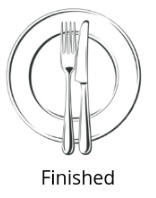
Utensils placed in the “finished” position let your server know you have finished eating and she may take your plate.
Neither of these utensil signals require verbal communication for your server to know what action to take.  In other words, they make your server’s job easier and prevent additional disruptions in your table conversation.

Two – and Only Two - Signals

Dining etiquette involves not only proper use of your utensils while eating, but using them to signal information that makes dining pleasant for everyone. 

Servers appreciate you letting them know what assistance you require from them.  And non-verbal signals are a small but significant part of civilized dining.

However, the only signals your server needs to receive via utensil placement is whether you are pausing during your meal, or whether you are finished with your meal.  There is no tradition anywhere that requires any other signals.  Attempting to do so only causes confusion.

I am joining Ms. Graber and other informed etiquette consultants urging you to ignore any image teaching inappropriate communication to diners and restaurant servers.  Won’t you join us?  
You can download the infographic here that shows correct and incorrect utensil placement signals.


Contributor, Candace Smith is a retired, national award-winning secondary school educator, Candace Smith teaches university students and professionals the soft skills of etiquette and protocol. She found these skills necessary in her own life after her husband received international recognition in 2002. Plunged into a new “normal” of travel and formal social gatherings with global leaders, she discovered how uncomfortable she was in many important social situations. After extensive training in etiquette and protocol, Candace realized a markedly increased confidence level in meeting and greeting and dining skills and was inspired to share these skills that will help others gain comfort and confidence in dining and networking situations. Learn more at http://www.candacesmithetiquette.com/


🍽Etiquette Enthusiast, Maura J. Graber, is the Site Editor for the Etiquipedia© Etiquette Encyclopedia

Sunday, July 23, 2023

How to Hold Cutlery

Forks and knives are held with the index finger on the backs of the utensil handles. This is how it looks from the underside. Sometimes it is easier to understand how the utensils are properly held by seeing how they fit into the palms of the hands at an angle.
Fork

When it comes to the fork, the prevailing way of holding it is in your left hand, tines facing downward. Use your fork to spear and lift food into your mouth. Place your index finger on the back of the fork, facing the tines, for a firmer grip.

Knife

So you’ve quite literally got to grips with the fork, what about the knife? This, you hold in your right hand with your index finger extended along the blunt side of the blade. When needed, use your knife to cut through food. However, when the dish doesn’t demand a knife, keep it to the right of your plate during the meal.

Spoon

Try to hold your spoon by resting the end of the handle on your middle finger, with your thumb placed gently on top. Specifically, when eating soup, dip the spoon sideways at the nearest edge of the bowl to you, then skim the spoon away from you. This is a good tip for using the spoon, no matter the food you’re eating with it – skim away not towards yourself! — From the AC Silver Site Blog, 2018


🍽Etiquette Enthusiast, Maura J. Graber, is the Site Editor for the Etiquipedia© Etiquette Encyclopedia

Monday, August 22, 2022

Etiquette for Flatware Placement

Basic Table Setting of the flatware.
A. Beginning of Meal
B. Main Course
c. Dessert and Beverage

There are a few easy-to-learn guides to correct position of the flatware as you place it on the table.

1. Place the utensils in a position so that they may be picked up to use from the outside, working toward the plate.

2. Only place the pieces on the table that are going to be used for that meal.

3. Place knives to the right of the plate with cutting edge toward the plate.

4. Place soupspoons to the right of knife and oyster fork to the right of soupspoon (if one is used).

5. If salad is to be eaten after the main course, place salad fork on left nearest the plate, then dinner fork outside of it.

6. If butter plates are used, the butter knife is laid across the top of the plate.

7. Place all the flatware an inch from the edge of the table. If a placemat is used, place the flatware an inch from the edge of the placemat.

8. Place the utensils evenly and straight.

9. The coffee spoon and dessert fork may be brought in with the coffee and dessert, or may be placed in front of the dinner plate.

To seat your guests comfortably you should allow about twenty-four inches for each place setting.


— From Patricia Kroh’s 1966 book, “Contemporary Table Settings” 


🍽Etiquette Enthusiast, Maura J. Graber, is the Site Editor for the Etiquipedia© Etiquette Encyclopedia
Sunday, March 6, 2022

What Not to Do At the Table

6 Categories of "Never-do"

 Table Manners

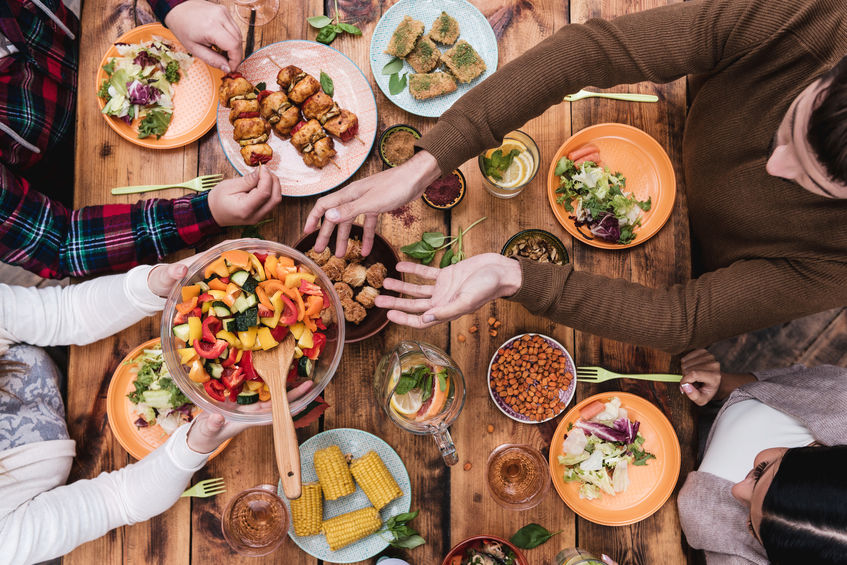
Friends Having Dinner

Sharing a meal is an inclusive experience.  The company, the food, and the conversation work together to blend the time at the table into a nourishing of body and soul.  

Part of this experience includes individuals "flying under the radar" of being noticed for how we eat and, therefore, avoiding the judgments of fellow diners.  No one is perfect and we all commit faux pas when dining with others.  

But whether or not our dining skills are polished or a little rough around the edges, there are things we never do that would bring our common courtesy into question.

Napkin “No-no’s”

  • Using it to blow your nose, wipe your face, or blot lipstick.
  • Tossing the napkin on the table.
  • Spitting food into your napkin is no way to be rid of it.
  • Napkins belong nowhere but on your lap.
  • Don't place on the table at the end of the meal until your host does.  

Properly used, napkins are the most important tool a diner has.  Their use signals the beginning and ending of the meal by the host, and they are convenient for catching crumbs and drips.

Space Invasions

  • Never reach or lean over someone else’s plate or across the table.  This includes shaking hands when others are already sitting.
  • Helping yourself to bread before the host has signaled the meal has begun. 
  • Taking food from someone’s plate.
  • Asking another diner for a bite.
  • Moving plates around to suit yourself. 
  • Placing unwanted food from your mouth on the table. 
  • Drinking before the host has signaled that the meal has begun. 
  • Eating before others have been served or before the host signals it’s time.
  • Talking or laughing loudly such that it's interruptive.  
  • Being anything other than kind to the server.

Our space at the table is our own, but at the same time, we share common space with all the other diners, too.  Being mindful of the boundaries between personal and shared space can prevent accidents and spills and help everyone feel respected and honored.

Unmannerly Sights and Sounds

  • Picking your teeth with your finger or a toothpick.
  • Using your tongue to cleanse outer limits of your mouth.
  • Scratching yourself or repeatedly touching your face, mouth or hair.
  • Swishing your food in your mouth.  Slurping!
  • Belching or burping.
  • Fidgeting or playing with silverware.
  • Knife blade scraping or screeching on the plate.
  • Talking with your mouth full.
  • Taking really big bites that cause difficulty chewing. 
  • Applying lipstick at the table.
  • Slouching in your chair.
  • Making a mess of your table space with your food.
  • Eating with one arm on the table or leaning on the table.
  • Leaning back in your chair with your hands on the back of your head.
  • Eating with your fingers - when you're not eating finger foods.
  • Shoving food onto your fork with your fingers.

What we can’t help but see and hear while dining together can leave unpleasant impressions.  Being aware that only we can manage ourselves as we engage with others over a meal, and being mindful of shared space, will make everyone glad they are with you.

Utensil and Glassware Errors

  • Leaving utensils hanging off your plate.
  • Bringing wine or beverage to the table from previous reception.  (Unless invited to do so.)
  • Licking or sucking on utensils.
  • Stabbing your food.
  • Knife blade aimed outward.  (Read by others as "aggressive.")
  • Waving or pointing with utensils during conversation.
  • Using a butter knife for anything but spreading butter.
  • Placing a used utensil on the table or tablecloth.  ("Used" always belongs on a plate.)
  • Bringing a thermos or water bottle to the table when it is already set with glassware.
  • Picking a dropped utensil or napkin up from the floor.  

A well-set table feels orderly and comforting, unless it’s not there—or unless diners upset the balance by mindlessness.  Disorder doesn’t have the same appeal as order.

Table Conversations that Raise Eyebrows

  • Updating everyone on your latest diet.
  • Complaining or bringing up unpleasant topics.
  • Engaging in ‘conversation stoppers’ such as politics, religion, or topics of a very personal nature. 
  • Talking to one neighbor at the table, but forgetting the neighbor on the other side.

When people dine together they have given their permission to be involved in pleasant conversation.  At a dining table, everyone should feel welcome.  This means sharing talk time and engaging in topics that will contribute to the general good (and good digestion) of all.

General Bad Dining Habits

  • Sitting down without first being invited to sit.
  • Hanging handbags on the back of chairs.  This is not only potentially disruptive, it might also invite trouble.  

When you dine, assume that not everyone knows the guidelines for table etiquette.  There is no need to correct someone if a rule is broken.  Leading by example usually makes a stronger statement of your good manners.


 Contributor, Candace Smith is a retired, national award-winning secondary school educator, Candace Smith teaches university students and professionals the soft skills of etiquette and protocol. She found these skills necessary in her own life after her husband received international recognition in 2002. Plunged into a new “normal” of travel and formal social gatherings with global leaders, she discovered how uncomfortable she was in many important social situations. After extensive training in etiquette and protocol, Candace realized a markedly increased confidence level in meeting and greeting and dining skills and was inspired to share these skills that will help others gain comfort and confidence in dining and networking situations. Learn more at http://www.candacesmithetiquette.com/

Etiquette. Enthusiast, Maura J Graber, is the Site Editor for the Etiquipedia© Etiquette Encyclopedia 


Tuesday, January 25, 2022

Century Old Rules Still Rule

Some unquestionable authorities say whatever is cut off by the knife, held in the right hand, must be lifted to the lips by the fork, prongs down, and held in the left hand.


WHEN USING KNIFE AND FORK TOGETHER

Some unquestionable authorities say whatever is cut off by the knife, held in the right hand, must be lifted to the lips by the fork, prongs down, and held in the left hand.

THE SPOON

The soup spoon goes into the liquid with a motion away from, not toward you — the rim toward you is lifted up, so that the outer, opposite edge dips down. Soup or any liquid, for that matter — is eaten from the side and not the tip of the spoon.

It is unsightly — and unnecessary to stir drinks more than once or twice with a spoon. A spoonful or so of a hot drink may be taken to test the temperature, then the rest drunk from the cup.

The individual salt cellar is not often used nowadays. If salt stands are on the table, there is usually one between every two places, and a spoon to go with it. Salt is taken on the side of the plate, with salt spoon, in that case. Whatever is neces sary to add flavor to a portion of food, may be taken on the tip of knife, or on the prongs of a fork. A carefully pre pared dish should not need additional salt or pepper. For eating ices, either a spoon or a fork may be provided.

FORK FOODS

Oyster, clam, lobster, and terrapin are fork food, as are fish, meats, vegetables, made dishes, and salads. Ices, frozen puddings, and melons may be eaten with a fork, though a spoon may be provided instead.

SPOON FOODS

Breakfast cereals, fruits with cream, soft boiled eggs, hot puddings, custards, jellies and preserves, are spoon foods-in general, a spoon is used for foods too soft or liquid to be con veniently eaten with a fork. The breakfast orange, or grape fruit, cut in half, is eaten with a spoon. But oranges, or similar fruits, served as a dessert, are quartered and peeled.

MORE ABOUT THE FORK

The fork should be lifted by moving the forearm only; nothing can be more unsightly than to see a fork raised by a movement of the arm that causes the elbow to stick out at an angle.

On this same principle of sightliness, it is preferable, after a bit of meat has been cut by the knife, to raise it with the fork, held in the left hand, as this makes unnecessary the zigzag shifting of fork from left to right hand. — A Book of Etiquette, Good Form on All Occasions, 1923


Etiquette Enthusiast, Maura J. Graber, is the Site Editor for the Etiquipedia© Etiquette Encyclopedia