Showing posts with label Etiquette for Children. Show all posts

Friday, October 21, 2022

Etiquette and Privacy for House Guests

Even a hostess sometimes spoils the privacy of the loveliest of guest chambers by entering it too frequently with inquiries.

When the guest room has an occupant, the children of the household should consider it sacred and should never be allowed to enter or even to knock at its door without first consulting an older head. Even a hostess sometimes spoils the pleasures of the loveliest of guest chambers by entering it too frequently with inquiries. Over entertainment is really worse than none at all. One may assume that a guest may perhaps want to be alone when she seeks her room.–The Morning Union, 1915

🍽Etiquette Enthusiast, Maura J. Graber, is the Site Editor for the Etiquipedia© Etiquette Encyclopedia

Wednesday, December 2, 2020

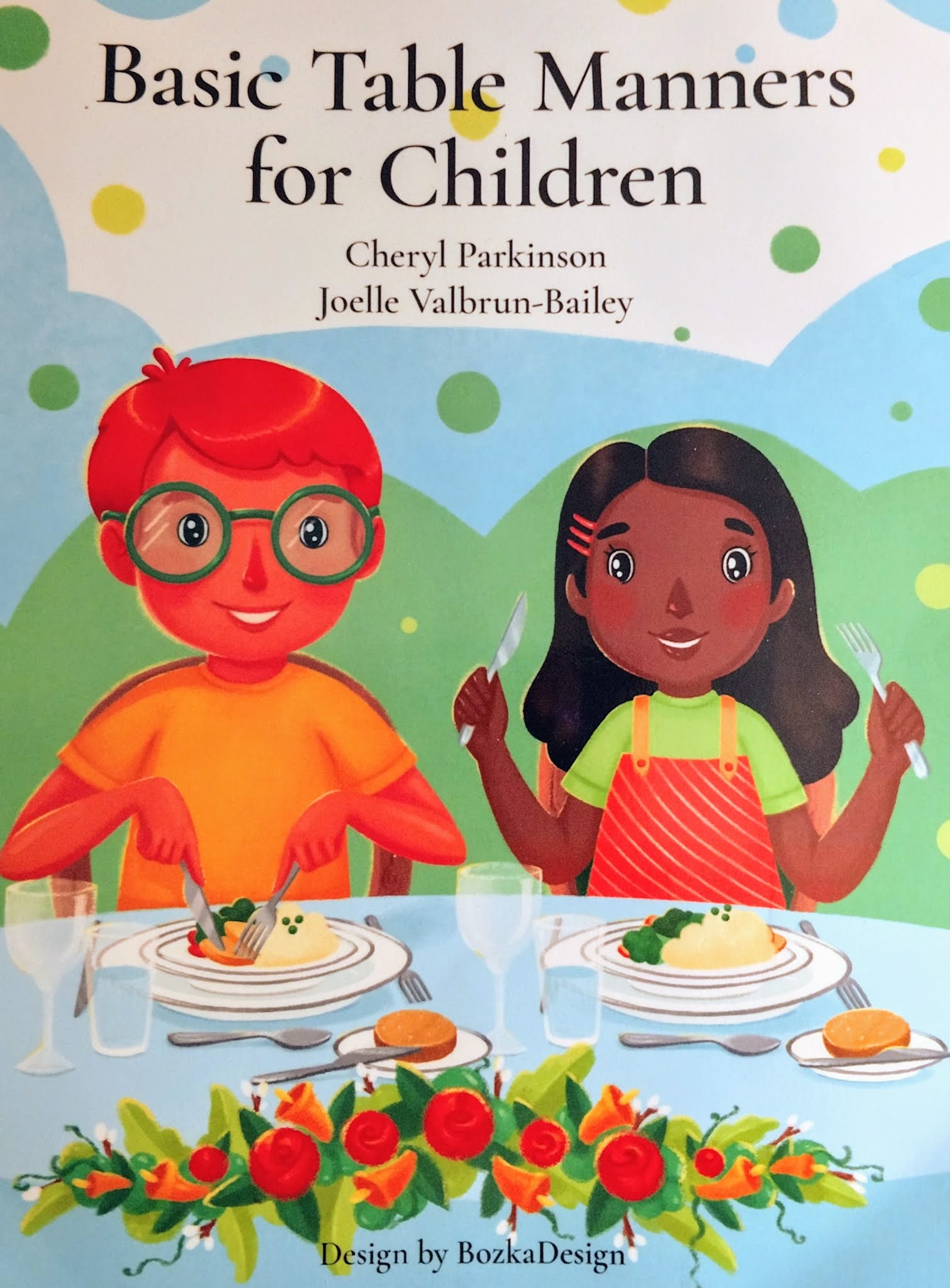
Basic Table Manners For Children ~ Book Review


I received this charming book for children a few days ago and it promises to teach kids basic table manners. It is a winner in every way. It's suitable for a wide range of ages and easy to understand. The authors never talk down to children and explain in clear, concise language the basic table manners every child should know. 
As an etiquette educator for the past 30 years, I laughed aloud when I read a piece of advice similar to a line that I have used numerous times when teaching over the years, especially with pre-teens or ‘tweens, “It's already dead, you don't need to stab your meat with your knife or fork!”

Learning how to hold and use a knife and fork properly, or how to set a correct place setting, is explained in easy to understand ways with beautiful illustrations. The artwork is colorful, fun, and the details are wonderful. Children will recognize themselves, their siblings and their friends who face similar tabletop dining challenges.

I recommend this book to anyone who knows a child who needs to learn these fundamentals, or one who simply needs to brush up on manners they’ve already been taught. I read this to my granddaughters yesterday, and they requested I read it 3 more times. 

Recommended Age Range 5 - 10 Years

From Bookstand Publishing

Paperback — 30 Pages

By Authors 
Joelle Valbrun-Bailey, Cheryl Parkinson


Etiquette Enthusiast, Maura J. Graber, is the Site Editor for the Etiquipedia© Etiquette Encyclopedia

Thursday, April 23, 2020

Q and A of Expected 1930’s Etiquette

Q. Should the hostess or her daughter pour at a formal tea?  — A. Neither. If the tea is formal, it is customary to have waiters perform this task. 


  • Q. How should a large number of formal invitations be recalled, due to sudden illness?   
  • A. Have cards printed, as engraving would delay matters: “Owing to sudden illness Mr. and Mrs. Robert Marshall are obliged to recall their invitations for Wednesday, the tenth of November” 
  • Q. Should the hostess or her daughter pour at a formal tea?  
  • A. Neither. If the tea is formal, it is customary to have waiters perform this task.  
  • Q. Is “Yes, ma’am” the proper answer for a child to give his teacher. 
  • A. No. The correct answer is, "Yes, Miss Marshall.” 
  • Q. If one enters a streetcar or bus, and sits down next to a friend who is reading a book, should one start a conversation?  
  • A. The friend who is reading should take the initiative, and decide whether she wishes to continue reading or converse with you.   
  • Q. Do the ushers at a wedding pay for their own outfits?  
  • A. Yes, because they are supposed to have in their wardrobes clothes that are suitable for a wedding.   
  • Q. Is it proper to pick bones from meat or fish with the fingers?  
  • A. This is permitted only in strict privacy.   
  • Q. What subjects should always be avoided in general social conversation?  
  • A. Religion, politics, illness, operations, death.
— by Roberta Lee, 1930-1939


Etiquette Enthusiast, Maura J Graber, is the Site Editor is the Site Editor for the Etiquipedia©️ Etiquette Encyclopedia  

Tuesday, October 17, 2017

Etiquette and Pre-Schoolers

Little children have no appreciation of social usage. Indeed they have no use for it whatever, as yet they have a long way to go into their social development, before parents can expect them to defer to another child simply because he happens to be a guest. Lessons in fair dealings come first; etiquette can wait until the child is ready for it.

Your Child
By Jane Coward

When little Judy, who was visiting, decided that she wanted the toy with which three-year-old Allen was playing. Allen’s mother called him aside and whispered that he was the host and must let his guest have whatever she wanted. Just as any other normal youngster would have done under the circumstances, Allen refused. Then, after some pleading on mother's part, he reluctantly handed his toy over to his little friend, but promptly slapped her. It so happens that the toy in question was Allen’s favorite. But even if it weren’t a favorite plaything, a toy always seems more desirable to a youngster when another covets it. This always makes him feel proud of his ownership. And it won’t do any good to criticize the sudden change by saying, “You never cared for the toy before!” He cares for it now, and that will be enough to make him feel and behave with possessiveness where it is concerned. 

At no time should parents insist upon drawing room decorum for pre-school-age youngsters toward their little guests. Little children have no appreciation of social usage. Indeed they have no use for it whatever, as yet they have a long way to go into their social development, before parents can expect them to defer to another child simply because he happens to be a guest. First, they must learn to get along with little people. For this they have to learn respect for property, to take turns, to share things. Disagreements like the one described above between Allen and Judy are bound to arise wherever youngsters meet, whether at the playground, in nursery school or at each other’s homes. And the person in charge must be prepared to deal with them on a basis of equality. Judy, for example, might have been urged to offer a toy to Allen in exchange for the one which he was using. No matter that he was her host. It takes years for children to learn give and take, and training has to be pursued diligently as opportunities arise. Lessons in fair dealings come first; etiquette can wait until the child is ready for it. – Madera Tribune, 1942


Etiquette Enthusiast, Maura J Graber, is the Site Editor for the Etiquipedia© Etiquette Encyclopedia 

Tuesday, April 25, 2017

Field Trip Etiquette Plea

1930's school children — “The majority of students know how to conduct themselves, but the hopeless minority group can make or break the school's reputation when off-campus.”

Filed Under “Conduct”

Emily Post has written many books on etiquette but it remains for some enterprising person to write a book on how students should conduct themselves on field trips. 
When a student is on a field trip, he himself carries a part of the school's reputation and it behooves him to act like a gentleman. 

The majority of students know how to conduct themselves but the hopeless minority group can make or break the school's reputation when off-campus. Those few students who act like rowdies and respect the property of no one should remain at home when the class makes a field trip. — The Corsair, 1938

Etiquette Enthusiast, Maura J Graber, is the Site Editor for the Etiquipedia© Etiquette Encyclopedia