|
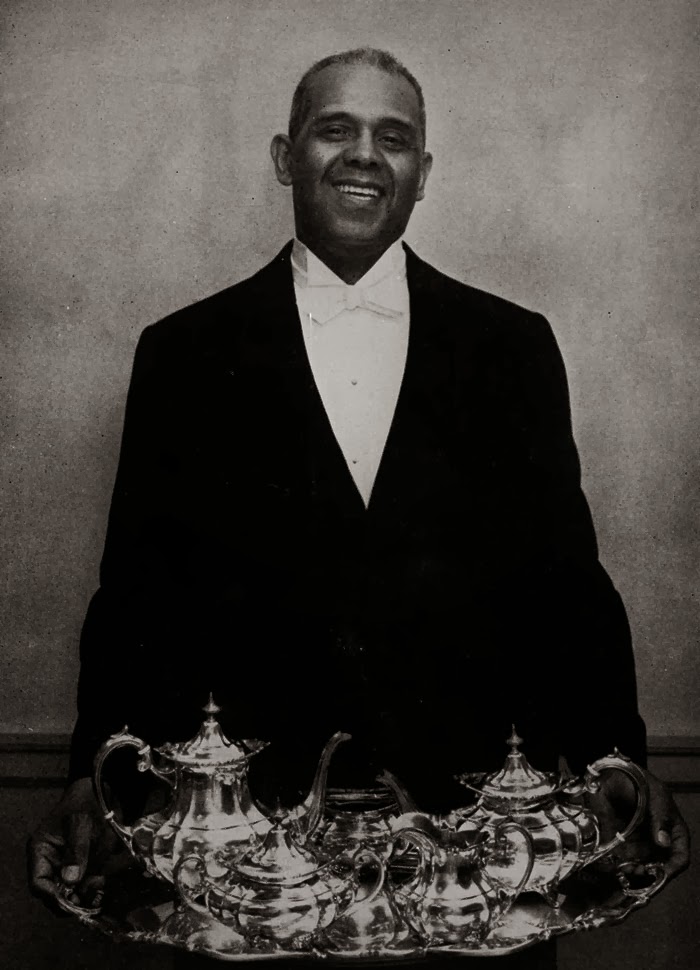
| “For the new super-rich, an English butler is a status symbol to line up alongside the Swiss banker, French chef, German car manufacturer, and Italian lover. The English are seen as refined, dignified, deferential, reserved, formal when needed, and able to adapt to any given situation without giving way to emotion or anxiety. They are also there to bring sophistication and old-world charm to the halls of their otherwise ostentatious homes; a touch of class alongside the gold taps and garish chandeliers.” –“... the two most desirable qualities in a good butler are loyalty and discretion. Loyalty, but also the ability to ignore his pretensions (and there are many), and discretion as a confidant who can also stay socially aloof.” The Guardian, 2011, photo source Pinterest |
Running households for the rich has payoffs for Coachella Valley’s top domestics
Imagine having a butler order custom brass or porcelain matchboxes for your party guests. Or employing three butlers; one to oversee household operations, one to take care of paintings and another to polish floors. That might seem a little far-fetched to most people, but not those in the Coachella Valley. Butlers may not be as plentiful now as they were 100 years ago, but the profession is far from dying out. Butlers are in demand, particularly by single business professionals and entrepreneurs with new wealth, according to local butlers and two Palm Springs employment agencies “There is a bigger demand here for butlers because of the influx of wealth into the valley.
The younger blue bloods in the 1960’s were out there doing their own thing Now they are going back to the old style,” said Michael, a butler for an affluent local businessman. Michael, 40, spoke on the condition his name not be used, thus ensuring anonymity for his employer as well as for himself. “Discretion is of the utmost importance,” he said. “There are some things about an employer that you wouldn't even tell your brother.” Michael has worked his way up through the ranks, learning the business as he went along. “You learn as things happen,” he said, “I used to move with great caution. If I made a mistake around guests, I would move swiftly, like nothing happened. If you make a mistake and get nervous, you’ll make the people around you nervous.”
He has worked for British aristocrats, royalty and Australian diplomats. The story of his career sounds like a fairy tale. Michael, the youngest of six children, was reared in an old-fashioned home in Ireland At age 16, he landed a job as a pantry man for Sir Edward and Lady Wills, at the tobacco magnate’s eight-bedroom country estate in Berkshire, England His assignments: polishing the silver, cleaning “a huge hallway" and setting aside silverware, glasses and plates for the head butler to set the table.
Employers with large domestic staffs rank butlers according to their responsibilities. The first or head butler is usually given the coveted duties. His tasks include greeting guests, pouring tea, serving dinner, planning menus and managing the domestic staff. Although Michael was promoted from pantry man to third butler, he soon grew weary of life on the secluded estate. After he and the other domestics returned from the Wills’ annual stay at the family castle in Scotland, he left for London. He then worked as the second butler for the Duke of Gloucester at St James Palace in London. His duties included serving afternoon teas for world figures such as Queen Elizabeth, the Queen Mother, King Hussein of Jordan and Queen Beatrix of The Netherlands. “Working with royalty was more important for my mother than for me.” Michael said “She took great pride in my profession. I was taught a lot about how to work in a very formal environment with people on a one-to-one basis.”
In England, butlers often exchange notes on the tastes of the people they serve Michael said it was common for butlers to call each other before a dinner party to learn what foods the guests liked or disliked. When guests arrived, they were greeted with their favorite drinks without having to ask. Michael said to be a butler, “you have to have a lot of dedication. And tranquility must prevail at all times.” Sometimes striving for perfection is hard to turn off. Michael admitted he has a habit of arranging other people’s tables when he is a dinner guest.
Like Michael, valley resident Jackson, who didn’t want his last name used, also worked his way up the ladder to his status as butler Jackson. 36, became a hotel busboy at age 16 and later worked at a variety of jobs. It was in Las Vegas that he entered domestic service, working at a seven-acre home once owned by billionaire Howard Hughes For nine years he took charge of the estate and even managed the rearing and breeding of Andalusian horses. “When you work for a family you become part of the family on the service side. You see children grow up,” Jackson said. When his employers were divorced, Jackson decided he wanted a change His next job was in Beverly Hills. "I worked briefly for a Hollywood’ wife. I wish her husband would find out the truth,” he said, referring to her extramarital affairs. “A lot of those women have their noses up two inches higher than God intended. But they can’t fool the butler because I've seen it all.”
Jackson, who has been a butler for 14 years, said he doesn’t mind being called a servant. “I’m there to serve the needs of the family. We’re all servants in life. You’re providing a service to your employer,” he said. His present boss is listed in Forbes Magazine as one of the nation's wealthiest men. “I work within a budget and spend the money as if it were my own.” Jackson said money isn’t a concern when planning a lavish party. The key to being a butler, Jackson said, is knowing your employers’ habits and keeping them content and happy. “What makes a good butler is surprising their (the employers) lives with new things, like food. Or using floral arrangements to create a little spark that gives them something new to look at. Doing things always to please them . . never to embarrass them,” he said. Jackson said he loves his job because it enables him to be around the ultra-rich.
Charles, who also wanted anonymity, said he’s been a butler/houseman for 25 years. His local employer is also well-to-do. “I chose to be a butler because I found it a means of always being employed," he said, “There are always going to be wealthy people and wealthy people can always afford help.” He is an American butler who grew up in an area where there was no work except as domestic help. “I went to school and worked part time as valet," Charles said. “After I finished school, I had trouble finding a job. I went back to being a domestic because you usually have room and board, a very decent salary and ample time off.” Also, a car allowance is often provided. “If you’re smart, you can pretty much keep all you earn," Charles said.
Palm Springs resident Sonny Karlsson, 45, arrived in the United States from Sweden in 1964. “When I came to America I didn’t have any idea about being a butler, other than what I saw in the movies,” he said. One year later, he was a Beverly Hills butler for Lita Annenberg Hazen, sister of Rancho Mirage resident Walter Annenberg. Five years later Karlsson went into business for himself, mainly serving dinners as an on-call butler. His clients included the late Henry Fonda, Kirk Douglas, Bob Hope, Danny Kaye and the late Walt Disney, he said. Karlsson also worked for Mrs. Henry Ford 11. He served at “very, very formal dinner parties” and once worked for five weeks at her Long Island estate. He is still in business serving dinners, but his 25-year-old son now helps. Karlsson, Charles, Jackson and Michael agreed that a live-in butler’s life is hard work, but they say the pay is good with a $500 average weekly salary. Jan Williams of the Palm Springs Employment Agency said her firm has placed butlers with monthly salaries ranging from $800 to $2,000, depending upon the butler’s experience and the employer’s needs. “Employers usually want incredible reference checks and a great work background,” Ms. Williams said. The wealthy who live on large estates frequently demand security checks with the FBI.
“When butlers are working with larger estates, naturally they’re going to be in contact with diplomats from all over the world,” she added The head of the household usually interviews butler candidates himself, Ms. Williams said. Ms. Williams and Dorothy “Sully” Sulman, of Surfside Services Agency in Palm Springs, said many people still maintain that the stereotypical English butler is tops. Ms. Sulman said, “A true domestic is one who smiles, does what he is told and keeps his mouth shut. In other words, what goes on in the household is nobody’s business. Butlers are servants, period. They serve.”
Butlers in Southern California frequently come to Palm Springs in search of work and solitude, she said. “Butlers in Beverly Hills and Hollywood are killing themselves with kinky parties and Mickey Mouse parties,” Ms. Sulman said. “They have to tolerate what goes on there. So, they come here when they get tired of working at that level and under the stress of that particular kind of world.” Ms, Sulman said many local employers who want butlers are “geriatric people” who need to be pampered. Why do Coachella Valley residents hire butlers? “So they never run out of anything and when they reach out for something, it’s there,” Ms. Sulman explained. – By Noel Fletcher, Desert Sun News, 1985
Etiquette Enthusiast, Maura J Graber, is the Site Editor for the Etiquipedia© Etiquette Encyclopedia