Showing posts with label Dorothy Dix. Show all posts

Saturday, April 27, 2024

Baby Shower Gift Etiquette


Vintage birth announcement card from 1957
DEAR DOROTHY DIX: It seems the new trend at bridal showers. is not to open the gifts. They are merely accepted and put aside. I think is is poor etiquette. Don't you? — Edith

DEAR EDITH: I could imagine nothing more tense than an evening spent glaring at a pile of beautifully wrapped gifts which the guests are not permitted to see opened I adore showers almost more than any other type party, but would certainly lose my enthusiasm after one of these. Personally, I've never heard of the fad, or trend, and certainly hope it passes very quickly. 

The whole object of a shower has always been the expressions of joy when the honored guest opened her gifts. This is the highlight of the party. Do your best to discourage the unopened-gifts trend. I'll back you up. – Dorothy Dix, Dorothy Dix is a Trademark registered in the U. S. Patent Office by The Bell Syndicate, Inc., 1956


 ๐Ÿฝ️Etiquette Enthusiast, Maura J. Graber, is the Site Editor for the Etiquipedia© Etiquette Encyclopedia 

Sunday, April 21, 2024

There’s No Excuse for Rudeness

The 1950’s and early 1960’s offered numerous new books of etiquette in the U.S. for the booming post-WWII years. A vintage advertisement for Amy Vanderbilt’s 1967 book of etiquette, with a tagline explaining that sooner or later, everyone needed the book of etiquette.

Hurt Feelings Not an Excuse!

DEAR DOROTHY DIX: My sister received a book on etiquette as a gift from her sister-in-law. My sister never expressed a desire for such a book and was highly insulted on receiving it. She returned the book. Was she right, or should she have kept the book?— P.P

DEAR P.P: Before returning the book your sister should have read it. There would be a raft of hurt feelings in this world if everyone who received a gift questioned the motive of the giver. A book of etiquette should be standard equipment in any household. 
At some time or other practically everyone comes across a situation that involves a small, but important, rule of manners, procedure or precedent. An authoritative source is indispensable at such a time. The book takes its place next to the almanac, dictionary and encyclopedia. Your sister's conduct was indefensible, and I certainly feel she owes her sister-in-law an apology. — By Dorothy Dix in “Shin Nichibei News,” 17 August 1957


๐Ÿฝ️Etiquette Enthusiast, Maura J. Graber, is the Site Editor for the Etiquipedia© Etiquette Encyclopedia

Thursday, April 11, 2024

Etiquette and Pushy Teenaged Girls

By the 1950’s, the novel automobiles and telephones from a short 70 years earlier had entered everyone’s homes and garages. At about that same time, the chaperones of young women had long exited the scene in most of the United States. It became more and more common for assertive young women to call young men on the phone and they began reversing the traditional, acceptable roles and doing the pursuing. But at what point did teenaged girls make the leap from being assertive and outgoing socially,  to being aggressive and rude? It was a quick evolution from women entering the work force en masse, to take traditionally male jobs in WWII, to the slow simmering of the roots of the Women’s Liberation Movement. Below is a prime example of what one modern teenaged girl had become by the end of the 1950’s.
DEAR DOROTHY DIX: Was I born 30 years too soon? Our 18-year-old son has been going steady with a 17-year-old girl for the past year. The young lady in question comes to our home looking for him when he's not at her house, she calls him to take her to school or on other errands, and even asked to accompany us on our vacation this summer. Her mother seems to encourage her aggressive attitude. I wonder whether common courtesy has died? I've always enjoyed having our children's friends in our home but this young lady seems to be a problem. – Worried Mother 

DEAR MOM: You've undoubtedly been told a hundred times that "times have changed since you were young," "things aren't done like that any more," etc... We'll all agree that times have changed but the qualities underlying common courtesy and graciousness have not changed. Your son's girl friend is a brash young thing, who has never been taught mannerliness and will never develop into a gracious and charming woman.
 
She has the instinct of a savage she must get her man at any price and hold him against all comers. The best protection you can give your son against this predatory female is to show him, by example, that this is not the way girls behave. Your daughters can help. Maybe the girl will absorb some of your charm; she certainly isn't learning any from her own mother. And for your comfort, may I offer the suggestion that most teen-age romances are passing fancies. – Dorothy Dix, 1958


๐ŸฝEtiquette Enthusiast, Maura J. Graber, is the Site Editor for the Etiquipedia© Etiquette Encyclopedia

Thursday, April 4, 2024

Etiquette and Respect for Others

We can't get rid of her. We've insulted her, ignored her, done just about everything but she still tags along. What can we do?” — Outrageous behavior on the parts of these three girls! Rudeness is inexcusable behavior to someone new you meet, regardless as to whether or not you wish to develop a friendship. “The Golden Rule,” honesty and showing some respect for others would be the best policy in a situation such as this one. Treat everyone as you would like to be treated.


DOROTHY DIX: We three girls have been friends for years. Recently a new girl came to our school and attached herself to our small group. We can't get rid of her. We've insulted her, ignored her, done just about everything but she still tags along. What can we do? —Dianne

DEAR DIANNE: It's much easier lo travel in a quartet than in a trio. Why be so selective? This girl is lonesome and frightened of her new school and different companions. She needs someone and has chosen ycur particular group as her idea of the best girls in school. Why not live up lo the honor? Be friends to this friendless youngster. Help her over the hurdle of getting accustomed to new surroundings. Encourage her lo overcome her shyness. Give her self-confidence. Some day you, too, may need a friend.— Dorothy Dix, 1958


๐ŸฝEtiquette Enthusiast, Maura J. Graber, is the Site Editor for the Etiquipedia© Etiquette Encyclopedia

Monday, January 15, 2024

Bad Manners Made Her Murder

We at Etiquipedia are confused by this Dorothy Dix article, as she normally wrote serious, well thought out columns. This had to have been a one-off attempt at humorous sarcasm. Otherwise, why would she condone murder over a husband’s poor table manners.
๐Ÿ€ ๐Ÿ€ ๐Ÿ€ ๐Ÿ€ ๐Ÿ€ ๐Ÿ€ ๐Ÿ€ ๐Ÿ€ ๐Ÿ€ ๐Ÿ€  
Downton Abbey’s, “Vera Bates”,  who famously poisoned her own food with the deadly powder, and ate her food, in order to frame her husband for murder. Vera Bates might have find this logic of Dix to be sound. Etiquipedia certainly wouldn’t recommend Dix as a lawyer for you in the event that you too understood her rationale and acted on the notion that it just may make your life happier! 
–Image Source, Pinterest
.  

Is a Woman Justified in Murdering a Husband Who Criticizes Her Cooking?

THE other day a woman gave as her excuse for murdering her husband that he always criticised her cooking. She stood it for years and years, and when she could endure it no longer having him ask, "Did she call that slop coffee?" and "What was the matter with the biscuit, and if she thought she "had a Government contract to make cannon balls instead of something to go in the human stomach," she reached down her little automatic and for ever silenced his carping tongue.

All that woman will need in order to get free when she is tried is to demand her constitutional rights to be tried by a jury of her peers. No twelve married women will ever send to the electric chair a sister who has done the thing that they have been tempted to do a thousand times, and that only the grace of God kept them from doing.

If the men who grumble about their food and knock their wives’ handiwork as they partake of it, were only mind readers enough to know that the ladies across the table from them are wishing that they had the nerve to flavor up the abused dishes with a little Rough on Rats, it would spoil many a husband's appetite. Likewise, there would be a great improvement in domestic table manners, and husbands would follow the old nursery admonition, to eat what is set before them and ask no questions, and make no comments.

Why women should be more sensitive to criticism of their cooking than they are to criticism of anything else they do they could not tell themselves. They simply are, and nothing gets on their nerves like having strictures passed upon their gravies, and invidious comparisons instituted between their pies and another woman's ples. Nor is there any woman who would not rather have her character aspersed than her baking. – Dorothy Dix, 1923


 ๐ŸฝEtiquette Enthusiast, Maura J Graber, is the Site Editor for the Etiquipedia© Etiquette Encyclopedia

Tuesday, January 2, 2024

Advice for Young Women in 1930


“Maybe youth is flaming," says flapper Fannie, "because hose is only used for display purposes.” – From “Girligags”


Dorothy Dix’s Letter Box

What Is There to Make a Woman Glad in Marriage?

Dear Miss Dix—I don’t agree with you that it is impossible to hand out a patented formula for making a girl attractive to men. There is an old, attested recipe that my mother used when she was a girl, and she taught it to me and I have handed it down to my daughter, and it still works in this modern day just as it did in the old mid-Victorian period because all men of all ages are alike. For a conversational line tell 'em that they are great and wonderful and big boys. 

Learn how to do things—how to swim, play tennis, golf and so on. And especially how to dance. Find out what a boy’s favorite sport is and get him to teach it to you. Learn how to do it well enough to keep him interested, but never get proficient enough to beat him. Don’t ever try to be brilliant or show off before a man. Keep the spotlight on him. And always surround an unattractive girl with plenty of other girls who have it. They will draw the man and the homely sister gels the left-overs. Try this rule, it never fails. – The Flapper Mother of a Flapper Daughter 

Answer: These are words of gold framed in silver which every girl who wishes to make a hit with men should hang over her dressing table, for, as my correspondent says, men are pretty much of a muchness as far as their taste is concerned and the poor fish are still caught with the same bail that the lady fishermen have used from generation to generation. Doubtless the first thing that Eve said to Adam as she rolled her eyes, at him and gave him the once over was to exclaim about how big and strong and wonderful be was and tell him that she fell for him the first time that she saw him. And Adam, lent an attentive ear, as every man has ever done ever since when a woman talked to him about himself and decided in his own mind that she was a young person of superior taste and judgment and so entertaining that he could go on listening to her forever. 

Nor do men want to discuss high-browed subjects with women. When they talk about the Einstein theory and the modern movements in literature and art and politics, they want to talk with other men. And no woman makes a greater mistake than in trying to be humorous with men. Men don’t like funny women. Nor women who laugh too much. They always have an uneasy suspicion that she is laughing at them. Therefore, the woman who is a good talker with men talks to them about themselves to the exclusion of any other topic. She is the human questionnaire. She asks them minutely about their childhood, about how they succeeded in business, about their golf or their car, and she listens with bated breath while they tell the stories of their lives and how they pulled off a deal or sold a bit of goods or w hat Mr. Hoover should do about prohibition. 

Then, in this day, girls have to be up and doing. Gone are the halcyon times when men sought out the shrinking violet. Now a maiden has to be not only a sunflower but one who takes the precaution of planting herself right in a man’s way so that he stumbles over her if she gets noticed. In other words, she has to be Sally on the spot. That is why so many girls who do not need to support themselves are going into business. They don't sit at home and suck their thumbs and wait for some fairy prince to come riding by and save them. They go down inlo the offices where the good chances are and where they have the opportunity of plying their arts and wiles on men at close range. Many girls who are homely avoid being seen out with pretty girls because they fear comparisons. This is a mistake. 

Every plain girl should hunt up the best-looking girl she can find for a running mate, because the pretty girl will attract the boys and that will give her a chance to do her stuff. For beauties do not always wear well on closer acquaintance. Nearly always they are egotistic and selfish and like to show their power by ordering men about, and this does not make a hit with the sex that likes to have the kowtowing done to it. So here is where Little Plain Face gets in her deadly work. She is so much sweeter, so much less self-centered, so willing and anxious to be pleased and so appreciative of every attention that oftener than not she wins out instead of the beauty. So perhaps the formula for a girl making herself popular with men can be summed up into me phrase: keep a man pleased with himself and he will be pleased with you. – Dorothy Dix, 1930


๐ŸฝEtiquette Enthusiast, Maura J. Graber, is the Site Editor for the Etiquipedia© Etiquette Encyclopedia

Sunday, May 14, 2023

Mothers, Manners and the Sexes

Why is a little girl adjured from her birth to act like a lady, while a boy is permitted to conduct himself like a hoodlum? 


Boys, as Well as Girls, Must Be Taught Manners!


WHY is it that mothers take so much trouble to teach their girls good manners and none to teach their boys any manners at all? Why is a little girl adjured from her birth to act like a lady, while a boy is permitted to conduct himself like a hoodlum? Why are there “finishing schools” for girls, where they are taught the little niceties of conduct that set apart the well-bred from the ill-bred, while a boy is left to form his own manners, and become a Beau Brummel, or a boor, as it happens? Do we consider that good manners and social adroitness are less necessary to a man than they are to a woman? Do we hold that women should have a monopoly on good manners? Or do we think that good manners come by nature, as Dogberry thought, a knowledge of reading and writing did? 

Whatever the answer is to these queries, there is no disputing the fact that the average little girl, of good family, has charming manners, and the average little boy is a savage. When the little girl comes into the room when you are calling on her mother she drops you a courtesy and treats you with respectful consideration. But let little brother come into the room, and he doesn’t notice a visitor any more than if she was a piece of furniture. He keeps his hat on his head, and cuts across the conversation to ask mother whatever he wants to know, and when you speak to him, he doesn't even answer you. 

Boys Rude Everywhere

One of the sights of this city that is enough to make any one weep is the horde of boys that you encounter on the streetcars. They are well dressed, evidently come from respectable families, but they have the manners of hoodlums. They rush pell-mell into a car, seize every good seat, and sit there while gray-haired women and women with babies stand. It makes one wonder what sort of mothers these boys have that they have not been taught the first element of good manners, or the first principles of the art of being a gentleman. 

Last summer I stayed all night at a New England summer resort. At dinner, at the table next to mine, were eight or ten young girls and boys, having a jolly time together. Presently to this table came an elderly woman. All of the other boys went on with their eating and laughing, but one lad sprang to his feet and stood while a waiter drew out the old lady’s chair and settled her comfortably. My companions and I looked at each other with smiles of approbation. “If I were looking for a boy to take into my business I’d give that youth a chance,” said the man of the party. “I’d like to know that boy’s mother,” I said. “If he had his pedigree hung around his neck and coat of arms branded on his forehead you wouldn’t know any more what sort of family he comes from,” said the other woman. 

Good Manners Influence All

Now very likely that boy didn't have any more intelligence, and wasn’t any kinder-hearted, and had no more real worth than the other boys at the table with him, but he had better manners, and his good manners had prejudiced everybody in the whole room in his favor. Every one of us felt like doing something for him out of sheer gratitude giving a living illustration of how a gentlemanly lad t should act. There is no bigger asset in the world manners. They are a letter of credit that every one of us honors at sight. They are the open sesame before which closed doors fly open. They make friends for us, and smooth the rough places. They will carry a man farther than brains, or industry, or the whole category of virtues, and, this being true, it passes all understanding that mothers do not think it worth while to teach their boys even the elements of courtesy and how to conduct themselves toward other people. 

If a mother can do but one thing on earth for her son, she can polish up his manners. If she can teach him but one thing, she can teach him courtesy. If she can give him but one thing, she can give him the charm that comes of being well bred, and that will make friends for him of everybody he encounters. And if be has that he doesn’t need Bishop Quintard, in speaking of Sewanee University in the South, that he founded, once said: “We can’t turn out every man who comes to Sewanee a scholar, because the good God hasn’t given every man the brains of a student, but we do turn out every boy that comes to Sewanee with the manners of a gentleman, and that’s the next best thing.” 

How One Mother Succeeded 

Some mothers do appreciate the necessity of teaching their boys good manners, and one of these whose little eight year old son is a perfect Chesterfield, said this to another woman who rhapsodized over the child’s manners in a mannerless age: “Well, we’ve tried to help Jack make a gentleman of himself, which is about the finest thing that any man can be. As soon as he could understand we began talking to him a great deal about gentleman-hood—if I may so express it —until we created an ideal of knightly conduct in his mind, and we keep this standard unfalteringly before his eyes. “We tell him that a gentleman can’t lie, a gentleman can’t steal or cheat, a gentleman protects the weak and helpless, and is extra courteous to servants and poor and afflicted people, a gentleman never strikes any one who is smaller or weaker than himself, a gentleman is very courteous to ladies; he takes his hat off in elevators; he gives ladies his seat on the cars; he lets them pass first out of a room, and so on. “I don’t know what Jack is going to do in the world, or how far he may wander off of the straight and narrow path, but I will stake my life that whatever he does he will do with the manners of a gentleman.” Would that there were other mothers like this mother. – Dorothy Dix, 1916

 ๐ŸฝEtiquette Enthusiast, Maura J. Graber, is the Site Editor for the Etiquipedia© Etiquette Encyclopedia

Sunday, October 9, 2022

Etiquette: A Law of Mutual Kindness

Precious few of us are such spellbinders that we can hold an audience on the intrinsic thrillingness of our discourse, nor are we brilliant enough humorists to provoke with our wit the ready laugh that etiquette hands us. Yet which one of us would enjoy a listener who frankly yawned when he was bored, or felt called upon to tell us that he had heard our cherished best story a million times before? 

Dorothy Dix Answers Writer Who Says ‘Etiquette Makes Hypocrites of Us’
——————
Conventions of Society Save Us Heartaches and Help to Keep Us Happy

Not long ago I wrote an article for this column in which I spoke with enthusiasm of the school for manners that the University of New York is going to inaugurate. A man reader takes exception to my views. He writes: 
“I disapprove highly of all the etiquette, because etiquette robs us of sincerity. If you go into a room and find people there who are not of the slightest interest to you, why should you hypocritically be sympathetic to their troubles, and rejoice in their happiness, when in reality you do not care whether they live or die? Yet etiquette requires you to do that. Etiquette will stop you from telling a man that he is a liar, or a woman that she is old and ugly. Etiquette prescribes that you smile when you have not the slightest desire to do so. Etiquette forces you to listen to the boresome conversation and long-winded stories of others. Etiquette forces you to do that which you do not desire to do, and to leave undone that which you wish to do.”

“What is the good of etiquette?’’ Etiquette is simply one of the rules of the game. When human beings rose above beasts who were continually at each other’s throats and decided to live together in peace and harmony, they found out that they would have to agree upon certain things that they could do, and couldn’t do, and that everyone must respect these unwritten laws because it made things pleasanter for everybody. Out of this grew what we call the conventions of society and etiquette, and, foolish and arbitrary as they sometimes seem, they invariably rest upon some human need and represent the accumulated experience of centuries of man’s dealing with man, and the best way to do it. Moreover, etiquette is nothing more nor less than the golden rule dressed up in party clothes and with a flower in its buttonhole. It teaches us to treat others as we would like to have others treat us. It makes us respect other people’s privacy and opinions, and be careful of their susceptibilities as we would like to have them respect ours. 

You can have no better illustration of the happy working out of etiquette than in the very instances cited by my correspondent. He asks scornfully why he should appear to sympathize with the joys and sorrows of people for whom he cares nothing. Doubtless this man never takes the trouble to write a note of condolence when there is a death in the family of some acquaintance, or telephone a congratulation good luck comes the way of a neighbor. Yet how would he feel if, when he entered a room, nobody greeted him with a pleasant and cordial word because no one happened to be vitally interested in him? Would he not be cut to the heart if his wife or child lay dead and no human being spoke a word of sympathy to him? Would not the happiness of his success be dimmed if not a man put out a hand and said: “Good for you, old chap, I’m awfully glad for you”? 

My correspondent says that etiquette forces us to listen with an affectation of interest to tedious conversationalists, and laugh over jokes that we cut our teeth on in our cradles. Let us thank Heaven that it does. Precious few of us are such spellbinders that we can hold an audience on the intrinsic thrillingness of our discourse, nor are we brilliant enough humorists to provoke with our wit the ready laugh that etiquette hands us. Yet which one of us would enjoy a listener who frankly yawned when he was bored, or felt called upon to tell us that he had heard our cherished best story a million times before? 

And if etiquette prevents us from enjoying the sacred joy of telling a man that he lies, or a woman that the least observing eye can see that she is ten years older than she pretends to be, and that anybody can tell that her complexion and her hair are only hers by right of purchase, is it not as broad as it is long, for it keeps other people from saying the same brutal things to us? As for etiquette being the mother of insincerity, that is nonsense. There is more to praise than to blame, more to admire than to criticize, more to like than to hate in the world. Why is it not as honest to speak of a person’s good qualities as his bad qualities? Why isn’t it as sincere to turn a cheery, bright face upon the people at your breakfast table and in your office as it is to grouch in gloom? And as for sympathizing with the joys and sorrows of those about us, even if we don’t know them very well and are not particularly attached to them, surely that is just the throb of a common humanity that makes us all kin. 

At its worst, etiquette is merely assuming the virtue of consideration of others by those who have it not, and that is better than the brutality of the savage, who goes his own way unmindful of the rights of others. When we all get to be angels, altruistically intent on promoting each other’s happiness, we can do without etiquette; but until that time arrives, blessed be good manners that make it bad form for us to step on each other’s toes and do and say things we are prompted to do.— By Dorothy Dix in the San Francisco Call, 1916


๐ŸฝEtiquette Enthusiast, Maura J. Graber, is the Site Editor for Etiquipedia© Etiquette Encyclopedia

Friday, October 23, 2020

Degree in Etiquette Never Offered

                          
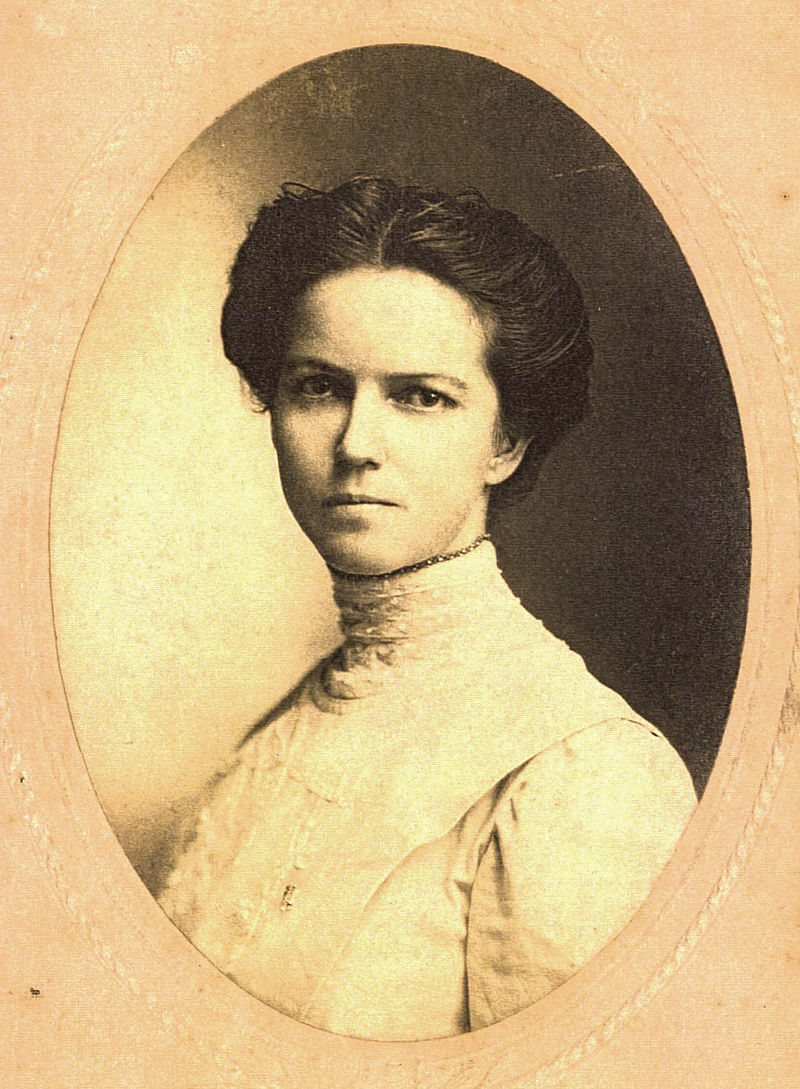
From what we at Etiquipedia have researched, NYU never did offer the degree mentioned in Dix’s 1916 article. It is disappointing, though, as it would have been one way of actually “certifying” someone as knowledgeable in etiquette and manners. — Elizabeth Meriwether Gilmer was an American “Agony Aunt” who wrote under the pen name, “Dorothy Dix.” A forerunner of today’s advice columnists, Dix was America’s highest paid and most widely read female journalist when she died in 1951. Her advice was syndicated in newspapers around the world, with an estimated audience of 60 million readers. Along with her column, she campaigned for woman suffrage.
— Public domain image


School of Manners, Dorothy Dix Says, Is Badly Needed American Child Too Often Lacking in Politeness and Little Graces of Human Intercourse

It is announced that the New York University is going to establish a school of manners, and that the degree of M. E.—Magister Elegantiarium—may be conferred on such students as perfect themselves in the etiquette of polite society. This news sounds almost too good to be true. Let us hope, however, that such a course of study is really to be established in one of our great schools, and that it will be compulsory, for nothing is more sadly needed.

For whatever other charms and virtues the American youth may possess, good manners are seldom among them. As a child he is almost invariably a little savage. As a hobbledehoy he is generally a hoodlum, and as a grown man, he is only too often an awkward blunderer, who is like a bull in the social china shop. On every side we encounter multitudes of men who have intelligence, force, power, men who have achieved success in their own particular calling, but who are as ignorant as babes of any of the graces of human intercourse. 

They cannot enter or leave a room without falling over their own feet. They do not know what to say when presented to a stranger, or how either to pay or receive a compliment. At dinner parties you may see them hopelessly floundering around among the silverware. At restaurants you may observe them with their legs twined like snakes around their chair legs, grasping their forks as if they were about to harpoon an attacking whale, and, alas, you may even pass away an evening listening to them eat their soup. 

Of course, we excuse such men by saying that they have been too busy with big affairs to give their attention to such small matters as the proper use of a fork or a spoon. We say that it's more important that a man’s heart should be of gold than that he. should wear the right sort of coat for the occasion, and we try to gloss over his boorishness by calling him a rough diamond. All of which is sheer nonsense. Nobody will contend that a rough diamond is as valuable as one that is cut and polished, and the truth is that while a man may succeed without good manners, he would succeed better with them. 

To know how to do things, to possess what the French call savoir faire, is always a help, never a handicap in life. People have always appreciated this fact, so far as women were concerned. In all girls' schools special attention is paid to deportment, and girls are taught the niceties of etiquette that they perhaps de not have an opportunity to learn in their own homes. More than that, at home stress is laid on little girls behaving like ladies, and wherever you go, the small daughter of the house will receive you charmingly, drop her little courtesy and endeavor to engage you in courteous conversation. 

But apparently the mothers of the same families make no effort to instill politeness into their boys, and their lads will storm into the room with their caps on. They will never stop to speak to the visitors, and only grunt by way of reply when addressed. And when these boys are sent off to school, no effort seems to be made to supplement their lack of home training in manners. They are grounded in all the arts and sciences except the most important art and science of all, which is that of making oneself agreeable to one’s fellow creatures. 

For, when all is said and dont, good manners will carry one further than anything else in the world. They are a letter of credit» that every one of us honors* at sight. The clown may compel our grudging respect, but present our hearts as a free gift to the courtier. A young man may be of the most sterling worth and yet wear a decollete collar that exposes his Adam’s apple and a coat and trousers and waistcoat of different makes and colors so that he looks like an animated patchwork quilt, but if he and another youth who knew how to dress, applied for the same job, the good clothes would get it. 

A man might he a genius and yet eat peas with his knife, but he would have a hard time getting close enough to those who might help him to get a chance to show what he could do. A man may have almost superhuman ability in any line, but if he is rude and crude in his manners, if he does not know how to please, he lives and dies neglected. On the other hand, the man who has what we call a charming personality, who is gracious in speech and polite in manners, finds a helping hand always at his elbow and a friendly shoulder ready to boost him up the ladder. That is why it is so important to teach boys good manners and why the opening a department in the New York University is epoch-making. — By Dorothy Dix, 1916


Etiquette Enthusiast, Maura J. Graber, is the Site Editor for Etiquipedia© Etiquette Encyclopedia


Saturday, July 11, 2020

Bridal Shower Gift Etiquette

Elizabeth Meriwether Gilmer was an American “Agony Aunt” who wrote under the pen name, “Dorothy Dix.” A forerunner of today’s advice columnists, Dix was America’s highest paid and most widely read female journalist when she died in 1951. Her advice was syndicated in newspapers around the world, with an estimated audience of 60 million readers. Along with her column, she campaigned for woman suffrage.
Public domain image

Dear Dorothy Dix:  
It seems the new trend at bridal showers is not to open the gifts. They are merely accepted and put aside. I think is is poor etiquette. Don’t you? 
 — Edith 

Dear Edith:  
I could imagine nothing more tense than an evening spent glaring at a pile of beautifully wrapped gifts which the guests are not permitted to see opened. I adore showers almost more than any other type party, but would certainly lose my enthusiasm after one of these. Personally, I’ve never heard of the fad, or trend, and certainly hope it passes very quickly. The whole object of a shower has always been the expressions of joy when the honored guest opened her gifts. This is the highlight of the party. Do your best to discourage the unopened-gifts trend. I’ll back you up. 
— Dorothy Dix, 1950


Etiquette Enthusiast, Maura J Graber, is the Site Editor for the Etiquipedia© Etiquette Encyclopedia