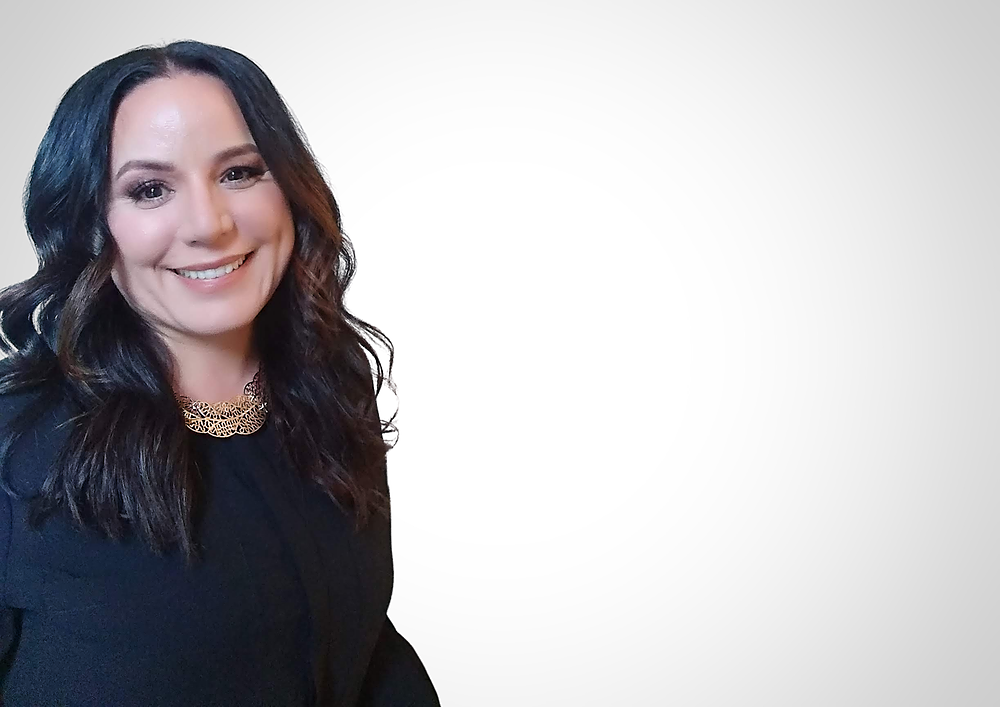
🍽️Etiquette Enthusiast, Maura J. Graber of The RSVP Institute of Etiquette, is the Site Editor of the Etiquipedia© Etiquette Encyclopedia
Etiquipedia© is an Etiquette Encyclopedia and Etiquette History Blog published to Educate, Enlighten and Entertain.
Sunday, December 21, 2025
Character Analysis and Manners
Saturday, December 20, 2025
Madame Récamier and Good Manners
![]() |
| In all French history no woman had a stronger fascination for whoever came within her reach than Madame Recamier. – Public domain image of Juliette Récamier, famous for her beauty and wit. |
The Secret of Good Manners
The secret of good manners is to forget one’s own self altogether. The people of really fine breeding are the ones who never think of themselves, but only of the pleasure they can give to others. No adornment of beauty, or learning, or accomplishments, goes so far in its power to attract as the one gift of sympathy. In all French history no woman had a stronger fascination for whoever came within her reach than Madame Recamier.
She was called beautiful; but her portraits prove that her beauty was not to be compared with that of many less a charming women. And when every attraction of person had long since passed away, and she was an old, old woman, her sway over the hearts of others was as powerful as ever. What was her secret ? It was this one thing solely — her genuine and unaffected interest in the good and ill fortunes of her friends.
Authors came to her and read her their books; painters came to her with their pictures; statesmen with their projects. She, herself, wrote no books, painted no pictures, had no projects. She was sweet, simply and unconsciously, as a rose is sweet. She really cared for the happiness and success of others, and they felt the genuineness of her sympathy. It surrounded her with an immortal charm.
Let any girl try Madame Recamier’s experiment. Let her go into society thinking nothing of the admiration she may win; but everything of the happiness she can confer. It matters little whether her face is beautiful, or her toilette costly. Before the end of three months she will be a happy girl herself; for the world likes sunshine and sympathy, and turns to them as the flowers baak in the sun of June. – Placer Herald, 1881
🍽️Etiquette Enthusiast, Maura J. Graber of The RSVP Institute of Etiquette, is the Site Editor of the Etiquipedia© Etiquette Encyclopedia
Friday, December 19, 2025
1951’s “New” Entertaining Manners
Spare Your Hostess!
..that will make it fun for everyone
DO YOU TRY to live in 1951 and keep up 1891 table etiquette?
Are you still trying to entertain the way Grandma did? Still trotting out all the family silver and china, the fussy meals and the millionaire manners?
But suppose you don't have Grandma's leisure or “a girl to come in and help.” Do you end up, after the company is gone, leaning on the kitchen sink and shuddering at the thought of guests?
Well, there's a new and smart way out. It's called the New Etiquette. Based sensibly on the fact that few 1951 homes have maids, it sees to it that the hostess enjoys her own parties.
The main requirements are the New Style Hostess (or Host) and the New Style Guest. Both should cut down work.
The keynotes are (1) dishes that can be thrown away, in- stead of cleaned, (2) food that needs less silverware, (3) table arrangements that let guests share with the serving, and (4) clean-up co-operation that lets all join in and have fun.
The New Etiquette is shown at work in the breakfast setting above. Please note that (1) Except for the coffee cups (without saucers), it uses new, non-tasting, plastie-lined paper plates and cups. (2) All food is presented in original containers, or in the cooking utensils. (3) All foods are grouped conveniently. (4) The paper napkins and easily sponged plastic cloth need not be laundered. Hosts and guests are on their own. Wash-up time will be a matter of seconds, not minutes.
Once you get the idea, the New Etiquette is simplicity itself. Here are some 'important pointers:
LUNCH, DINNER: Think of your menu in terms of the easiest service, with the main course served in one unit. Stews or cas- seroles are ideal. Roasts, steaks, and chops can be served on the same platter as the vegetables. Avoid putting silver-ware where it is not needed. With a little planning, the 82 pieces of silver and china often used to serve four people can be cut to 35. If you have one, carry everything in on a tea-wagon.
COCKTAIL PARTIES: Don't make the canapés, or beyond the first round, mix the drinks yourself. Arrange the makings for canapés and let guests help themselves. Bring liquor, ice, mixes, bar tools into the living room.
PICNICS: Let the guests dream up, and make, their own sandwiches. Take bread, butter, meats, cheeses, hard-boiled eggs, tomatoes, cucumbers, celery and lettuce.
MANNERS FOR GUESTS: Especially on week-ends, remember that your hosts are not your servants. Make your own bed, Pitch in and help with the rest of the work. They'll be glad to have you back!
MANNERS FOR HOSTS: If you expect guests to help with the work, keep it to a minimum and make it easy. For clean-up after meals, label your kitchen shelves so that they'll know where things belong. - By Russell Wright, Co-author with Mary Wright of "Easier Living" Simon & Schuster
🍽️Etiquette Enthusiast, Maura J. Graber of The RSVP Institute of Etiquette, is the Site Editor of the Etiquipedia© Etiquette Encyclopedia
Thursday, December 18, 2025
Fashion Etiquette and Absurdities
SARATOGA, August. The nights are, more absolutely than they ever were, devoted to follies the most fascinating, and exhibitions of fashionable manners and attire so absurd, that it would seem as if the tailors and modistes had conspired together this season to play a monstrous joke upon their patrons. Perhaps the dandies are worth less notice than ever. The difference between a fop and a gentleman in the United States is happily wide enough to render it impossible that any sane person should ever confound the two. But the difference between a female popinjay and a lady is here defined by such a curious and vulgar set of peculiarities ap- pertaining to the former person, that I cannot forbear to describe them. In the first place, a toilette is affected, which of itself suffices to turn a woman in full dress into a caricature.
The body and waist of the dress are remarkable only in one respect the last is exceedingly tight, and the former rather loose at the top and exceedingly low. It is below the waist that what is monstrous in the costume first attracts and then repels the eyes of man. A hoop of moderate dimensions, overspread with an underskirt or two, and a dress of whatever fabric, are worn. Underneath the rear of this hoop, just below the waist of the person designated, is bound a coil of wire from two to three inches in diameter, which “throws out” and elevates the upper portion of the dress behind, and forms the foundation, so to speak, of an exterior protuberance called the pannier. The pannier is a bustle, more or less enormous, upon which, in successive folds or layers gathered up or confined by a band encircling the dress from the stomach of the wearer around and beneath, an extra skirt, reaching just below the posterior, hangs, or or rathe rather “wobbles” to and fro. The dress has a train from four to six feet in length.
The posture affected in order to set off this attire is called the “Grecian Bend,” a contortion of the body which, as it is highly improper in itself, I find it difficult to describe with propriety. High-heeled shoes dispose the wearer to incline forward, and dispose high-heeled gaiters are, therefore, adopted by the “belle of the season.” She is thus the more readily enabled to elevate her hips behind, enhancing the aspect of the panier, to contract her stomach, and to form an S-like curvature of her upper shape, by thrusting out her chest, drawing back her shoulders, and bending forward her head. The latter is crowned by a hideous chignon, surpassing by several inches the thickness of the shallow nether brain.
It has been confided to me by an elderly woman with whom I conversed at a recent ball, that the distortion of the shape known as the Grecian Bend” is quite painful and wearisome, and that some girls adopt artificial contrivances to aid them in preserving the posture for several consecutive hours. A belt is fastened about the waist, under the skirts. From this belt, down either side the hips, the straps furnished with buckles, descend and are attached to strong bands, made fast around the lower thighs. As the buckles of the straps are tightened the hips are drawn up and held “in position.” This, says my amiable informant, "is a relief, of course, to only one part of the frame. The constriction of the upper part has to be preserved with no other aids than the stays; and those often render it the more difficult and tiresome.
“You perhaps notice another peculiarity about some of the ladies' dresses. The bodies are not only cut very low, but are so far from clinging jealously to the figure as to seem to challenge the gaze of partners to that satisfaction in regard to the reality of certain charms, which it was formerly claimed by marriageable bachelors that they were denied. So gracious a condescension on the part of our belles,” continued the matron, in a tone tingling with irony, “commends them, you will surely admit, as a far more honest and unequivocating set than the haunts of fashion are used to boast of.”
🍽️Etiquette Enthusiast, Maura J. Graber of The RSVP Institute of Etiquette, is the Site Editor of the Etiquipedia© Etiquette Encyclopedia
Wednesday, December 17, 2025
Etiquette Pre-Marriage and Post
Manners and Married Life
Why is it that a man will liberally sprinkle his conversation with “thank you.” and “I beg your pardon.” before marriage, and when the glamour of the honeymoon has faded into the past forget to assist his wife with her coat? What is the reason that a woman will spend an hour at her toilette before meeting her fiancé, and when married will appear positively unattractive?
I fear that the answer is in the fact that somewhere in either person’s conduct there is a lack of good breeding. Just because a person is married is certainly no excuse for a neglect of the ordinary social customs. Indeed, a lapse of good manners in the behavior of married people always fills me with disappointment and dread for the years in the far-away future.
It is the first step that counts. Never let yourself forget that you owe to your husband a consideration and politeness equal to, if not surpassing, that given to others: check your first impulse to answer him rudely: think twice before you act once when a wish to be impolite arises.
There are many little rocks upon which the happiness of married life comes to grief. First, there is the question of letters. Now, a letter that your husband receives belongs to two persons, to him and to the writer. His marriage has nothing to do with this, and the conventional understanding must not be undermined by a wife reading her husband's correspondence when the fancy strikes her. This rummaging propensity is ill-bred. The wife who complains that her husband never tells her anything will never win his confidence by reading his letters unasked.
Frequently there is an exchange of confidences in the first weeks of married life in which every memory, every past love affair and all friends and relatives are discussed. And frequently these easily made confidences are returned under the guise of chastisements in moments of irritation. A sufficient amount of reserve is lacking in this mode of action, and reserve is the sign of good breeding. Every little thing should not be told to the husband or wife. Remember that an account of past affairs involves the other person.
Bad temper is an evidence of bad manners in an aggravated form. Married people should exercise self-control just as carefully as those in single-blessedness. In closing, let me urge that politeness be emphasized in married life with the same care that occurs in the days before. A pardon should be asked of one's husband just as quickly as of the grocer: an entrance to his dressing room should be preceded by a knock just as surely as that to a guest’s room.
The great wheels of married life will move infinitely more smoothly if urbanity be the guiding thought. Be polite, even to your husband! Consider his feelings and his opinions as carefully as you do those of his nephew. Let there be an amiable manner at breakfast when alone with him as well as at dinner when guests are present. Never allow the familiarity of married life to breed a contempt for good manners. –Chico Record, 1909
🍽️Etiquette Enthusiast, Maura J. Graber of The RSVP Institute of Etiquette, is the Site Editor of the Etiquipedia© Etiquette Encyclopedia
Tuesday, December 16, 2025
Calling All Etiquette Enthusiasts!
![]() |
| CALLING ALL ETIQUETTE ENTHUSIASTS! THIS IS A UNIQUE OPPORTUNITY FOR YOU! |
Event description
- Discover the clever ways that etiquette is shown in Hollywood.
- How good manners are portrayed, and learn the subtle tools used to exhibit status or wealth.
- How etiquette and mannerisms have been used to create indelible roles and memorable characters.
If you joined us in 2023 for our previous free seminar on dining etiquette in Hollywood, and found it entertainingly educational, you will find the deeper dive into the subject even more so!
For over a century, motion pictures have enthralled, entertained and educated audiences around the world. Famous lines from hit movies, can immediately transport one back to the theater, to when they first heard the immortal words. “I’m the king of the world!” “There’s no place like home.” “I’ll be back.”… “Supercalifragilisticexpialidocious.“ “Here’s looking at you, kid.” “Houston, we have a problem.” "I have a head for business and a bod for sin."
All have resonated with movie audiences and pop culture for decades after the movies first arrived in theaters. Manners and mannerisms too, along with “etiquette lessons” seen in films, have affected pop-culture and moviegoers. I know this, due to the fact that so many of my etiquette class students over the last 35 years, young and old, have mentioned scenes from movies that left lasting impressions on them.
The movies are numerous. In this webinar, we will be covering many of them. Which motion pictures got the manners just right? Which motion pictures got the manners wrong? Which motion pictures should have steered clear of teaching manners to the theater going public? Which movies equated good manners with snobbery? Which movies made etiquette appear necessary for a civil society to thrive?
We will cover the films that have tickled us with their style in slyly teaching proper manners and mannerisms. We will cover the films which really got things muddled and were anything but helpful in teaching the theater going public that learning manners can be fun.
From delightful to dreadful, and back to delightful again, we are going to discuss these motion pictures, which have most stuck with us while entertaining us at the same time. Sit back, grab your popcorn and enjoy our visit to the movies. No 3-D glasses will be required!
We hope you’ll join us!
Maura J. Graber and Elizabeth Soós
Join us for a unique opportunity to enhance your etiquette knowledge and have your questions answered. Author, teacher and etiquette historian, Maura J. Graber will be joining Elizabeth Soós of Auersmont Etiquette for an online seminar in which they plan to enlighten, educate and entertain with the true reasons our dining etiquette rules exist, the history of the rules and the backstories behind them.
Course Contents:
This 2-hour course is designed for individuals of all backgrounds and professions, especially those in the field of etiquette! Attendees to this online seminar will discover how increasing one’s knowledge of etiquette can assist in making one more prosperous in business and social endeavours. We live in a world of many “Whys.” Why not join in the discussion?
Course Curriculum:
Take 1: Introduction
Take 2: A Century of Table Manners on Display in Hollywood
Take 3: Hidden Etiquette Lessons in Hollywood
Take 4: Confusing Utensils and Place Settings on Film
Take 5: Unusual Foods and Fine Tables Starring in Films
Take 6: Q & A
Questions Which Need Answers:
Please submit any questions you have about the etiquette shown in movies and in series, as the course will be tailored to address them. All questions must be submitted by January 15, 2026, via this link: All questions must be submitted by January 15, 2026, via this link: Google Forms: https://forms.gle/Lfnpjw73vhd3qESy7
Here are some questions that will be answered:
- Why are the gloves not removed fully at the table on Michelle Pfeiffer‘s character in the film Age of Innocence?
- Why do so many women wear gloves in period dramas when they are drinking or eating?
- Do writers of period dramas or films ever just make up their own Etiquette?
- How much etiquette do they actually stick to which is in etiquette books?
- What is one film that you can think of which shows incorrect etiquette throughout?
- What is one film or show you can recommend which gets all of the etiquette correct?
Certificates:
Certificate of completion - Digital certificate included.
Accessing Course Recordings for Review
Do you have a scheduling conflict? You can always watch it at your leisure another time. A link will be sent to you a few days after the seminar.
As a beginner, is this event suitable for me?
Beginners are welcome, and we hope that you enjoy the event.
Event pricing.
Pricing will be set as AUD - Australian dollar.
Where are my course emails? And will I be notified about the course before it starts?
Please check your spam, or other folders that your email account might have forwarded to. We send a series of emails via Humanitix every week leading up to the event.
Please note:
Gif's, video and photos credits: 20th Century Studios, Paramount Pictures, Paramount Home Entertainment, Walt Disney Pictures, Buena Vista Pictures, 21st Century Fox, CBS Media, Viacom, CBS Studios, Columbia Pictures, ITV, Focus Features, Universal Pictures, Sony Pictures, Canva
Your Hosts:
Maura J. Graber - The RSVP Institute of Etiquette & Founder of Etiquipedia Etiquette Encyclopaedia
Elizabeth Soós - Founder of Auersmont School of Etiquette and Protocol in Australia
🍽️Etiquette Enthusiast, Maura J. Graber of The RSVP Institute of Etiquette, is the Site Editor of the Etiquipedia© Etiquette Encyclopedia