Thursday, February 4, 2021

Manners For Sniffle Season


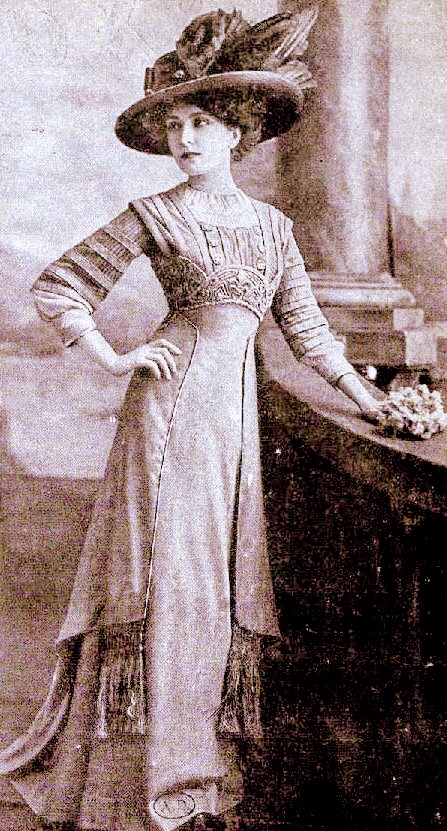
He Goofed! This young lady is not waiting to see if his germs are Asian or domestic. She’s ducking fast!

Winter, the germiest season of all, has arrived in many parts of the world. All in all, the times seems ripe to review germ etiquette: 

  • When you sneeze or cough, cover your mouth with a handkerchief. 
  • If there isn't time, at least muffle the explosion with your hand, turning your head away from the nearest person.
  • Blowing your nose at the dinner table is permissible, but don't make a production of it and don't apologize; the latter merely calls attention to the act. 
  • If your cold is a whopper, carry extra handkerchiefs.
  • Fastidious souls are offended at the sight of a battle-worn hankie, and even non-fastidious souls don't enjoy seeing one bloom from someone's breast pocket. Once used, a breast handkerchief stops being picturesque. 
  • P.S. to tissue users: Don't blow and throw. How many litter with tissue debris? Alas, too many. 
  •  Q & A on P's & Q's 
(Q) “Is it passe to ask guests if they want to wash hands before dinner?” Mrs. S.J., Cleveland 
(A) Until germs are passé, asking will never be.
 
—Portions taken from Don Goodwin‘s ‘Male Polish,’ 1957


Etiquette Enthusiast, Maura J Graber, is the Site Editor for the Etiquipedia© Etiquette Encyclopedia


Wednesday, February 3, 2021

Gilded Age Finger Foods


For olives, the forks, spears and spoons are for serving only.


There are a number of things that the most fashionable and well-bred people now eat at dinner table with their fingers. They are: 
  • Olives, to which a fork should never be applied. 
  • Asparagus, whether hot or cold, when served whole, as it should be. 
  • Lettuce, which should be dipped in the dressing or in a little salt. 
  • Celery, which may properly be placed on the table-cloth beside the plate. 
  • Strawberries when served with the stems on, as they often are. 
  • Bread, toast and all tarts and small cakes. 
  • Fruits, of all kinds, except melons and preserves, which are eaten with a spoon. 
  • Cheese, which is almost invariably eaten with the fingers by the most particular people. 
  • Even the leg or other small piece of a bird is taken in the fingers at fashionable dinners, and at most of the luncheons ladies pick small pieces of chicken without using a fork. — Exchange, 1888

Etiquette. Enthusiast, Maura J Graber, is the Site Editor for the Etiquipedia© Etiquette Encyclopedia

Tuesday, February 2, 2021

Singa and a Courtesy Campaign

A public education campaign featuring Singa the Lion was launched in 1982 under the National Courtesy Campaign with the slogan, “Courtesy is part of our tradition, it’s so nice to be courteous.”

The month of July has been “Courtesy Month” since 1979 in Singapore. Themes have changed from yearly, with songs, comic books and posters, all promoting courtesy. In 2013, Singa the Lion, Singapore's Courtesy Month mascot shockingly quit. In a letter, he explained his reasons:

Singa, the mascot for the Singapore Kindness Movement has called it quits. In an open letter the former Courtesy Lion, said that after 30 years, it was “just too tired to continue facing an increasingly angry and disagreeable society.”
Having done the job for over 30 years, Singa noted that kindness should not be a campaign, but a part of values education, adding that “people in authority - at work, in school, at home and in government - should lead by example”.
“I suppose it's time for real people to step up, and for the mascot to step aside.”
The letter also stressed that “it's not that we aren't a gracious society, or that kindness is not innate in all of us. But some days it feels like not very many of us believe in or care about expressing kindness.”
Signing off as “your friend Singa” the letter reminded that being rude, either online or in public, is a choice and people should be responsible for their actions and the society that they create.


The following day, it was revealed that the letter had been a publicity stunt.

Singa the lion to come out of retirement – the day after ‘quitting’

In what may prove to be one of the most predictable PR stunts in recent memory, the Singapore government’s “Singa the Lion” – the brand mascot for the Singapore Kindness Movement – is not retiring after all.

According to a story in government-backed broadsheet, The Straits Times, the stunt to withdraw Singa from the public eye – announced via a mock resignation letter– was actually a media campaign “to generate conversations and reactions online”, and Singa is likely to make a comeback. 

In the 2013 letter, the 30-year mascot, formerly known as Singa the Courtesy Lion, stated: “I’m just too tired to continue facing an increasingly angry and disagreeable society.” The letter also hit out at anonymous comments made by Singaporeans online, saying: “We can go online and be rude to others, but let’s not think it doesn’t count because it’s anonymous.”

The resignation appeared to have the opposite effect in inspiring kindness among online communities in Singapore, with the stunt prompting ire among bloggers and posters in social media. The Singapore Kindness Movement’s ad agency is DDB Singapore, although the agency said it had nothing to do with the stunt.

Poor PR stunts aside, Etiquipedia asks, “Can etiquette and genuinely good manners, ever be legislated or government run?” You are welcome to leave your thoughts in the comments below, or send us an email. We’re curious as to what our readers think.


Etiquette. Enthusiast, Maura J Graber, is the Site Editor for the Etiquipedia© Etiquette Encyclopedia


Monday, February 1, 2021

Elements of Great First Impressions


5 Elements of a Positive 
First Impression

First Impression

A first impression will many times be a lasting impression.  How do you ensure yours will be a great one?

Whether you're attempting to land the job of your dreams or be accepted in a new circle of acquaintances, practice and planning will help put you at ease so that you present yourself with confidence.

To make a positive first impression, there are five things you should strive to perfect: promptness, appearance, handshake, smile, and conversation.  You have ample opportunity to practice these every time you leave your home - wherever and whenever you are with other people.

Promptness

One way to show respect for someone is to be on time and, in fact, early.  Your punctuality says to the person you're meeting that you understand the value of his time and are responsible enough not to take it for granted.  

Showing up late, particularly for a first-time meeting, says to the other person, "I don't care that you made time to see me.  You're not very important."  This type of subliminal message does not bode well for those seeking employment.

Resolve to arrive in physical proximity to the occasion early enough to be ready to enter precisely on time whether you are meeting someone for a business or social occasion.  It's proper not to ring your dinner host's doorbell prior to the time invited, as greeting you might take her away from important last-minute preparations.  Nonetheless, punctuality is a lasting show of respect, first time or otherwise. 


Neat Appearance

Like it or not, the first time someone sees you, judgements are made.  What do you think the internal dialogue of the person seeing you is like?

  • "She certainly likes to be seen in a crowd."
  • "Did he just roll out of bed and land here?"
  • "She looks polished and professional.  A perfect fit for our company."

We all want to be noticed, but for the right reasons.  Consider the long-term effects of your appearance.  Individuality is a wonderful thing, but not if it keeps you from getting where you want to be.  

Practice giving some thought to your appearance.  Is your clothing is clean, wrinkle-free, and coordinated well?  Your hair, facial expression, posture and stance all factor into your overall appearance and the impression you make.

A Good Handshake

When you first meet someone and shake her hand, do you remember how it went?  If you do, it likely was a bad handshake.  

Getting it just right is an important part of a good first impression.  Make eye contact, extend your right hand vertically and as the hands meet at the web junctures between thumb and first finger, clasp the other person's hand, and shake. 

A handshake that is too firm says you may be nervous, even anxious, or that you are making a power move.  And a handshake that is too loose and soft says you don't know what you're doing or that you have no interest in properly greeting this person.

It's important that you practice shaking hands and remember what the perfect one feels like.  Practice as often as possible so that handshaking is a natural part of saying hello. 

A Warm Smile

Many times your smile is what stands out as making a first meeting most memorable.

A warm smile makes you seem open to engaging with other people.  It can comfort frayed nerves, ease tension, and is highly contagious (in a good way).

But the best of smiles are not just formed by your mouth.  It shows in your eyes, too.  The eyes are the windows to the soul, and if they are smiling, you appear happy, trustworthy, and confident.

Look in a mirror and smile.  What do you think?

Engaging conversation

Once you get someone's attention, you'll want to keep it.  Conversation is the way to do this, and it usually begins with "hello."  A kind, friendly tone of voice will engage almost anyone in conversation.

Practice conversing with people on the phone, while shopping, at the office, anywhere.  Be pleasant, but be discrete.  You don't want to overshare, and you also don't want to come across as a gossip.  The objective here is to become adept at beginning conversations.

More First Impression Preparations

Practicing the five elements of a positive first impression is a good start to actually making one.  You can also do some "behind the scenes" preparations.

  • If you're attending an event where you'll meet many new people, know the purpose of the event, who is hosting and/or sponsoring the event, and who is attending.  Find out as much information (discretely, of course) as you can so you know what to anticipate.
  • Have a list of conversation topics in mind for the event you are attending before you arrive.  You'll never run out of things to talk about and will always keep yourself and others at ease with good conversation.  (And keep that positive impression going by following up with a thank-you note.)


 Contributor, Candace Smith is a retired, national award-winning secondary school educator, Candace Smith teaches university students and professionals the soft skills of etiquette and protocol. She found these skills necessary in her own life after her husband received international recognition in 2002. Plunged into a new “normal” of travel and formal social gatherings with global leaders, she discovered how uncomfortable she was in many important social situations. After extensive training in etiquette and protocol, Candace realized a markedly increased confidence level in meeting and greeting and dining skills and was inspired to share these skills that will help others gain comfort and confidence in dining and networking situations. Learn more at http://www.candacesmithetiquette.com/

Etiquette. Enthusiast, Maura J Graber, is the Site Editor for the Etiquipedia© Etiquette Encyclopedia


Sunday, January 31, 2021

Etiquette: That was No “Lady,” Sir!


When speaking of females one has encountered while out and about, please keep mindful of the fact that the terms “Lady” and “ Woman,” just like the terms “Men” and “Gentlemen”— are not always synonymous.
———————————
“There are many good chances wasted by lack of promptness and businesslike habits, also by the inability to take up new ideas.” from ‘The Lady Magazine,’ on ‘How to Live,’ 1903
—Photo source, Pinterest 

No True “Lady” Would Indulge in Such Bad Manners

Not long ago, a resident of New York went into the post office in that city to procure a money order. As there were half a dozen persons ahead of him he naturally awaited his turn, although he was in a great hurry, as most New Yorkers try to make themselves believe they always are. The other prospective customers of Uncle Sam did not form into line, but herded themselves about the window. When those who were there first had transacted their business, this New Yorker, considering that his turn had arrived, stepped to the window to be served. What happened at this juncture, he relates in these words:

“Just as I was about to enter my application, a lady, who had just come, crowded past several people who had been waiting, as I had, and calmly shoved her application in before mine. I told her as politely as I could that I had been waiting there at least fifteen minutes and thought that, seeing I was in a great hurry, I should have precedence before her, whereupon she told me I was the rudest man she had ever seen, and besides went into a long discourse concerning the manners of modern men. I, nevertheless, held to my point and saw that I was served first.” After having cooled off he asks: “Was I right In doing so?” He thinks he was, but to satisfy himself on the ethics of the case, he has asked, through the New York Times, that others express their opinions regarding his course of action. 

We are genuinely surprised that any man who has long enjoyed the refining social advantages of the peerless town upon the historic Hudson; who has knocked elbows with the descendants of Diedrich Knickerbocker; who has been privileged to gaze upon the sacred person of a descendant of the famous game-leged governor of New Amsterdam; who, perhaps, may have enjoyed the more than a bowing acquaintance with the creator of that justly prized appendage which in a later day wrought the undoing of the distinguished mollycoddle from Indiana; who certainly must have read more or less of the newspaper condensations of the work of the illustrious Ward McAllister, entitled “How to Behave After You Have Succeeded in Breaking In” — we are surprised, aye, we are astounded that there should have arisen any doubt as to the channel into which this anxious inquirer should have diverted his behavior.

Under any and all circumstances this New Yorker, whose appeal for enlightenment indicates his gross ignorance of the commonest laws of etiquette as they relate to social intercourse between ladies and gentlemen, should have.

Avaunt there! The Herald narrowly escaped committing itself! It retreats in time! It seeks further enlightenment, more definite evidence, before it dare to pass judgment.

This New Yorker has not been fair. He has tried to trip us. He is paradoxical, equivocal, deceitful — we may be pardoned, we trust, for suggesting the possibility that he has innocently perpetrated an untruth, lacking the antecedent intention to deceive.

He says: “A lady who had just come crowded past several people who had been waiting.”

Impossible. No “lady” would ever “crowd past several people who had been waiting.” Our friend from New York needs one of two things: A new pair of spectacles or a new lexicon.— Los Angeles Herald, 1907


🍽️Etiquette Enthusiast, Maura J. Graber of The RSVP Institute of Etiquette, is the Site Editor for the Etiquipedia© Etiquette Encyclopedia

One Definition of Etiquette Enthusiasts

Caricature of Amercian lawyer and socialite Ward McAllister as “Snobbish Society's Schoolmaster.” Library of Congress description: “Caricature of Ward McAllister (1855-1908) as ‘an ass’ telling Uncle Sam he must imitate ‘an English Snob of the 19th Century’ or ‘you will nevah be a gentleman’; Uncle Sam is shown laughing heartily.” 
—Public domain image


Etiquette enthusiasts are usually super-sensitive people. “Good form,” in their eyes, is of paramount importance. Ward McAllister is one of these. The extremes of etiquette enthusiasm and of superficiality, usually go hand in hand. Frequently, the less a man knows the more enthusiastic is he over the punctilious observance of what is vulgarly known as “good form.’’ 

Active, intelligent men are too busy with the serious affairs of life to devote much thought to the etiquette of enthusiasts. Official life demands much etiquette and its observance is then as commendable as is a good dinner, such as is served at the Hotel Florence, to a hungry guest. — From “Local Intelligence,” the San Diego Bee, 1896

While we Etiquette Enthusiasts at Etiquipedia agree we can at times be super-sensitive, we disagree with the rest of this 19th century take on “Etiquette Enthusiasts.” We think this describes more accurately some working in the field of etiquette who assume the title of “expert,” without having actually attained any expertise.


Etiquette Enthusiast, Maura J Graber, is the Site Editor for the Etiquipedia© Etiquette Encyclopedia


Saturday, January 30, 2021

Etiquette and Confidentiality

 Keeping a Confidential Conversation Private

Young Couple

Knowing when to share a piece of information, and when not to share it, is a life-long learning process.  No one is perfect and we all make mistakes in this regard.

At the same time, to be someone others can count on, you have to know when to keep a confidential conversation to yourself.  If you can't do this, you won't be considered trustworthy, and this can be costly when you think of the friendships and opportunities you may be losing.

How to Know When It's Confidential

You know you're in a confidential conversation when someone says, "This is just between us," "Please don't say anything, but . . ." or, "I can trust you not to tell anyone about this, can't I?"

However, a request for confidentiality is not always verbalized, so it is important to train yourself for mindfulness.  If the person with whom you are speaking changes the tone of or lowers his voice, you are likely to hear something that shouldn't be repeated.

If you're comfortable doing so, ask the person directly if what she is sharing is private.  Or you might just say, "I'll keep this confidential."

In fact, when it comes to sharing information, establishing some ground rules for yourself may be helpful:

  • Always consider the information from another person's perspective.  Can the facts be misconstrued at all?
  • Never say anything personal about someone unless that person is present, or if you can imagine her standing right next to you.
  • Never participate in gossip or harshly delivered messages.
  • The Bottom Line Rule of Thumb: if information is revealed that seems in any way personal to someone or his business, never repeat it.


When a Confidential Conversation Goes Public

What do you do if a friend or co-worker doesn't respect a confidential conversation?  You can always ask the person if he has permission to share what he's telling you.  And if what he's sharing is not professional or friendly, you can stop him and mention that you prefer not to participate.

You might also call for a higher standard of conversation: "John, I know you are a person who doesn't like office gossip, so let's raise the bar here."

When you are the brunt of the conversation, however, it is very difficult not to take it personally.  But try to remain cool, calm, and collected.

After much thought on what you will say, go to the source of the gossip and discuss the situation.  Try and understand, without direct accusation, what the underlying concern is.  It may be that what you told her was misunderstood and then not handled appropriately.

Consider your own behavior and words.  Did you share a confidential conversation with the wrong person?  Someone you shouldn't have trusted?  Or did you share information that wasn't yours to share?

If you were seeking relief by relying on a trusted friend, you probably feel very betrayed if that person did not keep your confidence.  You may need to take a stand with that person and be clear that what is being said (or done) is not appropriate.  Unfortunately, you may also have to accept that it can take time for publicized information to die down.

Communication is Key

Remember, communication is the goal of any conversation.  Having a reason, a purpose, for talking with someone else helps you keep your words aligned with that purpose.  And, hopefully, that purpose is never to spread confidential information.


 Contributor, Candace Smith is a retired, national award-winning secondary school educator, Candace Smith teaches university students and professionals the soft skills of etiquette and protocol. She found these skills necessary in her own life after her husband received international recognition in 2002. Plunged into a new “normal” of travel and formal social gatherings with global leaders, she discovered how uncomfortable she was in many important social situations. After extensive training in etiquette and protocol, Candace realized a markedly increased confidence level in meeting and greeting and dining skills and was inspired to share these skills that will help others gain comfort and confidence in dining and networking situations. Learn more at http://www.candacesmithetiquette.com/

Etiquette Enthusiast, Maura J Graber, is the Site Editor for the Etiquipedia© Etiquette Encyclopedia


Friday, January 29, 2021

Properly Addressing a Prince


According to the self-appointed arbiter of Gilded-Age New York society, Ward McAllister, “Sir” and “Ma’am” were the preferred titles for the Prince of Wales and his wife. Above — Albert, Prince of Wales, who later became King George VII, after the death of his mother, Queen Victoria. 


Princely Etiquette

The Prince of Wales is always addressed, even by his intimate friends, as “Sir.” For example, on approaching him, the etiquette is to say, “Sir, Good morning.” This is followed by one’s continually addressing him as “Sir” on every and all other occasions. The Princess is always addressed as “Ma’am.” Ward McAllister tells us so.— Boston Herald, 1895


Etiquette Enthusiast, Maura J Graber, is the Site Editor for the Etiquipedia© Etiquette Encyclopedia